Feeds:
Posts
Comments

Archive for the ‘Architecture’ Category

[LISTENED TO: March 2017] The Organist

organistAfter really enjoying The Organist in 2015, the season ended and I hadn’t heard that there were going to be anymore.  So I stopped looking for them.  And then the other day I got an email reminding me about recent episodes.  Well, sure enough there had been an entire season last year and they were already part way through this year’s season.

So I’m playing some catch up here.  But they are timeless, so it’s okay.

Each cast has a section in brackets–this text comes from the Organist’s own site.  The rest is my own commentary.

The Organist is a free podcast from KCRW & McSweeney’s.  As of this writing, they are up to episode 82. (more…)

Read Full Post »

june10SOUNDTRACK: GABRIEL KAHANE-Tiny Desk Concert #178 (November 26, 2011).

kahaneWhen I saw Kahane a few months ago, he looked very different from the fellow here.  (More hair and a beard will do that).

I found Kahane’s music to be really enjoyable even if it was never really that catchy.  His songs are complex and thought-inducing, with many layers.  Although I found that after listening to his songs a number of times, I could really find the hooks in there.

His voice has a kind of soft quality to it–not quiet, but very much not harsh, which allows his enunciations to be heard quite easily.

For “Charming Disease,” Kahane plays keyboards.  He’s accompanied by strings and a guitar (I love the coloration of the guitar).  Since he also writes classical music, his pop songs have a distinctly classical feel (even without the string quartet to back him up). So the piano lines that he plays are simple chords, they are full lines.  And there are times when the guitar plays beautiful counterpoint to his chords.  This song is about an alcoholic (“I took you home and took away your keys”), but you’d never know the darkness of the lyrics from the melody which is bright and cheerful.  I love the middle section of the song–the chord progressions during the “Wine Dark Sea” are, in my mind anyway, very Kahane, and they’re what I love about his music.

For “Where Are the Arms” he switches to acoustic guitar.  You know the song isn’t going to be simple when he counts of “1, 2, 3, 4, 5, 6”  I love that he plays a continuing picked section while the guitar and strings play chords behind him, really fleshing out the song.

As they prepare for the final song, one of the violinists knocks over her music stand and he jokes, how did you fit an 11 piece band back her but we can’t get a string quartet.  Someone shouts that it’s the strings–the bows.  Kahane says, yes, “One string is two humans–ego and otherwise.”  To groans from the band.

For “Last Dance” I love that he sings his vocal melody along with the guitar melody (something Frank Zappa used to do–it’s complex and interesting).   And while there is certainly a melody there, he really complicates it with all of the single notes.  The strings come in and the song modifies somewhat until his voice seems to resume the complex singing style.  But then in the middle of the song (“she begins to sing”) it switches to a very catchy section with a refrain of “sex and cigarettes.”  It’s the most immediate thing in the show and shows how poppy Kahane can be.  even if the ending is quite abrupt.

He really deserves repeated and close listening.

[READ: February 5, 2016] “Learning to Look at L.A.”

I know Gabriel Kahane from when he opened for Punch Brothers this past summer.  I really enjoyed his set and found his album charming and eccentric but very literary.

Turns out that at the time of the release of The Ambassador he wrote this piece for the New Yorker as well.  It explores the themes that he delved into for his album, especially architecture in L.A.   He even opens with a discussion of Die Hard.  Like his song “Villains (4616 Dundee Dr.)” which contains the lyric:

I’ve been thinking a lot
About action movies of the 1980’s
Particularly Die Hard,
Which seems to illustrate
So many of the anxieties
Central to a time + place:
Japanese capital
The waning of the cold war
Pride in a downtown
What did they build it for?

He says that his “affection for this film is one hundred-percent unironic.” (more…)

Read Full Post »

moses SOUNDTRACK: WE ARRIVE ALIVE-One (2013).

oneThis is the final EP available from the We Arrive Alive bandcamp site.  In fact 2013 is the last I can find any information about this band at all.  This site, their Facebook page, there’s nothing after mid 2013.  I wonder what happened.

For this EP, the band has also grown to a 7 piece Andrew McGurk, Ben Healy, Adam Faulkner, Sean Dexter, Iain Faulkner, Michael Naude, Neil Dexter (still no idea who plays what).

“3 years” opens with some noise and fat propulsive bass and guitar.  The song feels more complex, although I’m not sure what the new musicians add to the song. There’s more noise (scraping guitar and whatnot ) that bring new dissonant textures to the song.  There may even be horns at the end (it’s a little hard to tell in the din). “Slow Fall” opens with a slow piano and an intricate drum pattern. A slow guitar line plays over the bass before some really noisy guitars are laid over the top.  At around 4 minutes the song shifts gear becoming faster and more broody.

The final song start with some ringing chords and a staccato guitar line. I like the way the new guitar introduces a melody to the proceedings. The song really starts to build at around 2 minutes, with some crashing cymbals shortly after.  There’s also a pretty middle section (which seems like a ticking clock).  The song end with a ringing guitar-and unexpected mellow ending to what I assumed would be a loud buildup to a song.

I’m intrigued by the direction the band went with this EP, although I like the sound of their previous one a bit more.  I am also concerned that they’ve broken up.  But if they have, they have three great EPs to their name.

[READ: March 24, 2015] Robert Moses

I can’t tell how ignorant I am that I’ve never heard of Robert Moses.  I mean his name sounded vaguely familiar, but I would never have known who he was (the master builder of New York City).  And I have to wonder if I am not alone.  For this book was originally written in French (and was printed in Poland and released in England).

This turns out to be a graphic novel biography of Robert Moses.  It’s hard to summarize how incredibly influential Moses was.  The back of the book says “From the streets to the skyscrapers, from Wall Street to the Long Island suburbs, every inch of New York City tells the story of one man’s mind.”

If you have seen the (excellent) book Wonderstruck, the mini model of New York City mentioned in the book was created for Moses.  New York Bound books describes the model thusly: “The Panorama, a miniature scale model of New York City that was commissioned by Robert Moses for the 1964 World’s Fair, is a 9,335 square foot architectural model that includes every single building constructed before 1992 in all five boroughs, or a total of 895,000 individual structures.” (more…)

Read Full Post »

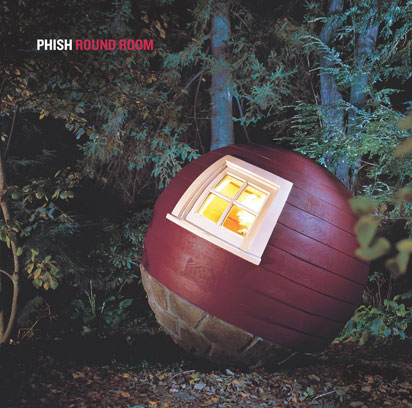
wallsSOUNDTRACK: PHISH-Round Room (2002).

round After Farmhouse, Phish went on a hiatus.  No one knew it would be quite so brief, but there was really a feeling that they were done.

And then they quietly released Round Room in 2002.  And it bursts forth with an 11 minute song.

“Pebbles and Marbles” has an interesting riff—complex and pretty.  And when I listened to it again recently I didn’t really quite recognize it.  But that’s because it’s nearly 12 minutes long and the really catchy part comes later in the song.  At around 5 minutes, the catchy chorus of “pebbles and marbles and things on my mind” announces itself.  And it is a good one.

“Anything but Me” is a pretty, mature song that is slow and piano heavy.  “Round Room” is a boppy little ditty (clearly a song written by Mike).  It is sweet and a little weird.  “Mexican Cousin” sounds a lot like a cover (maybe an old song by The Band) except for the solo which is very Trey.  It’s a funny, silly ode to Tequila.  “Friday” is a slow six minute song with two sections.  The verses are spaced out a bit, delicate riffs that are mostly piano once again.  The middle section is sung by Mike (which makes it more mellow somehow).

“Seven Below” is an 8 minute song.  It has another great riff (and the intro music is cool and bouncey).  When the vocals come in, it’s got gentle harmonies as they croon the sweet song).  Most of the 8 minutes are taking up with a guitar solo.  “Mock Song” is another of Mike’s songs.  This one seems to be a random selection of items sung to a nice melody.  Then when the chorus comes it’s quite nice, how this is a “just a mock song.”  The first verse is sung by Mike, then Trey does a kind of fugue vocal with different words in verse two.

“46 Days” opens with funky cowbells and turns into what seems like a classic rocking folk song—few words but a great classic rock melody (complete with 70s era keyboards).  “All of These Dreams” is a mellow piano piece, another mature song.  “Walls of the Cave” has an interesting piano melody that opens the song. The song is nearly ten minutes long and the middle part has a nice flowing feel to it.  There’s also a few sections that are separated be drum breaks—something that doesn’t often happen in Phish songs.  When the third part opens (to almost exclusively percussion, their vocals all work in a very nice harmony.  It’s a long song but with so many parts it always stays interesting.  “Thunderhead” is another piano-based song with some guitar riffs thrown on top. But it is largely a slow, mellow piece.

“Waves” is an 11 minute song with long instrumental passages.  It also begins with a kind of Santana feel to it, but it is a largely meandering song, with a simple melody that they stretch out for much of the song.  So this album proves to be an interesting mix of long jams and mellow ballady type songs.  It seems like Phish had a big mix of things to let loose.

[READ: November 1, 2013] If Walls Could Talk

This book reminds me of the work of Mary Roach—exploring a topic in great detail and including lots of amusing insights.  The two big differences here are that Worsley is British and that she goes back very far in British history to give us this fascinating information about the development of certain rooms of the house.

Worsley begins with the bedroom.  She looks at the furniture—the history of the bed from lumps with straw to fantastically ornate full poster beds that were made for kings who might never actually use them.

Then she moves on to more personal matters—sex (including deviant sex and venereal disease); breast feeding (for centuries mothers felt they were not equipped to take care of and nurse their own children, hence wet-nurses) and knickers (royalty had an entourage designed specifically to assist with underthings).  Indeed, privacy was an unknown thing in olden times.  Even royalty was expected to receive people in all of the rooms in the house.  Initially the bed chamber was for their most intimate friends, not just for sleeping.

The section on old medicine was also fascinating, they believed that it was vaporous miasma that did you more harm than say, excrement-filled water.

The section on Sleep discusses what was also in a recent article by Gideon Lewis-Kraus—that there were two sleep times at night.  With no electricity there was no artificial light to keep people up late so they would go to sleep early, wake up in the middle of the night (the best time for conception of children) and then sleep again. (more…)

Read Full Post »

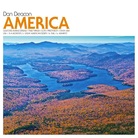
SOUNDTRACK: DAN DEACON-“Guilford Avenue Bridge” (2012).

I only know Dan Deacon from his “cover” of “Call me Maybe” (in which he layered the song on top of itself 147 times).  Deacon has a new proper album out and while it’s not quite as outlandish as the “Call Me Maybe” cover, it’s still pretty out there.

This is the opening track–a noisy barrage of sound set to a really catchy drum beat and bassline.  But you almost have to listen hard for that beat because it is just a wall of noise that goes on for 90 seconds until the song completely stops and is replaced by a manipulated banjo solo (I think).  This slowly morphs into pianos and then waves of delicate keyboards (all of which I’m sure is some kind of manipulated sound).  With about 30 seconds left the noise comes back and the songs ends much like it started.  Although it ends with a very happy chord.

This is definitely not for most, but the experimental nature is quite fun, and it’s definitely not something you’re going to hear on the radio very often.

[READ: August 22, 2012] “The College Borough”

I hadn’t read any Joshua Cohen before this story (he wrote the 800+ page buzz book Witz, but is NOT the author of a book called Leverage which Sarah reacted very strongly to–that would be Joshua C. Cohen, this one is Joshua A Cohen).  Also, I put it off because it was long.

Before I summarize, I want to state that this story is flipped on its own head by the final line.  The final few words completely changed how I felt about this story.  And I have to wonder what the risk is for a writer to do something like this.  For the entire story we don’t know why the narrator acts the way he does (in the present).  The flashback that the story provided is very thorough and detailed but it does not answer our pressing question.  Even when we return to the present, and the past comes to meet them, it still doesn’t explain it. It is literally the last few words that justify everything.  That’s audacious.

I’ll say more about this at the end.

It also begins with an audacious statement: “I helped build the Flatiron Building though I’ve never been to New York.”  Indeed, it seems that the narrator never wanted to go to New York.  But ow that his daughter, a junior in high school, wants to go to college in Manhattan (they hope she’ll stay in-state), he agrees for them all to go to New York City.

The narrator met his wife, Dem, in college (at in-state college).  They were both in the writing program and they’d had some classes together before they enrolled in Professor Greener’s seminar.

The beginning of the story is mostly the narrator’s complaints about New York.  I especially enjoyed this line: “I know no city can contain all the amenities you’d find at a place like our alma mater.”  Back home they have more pools, more StairMasters and their very own Flatiron Building (dubbed the Fauxiron).

Then the story pulls back so we can figure out what the hell this guy is talking about. (more…)

Read Full Post »

« Newer Posts