Feeds:
Posts
Comments

Archive for the ‘Animals’ Category

SOUNDTRACK: REN & STIMPY-Crock O’ Christmas (1993).
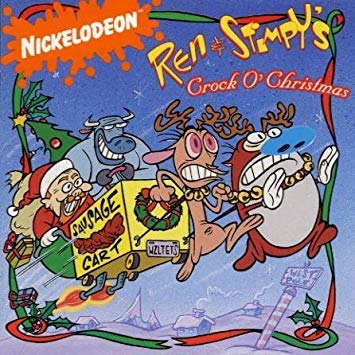
Certainly reaching the weird bottom of the list CDs in the Christmas collection here.

I’m not entirely sure why I even have this as I wasn’t a  huge Ren & Stimpy fan.  I assume I got it for free somewhere.  Anyhow, this is the kind of nonsensical disc that actually made me chuckle a few times as I listened to it again.  The songs are sort of parodies of actual classic songs.  But they’re not so much making fun of the Christmas song so much as using the Christmas songs to make up songs for their holiday Yaksmas.

If you know anything about Ren & Stimpy, you know that everything they do is gross, and this CD is just full of grossness.

The Wikipedia post about the disc is pretty thorough, so I’ll let it stand, with some of my one thoughts.

  • 1. “Fleck the Walls” – 2:51 – Stimpy explains to Ren that it is Yaksmas Eve to the tune of “Deck the Halls”.  [Stimpy’s untiring happiness is really just too funny. As is Ren’s hair-trigger temper.  This is a pretty funny and gross wait to start: “Come on everyone pit on a hat made of garbage and lets go Yaksmas caroling.”  The utterly over the top seriousness of the backing vocals is icing]
  • 2. “Cat Hairballs” – 3:27 – Stimpy sings about the gifts he can make out of his hairballs to the tune of “Jingle Bells”.  [Gross, but catchy].
  • 3. “We Wish you a Hairy Chestwig” – 3:04 – Ren and Stimpy sing about the “chestwig” they’ve gotten for Mr. Pipe to the tune of “We Wish You a Merry Christmas”, wishing him a “hairy chestwig and a bucket of beards”.  [No idea what this is all about but it’s a funny concept].
  • 4. “It’s A Wizzleteats Kind Of Christmas” – 3:51 – Stimpy sings a song about Stinky Wizzleteats, singer of the “Happy Happy Joy Joy” song; his “souped-up sausage cart” is the basis for the album cover.  [Stinky Wizzleteats is a wonderfully ornery character.  Not based on anything else, so it’s all about the bizarre words].
  • 5. “We’re Going Shopping” – 4:39 – Stimpy drags Ren into the mall to do some Christmas shopping.  {I was puzzled that they talk about Christmas here.  The disc follows a thread of the two of them all day, with everything having a narrative.  The Christmas just seems like a mistake.  Although the shopping items are pretty fun].
  • 6. “Yak Shaving Day” – 4:22 – Ren and Stimpy stumble on the secret gathering place of the Gilded Yaks.  [I love the voices of the Yaksm how serious and pretentious their voices are.  Plus the rocking guitars in the chorus totally rule].
  • 7. “What Is Christmas?” – 3:19 – Stimpy and his son, Stinky the Fart, recall the events of “Son of Stimpy”.  [I listened to this song and thought it was so treacly and un Ren & Stimpy-like.  And then I looked this up and saw that Stimpy’s son is a fart, and that makes everything different.].
  • 8. “Cobb To The World” – 3:08 – Ren and Stimpy sing the song of “good king” Wilbur Cobb, a senile senior citizen, to the tune of “Joy to the World”.  [This is just bizarre and creepy]
  • 9. “Happy Holiday Hop” – 3:48 – Ren and Stimpy attend TV star Muddy Mudskipper’s holiday celebration.  [This song is so peculiarly straight, that it could almost work outside of Ren & Stimpy, aside from the whole Muddy Mudskipper part of course]
  • 10. “I Hate Christmas” – 4:23 – While Stimpy goes to bed, Ren sings the blues about his personal disdain for the holiday.  [Again, with the Christmas.  This is actually quite a downer.  Poor Ren.  But surely Stimpy must get him over the blues].
  • 11. “The Twelve Days of Yaksmas” – 4:24 – Ren and Stimpy count down the Yaksmas gifts of Ren’s cousin Svën Hoek to the tune of “The Twelve Days of Christmas”.  [Everything that makes fun of this preposterously long song makes me laugh.  This one is especially gross, but they have a great time with the absurd lyrics.]
  • 12. “Decorate Yourself” – 5:26 – Ren and Stimpy sing an anthem in the style of “We Are the World” about decorating oneself for the holidays.  [This song soars and flies and is so catchy it could have been an anthem for the ages “Don’t deck the halls or burn boughs of pine, hang your mistletoe where the sun don’t shine!”].

Sometimes it’s wonderful to be silly for Christmas.

[READ: December 7, 2018] “A Qualitative Study of Our Father”

Once again, I have ordered The Short Story Advent Calendar.  This is my third time reading the Calendar (thanks S.).  I never knew about the first one until it was long out of print (sigh).  Here’s what they say this year

Fourth time’s the charm.

After a restful spring, rowdy summer, and pretty reasonable fall, we are officially back at it again with another deluxe box set of 24 individually bound short stories to get you into the yuletide spirit.

The fourth annual Short Story Advent Calendar might be our most ambitious yet, with a range of stories hailing from eight different countries and three different originating languages (don’t worry, we got the English versions). This year’s edition features a special diecut lid and textured case. We also set a new personal best for material that has never before appeared in print.

Want a copy?  Order one here.

And here’s a Q&A with Levin.

Like last year I’m pairing each story with a holiday disc from our personal collection.

This story is written in Levin’s words as “a kind of pseudoscientific research paper by a pair of siblings trying to make sense of their father via examining his behavior toward houseflies.”  It has epigrams from Shakespeare and Skinner.  The abstract, for of course there is an abstract, states that their father, a well-meaning human being likes to kill flies.  There;s nothing sexual or creepy about his desire to kill them, he just seems very placidly happy when he does. (more…)

Read Full Post »

SOUNDTRACK: CAUTIOUS CLAY-Tiny Desk Concert #798 (October 24, 2018).

Cautious Clay has a wonderful name.  And that’s really all I knew about him.

He came to the Tiny Desk with friends, a lot of friends. In fact, Josh Karpeh, best known in the music world as Cautious Clay, put together a backing vocal ensemble of friends he’s known since his days as a music student at The George Washington University here in D.C. And so, with five singers – Sanna Taskinen, , Sam East, Claire Miller and Michael Ferrier – along with a drummer, keyboardist and a bassist – Cautious Clay brought a warm, thoughtful and chill vibe to the Tiny Desk.

Clay sings three songs and he shows off a lot of musical skill as well as a delightfully chill voice.

 Here at the Tiny Desk, Cautious Clay opens with “Cold War,” a song that I interpret to be about commitments within relationships. The line, “In it for the monetary growth and power / But we divided at the bottom of this whiskey sour” shows the humor and insight that I love in his lyrics.

Eric Lane (Keyboard/keybass), plays a cool riff on the keybass (an instrument I’d never heard of before), but I’m more interested in the cool sounds he’s getting out of the other keyboard.  Clay gets some nice falsetto notes as the backing singers join him.  The big surprise for me was when Clay pulled out a saxophone and played a tidy little solo.  I’m not sure it works with the music, but it sounds fine.

For the second song “Call Me,” Clay grabs a (tiny seeming) guitar and plays left-handed. It’s mostly delicate chords high up on the neck.  Midway through this song, Clay picked up a flute and played an all too brief solo.  It was a real highlight for me since I’ve been really enjoying the flute lately.  Chris Kyle switched from guitar to bass for this song, but he’s back on guitar for the final song.

The only person who doesn’t get to really shine is drummer Francesco Alessi.  The drums are pretty quiet and pretty uneventful for most of the show, but I guess they get the job done.

For the final song, “Stolen Moments,” the singers depart, leaving only the four piece.  There’s some pretty. simple guitar and another sax solo.

All three songs are a little too soft rock for me, but it’s clear that Cautious Clay has a lot of talent.

[READ: November 21, 2018] “The Dog”

The sign on the gate says “Chien méchant,” and the dog is certainly méchant.

Every day she walks past the dog and it hurls itself at her, snarling and ferocious.  She knows it is not personal–it hates everyone.

But she wonders how deep is that hatred.  She doesn’t know but she feels the dog gets satisfaction from the encounter–from being feared.

She knows that St. Augustine says that we are base animals because we can’t control  our fears and our bodies: (more…)

Read Full Post »

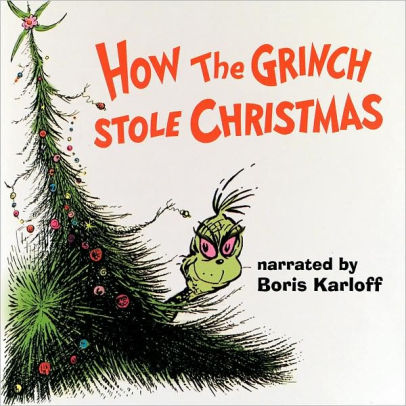
SOUNDTRACK: How the Grinch Stole Christmas (1966).

Back in the early days of CDs (1996), it was exciting when things that you never expected to see available were right there for the asking.

Who knew anybody wanted a CD of How the Grinch Stole Christmas?

This CD contains the entire narration from the movie.  He even narrates Cindy Lou Who in this version.  The songs are included–and are even interrupted by the narration–as in the movie.

The rest of the disc includes four songs from the movie, sung by the original artists.  You get “Welcome Christmas” as well as a reprise of it and “Trim Up the Tree” sung by the Whos in Whoville.  The final song is “You’re a Mean One, Mr. Grinch” sung by the irrepressible Thurl Ravenscroft and his amazing voice.

Does anyone need to listen to this?  Probably not, but it is fun to listen to without having to sit down and watch a movie.

[READ: December 1, 2018] “Sea Monster”

Once again, I have ordered The Short Story Advent Calendar.  This is my third time reading the Calendar (thanks S.).  I never knew about the first one until it was long out of print (sigh).  Here’s what they say this year

Fourth time’s the charm.

After a restful spring, rowdy summer, and pretty reasonable fall, we are officially back at it again with another deluxe box set of 24 individually bound short stories to get you into the yuletide spirit.

The fourth annual Short Story Advent Calendar might be our most ambitious yet, with a range of stories hailing from eight different countries and three different originating languages (don’t worry, we got the English versions). This year’s edition features a special diecut lid and textured case. We also set a new personal best for material that has never before appeared in print.

Want a copy?  Order one here.

Like last year I’m pairing each story with a holiday disc from our personal collection.

Most of the stories have nothing to do with Christmas.  In fact, some of them are quite dark and unhappy.  But others are just kind of weirdly enjoyable.

This story is weirdly enjoyable. (more…)

Read Full Post »

SOUNDTRACK: BLEACHED-“Electric Chair” (Field Recordings, July 25, 2012).

This Field Recording [Bleached: Picnic Table Punk] is related to SXSW (it was filmed on the eve of the 2012 Festival at a food-truck parking lot [The awesomely named Hoover’s Soular Food] off the highway — about a mile northeast of Austin’s swarming 6th Street.

Jennifer and Jessica Clavin make up the core of Bleached, a rough-and-tumble garage-rock band.  Bleached is one of many young punk-infused acts playing three-minute, three-chord bashers with sneering, unraveled immediacy. When played on stage, the band’s music takes on a messy-but-fun live-wire buoyancy.  “Electric Chair,” is a distortion-fueled strumfest built around [literally] two lines: “Just got out the electric chair / and I don’t see you anywhere.”

It almost sounds like they aren’t plugged in (“we’re playing too loud,” one of them says)–you can hear the pick hitting the strings almost as much as the chords themselves.  Adn someone sounds a wee bit out of tune, but that all seems appropriate for this band.  This song is a simple (very simple) rough and tumble garage rock song.

Assisted by Sara Jean Stevens on bass and drummer Jonathan Safley — here playing a light-up tambourine bought at the last second from a tchotchke shop — Bleached showcases its fun, off-the-cuff spirit. It may lack meticulous precision, but the band’s infectious energy and simple, winning hooks more than compensate.

I don’t really care for garage rock all that much and this song doesn’t do all that much for me.  It is too spare and, honestly, I need at least one extra lyric.

[READ: January 5, 2017] “Flower Hunters”

This story is set on Halloween.  But the protagonist, a mom, has forgotten about the day entirely.  The last two days she was absorbed in a book by naturalist William Bartram, who traveled through Florida in 1774 (he’s a real person).  And so, although her boys wanted to be ninjas, she had made one a costume that was a long-sleeved shirt tied in the back and a slotted mask.  The boy is calling himself Cannibal Lecture.  The other boy is getting an old fashioned sheet-as-ghost (she is made uncomfortable about a white boy in a sheet but hopes the rosebuds on the hem mitigate the effects somewhat.

Her husband comes in from work, sees the costumes, raises an eyebrow, remains merciful.

What I really liked about the story was the narrator’s tone.

“She says to her dog, who is beside her at the window…One day you’ll wake up and realize your favorite person has turned into a person-shaped cloud.
The dog ignores her, because the dog is wise.

In addition to failing Halloween , the woman is also failing at friendship.  Her best friend, Meg, told her she doesn’t want to be her best friend anymore: “I’m sorry, I just need to take a break.” (more…)

Read Full Post »

SOUNDTRACK: REIGNWOLF-“In the Dark” (Field Recordings, June 29, 2012).

This is another Field Recording set at Sasquatch! Music Festival [Reignwolf: A One-Man Rock Show].

I’d never heard of Reignwolf and I’m still not sure if Reignwold is typically a solo project–like here or a band.  “In the Dark” is a simple blues rock song–like Led Zep via the White Stripes.

Jordan Cook plays a noisy, distorted guitar with a metal slide so that there’s pretty much always something coming out of the amp.  After some pretty simple verses he plays a wild, sloppy (broken stringed) solo.

The way he was tearing it up during an impromptu set at the Sasquatch Music Festival, you’d barely notice that Jordan Cook, a.k.a. Reignwolf, broke a string midway through his fiery rendition of “In the Dark” — that is, until you saw the mangled remnants of his guitar, smoldering on the ground after he’d wrenched every wailing chord from its guts.

The song works best when he plays the kick drum.  It adds just enough oomph to make it not seem like a guy playing a guitar.

The Saskatoon native and recent Seattle transplant never misses a beat — literally. When he’s not with a band, he accompanies himself on kick drum and makes enough noise to match a dozen metalheads. In this video, recorded at the artist campground between sets at the festival, Reignwolf causes a ruckus beside his RV and rousts a crowd of sleepy campers into dancing and cheering.

The soloing goes on for a while and the people around him seem to like it.  Although the soloing behind his head is a bit much, but hey, if you can do it, then go ahead!

[READ: February 1, 2017] “The Sightseers”

I really liked a main aspect of this story, and so many of the details.

The story begins with an overprivileged New York family.  They have a maid/cook/gofer named Kiki from Tibet and the husband marvels at Kiki and “their calm, those people.”

The father, Robert, is happy that they no longer go to North East Pennsylvania for Thanksgiving–the round nephews and the piles and piles of food.  For their Thanksgiving they would be having salmon as Robert was training five times a week with a Navy Seal.

When the salmon turns out to be halibut, the son says that wasn’t on the menu (the menus were designed ahead of time to limit daily stress by preparing the children for their dinners ahead of time–there would be no surprises.  The son asks if the next time they have halibut it will be salmon.  The father thinks that’s an excellent suggestion. (more…)

Read Full Post »

SOUNDTRACK: LEE FIELDS-“Still Hanging On” (Field Recordings, April 18, 2012).

This was another Field Recording from SXSW filmed on the patio of Joe’s Crab Shack [Lee Fields: Early Morning Soul].

Lee Fields is soul singer who I don’t know.  Evidently he toured in the 1970 sand resurfaced in the ’90s.  He’s got a great powerful voice, but you can tell he’s a bit wiped out.

It was Friday morning during South by Southwest, and Lee Fields was gassed. The veteran soul singer told us he’d given his all in a concert the night before, and you could tell that our early appointment at Joe’s Crab Shack in Austin, Texas, had left his voice gravelly and raw.

He has steadily put out funk-tinged blues and gospel records, crooning love songs and belting world-weary anthems with an expressive voice full of swagger and regret.

So on that March morning, Lee Fields reached deep, fought off the morning fog and gave a passionate, stripped-down performance of “Still Hanging On” with the help of guitarist Vince John. It was a rare peek at a legendary, impossibly gracious singer who proved that, after all these years and even with little sleep, he’s still got it.

Somehow the rawness and weariness of his voice makes it all the more poignant and impressive.

[READ: January 8, 2017] “The Weir”

This was a fascinating story that went in a few different directions.

It begins with a fifty-something year old man throwing tennis balls to his dogs.  He is on a large swath of land that abuts a river.  He is using this time with his dogs to think about his family.  His wife left him six weeks ago and he feels he is coping well (the dogs help).

But his son was the real problem.  He was gone missing.  For years.  His wife had even said that it would be better if he were dead.

While in his thoughts, he sees a young woman hugging the cliffs on the edge of the river.  As he watches her he realizes that she is going to jump in (the river is extremely fast and dangerous).  He rushes to try to stop her, but she can’t hear anything with the noise of the river.

Without even realizing he did it, his jacket and shoes were off and he was jumping in.  The river is crazy and violent and he is tossed around.  Finally he catches up to her, but she is attacking him–whether on purpose or not he doesn’t know.  Eventually he is able to drag her to the shore.  The water was really cold.  The air is cold.  She is cold and he is cold.  She is breathing but not responsive.

He hauls her back to the car and wraps the dogs’ rug around her. The only thing she says is “not the hospital.”  So he brings her to his house.

It’s all really exciting. (more…)

Read Full Post »

SOUNDTRACK: DRY THE RIVER-“Bible Belt” (Field Recordings, March 27, 2012).

The Field Recordings project was such a neat idea.  Kind of like the Tiny Desk, but not.  Many of them were planned ahead of time and some of t hem seem surreptitious.  It’s a wonder they didn’t do more or aren’t still doing them.

Since the whole NPR crew goes to SXSW, it just seems like these little songs would be easy to score.  I realize that they now do the South by Lullaby, but this is different (sort of).

This Field Recording [Dry The River: An Oasis Of Calm Amid The Feedback] is from a band I don’t know.  They were playing at SXSW and NPR got them to play on the secluded patio of Joe’s Crab Shack’s  overlooking the Colorado River (which is one thing that makes this cooler than a Tiny Desk).

“Bible Belt” is a gentle acoustic song with delightful harmonies–not unlike Fleet Foxes or Band of Horses.  Dry the River includes a violin which adds a slightly different quality.  But like those other bands, the song looks to soar:

Dry the River typically writes music with big, cathartic climaxes in mind: Songs on the band’s first full-length album, Shallow Bed, tend to start with miniaturized melodies that eventually burst into thunderous rock anthems.

You can feel like this song wants to be bigger, but they handle a quieter version nicely.

On this particular morning, Dry the River arrived in a more intimate formation, swapping electric guitars for acoustics and its full drum set for a single snare. While this performance of the gorgeous “Bible Belt” eases back on the loudness of the original, the band by no means lacks power. The result is a hushed, stirring performance that highlights the band’s many strengths.

My favorite part is the moment the band grows really quiet and you can hear some birds singing.  I’m very curious to hear just how big the original gets.

[READ: November 8, 2018] “Cattle Praise Song”

This is a story about genocide and cows.  The genocide is unavoidable but not explicit; the cows are the focus.

Starting in Rwanda, a seven-year old boy, Karekezi, watches his father with their herd of cows.  The cows are everything to them.  Karekezi even has a cow of his own: Intamati–all of the cows are named.  Every morning they look after the cows carefully–removing ticks or other insects, carefully inspecting them, calling them by their name and petting them–even worrying about a cow that takes too long to pee:

He’d hold her tail high and boldly lean forward–never mind that if the cow finally decided to urinate she might shower him.  Nobody dared to laugh.  Anyway, isn’t cow urine, amagana, considered to be a potent remedy?

The first few pages discuss the caring for and nurturing of these cows–the hand feeding, the fires to keep away flies; the special water only for the cows to drink.  And then the milking–a family event in which the best milkers milked and the others carried the bowls of milk like a priest with a chalice.  The young children drank hungrily from the fresh warm milk. (more…)

Read Full Post »

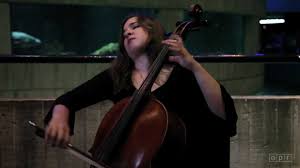
SOUNDTRACK: ALISA WEILERSTEIN-“Prelude from Bach’s Suite No. 5” (Field Recordings, February 16, 2012).

One thing I love about the Field Recordings series is the wonderfully unexpected places they have the performers play.  Like this Field Recording [Alisa Weilerstein: Playing Bach With The Fishes] which is set at the National Aquarium in Baltimore.

Strategically positioned above a tank full of stingrays, Weilerstein unpacked her cello to serenade the sea creatures — and dozens of pleasantly surprised aquarium visitors — with music by Johann Sebastian Bach. She chose the Prelude from Bach’s Suite No. 5 for unaccompanied cello. The music’s tranquil power and meandering melodies became an extraordinary soundtrack to the majestic rays as they roamed through the water, rising occasionally to catch a note or two.

The music is sublime–sad and powerful but ever so fluid.  And the setting is just perfect–you can almost see the fish appreciate it.

[READ: February 2, 2018] “Four Fictions”

Breytenbach confounds me with his stories.  This is a collection of four really short pieces and while I enjoyed parts of some of them, overall they were a big huh?

Race
This appears to be a race through the sea?  On foot?  A tractor charges into the waves and a Jeep follows. The route will take them through the sea to Germany and back to Stockholm.  Their friend Sven is running in the race (he’s from Lapland).  When the race is over he still has to run through the house to the balcony.  When they gather for the results , how many drowned, etc, the story ends with another man removing his top hat and his hair looking sunken and dry.

What? (more…)

Read Full Post »

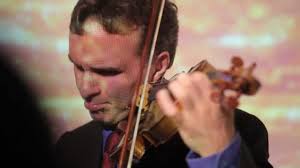
SOUNDTRACK: GIL SHAHAM-“Partitat No. 2 “Gavotte en Rondeau” by J.S. Bach” (Field Recordings, January 12, 2012).

This was the very first Field Recording posted on the NPR site back in 2012 [Gil Shaham: A Violinist’s Day At The Museum].

Shaham plays Bach in the Hirshiorn Museum.

As Gil Shaham wandered through the back offices of the Hirshhorn Museum and Sculpture Garden in Washington, D.C., he said he felt “like Ben Stiller in Night at the Museum.” For this impromptu Bach mini-recital, the violin superstar momentarily became part of the art, bathed in the modish lighting and projections of a multimedia installation during the performance.

He is introduced with the rather amusing:  “A world famous, world renowned violinist who, by the way, starts every morning with a bowlful of Cap’n Crunch.  He told me that.”

I love that this first Field Recording was, like many of NPR’s best things, a spontaneous idea:

A crowd packed the exhibit room to watch as Shaham launched into Bach’s third partita. After the performance, the violinist greeted fans in the museum, many of whom were headed to his concert at the Kennedy Center that night. He seemed surprised and delighted that the guerrilla concert, announced only on local classical station WETA and Twitter that day, drew so many people willing to hear Bach in the afternoon.

[READ: January 22, 2017] “Are We Not Men”

Boyle’s stories aren’t usually as fanciful as this.  But I loved it just as much as many of his other more down to earth stories.  I particularly enjoyed that it was set in the future, although there was no real statement of that until late in the story.  There were hints, which seem obvious in retrospect, but which at first just seemed like hyperbolic or metaphorical.

Like “the dog was the color of a maraschino cherry” or that the lawn incorporated “a gene from a species of algae that allowed it to glow under the porch light at night.”

The story opens with the cherry-colored dog killing an animal in the narrator  Roy’s front yard (on that grass).  He wanted to chase the dog away because it might ruin his grass.  Then he noticed that what the dog had killed was his neighbor Alison’s pig.  She loved that pig and anthropomorphized it.  To try to salvage the pig, he ran up to the dog waving his arms.  It immediately latched onto his forearm instead.

As Roy fights with the dog, the dog’s owner, well, the daughter of the owner, came running across the street.  She looked like a teenager but was actually 11 or 12.  When the girl says, “You hit my dog,” he replies that she bit him.  The girl says Ruby would never do that–she’s just playing.

Amid this horrorshow of blood and violence and death, and a sprinkling of genetic splicing, Boyle throws in a very funny experiment gone wrong.  Crowparrots were a modified bird which blended crows with the invasive parrot population.  It believed that the experiment would turn the parrots into carrion eaters.  But instead it made their calls loud and more frequent.  And they mimicked, so they “were everywhere, cursing fluidly, (“Bad bird! Fuck, fuck, fuck!“).” (more…)

Read Full Post »

SOUNDTRACK: THE CIVIL WARS-“Kingdom Come” (Field Recordings, November 8, 2012).

I discovered The Civil Wars after they had broken up.  Which is such a shame as they make such beautiful music.

They were Joy Williams and John Paul White and

the two [had] built a gentle, harmony-rich folk-pop sound in which warm chemistry more than counteracts the tension under the music’s surface. Though not a couple themselves — each is married, and Williams just had a baby — they convey many hallmarks of a loving union, particularly in the way she stares at him sweetly as they sing.

That staring is really uncanny–she seems so happy with him.  So it is amazing that at the time of this airing

Williams and White announced that they’ve canceled all of their tour dates in response to “internal discord and irreconcilable differences of ambition.” This, naturally, has fueled talk of a breakup — the assurance that “our sincere hope is to have new music for you in 2013” doesn’t specify whether that music would be made together or separately — which is a pretty crummy development

This Field Recording [The Civil Wars: A Song Of Loyalty, Before It’s Tested] was done in (presumably) happier times — during the Sasquatch! Music Festival in George, Wash.

The pair sing in a field of grapevines.  Just as John Paul arrives, the wind picks up incredibly, almost comically.

Amazingly, given the setting, this song sounds fantastic.  I love that you can hear whistling wind faintly (it might even be cooler if the wind was a bit louder).  But you can see the grapevines (and their hair) blow as the wind picks up.  But their voices and guitar sound perfect.

This song, like every song from The Civil Wars is wonderful.  Their voices are just magical together.  Even if there’s not a lot going on musically (it’s a single guitar although the melody is great), it’s the way they loop their voices together that is just out of this world.

I love them on record, and they sound even better here–White just lets his voice soar at one point and it’s fantastic.

[READ: January 12, 2017] “Back the Way You Went”

I was really puzzled by this story.  I couldn’t tell if it was one story with three parts or three separate stories.  I hoped it was three separate stories because the three pieces don’t seem to go together at all.  But at the same time, the internal parts of each story isn’t entirely coherent either.

Garland
D and F take a woman with them on a weekend getaway.   The woman’s mother recently died.  They go to a honeycomb.  Bees stream through the streets and the night.  D and F are bees too.

But they aren’t, of course.  Because the next day they ride bikes (the woman never learned and is quite bad at it).

Years later she wonders “what it was like for D and F to be thugging her around.”  Thugging?

The next paragraph is a flashback and is a good one.  But each paragraph seems to be separated from each other.  The title appears in the body.

Mexico
In this part “they” go to visit Dad in a home.  He is  in a room with a man whose eyelids don’t close–doctors don’t want to touch them in case they stayed permanently closed.

One Sunday they were coming home from visiting Dad–it was no different from any other visit. but her insides had gone bleak and dangerous. She sat in the back of the taxi thinking about an art work she saw in Mexico

The title of this piece appears in this section as well.  And, again, I enjoyed the part about the art piece and I enjoyed the way her dad tells her this bon mot, but I don’t see how they connect

Trouble in Paradise
Her mother in law Verna is four feet nine.  She feels big and bestial hugging Verna.  Her own mother was also short, but otherwise unalike. She is unlike her own mother except that they both think she needs to shop for clothes because they don’t like the way she dresses.

Vera is telling stories about her best friend Mildred who died.

But the narrator is thinking back to drying dishes with her own mother.

And then the narrator snaps out of it and asks Verna a question about Mildred which she finds quite surprising.  The ending in which she mentions the filmmaker Lubitsch, is just as puzzling as all the rest f the story(ies).

Read Full Post »

« Newer Posts - Older Posts »