Feeds:
Posts
Comments

Archive for the ‘Birds’ Category

SOUNDTRACK: EARTH-All Tomorrows Parties, October 5, 2011 (2011).

Anyone who likes Black Sabbath a lot knows that they were originally called Earth.  About mid way through this concert, the lead singer/guitarist of Earth says that he grew up listening to Black Sabbath and reading HP Lovecraft, so Earth is clearly something of a tribute.   Incidentally, he grew up in Manalapan, NJ which is just down the road from us.

All of these bona fides means that I should love Earth.  But I have to say that although I didn’t dislike this show at all, it’s really not my thing.  Earth creates long droney songs.  I tried to measure a couple of BPM of songs and came out with 60 for one song and 42 for another (by contrast Judas Priest’s “Breaking the Law” is 180 BPM).

The songs are all instrumental and range from 8 to 12 minutes.  Again, nothing objectionable about that.  Indeed most of the songs are cinematic and cool sounding.  My problem with them is that there wasn’t a lot of dynamism in the songs.  The bass wasn’t crazy heavy or loud or chest rattling (as I had been led to believe Earth’s bass was).  The melodies were pretty, but it came across as soundtrack music–for a very very slow zombie chase, perhaps.

According to some basic history, Earth used to be a heavier, noisier band, but have morphed away from that, and I suspect I would have liked their earlier stuff a bit more (although the one older that they played, “Ouroboros is Broken” wasn’t that much different from the rest.

NPR broadcast most of the All Tomorrow’s Parties concerts, and I enjoyed listening to them all.  But Earth is just not my thing.  You can check it out here.

[READ: October 20, 2012] “A Farewell to Yarns”

I mentioned the other day that I read one complete piece in the three Outside magazines since I subscribed.  It was this one.  The thing that I have enjoyed about the Outside articles that I have cherry picked is that unexpected writers pop up to write an essay.  So here’s Ian Frazier, comedian and essayist, writing for Outside.  Weird.  (Or maybe not so weird, he’s an Editor).

And, unlike many of the other things I’ve read in Outside, Frazier is not, repeat not going to do anything brave or daring or stupid, he’s just going to muse about a topic.  I like it.

Basically, this whole piece is a compliant about how with everything documented and digitalized it’s impossible to tell fibs about the one that got away or as he calls it, “an outdoorsman’s sacred right to exaggerate.”  What I like is that he takes us all the way back to ye olde mapmakers who wrote Here be Monsters which leads to this wonderful idea that I have never considered “the pictures of the monsters must have been accurate; how would the mapmakers have known what to draw unless eyewitnesses had told them?”

And he moves on through those who spied the Loch Ness Monster and Bigfoot.  He even talks about one I had ever heard of, a hidden city in Siberia called Gorod Koka-Kola, built during the cold war as a reproduction of an American city, they speak English and live and behave like Americans–perfect for spymasters to practice   Genius–and how would anyone ever know if it existed in remotest Siberia?

But Fraizer’s greater point is that “Lies make the wild scary and alluring.”  He grew up in Rural Illinois afraid of the Argyle Monster who haunted Argyle State Park–and, boy, how many adventures he had or dreamed of having back then. (more…)

Read Full Post »

SOUNDTRACK: THE FLAMING LIPS-Due to High Expectations…The Flaming Lips are Providing Needles for Your Balloons EP (1994).

This EP came after the success of Transmissions from the Satellite Heart and the single “She Don’t Use Jelly.”  Naturally that is not the single here, rather it is “Bad Days,” a new song tha sounds of the period.  As does “Jets Part 2 (My Two Days As An Ambulance Driver)” a fuzzed out trip.

“Ice Drummer” is a primarily acoustic but still distorted song.  It’s kind of boppy and light which is odd since it is a cover of a Suicide song.   “Put the Waterbug in the Policeman’s Ear’ is a demo with strings and piano.  It also has a very lengthy introduction in which Wayne explains his brother’s proclivity for drugs and his belief that he can control bugs (and have them attack the policeman who is trying to arrest him).  It was recorded on a boombox.

“Chewin’ the Apple of Yer Eye” is a live version recorded at a record studio.  It has nice guitars with scritchy violins.  “Chosen One” is a cover of a Bill Callahan song at the same venue.  There’s a lengthy introduction explaining that it’s a cover and why he likes it so much.  It’s a nice version, very stripped down.  “Little Drummer Boy” is a travesty, but a good one (and is 1,000 times better than their version of “White Christmas.)”

“Slow-Nerve-Action” is a live version apparently broadcast on a Top 40 radio station.  The squall of noise as the song opens would frighten off anyone listening to Top 40, but the middle of the song’s acoustic section is rather pleasant (if not a little scratchy and staticky).  Although this EP racks in at 44 minutes long, it’s really not that essential (although the live versions are nice).

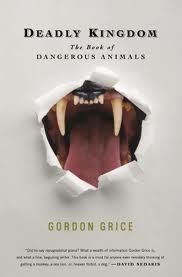
[READ: May-July 2012] Deadly Kingdom

If you have any kind of animal phobias–literally any kind: snakes, sharks, spider, rodents, bugs, stay away from this book.  Indeed, even if you don’t have this kind of phobia, you may after reading this book.  As the title says, this book tells you every single conceivable way that an animal can kill you–from biting to clawing to stomping to crushing to infections to diseases to parasites to long lingering diseases to numbness to elephantiasis (and that’s just chapter 1).  Somehow the author is not afraid of everything that moves, and is even a collector (with his wee son) of all manner of unusual creepy crawlies–tarantulas, hissing cockroaches and the like.

Sarah bought me this book for my birthday because David Sedaris recommended it when we saw him speak.  When Sedaris read from it, it was funny but dark.  Sedaris’ comment that “Monkeys are such assholes “was certainly borne out by the book.  Sedaris’ other comment–if you ever feel bad about eating meat, just read this book–is also completely accurate.  Even cows can be assholes.  This book is hard to digest in large doses.  I found that I had to put the book down after a section or two because there’s only so much you-will-die-if-you-do-this reading that I could take.

Grice has done a ton of research–he has looked into all manner of medical and death records and talked to lots of scientists around the world.  And he breaks the book into five major categories: The Carnivorids, Aquatic Dangers, The Reptiles and Birds, The Arthropods and Worms and Other Mammals.  The introduction more or less explains his origin story for being interested in deadly animals–a cougar was on his Oklahoma panhandle property when he was six years old.  His grandfather dispatched it, but he had to stay safely in the car during the ordeal.  And he has been curious ever since.

The introduction also contextualizes the violence that animals do to humans.  Is it all defensive (as we take over more and more land, it’s hard to know exactly what is defensive) or is it straight out aggressive. But he says the hardest part about this kind of descriptor is that “besides our usual biased views of all the parties involved, is that violence rouses strong emotions.  We are almost forced to take sides with the injured humans or the slandered animals….  Many writers depict virtually all animal attacks as “provoked” by the victim.  On the other side, some writers are at pains to paint dangerous animals as monsters of cruelty.  All of these views are simplistic.” (xxiii). (more…)

Read Full Post »

SOUNDTRACK: RALPH’S WORLD-“Red Banana” (2006).

There’s something about kid’s music.  It’s simple, typically, and it can be either cloying or fun. But it’s a really fine line that stands between the two.  Ralph Covert of Ralph’s World manages to keep the line in view and stays on the fun side.  Ralph has a rock history (with The Bad Examples) but I think his kids music is much better and much more interesting.

“Red Banana” is a simple folk song with a wonderfully catchy chorus (“What am I gonna do if my mom finds out?”).  The verses are fun as well.  “Who ever heard of a red banana? Have you ever heard of a red banana?  I’ve never heard of a red banana.” “Who ever heard of a green gorilla?”  (Who is eating the red banana, of course.) 

Ralph knows silly, and he knows how to make silly catchy.  This whole Ralph’s World album, Green Gorilla Monster & Me is a lot of fun.

[READ: December 2010] Guinea Pig, Pet Shop Private Eye

My kids love books (surprise).  And Clark has been reading a lot by himself.  So I’ve been getting him some graphic novels for his reading pleasure.  I stumbled upon this series at the library.  It’s a little too much for him to read by himself–he read it but I know he didn’t get all of what is going on.  Nevertheless, we enjoyed the first book very much and when I learned there were four more I was thrilled!

This series is clever and funny.  And while the kids may not get all the jokes, I sure do, and I think they’re really funny.  And, there are more than enough jokes (visual and verbal) for them to enjoy and for me to enjoy reading to them.

There’s a Guinea Pig (with the best name–Sasspants) who lives in a pet store.  The pet store is owned by Mr Venezi, the most incompetent pet store owner (and business owner, frankly) ever.  Mr Venezi loves his animals but not only does he not know how to take care of them, he doesn’t even know what most of them are called.  Their tanks are mislabeled and often times animals are simply in the wrong places.  Obviously in real life this would be a disaster, but these animals are funny and clever and roll with the problems quite easily.

In the first book, the hamster named Hamisher reads the sign for Sasspants’ tank which says Guinea PI.  Naturally Hamisher thinks that Sasspants is a detective.  The story behind this name change is quite funny.  Sasspants seems to be the only animal with not only the correct name but also a name made out of sticky tiles rather than tape (one assumes this is because Sasspants is very smart and an extensive reader (as well as writer, rappeller and, eventually sleuth)).  When the G from Guinea Pi”g” falls off and goes missing, well, it’s time for our reluctant Guinea Pig to get to sleuthing. 

There are currently four books in the series and I can only hope that more are on the way soon!  All of the illustrations are by Stephanie Yue.  And they are wonderful (it is odd since Venable is a wonderful artist that she uses someone else, but hey, spread the wealth!) (more…)

Read Full Post »

SOUNDTRACK: MOGWAI-Batcat (2008).

“Batcat” is one of my favorite Mogwai songs.  The melody is intense and the drumming is wonderful.  I picked up this single for the B sides (which will undoubtedly be collected somewhere one of these days anyhow, but that’s okay. 

It was very hard to pass up a song called “Stupid Prick Gets Chased by the Police and Loses His Slut Girlfriend”  Given that the song has “Chased” in the title, this is a surprisingly slow tune.  It builds slowly over a series of keyboard waves.  There’s also a slow guitar melody that keeps the piece grounded.  It’s one of their more subtle songs, which again, is rather surprising given the title.

“Devil Rides” is quite jarring in that it features vocals by Roky Erickson.  I don’t really know anything about Roky.  I picture him as a large, unkempt man with crazy hair and a beard.  His voice is otherworldly and seems to be maybe just a wee bit off from what the music is playing.  It’s a strange track and works very well with Mogwai’s history of slightly off-kilter vocalists. 

[READ: November 3, 2011] The Discomfort Zone

After reading The Corrections, I planned to read one of Franzen’s earlier novels.  But they were all quite long (even his debut!) and I wasn’t ready to get so immersed yet.  Then I found The Discomfort Zone in the biography section of the library.  It was less than 200 pages and seemed like just the thing.  It turns out, however, that I had read most of it already.  Three of the pieces were published in slightly different form in the New Yorker: “The Retreat,” (here as “Then Joy Breaks Through”) “The Comfort Zone,” (here as “Two Ponies”) “Caught” (Here as “Centrally Located”) and one “My Bird Problem” (here as “My Bird Problem”) which appears to be unchanged. 

That leaves two essays that were new to me: “House for Sale” and “The Foreign Language.”

The collection works as something of a biography, although really it’s not–it’s a collection of essays about his life, but I don’t think I would go so far as to say biography.   The book also doesn’t follow a chronological order. (more…)

Read Full Post »

SOUNDTRACK: FANFARLO-“Replicate” (2011).

This is the final Fall Music song I’m going to mention.  “Replicate” was Robin Hilton’s song of choice for the fall, and I can see what he liked about it–there’s a lot of unusual sounds going on (in many ways it reminds me of Sparks or maybe sort of early Depeche Mode, although no one in the discussion mentioned them).  It opens with a series of staccato string notes over a repeated lyrics (“it’s gonna, it’s gonna, it’s gonna…happen soon”).  The strings build and build, but they stop before any major climax; they are replaced by a fast, kind of spazzing keyboard melody with more repeated vocals, (“it’s gonna, it’s gonna, it’s gonna…happen soon”).  The staccato notes come back and both sounds build to another near-climax.

Until the chorus comes in with its supremely catchy but very cold “oohs”.   Even the end builds but does not quite achieve the climax one would expect, although it is still satisfying.

It’s a very clinical song, cold and detached (the instrumental break has wood blocks that sound like a woodpecker banging a tree on a winter’s day).  But the vocals are so warm, that they disarm the song of its coldness even if the chorus is “Will it replicate inside our bodies now?”   At first I really didn’t like the song, but after a couple of listens, I really heard what Robin Hilton enjoyed.  And I would like to hear more from them.

The video is pretty neat too:

[READ: September 19, 2011] “Animal Art”

This article was probably the most “academic” and “scientific” of them all five of the JSTOR articles I read.  And by that, I mean, that it was researched and tested and full of abbreviations and as a result it reads very dry.  Which is a shame (well, actually it’s not a shame, the scientific requirements are essential for there to be an academic article published)–what it needs is a cool popular version to lighten it up a bit (and it needs better pictures as well).

The article looks at the bowers of the bowerbird.  The bowerbird is a family of 20 species of bird found in New Guinea and Australia.  Bowerbirds are noted and named for the bowers that the males construct to win a mate (see photo at right).  What’s interesting is that the different species of bowerbird construct similar nests but do things quite differently (some “glue” the sticks of their nest together with either spittle or insect secretions while others weave their sticks together).  But they are all very particular about the nests they build:

When I shifted the position of a decoration, the bower owner either restored it to the original position or else discarded it in the forest.  Decorations changed from day to day as birds replaced wilting flowers and rotting fruit with fresh ones.

The articles sets out to discover whether the traits that the male bowerbird develop in their nests are inherited or are learned.  Diamond believes that they are learned because birds that are not very far apart use different techniques, but immature birds are often seen observing the adult birds to presumably learn from them.  The nests are built by the males, but, similarly, the immature females go with the adult females to inspect the nests, thereby learning what traits to most look for in a nest.

But what seems to have inspired this paper was the bowerbirds’ proclivity for choosing colors to decorate their nests: most use flowers and mosses from the surrounding area, arranging them in beautiful colors.  What Diamond did was to take colored poker chips (a series of uniform shape, size and texture) with varying colors to see if the bowerbird would choose based on color (his scientific conclusion is that it’s really impossible to tell because who knows what other variables are at play, but his more satisfying conclusion.  is that the birds decorate by color.

So, Diamond put the poker chips in front of their bower (on the moss “mat” that looks like a welcome mat).  And with one group of birds:

Within 10-30 minutes [three birds] picked up all chips regardless of color and discarded the in the forest.

While for a different group of birds, they quickly discarded any white chips (and one bird discarded the yellow chips as well).  There was a marked preference for colors in this order: Blue>purple>orange>red>lavender>yellow>white.  While these birds not only embraced the chips and used them for their decorations, other birds stole chips from their rival makes’ nests:

When I placed three chips of each color at bower W6, bird W5 stole within 3hr all blue, orange and purple chips, two red chips and no yellow, lavender or white.

(Poor W6 bird–he really has nothing).  But the study shows that the birds hate the white chips!  He even created a chart that showed that most of the birds kept 100% 0f the blue chips, and most of the purple chips while dismissing almost entirely the yellow chips; none of them kept any white ones.  (One bird in the study seemed to be quite a pig–this is the one who stole from W6–he kept far more than the other birds, including 100 % of orange an 66% of yellow–i wonder if the females thought he was a gaudy show off?)

Incidentally, this study was done in 1986, so it does not account for the more recent discovery that bowerbirds will basically use any old crap to build their nests, provided it is colorful.  Many people find this sad, but the birds don’t seem to mind.   In the article, the author says that one of the birds came up to his colleague, stood on his shoe, and tried to steal the blue docks that he was wearing.  Here’s a picture of a bowerbird with a whole bunch of blue clothespins.

Read Full Post »

SOUNDTRACK: JONATHAN FRANZEN-Commencement Speech (audio) (2011).

You can hear the entire speech from the Kenyon College site.

[READ: May 28, 2011] Commencement Speech

On May 21, Jonathan Franzen gave a commencement speech to the students of Kenyon College.  When I think about my commencement speech (from Judy Woodruff of CNN), all I can remember is that I had never heard of her (and when I typed her name just now I got it almost entirely incorrect–the only thing right was the “wood” part).  I don’t recall a single thing that she said.  [It’s also fascinating that I can’t find any record of this speech anywhere online–what a different world it was twenty years ago].  I rather expect that most people feel this way about commencement speakers.  I have to wonder, if Jonathan Franzen had spoken at my college, would I have cared?  Is there even a chance that I would have read any of his novels (had they been published of course) when I was in college?  Would I be treating this any differently than my whatever speech in 1991?

But I like Jonathan Franzen and I wanted to read what he had to say. 

His speech is about love.  Love is kind of an odd topic for a commencement speech, isn’t it?   I mean, aren’t they supposed to talk about the Future and Jobs or something?  Or maybe even sunscreen?  But really, what is more useful for a 21-year-old to think about than Love.  Franzen hits the nail right on the head about Love, how it is a dangerous, risky proposition to put yourself out there, to take off your veneer and reveal all of your flaws–and hope someone will love you.  Not new or novel, but still true.

The way that Franzen gets into this subject is through technology.  It seems weird and artificial at first, but it’s a wonderful way to get into a young audience’s state of mind.  They were probably all looking at their iPhones while he was extolling the virtues of his new Blackberry (the old person’s phone, right?).  And when he segues into Facebook (who even knows if he has an account–but he seems to be well-versed with it, so maybe he does) you can imagine students raising their head in familiarity (maybe even updating their status) and wondering (as he puts it) if this 51-year-old guy is going to dis Facebook. (more…)

Read Full Post »

SOUNDTRACK: THURSTON MOORE-in studio at KEXP, March 11, 2008 (2008).

This interview was headlined ‘Thurston Moore: Not a “Real Guitar Player”?’ which is pretty funny.  The Sonic Youth guys have been defying conventional guitar playing for years.  And then in 2008 Thurston put out a solo album called Trees Outside the Academy, a beautiful delicate album of acoustic guitar songs.

The interview covers this very subject and concludes that maybe back when they started he wasn’t a guitar player, but now, 25 years later, he certainly is.  Moore is charming and funny and relates a very amusing story about being on the cover of Guitar Player and then embarrassing himself in front of one of his idols.

But this download is all about the songs.  Thurston (and violinist Samara Lubelski–who plays great accompaniment, but doesn’t really get any on air time to speak) play four songs from Trees: “Sliver>Blue,” “The Shape is in a Trance,” “Frozen Gtr” and “Fri/End.”  He sounds great in this setting, especially under close scrutiny.  I’d always assumed that there was a lot of improv in the SY guitar world, so to hear him play these (admittedly not difficult) songs flawlessly is pretty cool.  I actually wondered if he’d be hesitant (he admits the acoustic guitar is a fairly new thing for him), but not at all (although he says he screwed up on a chorus, but I never heard it.

It’s a great set and its fun to hear Thurston so casual.

[READ: April 14, 2011] “Farther Away”

The subtitle of this essay is “‘Robinson Crusoe,’ David Foster Wallace, and the island of solitude.”  As with Franzen’s other recent essays, this one is also about birding.

Franzen explains that he is hot off the work of a book tour (for Freedom) and is looking for some solitude.  He decides to travel by himself to the island of Alejandro Selkirk, a volcanic mass off the coast of Chile.  The island is named after Alexander Selkirk, the Scottish explorer who is considered the basis for Robinson Crusoe.  As such, Franzen decides to travel to the remote island, decompress and read Robinson Crusoe while he’s at it.  The locals call the island Masafuera.

I haven’t read Robinson Crusoe as an adult, so I don’t know the ins and outs of the story.  Franzen has a personal resonance with the story because it was the only novel that meant anything to his father (which must say something about Franzen’s father, no?).  The upshot of what it meant to Franzen’s father was that his father took him and his brother camping a lot as a way to get away from everything.

However, for Franzen, on his first experience of being away from home for a few days (at 16 with a camping group), he had terrible homesickness.  He was only able to deal with the homesickness by writing letters.

When he arrives on Masafuera, Franzen’s writing really takes off.  He has some wonderful prose about this treacherous space.  Although he comes off as something of a yutz for relying on a Google map to learn about the terrain and for bringing an old GPS which has more or less run out of battery. (more…)

Read Full Post »

SOUNDTRACK: RICHARD THOMPSON-Dream Attic (2010).

I was a little disconcerted by this CD when I first listened to it.  The opening song, “Money Shuffle” has a really long sax solo.  I’m not a big fan of sax solos in general, and the fact that this was so prominent was really confusing to me.  It was only more confusing when later in the disc I noticed some clapping.  Was this a live album?  Made of songs I’d never heard before? What the hell was going on?

Well, this is an album of all news songs.  They were all recorded live in California on West Coast tour.  It’s unclear why you can occasionally hear the crowd noise.   RT’s live records have always been a place where he really shines.  He lets loose with amazing solos and just seems so less constrained than he does by his studio work.  This is  logical way for him to record an album.  And I think it’s one of his best.

So anyhow, “Money Shuffle” is one of RT’s great indignant songs about the banking industry. It rocks hard (I can get into the sax solo at this point) and it features some great angry (but intelligent vocals).  It’s also got a nice wailing guitar solo (and an electric violin solo, too!).

As with many RT discs, this one is sequenced beautifully.  The second track is the beautiful melancholy ballad “Among the Gorse, Among the Grey.”  It’s a quite track with minimal accompaniment and the melody is haunting.  It’s followed by the shuffling rocker “Haul Me Up” complete with all kinds of deep backing vocals.  It’s the perfect place for RT to put in a long guitar solo.

“Burning Man” is a slow, quiet track with a great melody line.  It’s followed by the upbeat, hugely sarcastic “Here Comes Gordie” about a puffed up guy.  It’s rather funny and has a great violin solo.  “Demons in Her Dancing Shoes” has an unexpected chorus, with a rhyme scheme that is unusual in a rock song.  I wind up singing this song all day after I hear it.  The horns play fantastic accents and the guitar solo is brief but fiery.  It ends with a great jig that feels like a different song altogether.

“Crimscene” is one of RT’s fantastic stories.  It is a slow building affair about a crime, obviously.  It opens with slow violins as the scene is set.  But it quickly reveals itself to be the kind of angry RT song that is going to feature a scorching guitar solo. And does it ever!  The only surprise is when the raging solo is over that he can get back to that earlier mellowness so seamlessly.  “Big Sun Falling in the River” is another great singalong.  The chorus is just so darn catchy (even if it’s hard to remember the words exactly).

“Stumble On” is another classic RT type of song.  It’s a slow mournful song of failure, something he does with incredible beauty.  And “Sidney Wells” is a vicious story about a serial killer. It’s 7 minutes long with dozens of verses and a solo after each verse (sax, violin, guitar–which is brutally great).  It’s a wonderfully told murder ballad (and also features an interesting jig at the end).

It’s followed by “A Brother Slips Away.”  This is a sad mournful song that RT also does very well.  I don’t really care for these songs in his catalog (I prefer the faster songs), although this one is really pretty.  After many listens, I have started to rather enjoy this song too.  He follows this ballad with “Bad Again” a stomping rocker about losing in love (if he ever had a successful relationship, he’d have no more songs!).  It’s a fun old-timey rocker, that even sounds like it might be from the fifties.

The disc ends with the amazing “If Love Whispers Your Name.”  This 7 minute song can easily sit alongside his other majestic epic tracks.  It opens with great minor chords and a dejected but not bowed RT standing up for Love.  And by the end, everyone in the house should be moved to tears.  The lyrics are simple but powerful:

If love whispers your name
Breathes in your ear
Sighs in the rain
Love is worth every fall
Even to beg, even to crawl

‘Cause I once had it all and
I once lost it all and
I won’t miss again
If the chance should come my way
If love should look my way

You can hear the aching in his voice as the song builds through several verses.  And then he lets his guitar speak for him–an amazingly aching solo if ever there was.  And how do you come out of a soul-wrenching three-minute guitar solo?  You don’t.  You let the disc end with nothing but applause.  Amen.

RT has made a really stunning album–unmistakably RT, and yet original and wholly enjoyable.  It’s never easy to say where to start when advising someone to gt into RT, and I would definitely say that this is as good a place as any.  He covers all the bases in terms of style, and the playing is simply wonderful.

[READ: December 22, 2010] “A Year of Birds”

After reading several Jonathan Franzen birding articles in a row, I wasn’t sure if I was up for another one.  But Proulx–whom I’ve never read before even though I’ve planned on reading The Accordion Crimes for years–takes a very different approach to our avian friends.

This piece is a memoir of her stay in Bird Cloud, near the Medicine Bow ranch in Wyoming.  The house that she is living in overlooks a vast gorge with a river and mountains on either side.  From her dining room window she can see a family of bald eagles who swoop around and dive for fish.  They chase away other birds of prey and, despite what the books say, they do not seem to overtly fear Proulx when she wanders around.  (The books say they will never nest within a 1/2 mile of a house).

Most of the story is taken up with her trying to figure out what the dark birds circling another area of the mountains could be.  After several months of fruitless binocular searching, she finally realizes that they are golden eagles.  Again, the books suggest that golden eagles would never nest so close to bald eagles, and yet there they are. (more…)

Read Full Post »

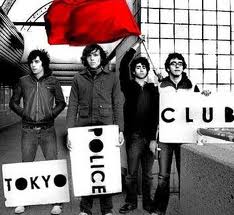
SOUNDTRACK: TOKYO POLICE CLUB-“Bambi” (2010).

I loved the first couple of Tokyo Police Club albums, but I missed this one when it came out.  My friend Al said it was one of his favorite albums of the year and that this song was one of his favorite songs.

I was disconcerted when I started listening to this because TPC is all about short, heavy, punk blasts of music.  And this song starts with…keyboards.

But it’s clear that this is still TPC, just with new bits and pieces added.  The keyboards are strangely out of pitch–they sound off somehow–and they add these bizarre little accents to this super catchy song.  The aggressive punk guitars are gone, but the attitude remains and this is a fantastic tune. One that I’ll listen to a lot more.

[READ: December 8, 2010] “Emptying the Skies”

I didn’t think it would happen, but I reached my Franzen saturation point with this article.  This is his third article about the disappearance of birds.  Originally, these articles came several years apart, so they wouldn’t seem so overwhelming.  But reading them all within a few days of each other, I’ve about had it with the doom and gloom.

These articles are devoid of Franzen’s usually charm and wit.  Obviously, a story about the disappearance of the earth’s birds should not have charm and wit, so he did his job well.  But man, I’m overwhelmed by the devastation of Europe’s migration paths.

The essay looks at three Mediterranean countries and their (reprehensible) attitudes towards birds: Cyprus, Malta and Italy. (more…)

Read Full Post »

SOUNDTRACK:BELLE AND SEBASTIAN-Live in Glasgow, TODAY! December 21 at 4PM eastern: NPR simulcast (2010).

It’s very rare that I have news before it happens, especially on this blog. But I do. Today at 4PM Eastern time, NPR is simulcasting Belle and Sebastian’s live show from Glasgow.

I don’t know if it will be downloadable (I do know that I am at work…boo!).  But I have to assume it will be pretty great.

Get details here.

[READ: December 6, 2010] “The Way of the Puffin”

After a few years away from lengthy New Yorker articles, Franzen returns with this 13 page (!) article about China.  The last article that we saw from Franzen was about his birding passion.  That passion has not subsided at all, and his co-passion of environmentalism is what sends him across the globe to the Yangtze Delta.

Franzen receives a Puffin-shaped golf club head cover, which he finds quite adorable.  But when he sees that it’s made in China, he wonders about the environmental impact of this adorable item.  He calls the company that makes the puffins (Daphne’s Headcovers), and is told that they use environmentally conscientious Chinese labor.  She also tells a (heartwarming) story about karma and how a good deed will get repaid manifold.  She tells Franzen about the workers in China and invites him to go check them out.  This leads to Franzen’s most “reporter”-like piece, and probably his least personal.

At first I wasn’t that interested in the piece.  I feared it was going to be a long slog through environmental degradation and depression.  And while it was that, Franzen also humanizes the story through the efforts of that rarest of birds: the Chinese environmentalist. (more…)

Read Full Post »

« Newer Posts - Older Posts »