Feeds:
Posts
Comments

Archive for the ‘19th Century’ Category

bm-cover-sm-225x300SOUNDTRACK: ERIC CHENAUX-Dull Lights [CST043] (2006).

dullI’ve talked about other Eric Chenaux discs before, and this one is similar to those–very mellow with Chenaux’s gentle voice running through some melodies.  The instruments include electric guitar, 12 string banjo, lap steel guitar, harmonica, electric banjo, portable sample keyboard and drums.

It’s never always clear to me what he’s signing about because his words are stretched out quite long and I’m often very distracted by the music that is accompanying the songs.

The first song “Skullsplitter” is in no way what you might be expecting from a song with that title.  There are cymbals, but no real drums, there’s a scratchy sound like a violin (although none are listed in the credits so perhaps it is samples) and what sounds like randomly plucked notes on a muted banjo.   The martial drums on track 2, “Worm and Gear” really help to coalesce the elements of this song  so you can really appreciate what Chenaux is doing here.  “I Can See It Now” has a woozy almost drunken feeling.  Chenaux has such a pretty voice that you want to lean in but the music seems so unusual.

Later in the disc, “Memories Are No Treasure” is catchy with a nice vocal melody, showing that Chenaux can write a more conventional song.  “White Dwarf White Sea” has a banjo line that has always reminded me of lines from “God Bless America”–in the middle of the riff, the banjo seems to play “from the mountains to the prairie.”   “Ronnie-May” has a very catchy county melody.  A pretty wild (genuinely wild) guitar solo, breathes crazy life into the record.  “However Wildly We Dream” concludes the record with that same kind of drunken feel (the drums are just insane).

I definitely didn’t enjoy this one as much as his other discs

[READ: April 7, 2014] Balfour and Meriwether in The Vampire of Kabul

This is a short story that I discovered because I enjoyed the (written later but not impacting this story in any way) novella that came out this year.

Abraham has written three stories about these two turn of the 20th century “detectives.”  They are like a supernatural Holmes & Watson (with a tad more violence).  In this story, which, again, is completely independent of the others, Meriwether & Balfour are sitting at home on a December night in 188- bored out of their minds.

Just as Meriwether says he wishes that something would break their malaise a ninja comes crashing through their giant window.  In a trice she has a gun at Balfour’s head. Meriwether is helpless to assist.  But they both recognize who it is almost immediately–Maria Feodorovan, the czarina of Russia and sworn enemy of Meriwether & Balfour.  As the dust clears, we learn what Maria is here for–she is daring to ask for help from our duo.

It appears that the Czar has gone mad.  But not from natural causes–someone or something attacked him.  There was “an ectoplasmic darkness” in the corners of the room and while he has recovered somewhat, it seems that his mind is no longer his own.  And, she explains based on overheard knowledge that the Queen of England is next.  As she says this, the police rush in to say that The Queen has been attacked. (more…)

Read Full Post »

momentSOUNDTRACK: NICK BUZZ-Circo (1996).

nickbuzzNick Buzz is a side project of Rheostatics singer/lead guitarist Martin Tielli.  This album was reissued in 2002, when I bought it  But it came out in 1996, right around the time of the concerts I’ve been posting about.  Martin says that this album is pure pop, and that he is genuinely surprised that people don’t see this.  Of course, when your album has screeching monkeys, cars honking and circus music, pop is not the first thing that comes to mind.  There are certainly pretty songs on here, but it is an album that resists easy entrance.  There are short manic pieces, slow, languorous, almost lounge music pieces, and an improved cover of Joni Mitchell’s “River.” And then there’s the instrumentation: piano, violin, guitar, voice (no drums, although there is percussion on some tracks) and other weird sound effects.

“Step Inside” opens the disc.  It seems like a normal, mellow song (with slightly falsettoed vocals).  But 34 seconds in the circus music starts—a deviant and unsettling circus that pushes its way into the song briefly then vacating and allowing the pretty melody to return.  It’s like a mild form of Mr Bungle (with more actual circus).  It’s unsettling at first but then strangely catchy after a few listens.  There is fanfare as the song ends, interrupted by the sound of a tape speeding up (or going backwards) until song two bursts in.

“That’s What You et for having Fun” is less than three minutes and while weird, it is certainly accessible and funny.  The guitar sounds like he is slapping the strings rather than strumming them.  The refrain of “there’s a monkey in my underwear” gives a sense of the absurdity (especially when the President of Canada (sic) says he has one too).  “Just Because” mellows things out a lot—simple guitar with a kind of lullaby feel (it’s a bout wishing on stars).  It’s so slow after the craziness of the first two songs.  After  3 minutes of a lounge type song, it ends with a distant radio sound of an even more loungey song which melds into the live version of “River.”

The mellow “River” is followed by a raucous bass clarinet solo and wild guitar solo that is interrupted by the long (nearly 6 minutes) “Sane, So Sane.”  This is the most conventional song on the record—a simple piano melody with repeated lyrics (conventional aside from the weird distant music in the background of course).  Although it does gone on a bit long.  “A Hymn to the Situation” is an eerie two-minute wobbly song.

“Fornica Tango” is indeed a tango presumably sung in Italian. This song features a crying baby, an interesting sounding “Italian” chorus and the screeching monkey at the end.  “Love Streams” is a pretty, slow ballad.  “Aliens Break a Heart” is another pretty song.  Although this is the song that ends with traffic sounds.  “The Italian Singer/Just Because I’m Nick the Buzz” has a kind of Kurt Weill atmosphere to it with spoken words and falsettos.

It took me several listens before I could really find purchase with these songs.  I find that I really enjoy most of them now–some of those slow ones are a little too meandering for my liking.  But it seems like a fun outlet for Tielli’s songcraft.

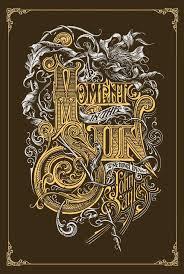
[READ: October & November 2013] A Moment in the Sun

I read this book last year…finished it just before Thanksgiving, in fact (I was proud of my pacing).  But it was so huge that I didn’t want to write about it until I had a good amount of time.  And now here it is four months later and I probably have forgotten more details than I should have and the post will be nowhere near as in depth as I was saving time for in the first place.  Bah.

When people see this book, they say, “That’s a big book.”  And it is a big book.  It’s 955 pages (and they are thick pages, so the book itself is nearly three inches thick–see the bottom of this post for an “actual size” photo); it’s got three “books” and dozens of characters whose stories we read about in full.  It is about the United States, racism, The Gold Rush, the assassination of a President, the Spanish American War, a World’s Fair and even the exploration of moving pictures.  This is a fairly comprehensive look at the Unites States from the 1890s to the early 1900s.  And, man was it good.

John Sayles is known more for his movies than his books (18 films directed, nearly as many different ones written and only 4 novels), but the cinematic quality that is clearly in his blood comes through in this book as well. (more…)

Read Full Post »

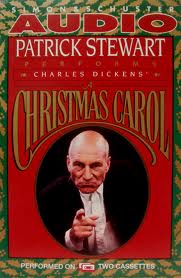
[LISTENED TO: December 29, 2013] A Christmas Carol

patAfter enjoying the play of A Christmas Carol, we decided that since we were on a longish trip for Christmas, that we’d listen to the audiobook and see what was different.  The kids were certainly less engaged than a more kid-friendly book, and that’s understandable—the language is pretty opaque from time to time.  But I was pleased at how they were able to tell where we were in the story (as compared to the place) most of the time.

I felt that the play was different, so i was listening for them.  I don’t know anything about the adaptor of the play and his choices to change things—I don’t even know if the version we saw is a standardized version of the play (I feel like next year we should see it somewhere else for comparison).  But there were more than a few things that were changed. (more…)

Read Full Post »

[ATTENDED: December 20, 2013] A Christmas Carol

headerI had never seen A Christmas Carol performed.  I was, of course, familiar with the story–from the original (the Patrick Stewart audiobook is amazing) and from the many, many versions of it that have been performed in cartoon and live action formats.

We took the kids as this is a holiday classic and we thought it would be fun for all of us.  And we were right.  Except–this version is at times quite scary and (as my son pointed out) quite loud.  I didn’t find it terribly loud, although the scary bits were considerably louder than other bits.  And yes, the ghosts were certainly scary.  (I had actually warned him that the ghost of Christmas Future would be very scary, but it proved to not be the case, although it was really frikkin cool).

And I must say I was charmed immediately–as soon as the kids ran out on stage in period costume, singing songs and being very Christmassy, I was hooked.  (more…)

Read Full Post »

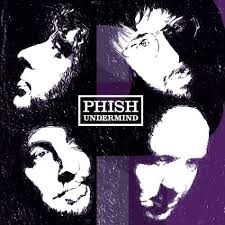
mccarthySOUNDTRACK: PHISH-Undermind (2004).

undermindAs I understand it, Phish fans didn’t like Undermind that much and yet I really liked it and still do.  Indeed, “Undermind” is one of my favorite new Phish songs, it’s clever and boppy and just really catchy.  The album has very Beatles vibe to it—a kind of echoey feel on all the songs.  And I have recently read that people interpret the cover design to be a nod to Let It Be (there are other connections made but I’m not going to go too deeply into that).

“Scents and Subtle Sounds” opens the album.  This is a brief intro–the full songs, which sounds different appears later on the disc (it’s 97 second here)).  It leads into “Undermind” which has a loose, slightly funky sound—one of their more fun songs on recent albums.  The album version has some big fat organ sounds on it which make it even cooler.

“The Connection” is another great poppy song—gorgeous harmonies and wonderful melody, and indeed it was their first real hit.  “A Song I Heard the Ocean Sing” is another great song, great backing vocals, an excellent melody and great alternating verse vocals from Mike.  It also has a great middle guitar section—it’s long and wild and reminiscent of Jimi Hendrix’ solos.  “Army of One” is sung by Page.  It is a big soaring song and it’s got a very upbeat sound.  “Crowd Control” is a very Beatleseque song.

“Maggie’s Revenge” is a noisy instrumental, with Trey’s guitars making all kind of squealing noise.  It’s weird and quite refreshing from Phish’s more recent fair.  “Nothing” picks up with the open and poppy sounds of earlier records and has more great harmonies.  It seems to fade out in the middle though—a song that could have been longer!  “Two Versions of Me” is another mid tempo song with great harmonies and  great chorus.  “Access Me” is a brief poppy song that feels a bit like filler, although it has a cool and interesting coda.  “Scents and Subtle Sounds” resumes

“Tomorrow’s Song” has a very African feel to it.  It is a simple repetitive rhythm that lasts for about 3 minutes before it fades out just like it faded in.  “Secret Smile” is a very pretty piano ballad.  It’s a little heavy handed with the strings, and at nearly 7 minutes it’s too long (especially the long coda), but the melody is certainly nice.  The album ends with “Grind,” a barbershop quartet track which shows just what kind of great harmonies they cool do.

Although it’s a mature sound, there’s enough weird stuff to let them show their funky side too.  The CD comes with a DVD called “Specimens of Beauty.”

[READ: October 8, 2013] C

I received a prepub version of this book back in 2010.  The cover and title were weird and I thought I’d like to read it.  And it sat on my shelf for two years.

And then Borders closed (bummer, their chai tea was the best!) and I saw a hardcover copy of the book for $1 so I bought it (I’m enough of a geek to want to see how prepubs and final copies are different.  In this case, the books appear identical except that in the last two dozen or so pages, there’s a section with ellipses.  In the prepub, they are single spaced but in the final book they are double spaced which throws off the line spacing.  So by the end of the book, the lines are about three lines different.  Fascinating huh?).

Anyhow, what on earth is a book called C about?

Well, it is a Bildungsroman or coming-of-age story.  By definition these stories focus on the psychological and moral growth of the protagonist from youth to adulthood.  Our protagonist is Serge Carrefax, even though he is not the first person we meet.  That would be a doctor delivering materials to Serge’s father, Mr. Simeon Carrefax.  Mr Carrefax runs a school for the deaf in which he tells children to stop using sign language and to start speaking properly.  And he has had considerable success with the children, each of whom acting in a play every year.  (The book, by the way, is set in the late 1800s).  His mother is a silkworm farmer, and much of their money comes from this job.

But the main person in Serge’s life is his sister Sophie.  Sophie is a deviously clever girl who is alternately mean to Serge (as only older sisters can be) and then encouraging him to play with her.  She is mad for science and is constantly experimenting with her chemistry set (leading to more than one explosion in the house).  The early sections of the book show Sophie and Serge’s education.  And when Sophie goes off to school, Serge is lost, especially when she returns from school but keeps telling him to leave her alone.  And then one day, Serge discovers her dead in her “lab” and experiment in progress. (more…)

Read Full Post »

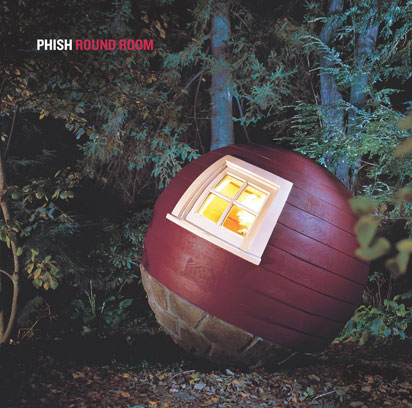
wallsSOUNDTRACK: PHISH-Round Room (2002).

round After Farmhouse, Phish went on a hiatus.  No one knew it would be quite so brief, but there was really a feeling that they were done.

And then they quietly released Round Room in 2002.  And it bursts forth with an 11 minute song.

“Pebbles and Marbles” has an interesting riff—complex and pretty.  And when I listened to it again recently I didn’t really quite recognize it.  But that’s because it’s nearly 12 minutes long and the really catchy part comes later in the song.  At around 5 minutes, the catchy chorus of “pebbles and marbles and things on my mind” announces itself.  And it is a good one.

“Anything but Me” is a pretty, mature song that is slow and piano heavy.  “Round Room” is a boppy little ditty (clearly a song written by Mike).  It is sweet and a little weird.  “Mexican Cousin” sounds a lot like a cover (maybe an old song by The Band) except for the solo which is very Trey.  It’s a funny, silly ode to Tequila.  “Friday” is a slow six minute song with two sections.  The verses are spaced out a bit, delicate riffs that are mostly piano once again.  The middle section is sung by Mike (which makes it more mellow somehow).

“Seven Below” is an 8 minute song.  It has another great riff (and the intro music is cool and bouncey).  When the vocals come in, it’s got gentle harmonies as they croon the sweet song).  Most of the 8 minutes are taking up with a guitar solo.  “Mock Song” is another of Mike’s songs.  This one seems to be a random selection of items sung to a nice melody.  Then when the chorus comes it’s quite nice, how this is a “just a mock song.”  The first verse is sung by Mike, then Trey does a kind of fugue vocal with different words in verse two.

“46 Days” opens with funky cowbells and turns into what seems like a classic rocking folk song—few words but a great classic rock melody (complete with 70s era keyboards).  “All of These Dreams” is a mellow piano piece, another mature song.  “Walls of the Cave” has an interesting piano melody that opens the song. The song is nearly ten minutes long and the middle part has a nice flowing feel to it.  There’s also a few sections that are separated be drum breaks—something that doesn’t often happen in Phish songs.  When the third part opens (to almost exclusively percussion, their vocals all work in a very nice harmony.  It’s a long song but with so many parts it always stays interesting.  “Thunderhead” is another piano-based song with some guitar riffs thrown on top. But it is largely a slow, mellow piece.

“Waves” is an 11 minute song with long instrumental passages.  It also begins with a kind of Santana feel to it, but it is a largely meandering song, with a simple melody that they stretch out for much of the song.  So this album proves to be an interesting mix of long jams and mellow ballady type songs.  It seems like Phish had a big mix of things to let loose.

[READ: November 1, 2013] If Walls Could Talk

This book reminds me of the work of Mary Roach—exploring a topic in great detail and including lots of amusing insights.  The two big differences here are that Worsley is British and that she goes back very far in British history to give us this fascinating information about the development of certain rooms of the house.

Worsley begins with the bedroom.  She looks at the furniture—the history of the bed from lumps with straw to fantastically ornate full poster beds that were made for kings who might never actually use them.

Then she moves on to more personal matters—sex (including deviant sex and venereal disease); breast feeding (for centuries mothers felt they were not equipped to take care of and nurse their own children, hence wet-nurses) and knickers (royalty had an entourage designed specifically to assist with underthings).  Indeed, privacy was an unknown thing in olden times.  Even royalty was expected to receive people in all of the rooms in the house.  Initially the bed chamber was for their most intimate friends, not just for sleeping.

The section on old medicine was also fascinating, they believed that it was vaporous miasma that did you more harm than say, excrement-filled water.

The section on Sleep discusses what was also in a recent article by Gideon Lewis-Kraus—that there were two sleep times at night.  With no electricity there was no artificial light to keep people up late so they would go to sleep early, wake up in the middle of the night (the best time for conception of children) and then sleep again. (more…)

Read Full Post »

sailorSOUNDTRACK: VOIVOD-Angel Rat (1991).

angelSo if you’re Voivod and you have just released a prog rock metal masterpiece, what’s your next step?  Hire Terry Brown, famed producer of the early Rush catalog!  And then try to go somewhat more commercial.  And name your new, commercial album… Angel Rat?

Oh but then—never a good sign—after recording the album, original bassist Blacky left the band.  It’s hard to find out exactly why (personal reasons) but he then went on to form The Holy Body Tattoo Dance Society and to create electroacoustic music.

When this album came out I was very disappointed in it—it is so far from the angular prog rock of Nothingface that I assumed the band had utterly sold out.  I mean, there’s ballad moments on it, there’s hardly any dissonant chords, and most of the songs are simply verse bridge chorus.  The band sounds a lot more commercial (sadly for them, the album tanked).  Listening to it now with fresh ears it actually reminds me a lot of Blue Öyster Cult, especially with Snake’s vocals and the chord structures that Piggy presents.  And since they used Terry Brown  there’s a Rush element as well.  Once I divorce the album from what came before I actually like the album quite a bit.  The songs are remarkably simple (I feel like Piggy could have been playing all the parts himself at the same time), but there’s still enough interesting weirdness that the songs don’t sound boring.  And once you get used to the overproduction and the fact that Snake can sing, there’s some really good stuff here.  Conventional but good.

It starts out pretty heavy with a chugging guitar but soon you notice that Snake is actually singing…nicely.  His voice sounds polished and good.  And then you notice that the guitars are fairly conventional—there’s almost no dissonance. True it is still heavy metal and there’s some slightly obscure chords, but for the most part it’s not all that weird.  Even the guitar solo is a fairly conventional speedy solo. And when the chorus comes in it’s actually quite pretty.  Speaking of pretty, the band photo is one of the more glammed up moments in Voivod’s career and, without being unfair, they are not a terribly pretty band, so this is kind of a funny picture.

“Clouds in My House” is also quite a pretty song, although admittedly the verses are a little dark (with that squeaking guitar solo sound that was popular around that time in heavy metal).  But the chorus is downright upbeat.  There’s a cool section in the middle with a noisy (but very simple) bass popping and a guitar solo over the top of it—it reminds me a lot of Rush in sound).  “The Prow” is the catchiest thing that Voivod has ever done—great sing-along verses and a big chorus.  “Best Regards” has more BÖC simiarlies—the chorus in particular has a very BÖC structure.  There’s also a some great bass on it.  Again, not the complicated bass of previous album, but a great rumbling sound that works very well as a riff while Piggy solos.  “Twin Dummy” is another fast song. This one features some of the stranger lyrics on the album.  Away says that he backed off on some of the concepts for this album and let Snake so his own thing.  So this song seems to be about ventriloquist dummies with the strange opening lyric “Dummy says…”  But the music is fast and furious here—some weird chords and really fast bass.  There’s also some keyboards on this track (pipe organ type sounds) that reminds me of Rush from around this period.

Title track “Angel Rat” sees Snake crooning over a very simple guitar ballad intro.  It’s almost unthinkable.  And yet the band keeps it interesting—especially Blacky’s bass.  Again, I don’t know why he left, but his bass is featured nicely on this album anyhow.  Blacky opens “Golem” with a powerful (but again simple) bass.  There’s an occasional funky note, but it’s a very staccato song. The drums have a strangely pop quality (the way he fills in the gaps).  It’s a little unsettling how obvious and catchy it is.  And even more unsettling is the solo—which has a very jazz feel.  I can’t even really tell what’s going on—is that Piggy or a keyboard?  “The Outcast” has probably the most conventional early 90s metal sound (except…is that a harmonica?)  Snake even does a falsetto at the end of a verse!  Probably the biggest surprise is that the final lines are “everything’s gonna work out.”

“Nuage Fractal” at least has a very Voivod title.  And the chorus sounds a lot like recent Voivod (except for the solo section).  The biggest surprise has to be “Freedoom” which opens with a very pretty guitar ballad sequence.  Something that early Voivod would have stomped all over.  Snake is whisper-singing and Piggy is playing gently for two whole minutes.  Interestingly, once the full band kicks in for the last two minutes, it is one of the heaviest sections on the album.  So even when they’re being conventional, they can’t do it for too long.  The bass in particular sounds very Geddy Lee to me on this track.  The final song “None of the Above” Is another political song—this one about global destruction.  The music is surprisingly upbeat for such a topic, but Blacky’s bass is wonderfully deep and rumbling here.

So yes, ever the chameleons, Voivod have made an album that could have sold a lot of copies–except that they’re a little too weird to do so.  But it was a good experiment and resulted in some great songs.

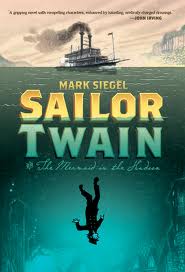
[READ: August 15, 2013] Sailor Twain

Sarah got me this book for Christmas.  I didn’t read it until right now because it’s fun to stretch out Christmas gifts as long as possible.

This book is a lengthy graphic novel from our friends at First Second.  It is complicated and a little confusing (the whole story is a flashback that is sort of explained in the very beginning).  It’s also very beautiful.

Except, I might say, for the main character. The background images and the interstitial pages are really beautiful and detailed.  But the main character is very cartoony–very two-dimensional with a triangle nose and big circular cartoon eyes.  I found this very disconcerting for about a third of the book.  Siegel does manage to make him very expressive and uses the big circle eyes to a good drawing benefit through, but the character just looks so–surprised?–all the time that it was hard to not notice him.  Of course later on his big eyes come in handy during the darker sequences, but I still found it an odd choice.  So too were the really cartoony choices of some of the other main characters–very big, comical noses or fat round faces.  It certainly made the characters distinctive, but as I said, I was unsettled by it.

As the story opens, Captain Twain sits in a bar and is approached by Miss Camomille.  She asks to speak to him but he says he wants nothing to do with her or his past.  She holds out a necklace and says he can have it if he tells her the story.  He is shocked to see it and reluctantly agrees. (more…)

Read Full Post »
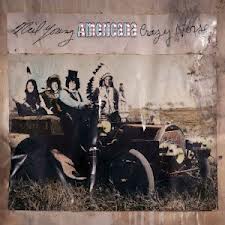
2013-01SOUNDTRACK: NEIL YOUNG WITH CRAZY HORSE-Americana (2012).

amercancaThe reuniting of Crazy Horse after a time is always cause for excitement.  In this case, they released this strange album, which seems like it should be an EP but is almost an hour long.  It’s basically the band jamming on traditional Americana songs (for the most part).  And it is totally a jam–you can hear them talking about what they just played after a number of tracks.  Critics have complained that Young hasn’t really been writing any thing new in the last few years, and this would bear that out to a certain extent.  But here’s the thing–the music is really good (for the most part), but the lyrics–the traditional lyrics–are sometimes really off-putting, almost feeling like a joke.

The one real standout is Clementine  which the band totally disassembles and make into a sloppy rocker that bears almost no resemblance to the original.  Young even plays around with lyrics, making it a much different story–with a dark, twisted ending.  There’s something a little fun about “Oh Susannah” ( I like the b-a-n-j-o part) although it sounds a little half baked.  “Travel On” also feels less successful.  I think the problem with these songs is that the fast pace doesn’t allow for the band to stretch out much–Crazy Horse works best with slow big open (sloppy) chords rather than these martial type beats.

“Tom Dula” (which is “Tom Dooley”) is almost 9 minutes  long.  This song feel like a murder ballad-a slow meandering song that rather works.  The same is true for “Gallows Pole” which has the same feel.  For me the least successful is “Get a Job,” a song I dislike at the best of times, but this is just a goofy cover.

“Jesus’ Chariot” successfully straddles the line of changing the original (“She’ll be Comin’ Round the Mountain”) with a cool minor key workout and noisy solo.  The singing is so different from the original that it doesn’t really sound like the traditional song.  They give “This Land is Your Land” a kind of country feel.  It works pretty well.  As does “Wayfarin’ Stranger” which is a very low key affair.  The album ends strangely with “God Save the Queen” which he slides into “My Country Tis of Thee.”

So this album is kind of a mess.  It probably would have made a great EP.  But it also works as a fun document of what the guys were up to before they released their “proper” album Psychedelic Pill a little later in the year.  It’s not essential by any means, but it’s an interesting item.  Interestingly, the liner notes explain the lyrical changes are actually the original lyrics–lyrics that have been lost or removed over the years.  I rather like that.

[READ: January 5, 2013] “Seal”

Kuitenbrouwer also had a story in the January/February Walrus last year.  Hmm.  But Kuitenbrouwer writes about such diverse subjects that, aside from a certain harshness in her characters, it wouldn’t be obvious that it was the same author.

I love that in this story the narrator distances himself from the story before even beginning it: “I never had another story but this one, and even it is not mine.”

And what we get is the story of a fishmonger.  He and his wife live above the fish store.  The narrator, a young boy named Ivan, lives above them on the third floor.  He is strangely obsessive about the fishmonger and his wife. He plays fishmonger every day with his parents.  And he pays a girl to go in and ask the man a question (do you like fish?).  The answer is yes and that he eats it for every meal.

The fishmonger, Kieran, is also the fisherman, walking out the back of his shop and into the sea to fish–he even gets special orders right from the sea if he doesn’t have any in the shop.  Kieran is a loud but jolly man. He knows that Ivan paid the girl to ask the question and he teases him about it.  He tells Ivan it’s cheaper to just ask him directly. (more…)

Read Full Post »

[WATCHED: Summer 2012] Great Expectations

300px-Great_expectations_titlecardSometime after I read Great Expectations, PBS aired this BBC production.  I don’t know if it’s a movie or a mini series and I don;t really care, so I’m calling it a movie.  So I thought I’ll just wait until after I watch the movie and then write my post about both.  And now here were are, several months later.  Sigh.

Anyhow, this movie version of the book was outstanding.  One of the main criticisms leveled at movie versions of books is that your own imagination makes things far “more” than any film could.  For instance  monsters in your head are far more scary than any special effects could make them.  But the opposite was true here.  I never would have guessed that the people in the book could be so horrible, that the squalor could be so extreme and that the atmosphere could be so stifling–I assume years of good breeding made me forget just how bad things used to be

Part of the fault also belongs to Dickens–he was writing for a contemporary audience–for people who didn’t need to be told, for instance, how old Pip was (they would just know) or how old he would need to be to receive his inheritance.  The story was serialized in a magazine, so it was very current.  And so those of us with a great remove from daily life in 1850 don’t always get the details we need.  This is not to say that Dickens himself was not a master writer or an evocative picture creator.  He often includes lots of details they are very helpful, but some things are left out.  So the movie filled in gaps and details that I didn’t know, and they brought the book to life in a way that reading it alone didn’t.  Again, no disrespect to the book–it’s the same way that seeing Shakespeare is better than reading him).   (more…)

Read Full Post »

greatSOUNDTRACK: PHINEAS AND FERB-“We Wish You a Merry Christmas” (2010).

pfholidayThis song takes the music of We Wish You a Merry Christmas and modifies it to fit the show.  Several characters get a verse, with my favorite coming from Isabella:

Oh, come tell me what’cha doin’ / All my relatives just flew in /From Mexico and Jerusalem / For the holidays
Both Christmas trees and menorahs / It can be confusing for us  / When we break into a chorus / Of “olé” (¡Olé!) and “oy vey” (¡Oy vey!)

Although I usually find Doofensmirtz’ lines to be the best, I don’t care for his verse–it is forced and not terribly funny.  But that is more than made up for with the end as it revisited the beloved figgy pudding:

All: We wish your every endeavor
Makes this the best Christmas ever
And we’re all so glad that we will never
Mention figgy pudding…

Dr. DoofenshmirtzOh, great. Well now we’ve mentioned it.
Major MonogramYou know, no one would have noticed if you’d have just kept your mouth shut.

We recently added the entire Phineas and Ferb Holiday Favorites album to our Christmas music collection.  Thanks, Swampy.

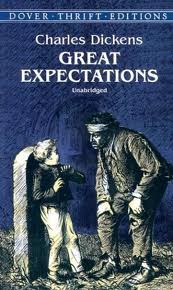
[READ: end of 2011-beginning of 2012] Great Expectations

I started this book over a year ago–Christmastime 2011 and I finished it in January of this year.  And I imagined writing a grand, eloquent post about the book, so I bided my time, and have now delayed for almost a year and have basically forgotten everything significant I thought about saying about it.  Never put anything off in the hopes that genius will strike.

So I read this book because my former coworker Stephanie talked about how much she liked it.  I had never read any Dickens before (possibly Tale of Two Cities but that would have been in High School and doesn’t count).  And Nick Hornby raves about Dickens in the pages of The Believer, so it seemed like a time to try him out.  Back when I was in college I joined a book club and received The Oxford Illustrated Dickens–30-some volumes of all of Dickens’ work in beautiful hardcover editions.  And I have lugged them with me to all my homes.  And now I have finally read one.

I was as surprised by how surprised I was by the story.  I knew the very basic outline and character names (thanks South Park), and from what I knew of Dickens, I thought I had the whole story figured out pretty early on.  But no, there was more afoot than I would have ever guessed.

So, the story: Phillip ‘Pip’ Pirrip is a blaksmith’s apprentice.  He was orphaned as a young babe and is currently living with his (terribly mean) older sister and her husband, a kindly blacksmith named Joe Gargery.  One dark and spooky night (as only existed in 19th century England), Pip is out in the swampy foggy graveyard visiting his parents’ graves when he hears a fight.  Two convicts have escaped from a prison ship and are fighting amidst the marshes.  The “winner,” spies Pip and threatens him–unless he brings a nail file and food, he will kill the young boy.  Pip is freaked and runs home to steal one of Joe’s files and a piece of pie that his sister has baked.  The next day the police capture the criminals, and the one whom Pip helped gives Pip a long look and says that he stole the pie, which lets Pip off the hook from his sister’s wrath.

Meanwhile, up the road a piece, there’s an old dilapidated house with an old dilapidated woman living in it.  She is Miss Havisham.  The delightful thing about Dickens is that Miss Havisham is crazily over the top and yet, because of the time it was written, she is totally believable.  (She may indeed have been based on someone Dickens knew).  No one like Miss Havisham could exist now–she would be institutionalized in a heartbeat, but back then, this woman could be head of a household and have servants and simply be spoken of as a bit odd.  For odd she is. (more…)

Read Full Post »

« Newer Posts - Older Posts »