 SOUNDTRACK: CIGARETTES AFTER SEX-Tiny Desk Concert #684 (December 13, 2017).
 I only know of Cigarettes After Sex from when NPR played a song of theirs and Bob asked us to guess whether the singer was a man or a woman.
Greg Gonzalez has one of those wonderful voices that is deep and husky and sounds feminine (although his speaking voice is very deep).
This Tiny Desk Concert is very quiet (like The XX). It is just Gonzalez on heavily echoed guitar and vocals and his unmoving, emotion-free longtime bandmate Phillip Tubbs on spare keyboards.
Although there’s not a lot to these songs, the melodies are truly terrific.
The three songs sound very similar–unmistakably them.
“K.,” the opening track to this Tiny Desk Concert – and the opening cut to the band’s eight year-long awaited debut album – is especially memorable. The lyrics are simple and easy to remember: “Kristen, come right back/I’ve been waiting for you to slip back in bed/When you light the candle.”
Amazingly, for almost half of each song, there are no keyboards, just the guitar. So that extra, gentle wash of music sounds huge. “Apocalypse” has the lovely swooning chorus of “you’ve been locked in here forever and you just can’t say goodbye” and “Nothing’s Gonna Hurt You Baby” follows that same pretty structure (although it’s my least favorite of the three). With the minimalism:
each note and each word seems to count for more … and the office environment of the Tiny Desk Concert [may work better] than in a club, where just the chatter of a crowd can drown out this gentle music.
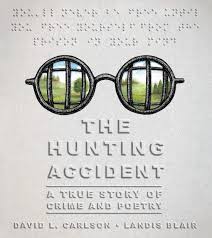
[READ: November 1, 2017] The Hunting Accident
I loved this book. Everything about it was utterly fantastic. The story, the way it was told, and the amazing drawings of Landis Blair
The book opens on a snowy day in Chicago in 1959. A boy whose mother has just died has moved from sunny California to miserable Chicago to live with his blind father, Matt. The boy had lived with his mother since he was four (his mother’s mother thought that his father was a trouble and that they needed to get away from him). So he barely knew his father. And now it was time to find out everything about the man. Like, first off, how he became blind.
The father told the boy all about the hunting accident. He and his friends were screwing around, playing by the train tracks. They were having fun scaring each other. All the kids were afraid of real life bogeymen Leopold & Loeb local murderers. The boys even believed they found the pipe in which Leopold & Loeb stuffed their victim.
There’s even little reminder of the crime:
In 1924, two wealthy educated men kidnapped and brutally murdered Bobby Franks, a 14-year-old neighbor…just for the thrill of it… to see if they could commit “the perfect crime.”
Anyhow, the boys had a shotgun and heard a deer. When one of those boys shot at the deer he missed and his Charlie’s father right in the face.
Soon Charlie must learn what it is like to live with a blind man–how everything must be in the exact same place.
Charlie’s father writes all the time (on a braille machine). He writes about morality and poetry. He quotes Dante. And soon, Charlie’s dad was having Charlie help with the writing–by proofing and checking things (Charlie learned a lot at the same time).
Charlie’s grandmother also said that Chicago was dangerous, but not for Charlie. He got along fine. He even made friends with Steve Garza–the coolest kid in the neighborhood. Garza was so cool he bummed cigarettes off of Charlie (from his dad–even though Matt, counted them and got mad about it).
Charlie also began getting involved in extracurricular activities–he loved tap dancing and tried the cello–two things his father appreciated. But soon Steve and his buddy started pressuring Charlie. He “left” his tap shoes at the park, he stopped playing cello and he got involved in some ugly things.
Garza wanted to join the JPs–a local mob related gang. But he was too young so he started the Junior JPs and soon enough that involved theft. And since they were dumb, they were easily caught.
And that’s when the truth comes out.
I was already hooked into the story and then I was blown away. Charlie’s dad did not lose his sight in a hunting accident. Charlie is furious that his dad lied to him.
Garza convinces Charlie to head for Canada to avoid the cops. (The third guy has already gotten there and is at a free-love commune or something). Charlie is prepared to drive them both (he’s the one with the car after all). And then his dad tells him the whole truth, which gets Charlie to pause.
The rest of the book cover’s Matt’s story.
He was poor in 193os Chicago and got mixed up with the wrong crowd. His did go blind from a gun shot, but it was a very different setting–and it led to prison.
On the day he got to prison, the same prison that Leopold and Loeb were in, Richard Loeb was killed in the shower. This left Leopold alone.
Charlie asks if he met Leopold. And Charlie’s dad says that Nathan Leopold is the reason for his divorce. What?
Turns out hat not only did Charlie’s dad know Nathan Leopold. He was Leopold’s cell mate. Since Loeb was killed there was concern that Leopold might be next. And since Matt was blind, they were put together under watch.
After Matt was out of prison, Leopold sent him a letter (in braille) which the grandmother intercepted. Matt had never told anyone he was in jail, and that made Matt a Liar.
Matt was miserable in jail. He couldn’t see, his father was disappointed in him and he had nothing to live for. He just wanted to die, but that was pretty hard to do under constant supervision. We see daily life for a blind man in jail–food stolen all the time and knocking his cellmate’s things over.
Leopold was angry and bitter and wanted nothing to do with a blind man. But soon, Leopold began talking to Matt about the life of the mind–something he realized that Matt lived all the time. Because he couldn’t see everything was in his mind. Leopold used to hold educational lessons in the library at the jail. He also showed Matt how to make a Glim Box (a way to use a spinning coin to light a fire to light cigarettes).
Matt tells Leopold that he has no family. Meanwhile, Leopold’s dad visits every two weeks (the visits are awkward and uncomfortable but are a way for Leopold to get things from the outside).
Soon, Leopold is trying to convince Matt to learn Braille. Why? well, this gave opportunity for Leopold to learn it to and thereafter he could read after lights out. (Leopold was a master of many languages and picked up braille easily).
And that’s when Leopold persuaded Matt to read Dante’s Inferno.
The story of Matt’s imprisonment jumps back to the present where Charlie is still annoyed with his father, but is really interested in the story. Especially when he leans that his father almost committed suicide there.
I loved the philosophical ideas in the story–they way the book interprets both Plato and Dante for the everyman . I loved that Matt’s story runs throughout the book and I loved the whole idea of a blind man helping one of the most notorious criminals of he 20th century.
This story is thought-provoking and exciting at the same time.
The only thing that I feel was left out–did Charlie wind up going to jail or not? It’s never addressed.
The end of the story and that final two-page spread are just breathtaking.
I also love that David L. Carlson more or less found out about this amazing true story by accident.
Read Full Post »
 SOUNDTRACK: DARLINGSIDE-Whippoorwill EP (2016).















 I Just Read About That...