Feeds:
Posts
Comments

Archive for 2012

SOUNDTRACK: NADA SURF-The Stars Are Indifferent to Astronomy (2012).

Nada Surf continues to put out poppy guitar rock.  I tend to link them with Guster, in that they write really catchy pop songs about unexpected things.  The songs are usually fast, but they also writes some slower songs too.  They would make a good double bill.

This album with the wonderful title is 38 minutes long, a perfect light summer album.  If you don’t get “Waiting for Something” (which I agree is repeated waaay too often in the chorus) stuck in your head, then you haven’t been listening to this record.

All ten songs feature bouncy guitars (except “When I Was Young” which opens as a slow ballad), although even this song, after about 2 minutes, calls forth loud electric guitars.  There are some elements that show the band “maturing”–strings on “When I Was Young” horns on “Let the Fight Do the Fighting.”  But one of the songs references Gilligan’s Island, so they’re not maturing too much.

And some of the songs sound like throwbacks to other eras too, the 60s guitar intro of “Jules and Jim,” the R.E.M. ish intro of “Waiting for Something.”  It’s a great album, fun, catchy and perfect for driving.

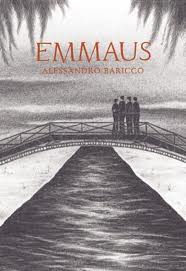
[READ: July 24, 2012] Emmaus

I had no idea who Alessandro Baricco was when I got this book as part of my Book of the Month deal with McSweeney’s.  But I’ve never been disappointed by one of their new books before, so it was worth checking out.

The book is short–134 pages–and is novella length, which is the perfect length for this story.  [I had just read about Jim Harrison and his novellas, and I believe that there needs to be more novellas published].  This book was originally written in Italian and was translated by Ann Goldstein.

There is a prologue which is completely exciting and absolutely wonderful.  It’s only a page and a half, but it is intriguing, funny, deep and, most of all, really surprising.

The opening of the book doesn’t quite match the excitement of the prologue, but that’s because this novella has two aspects–deep, thoughtful introspection and base, animal instinct.  And Baricco/Goldstein does an excellent job keeping the flow and continuity going between these two very different writing extremes.

The book reminds me of Jeffrey Eugenides’ The Virgin Suicides for two reasons.  One: it is written about a group of boys and is written in the second person plural (at least the beginning is) and two: they are all watching a girl who is beyond their ken–someone of their world but not, someone who is en route to hurt herself.  And there’s nothing they can do about it.

But this book is entirely its own.  There are four boys who make up the initial “we” (and when it diverges from plural to singular, you really feel the loss of the other boys).  And so the book starts: “We’re all sixteen or seventeen years old, but we aren’t really aware of it.”  The four boys are good boys–Catholic (and believers, at that), who play in the church band, who volunteer removing catheters at the poor person’s hospital and who plan to not have sex before marriage (heavy petting is okay but it never goes too far).  The four boys are: the narrator, whose name is never given I don’t think; Luca, whose father is rumored to be suicidal; Bobby, the most outgoing of the bunch and The Saint, a very pious young man who has designed for the priesthood and who is not afraid to be seen as more pious than you. (more…)

Read Full Post »

SOUNDTRACK: ST. VINCENT-Actor (2009).

I had seen St Vincent on Austin City Limits, and her juxtaposition of waif-singer with noise mongering guitar player blew me away.  So I was a little disappointed when this album opened up with this gentle, practically 1950s sounding vocal and string line in “The Strangers.”  It takes two and a half minutes, but the noise eventually comes and it totally changes the texture of the song.  Of course now, “make the black hole blacker” is a fun thing to sing along with (and the lyrics in general are pretty great).  “Save Me from What I Want” is another quiet song with a catchy chorus.  “The Neighbors” has a great melody with interesting strings over the top of it.  “Actor Out of Work” brings in some stranger sounds to the album.

There’s something interesting about the songs on this album, like the way “Black Rainbow” has these sweet string sections but for the end half builds a crescendo of tension. I also love that a seemingly delicate song can be called “Laughing with a Mouth of Blood.”  Perhaps the strangest song on the disc is “Marrow” which has a strange horn section and the chorus: “H.  E.  L.  P.  Help Me Help Me.”  “The Bed,” “The Party” and “Just the Same But Brand New” continue in this vein–like a Disney princess song with a horrible threat underneath: “Don’t Mooooove, Don’t Screeeam.”  But that sense of princess who are slightly askew really resonates on this record.  It’s not as willfully dissonant as her first record, but lyrically it’s a knife covered in cotton candy, it’s still a gem.

[READ: March 20, 2012] McSweeney’s #39

One of the bad things about having a job with actual work is not being able to write complex posts about compilation books.  It’s hard to have your book open while bosses walk by.  So, its been a while since I read this and I’ll do my best to remember it all.  Incidentally, if you’re keeping track I skipped 38, but I’ll get to it.

Issue #39 is a hardcover and a pretty one at that. It has a front cover photo (as well as many interior photos) taken by Tabitha Soren.  Yes, forty-somethings, THAT Tabitha Soren, from MTV who has a new career as a photographer.

This issue continues with the recent return of the Letters column (as the magazine and front matter become more serious the return of the Letters adds an air of silliness). (more…)
Read Full Post »

SOUNDTRACK: MOGWAI-Zidane: A 21st Century Portrait-An Original Soundtrack by Mogwai (2006).

It’s no secret that I love Mogwai.  I like them so much that I even track down soundtracks to obscure films that I’ll never watch.  (Of course, since Mogwai play mostly instrumentals, soundtrack work suits them quite well).

The Zidane of the film is Zinedine Zidane, a French footballer whom many consider to be the greatest ever (don’t yell at me for that, I don’t have an opinion of the man).  I had to look up exactly what the film is about and I have to say I’m intrigued: The film is a documentary focused on Zidane during the Spanish Liga Real Madrid vs. Villarreal CF game on April 23, 2005 at the Santiago Bernabéu Stadium and was filmed in real time using 17 synchronized cameras.  I watched a couple minutes on YouTube, and indeed it is a football match.   How on earth did they decide on that game (in which Zidane is ejected for fighting as the match nears its end).

The music is designed primarily for background and pacing, although there are certainly moments of great melody as well.  There are three songs that are more or less played twice (with different variations): “Terrific Speech 2″ and Terrific Speech” “Half Time and “Time and a Half” are similar piano melodies, and the opener and closer “Black Spider” and “Black Spider 2.”  “Black Spider 2” opens with the same melody as 1, but this song is thirty minutes long.  After a few moments of silence, it tuns into 17 minutes of quiet noise.  The remaining five experiment with distant feedback squalls.  Not loud and crazy, but something that creates a lot of tension, which goes with the end of the film.

Despite the titles, “Wake Up and Go Berserk” and “I Do Have Weapons” are a mellow songs.  They’re very pretty tracks.  Indeed, there’s nothing too wild at all here.  Fans of Mogwai’s wilder music will be a little disappointed.   And indeed, the overall feel is almost kind of sleepy, but it really captures another side of Mogwai, and the music is quite good.

[READ: June 20, 2012] “The Cheater’s Guide to Love”

Not bad… Junot Díaz had a story in the New Yorker just a few weeks ago, and now he’s got another one.

The familiar criticism of Díaz is that he writes the same story over and over (well, the other criticism is that he always writes in Spanish and English, but I think that’s a stupid complaint).  So here’s another story about Yunior and how he cheats on women and is basically a shit-heel.

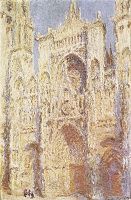
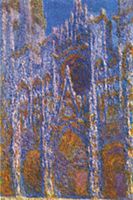
While there is some validity to criticizing an author for retelling the same basic story, it is not unheard of in art.  Monet, for instance painted over 30 paintings of Rouen Cathedral.  And while they are all the same composition, individually they are very different.  Here’s four paintings (not prints a la Andy Warhol):

While I’m not suggesting that Díaz is on par with Monet, I am trying to say that you can work with a similar subject and create very different pieces of art.

So, yes it’s another Yunior story and yes, Yunior has cheated on his girlfriend again.  But this story is constructed differently.  And at this point I’m starting to wonder if maybe there aren’t multiple Yuniors–I’ll even think of them as in alternate realities.  Because Yunior sure has cheated on a lot of women by this time.

It makes him the perfect writer for “The Cheater’s Guide to Love.”

Unlike in the other stories, this one takes place over five years!  In Year 0 you are caught cheating by your girl (the story is set in second person).  She sticks it out with you for a time and then dumps your ass.  I liked how it was revealed just how many women he had cheated in her with over the years that they were together–he really is a shit.

In Year 1, you act like it doesn’t matter, but it does.  And you are crushed.  Your friends try to help out, but how much can they really do?  You think suicidal thoughts and imagine that that will make her forgive you.  It doesn’t.  By year 2, you have met someone.  But you find some bullshit reason (she hasn’t put out yet) and you break it off and go into another spiral.

Year 3 sees you looking after yourself–running and fitness.  In what I think of as a wholly accurate happening, you injure yourself running and are knocked back on your ass for months–momentum and caring are gone.  You look for substitutes but nothing feels as good as running.  So you stop.  And you let yourself go.

What I also liked about this story is that despite this background of the break up, there are other interesting things spiraling around Yunior.   There’s a fascinating look at racism in Boston (perceived or real?); there’s the woman who claims to be the mother of his child, the woman back in the DR who claims to be the mother of his friend Elvis’s son.  Both men act very differently to the news.  Elvis is thrilled to have a son, Yunior is freaked by this woman.  This is probably the first time that I’ve seen Díaz have a woman do behave the way they do in this story.  It’s also interesting to compare Yunior and Elvis by the end of the story.

I also got a kick out of all the women he used to cheat on his girlfriend with star getting married and they all start sending him invitations: “Revenge is living well, without you.”  Year 5 sees a completion of the spiral for all parties.  And a cool resolution to this story.

Much like with the Monet paintings, if  Díaz can keep his Yunior stories interesting (and varied enough), I will keep reading them.

For ease of searching I include: Junot Diaz, Bernabeu

Read Full Post »

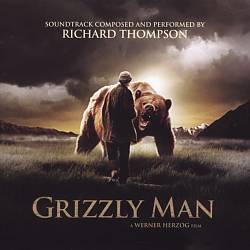
SOUNDTRACK: RICHARD THOMPSON-Grizzly Man Soundtrack (2005).

This is a largely instrumental soundtrack by Richard Thompson.  It features some wonderful guitar work (no surprise there).  There are several slow acoustic numbers (“Tim & the Bears,” “Foxes”–which is in the style of his old traditional folk ballads) there’s also the slow impassioned electric guitar solo (set over a simple beat) of “Main Title.”  “Ghosts in the Maze ” is a dark piece, the exact opposite of “Glencoe” a traditional-sounding song, both of these are under two minutes long.  “Parents” adds a cello, which means a sombre song.  “Twilight Cowboy” is one of the longer pieces, and it really conveys an openness of nature.

“Treadwell No More” is a slow six-minute dirge type song.  “That’s My Story” has spoken dialogue by Treadwell, over a simple unobtrusive guitar.  But as the title of the record says, Music composed and performed by Richard Thompson.  Which means there are other musicians on the soundtrack too.  “Small Racket” is where things start to get noisy and a little uncomfortable.  There’s some squeaks and slashes of sound, but it’s mostly a tense guitar feel.  Then comes the darker, scarier stuff.  “Bear Fight,” is a series of cello noises and swipes.  “Big Racket” is indeed that, with guitar from Henry Kaiser and noises from Jim O’Rourke.  “Corona for Mr Chocolate” is all Jim O’Rourke, it’s also odd noises and moods.  None of these three songs are terribly off-putting but they reflect a very different tone.

The album ends with “Main Title Revisited,” which is what it says and “Coyotes” by Don Edwards which has some coyote yodels.

It’s a good soundtrack, really conveying what the movie is about, and while not essential Richard Thompson, it is still some great guitar work

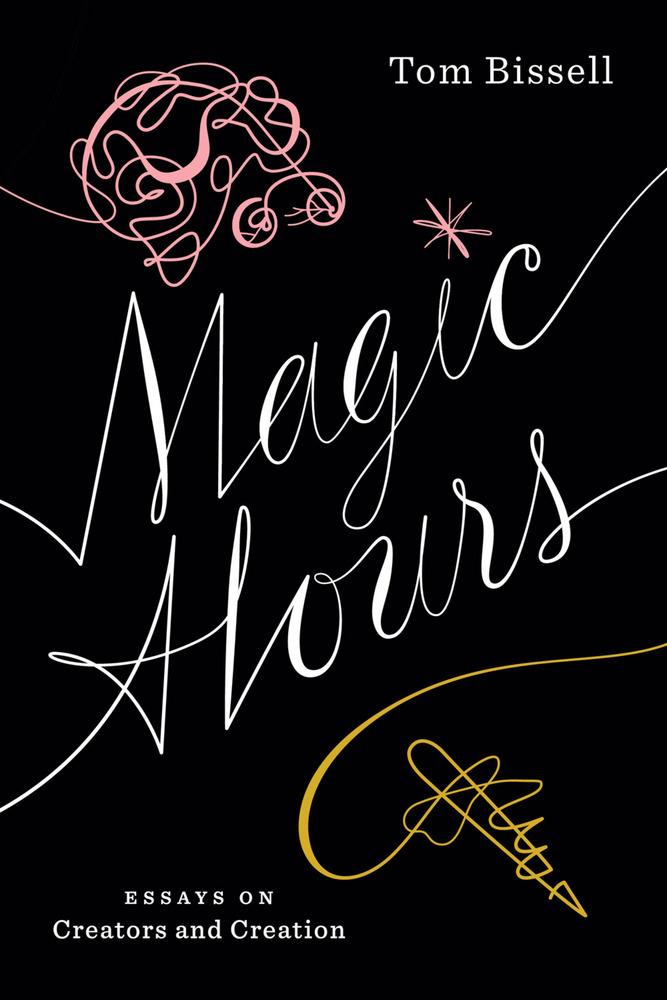
[READ: July 23, 2012] Magic Hours

I thought that I had never heard of Tom Bissell, but I see that I have read three of these articles already (I guess I don’t always pay attention to the author’s name).

This collection of essays comes from the last eleven years (2000-2011).  The articles have appeared in The Believer & The New Yorker (these are the ones I have read) and Boston Review, Harper’s, New York Times Magazine, Virginia Quarterly Review, New York Times Book Review and Outside (which I am starting to think I should really check out more).

Primarily they are articles about writing–he looks at fiction, non-fiction, film or a combination of them.  Bissell is a strong writer and he does not hold back when he sees something he likes or dislikes.  I found his articles (all of which are quite long–about 30 pages each) to be engaging, funny and very persuasive.  I’m really glad I read the book (and was even glad to re-read the articles that I had read before). (more…)

Read Full Post »

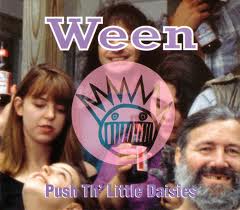
SOUNDTRACK: WEEN-Push th’ Little Daisies (1992).

So Ween broke up back in May (this is the year of seemingly one-hit-wonder bands breaking up after decades of playing).  I have a bunch of Ween’s earlier stuff, but stopped listening after their hits.  I’m told some of their later records are quite good.  This song from the album Pure Guava was my introduction to them, and it is weird and kind of irritating and strangely catchy and perfectly encapsulates Ween.

The melody is simple and poppy, but the vocals are, if not sped up, then crazily falsettoed.  And the repeated refrain of “push the little daisies and make em come up” is, if not annoying, certainly infectious (in many senses of the word).

The other fun thing about Ween is that in addition to pretty much none of their albums sounding alike, pretty much none of their songs sound alike.  So you can’t tell if you’ll like any other Ween songs based on this one.  A nice trick, that.

And if, like me, you haven’t see the video in twenty years, check it out

And there is a tangential tie in to JR with this post, by the way.

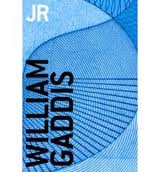
[READ: Week of July 16, 2012] JR Week 5

I realized that, unlike in previously long weekly posts, I haven’t been including tangentially related photos (I rather liked putting them in the Gravity’s Rainbow posts).  I blame it all on my time constraints.  There also aren’t quite as many picture-worthy things in this book.  GR had lots of locations and historical photo-op type things.  JR is more about money and sex, and the internet doesn’t have many pictures of either, right.   So instead, it’s all block text.

When we left off, JR was trying to persuade Bast to help him out some more.  And, holy, he needs Bast to meet Mister Piscator out by the Egyptian stuff in the museum (JR can’t do it himself obviously–I love that he is using a handkerchief on the phone and everyone asks if there’s connection troubles).  Bast barely says anything but JR is on a roll: he got him the briefcase and that alarm clock (which runs backwards) and the business cards (which Simon pointed out I’ve been missing the typo on) and “I’ll call up that Virginia and fix it up where you get her to take telephone calls at the cafet…” (302).  JR is also going on about the kind of massive tax breaks he (and Bast) will be able to declare.  I can’t decide if he’s right or not (or if it simply won’t be relevant for what he has–indeed, a lot of this financial stuff, it seems like JR is more knowledgeable than anyone else because he has actually read the material–something nobody does.  And Bast is a musician, what does he know about money, right?).  Although his ultimate plan (potentially ingenious, but practically preposterous) is that they buy one share of all the big stocks, get their prospectuses and read them all.  And if anyone is doing anything illegal they can file a class action suit like they did with Diamond Cable. (more…)

Read Full Post »

SOUNDTRACK: R.E.M. “Superman” (1986).

Even though R.E.M. is all about Michael Stipe, “Superman” is one of my favorite R.E.M. songs.  I know it’s a cover, and I know the lyrics are kind of dumb, but there’s something about Mills’ singing voice that I love (I often think his backing vocals are the strongest parts of R.E.M. songs).

Stipe didn’t like the song and refused to sing lead.  This gave Mills his debut lead vocal appearance.  You can hear Stipe in the background–he sounds great, too.  A total throwaway song that is awesome.

By the way, the original by The Clique, which I never listened to before, is very strangely clipped in the vocals.  I was sure that the band was not American by the vocal delivery, but apparently they’re from Austin.  Huh.

I know I should have picked Voivod’s cover of “Batman” for this post, but how creepy is that R.E.M. cover?

[READ: July 21, 2012] “The Only Human Superhero”

I have it in my head that I might one day read all of Jonathan Lethem’s works.  Although I’m not all that sure I like him that much. (There’s so many Jonathan’s writing, I can’t keep track of who I like).  He has 18 entries on this blog (although I see that none are for his novels).  Nevertheless, I  must like him pretty well.

Anyhow, this article is a one page thing about Batman The Dark Knight.  This was written before the terrible, horrible, unimaginable tragedy in Colorado, so there is no insensitivity about it. (more…)

Read Full Post »

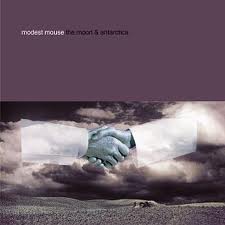
SOUNDTRACK: MODEST MOUSE-“Lives” (2000).

This song (quoted in the story) comes from the first Modest Mouse album that I ever bought, The Moon and Antarctica.  I have very vivid memories of listening to this album on a long dark stretch of road–not a bad image to connect with the album.  This song comes near the end of the album after the stomper “I Came as a Rat” and the slow guitar and slightly ill sounding bendy note really set the unease of the song.  After about 45 seconds the tribal drums kick in and change the pace of the song.  But rather than bursting forth, the song kind of falls back in on itself until what feels like a brand new song comes out of this little cocoon–an upbeat acoustic number with strings that tries to remind you to live before you die.  After a brief flirtation with yet another style, the song returns to whence it started.

It’s representative of Modest Mouse’s quieter side, although it barely showcases the extremes that the band is capable of.

[READ: July 11, 2012] Arach nID

My former co-worker Jay is one of the few people I know who is “writing a book” who has actually written most if not all of said book.  He has been writing a sci-fi opus for a few years now and at last count it eclipsed 600 pages.  I mean, sure, I’m “writing a book” but it’s all in my head.  Anyway, I told him about a short story contest and asked if he had any short stories to submit.  We once had a discussion about how novelists shouldn’t really write short stories if what they wanted to write was a novel, so I didn’t know if he had anything handy.  He told me he had this work partially written and, with a deadline in mind, he polished it up and finished it off.

Because the story is unpublished, I’m not going to give away too many details, as that’s not cool (and because he may always revise it).  But I will talk about the basics of the story because I think it’s pretty interesting. (more…)

Read Full Post »

SOUNDTRACK: CORB LUND-“Dig Gravedigger Dig” (2012).

I’m not what you’d call a country music fan.  There’s a lot of reasons for this.  But most of the reasons have little to do with the music itself–some of which (the faster honkier tonkier stuff) I rather like.  Corb Lund is a Canadian country singer who I’ve heard of but don’t know anything about.

This song is a honky tonking, harmonica stomping, group singing song about digging graves.

This is the kind of country I could get used to. Whoo!

[READ: July 19, 2012] Bake Sale

Why not follow a cookbook with a book about cooking.  Bake Sale is a graphic novel about a cupcake who makes cupcakes.  He is friends with an eggplant and all of the residents of his Brooklyn neighborhood come into buy his wonderful baked goods (a bag of sugar loves his brownies and an egg gets coffee every morning).  Cupcake is also in a band with his friends: bagel on banjo, pear on bass, egg on horn, eggplant on trombone.

(After I read it, Sarah pointed out how odd it is that all of the characters are foodstuffs, and that the bag of sugar is eating something that contains sugar.  I noticed that (how could you not?) but I allowed for some cognitive dissonance I think).

Turns out that Eggplant’s Aunt Aubergine knows Turkish Delight, the famous chef.  And Eggplant is traveling to Turkey to visit Aunt Aubergine.  Cupcake would love to meet Turkish Delight, but he can’t afford an airplane ticket.  So cupcake has a choice to make–work longer hours and quit the band or simply not meet his idol.

Cupcake decides to work extra hours.  But not in his shop–he begins selling his cupcakes (and more) on the street.  I enjoyed his table laden with themed items (for a boxing match, for the blessing of the animals at the cathedral, and even dog biscuits for the Westminster dog show). (more…)

Read Full Post »

SOUNDTRACK: TAME IMPALA-Innerspeaker (2010).

Tame Impala are from Australia, and their sound is majorly retro.  They remind me a lot of Dungen, including the fact that I would have guessed (from the way the words are sung) that English wasn’t their native language (which makes this already trippy album feel even more trippy).

Fuzzy guitars over a cool bassline introduce this album.  “It is Not meant to Be” is something of  statement about the sound of this album.  And when the vocals come in (fuzzier still), it’s retro all the way.  “Desire Be, Desire Go” continues the fuzzy guitar with a slightly faster pace.  The chorus comes in a little cleaner which is nice as it breaks up the fuzz somewhat (but only somewhat).  “Lucidity” ups the noise and pace with a great catchy riff and a strong chorus.  I think of this as the “hit” based solely on the fact that I heard it first, but when they played KEXP in studio sometime after the release of the album, they didn’t play this song .

They did play “Why Won’t You Make Up Your Mind” which is probably the real single–the cool reverbed riff and the soaring guitars sound great.  “Solitude is Bliss” has become my favorite song on the album lately.  The vocals remind me of early songs by The Who (maybe from Sell Out), but again, the music is all reverbed and hippie sounding, it’s a nice pairing and the chorus is once again, really catchy.  “Jeremy’s Storm” opens with a cool riff. It turns into a wild jam instrumental.  “The Bold Arrow of Time” sounds like a song from the 70s.  The guitar sound as it opens could come from Jesus Christ Superstar and when the riff finally kicks in, it could be a Cream song.  And yet the vocals (always soaring) don’t sound like anything from that time).

I love any song with a good bassline (especially one that’s not just repeating the guitar riff)–so I love the cool bassline that runs through “Runway, Houses, City, Clouds”–high and kind of obtrusive.  A perfect way to keep pace.  And when the bass gets a little “solo” at the end, it’ s a nice payoff.  The final song is “I Don’t Really Mind.”  It’s the most conventional and not dreamy sounding album on the album.  There’s even a break from the wall of guitar where we get just some drum beats–it’s very p0ppy.  It’s a good ending, upbeat and catchy and makes you want to start the whole shebang over again.

The album is a little long-feeling overall (it’s about 55 minutes), and some of it can be a little samey, but there’s enough diversity and great songwriting to make this album really enjoyable.

[READ: July 2012] At Home on the Range

Another frickin cookbook?  For a guy who doesn’t do cookbooks, there’s certainly a lot of cooking-based items on this blog.  Blame McSweeney’s who put out this book, too.

As everyone knows Elizabeth Gilbert wrote Eat, Pray, Love.  I’ve never read it (although I have read some of her earlier books (Pilgrims and Stern Men) which I liked quite a bit–I was into her before she was cool, man).  But this book is actually a cookbook that her great-grandmother wrote and had published in 1947.  Gilbert’s contribution is slim, but engaging.  She gives a lengthy biography of her Gima.  She was born rich (Main Line Philadelphia rich) and loved to travel.  Gilbert says that you can sum up Gima with a Jazz Age sensibility and one word: Enjoy!  By the time she was married (to an “impossible” man) much of their money was gone–indeed, she slipped out of a few foreclosed homes as the sheriff was coming for them.

Gilbert also points out how far ahead of her time Gima was.  The 1940s saw food moving towards prepackaging and processing.  So this cookbook came out right around frozen dinners to try to re-introduce women to the kitchen (although not in a retrograde way) and to be proud of what you can accomplish there.  But more than just a cookbook, Gima tried to introduce Americans to Brains with Black Butter, Eels, Tripe and Calves’ Head Cheese.  She was also unafraid to try things in different neighborhoods (the story of how she first encountered pizza is wonderful).  Gilbert wonders what might have become of her in a different time place or circumstances and it’s true for she was really a remarkable woman.

And the remarkable nature of this cookbook is not the recipes (which are remarkable and I would like to try some of the simpler ones), but the prosaic nature of the book.  Gima is telling a story with each recipe.  Indeed, the recipes aren’t even given in standard annotated form: they are written in the prose.   Gilbert’s other contribution is to take ten of their family’s favorite recipes from the book and write them out in conventional cooking style for ease of cooking.  I enjoyed this book a lot–Gima is a fascinating woman with a delightful taste for life.  The question is what to try first? (more…)

Read Full Post »

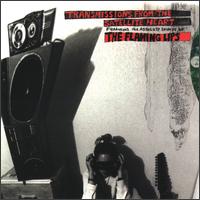
SOUNDTRACK: THE FLAMING LIPS-Due to High Expectations…The Flaming Lips are Providing Needles for Your Balloons EP (1994).

This EP came after the success of Transmissions from the Satellite Heart and the single “She Don’t Use Jelly.”  Naturally that is not the single here, rather it is “Bad Days,” a new song tha sounds of the period.  As does “Jets Part 2 (My Two Days As An Ambulance Driver)” a fuzzed out trip.

“Ice Drummer” is a primarily acoustic but still distorted song.  It’s kind of boppy and light which is odd since it is a cover of a Suicide song.   “Put the Waterbug in the Policeman’s Ear’ is a demo with strings and piano.  It also has a very lengthy introduction in which Wayne explains his brother’s proclivity for drugs and his belief that he can control bugs (and have them attack the policeman who is trying to arrest him).  It was recorded on a boombox.

“Chewin’ the Apple of Yer Eye” is a live version recorded at a record studio.  It has nice guitars with scritchy violins.  “Chosen One” is a cover of a Bill Callahan song at the same venue.  There’s a lengthy introduction explaining that it’s a cover and why he likes it so much.  It’s a nice version, very stripped down.  “Little Drummer Boy” is a travesty, but a good one (and is 1,000 times better than their version of “White Christmas.)”

“Slow-Nerve-Action” is a live version apparently broadcast on a Top 40 radio station.  The squall of noise as the song opens would frighten off anyone listening to Top 40, but the middle of the song’s acoustic section is rather pleasant (if not a little scratchy and staticky).  Although this EP racks in at 44 minutes long, it’s really not that essential (although the live versions are nice).

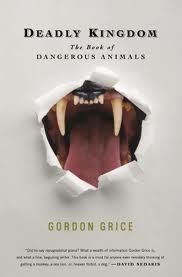
[READ: May-July 2012] Deadly Kingdom

If you have any kind of animal phobias–literally any kind: snakes, sharks, spider, rodents, bugs, stay away from this book.  Indeed, even if you don’t have this kind of phobia, you may after reading this book.  As the title says, this book tells you every single conceivable way that an animal can kill you–from biting to clawing to stomping to crushing to infections to diseases to parasites to long lingering diseases to numbness to elephantiasis (and that’s just chapter 1).  Somehow the author is not afraid of everything that moves, and is even a collector (with his wee son) of all manner of unusual creepy crawlies–tarantulas, hissing cockroaches and the like.

Sarah bought me this book for my birthday because David Sedaris recommended it when we saw him speak.  When Sedaris read from it, it was funny but dark.  Sedaris’ comment that “Monkeys are such assholes “was certainly borne out by the book.  Sedaris’ other comment–if you ever feel bad about eating meat, just read this book–is also completely accurate.  Even cows can be assholes.  This book is hard to digest in large doses.  I found that I had to put the book down after a section or two because there’s only so much you-will-die-if-you-do-this reading that I could take.

Grice has done a ton of research–he has looked into all manner of medical and death records and talked to lots of scientists around the world.  And he breaks the book into five major categories: The Carnivorids, Aquatic Dangers, The Reptiles and Birds, The Arthropods and Worms and Other Mammals.  The introduction more or less explains his origin story for being interested in deadly animals–a cougar was on his Oklahoma panhandle property when he was six years old.  His grandfather dispatched it, but he had to stay safely in the car during the ordeal.  And he has been curious ever since.

The introduction also contextualizes the violence that animals do to humans.  Is it all defensive (as we take over more and more land, it’s hard to know exactly what is defensive) or is it straight out aggressive. But he says the hardest part about this kind of descriptor is that “besides our usual biased views of all the parties involved, is that violence rouses strong emotions.  We are almost forced to take sides with the injured humans or the slandered animals….  Many writers depict virtually all animal attacks as “provoked” by the victim.  On the other side, some writers are at pains to paint dangerous animals as monsters of cruelty.  All of these views are simplistic.” (xxiii). (more…)

Read Full Post »

« Newer Posts - Older Posts »