Feeds:
Posts
Comments

SOUNDTRACK: Soundtrack to “I’m Here” (2010).

This soundtrack comes with the book mentioned above and below.  It is the soundtrack to the film “I’m Here” which also comes with the book mentioned above and below.

I haven’t watched the film yet, so I don’t know how well the music works.  But the book explains how many of these songs came to be in the film.  And the organic nature of the compositions sounds like they are very suitable.

The first track (and “theme” of the movie is by Aska & The Lost Trees.  The Lost Trees are a factious band made up for the film.  Aska wrote the song (and there’s sheet music for it in the book).  She has a second song called “Y.O.U.” later on the soundtrack.  It’s a synthy dreamy song.

Gui Borrato’s “Beautiful Life” is an 8 minute techno song.  It seems like an instrumental, but there are eventually lyrics.  And it is rather catchy.

Then there’s a number of bands who I have heard of but don’t know these songs: Sleigh Bells: “A/B Machines” (which is on their debut Treats–a loudly mixed, increasingly noisier and noisier dance track, which is strangely addictive); Animal Collective: “Did You See The Worlds” (which is on Feels and gets better with each listen); Girls: “Hellhole Ratrace” (which is on their debut Album and which sounds like a distortion-free Jesus and Mary Chain) and Of Montreal who remixed “The Past is a Grotesque Animal” from Hissing Fauna… so that The Lost Trees could “cover” it in the film.  I don’t know the original but this has punky abandon and distortion and rocks pretty hard.

The final two tracks are by Sam Spiegel: “Lonesome Robot Theme” and “There Are Many of Us (Electric Dream Reprise).”  They are both slow keyboard washes–delicate songs that close the disc nicely.

It’s an enjoyable soundtrack, a little heavy on the electronics–which makes sense for a movie  about robots, right?

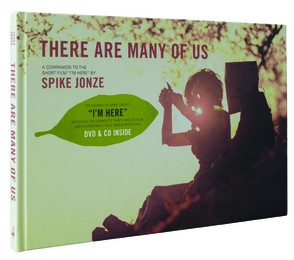
[READ: September 2, 2010] There Are Many of Us

[UPDATE: September 6, 2010] Just watched the film….  Reading the book first will definitely lessen the emotional impact of the film.  So, be sure to watch the DVD, then read the  book.

This book came the other day in the mail as part of my McSweeney’s Book Club.  It’s funny to get a book that is a companion piece to a film you’ve never heard of and which you will likely never see.  And that’s why it’s great that the book includes the film on DVD!  (Along with several bonus features).

I really enjoy short films. And that’s why I like the Wholphin Series as well as the DVDs of Academy Award winning shorts.  I only wish there was more access to them.   I mean, frankly, where would I ever be able to see this film but here?

As I write this I haven’t had the chance to watch the film, so maybe it’s awful.  But I have liked everything that Spike Jonze has done, so I don’t expect to be disappointed.

The stills in the book are fantastic, and the robots look incredibly lifelike.  I’m not sure if it’s better to read the book or watch the film first.  The book doesn’t really give much away about the story (except that it says that the film is inspired by The Giving Tree).  And whether or not I should have watched the film first, the book has me really excited to watch the film soon. Continue Reading »

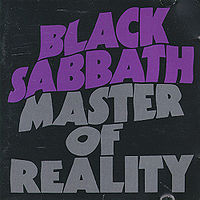
SOUNDTRACK: BLACK SABBATH-Master of Reality.

I recently reviewed this album.  And in light of this book I investigated some of the things that Darnielle’s character mentions.

First: according to Wikipedia, the US release of the LP/cassette DID have “extra” tracks on it.  When you listen on CD, and see the time settings of the songs, it’s kind of understandable what they are.

I have no idea what “The Elegy” is supposed to be (as part of “After Forever”) (unless it’s the intro part…no time is given in Wikipedia).  But “The Haunting” after “Children of the Grave” times perfectly to the “Ch Ch Children” part at the end of the song.

“Step Up” which, as he mentions, is a ridiculous name for a Sabbath song can be seen as the 30 second intro riff to “Lord of This World” as it is very different from that song.

The most unlikely “extra song”  is “Death Mask” as part of “Into the Void.”  The timing claims that it is the first half of the song.  The song changes at the 3 minute mark but it also reverts back to the original, so this “song” is specious at best.

But I do appreciate the book for giving some insight into the songs that I hadn’t considered before.

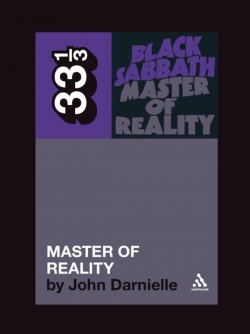
[READ: August 31, 2010] Master of Reality

When my friend Andrew told me about this book (and the series), I assumed it was writers (or musicians) writing about their favorite albums.  I had no idea it would be like this (and, I don’t know if they are all like this).

Darnielle has created a fiction (I assume) about a young man in a psych ward in 1985.  As part of his time there he is told to write in his diary every day.  After the first or second day (in which he just writes Fuck You!) he learns that Gary, the man in charge of him, is reading the diary.  And soon, he begins to use his diary as a way to get his Walkman and cassettes back (they were taken from him when he entered the ward).

Specifically, he wants Master of Reality back.   Continue Reading »

SOUNDTRACK: PHISH-LivePhish 11.14.95 University of Central Florida Arena, Orlando FL (1995).

I have a number of these LivePhish discs.  They are universally solid releases (all from soundboards, I believe, which, have they really been recording all of their shows since like forever?).  And it’s fun to hear Phish totally jam out on a few of their more meandering songs.

One of the most interesting aspects of the series is that they almost always throw in a cover song (on Halloween, they cover an entire album by another band).

I haven’t really mentioned any of these releases because there’s usually not much to say about them: you either like Phish live or you don’t.  But this one is notable for being particularly odd.

They do an a cappella song in the first set–typically if they do an a capella track it is as an encore or the intro of the second set, but this one is right there in the beginning.

The end of the set also had the only instance (of the shows that I have) where Trey explains the audience chess match.  Many of the recordings open up set two with an audience chess move.  In this case, Trey explains that they have been playing chess with the audience at each show.  Phish is white, the audience is black and anyone who wants to just has to go to the Greenpeace booth to play a move…I have no idea how they would choose who gets to play the final decision.

There’s some other odd things in the show. “The Divided Sky” features one of the prettiest solos that Trey plays.  In this show there is a very long pause between the end of the first half of the solo and the beginning of the second.  The crowd cheers quite a bit during the pause, but we the listeners, have no idea what happened.

And then there is the extra long rendition of “Stash.”  It’s broken into three sections.  The first one features a fun audience response guitar solo.  And in this instance, he plays it in a much more staccato style.  The middle one features a bizarre percussion type solo.  And the third features a rendition of “Dog Faced Boy” which is not sung to the appropriate music, rather, the keyboards just play simple, unrelated chords while Trey sings.

Set two ends with a wonderful rendition of “You Enjoy Myself” that ends in their bizarro screaming and grunting.  You’ll get funny looks listening to that loudly.

So this set is a good one, and it stands out as unique among the others for being so darn bizarre.

[READ: June 27, 2010] The Boy Who Couldn’t Sleep and Never Had To

I’m always bummed to read a prepub after it gets published.  Sigh.

Sarah told me that I’d love this book and she was correct.  It’s about a misfit high school boy who draws pictures and draws them really well.  Despite this talent, he is not lauded by the cool kids in his class (the kid who draws licensed characters holding joints is lauded by the cool kids).

He’s also kind of defensive about his drawing, because he gets tired of people asking him what he’s drawing.  Especially when they think that he’s just doodling.  But then one day Eric Lederer asks him what he’s drawing.  He and Eric have never talked.  In fact, he doesn’t think anyone talks to Eric.  Eric’s THAT kind of weird.

And what our narrator realizes is especially weird about Eric is that he is standing really really still: “No one stands this awkwardly sure of themselves except characters in my drawings staring straight ahead with their arms at their sides” (8).  And with that awesome detail I fell in love with the book. Continue Reading »

SOUNDTRACK: THE REAL TUESDAY WELD-“Cloud Cuckooland” (2007).

My friend Andrew linked me to the video for this song (after I showed him the video for “Lucas with the Lid Off.”   I’d heard of The Real Tuesday Weld, but never heard them, and I hope this is indicative of the rest of their (his?) stuff.

The video (which is hilarious and weird) supplies a wonderful videotrack to the music, but, unlike some other recent videos that I have watched, it doesn’t make a lame song seem interesting.

I likened this song to what I wanted the Squirrel Nut Zippers to sound like: playing old-timey music but with a real sense of silliness.  (The Zippers are great but are often too straight for me).  Rather than vocals, there’s a  sort of nonsensical sound-making.  And there’s some even some human beatbox in the track.

And it’s all over a very bouncy soundtrack that fits well with the black and white “movie” of the video.

It’s very cool.  Check it out here.

[READ: August 27, 2010] The Shell Collector

I have really enjoyed the two short stories that Doerr has written for McSweeney’s.  So much so that I decided to track down this collection of short stories.  And I’m delighted that I did.

Doerr’s stories are set all over the world (he himself has lived in Africa and New Zealand, although he is now from Idaho and grew up in Ohio) and there is so much diversity in this collection that I couldn’t believe he had this much information at his disposal.

One of the interesting things is that quite often the main character is named “The Shell Collector” of “The Hunter” while everyone else in the story has a name.  It’s an interesting conceit which brings at once a distance to the person and yet an immediacy to what he “is.”

“The Shell Collector” features a man who works with shells, specifically with the creatures that live in them (most of which are poisonous).  One day, a reporter is stung by a cone shell (that crawled from the ocean into his house) and goes into deathly coma.  The cone shell is a predatory sea snail called a geography cone has twelve kinds of venom in its teeth.  The woman was pronounced incurable, and yet twelve hours of catatonia later she emerged claiming to have had a religious experience.  From then on, the shell collector’s life is turned upside down. Continue Reading »

SOUNDTRACK: PEARL JAM-Halifax, Nova Scotia, Metro Centre, September 22, 2005 (2005).

This show came as a free download if you purchased Pearl Jam’s Backspacer CD.

Pearl Jam live shows really showcase the band’s strengths.  And no shows are better than when they go to a place for the first time.  This was their first trip to “Halifax to the Max” and the band sounds fantastic.

Even when Eddie Vedder forgets the words in the first verse of a song “Breath” (which he says they don’t normally play and hadn’t yet played in on the tour) and just shouts “FUCK!” the band continues and the songs starts again as if nothing happened (the crowd wildly supportive of course).

There’s also some surprise treats, like the often overlooked “Glorified G” (not anywhere close to being one of their best songs, but fun in a live setting).  I especially liked the snippet of Sleater-Kinney’s “Modern Girl” that the toss in at the end of “Not for You.”  Although the inclusion of “Bow wow wow yippe yp yippe yea” in “Blood” is certainly odd.

Eddie in particular has a lot of fun with the locals when he demands that they bring him a can of Keefe’s Irish Stout.  He gets sillier and sillier with them (describing what he assumes the beer must be like) until one is finally procured for him.  And the bit about “fetch me a new guitar, I shan’t be playing this one” was a great set up for a joke.

The only complaint is that my downloaded version ends with Bu$hleaguer but the setlist suggests that there should be two more songs (“Fortunate Son & Rockin’ in the Free World”).  Bummer, although I’ve heard those songs on enough bootlegs to not really miss them.  (New comments added February 26, 2011).

[READ: August 26, 2010] Echo: 23 & 24

The series continues to grow in intensity and depth.  After something of a cul de sac in episodes 21 & 22, number 23 burst forth with new excitement.

The biggest news (ha ha) is that the alloy is making Julie grow.  The revelation is done rather humorously because, as we knew already, she needed clothes.  And when Ivy buys her her normal size, the clothes are simply too small (which Ivy has a mocking field day with).  [The whole of Issue 23 is devoted to some female fighting.  Terry seems to have an ear for this sort of fighting because it sounds very believable. Although it did make me uncomfortable that his two main characters, both of whom are female devolve into this sort of sniping, at least it didn’t get really ugly.] Continue Reading »

SOUNDTRACK: SINÉAD O’CONNOR-The Lion and the Cobra (1987).

I was tempted to say that this album came before all of the controversy.  But then, she’s always had controversy around her.  Just the fact that she had her head shaved was enough to incite some people to alarm (not to mention, we never received this more fierce looking album cover).

But before all of the success of “Nothing Compared 2 U,” she released this amazing, empassioned debut album.

I’ve no idea what the first track is about, but there’s something about her voice on the “oh’s” in particular that still gives me chills.  “Mandinka” has a great guitar sound (seemingly destined for hit radio) that seems very out of place on this disc (again, I’m lost on the lyrics here, too).

The album comes into its own with the really odd but delightful “Jerusalem.”  Musically it’s got a sort of funk base which resolves itself into a very winning chorus.  And, once again, her voice sounds otherworldly.  It’s followed by the largely acoustic “Just Like U Said it Would B” (Prince fan much?).  It’s a  fairly simple song (with interesting arrangement–I like the flute) that builds to a strong climax.

“Never Get Old” opens with some spoken Irish (and features future star Enya), but it’s “Troy” that is the absolute breakthrough on this disc.  From the occasionall string swells, to the eerie silences to the incredible heights that she reaches (and the notes that she can hold) it’s really tremendous.

“I Want Your Hands on Me” seems like another grab for a single.  The single version featured a bizarre little rap from MC Lyte.  In the pantheon of silly rap lyrics, I’ve alwys kept this near the top: “I’m not the kind of girl to put on a show coz when I say no, yo I mean no.”  Sentiment and good intentions aside, it’s very clumsy.   Not my favoite track.

The final two, “Drink Before the War” and “Just Call Me Joe” are interesting denouements after the pop of “Hands.”  “Drink is a slow paced, somewhat quiet track, until the chorus really blasts off.  And “Joe” sounds like a demo: a raw electric guitar, cranked way up (but mixed quietly) accompanying Sinéad’s instructions to just call her Joe.

In some ways this album is less subtle, and by that reckoning, less sophisticated, than the bajillion-selling follow up, but I find the naked passion on this disc to be even more amazing.

[READ: Week of August 30, 2010] Ulysses: Episodes 18

The final chapter of Ulysses is all about Molly.  It enters her head and doesn’t leave.  It doesn’t even pause for punctuation (there’s none in the entire chapter except for the final period).  There are paragraph breaks, which means that there are eight sentences in total.

The Episode is crass and sexual, beautiful and moving, personal and insightful and it seems incredibly forward thinking coming from a male writer.  And although it gets a lot more press as a stream of consciouness piece, it’s not that far removed from Stephen’s or Bloom’s pieces, [except that she doesn’t actually intearct with anyone to interrupt her thoughts].

The Epsiode reflects upon what we’ve learned in the day.  It inadvenrtanetly corrects some misperceptions (regarding Molly’s past infidelities–she didn’t have any–), but it also shows some pretty poor judgments on Molly’s part (mostly regarding Stephen).  And there’s just so much going on in the episode that it’s hard to catalog it all.   But it is certainly full of a lot of sexual thoughts. Continue Reading »

[WATCHED: August 26, 2010] Everything’s Gone Green

I’m including this film because it was written by Douglas Coupland (and he’s one of those writers that I read a lot).

Everything’s Gone Green is a story of suburban life in Vancouver.  As the film opens the main character gets dumped by his girlfriend and loses his job.  And he hasn’t won the lottery (this sequence with his family is hilarious).  However, calling the BC Win line (is this what you do when you win the lottery?) gets him a job at the BC lottery.  [This entire job and company absolutely fascinated me.  It was an excellent location for a film].

From there the movie settled into Douglas Coupland territory: scenes from Vancouver, working in a cubicle, scenes from Vancouver, unattainable love, scenes from Vancouver, the Asian community of BC, and more scenes from Vancouver.

We had recently watched the TV series of JPod (based on his book).  Steph Song from JPod is in this film (and it’s nice to see her with a different type of character).  But what’s surprising (or maybe it’s not?) is how much of this film he recycled into JPod (or actually, they seem to be written concurrently, so I’m not sure which came first). Continue Reading »

SOUNDTRACK: A HOUSE-“More Endless Art” (1991).

Lar, my encyclopedia of music, pointed me to this second version of “Endless Art” by A House.  The original was all male artists.  This follow-up is all female artists.

I enjoyed this version very much, and it made me realize that I was tired of the original song because of the lyrics, not the music (listening to spoken word bits over and over can be exhausting). So, now I get a new version of the song with brand new lyrics to think about.

The video doesn’t go anywhere near the conceptual peak that the first one achieved, I’m not even sure who made it.

Watch it below, or look for the “Endless Art” single.

[READ: August 21,. 2010] “A Brush”

I read John Berger’s Ways of Seeing back in graduate school.  It’s a group of essays about perception and art.  I had no idea that he wrote anything else, and promptly forgot about him.  So, imagine my surprise to see this piece of fiction written by John Berger (and a little research indicating that it is the same guy).  I liked Ways of Seeing but it didn’t impact my life in any major way, this was all just an interesting (to me) coincidence.

I wasn’t really sure what to think of this story as it opened.  It talks of a paint brush.  And the wording of it was a bit odd, I felt:

I want to tell you the story of how I gave away this Sho Japanese brush.

But it’s the description of the brush that I found so compelling:

I drew often with it. It was made of the hairs of horse and sheep. These hairs once grew out of a skin. Maybe this is why when gathered together into a brush with a bamboo handle they transmit sensations so vividly. When I drew with it I had the impression that it and my fingers loosely holding it were touching not paper but a skin. Continue Reading »

SOUNDTRACK: PETE SEEGER-Greatest Hits (2002).

Like Woody Guthrie, Pete Seeger has been singing for the common man since forever.  Unlike Woody Guthrie, Pete Seeger is alive and well and still kicking up a fuss.

This collection of his songs is fascinating in that it shows a certain aspect of Pete’s music: his songs are designed for “folks.”  His songs almost demand audience participation.  And so, he has albums for kids (that are weird but wonderful) and other, grown up songs that kids also know, which people have been singing for generations.

And so this disc features more than “studio tracks.”  It opens with “Little Boxes” a wonderful song which features some awesome lyrics including this verse:

And the people in the houses
All went to the university,
Where they were put in boxes
And they came out all the same,
And there’s doctors and lawyers,
And business executives,
And they’re all made out of ticky tacky
And they all look just the same.

But in addition, you get some classic tracks that define rebellious folk: “Which Side Are You On?” “We Shall Overcome” and “Waist Deep in the Big Muddy.”   It also has songs like “Wimoweh (The Lion Sleeps Tonight)” and “Abiyoyo.”

And of course, it features, “Where Have All the Flowers Gone” and “Turn Turn Turn” songs which I’ve known since I was a little kid, but whose lyrics never meant anything to me until I became an adult.  There’s even “If I Had a Hammer” with the final verse:

It’s the hammer of justice;
It’s the bell of freedom;
It’s the song about love between my brothers and my sisters;
All over this land

For a really comprehensive collection of his “studio work” the ideal disc is If I Had a Hammer: Songs of Hope and Struggle (where he sets the tune of “Battle Hymn of the Republic” to a song called “Solidarity Forever” (Solidarity forever, Solidarity forever, Solidarity forever, For the union makes us strong.)

Pete Seeger is indeed a national treasure, and a man who fights in his own way for each of us.

[READ: August 23, 2010] Social Anarchism or Lifestyle Anarchism: An Unbridgeable Chasm

After reading Letters of Insurgents, I felt the need for a palate cleanser.  Melissa suggested this title.  And it really did wonders for me.

All along while I was reading Insurgents, I felt like everyone in the book was misguided about their role in society and, frankly about their ability to undermine the world.  I never understood the idea that people were “making” them work.  They didn’t have to work.  They could have lived off the grid somewhere and eaten berries.  What else is the point of a strike than to improve working conditions, not to abolish work altogether (that whole apart about the plants’ foreign offices plugging along despite their big lockdown was particularly hilariously naive).

In many ways I felt like their opinions were on par with what I thought anarchism was, and yet their opinions were nothing I wanted to be a part of.  Bookchin argues that their attitudes are examples of Lifestyle Anarchism (this article does not address the book at all, but you can see the characters in what he’s describing.) Continue Reading »

SOUNDTRACK: A HOUSE-Zop (1991).

This is an EP that came out just after I Am the Greatest.  Released only in the UK, I found it used at Amoeba Records (I must have been on an A House binge at the time).

The EP has 6 tracks.  The opener sounds like a slightly remixed version of “You’re Too Young.”  And “Take It Easy on Me” also sounds remixed (the wah wah seems downplayed somewhat, although the song is still strong).

The other tracks are good songs from this experimental period of A House.

But for me the highlight is “When I Last Saw You,” the 5 minute version of “When I First Saw You” from Greatest.  I’d always liked the album versions’ fascinating concision and almost a capella feel.  This version tacks on a proper song, and it changes the song in wonderful ways.  I will always enjoy that short version, but this EP version is really great.

What’s interesting is that there’s virtually no record of this disc on the web.  Even though the A House homepage is known as ZOP.  The site, sadly, has not been updated for two years.  Although it does answer the question of what Dave Couse has been up to since the late 1990s.

[READ: August 22, 2010] Bloom County: Vol. 2: 1982-1984

This volume of the collection covers a lot of the comics that I know very well.  There are a number of strips that I drew (not traced) and hung in my locker in high school (I wasn’t about to cut up Loose Tales, was ?).  It also covers what I think of as my first era of social and political awareness.

I know I wasn’t totally aware of what was going on, but, via punk music mostly, I became aware of criticisms of Reagan.  And to a lesser degree, so does Bloom County.  I’m actually surprised at how apolitical it seems in retrospect.  My recollection was that it was a massively political strip.   And yes, there are a lot of political references, but for the most part it’s sort of political pop culture jokes.  Reagan gets teased a bit (although again less than you might expect), but it’s not the raging left-wingedness that I fondly recall. (That said, the strip is imbued with leftie political ideas, but they’re sort of mellow compared to now).

Rather, the political jokes are aimed at politicians as a class.  And there are commentaries about political events (couched in terms of local politicians, or, more often, in terms of Bloom County’s nonsensical “scandals” that are based on what really happened (although often the real scandals seem as absurd as the Bloom County ones). Continue Reading »