Feeds:
Posts
Comments

SOUNDTRACK: BUFFALO TOM: “Guilty Girls” (2011).
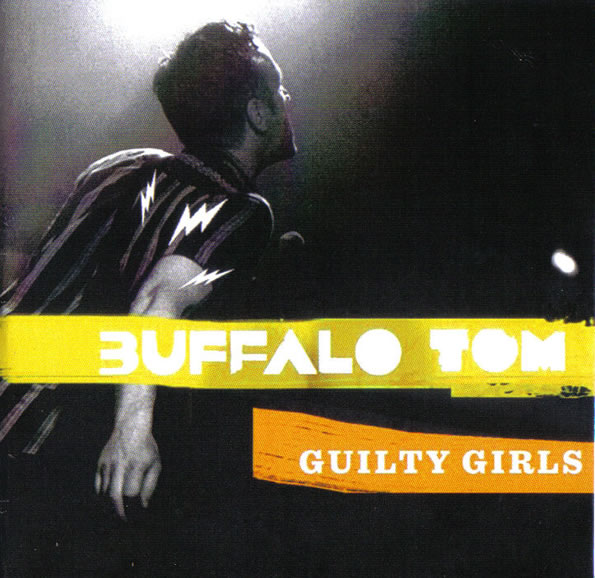
Holy cow, Buffalo Tom!  I more or less forgot about these guys (who I really liked back in the 90s).  Some of their songs from that period are fantastic.  They never had any major success, but they had a series of great releases.  Evidently they reformed a few years ago and released a reunion album.  And now, in 2011, they have a brand new record.  Wow.

I haven’t listened to them in a few years, (although their albums covers are still very fresh in my head).  But I listened to a few older songs for comparison’s sake.  To me the biggest difference between Tom in 1999 and Tom in 2011 is that the singer now sounds even more like Elvis Costello.  Bill Janovitz has always had a strong baritone voice, but with a few extra years thrown on, it has maturity that it lacked back then (not that it needed it, but the songs are more mature lyrically now, and the voice fits it well). 

This song is a kind of punky (poppy punk, but still punky) rocking anthem.  It’s under three minutes and it aims for mega catchiness.

[READ: July 18, 2011] “The Orderly

Having read the brief story by Arthur Bradford in Five Dials, I realized that I knew the name and decided to see what else I had read by him. It wasnt much, but I enjoyed what I’d read.  I decided to look him up and discovered that he really only wrote one book, a short story collection called Dogwalker, before switching media to TV (and a show called How’s Your News?).

On his website, he has links to a number of published stories (fiction and non-); since the Esquire pieces have been collected in his book, there’s really only three unique fiction stories available here.  So i decided to read them all.

Now Nerve.com was a site for “literate smut.”  I remember when it came out and it was somewhat revolutionary in the sex world because it tried to raise the bar of quality and to include some decent writers.  I didn’t actually know that nerve.com was still active (it is, and there’s some really good stuff there).  As such, I feel like perhaps the stories at nerve aren’t entirely top-notch.  Not Penthouse forum, mind you, but not Hemingway either. Continue Reading »

SOUNDTRACK: BRENDAN PERRY-Live at KEXP, July 26, 2011 (2011).

Brendan Perry was the mastermind behind Dead Can Dance, one of the more influential bands on the 4AD label.  I really haven’t listened to them in ages (goth is so 1990s), but I was delighted to see that Robin Guthrie and Brendan Perry performed a live set at KEXP.

There’s an interview explaining what Perry has been up to since his last solo album (in 1999)–he has a new one from 2010 that was just released in the States.  He explains a lot about his early musical career and his interests (and living in New Zealand).  But the magic really comes when he starts singing.  And sadly his set has only two songs: “Song to the Siren” and “The Carnival is Over.”

Indeed, I had forgotten what a great, resonant voice Perry has.  It is instantly recognizable and brought me back to Dead Can Dance immediately.  “Song to the Siren” is a Tim Buckley cover, which he (and others) recorded for This Mortal Coil’s It’ll End in Tears album.  This version has Robin Guthrie on guitar. 

The other song, “The Carnival is Over” is a Dead Can Dance song (from Into the Labyrinth).  This song is piano and strings and is immediately recognizable as a Dead Can Dance song.  I admit it’s not as moving as the Tim Buckley song but that would be hard to accomplish (what is it about Guthrie’s echo pedal that is so amazing?).  Nevertheless, it’s a great reunion and wonderful to hear his voice again.

[READ:  July 19, 2011] Modelland

When I was at BEA, there was a lengthy line forming at one of the publisher’s tables.  I found out that it was for Tyra Banks, who was making a “surprise” appearance.  I certainly wasn’t going to wait for her, but after a few minutes, I heard people saying that she would be coming momentarily.  So I hung out and when she arrived with her entourage, I snapped a few pictures and left.

A few days ago, my former co-worker Sandy came to work and left me a [signed!] copy of this excerpt (she had waited for Tyra and got her autograph).  I really had no intention of reading the book, but I was delighted to have a copy of it.  In the interest of embarrassing full disclosure, Sarah and I watch ANTM.  However, in our defense, we FF just about every time someone speaks.  We basically like it for the photo shoots and the final pictures.  But we both feel that Tyra is a looney-tunes egomaniac. 

But seeing the book on our table made me have to read it. 

So how good could this book possible be, especially when the main character is named (seriously) Tookie de la Crème (and her sister is named Myrracle).  Oh and holy cow Tyra’s own introduction says that this is the first book in a trilogy!  Good grief.  

The summary of the story is:

Welcome to Modelland, where every girl dreams of the beauty and glamour of the Land on the top of the mountain. Every girl but one.

Right.

Well, surprise, surpise…the story is actually quite interesting. Continue Reading »

SOUNDTRACK: MY MORNING JACKETZ (2005).

I’ve enjoyed My Morning Jacket since I bought their live album Okonokos.  I’ve enjoyed all of their releases since, but I never listened to Z, the album that forms the basis of much of Okonokos. Finally, I saw it cheap and picked it up.

And I was really surprised.  The reason I hadn’t gotten it was because I figured I had all of the songs already in live format, so who needed the studio?  Well, it turns out that the studio versions are quite different from the live ones.  In fact, on my first listen, I didn’t really like the studio versions all that much.  After a few listens of course, I like them just fine, but they are indeed quite different.

There are three songs here that didn’t make the live record: “Into the Woods,” “Anytime” and “Knot Comes Loose.”  But the other seven songs appear (often in slightly longer form) on the live disc.  And the live disc is fuller, louder and more energetic than the studio.  That’s what a live album is supposed to sound like.

Z, on the other hand, sounds a bit more polished, more almost dancey–reflecting the kinds of sounds they would incorporate down the road (like on Circuital).  But Z isn’t quite as full-sounding.  Despite that, the songs are top-notch.  And Jim James’ voice is truly a thing to behold (check out that crazy high note at the end of “What a Wonderful Man”).

I hate to sound like I’m down on this disc, because indeed, I am not.  It’s a really fascinating mix of psychedelia and Prince-inspired keyboard rock (I’m not going as far as funk, but it’s certainly Prince-y.  There’s some folk tracks, there’s the amazing “Wordless Chorus” which has a kind of 70;s soft rock feel, which is followed by the Prince-titled “It Beats 4 U” which sounds nothing like Prince, but has a great subtle guitar intro.  “Gideon” doesn’t match any of the over the top epics of earlier records, but it sure feels close.  And “Off the Record” is a practically ska.  The album even has a near 8 minute closing track, the awesome “Dondante.”

All in all, Z is pretty great.  But I still like the live versions better.  That’s what happens when you listen to things out of order, I guess.  But when do live albums count for anything?

 [READ: July 11, 2011] 3 book reviews

According to Five Dials, Zadie Smith is an official member of Harper’s staff now (funny I found out about it from Five Dials, but they really do have tentacles in all aspects of my life).  Congratultions, Zadie.

I can’t imagine having to review two or three books a month (I know I review a lot here, but most of them are short stories).  Zadie plows through a lot of books for this column, but what is wonderful is that the diversity of what she reads is really pronounced.  Just witness this months’ books.

MELA HARTWIG-Am I a Redundant Human Being?
Zadie takes a great angle on this novel.  She (with the help of an online reviewer) compares the protagonist of this novel (written in the 1930s) with Carrie Bradshaw from Sex in the City.  Why?  Because both protagonists seem to live their lives in the male gaze.  And yet they both also continue on their merry way regardless of what the men say or do.  True, Hartwig’s novella has much more angst, but really, there is a similar attitude present.

I especially like Zadie’s argument that women writers have never really had they way to express the bragging rights that men have employed time immemorial “We can’t, as the saying goes, pull it out and slap it on the table.”  And as such, women have had to achieve their victories through more roundabout means.  I rather liked this analysis.  And, I think it makes for more interesting reading most of the time. Continue Reading »

SOUNDTRACK: BOB MOULD-Sasquatch Festival, May 28, 2011 (2011).

I loved Hüsker Dü.  I loved Sugar (a tad less).  I loved Mould’s Workbook.  And then I kind of loss interest in the guy.  He recently wrote an autobiography, which I would consider reading, but musically, I assumed he was done.

So I wasn’t even that interested in listening to his set (shame on me).  This turns out to be a really cool set in which it’s just Bob and his electric guitar.  He plays a varied set of songs from throughout his career.  He plays some of his hits (“See a Little Light,” “Hoover Dam”) but mostly he plays interesting non-hits (“Chartered Trips” (!!), “I Apologize”).  (Is it possible that Grant Hart wrote all of Hüsker’s big hits?)

The most amazing thing about the set is Bob himself.  He sounds so cool and chilled out (even though I think he was like the very first opening act of the concert–which is a pretty shitty time slot).  He seems to be really happy playing (hearing him respond to a request with “I forgot how to play that one” is pretty darn funny.)  Of course, a little later when he says “What’s that?  I’m trying?” he almost sounds like Al Bundy.

But then, look at him, he’s an old man now.  And sure, he’s been playing music forever, so gosh, he’s got to be super old, right?  What?  He was born in 1960?  He’s nine years older than me?  Oh good grief.  So, wait the first Hüsker Dü album came out when he was 22?  He really crammed a lot of music into just a few years.  Not bad, Bob.

And yes, I’m fully invested in relistening to all the great music you’ve made now.  Thanks, Sasquatch.

[READ: July 13, 2011] “Incident in the Orient”

This very short story features a dead dog. I’m getting that out of the way since I know some people won’t read any further once they know that.

I rather liked the brevity of this story, how Theroux is able to cram a lot of information and a lot tension into just a couple of pages.  The story is also a strange little onion of a tale, with the narrator working for a man (Moses) who is a sort of mercenary construction boss.  The narrator gives a lot of insight into Moses, although he also admits that he doesn’t really know the man very well (how could anyone know him).

He has done work in various war-torn countries and has effectively built a crew out of a small group of devoted men, mingled with local help.  The most fascinating thing is that Moses is a short man with a lisp and yet he commands the respect of everyone who works for him.  He takes no shit, but he pays well and uses local materials (including tearing down materials from destroyed buildings if necessary).   Continue Reading »

SOUNDTRACK: WAVVES-King of the Beach (2010).

I feel like I shouldn’t like Wavves.  There’s os much to dislike about them (or him,  I should say, since it’s almost entirely the product of one guy). He’s bratty, fans seem to dislike him (do a search for Wavves live), and in the first live show that I downloaded, he seemed a bit disdainful of the audience.

And yet, I really like this album. It’s fast and punky and reminds me of some of the best summer punk music from my high school days (Surf Punks anyone?).

So Williams plays all the instruments (with a few exceptions), and the sound is consistent through: a trebly guitar (the perfect sound for surf music, although he doesn’t play surf music at all).  Fast punky drums and William’s voice which is not so much whiny as bratty–the lyrics play out this bratty idea too:

bet you laugh right behind my back/I won’t ever die/I’ll go surfing in my mind/I’m not supposed to be a kid/but I’m an idiot/I’d say I’m sorry/but it wouldn’t mean shit

or

My, my own friends/Hate my guts/So what? Who gives a fuck?

(from “Green Eyes,” which sounds like a ballad but soon rocks out).

Of course, it’s not all just punky tracks, “When Will You Come” has the drums of a 50’s doo wop song (no one would mistake it for a doo-wop song, though) including his falsetto’d voice.  And “Baseball Cards” has a similar inspiration–although again, sounding nothing really like that style of music.  Even “Mickey Mouse” opens with what sounds like the music from “Da Doo Ron Ron” (indeed it is a sample from the song, but manipulated slightly).

“Convertible Balloon” sounds like a quirky Japanese pop confection.  And, “Post Acid” which is a punky bratty song has a wonderful part where the song stops and they make crazy grunting sounds which I like very much.

It’s not smooth summer music by any means, but it is fun and energizing.  Perfect punk beach soundtrack.

[READ: July 11, 2011] “Married Love”

This story had me fooled from the outset.

Recently we listened to Judy Blume’s Fudge-a-mania.  In that story Fudge, who is 5, says that he is going to marry Sheila Tubman, his big brother’s arch nemesis.  Everyone laughs, and we ultimately learn why he wants to marry her (I won’t spoil it).  In this Tessa Hadley story, Lottie, a nineteen year old girl (who looks about thirteen) announces that she is going to get married.  As in Fudge-a-mania, the family is bemused by the idea and laughs about it, until Lottie reveals that she is quite serious.

Things get even “funnier” when the family learns who she is planning to marry: Edgar Lennox, a former teacher who is forty-five years older than her and who is currently married.  Ha Ha Ha, says her family until, Oh, she is serious.

The story surprises even further when they go through with the wedding (about half way through the story). Continue Reading »

SOUNDTRACK: THE HEAD AND THE HEART-Sasquatch Music Festival, May 28, 2011 (2011).

This is the fourth live recording from The Head and the Heart that NPR offers.  Not bad for a band with only one album out.  This set finds the band even more confident and relaxed (despite their genuine excitement at playing the festival).  The band sounds fantastic and I’ve really grown to appreciate the female harmonies on most of the songs now (I’ve not always liked them on every song).

This set has two as yet unrecorded songs in it (one of them was listed as untitled).  There’s some banter between the band and the fans (the band is nothing if not jovial) including a great story about how someone in the band went to Sasquatch the year before and swore he wouldn’t remove his backstage pass wrist band until The Head and The Heart band played Sasquatch.  I like to imagine there was ceremonial wrist band cutting ceremony on stage, but that is lost in the audio version.  Of course the story would be better if it was two or three years later, but it’s still a pretty good one. [See the Five Dials review below for a similar story!]

I found the sound quality of the show to be less than perfect.  The sounds are a bit muddied.  I don’t blame the band.  The Sasquatch venue may be beautiful (so many performers comment on it, I’d love to see the view) but I suspect that maybe the audio was less than stellar.

Nonetheless, The Head and the Heart continue to amaze in a live setting.

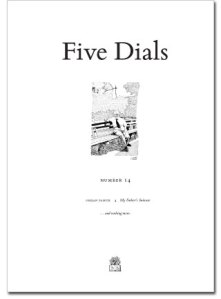
[READ: July 3, 3011] Five Dials Number 14

If Five Dials 13, The Festival Issue, was a double live CD, jam-packed with photos and stories and all kinds of wonderment, Five Dials Number 14 is an EP.  Even though it contains only one item, it’s more than a single, because the item is long and a lot is packed into it.  And that ends my metaphor.

One of the fun things about Five Dials is that it can be whatever length it wants to be. Many magazines offer double issues, but they never offer tiny issues afterwards.  And sometimes it’s nice to have a short issue that you can enjoy leisurely, without having to sift through filler.

So this issue consists of exactly two items: Craig Taylor’s introduction and the nobel prize acceptance speech by Orhan Pamuk. Continue Reading »

SOUNDTRACKS. CAREY-Live at Sasquatch Music Festival, May 29, 2011 (2011).

I learned about S. Carey through NPR.  S. Carey is the drummer for Bon Iver and he set out on his own playing these cool, atmospheric songs.  What I like best about them is that they feature the vibes.

The whole set has a cool, chilled out sound.  The vocals are slow and dream-like (I’m sure there are lyrics, but I don’t know them) and at times he sounds not unlike Dallas Green from City and Colour.

When Sean (he is the S.) Carey banters with the crowd, he’s very friendly and relaxed.  I especially like the anecdote about going to the Twin Peaks Cafe and hearing Audrey’s music from the show (which the band then plays).  The Twin Peaks sounds melds perfectly with their own sound, which should give you an idea of what the band sounds like.

The songs are about 4 or five minutes except for “Mothers” which tops out at over 8 minutes and actually gets pretty raucous by the end.  For this band it’s a wild song ending.  It’s a good set.  And the surprise cover of Björk’s “Unravel,” which melds perfectly with “All We Grow” is a nice treat.

I don’t know if I’d want to see them live (I like my shows a bit more uptempo) but it’s a great relaxing set.  Of course, having said that, the final track, “Leave” is the most conventional-sounding with a really catchy chorus and a somewhat faster pace.  It’s my favorite song of theirs.

[READ: July 13, 2011] “Homage to Hemingway”

Like the students in this story, I was initially put off by the title of this book because I have grown to dislike Hemingway (probably unfairly, more of a decades-long, knee-jerk reaction to him). But I’m glad I read it because of a couple of things.  One: it was a good story.  Two: it is actually an homage to one of Hemingway’s stories (called “Homage to Switzerland”) so it’s doubly meta-.

In “Homage to Switzerland,” there are three brief stories.  In each one an American man waits for a train in a Swiss station.  Each man follows the same basic trajectory in the story, meeting a waitress but having no real resolution.  Perhaps the men, even though they had different names, were maybe the same person.

Barnes’ story also has three parts, although it is pretty clear that the man is the same in each part, despite their different section titles.  In 1. The Novelist in the Countryside he helps students with their fiction (I rather like reading stories about fiction writing classes, as odd as that sounds). Continue Reading »

SOUNDTRACK: POTTY UMBRELLA-4 Tracks on MySpace (2007).

The internet is a fascinating thing.  While looking up Basia Bulat, I stumbled upon a Polish music website.  That site featured a review of an album by Noël, Pleszyńskiego, Maćkowiaka.  It turns out that Artur Maćkowiak was also in a band called Potty Umbrella.  And Potty Umbrella have a MySpace page with 4 songs on it from their 2007 album Forte Furioso.  

Potty Umbrella is a (mostly) instrumental band that plays pretty great alternative/psychedelic/ jazzy rock.  I suppose they’re a jam band, although the Polish language SavageSaints blog (technically called … którędy pójdą dzicy święci) describes them as “New wave of Polish post-jazz.”

The songs are wonderful.  “Gone” opens with the waving guitar and delicate riffs of an Explosions in the Sky song.  But it soon shifts with the propulsive bass of a jazz song.  It’s a wonderful medley of the two styles.  And when the keyboards come over the top, it adds yet another layer of musical stew to this mix.

“Jet Lag” continues the manic fun with a 6 minute  (actually most  of the songs are 6 minute) blast of energy.  Crashing drums open a sinister spy-movie theme (with wicked-sounding guitar lines).  By the middle of the song, wah wah guitars and super fast keyboards have converted this into a cool jam.

The track “Dr. Pizdur” is wonderfully wild, with some great keyboard sounds over the top of the funky guitar/bass lineup.  And the live track “Nymph’s Song” (sung in rather forced English) rocks really hard.

Potty Umbrella will never have a big following in the States (although there are YouTube videos of them playing in Canada), but the underground fanclub can start right here.

[READ: June 24, 2011] “Gravel”

Readers here know that I love Alice Munro.  I think that she is one of the best short stories writers around.   Of course, if you know what other kinds of writers I like you might be surprised by this declaration–because I love florid prose.  But Alice Munro is the antithesis of that.  She writes succinct stories, with very little in the way of flourishes.  Sometimes they have action, but usual there’s very little and, like in this story, the action is not the point of the story.  And yet for all of that, the stories are quite powerful.

This is the story of a young girl (written from the point of view of the girl when she is an adult).  When her parents separated she, her mother and her older sister Caro moved to a trailer park (with their dog Blitzee).  The reason her parents separated is because her mother became pregnant.  And she told everyone that the baby was Neal’s.  Neal was an actor in the town’s summer theater troupe (he drifted from job to job but always had enough to get by).

Caro was a headstrong girl, but since this is her sister’s story we see Caro’s actions from her sister’s perspective.  On two occasions, Caro sneakily brought Blitzee to their old house (where their father still lived)–pretending that he had run back to the house.  The parents were amazed and perplexed at first, but caught on when it happened again so soon. Continue Reading »
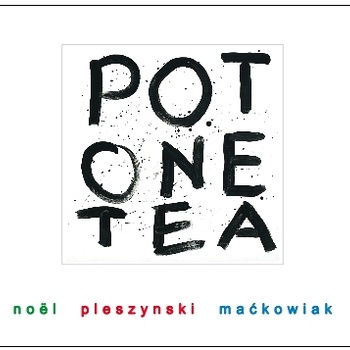
SOUNDTRACKNOËL, PLESZYŃSKI, MAĆKOWIAK-“Salty Air” (2011).

While looking for videos of Basia Bulat, I stumbled upon a Polish music site.  The site featured a review of this album and a free stream of this song.

The album is a collaboration of artists Ann Noël, Grzegorza Pleszyńskiego and Artura Maćkowiaka (Ann Noël, Grzegorz Pleszynski and Artur Maćkowiak).  Their website explains the collaboration (in translated English obviously):

It is for the first time that Fluxus artist Ann Noël and a visual artist Grzegorz Pleszynski engage in a music venture. For Maćkowiak, a musician from Potty Umbrella and Something Like Elvis, this project has become an unprecedented way to go beyond rock band routines known for years.

Potty Umbrella?  Love it.

Anyhow, this is experimental improv music of the most fascinating kind. Especially since, “Ann and Grzegorz have never played music or any instrument.”  The site allows you to listen to all of the tracks.  “In Emmet’s Bag” is a spoken word piece in the spirit of Laurie Anderson (the spoken part is in English).  And “Hey Man!” is a pretty conventional guitar with spoken word piece.

But it’s this track, “Salty Air” that I keep coming back to.  It opens with some guitar waves. Then a simple repeated riff entrs the mix.  And after a minute or so, distorted, echoed vocals speak underneath the music.  I think it’s in English but that’s irrelevant because the repeating and echoing makes it almost incomprehensible.

It doesn’t evoke a mood so much as a kind of helplessness.  But it’s a beautiful helplessness.  Especially when the second voice comes in, sounding almost inhuman as it moans over the top of everything else.  It’s quite a track.

 You can hear this song (and others, and download the CD for $.50) at their site.

[READ: July 10, 2011] “The Swan”

“The Swan” was a wonderfully dark and confusing story.  I loved everything about it.  It opens with the very simple scene of David coming home from work and knowing something was wrong.  His wife Suzie is acting very strange, and where the hell is the car?  Suzie tells him that she was hit by a car and that her car was totalled.  Why didn’t she call him at work?  She didn’t think it was that big of a deal.

He doesn’t know what to think so he turns his anger towards his seventeen year old son (from his first marriage).  Jamie is upstairs in his room, smoking pot and more or less ignoring everything around him (a trait he has perfected).  When David finally breaks through to Jamie, he learns the truth–Suzie was hit by a swan.

The story unfolds a little more: Suzie imagined that the swan was David’s first wife, coming to give her a message.  David is more freaked out by this than Suzie seems to be.  He can’t understand why suddenly all these years later, she is so upset about his first wife (who died, before David met Suzie, by the way).  Suzie wants to know why David never talked about her (she didn’t want to know back then).  And then finally she winds up spending most of her time with a sketchy woman across town. Continue Reading »

SOUNDTRACK: BASIA BULAT-“The Shore” (2010).

I loved Basia Bulat’s “In the Night” which wa s fun, uptempo folk rocker.  “The Shore” is a hauntingly beautiful, wistful ballad.  “In the Night” featured the autoharp as its main instrument, but “The Shore” features the pianoette as its sole instrument (on this recording anyway, I haven’t heard it on the record).

Listenin to the song is great, a wonderful expereicen.  But once you watch her play it, the song is even more powerful.  This video in particular is enchnating–where is this beautiful open room?  How did she learn to play the pianoette?  What is that little hammer she’s using?  Is anyone not blown away the first time she hits a string for multiple notes and the song goes from simple to majestic?

And what do you suppose uwolnijmuzyke means?  I don’t know, but it’s a really cool music site from Poland.

Pretty good, huh?

[READ: July 13, 2011] Dining with the Tiger

I wasn’t going to talk about this “review” either.  But several things stood out for me:  John Banville!  It’s hard to pass on him.  I also seem to be talking a lot about food this week (what with Will Self, Jun’ichirō Tanizaki and Lucky Peach in general).  And because I have to wonder if my friend Lar knows of any of restaurants that Banville mentions (now that he is a landed, married gentleman and not the post-graduate guy who would take an American mate to an “American” diner on Grafton Street–which was lorryloads of fun, make no mistake).

So Banville gives a brief run through of the state of Irish restaurants circa the end of WWII–as in, there were none.  Then came the 1990s and the critical moment in Irish culture–the scandal of Bishop Eamon Casey and his unexpected son. The scandal seemed to rock the country, but mostly it made them let fall the shackles of conformity across the country.  Banville suggests that such a major event could have shaken a Catholic country to the core, but in Ireland, it seems to have just woken everyone up to the possibility of making money. Continue Reading »