Feeds:
Posts
Comments

02013SOUNDTRACK: THE CAPSTAN SHAFTS-Revelation Skirts (2010).

capstanI’d never heard of the Capstan Shafts when Sarah bought this disc for me for Christmas a few years ago.  (It was in the NPR recommended discs for 2010).  Turns out the band has been around for nearly 20 years but have been making home recordings with little publicity for much of that time.  They (he, really, as it has always been one guy) finally decided to release a proper album with a second guy in the band.  I wouldn’t have known any of that if I hadn’t looked it up just now–because even with the accolades, this is still a low selling record.  I also wouldn’t have known that for some fans this album is the commercial sellout for this band who usually makes weird personal songs.  And yet I like this album a lot–and it is plenty weird.  Or perhaps a little weird-sounding–like the buzzing noisy guitars (which I guess are from the “new guy”).

The songs are pretty straightforward folkie indie rocky.  They are bouncy and poppy, and the buzzy guitar solos adds a nice contrast to that bounciness   There’s an air of Guided by Voices (“Let Your Head Get Wrong”, with the singer’s slightly faux British accent (he sounds like about half a dozen different singers throughout the disc).   There’s definitely a feel of 90s rock here–maybe Sebadoh (“Little Burst of Sunshine”) or even Dino Jr (“Versus the Sad Cold Eventually”).  The album has 14 songs in 30 minutes–and it feels like a full record–there’s not a lot of shilly-shallying with solos or extended verses, and yet the song are not fast punk tracks either–the pace is leisurely.

I really enjoyed this record and I like popping it in from tome to time for a good album that will never be overexposed.

[READ: February 5, 2013] “The Bloodline of the Alkanas”

I found this story to be quite challenging.  The prose was awkward and not very fluid.  I found it slow going until the end, but even that seemed a mite slower than necessary.

This story has three informal parts.  The first shows the narrator’s parents–her father is Cyrus Alkana, a poet who believes in older, more formal rules of poetry.  He is passionate, but far more passionate about his dislike for more modern writers, especially Alexander Alcott to whom he writes nasty letters.  Or actually his wife writes them–she does everything for him believing unquestioningly in his genius.  She works a full time job then comes home and takes care of the house and also types his correspondence.

The parents have no respect for the narrator because she did not receive The Bestowal–what they call the poetic gift.  The narrator doesn’t care about any of that–she explicitly states that she doesn’t know half of the poets that her father admires.  Consequently, her parents show her no respect.

Cyrus can’t seem to get published anywhere.  His wife unfailingly sends out his poems but they receive nothing.  Finally, she decides to bundle up his work and to include a cover letter expressing how wonderful the work inside is.  We later learn that the name she put on the letter was Alexander Alcott.  Obviously, this would show an instant sign of respect and it would be a rather shocking development in the land of poetry.  Especially when the publisher agrees to publish the book only if Alcott’s accolades are included.

The narrator is understandably freaked out about this–her mother is publicly defrauding another (far more famous) writer–surely there will be hell to pay.  But her mother is not concerned in the least.  She says that Alcott will be happy for the publicity.  After its publication  critics do talk about it–most wondering what happened to Alcott to endorse such a poet, but there is never any formal repercussion.  And no word from Alcott at all. Continue Reading »

02013SOUNDTRACK: TRENCHMOUTH-More Motion: A Collection (2003).

moremotionSeven years after they broke up, a Trenchmouth compilation was released.  Does a band with four albums, no chance of hits and a bizarre evolution of sound warrant a collection?  Well, in that most of their discs are out of print?  Yes.  In that Fred Armisen has become more and more famous and people might be curious what his band sounded like? Sure.

The fact that there are a few rare songs is a nice feature, although again, most of these albums are hard to find anyhow, so they’re almost all rare.  But what this disc really shows is the fascinating evolution of the band from noisy punks to smooth dubsteppers.  I have two of their albums and that progression is not really clear, but hearing them all laid out in chronological fashion it all becomes apparent.

The early songs are noisy and  jittery–the kind of songs that they would perfect on their second album, they’re just not quite as screamy.  As if they haven’t quite pushed the envelope far enough.  “Making Money for the Freak Machine” comes from an early 7″.  The song is challenging because of several abrupt halts–the song sounds like it ends but then after a longer than expected pause it resumes with a bass heavy reintroduction.  “Gold” and “The Volcanic Action of My Soul” show the kind of music they would be known for–bass heavy, noisy guitars and chanted choruses.  “Volcanic” in particular rocks hard (and the chorus is great).  Armisen’s drumming is great too.

The bulk of the songs of the collection come from Inside the Future and they are really a highlight.   They sound great in this context, too.  There’s also five songs from Vs the Light of the Sun.  Hearing the music chronologically like this, you can hear that the band is moving away from the frenetic punk and into a more dub style.  Although there’s still a lot of noise and noodly guitar solos and such.

By the last four songs, the dubstep version of Trenchmouth is fully in play.  The jangling wild guitar solos have been replaced by subtle echoing guitar notes.  The bass is as wild as ever, but the pace is slower  The instrumental “Contrast Beneath the Surface  is downright mellow–things seem calmer without Damon Locks sing/screaming).  The final song is live and the audience really responds.

The switch to the dub sound is an interesting choice–possibly a chance to make more money although it seems like jumping from an unpopular niche to a more unpopular niche.  Did their later live shows have both sides of the band?  That would be crazy.  Nevertheless, this is a good collection of songs from an underrated and really, unknown band.

[READ: February 5, 2013] “That Doubling is Always Observed”

I don’t know Robert Leonard Reid.  And I don’t understand this story at all.  I don’t even really understand this type of story–it is a very detailed history of a fictional thing.  It’s not so much a story as a historical background–told in sections that sound very formal and official.

The story is about the kupuestra which appears to be some kind of un-sensual dance.  Reid devotes many paragraphs to explaining this “dance” and its unsensual nature.

Edward Vekner was the father of the kupuestra, although that seems to have been accidental–his heart attack appears to have inspired others to emulate his moments.  There’s also someone named Lop, a woman who sank into the kupuestra (which means she was very good at it).  Lop was brittle like a cracker and the color of bacon grease–in other words, perfect. Continue Reading »

clickSOUNDTRACK: BEACH HOUSE-Teen Dream (2010).

teendreamI didn’t know Beach House until this album got huge raves in end of the year lists.  I decided to investigate it and I was really pleasantly surprised by the album’s Cocteau Twins meets My Bloody valentine feel.  I have recently read that their first two albums were not quite as big and full and orchestral as this album, which meant that this one marked a recording (but not necessarily song stylistic) change for the band.  Part of me wants to hear what the earlier, more homemade version of the band sounds like, and yet I like the full almost orchestrated feel of this album so much that I can’t imagine going back to a less big sound.

The album opens with a delicately reverbed guitar riff—it feels warm and summery and then the angelic voices kick in and the ahhhs launch the song into the stratosphere.  And it pretty much stays there for the whole album.  There’s virtually no bass and only the slightest hints of drums (time-keeping measures rather than percussion).  Well, okay, “Better Times” has drums but even they are mild.  Victoria Legrand’s voice just soars, sometimes in staccato bursts, but mostly in otherworldly seeming falsetto (with occasion moments when she sounds kind of masculine and yet still angelic–it’s an amazing range).  There’s mostly reverbed guitars but on some tracks like “Used to Be” there are keyboards as well.  They’re even more prevalent (and more 80s sounding) on “Lover of Mine.”

Despite the sameness of the songs, the album doesn’t feel like one song repeated over.  The melodies are unique and the composition of the songs really shows a lot of diversity within a format.  Like “10 Mile Stereo” which has a faster pace than the other but still maintains that ethereal vibe.  Or “Real Love” which introduces a piano into the mix, and the song feels a little less ethereal, but only a little.  The album is also not too long.  It’s like a wonderful blast of summer.

The CD comes with a DVD with videos for each song, although I have not watched them yet.

[READ: February 11, 2013] Click

I discovered this story because it was listed in Roddy Doyle’s bibliography on Wikipedia.  I’m somewhat surprised that I’d never heard of it as I know so many of the authors that were involved (indeed, several of them are involved in the 39 Clues, another multiple author series).  This book is billed as a YA book and I guess it is as many of the sections are about teenagers, but some characters grow old and there’s some talk of the bombing of Hiroshima which may be a bit intense (there’s no pictures and no detailed descriptions, but still…).  It is a quick read though, so I guess it can qualify as YA.

The story is about a photographer named Gee (real name George Keane) and how he impacted so many lives.  In the first story/chapter (each chapter is like a short story that contributes to the overall picture and each one of these is written by someone different), written by Linda Sue Park, we learn that Gee has just died.  He left his granddaughter Maggie (who I came to think of as the “main” character, even though she doesn’t appear in every story) a box with seven compartments.  In each compartment was a shell with a clue, suggesting that she should take all of the shells back to where they came from–a subtle encouragement to travel the world.  But Maggie is utterly distressed by Gee’s death and she can’t get off the couch where she used to spend time with him.  Eventually her parents offer to take her to one of those locations–Japan–getting her life started at last. Continue Reading »

alsion1SOUNDTRACK: THE DOUBLECLICKS-Pirates!  The PPDXYAR EP (2012).

pdxyarI wanted to explore more of The Doubleclicks’ music, and their site showed off this EP.  It was made for Talk Like a Pirate Day (you’re already sold, right?) and EP is a tribute to the Portland Pirate crew of PDXYAR (whatever that is).  The first song is “The Pirates of PDXYAR highlights what I’ve come to understand is the real Doubleclicks sound: ukulele and cello.  But this one also has a host of backing vocals (make and female).  The song is all about the pirates of PDXYAR and how they came to be and how the represent Portland.

The second song “How Not to Touch a Pirate” is a simpler song which insists that, tempting as it may seem, you should NOT be touching any of the pirates (this seems like a real inside joke).  Its amusing and would probably be funnier if I knew more about PDXYAR.  And oops, this song even has an F-bomb at the end–watch out!

The final track is a remix of “The Pirates of PDXYAR, ”  And mostly it allows more funny backing vocals.  It’s a better, funnier track because of it.

I’m not sold on The Doubleclicks yet.  I like them, but I think more in small doses.

So it turns out that PDXYAR is a Portland-based pirate crew, which you can read about on their website.  The lyrics to the song seem to explain  the origins of the pirates (kickstarter).  Frankly, I don’t know why the pirates (and the Doubleclicks) haven’t appeared on Portlandia yet.

[READ: February 7, 2013] Alison Dare: Little Miss Adventures 2

Volume 2 of Alison Dare is just as fun as Volume 1.  Although I admit the first story was a little confusing (I was never really sure exactly how these books were published originally, so it wasn’t clear that the first few stories were connected.  Although in retrospect it seems obvious enough.

In the first story, “What I Did on My Summer Vacation” it’s obvious that Alison doesn’t have much in the way of the excitement that girls expect from her.  So she makes up an elaborate story which all of the girls (except her two close friends) find wonderful   In “The Unbelievable Truth” we see what really happened (and we see that Alison’s story wasn’t far off, but that details make all the difference).

In “The Perfect Gift” the Blue Scarab (aka Alison’s dad) searches for the perfect gift for his daughter.  But that proves harder than he thought, especially when she accidentally takes a precious jewel that he has recovered in a mission.  In “A Day at the Museum” the girls open something they shouldn’t and unleash a plague.  This ties to the previous story in an unexpected way.  And in “The Gift Exchange” the previous two stories come together for a satisfying conclusion. Continue Reading »

TintinLotusSOUNDTRACK: THE DOUBLECLICKS-“The Internet National Anthem” (2012).

inatThe Doubleclicks are a sister duo from Portland, Oregon.  They are nerdy and fun (perhaps we can think of them as non-accordion, female They Might be Giants?).  Take “The Internet National Anthem”,” a song  with a steady four/four beat, cellos and  a suitably anthemic chorus, that’s all about the internet.

I was introduced to this band from Kid’s Corner, although I feel that perhaps their songs aren’t really for kids (not that they’re inappropriate but they seem more sophisticated than a typical kids song.  Like this song has big words and it is quite funny.  Although in all honesty it’s not laugh out loud funny, just mildly funny.  It’s got the vibe of Garfunkel and Oates, but not the big guffaws.

Check out their albums here .

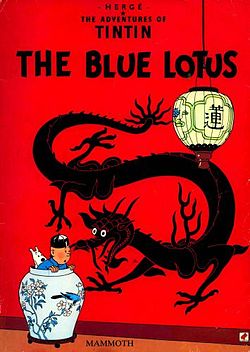
[READ: February 8, 2013] The Blue Lotus

This third (technically fifth) Tintin book is the continuation of Cigars of the Pharaoh.  One of the characters from Pharaoh returns in this book, despite the fact that it is set in China.  This book also continues with Hergé’s having it both way in terms of other races.  His drawings are caricaturey and depending on your sensibilities/appreciation for drawing skills/tolerance are either really racist or simply in poor taste (although it does seem to be that the bad characters of other races are the most offensive–the good people are less crazy).

But despite the visual insensitivity, there are several section where Hergé explicitly talks about tolerance and understanding between races.  Like when Tintin saves the young Chinese boy, Chang, who says he thought all white devils were wicked.  Tintin explains that white people believe stupid things about Chinese people too  (eating rotten eggs, tons of unwanted babies in their rivers, etc.).  Chang says “They must be crazy people in your country).  As it turns out (quoting Wikipedia ), “The Blue Lotus is a pivotal work in Hergé’s career, moving away from the stereotype and loosely connected stories and marking a new-found commitment to geographical and cultural accuracy. The book is also amongst the most highly regarded of the entire Tintin series, and was the 18th greatest book on Le Monde’s 100 Books of the Century list.”  It’s quite progressive for the 1930s.

The plotlines from the previous book are continued: there is the poison that makes you crazy, the Pharaoh’s logo shows up and there are Indian characters returning as well.  And by the end Thompson and Thompson, the twin policeman who complicate each others sentences and prove to be more bumbling than we originally thought arrive to capture Tintin (although they believe in Tintin’s goodness–they’re only following orders, you see). Continue Reading »

elsewhere4SOUNDTRACK: GARBAGE-Not Your Kind of People (2012).

notyourkinddAfter Bleed, I had basically given up on Garbage.  And they had given up as well, so it made the breakup easier.  For seven years they stayed away, but in 2012 the band reunited and released Not Your Kind of People.  I wasn’t planning to get it–two great albums and two very mediocre albums l leave a listener with a tough decision   But I heard good things–a return to form, less dance more rock and I gave in.

And it was a good choice.  The slickness is still there, which makes sense given who we are dealing with, but it feels more powerful than recent albums and, even better, Manson seems angrier which always makes her vocals better.

“Big Bright World” could have been a hit (for a new band) although it’s a little generic.  “Blood for Poppies” returns to that good grungy guitar sound and yet with its “Wo Ho Ohs” it also has pop song trappings.  “Control” is big and loud with some interesting sounds thrown on top.  It’s probably the closest to 2.0  Even the chorus is very old school Garbage, something they seemed to shy away from on the last two albums.

“Not Your Kind of People is a slow ballady type song but it stands above their recent ballads–the song is cleaner and darker, much more interesting.  And given how sweet the backing vocals of the chorus sound, I’m surprised I like it as much I do.  “Felt” has a real “Stupid Girl” feel to it, except for the poppy bridge.  I don’t like the end where she repeats the Oh oh oh oh oh oh oh bit, but that’s just something I dislike about pop music in general.  “I Hate Love” brings in all of the glitches and electronics that the band uses so effectively, and despite the retro-90s feel of that, it really adds to the music.  “Sugar” is a beautiful slow song. The kind that, when they do it well, sounds great.

“Battle in Me”  is almost a great song.  The guitar builds and then stops short–it worked so well on “Supervixen” but sounds just too sterile here–the technology too crisp or something   But “Man on a Wire” does everything right–the guitars, Shirley’s screaming/singing, the rough guitars–it’s a shame this is buried so far down on the album.  “Beloved Freak” is a nice closer although as I complained from “Special” quoting someone else’s song in your song is cool once, but dong it again sounds lazy. So here we get her ending the song with a line from “This Little light of Mine” which doesn’t work and rather than making you smile like it did on Special it makes you go, “Huh?”  Plus as anyone who ever wrote a paper knows, never end with someone else’s words!

Still, this is a nice return to creative excitement from the band.  And while it never reaches the majesty of their first two albums it comes close to some of their past glories.

[READ: February 1, 2013] The ElseWhere Chronicles Book Four and Five

After a hiatus, Bannister & Nykko return with what feels like a new version of The Elsewhere Chronicles.  The look of the art is slightly different.  It’s clearly the same artist but the lines and angles look a little different on the characters–just a wee bit harsher.  It’s odd.  But it shows that things are a little different now.

The setting is nine moths after the end of book three.  Max has not spoken to any of the others since the lat book when his mother slapped him. Indeed, he’s been hanging around with his brother and his brother’s friends who are no good (especially to Max).  But Theo and Noah had rescued a bunch of things from Grandpa Gabe’s house.  They stored them safely somewhere before the house was demolished.  Meanwhile, Rebecca has been ill and hasn’t seen any of them.  She believes that the illness was caused in the other world and knows she needs to return there to get better.

Max is having a hard time with his new gang  They don’t respect him at all and he actually hates hanging around with them all.  In fact they just kicked him out of their gang and he is sulking when he believes he sees Rebecca.  Could she really have returned?  He follows her as she goes to her grandpa’s house.  She starts to break down when she sees that it was demolished.  She’s about to despair when and old friend sees her and gives her comfort.

Noah and Theo show her that they have Gabe’s possessions.  And they show her that the have figured out how to use the machine.  So they reactivate the passageway and the three of them return to the other world.  Before we can really see what happens over there, Max heads off to the hiding place.  He also passes through the passageway where he runs into Gabe who (after threatening to kill Max) offers to drive him to where Rebecca and the boys must be.

They arrive just as Rebecca and friends sneak into a cave.  Gabe says that the cave leads to nothing but danger.  And as the book ends, we see that that is true…. Continue Reading »

CV1_TNY_02_04_13Schossow.inddSOUNDTRACK: GARBAGE-Bleed Like Me (2005).

Wbleedhat happens when you take something slick and shiny and remove the shine?  You get something slick and dull.  And that’s the overall feel of Garbage’s fourth album.  After the dance pop of Beautiful Garbage, Bleed Like Me was d described as a return to the rock roots of Garbage.  And it’s true that there’s a lot more guitar.  But as in the production of Beautiful, the guitars feel really anemic–again, coming from Bitch Vig who made Nirvana’s guitars roar, this is a major surprise.

Worse than the production though s the utterly generic feel of the songs and the lyrics.  Manson was most powerful when she was personal.  Even if the songs were oblique, you knew they were about something.  But these songs just feel like words, and she sings them as if they were just words.

The single was “Why Do You Love Me” and it opens with a powerful heavy metal guitar riff.  But the verses quiet down and the chorus is fast but without any oomph.  It’s quickly forgotten and even the lyrics: “Why do you love me it’s driving me crazy” don’t really make you want to learn more about it.  “Run Baby Run” had potential for a radio friendly hit but it’s also quickly forgotten.

Then there’s the songs that seem to be about something.  “Sex is Not the Enemy” seems like it could be transgressive but it’s really not–it feels like a last stand from a beaten person rather than a rocking anthem.  Musically it’s mediocre and even lyrically it’s not that shocking/surprising.

“Boys Wanna Fight” brings some of that electronic feel back and it injects some life into the disc, but again the song isn’t that inspiring.

I wonder how much I would have liked this album without the history behind it.  I know that bands need to experiment and try different things, but it felt like Garbage fell especially far from the heights that I held them.  Garbage tool a pretty lengthy hiatus after this album–Shirley went into acting (catch her on Terminator: The Sarah Connor Chronicles) and it seemed like the band was finished.

[READ: February 7, 2010] “Zusya on the Roof”

I read a story with a very similar setup recently (not implying that Krauss read it or anything).  In Russell Banks’ story “Christmas Party” a divorced man goes to his ex-wife’s new house and takes her newborn baby and…  the story ends.  [Spoiler, sort of].  This story has a similar arc.  And I guess I don’t understand this arc.  Or maybe, although I’m usually okay with endings that are vague, when you have a person with a baby, there are so many different possible endings that not leaning in one way or the other is just unfair–yes we can get clues from the story, but one never fully knows what a person’s intentions are.

This story also relies a lit on Jewish tradition.  And I find a lot of Orthodox behavior inscrutable (as Zusya seems to).  So I tend to get lost in the traditions.  Especially when, as in this story, names are used to indicate a tradition that I simply don;t know (and yes, this is my fault, not the author’s, unless she wanted to appeal to a goyish crowd).

So in this story, Zusya is about to become a grandfather.  But he falls ill just as his grandson is about to be born.  In his haze of hospital care, the grandson is born and he imagines that he gave birth to the boy–a kind of my life for his deal.  And when the grandfather recovers, he has strong emotional ties to the boy. Continue Reading »

CV1_TNY_02_11_13Greiner.inddSOUNDTRACK: GARBAGE-Beautiful Garbage (2001).

beautifulI loved Version 2.0 but never really absorbed just how poppy it was.  So Beautiful Garbage took me by surprise.  It seem like more of a natural progression if you listen in sequence but it’s impossible to imagine that the buzzing guitars of “Queer” would morph into something like “Can’t Cry These Tears” in just two albums.  “Tears” is practically girl groupy, it is so poppy and Spektorish.  Yes, there are some buzzy guitars, but wow.  What’s more surprising though  is the amount of manipulation that is done to Manson’;s voice.  Garbage was always about deconstruction and technology–they always mixed genres, but “Til the Day I Die” uses some pretty generic voice scratching  as if trying for a pop hit.  Or more specifically a dance hit.

The single from the album, “Cherry Lips (Go Baby Go)” doesn’t even sound like Garage–Manson’s voice is so treacly it has to be processed (and indeed it was sped up for the song).  “Shut Your Mouth” also seemed to head straight for the dancefloor and the rather anemic introductory sounds of “Androgyny” were a surprise.  What’s weird is that even the aggressive guitar riff is really so wimpy compared to the earlier albums.   Which is not to say that the song is bad–the riff, wimpy though it may be is still a good one and the chorus is catchy as anything.  It’s just a different audience.

“Cup of Coffee” removes all of the dancey/techno and is a simple ballad.  And it sounds like the Garbage of old.  It’ a very pretty, sad song.  “Drive You Home” is also a beautiful natural-sounding ballad.

But “Breaking Up the Girl” is the closest to the Garbage sound of old(ish) it could easily have come from 2.0.  “Nobody Loves You” has a much more interesting guitar based sound as it opens–implying something grand.  But after the opening, the song slows down into a more dark feel.  “Uncountable” returns to the dance floor (and even has some”uh uh”s).

So, overall this is a weird and unsatisfying album.  It sounds like they gave up on the rock side of things because their poppy songs were such a hit. But at the same time it sounds like their hearts just aren’t in it.  Even Manson’s lyrics are kind of lame.  Which is not to say the album is a disaster, it’s just…different.

[READ: February 6, 2013] “The Embassy of Cambodia”

In Zadie Smith’s previous piece in the New Yorker (which was an excerpt from her novel), she broke her story into a series of small sections.  It was unexpected from her.  And now she  has done it again.  The story has as a basic plot point a game of badminton.  Accordingly, all of the chapters are listed as a badminton score (a one-sided rout actually): 0-1, 0-7, 0-21.

The sections are mostly brief and kind of bounce back and forth between the main character of the piece, Fatou, and the citizens of Willesden (represented by a a single person–who took it upon herself to represent them, even if they didn’t want her to).  This unnamed narrator gives background information about Willesden and the eyes of the community who watch Fatou go about her business.  The narrator also talks about the titular embassy and how it’s not that unusual to see a building like it on their street, even if they never really see anyone Cambodian going into it,

The only thing that people can really see from the outside of the embassy is the shuttlecock which can be glimpsed over the top of the wall that surrounds the embassy   Clearly there is some kind of field there, although no one has ever seen it.  They just see the birdie arc over (and then get slammed back).

And Fatou enjoys watching it and imagining the people inside.  For Fatou is a housekeeper and sort of child watcher for a family that lives down  the street (the Derawals).  Fatou is African and her prospects are bleak.  She is not paid to work for them–she gets free room and board in exchange for her services.  In fact she does not even know where her passport is (Mr Derawal took it and she hasn’t seen it since).  At one point, after reading an article about a slave girl, she even wonders if she might be a slave.  (She decides she is not). Continue Reading »

2013-03SOUNDTRACK: GARBAGE-Version 2.0 (1998).

2.0Garbage toured and promoted their debut for a long time.  And then they went back in the studio for the follow up.  After the success of the first one, the producers evidently tinkered and retinkered and reretinkered with Version 2.0 for ages.  I seem to recall Shirley Manson complaining that she had done her parts ages ago and was just waiting for the boys to stop playing with it.

And when they did, it was beautiful.  Look at the shiny packaging   The album cover was very graphic. All of the singles were very graphic and literally icon-ic. It was an amazing visual assault of a campaign.  And the album was like the debut only bigger slicker brasher more.  And I loved it.

In retrospect it is still good.  Quite good in fact.  But when pinpointing why the Garbage of today sounds so different, you can see it in 2.0.  The band definitely sounds more poppy, more dancey.   And Manson’s voice sounds more confident.  Less hidden behind gothy trappings.  She’s way out in front and indeed became the central focus of the band (despite the big names of the producers).  I was so enamored of Garbage and 2.0 that I never realized quite how poppy 2.0 was compared to the first.  The gothy dark side was replaced by a poppier sheen.  True, the lyrics were dark, but not quite as angsty (and they were a lot more about sex this time around).

Even though the music sounds similar there is a world of difference in the vocal styles of “Queer” and “I Think I’m Paranoid” which has her doing all kinds of vocal tricks   And “When I Grow Up” is practically all pop (with bright bah bah bah bahs).  “Medication” has an incredibly sweet section–Shirley’s gentle falsetto singing the “co-dependent” section is the great example of the dichotomy of Garbage.

“Special” is a slinky sexy song that quotes the Pretenders (something that was very cool at the time but which I feel has become something of a crutch for Manson/Garbage–quoting too literally from their sources rather than mashing them up).   “Hammering in My Head” has a cool keyboard riff and more of Shirley’s whisper/singing.  “Push It” references the Salt-n-Pepa song which is a little weird, but there’s great noisy guitars and slinky bass that makes the song it own.”The Trick is To Keep Breathing “is a the surprise song where the whispered quieter verses turn into a really pretty and prettily sung chorus.

 “Sleep Together” plays on that aggressiveness sexuality that Manson is so go at.  “Wicked Ways” ends with some really cool sequences (I don’t like the beginning that much for some reason).  And the disc ends with “You Look so Fine” a sweet track with a nicely multi-tracked vocal.  Although the album and song just kind of drift away at the end.

2.0 is an apt title, more of the same but bigger and sleeker.  But it seems to also point them in the direction of more technology that would come next.

[READ: February 5, 2013] “How Long and What a Marvel”

This is a very short story (about a page) and it is a very simple one.  But there’s a surprising amount of depth included.

The simple plot is that the narrator’s grandfather died and caused a seven hour delay of game.  What’s fascinating is that the game is never specified and I’m not exactly sure what game it might actually be.

The men from Three Mile came to their valley to play the first game of the season.  After a big meal, it was customary to start the game by having one of the old men come out, take his bat and challenge the slinger.  Many of the old men hadn’t survived the winter, but the narrator’s grandfather had and he went up to bat.  He was slow and dragging as he got up there.  (This sounds like baseball right?  Except the thrower is called a slinger and the innings are called frames.  Is it cricket?). Continue Reading »

bernSOUNDTRACK: GARBAGE-Garbage (1995).

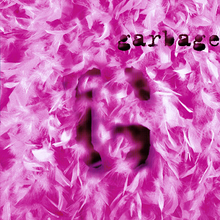
garbageWhen the debut Garbage album came out I was totally hooked.  I was initially skeptical of the album–the sneaky release of “Vow” with no hype (but hype), the Butch Vig connection.  But I heard it and wow.  Then the rest of the album did not disappoint.  I listened to this album so much it’s hard for me to even be objective about it.  For a time this was my favorite album.  My biggest celebrity bummer was when I found out that they were appearing at a Newbury Comics and I went to the wrong one.  By the time I got across town to the real location, the line was huge and the clerk cut off the line about four people in front of me.  Ugh.

I’m not sure what it was about this album–it’s slick, it’s technically overproduced (three producers who spent countless months tinkering with it) but it doesn’t really sound overproduced. It’s an interesting pastiche of pop, grunge, electronic and goth.  It’s a dark album for sure, but it has pop tones all over it.  It’s also musically interesting, like the way the disc opens.  The opening riff of “Supervixen” is a few notes and then just stops                            and then resumes.  It’s weird and off-putting for the opening of an album and it immediately grabs you.

Then you get the sultry goth-lite of “Queer.”  Overtly sexual, dark and sneaky it’s a perfectly naughty radio friendly alt rock song.  This was released during a time when women were ruling alt-rock, so it wasn’t singular in any way, but it certainly led the way for more women fronted gothy bands.  And so did “Only Happy When it Rains” –the surprise mope rock hit.

“As Heaven is Wide” is a really dark song, understandably not a hit, but really sexy and groovy.  “Not My Idea” brings in some of the first non minor key chords–where Manson sings in her sweeter voice until the raucous chorus.  “Vow” seems like such an unlikey first single–the stuttering guitar the nonsinging vocals, it really doesn’t showcase Shirley’s voice all that well.  But as a middle of the album song it’s nice and hard hitting.  “Stupid Girl” was also pretty huge–it’s got some wonderfully raw sounds to keep it from being too treacly (well and the lyrics do too, of course).

“Dog New Tricks” has a lot going on musically underneath Manson’s voice that I still find it really compelling–like the staggered guitars that don’t seem to fit, but do.  “My Lover’s Box” (which I always assumed was called “Send Me An Angel”) is another slow sultry number although the guitar riff is way too reminiscent of Aldo Nova’s one hit (“Fantasy).  “Fix Me Now” is one final loud, oddly upbeat song, followed by the wonderful gothy closer “Milk” which emphasizes keyboards in a way that the rest of the album doesn’t.

It’s a great debut, an album that I still regard very highly even if I don’t listen to it all that often anymore.

[READ: February 3, 2013] Where’d You Go, Bernadette

Sarah brought this book home and said I would like it.  And I was able to read a few pages when she ran into a store and it was very funny so I couldn’t wait to read the whole thing (despite the rather stupid cover).  Maria Semple was a writer for Arrested Development among other shows and recently turned her pen to novels (this is her second book).

One of the delights of this book was having literally no idea where it was going.  Meaning that by the end of Part Two (there are six parts), I really had no idea where it would end.  By the time it ends it all makes sense, but it wasn’t telegraphed, which is pretty cool.  This book also ties nicely to Mr Penumbra’s 24 Hour Bookstore.  In Penumbra, much of the action took place at and around Google.  In Bernadette, much of the action takes place in and around Microsoft.  Based on these two fictionalizations, it sounds like Google is a more enjoyable place to work as Google gave you free food made to your specifications whereas in Microsoft all they had was free candy machines (and lots of layoffs and jealousy that they can’t use an iPhone).

The story is narrated by Bee, and eighth grader who scores all S’s on her private school report card (S is the highest you can get, since they don’t believe in grades).  The note accompanying the report card raves about Bee’s intelligence, generosity and helpfulness around the school).  That night at the dinner table, Bee tells her parents what she wants for getting such a great report card (she had always wanted a pony, but has changed her mind): She wants to go to Antarctica on a cruise with the family.

This presents a problem for Bee’s mother Bernadette because she pretty much never leaves the house.  Well, she does, but only to drive Bee to school.  She has recently started outsourcing her life to a woman in India (for 75 cents an hour). The woman does literally everything for her, including making reservations at a restaurant 1/2 a mile from Bernadette’s house.  But Bernadette wasn’t always like this.  Indeed, she was once a future star in the architecture field until the tragic event that changed everything for her.

That change inspired a move with her husband, Elgie, to Seattle (a city which she now loathes–in great detail) where he found a job at Microsoft.  He thrived there and soon was put in charge of the Samantha 2 project–a program that allows you to interact with all your devices using only your mind (his TED talk is the fourth most viewed ever!). Continue Reading »