Feeds:
Posts
Comments

SOUNDTRACK: MAL BLUM-“See Me” NPR’S SOUTH X LULLABY (March 13, 2018).

I feel like I was pretty lucky to see Mal Blum just days before they went to SXSW and made a Lullaby.

Without the band, Mal sings more quietly which certainly lets you hear the words more clearly–and Mal is a gifted lyricist.  But Mal also writes catchy tunes.

I love that the verses are quiet and muted, but there’s loud strumming in between.

And as the song nears the end, the intensity ratchets up for a line of “why can;t they see me?”  …before the quiet conclusion: “I was right there.”

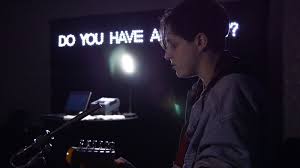
Mal performs in front of the Future of Secrets art installation.

The Future of Secrets was conceived by Sarah W. Newman in collaboration with Jessica Yurkofsky, Rachel Kalmar and metaLAB at Harvard. The installation, which is part of the SXSW Art Program, asks those attending to anonymously type a secret into a laptop and in exchange someone else’s secret is given to you. Those secrets are then projected on a wall, which is the backdrop for this video.

“‘See Me’ is an unreleased song that will be on our next record (sometime next year),” Blum tells NPR. “It’s about the disparity between how one sees oneself, or the struggle of being seen as we are, versus how others view us, which can result in an unintentional hidden self or a perpetual feeling of invisibility. Being transgender informed the song, but it’s not exclusively about that.”

[READ: September 10, 2017] “An Education”

This is a short piece about two girls in school  I assume it is set in Hungary as it is translated from the Hungarian by Len Rix.

The narrator said she was always a hard-working child filled with self-discipline.  But her parents never understood that she did it all for herself–not for them or to make anyone else happy.  Her father was the school principal and was absolutely proud of her–she was hardworking and punctilious like he was.

Her mother, on the other hand, was clearly more loving to her sister Blanka–when she lost her temper with Blanka “there was something frenzied and indiscriminate about the way she pummeled her.”  Her father tried to push her very hard to make her learn more.  Her father was far more proud of the narrator than Blanka, but “no one was ever as proud of me as Blanka [was].” Continue Reading »

SOUNDTRACK: JOHN PRINE-Tiny Desk Concert #717 (March 12, 2018).

For all of the legendary status of John Prine, I don’t really know that much about him.  I also think I don’t really know much of his music.  I didn’t know any of the four songs he played here.

I enjoyed all four songs.  The melodies were great, the lyrics were thoughtful and his voice, although wizened, convey the sentiments perfectly.

The blurb sums up things really well

An American treasure came to the Tiny Desk and even premiered a new song. John Prine is a truly legendary songwriter. For more than 45 years the 71-year-old artist has written some of the most powerful lyrics in the American music canon, including “Sam Stone,” “Angel From Montgomery,” “Hello In There” and countless others.

John Prine’s new songs are equally powerful and he opens this Tiny Desk concert with “Caravan of Fools,” a track he wrote with Pat McLaughlin and Dan Auerbach. Prine adds a disclaimer to the song saying, “any likeness to the current administration is purely accidental.”

I thought the song was great (albeit short) with these pointed lyrics:

The dark and distant drumming
The pounding of the hooves
The silence of everything that moves
Late in night you see them
Decked out in shiny jewels
The coming of the caravan of fools

That song, and his second tune, the sweet tearjerker “Summer’s End,” are from John Prine’s first album of new songs in 13 years, The Tree of Forgiveness.

He introduces this song by saying that.  This one is a pretty song.  It might drive you to tears.  He wrote this with Pat McLaughlin.  We usually write on Tuesdays in Nashville because that’s the day they serve meatloaf.  I love meatloaf.  We try to write a song before they serve the meatloaf.  And then eat it and record it.

For this Tiny Desk Concert John Prine also reaches back to his great “kiss-off” song from 1991 [“an old song from the 90s (whoo)…  a song from the school of kiss off 101”] called “All the Best,” and then plays “Souvenirs,” a song intended for his debut full-length but released the following year on his 1972 album Diamonds in the Rough. It’s just one of the many sentimental ballads Prine has gifted us.

He says he wrote it in 1968…when he was about 3.

Over the years, his voice has become gruffer and deeper, due in part to his battle with squamous cell cancer on the right side of his neck, all of which makes this song about memories slipping by feel all the more powerful and sad.

“Broken hearts and dirty windows
Make life difficult to see
That’s why last night and this mornin’
Always look the same to me
I hate reading old love letters
For they always bring me tears
I can’t forgive the way they rob me
Of my sweetheart’s souvenirs”

The musicians include John Prine, Jason Wilber, David Jacques and Kenneth Blevins.


[READ: December 11, 2017] X

I really enjoyed Klosterman’s last essay book, although I found pretty much every section was a little too long.  So this book, which is a collection of essays is perfect because the pieces have already been edited for length.

I wasn’t even aware of this book when my brother-in-law Ben sent it to me with a comment about how much he enjoyed the Nickelback essay.

Because I had been reading Grantland and a few other sources, I have actually read a number of these pieces already, but most of them were far off enough that I enjoyed reading them again.

This book is primarily a look at popular culture.  But narrowly defined by sports and music (and some movies).  I have never read any of Klosterman’s fiction, but I love his entertainment essays. Continue Reading »

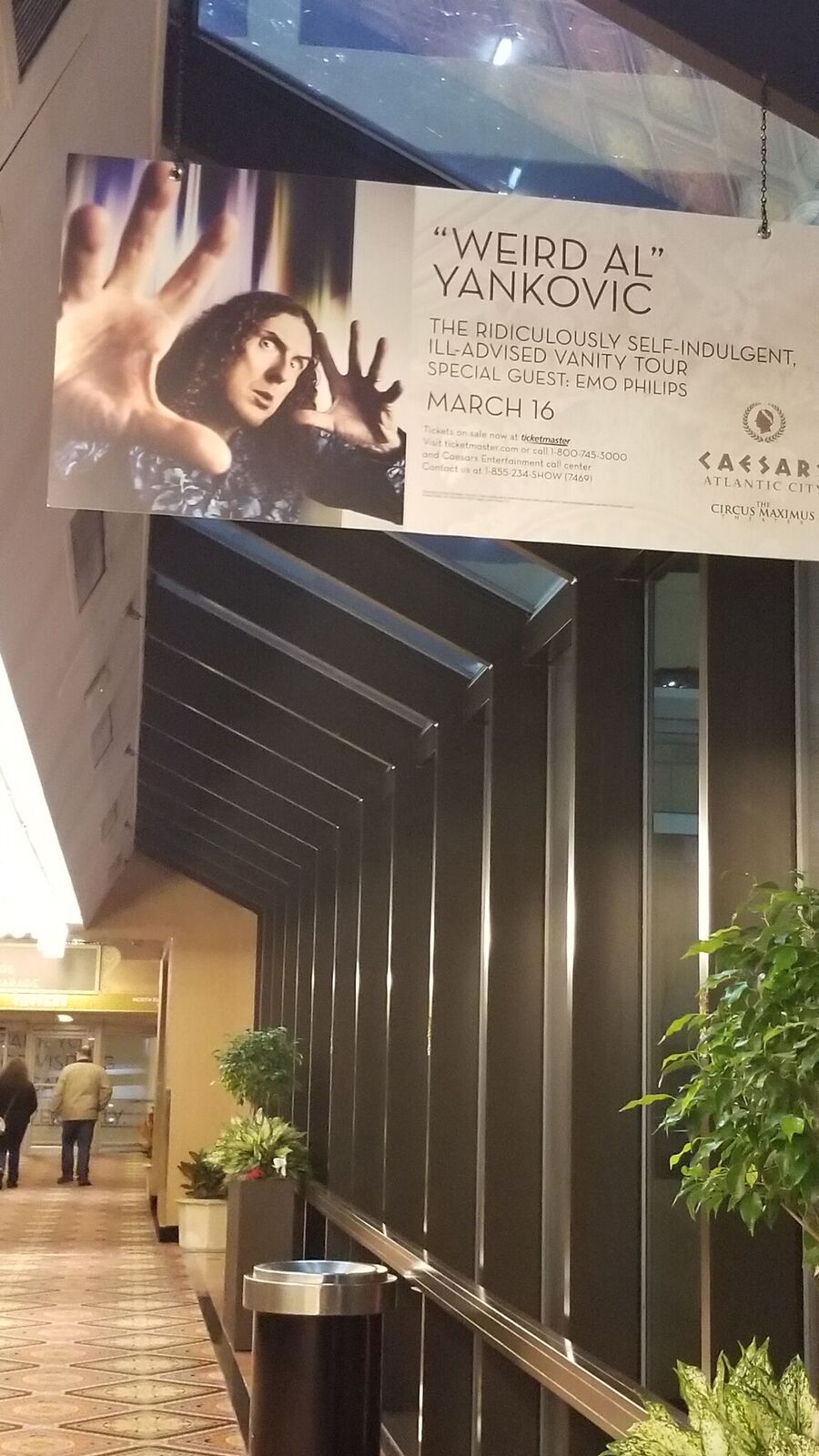
[ATTENDED: March 16, 2018] “Weird Al” Yankovic

The last time I saw “Weird Al” I kind of assumed that would be the last time I saw him…  I love his shows but I have seen him possibly more than any other performer.  I joked with my friend Matt that I wished he would play a deep cut amid all of the hits.   his originals.

Well lo and beheld, Al listened and announced this tour, the brilliantly named The Ridiculously Self-Indulgent, Ill-Advised Vanity Tour.  And when he announced the show, he explained that there would be no costumes: “Please note: this is a scaled-down tour in smaller, more intimate theaters, with limited production (no costumes, props, or video screens) and Al’s set list will be comprised almost entirely of his original (non-parody) songs.” Continue Reading »

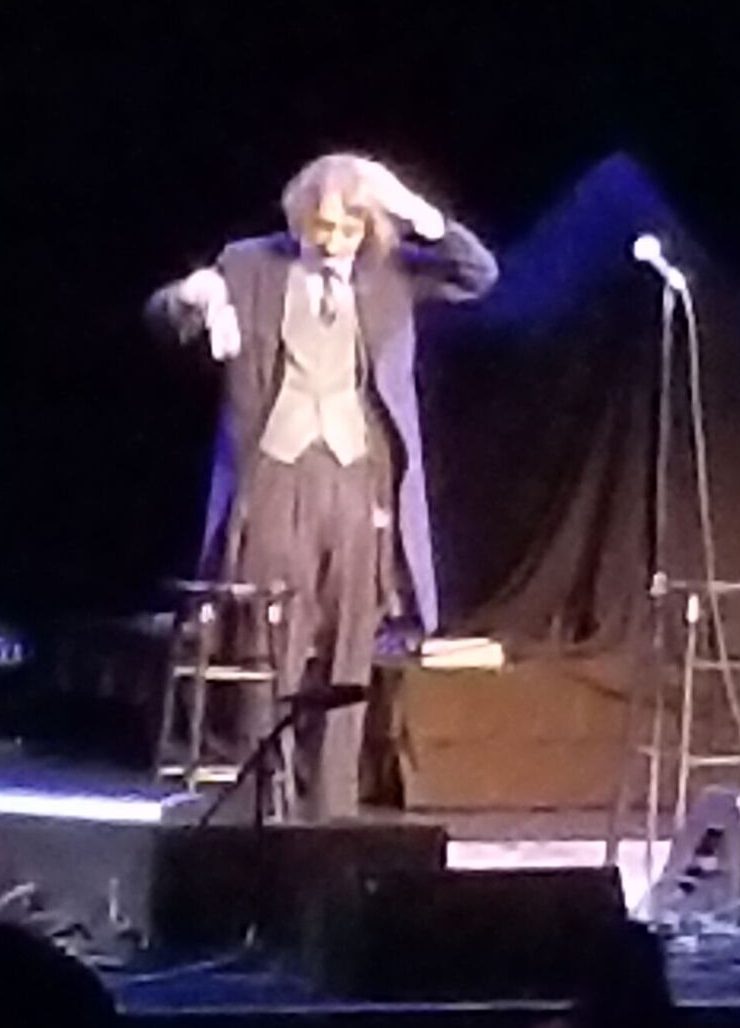
[ATTENDED: March 16, 2018] Emo Philips

I don’t really know all that much about Emo Phillips.  I know that he was kinda popular in the 1980s, but I didn’t know he was still doing stand up–I’ve mostly known him through his association with Weird Al.  Emo was in UHF as the shop teacher who (spoiler) cuts his fingers off.

Well, apparently Emo has been plugging away all this time and has remained friendly with Al.  So for Al’s Vanity tour, he asked Emo to open.  Emo even made a joke about this.  He said that during the filming of UHF, he asked Al when the two of them might tour together and Al said (mockingly) “when donald trump is president.”

Emo’s comedy is really dark but–delivered in his bizarre manner that goes somehow beyond deadpan–it makes his jokes really hilarious. Continue Reading »

SOUNDTRACK: KUINKA-Tiny Desk Concert #716 (March 9, 2018).

Kuinka are a happy band.  Smiles are on all four members’ faces as they play their three songs.

Miranda Zickler says that they spend all of their time in the van listening to NPR, so this is pretty exciting for them.

The blurb says:

Last year I came across Kuinka (coo-WINK-uh), a band from Seattle… Kuinka’s live performance knocked me out even more than the creative video they’d submitted for the contest.

Since then, Brothers Zach (guitar) and Nathan (mandolin) Hamer, along with Miranda Zickler (keys) and Jillian Walker (cello), have come to D.C. for an official performance at the Tiny Desk, bringing with them their great harmonies and unique blend of energetic, string-band music with a dose of synth.

I’m not sure what the band sounds like normally–if they typically play electronic drums or what, but as the blurb notes

The songs are performed here on relatively tiny instruments, including a ukulele, a drum pad, a small synth, a mandolin and a banjo, along with an electric guitar. But the performance is fleshed out beautifully with rousing vocal harmonies.

All three tracks performed here are from Kuinka’s 2017 EP Stay Up Late, and each one has its own charm.

“Curious Hands” has lead vocals by Miranda.  There’s a cello, keys and Nathan playing a small acoustic six string guitar (or ukulele?).  He gets a pretty big (largely percussive) sound out of that little thing.  But it’s the harmonies that are really spectacular.  I feel like the electronic drums are a little too electronic for this largely folk band but whatever.

For “Spaces,” Zach switches from electronic drums to electric guitar.  He also sings lead with an unexpected twang.  Nathan has switched to mandolin which gives the whole song a kind of Americana vibe.  The electronic drums sound they chose is awful, but there’s a really cool synth sound between verses that prevents this from being overtly in one genre.

Miranda “explains” the name of the band: Kuinka is like kuinka-dink but it doesn’t have anything to do with that, it’s just a coincidence [that’s our ‘bit’].

The blurb’s recommendation to stay until “Mistakenly Brave” is a good one as it is the most rousing song.  They revert back to previous instruments, although Miranda plays banjo.  The harmonies are terrific (much better than the solo vocals, honestly).  It’s got that whole The Head and the Heart vibe going on.  Big soaring vocals and a cool break that leads to a rollicking coda.  Mid way through, Zach switches back to electric guitar to add some oomph.

[READ: April 20, 2016] Endpoint

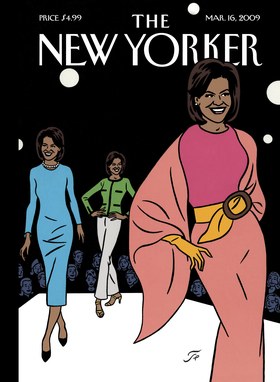
John Updike died in January 2009 after decades of writing for the New Yorker and elsewhere.  As the news settled in the magazine ran this tribute to him in the March 16 issue.

Rather than running a story, they published a ten-poem sequence called “Endpoint,” (I didn’t even know he wrote poetry).  Most of these poems were written in 2008, while presumably, he knew he was dying from lung cancer.

Endpoint Continue Reading »

SOUNDTRACK: NEIL YOUNG-Harvest (1971).

I like loud rocking songs and I dislike most country.  So really I shouldn’t like Neil Young’s Harvest (at least compared to his more rocking albums).

But Neil is Neil and while I would never say he can do no wrong (he definitely can), I give him the benefit of the doubt.  And on this album he delivers.  Plus, it’s really not a country album at all.

I think what I particularly like about Harvest is the looseness of it, which I see signified primarily by Neil’s harmonica which is never off, but which is never perfect either.  Plus, and I’m sure this has a lot to do with it–I’ve heard these songs a lot and they have really sunk in.

“Out on the Weekend” is the opening track and it was one of the songs I knew least well–which is odd certainly for an opening song.  There’s slide guitar and harmonica.  But it’s followed by “Harvest,” which is so simple and so notable–bass, a gentle acoustic guitar and basically a snare drum play that simple up and down melody as Neil sings “dream up, dream up, let me fill your cup with the promise of a man.”  It’s those steel guitar lines that seems to fade in from nowhere that really rather make the song.

“A Man Needs a Maid” is one of those weird songs that is so odd to me–the song is literally about him getting a maid (but much more): “keep my house clean fix my meals and go away.”  Neil sounds like he is singing from a mile away as he plays the melody on the piano.  And then after the first verse all kind of orchestration fills in–bells and strings and the song gets really really big.  By the time the song comes around again, the chorus is swallowed by the strings and bells.  It feels much longer than its 4 minutes.  I sort of hate it but kind of like its oddness at the same time.

And then comes the wonder that is “Heart of Gold,” another simple melody with soft bass notes and that harmonica.  Incredibly catchy and undeniably great.

Harvest is more of a folk album with slide guitar (and orchestration), but a song like “Ready for the Country” certainly leans toward country (or is it mocking country?).  It’s got a good beat and is kind of fun, with a lighthearted joshing about the country.

“Old Man” is a another slow classic.  When the harmony vocals come in later in the song it’s really wonderful.  I never knew that James Taylor and Linda Ronstadt sang backing vocals on this song and that that’s Taylor on the banjo.  “There’s a World” is a ponderous song from the get go–almost as if it left off from “Maid,” with strings and kettle drums.  After a verse a harp swipes away the song and plays a delicate melody which is just as quickly wiped away as this song which seems so big comes to a rather quick ending–only 3 minutes in total.

“Alabama” introduces a fuzzy electric guitar with what seems like it should be a classic riff but which …isn’t.  It doesn’t quite resolve into anything and the chorus is almost satisfying–it starts really big with a chorus of “Alabama!” but it also doesn’t exactly resolve into anything.  I think I keep thinking it’s other songs, and yet it is distinctly its own.

“Needle and Damage Done” is just great.  A terrific riff and a poignant song simple and brief (2 minutes!) but really powerful.

“Words (Between the Lines of Age)” is nearly 7 minutes it’s the longest by far on the record.  It builds slowly with a big chorus.   There’s a great instrumental section with a nice piano melody.  The song ends with a very Neil Young guitar solo as well.  Pretty great stuff.

I’m not gushing about the album only because it is a classic and all classics have flaws.  But I could listen to this any day, even “Man Needs a Maid.”

[READ: July 1, 2016] Harvest

I have often thought I should read this series.  Of course, the last time I thought about it, there were 50-some books in the series and that seemed like way too many.  Well as of June 2017, there are 120 books in the series, which is an insane series to jump into.  But at work, four of the books came across my desk and if that’s not an invitation to read something, I don’t now what is.  So I’ve decided to read these four and we’ll see if that leads to more.

This story gives a lot of history of Neil himself and a lot of context of the albums surrounding this one.

Inglis starts by talking about how when Harvest Moon came out in 1992, it was a call-back to Harvest and it was highly regarded, even though Harvest itself wasn’t at the time.  Even Neil himself seemed to recoil from the unexpected success of Harvest by playing every kind of music but folk/country for decades.

In fact, Harvest was panned when it came out–described as superficial and without meaning.  It was deemed pleasant rather than passionate.  It also worked to define Neil Young as a melancholy songwriter full of catchy tunes, smiling with prairie straw n his mouth.  Meanwhile other fans dismiss this picture entirely, preferring the gritty songwriter from Tonight’s the Night. Continue Reading »

[ATTENDED: March 14, 2018] Godspeed You! Black Emperor

Back in 2000, I saw Godspeed You Black Emperor at Maxwell’s in Hoboken.  My friend Lar was in from Ireland and he went to the show with me, which was pretty awesome.

It is one of the most memorable shows of my early concert-going experience.  Which is possibly why I waited 18 years to see them again.

Even though my friends Liz and Eleanor (who have seen them many times) told me to join them in the balcony, to close my eyes and drift to the music, I’m a close-up guy and I wanted to be a part of the show.

The band had a semicircle of chairs on stage.  I should have realized from the get-go that as soon as someone sat in one of them he would basically be blocking everything for me, but I didn’t think it through.

So the show began with “Hope Drone,” which is, as suggested, a drone.  Continue Reading »

[ATTENDED: March 14, 2018] Liberty / Tashi Dorji Duo

I had never heard of Liberty / Tashi Dorji Duo when I saw they were opening for Godspeed You Black Emperor.   I also didn’t know if Liberty was a part of the duo or even if Liberty was a second opening act.

Well, it turns out that Tashi Dorji is a guitarist who often plays by himself.  But for this show he was with “the elusive Danish saxophonist LIBERTY (Mette Rasmussen).”

So what did this mean for the show?  Well, a brief search on Dorji revealed:

Tashi Dorji was born and raised in Bhutan, on the eastern side of the Himalayas. Residing in Asheville since 2000 and soaking up a vast array of music. Along the way, Dorji developed a playing style unbound by tradition, yet with a direct line to intuitive artistry. All references break loose during his playing, as Dorji keys into his own inner world.

and that

Liberty is a saxophone player whose music is defining a unique balance of uproar and beauty. Her ability to move between the often strict confines of genres and explore the elements makes her presence highly powerful. She has encapsulated her own personal vision of acoustic music, by amplification expanding her range in dynamics and rocketing a more prosaic stem.

So. Continue Reading »

SOUNDTRACK: RED BARAAT-“100+ BPM” (Live in front of the Brooklyn Public Library) (Field Recordings, June 2, 2014).

Continuing with the fun that is Red Baraat, I stumbled upon this Field Recording [What Happens When 350 Musicians Meet For The First Time In Brooklyn?] from the NPR studios.

As part of the Make Music New York Festival, NPR commissioned new music from Red Baraat and Sunny Jain created “100+ BPM.”  And as the blurb informs us:

“We put out a call and they came — by the hundreds. When we invited wind, brass and percussion players to join us yesterday in Brooklyn to perform a world premiere by Red Baraat‘s Sunny Jain for the annual Make Music New York festival, we were hoping that lots of different kinds of musicians would join us. And boy, did they ever.

On this absolutely gorgeous Saturday afternoon, about 350 musicians assembled on the steps of the Brooklyn Public Library to play Jain’s 100+ BPM. Young, older, professional drumlines, community marching bands, seasoned jazz players, Indian wedding band musicians, Brazilian samba drummers and scads of amateur players came out to play. It was just incredible.

I don’t know how they managed to record the music so perfectly, but it sounds fantastic.  You can really hear the different instruments (well, except maybe the poor violins and that piccolo) as they zoom in on one section or another.

The whole group plays along perfectly.  And there’s even some great sax solos (how did they decide who got to solo?) an excellent trombone solo and lots and lots of drums and percussion.

I love that after the wild soloing everybody joins back in for that great melody once again.

At 6:15, the song stops (and you get to see how psyched Sunny is).  Then after a short pause he starts clapping and selects which group of instruments will keep the beat going.  First it’s drums, then percussion, then the tubas and then the brass comes into play a new staccato riff that is fun and catchy and easy to speed up. Which it does.

He drops out the drums and selective instruments until it’s just the tuba and percussion.  Then the drums come back in and he starts picking up the tempo of that riff again.  Faster and faster do they get to 100BPM? According to this excellent free BPM counter, they make it to 106/107 BPM during the main part.

Then after a breather it’s time to keep going, faster and faster until they reach 126 BPM by the end and Sunny gives an exultant leap to end the song.

What an excellent way to spend a Saturday afternoon.

[READ: February 26, 2018] “Pardon the Intrusion”

Lydia Davis stories are usually really short–a paragraph or two or three.

This one is very different.

It is a series of posts–requests and thanks for various items.  And that’s it.

It’s hard to tell if a story can be constructed from these requests–at times it seems like you can follow a narrative.  But mostly it just seems to be people requesting goods and services. Continue Reading »

SOUNDTRACK: ALEX CLARE: Tiny Desk Concert #715 (March 7, 2018).

Alex Clare’s band is clearly having a beard-growing contest.  The drummer (Christopher Prendergasp) isn’t playing but everyone else suggests the stakes are high.  The bassist (Christopher Hargreaves) is winning.

Vocalist and songwriter Alex Clare is yet another soul disciple from the UK, and his visit to Bob Boilen’s desk is the perfect setting to bask in the power of his voice.

The first song, “Three Hearts,” is a love song dedicated to the moment he heard the heartbeat of his first child coming from his wife’s sonogram. Backed by a tight four-piece band, Clare’s tale of his family’s road to domestic tranquility captures the joy as well as the uncertainty of impending parenthood.

Lyrically it’s okay and sweet, it just sounds fairly typical.  Especially musically.  I thought we;d be getting 20 minutes of straight ahead soul with a little less charisma than The Commitments.

Next is “A song called ‘Love Can Heal.’  True story.”  The guitar (Jordan Peters) is far more interesting on this song.  In fact I found myself enjoying the guitar more than Clare’s voice.  I love the cool guitar licks at the end and the nifty harmonic note that ends the song.  Although, having said that, his voice is quite powerful.  And he shows it off even more on the next song.

In “Caroline,” he inhabits the words with passion and heartfelt pleading, bringing to mind some of the best soul shouters, completely lost in the sentiment of the lyric.

That is very true, he is completely swept up in this song (even he says it’s not about anyone in particular).

I really like the guitar on the final song “Open My Eyes.”   I like the whole vibe of this song–the way the song unfolds and the backing vocals as well.  Indeed I feel like each song has gotten a better as the show progressed.

While I found his music to be fine–nothing I’d go out of my way to listen to but I wouldn’t turn it off either. I found his backstory far more interesting:

The British singer-songwriter released his debut album, The Lateness of the Hour, on Island Records last summer. But the label soon discovered how serious Clare was about his faith [he is an Orthodox Jew, which I didn’t know when I made the beard contest joke] — especially when it came to the sabbath and high holy days, on which Orthodox Jews are forbidden to perform.

“When I signed to Island — you know, obviously a shomer Shabbos Jewish person — I don’t think they quite realized what that means,” Clare says. “I got offered a tour at Pesach, at Passover, and couldn’t perform.”

The offer Clare turned down was a slot opening for Adele. About four months later, he was dropped from Island’s roster, having failed to generate significant album sales or radio play. As Clare was figuring out his next move, he received a call from Microsoft, which was interested in using his song “Too Close” in a commercial. It was a deal that would make the song a hit and restart his career.

He doesn’t play that song here, which is too bad.  And the poor percussionist’s name is never given.

[READ: February 28, 2018] “Violations”

This is a story about writing stories and how autobiographical they are or are not.

It is written in close third person.  And the first sentence is really, really, really long.

It begins, “He had wanted to make sure she wouldn’t write about him…” and then it goes on in his mind about why he didn’t want to be written about and narcissism and all that kind of thing.  The short of it is that he never asked her not to write about him, but he never stopped craving assurance that she wouldn’t (and there’s a long entangled reason why not).

The “she” is his now ex-wife.  She moved out but he still gets her mail.  And she has not written about him.  He tries to get her mail to stop coming but he doesn’t cancel her magazines–especially the one that she always wanted to be published in but had never been. Continue Reading »