Feeds:
Posts
Comments

Archive for the ‘Yuck!’ Category

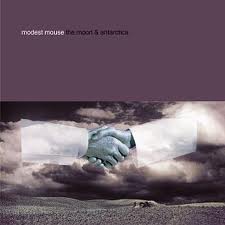
SOUNDTRACK: MODEST MOUSE-“Lives” (2000).

This song (quoted in the story) comes from the first Modest Mouse album that I ever bought, The Moon and Antarctica.  I have very vivid memories of listening to this album on a long dark stretch of road–not a bad image to connect with the album.  This song comes near the end of the album after the stomper “I Came as a Rat” and the slow guitar and slightly ill sounding bendy note really set the unease of the song.  After about 45 seconds the tribal drums kick in and change the pace of the song.  But rather than bursting forth, the song kind of falls back in on itself until what feels like a brand new song comes out of this little cocoon–an upbeat acoustic number with strings that tries to remind you to live before you die.  After a brief flirtation with yet another style, the song returns to whence it started.

It’s representative of Modest Mouse’s quieter side, although it barely showcases the extremes that the band is capable of.

[READ: July 11, 2012] Arach nID

My former co-worker Jay is one of the few people I know who is “writing a book” who has actually written most if not all of said book.  He has been writing a sci-fi opus for a few years now and at last count it eclipsed 600 pages.  I mean, sure, I’m “writing a book” but it’s all in my head.  Anyway, I told him about a short story contest and asked if he had any short stories to submit.  We once had a discussion about how novelists shouldn’t really write short stories if what they wanted to write was a novel, so I didn’t know if he had anything handy.  He told me he had this work partially written and, with a deadline in mind, he polished it up and finished it off.

Because the story is unpublished, I’m not going to give away too many details, as that’s not cool (and because he may always revise it).  But I will talk about the basics of the story because I think it’s pretty interesting. (more…)

Read Full Post »

SOUNDTRACK: TAME IMPALA-Innerspeaker (2010).

Tame Impala are from Australia, and their sound is majorly retro.  They remind me a lot of Dungen, including the fact that I would have guessed (from the way the words are sung) that English wasn’t their native language (which makes this already trippy album feel even more trippy).

Fuzzy guitars over a cool bassline introduce this album.  “It is Not meant to Be” is something of  statement about the sound of this album.  And when the vocals come in (fuzzier still), it’s retro all the way.  “Desire Be, Desire Go” continues the fuzzy guitar with a slightly faster pace.  The chorus comes in a little cleaner which is nice as it breaks up the fuzz somewhat (but only somewhat).  “Lucidity” ups the noise and pace with a great catchy riff and a strong chorus.  I think of this as the “hit” based solely on the fact that I heard it first, but when they played KEXP in studio sometime after the release of the album, they didn’t play this song .

They did play “Why Won’t You Make Up Your Mind” which is probably the real single–the cool reverbed riff and the soaring guitars sound great.  “Solitude is Bliss” has become my favorite song on the album lately.  The vocals remind me of early songs by The Who (maybe from Sell Out), but again, the music is all reverbed and hippie sounding, it’s a nice pairing and the chorus is once again, really catchy.  “Jeremy’s Storm” opens with a cool riff. It turns into a wild jam instrumental.  “The Bold Arrow of Time” sounds like a song from the 70s.  The guitar sound as it opens could come from Jesus Christ Superstar and when the riff finally kicks in, it could be a Cream song.  And yet the vocals (always soaring) don’t sound like anything from that time).

I love any song with a good bassline (especially one that’s not just repeating the guitar riff)–so I love the cool bassline that runs through “Runway, Houses, City, Clouds”–high and kind of obtrusive.  A perfect way to keep pace.  And when the bass gets a little “solo” at the end, it’ s a nice payoff.  The final song is “I Don’t Really Mind.”  It’s the most conventional and not dreamy sounding album on the album.  There’s even a break from the wall of guitar where we get just some drum beats–it’s very p0ppy.  It’s a good ending, upbeat and catchy and makes you want to start the whole shebang over again.

The album is a little long-feeling overall (it’s about 55 minutes), and some of it can be a little samey, but there’s enough diversity and great songwriting to make this album really enjoyable.

[READ: July 2012] At Home on the Range

Another frickin cookbook?  For a guy who doesn’t do cookbooks, there’s certainly a lot of cooking-based items on this blog.  Blame McSweeney’s who put out this book, too.

As everyone knows Elizabeth Gilbert wrote Eat, Pray, Love.  I’ve never read it (although I have read some of her earlier books (Pilgrims and Stern Men) which I liked quite a bit–I was into her before she was cool, man).  But this book is actually a cookbook that her great-grandmother wrote and had published in 1947.  Gilbert’s contribution is slim, but engaging.  She gives a lengthy biography of her Gima.  She was born rich (Main Line Philadelphia rich) and loved to travel.  Gilbert says that you can sum up Gima with a Jazz Age sensibility and one word: Enjoy!  By the time she was married (to an “impossible” man) much of their money was gone–indeed, she slipped out of a few foreclosed homes as the sheriff was coming for them.

Gilbert also points out how far ahead of her time Gima was.  The 1940s saw food moving towards prepackaging and processing.  So this cookbook came out right around frozen dinners to try to re-introduce women to the kitchen (although not in a retrograde way) and to be proud of what you can accomplish there.  But more than just a cookbook, Gima tried to introduce Americans to Brains with Black Butter, Eels, Tripe and Calves’ Head Cheese.  She was also unafraid to try things in different neighborhoods (the story of how she first encountered pizza is wonderful).  Gilbert wonders what might have become of her in a different time place or circumstances and it’s true for she was really a remarkable woman.

And the remarkable nature of this cookbook is not the recipes (which are remarkable and I would like to try some of the simpler ones), but the prosaic nature of the book.  Gima is telling a story with each recipe.  Indeed, the recipes aren’t even given in standard annotated form: they are written in the prose.   Gilbert’s other contribution is to take ten of their family’s favorite recipes from the book and write them out in conventional cooking style for ease of cooking.  I enjoyed this book a lot–Gima is a fascinating woman with a delightful taste for life.  The question is what to try first? (more…)

Read Full Post »

SOUNDTRACK: THE FLAMING LIPS-Due to High Expectations…The Flaming Lips are Providing Needles for Your Balloons EP (1994).

This EP came after the success of Transmissions from the Satellite Heart and the single “She Don’t Use Jelly.”  Naturally that is not the single here, rather it is “Bad Days,” a new song tha sounds of the period.  As does “Jets Part 2 (My Two Days As An Ambulance Driver)” a fuzzed out trip.

“Ice Drummer” is a primarily acoustic but still distorted song.  It’s kind of boppy and light which is odd since it is a cover of a Suicide song.   “Put the Waterbug in the Policeman’s Ear’ is a demo with strings and piano.  It also has a very lengthy introduction in which Wayne explains his brother’s proclivity for drugs and his belief that he can control bugs (and have them attack the policeman who is trying to arrest him).  It was recorded on a boombox.

“Chewin’ the Apple of Yer Eye” is a live version recorded at a record studio.  It has nice guitars with scritchy violins.  “Chosen One” is a cover of a Bill Callahan song at the same venue.  There’s a lengthy introduction explaining that it’s a cover and why he likes it so much.  It’s a nice version, very stripped down.  “Little Drummer Boy” is a travesty, but a good one (and is 1,000 times better than their version of “White Christmas.)”

“Slow-Nerve-Action” is a live version apparently broadcast on a Top 40 radio station.  The squall of noise as the song opens would frighten off anyone listening to Top 40, but the middle of the song’s acoustic section is rather pleasant (if not a little scratchy and staticky).  Although this EP racks in at 44 minutes long, it’s really not that essential (although the live versions are nice).

[READ: May-July 2012] Deadly Kingdom

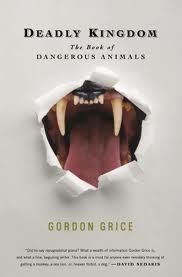
If you have any kind of animal phobias–literally any kind: snakes, sharks, spider, rodents, bugs, stay away from this book.  Indeed, even if you don’t have this kind of phobia, you may after reading this book.  As the title says, this book tells you every single conceivable way that an animal can kill you–from biting to clawing to stomping to crushing to infections to diseases to parasites to long lingering diseases to numbness to elephantiasis (and that’s just chapter 1).  Somehow the author is not afraid of everything that moves, and is even a collector (with his wee son) of all manner of unusual creepy crawlies–tarantulas, hissing cockroaches and the like.

Sarah bought me this book for my birthday because David Sedaris recommended it when we saw him speak.  When Sedaris read from it, it was funny but dark.  Sedaris’ comment that “Monkeys are such assholes “was certainly borne out by the book.  Sedaris’ other comment–if you ever feel bad about eating meat, just read this book–is also completely accurate.  Even cows can be assholes.  This book is hard to digest in large doses.  I found that I had to put the book down after a section or two because there’s only so much you-will-die-if-you-do-this reading that I could take.

Grice has done a ton of research–he has looked into all manner of medical and death records and talked to lots of scientists around the world.  And he breaks the book into five major categories: The Carnivorids, Aquatic Dangers, The Reptiles and Birds, The Arthropods and Worms and Other Mammals.  The introduction more or less explains his origin story for being interested in deadly animals–a cougar was on his Oklahoma panhandle property when he was six years old.  His grandfather dispatched it, but he had to stay safely in the car during the ordeal.  And he has been curious ever since.

The introduction also contextualizes the violence that animals do to humans.  Is it all defensive (as we take over more and more land, it’s hard to know exactly what is defensive) or is it straight out aggressive. But he says the hardest part about this kind of descriptor is that “besides our usual biased views of all the parties involved, is that violence rouses strong emotions.  We are almost forced to take sides with the injured humans or the slandered animals….  Many writers depict virtually all animal attacks as “provoked” by the victim.  On the other side, some writers are at pains to paint dangerous animals as monsters of cruelty.  All of these views are simplistic.” (xxiii). (more…)

Read Full Post »

SOUNDTRACK: CHUMBAWAMBA-“That’s How Grateful We Are” (1990).
Chumbawamba called it quits this week after 30 years of being a band together.  Most people assume they put out one single and that’s all. And in some ways that is true.  Because most of their other music was way too radical to be played anywhere–even when it was as catchy as this.

This is a six-minute dance-funk song off of the first Chumbawamba album I ever heard (Slap!).  It opens with a little girl saying “Okay, lay some drums on me.”  After some drums and hammered percussion, she says, “gimme some bass” and a funky riff starts.  It’s followed with accordion, horns guitars and, Chumbawamba’s signature–chanting.

It’s a call and response song with a wonderfully catchy chanted chorus.

On first listen you might catch a few unexpected words (black lung, attack, attack, we took to the streets).  But then you get swept up in the chorus again (and maybe the accordion solo).  But on further inspection, the song is about the Hungarian Revolution of 1956:

Working in a forge, black lungs, burnt skin
Callouses, arched back, hammering, hammering
Stalin watching over us pigeon shit head
We’d spit on the floor at this red bastard god.

Not exactly pop music, but you can sure dance to it.  I haven’t listened to too much of their more recent music, but their early stuff is wonderful and worth looking for.  Thanks for the music lads and lassies.

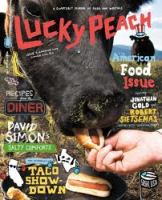
[READ: July 2012] Lucky Peach Issue 4

I can’t get over how much I enjoy Lucky Peach.  I just loaned a past issue to a friend and he loved it too.  He’s looking forward to trying some recipes and he’s been fascinated by the articles, too.  I don’t read any other cooking type magazine, and yet I can’t get enough of this one!

DAVID CHANG & CHRIS YING are still on board with their note “From the Editors” and PETER MEEHAN, JONATHAN GOLD & ROBERT SIETSEMA talk about “American Cuisine, Whatever That Is”

This issue features a choose your own adventure from COURTNEY McBROOM AND ALISON ROMAN–“Voyage of the Taco Belles” in which they travel to Texas and California to compare “Mexican” food.  It’s a fun adventure with many pitfalls and many delicious locations.  No one could conceivably eat that much.

DREW ALTIZER-“Swan Oyster Depot” photos from the independent seller.

DAVID TREUER-“No Reservations” gives a fascinating history of the Objiwe peoples.  How they don’t have a cuisine per se, but they do have specific foods they eat.  Also, that their way of life was not decimated when the white man came because they did not eat bison, they ate from the water and from smaller animals.  But when the white man gave them fatty fried foods, their diet was changed for the worst.  A fascinating look and an unexpected content from a “food” magazine.

PETER MEEHAN, BRIAN KOPPELMAN, ANTHONY BOURDAIN and ELVIS MITCHELL all talk about the movie Diner.  I have never seen it, but it sounds pretty important in a certain range of cinema.  I liked hearing their various opinions of the movie.  Elvis Mitchell (from NPR’s The Treatment) is particularly funny.

TOM LAX-“The Schmitter” talks about The Schmitter a crazy sounding sandwich from Philadelphia that should give the cheese steak a run for its money.  (Cheese, Steak, Grilled Salami, “Special” sauce, Tomatoes, More Cheese and Friend Onions).  Yum!

HAROLD McGEE-“Harold McGee in Outré Space”–He’s back with a lengthy article on eggs and his attempts at peeling hard-boiled eggs without ripping the egg inside–his experiments are pretty out there!

BEN WOLFE–“American Microbial Terroir” How microbes and bacterium form on salami in different regions and how those bacteria inform the flavor of the meat.  Gross but very interesting.

STEVE KEENE-“Portfolio”  He did the cover for Pavement’s Wowee Zowee album and here has a new portfolio of his new style of painting–on plywood.

DANIEL PATTERSON-“We Waited as Long as We Could” He talks about the Rascal House, a restaurant that he went to as young kid with his grandfather.  It’s about the demise of this kind of establishment in general too.
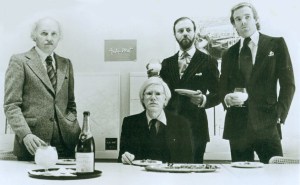
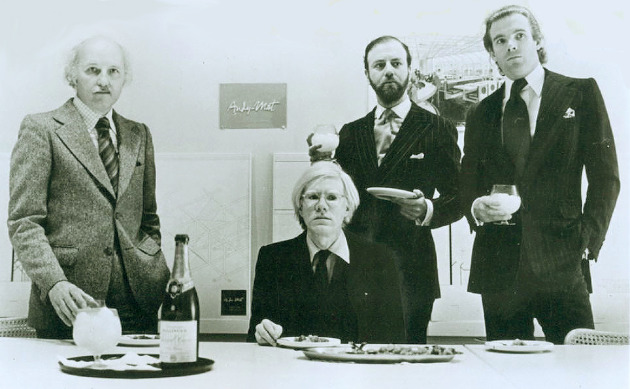
BOB NICKAS-“Someone Has to Bring Home the Bacon” Nickas looks at Andy Warhol and his various accomplishments regarding foot (including the aborted Andymat)

JOHN GALL-“Defrosted Foods” a photo of defrosted foods

NOZLEE SAMASZADEH-“A Modest Proposal”  This clever article talks about eating foods and plants that we consider invasive.  The best idea is to sell back the Asian carp to the Chinese–they love it and we don’t eat it, meanwhile it is invading our waterways.  Seems we could get back all the money they owe us!  Plus, why not eat Nutria?

MATTHEW RUDOFKER-“Knives Out” Look at these amazing knives (that I will never buy).

JONATHAN PRINCE-“Photo-Op Food” A very funny article about politicians trying (and often failing) to blend into regions by eating “local” food.  And the funny photo-ops they often provide.

MARC MARON-“Pan-American” The tale of a used cast iron frying pan and the story behind it.

DOUGLAS WOLK-“Love, Love, and ALE-8 One” This is the story of an independent locally created soda.  It’s based in Winchester, KY and serves more or less the Winchester area.  The soda is in huge demand there.  It’s the story of a brief but failed expansion and a determined independent spirit.  Check out their site and stuff.

DAVID SIMON-“Pickles and Cream” appreciating the only contribution Simon’s grandfather ever made to the culinary arts.

LAUREN WEINSTEIN-“Sushi, USA” a comic about sushi.

MARK IBOLD is still on board (hurray!) bringing culinary fun from Southeastern PA.  This time: John Cope’s Fancy Golden Sweet Corn.

There’s of course lots of delicious (and sometime crazy) recipes written in their own wonderful somewhat disrespectful style.

Oh, and just to put your mind at ease, the picture on the cover is of a cow eating a veggie dog.  Even knowing that it’s still disturbing.

Read Full Post »

SOUNDTRACK: INVISIBLE GUY BLOG (2012).

Jonas from Invisible Guy contacted me about a project he’s working on.  I’m not quite the right fit for it, but I had to check out his site to see what he was all about.  As his About page explains; “This blog is generally a platform for unknown bands to get promoted and interviewed.”  That’s pretty awesome in itself.  But as I browsed the site, I saw that in his post Invisible Guy recommends: 80s Post-Punk – 1982 (Part II) he includes not only The Birthday Party but also The Virgin Prunes.  Much respect there (especially for someone who wasn’t alive when those records came out!).

But the bulk of his site is full of really obscure bands (lots of bands that I’ve never heard of).  He interviews band members (sometimes in Swedish!) and has quite an impressive list of publications that he’s worked for.

So head on over to Invsible Guy for a wonderful collection of punk and hardcore music as well as some iconic (and really obscure) new wave and post-punk tunes.  He’s also got some great stuff on death metal too.  Not bad for a site that’s only a few months old.  Invisible Guy has a lot of samples and videos as well as a bunch of streaming music from unreleased or just-released albums (like this demo from the Swedish band Regimen called Välkommen hem).

And here’s a video for the Swedish stoner metal band Skraeckoedlan.  The song is “Apple Trees” and no you can’t understsnad the words because they are in Swedish.  I love that.

It’s a great site.

[READ: June 15, 2012] “A Psychotronic Childhood”

The more I read Colson Whitehead, the more I like him, not just as a writer, but as a “person” (the person he presents to us anyhow.  Although I met him briefly at a convention and he was super friendly and very nice).  This essay shows that he and I occupied some of the same headspace when we were kids (we were born in the same year)—watching sci-fi and horror movies on Channel 7 & 11 after school and on the weekends.  Of course, I didn’t really get into horror movies until much later them him (his first time was when his parents took him to  a horror film in the theater at the age of 5).  FIVE!

These early horror movies really shaped his outlook.  He lists about 70 movies in this article, of which I have seen at least half (although more from MST3K than actually sitting through them unaccompanied) and his summaries about them (four or five parenthetical words) are apt and often hilarious:

  • Food of the Gods (giant chickens rain pecking doom on a small island)
  • Alien (an outbreak of tummy trouble among space miners)
  • Demon Seed (rom-com about a horny computer that wants to impregnate Julie Christie)
  • The Devil’s Run (A negligible and mind-numbing film, notable only for the utter ineptitude of its attempt to cash in on the brief occult-movie fad that followed Rosemary’s Baby and The Exorcist.

The Devil’s Run is the first movie he saw, back in 1975, in the theater.  He says that there was something good in it, that it really captured the element of terror when your loved one turns on you.  And he tapped into this for his novel Zone One.

Then he reflects back on 1981, when his family bought a VCR and he and his brother would head to Crazy Eddie (remember Crazy Eddie?) to rent 5 movies for the weekend (I didn’t even know they rented movies!).  The movies were inevitably 4 horror movies and one mainstream film.  And the family would gather by the TV and watch together.  How wholesome!  Except when you read what they were watching (I can’t IMAGINE my family watching these together when I was a kid–even now, Sarah hates horror films).   This is getting into the era of Friday the 13ths and Halloweens as well as classics like Terror Train, Prom Night, Slumber Party Massacre, Silent Night, Evil Night, Mother’s Day and My Bloody Valentine (“not even the holidays, hallmark or otherwise were safe”). (more…)

Read Full Post »

SOUNDTRACK: FATHER JOHN MISTY-“Hollywood Forever Cemetery Sings” (2012).

This song is also on the list of NPR’s Top 50 songs of the year (so far).  It comes so far out of left field in terms of who the guy is and the way the music sounds that I can’t believe it made it to  their list.

Father John Misty is comprised of former Fleet Foxes dude J. Tillman.  I was bummed that the Foxes were not the original lineup anymore (although Tillman says he didn’t really want to be part of someone else’s vision, so that’s cool).  And if this is Tillman’s vision that  makes sense.

This is a simple guitar and drums kind of song;  There’s a ton of reverb (on the vocals, the guitars and especially the drums).  It has an incredibly retro feel.  It reminds me of someone like Pugwash, although it sounds nothing like them, really.  It feels like an older song (aside from the reverb, the guitar sounds very clean) and then the lyrics kick in: “Jesus Christ girl, what are people going to think”  And the song is all about death and cemeteries (“Someone’s gotta help me dig”).

I wasn’t sure about the song when I first listened, but then I couldn’t stop replaying it.  Yes the song is very simple–chord structures are pretty basic, but it feels so raw that it’s hard to stop listening–especially when the song starts to pick up more…instruments, and vocals, before it ends.

There’s a video for the song (in which Aubrey Plaza (from Parks and Rec) goes batshit crazy).  And the video version is a bit longer (a lengthy coda is added on).  Well, hell, here it is:

I will definitely have to hear more from this album.

[READ: June 23, 2012] “In Space No One Can Hear You Slay”

As I mentioned yesterday, The Guild was backed with a Buffy the Vampire Slayer comic for Free Comic Book Day.  I loved Buffy the show.  I loved Buffy the comics.  I loved the idea that Joss was keeping the series alive in the comic books.  And then somehow I fell behind in the series.  I haven’t really read much of Season 8 (some day…some day). So there was a little bit of a context issue for me here (very minor, but still there).

True context is kind of unnecessary here (except that I don’t know what Spike and Buffy are doing together–their past relationships are so complex, who knows where they may wind up).  Anyhow, as I said context is irrelevant because this issue takes place in…outer space.  That’s right, Spike suggest that Buffy go on a space vacation to see a nebula explode (what?).  Massive cerebral cortex confusion aside, this one-off does indeed see Buffy on a spaceship.  (more…)

Read Full Post »

SOUNDTRACK: MASTODON-Crack the Skye (2009).

I’ve really enjoyed Mastodon’s previous records, and this one ranks way up there in intensity and songsmanship. There are 7 songs on the disc, with two over ten minutes long.  “Oblivion” opens with a great minor key chord plucked with single notes and a dropped E.  And when the vocals come in, they highlight the different vocals styles in the band–from a more screamy, almost punk voice to the more melodic/echoey voice of the chorus (kinda like Alice in Chains).  At about 4 minutes the solos play off each other wonderfully, both blistering and then melodic (with almost a Pink Floyd feel at one point).  “Divination” has some amazing guitar play both in the intro and the way the bridge soars with great guitar lines underneath the vocals.  “Quintessence” opens with furious drums and a great prog rock kind of guitar opener.  I love the way the bridge is a gentle (albeit fast) almost trippy section before the chorus bursts in with heavy, heavy chords and chants of “let it go let it go let it go”  It’s the kind of song where the parts work so perfectly together but which wouldn’t seem to.

“The Czar” is a four-part, ten-minute epic.  It opens with a creepy keyboard melody.  The first section is slow and heavy, and when part two comes in the guitars are loud and fast.  Part three has a great riff.  And the end has some gorgeous solos.  It amazes me that ten minutes can pass so quickly. It’s followed by the very heavy (lots of double bass drums) “Ghost of Karelia” the pretty much heaviest song on the record (with a nod to Voivod in the descending guitar solo about three minutes in).  “Crack the Skye” opens dark, but throws in some contradictory keyboard notes that lead to another cool extended guitar riff before jumping into a super heavy death metal verse.  This gives way to some more soaring vocals–the juxtaposition of these two vocalists is amazing.  Imagine the surprise then when the last third of the record has the vocals sounding completely robotic and phased–followed by a mess of guitar solos and concluding with some pretty guitars.

They fade into the final epic, the 13-minute “The Last Baron,” which is one of my favorite metal songs.  It opens with some great guitars and some really cool singing.  The vocals soar, the bass plays a great melody.  There’s a great heavy instrumental section but it keeps returning to the wonderful rising vocal melody line that will get stuck in your head for days.  It’s an amazing end to a great album.

The disc also comes with a DVD that’s all about the recording of the album.   I watched a few minutes and it seemed kind of fun, so I hope to watch it more soon.

[READ: June 17, 2012] The Architect

In the past, Connell’s books have explored all manner of depravity. His books were violent, often sexual and dealt with an otherworldliness that may or may not be internalized. Despite all of this transgressive material, his work was never schlocky, especially his later pieces which show an amazing growth in topics, word choices and imagination.

Connell’s previous books The Life of Polycrates and Metrophilias featured short stories that dealt with all manner of topics.   In Metrophilias, the stories were very short, and it allowed Connell to really explore an idea to its fullest without having to make a “book” about of each one. The short length also allowed him to make the words choices and descriptions more effective.

All of the benefits are reaped in this book, a novella.

Although I enjoyed Connell’s previous longer works, I really loved the way this story started with one idea and stayed with it. Some of his other books are a bit more episodic, which worked for those stories, but in this one, we’re in one place and we are pretty much going to stay there.  And that focus makes this story all the more powerful.

The one thing that hasn’t changed is Connell’s scholarship (both real and fake). For this book is a celebration of Dr Peter Körn (1849-1924), visionary and spiritual scientist. As the story opens, four members of the Körn Society are discussing plans for the new Meeting Place, a central location where all members of the Körn society can gather. They are disgusted by the pedestrian, commercial and rather offensive submissions that they have received for their building—a building that should reflect the spiritual visions of Körn.

Dismayed at the architects who have submitted, one of the members of the Society, Maria Venezuela tells the other three that her nephew Peter De la Tour will soon be arriving with something special.  Peter brings them a book of architecture designs by Herr Nachtmann.  These designs are bizarre and wonderful–organic, amoebic, gravity-defying gorgeous monstrosities–exactly the kind of thing the Society is looking for.  Although one member feels that they are impossible to build, the others are firmly on board.

The challenge then is to find the man. There is some history about the man himself–his genius in and out of school followed by his utter inability to have his work taken seriously by the establishment.  He even had one of his more ingenious ideas stolen by the very teacher who said it was terrible.  And so, when Peter finds him, he is little more than a drunk at the end of the bar.

Yet his ego has never been diminished, and when he is presented to the Society he dismisses their concerns and even tells them that he will not wait for their decision–they have 30 minutes to say yes or he walks.  They agree and he begins working on his masterpiece.

The Society loves the sketch–they know it will be expensive, but Nachtmann promises fast work, effective designs and world-wide acclaim.  Amazingly, he delivers.  He works his men hard.  All through the spring and summer and into the fall, the men work carelessness and the building rises at a phenomenal rate.  Even if it seems to be growing larger than designed. (more…)

Read Full Post »

SOUNDTRACK: THE GREAT GAMBLE-Book One (2012).

My friend Matt has worked at a school in Pennsylvania for years. He wrote to tell me that a few kids who graduated from his school had formed a band and have released a CD.  It’s streaming (and downloadable) on bandcamp at their site.

I have lots of friends in bands, and I’ve listened to lots of demos, so I wasn’t expecting very much.  But the first thing I noticed when I listened was how good this sounds–professional and, yes, like a “real” album.  This isn’t just a bunch of guys jamming in their garage.  What makes this even more striking is that the music is heavy progressive metal–not something you just whip out in a quick take.  This is complicated, interesting music.  I’m hearing a kind of Dream Theater meets King’s X vibe going on.  And man, it’s really good.

This is multi-step heavy rock (complete with a synth player/violinist!). The only song that is less than 9 minutes is the 90 second introduction called “The Marketplace.”  Otherwise, we’ve got three songs over ten minutes and one over 16!  Who even knew young bands did stuff like this anymore?

Al Joseph plays lead guitar and sings lead vocals.  His guitar speed is very impressive and his vocals sound not unlike Dug Pinnick from King’s X (noticeable on the opening track, especially) .  Matt Weaver plays violin and keyboards.  The keyboards offer more than just a fuller sound.  On “Release the Kraken” they provide some cool sci-fi sound effects.  At about five minutes in, “Release the Kraken” slows down to a quiet middle section that really showcases Steve Michael’s drums.  And then comes the blistering guitar solo.  It’s followed quickly but a slight diversion and then a wholly different style of solo.  It’s really something.

If “Release the Kraken” wasn’t a good enough prog rock title, how bout “Legends of the Symmetria.”  This one has a very Dream Theater feel for the opening.  But the vocals sound very different–dual vocals with great low harmony.  There’s a cool pre-chorus (I guess) at about 3 minutes.  This song is definitely a heavy one.  At about 4 minutes, the song slows down into a pretty classical guitar section,where Chris Joseph on plays bass gets to show off a bit (although he seems to be the most understated of the 4 players).  There’s some great drumming at the end of the song, too.

“The Ghost of Three Reflections” is a slow builder of a song.  There’s some quiet parts (with beautiful harmonies) and a guitar solo that sounds clear and perfect (I’m hyping the production so much because it sounds so good).  The guitar solo section in this one strikes me as something that might suit two guitarists better–maybe two more different styles of soloing, but he pulls it off well, especially when by the end, he has shifted to a very different style, and the music changes along with it).  I love the bass section at the 8 minute mark, which reminds me of something Rush might have done back in the mid 70s.  The song kind of merges into “Breach At Fort Mycenae” which opens with the same kind of staggered sound as the end of the previous song.  The violin gets an airing in the middle of this song and it’s a cool treat.  I could definitely use more violin in these songs, although maybe little bits are a treat.  There’s a few times when I don’t like the production choices–maybe there needs to be a bit more music behind some of these solos so it doesn’t just sound like two players soloing against each other.

The disc ends with the big one, the sixteen minute, “The Sleepwalker Pt. 1 – Tears of Dagon” [I love that it’s a Part One and it’s 16 minutes long].  When the vocals kick in at about 3 minutes, the harmonies are gorgeous.  I love the bass guitar break at 5 minutes.  Although there’s something about the keyboard sound that I don’t like–maybe they’re not big enough?  But I love the crazy guitar solo at the 9 minute mark of this track (I’m a sucker for dissonant scales).

This is an amazing debut CD and I hope these guys go far (they’re going from Scranton to Boston for school, but I hope they can go further than that).  They are tight as a drum, stopping and starting perfectly, keeping all of the rhythms and time changes perfectly.  They really have done their prog rock homework.  The only gripe is as I’ve said, some sections don’t feel “big” enough.  If you’re going to write a 16 minute song, you don’t want sections that sound small–you want your backing guitars or bass guitars to be a little louder so it sounds like the song is still going.  But other than that, there’s not much room for improvement.

I downloaded their CD, (and yes, I paid for it…that will help with college, eh?).  But my real complaint is that on the computer, the album cover is awesome–if you look at it from an angle, there’s a whole scene behind the large logo (try it, it works here too).  But when you print it out, you lose all of that.  The images are there, but the effect is gone.  This is a band that calls out for full color packaging and maybe even a gatefold sleeve!  (The bottom of the cover says Ο υπνoβάτης which means The Sleepwalker).

Good jobs guys!  You’ve done NEPA proud!

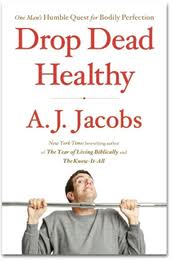
[READ: May 15, 2012] Drop Dead Healthy

Sarah got me this latest A.J. Jacobs book for my birthday.  At first I didn’t think I wanted to read it because I feared what a book all about being in good shape would be—nagging, obnoxious, making me feel bad about my vices. But I should have leaned from all of my A.J. Jacobs experience that he is completely NOT about that.

Jacobs occasionally enters into preposterous forays of Self-Improvement.  In the first book of his I read, The  Guinea Pig Diaries, he tried various weird experiments to see what it was like to be a woman, radically honest, a unitasker, etc.  His other books have been about self-improvement.  He read the encyclopedia from A-Z, he did a year trying to live like out of the bible (I will get to these eventually).  In this book, he is on a quest to be the healthiest person in the world.

It’s an impossible task.  And, frankly, a foolish one.  But he decides he will take two years and focus on individual parts of his body one month at a time.  I’m going say right up front I feared that this book would make me feel bad about all the things I don’t do for myself.   But well, a) Jacobs is a funny writer, so at least you’re laughing.  b) Jacobs is either in bad shape or plays up his badshapedness so that the average person doesn’t feel too bad off.  c) He is so over the top in his quest that no one would ever think about doing all of the things, but we can take what he learned and apply little bits to ourselves.  What is nice is that he tries to get two if not balanced opinions then perhaps fringe opinions to balance out–trying one extreme then another to see which work.

He Breaks His Categories Down thusly: stomach (eating right, the perfect food), the heart, the ears (the quest for quiet), the butt (avoiding sitting too much), the immune system (germs), genitals, nervous system, lower intestine (better bowels), adrenal gland (lowering stress), brain, endocrine system (removing toxins), teeth, feet, lungs, skin, inside of the eyelid (sleep), bladder, gonads, nose, hands, back, eyes, and skull.  Each category is designed to be a month-long workout of that organ/item–some things he keeps doing after the month is over making his workout regime something like 5 hours a day.  And at the beginning of each month he lists the stats for what he accomplished.

I’m not going to talk about all of his body parts, but I will mention a few that i enjoyed the most. (more…)

Read Full Post »

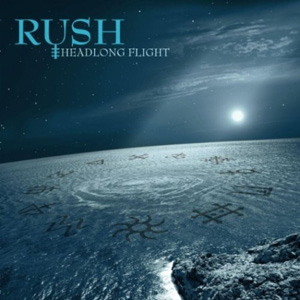
SOUNDTRACK: RUSH-“Headlong Flight” (2012).

A new single from Rush came out on Thursday.  And it’s seven minutes long!  Yeeha!  It’s also really heavy.

It opens with a cool bass riff and then thundering guitars.  This song continues in the heavier, grungier sound from Vapor Trails.  The middle section sounds distinctly Rush (late 80s style), and Geddy’s voice hits some pretty high notes.

There’s a brief extra section with a spoken word part–I’ve not been able to make out what it says, but the instruments (especially the great guitar sound) is fantastic behind it.  That’s followed by a great solo from Alex (that hearkens back to his wild solos from the 70s).  Geddy throws some cool bass fills–although he’s not showing off as much as he might).  And, of course, Neil is doing some cool drum things through the song–little fills and whatnot–and he sounds like he’s pounding the hell out of the drums.

Here’s the video

[READ: April 14, 2012] Squirrel Seeks Chipmunk

As I mentioned yesterday, I bought a book to have David Sedaris sign it, but decided the wait wasn’t worth it.  This is the book I bought.  It very excitedly claims to “with one new story” which I thought was funny both in itself and also because I hadn’t read any of the other ones (I gather they are from This American Life, although they’re mostly too vulgar to have read on the radio).  It also has illustrations from Ian Falconer, who is the guy behind Olivia, the children’s book series.

Anyone who has read David Sedaris essays knows what to expect–funny, presumably exaggerated stories about his family and loved ones.  Indeed, the stories that he read from during the show were just that–dark and funny and about his loved ones.  So imagine my surprise to find that these were all short fictional stories about animals!  No Sedaris’ are harmed in this book.

All of the animals are behaving like people, so Sedaris’ caustic wit and attacks on hypocrisy are all in play.  However, because they are animals, Sedaris can go much much further with them.  Matt Groening said that he could get away with a lot more social criticism because The Simpsons were cartoons; the same applies here.  Indeed, these are some of the darkest stories that I have ever read from Sedaris.

Some of them are kinda funny, but most of them left me mildly bemused at best.  Because while they seem to be a kind of laugh-at-the-recognition-of-our-foolish-behavior (as done by animals), really they are preachy and seem generally disappointed in us.   And who wants to read that?  It basically seemed like an opportunity for Sedaris to make fun of things that he doesn’t like about people.  But he knew it would be obnoxious to makes stories about people acting that way, so he made them animals instead.  And perhaps he thought that would make it funnier.  At times this was true, but not very often. (more…)

Read Full Post »

[ATTENDED: April 11, 2012] David Sedaris

I have enjoyed David Sedaris for a number of years now.  When our friend Melissa went to see him a few years ago, she said he was hilarious.  I’ve heard several readings done by him and had to agree with her–he’s very funny live.

I find that he’s much funnier when I hear him read his stuff than when I read it myself.  Indeed, when I read his stories I try to imagine it in his voice, just so it will be funnier.  Turns out he does a much better David Sedaris than I do.  Each of the stories was very funny (tear-inducingly funny) and very typically Sedaris.

This show was him on stage reading from a number of his pieces and from his diary.  I didn’t know the first piece, called “Understanding Owls,” which was about Owls and taxidermy.  It was also about trying to find the perfect Valentine’s Day gift for his boyfriend of 20 years (wow!), Hugh.  He wanted to buy a stuffed owl because of a long running joke about all of the owl tchotchkes in their house.  The setup alone was hilarious and the sequence in the taxidermist was very funny and rather uncomfortable. (more…)

Read Full Post »

« Newer Posts - Older Posts »