Feeds:
Posts
Comments

Archive for the ‘Word usage’ Category

SOUNDTRACK: DROPKICK MURPHYS-“Finnegan’s Wake” (2005).

This song has been around forever and there are dozens of different versions of it.  For your more traditional versions, you want The Dubliners of Christy Moore (if you really want to hear the words).

But The Dropkick Murphys do it the way I like my traditional Irish songs–fast and loud and full of punk.

Although to be honest, The Dubliners’ version has a bit more swagger and fun (it’s hard to beat Ronnie Drew for a hard living singing voice).

Whichever version you choose, be sure to have your favorite ale or lager (or whiskey punch) on hand.

[READ: April 1, 2012] Finnegans Wake

I decided it was time.  How many times have I read the opening line of this book:

riverrun, past Eve and Adam’s, from swerve of shore to bend of bay, brings us by a commodius vicus of recirculation back to Howth Castle and Environs.

And as many times I have read the end of the book:

A way a lone a last a loved a long the

But now it was time to read the other 620-some pages of it.  So I set aside some time this weekend, and, in the spirit of Joyce’s stream of consciousness, I stayed awake until I finished it. And having digested the book, I now get to write all my thoughts about it.

(more…)

Read Full Post »

SOUNDTRACK: KISS-Dynasty (1979).

I was pretty excited to buy this album when it came out–a new Kiss album that wasn’t solo albums!  Woo hoo!  And the fact that it was disco?  Well, even though I said I “hated disco,” I didn’t really know what disco sounded like then (and really, aside from the middle “I Was Made for Lovin’ You” it’s not really a disco record) and plus my other favorite band was the Village People (and really, that makes a lot of sense–tw0 bands in over-the-top costumes talking about sexuality that I totally didn’t understand).

So, this album is hard for me to be critical about because it was such an essential part of my childhood, especially “I Was Made for Lovin’ You.”  I love it, and yet I can listen critically and appreciate that it’s really not that good.

But I’ll move on to the other songs.  “Sure Know Something” and “Magic Touch” really don’t seem that out of place chronologically with, say, the Kiss solo albums–they sound an awful lot like something off of Paul’s album.  So, despite the sort of slinky 70’s bass on “Sure Know Something”, they can’t have been that much of a surprise.  The guitar solos are short but have some interesting Ace sounds (I like the harmonics on “Magic Touch”).  It seems that while the other guys were embracing disco, Paul was keeping the Kiss sound alive.

Then there’s the Ace songs.  “2,000 Man” made total sense as an Ace song. I had no idea it was a Rolling Stones cover until fairly recently (and I like Ace’s version much better).  “Hard Times” feels like the sequel to “New York Groove.”  Not the music so much although maybe a little, but the lyrics–now that he’s in the city here’s what happened–the gritty reality. It’s one of Ace’s great, lost songs.  And check it out, Ace sings on three songs here!  (Guess having a #1 hit wasn’t lost on the Kiss powers).  “Save Your Love” has a cool descending chorus and a nice bass feel to it.  Ace certainly wins on this record.

Peter got only one song, “Dirty Livin'”.  In fact, this is the only song that Peter had anything to do with (his drums were re-recorded by Anton Fig).  It reminds me (in retrospect) of the Rolling Stones disco era even more than “2,000 Man,” the backing vocals remind me of something like “Shattered.”  I always liked this guitar solos on this (cool feedback).  Although I liked the song (along with the rest of the album), I don’t think it holds up very well.

Gene only gets two songs.  It amuses me how little he has to do with these late 70s albums even though he is always the leader of the band.  I always liked “Charisma” (I had to look the word up back then) even though it is, admittedly, rather discoey and really not very good.  It is fun to ask “What is my…charisma?”  But “X-Ray Eyes is the better Gene song on this record.  It harkens back to earlier Kiss songs and even has a bit of menace in it.

So, Dynasty was a huge hit for the band.  And they even got to mock it in Detroit Rock City the movie.  Cynical marketing ploy or genuine fondness for disco?  Who would ever know.

[READ: November 1, 2011] “The Brief Wondrous Life of Oscar Wao”

Readers of this blog know that after finding an author I like, I will try to read everything that he or she has written.  Close readers will know that if a writer is reasonably young and reasonably unpublished, I will try to read his or her uncollected work as well.  Well, I really enjoyed Oscar Wao the novel, so I decided to see what else Díaz had written. There’s really not a lot, to be perfectly frank.  There’s his short story collection Drown and a few fiction pieces published here and there (mostly in the New Yorker) and a few non-fiction pieces as well.

So this “short story” from the New Yorker (with the same title as the novel) is in fact an early, mostly the same, version of the Oscar story in the novel.  The thing here is to note the date: 2000(!).  The novel came out in 2007.  So, Junot had been working with this character for easily five years (giving time for the publishing industry to get a book out and all). The remarkable thing the is just how accomplished and polished this piece is and how much of it was used in the novel.

I’m curious to know whether this was written as a short story (it’s quite a long short story) or if it was always intended as a part of a novel.  Interestingly, when you read this story by itself and you realize that it is pretty much all of Oscar’s story in the novel, you realize just how little of Oscar is actually in the novel.  The novel is about Oscar, obviously, but it is really about his family and the fukú that was placed on them by the Trujillo clan.  Oscar is sort of the touchstone for the fukú, and the person whom the narrator knows most intimately but his story is also brief. (more…)

Read Full Post »

SOUNDTRACK: COLIN STETSON: “Horn of Plenty” (interview, NPR’s All Things Considered) (2011).

I’ll be mentioning some recordings by Stetson shortly, but as an introduction to this man and his bass saxophone, this ten minute piece from NPR is absolutely essential.  I had listened to his recent album and NPR has two concerts from him that are downloadable.  I enjoyed the music, but after listening to this interview it gave me so much more appreciation for what the man is doing.

For a lot of classical and jazz, knowing what the author “meant” can help.  Knowing that The Moldau is a river makes Bedřich Smetana’s piece all the more interesting and moving.  Similarly, knowing that “Judges” is about horses… well, holy crap yes it is.

More importantly, knowing how he does what he does–circular breathing: taking air in through your nose while breathing out through your mouth (try it…it’s not possible) allows Stetson to essentially never have to stop playing.  (Tenacious D has a very funny version of this called “Inward Singing,” although it lacks the gravitas of Stetson.)

Also, the bass saxophone weighs twenty pounds nad is almost as tall as him.  The picture is preposterous.  Who even thinks of making music with such a thing.  And yet he does.  Unsettling music, sure, but music nonetheless.   Listen to this interview and be amazed.

[READ: 2010-2011 and beyond] Natasha Wimmer

Many readers don’t read anything that was written in a different language.  And those of us who do probably give little thought to the translator.  Until recently I didn’t give much thought about them either.  Often I assumed that if I didn’t like a book, it was the author not the translator.  And that could be true, but it may also not be so easy a judgment.

Natasha Wimmer has translated many of Roberto Bolaño’s English publications (she has not translated them all–see below–and, she has also translated other writers).  But she has famously translated The Savage Detectives which rocketed her to prominence, and then she managed his unwieldy 2666.  She has also recently translated Between Parentheses, the book I am currently reading.

Between Parentheses is a collection of newspaper columns, essays and pseudo-fictions.  It is a far cry from the convoluted masterwork that is 2666 and yet Wimmer has made this collection of essays utterly readable (I’ll review the book proper when I finish it).  Again, obviously the work is Bolaño’s and he deserves the credit.  But as I’m reading these newspaper articles, I am aware that they were written in Spanish.  And yet the word choices that Wimmer uses, from idioms to real seventy-five-cent words make the essays flow, give them real impact and really convey the kind of writer that Bolaño was.  Let’s take just one example picked not at random but because it uses a real seventy-five-cent word and it mentions David Foster Wallace (can I go a week without mentioning him?).  In “All Subjects with Fresán”, Bolaño states that he and Rodrigo Fresán spend much of their time talking about various subjects;  he lists 30.  Number 22 is “David Lynch and the prolixity of David Foster Wallace.”  I have no idea what word Bolaño used in Spanish (he has an amazing vocabulary, so I’m sure it was a Spanish 75 cent word) but how many translations would have used the word prolixity?  [Okay I had to look it up, he uses “palabrerío” which Collins translated as “verbiage, hot air.”  How much more outstanding is “prolixity”!–Oh, and as if Bolaño wasn’t prone to palabrerío himself]. (more…)

Read Full Post »

SOUNDTRACK:THEM CROOKED VULTURES-Live on Austin City Limits, Feb 13, 2010 (2010).

This set from Them Crooked Vultures is outstanding. I really like the album, but in a live setting these three (technically 4) guys are on fire.  They extend the songs a bit but are always tight as a drum.  Josh Homme is a great front man, even if he’s not that animated.  He shares guitar duties with Alain Johannes who is not on the album, but who gets some great sounds out of his guitar.

Dave Grohl is in his drum-pounding glory back there.  Man, he hits the drums hard.  And he seems to be really enjoying himself .

 And the biggest surprise (sort of, but not really) is John Paul Jones.  He fits in perfectly with the two younguns, and he really shows them how it’s done.  His bass work is phenomenal: fast, furious and accurate to a fault.  He also plays keyboards, an LED pulsing 12-(at least) string bass and a fascinating purple electric slide guitar contraption on “Nobody Loves Me and Neither Do I”.   Matt Rosoff from cnet explains this guitar here:

It looked like some sort of slide guitar with an electronic screen. I’d never seen anything like it before, so I did a little digging and found out from a March interview in Bass Player that it’s a custom-made axe created by Hugh Manson, who has been Jones’ tech for some time and who owns a renowned guitar shop in England. It’s essentially laid out like a lap slide guitar, modified so Jones can sling it over his shoulder and carry it around on stage, and with two extra bass strings at the bottom.

So what about that rectangular screen? According to a forum post on the EMG pickups site, it’s a MIDI controller that Jones can use to trigger stage lights. I imagine it could also be used to trigger various effects, similar to the modified Korg Kaoss controller that Manson built into a guitar for Muse’s Matt Bellamy.

If you’re already a fan of the band, you really need to check out this live show; they are amazing.  And if you’re not a fan, you will be after this show.  This is how I first heard  them and I was blown away.

You can watch the show online on PBS.

[READ: July 27, 2011] Five Dials Number 20

I didn’t expect to get caught up to Five Dials issues so quickly (has it really been 20 weeks already?).  This is the most recently releases issue!  They aren’t getting published as often as I expected.  Which is fine.  But the funny thing with this issue is that there were several printing errors in the initial run of this issue.  I don’t know if this has happened before, but it seemed so noticeable to me, that I had to wonder how it slipped by everyone.  The most obvious was that the front page had many ƒƒƒƒ characters (these were also evident in the Word Cloud later on).  There’s a word missing from the fiction “the thin cold stillness you got [  ] this part of the country” and there’s a crazy typo in the Fiction story later on. The errors have now been fixed.  But, the letter to the editor (and this has not been fixed) promises us a picture which isn’t there. “Here’s a photo of Doni at the reading – he did a brilliant job.”  I’ll assume they were partying too hard at the Port Eliot Festival to make sure  the issue was launch-ready

CRAIG TAYLOR-A Letter from the Editor: On Cable Street and General Interests
There were some serious race riots on Cable Street back in 1936.  Indeed,the head of the British Union of Fascists, Mosley, and his aggressive supporters were turned back by a noisy crowd (Irish women throwing fishy potatoes at them).  The rest of the magazine he says is general Interest, an anachronistic term from the 20th century before all magazines had to specialize in something.  I mentioned in my introduction that there was a photo error here.  Doni Gewirtzman performed a reading at the launch of Five Dials 19.  They couldn’t out the picture there, so they added it here.  Perhaps in Issue 21? (more…)

Read Full Post »

SOUNDTRACK: RHEOSTATICS-The Whale Music Concert, 1992 [Sets 1 and 2] (2005).
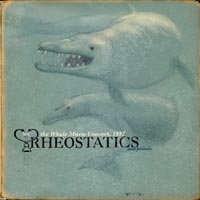
This is the second Rheostatics live CD that’s available from ZuniorWhale Music is a simply stellar album, and this concert focuses primarily on that disc, although there are a couple older tracks (and the then-new “Michael Jackson”) as well.  The big surprise about this concert is that they consider it a night of 1,000 stars: there are a ton of guests in this show (the majority of whom are even more obscure than the Rheostatics, I believe–the only two that I knew of before hand were Kevin Hearn and Andy Stochansky (who drummed with Ani Difranco for a while).  But guests like Tannis Slimmon, Doug Feaver, Tim Mech, Kevin Gould, Richard Burgman, Mitch Perkins and The Bird Sisters (and if you like Canadian music, the link for The Bird Sisters is to a cool blog called Raised on Canadian Radio: 1 Song per Day by 1 Uniquely Canadian Artist) add to the party atmosphere.

Anyhow, sometimes guests can really heighten a show.  And that’s the case for some of this show.  Of course, anyone who has read my criticisms of rap knows that I feel that too many guests spoil a good thing. None of these guests are “too much” here, but it does seem odd that there are so many!

The first set of this concert is awesome (the whole show was recorded to DAT and although there are a few weird drop outs, the set sounds great).  It’s like a greatest hits of early Rheos songs; the band sounds tight and they really respond to the audience.  “Rock Death America” is blistering, “Green Sprouts” is a fun little treat and “Palomar” and “King of the Past” sound fantastic.  It’s also funny to me how many great songs Tim Vesely is responsible for.  And they all seem to be featured here.

Set 2 is a little different.  It feels looser, a bit sillier, and is filled with much more Dave Clarke.  I’ve always known that Clarke was the goofball of the band.  He’s the chatty one when they’re onstage–he is full of goofy banter and he introduces most of the guests.  While it’s true that the Rheos aren’t entirely serious, I find Clarke’s goofiness to be a little off-putting.  And by the end of Set 2, he sees to have taken over the show.  He’s an excellent drummer, no doubt, but he hams it up on “Full Moon Over Russia” and I think he rather ruins “Queer” (one of my favorite songs) with his , yes, bad, singing.  And on “When Winter Comes,” the bridge is so beautiful, that his rantings in the verses are just too much for it.  Having said that, while I like the sentiment of “Guns” (although it is oversimplistic), the drum solo bit is quite cool.

The other thing that I kind of dislike in Set 2 is that the songs are really extended, but not in a good way.  I mean, “Queer” is 9 minutes, but it’s a lot of Dave Clarke and Kevin Hearn’ keyboard silliness.  And “Record Body Count” seems really slowed down or something.  However, the band closes strong with a great version of “The Wreck of the Edmund Fitzgerald” and what sounds like an amazing version of “Horses” (the beginning of “Horses” is cut off, which is a shame).

So overall, despite some flaws, this is a really good live release.  And since, it’s only $8.88, it’s totally a bargain.  Plus, there’s some great artwork by Martin Tielli as well.

[READ: August-September 2011] Tree of Codes

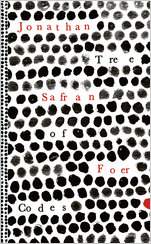
I first heard of this book through the Five Dials news feed (and there’s an excerpt of the book in Five Dials Issue 20 which you can see here).  Anyhow, I read about it and decided I wanted a copy for myself.  It’s not cheap, but you can just look at it to see how complicated it was to make (or you can watch this video) .

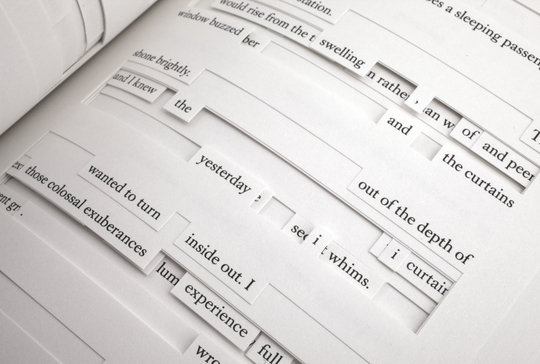
So this book follows the exact same logic as Of Lamb.  But unlike Harveys’ execution, in which she wrote out the words and made them into her own pages, Safran Foer creates a story out of an extant book.  The way the book is presented, he literally cuts out what he doesn’t want you to read. It’s also fascinating to me that this book came to my house in the same week as Of Lamb did (even though this came out much earlier–but as Foer says, there was no way for him to advertise the book).  They are absolutely similar ideas and yet their execution is so radically different.

When you open this book, you see holes.  Lots and lots of holes.  The pages have massive squares of text missing.  When you first open it, you can see many layers of text, some penetrating thirty pages down.  So you can read words that comes later in the book (you often read words from the following page if you don’t hold the page up correctly or put a piece of paper under each page).  Don’t believe me?  Here’s a picture:

Safran Foer’s explanation (at the end of the book) is that he loved the book The Street of Crocodiles by Bruno Schulz (which I’ve never heard of and have no idea what it’s about).  And he often saw a story within the story.  So, he decided “to use an existing piece of text and cut a new story out of it,” using only Schulz’s words.  But rather than presenting it in a conventional way (or even in an unusual way like Of Lamb), he wanted to push the boundaries of what a physical book could do. He was “curious to explore and experiment with the die-cut technique.” (more…)

Read Full Post »

SOUNDTRACK: MOGWAI-Come on Die Young (1999).

Mogwai’s second full length record goes in a slightly different direction than Young Team. Although it is still full of somewhat lengthy instrumentals, for the most part, the loud and quiet dynamic that they’ve been mastering over their EPs and Young Team is dismissed for a more atmospheric quality.  There’s also a few vocal aspects that comprise some tracks.  One in particular is very puzzling.

The disc opens with “Punk Rock.”  The music is actually not punk at all; rather, it’s a pretty melody that plays behind a rant about punk rock spoken by Iggy Pop. It’s followed by “Cody,” a kind of  sweet slow song.  This one surprises even more because it has gentle vocals which are actually audible.  The track is surprisingly soporific for Mogwai.

And then comes the real puzzler, “Helps Both Ways” is another slow track. But this time in the background is a broadcast of an American football game.  The announcers begin by telling us about an 89 yard run that was called back due to a penalty, but the game stays on throughout the track.  And I have to admit I get more absorbed in the game than the music. After these few quiet tracks,”Year 2000 Non-Compliant Cardia” is a little louder (with odd effects).  It’s also much more angular than songs past.

“Kappa” is the song in which I realized that much of the songs here are more guitar note based rather than the washes of sounds and noise.  “Waltz for Aidan” is indeed a waltz, another slow track.  It’s followed by “May Nothing” an 8 minute track which, despite its length, never gets heavy or loud or noisy.

“Oh! How the Dogs Stack Up” changes things.  It features a distorted piano which creates a very eerie 2 1/2 minutes.  And it leads into the 9 minute “Ex Cowboy.”  Although the general feeling of “Ex Cowboy” is mellow, there are some squealing guitars and noises as well.  By about 6-minutes the song turns really chaotic, its “Chocky” is another 9-minute song (the disc is very backheavy), there’s noise faintly in the background as a simple piano melody is plucked out.  It’s probably the prettiest melody on the disc, and the noisy background keep its unexpected.  The disc more or less ends with “Christmas steps.”  This is a rerecording of the awesome track from the No Education = No Future (Fuck the Curfew) EP.  It is shorter but slower and it sounds a little more polished than the EP. I actually prefer the EP version, but  this one is very good as well (it’s honestly not that different).

“Punk Rock/Puff Daddy/Antichrist” ends the disc with a fun track sounds like a drunken Chinese western  It’s two minutes of backwards sounds and is actually less interesting than its title.

This is definitely their album I listen to least.

[READ: March 15, 2011] Icelander

It’s hard to even know where to begin when talking about this story.  So I’ll begin by saying that even though it was confusing for so many reasons, I really enjoyed it (and the confusions were cleared up over time).  This story has so many levels of intrigue and obfuscation, that it’s clear that Long thought quite hard about it (and had some wonderful inspirations).

The book opens with a Prefatory note from John Treeburg, Editor (who lives in New Uruk City).  The note informs us that the author of Icelander assumes that you, the reader, will be at least a little familiar with Magnus Valison’s series The Memoirs of Emily Bean.  As such, he has included notes for clarification.  He has also included a Dramatis Personae.  The characters in the Dramatis Personae are the characters from Valison’s series (not necessarily Icelander), and are included here for context.  He also notes that his afterward will comment on the disputed authorship of this very novel.

The Dramatis Personae lists the fourteen people who Valison wrote about inThe Memoirs of Emily Bean.  Except, we learn pretty early on that the The Memoirs were based directly on the actual diaries of the actual woman Emily Bean Ymirson.  Emily Bean died in 1985, but before she died she was an extraordinary anthropologist and criminologist.  She kept meticulous journals of all of her exploits, and Valison fictionalized it (to some people’s chagrin, but to general acclaim).

Emily Bean was also the mother of Our Heroine.  Our Heroine is, indeed, the heroine of Icelander, although her real name is never given.  We learn pretty early on is that Our Heroine’s friend Shirley MacGuffin has been killed.  MacGuffin was an aspiring author (whose only published work appears on a bathroom wall).  Her final text was meant to be a recreation of Hamlet.  Not Shakespeare’s Hamlet, but Hamlet as written by Thomas Kyd.  And, indeed, Kyd’s Hamlet predated Shakespeare’s.

There’s also a lot of excitement with The Vanatru.  The Vanatru lived underground, and had a serious quarrel with surface dwellers who worked hard at keeping them down. The Queen of the Vanatru is Gerd.  She controls the Refurserkir, an inhuman race of fox-shirted spirit warriors who appear literally out of nowhere.

Okay, so how confused are you now? (more…)

Read Full Post »

SOUNDTRACK: SWANS-“Can’t Find My Way Home” (1989).

In the Swans review yesterday, I mentioned this as a song that was as far afield from early Swans as was imaginable.  This is a cover of the Blind Faith song and it is surprisingly faithful.  In fact, the original song features a voice that is so falsetto’d it’s almost higher than Jarboe’s.

The big difference here is that Jarboe is an unusual lady and her voice has a weird almost strangled quality to it which adds an air of longing to the song that the original doesn’t.   There’s also an ethereal quality to the music which contrasts with the original’s folk styling.  Not to mention that the production on this version is better.

I also happen to think that the Swan’s guitar intro (while less technically accomplished) is more intriguing.  Not bad for an industrial band.

[READ: February 20, 2011] Consider David Foster Wallace [essays 7-9]

The group read of this book seems to have come to a halt.  Coincidentally, so had my reading of it.  So, I decided to finish up the last few essays of the book to have it done in time for the April 15th release of The Pale King (yay!).

It’s been three months since I last posted about this book so I’ll give my disclaimer:  because I don’t have a lot to say about the pieces (I’m not an academic anymore), I’m only going to mention things that I found puzzling/confusing.  But be assured that if I don’t mention the vast majority of the article it’s because I found it interesting/compelling/believable.  I don’t feel comfortable paraphrasing the articles’ argument, so I won’t really summarize. (more…)

Read Full Post »

SOUNDTRACK: LETTERS TO CLEO-“Cruel to be Kind” (1999).

I’ve liked Letters to Cleo since I first heard them back on WFNX radio in Boston.  And since I had a dog named Cleo and their album was called Aurora Gory Alice, how could I not love them?

This cover of Nick Lowe’s song comes pretty close to the end of their career when they were poppier and slightly less indie.  In fairness, they were always a poppy band and their hooks were irresistible, but they had a bit more of an edge in the beginning.

This cover is pretty spot on.  There’s not a lot of “Cleo” put into it.  It sounds a lot like the original, only sung by the wonderfully voiced Kay Hanley (she sang Josie’s parts in the (terrible) Josie and the Pussycats movie, the title song for My Friends Tigger & Pooh and (gasp) as a backing singer for a Miley Cyrus tour (that’s the sound of my indie heart breaking).  I love her voice (she has a strange pronunciation/accent of some words that I find endearing), so I find the LTC version better than the original, but it’s honestly not all that different.

[READ: Week of November 16, 2010] Consider David Foster Wallace [essays 4-6]

These three essays cover the novella “Westward…” and Infinite Jest.  I was pleased to begin the essays about IJ because I know that novel far better than I know the short stories or Broom of the System.

As I mentioned in the previous entry:  because I don’t have a lot to say about the pieces, I’m only going to mention things that I found puzzling/confusing.  But be assured that if I don’t mention the vast majority of the article it’s because I found it interesting/compelling/believable.  I don’t feel comfortable paraphrasing the articles’ argument.  Besides, what would be the point of that? (more…)

Read Full Post »

SOUNDTRACK: AZTEC CAMERA-“Jump” (1984).

This is a wonderfully twisted covered of Van Halen’s “Jump.”  VH’s version of “Jump” is bouncy, lively, fun, it makes you want to yes, Jump!  It was many years after the release of VH’s “Jump” that I heard the Aztec Camera version (even though it was released the same year).  The first time I heard it I assumed it was a joke.

I didn’t know much about Aztec Camera (and actually still don’t–looking at their Wikipedia page I don’t recognize the names of any of their singles).   But I have grown to love this cover of “Jump.”  In fact I prefer it to the original.

The opening chord structure makes me think it’s going to be the Rolling Stone’s “Waiting on a Friend” but instead of Jagger’s ooh oohs we get Roddy Frame’s deep voice practically whispering the lyrics that David Lee Roth made famous.  And it stays with this delightfully mellow acoustic style and pacing throughout.  The guitar work in the bridge is actually much more interesting than the bridge in the Van Halen version (ouch).

The chorus seems kind of odd with his very mellowly saying “jump” (although David Lee Roth doesn’t scream “jump” either, it’s the backing vocals that do the exciting part).  I feel like the original VH version hasn’t held up that well, but the Aztec Camera version shows that it’s quite a good song.

Check it out here.

[READ: Week of November 8] Consider David Foster Wallace [first three essays]

I lied.

I said that I wouldn’t feel up to writing posts about all of the articles in this book on a regular basis.  As it turns out, I don’t have a lot to say about these essays, but I had a few thoughts about each one.  Since there’s a group reading going on, I thought it might be fun to post these thoughts now while people were still speaking about the articles instead of waiting until the end.

Before I say anything about this articles, I want to preface that I’m not going to repeat things that were said in the group read (for a couple of reasons).  Everything here is going to be things that I felt about the article and maybe, if something another reader says really sticks with me, I’ll mention it as an influence on me.

Having said that, in one of the comments, author Clare Hayes-Brady says that her article is a part of a longer thesis.  I found this to be a very useful thing to know, and I assume that she is not the only one who had to compress her article because of size and time constraints.  With that in mind, I’m going to accept that if it seems like the author could/should say more about a certain thing within the article that there is probably a larger version of the piece.

And finally, because I don’t have a lot to say about the pieces, I’m only going to mention things that I found puzzling/confusing.  But be assured that if I don’t mention the vast majority of the article it’s because I found it interesting/compelling/believable.  I don’t feel comfortable paraphrasing the articles’ argument.  Besides, what would be the point of that?

(more…)

Read Full Post »

SOUNDTRACK: MARTIN TIELLI-“We didn’t even suspect that he was the poppy salesman.” (2001).

Martin Tielli’s first solo disc is a proper solo release: it’s almost all him on acoustic guitar and his gorgeous alto voice.  I hadn’t listened to this disc in a while and I was delighted by how much of the disc I knew so well.

Te opening track, “I’ll Never Tear Your Apart” is deceptively simple: harmonic’d guitars and his gentle voice.  There’s a great video to go with it here.  That is followed by the wonderful “My Sweet Relief” which sounds like a great Neil Young folk song: great verses an a strong chorus.  Lyrically, though, it is all Tielli.  “Double X” highlights Tielli’s beautiful acoustic guitar work (and his dark lyrics).  “Voices in the Wilderness” is another delicate song (which opens with a sound that reminds me of Led Zeppelin’s “The Rain Song,” although in no way is the rest of the song like that. This song also (mis)quotes Rush very nicely: “‘If you choose not to be free you still have made a choice,’ said a high and squeaky voice.”

“Farmer in the City” is the only track that Tielli didn’t write.  It’s a nearly 8-minute song by Scott Walker.  I don’t know the original, but Tielli’s version is a bit too meandering to be really satisfying (although it fits in with the album style quite nicely).  It comes across as an atmospheric song more than a song proper.

It’s followed by the delightful “World in a Wall” which uses mice in the wall as a metaphor for a broken relationship (with wonderful detailed lines like: She’s like a mouse, I know she’s around It’s a gnawing sound. Leaves little brown poohs from a little pink bum.”

This is followed by the odd rocker “That’s How They Do It in Warsaw” (which features a woman speaking Polish–no idea what she’s saying).  It’s coupled with a slightly less rocky but still loud track “How Can You Sleep?” (which makes another fun musical allusion, this time about Guided by Voices).

“She Said ‘We’re On Our Way Down'” returns to the more ethereal sounding songs (although this has some great guitar tricks thrown in).  Like the bulk of the album, the song seems to eschew melody but then a gorgeous guitar or vocal line shines through and really sounds brilliant.  “From the Reel” is a beautiful, aching little ditty.  And the disc ends with the odd, seven minute “Wetbrain/Your War.”

There is a really wonderful review of post-Rheostatics work here at The Ohs.  He’s pretty harsh on the Bidiniband (although I haven’t heard the disc proper, just the live concerts that toured it, so I can’t say for sure) but his assessment of Tim Vesely is spot on (I love the idea of a Canadian Wilburys) as is his review of this disc.  I particularly like the Mary Margaret O’Hara comparison: Achingly beautiful but in need of an editor from time to time.

[READ: November 1, 2010] “The man who saw grey”

One thing I have really come to appreciate about Connell’s stories over the years is that he is not afraid to deal with dark aspects of humanity that many people would rather not think about.

The thing that surprised me about this story is that, in the past, Connell has used very specific language, one might even say two-dollar words (some of which I had to look up), to convey his ideas.  But in this story, he largely refrains from such language, keeping the language down to earth and familiar, much like his protagonists.

So this is a fairly simple story: a man hits his head and can thereafter only see in shades of grey.  What makes the story much more interesting than that simple plot is that the protagonist is a painter (well, his hobby is painting, in reality he is an administrator at the DMV). (more…)

Read Full Post »

« Newer Posts - Older Posts »