Feeds:
Posts
Comments

Archive for the ‘World War II’ Category

peanuts-1995SOUNDTRACK: TINARIWEN-Tiny Desk Concert #184 (January 5, 2012).

tinariwenTinariwen are a band from northern Mali, whose members met in the training camps of Col. Moammar Gadhafi. Much has been written about them and their story, which is pretty amazing.  I’m only going to talk about this Tint Desk Concert.

Typically, they play an interesting electric guitar kind of trance music.  But for this one they were all acoustic.  As Bob Boilen notes, they are his “favorite electric-guitar-based band on the planet.”  But he says he was:

“initially worried and disappointed when I learned that it was coming to play the Tiny Desk as a trio carrying acoustic guitars. My heart sank a bit more when the three Tuareg musicians from the Sahara arrived in jeans and polo shirts instead of the beautiful, flowing robes I’d seen them wear on stage so many times.

But they switched clothes and they do not disappoint on acoustic guitar.

I don’t know their music all that well, but it feels like the acoustic nature of this show is even more soothing and trance inducing.  The two acoustic guitars interweave–one playing lead (which is mostly hammered notes–not a “solo” per se) and the other strumming.  The percussion is the sound of two hands rubbing, clacking (with a cigarette lighter) and pounding (for bass drum) a large gourd.

The songs tend to be almost looping.  Like they could go on forever.  There’s no real verse chorus structure that I can tell.  It’s more of a meditative sound.

All of the vocals are in Tamashek and I have no idea what the songs are about.

On “Adounia” both guitarists sing and the voices sound very traditional, almost atonal. “Takkest Tamidaret” opens with a more conventional sounding guitar lick, but it’s all so quiet in the mix, that you can’t tell how much his fingers are moving.  The lyrics are a bit slower, but still in that droning style.  I love the way “Tenhert”  has a a cool riff from the lead guitar–one that probably sounds more intense on electric guitar.  He sing/speaks incredibly quickly.  “Tahlamoyt” is a much slower song with the lyrics pretty much all spoken word.

The “Mali sound” is pretty distinctive and Tinariwen are great proponents of it, spreading it around the world for all to hear.

[READ: June 8, 2016] The Complete Peanuts 1995-1996

I was under the impression that these last few volumes of books would show a serious drop in quality.  I had assumed that with the amount of product the Peanuts characters were sponsoring that these strips would be more cute.  But that is far from true.  I enjoyed this book as much if mot more than some of the other recent volumes.

I was also surprised to discover that I really enjoyed the Sunday cartoons more than the dailies.  In the past I haven’t really gotten big laughs form the Sundays–it seemed like the big stories and jokes were in the dailies and the Sundays were unrelated one offs with varying degrees of punch.  But I enjoyed a dozen or so in this book.

One of the major additions in this book is the inclusion of a slightly older Rerun.  He is now mobile and even heading to kindergarten (I love that he is aging while the others aren’t).  But rather than using Rerun for obvious cute child jokes (he’s no longer riding the back of his mom’s bike) Rerun is now making funny “outsider” observations about the world of Peanuts–he is constantly disenchanted with the way  things are going and with the belief that people are always lying to him.  There are also a ton of strips of him trying to shoot a basketball and failing miserably.  Schulz has always tended to take an idea and run and run and run with it, but this one is pretty good for the number that he uses it. (more…)

Read Full Post »

1993-1994 SOUNDTRACK: LEON BRIDGES-Tiny Desk Concert #469 (September 8, 2015).

leonLeon Bridges has a great old soul voice.  Indeed, I had no idea he was so young until he started speaking after the third song and all manner of young person chat came out of his mouth: “Thanks to my main man, you all looking beautiful man.”  His voice is pure and clean and hearkens back to 1960s soul singers like Sam Cooke.

The way he sings “baby baby baby” in “Coming Home” is classic soul.  And his enunciation of “mouth” is just gorgeous.  This song features the backing vocals of his sister Jesse.

“Smooth Sailin'” features a sax solo and Bridges on guitar.  Since there are 2 guitarists already Bridges’ guitar doesn’t  add much, but for me it’s all about his voice anyhow.

“Twistin’ & Groovin'” is about how his grandparents met.  He says the first time he saw her at a party the thing he noticed first about her was her long legs.

“River” is just him on acoustic guitar with Jesse singing backing vocals.

It’s a solid set and Bridges’ star has continued to rise since this show.

[READ: September 18, 2016]  The Complete Peanuts: 1993-1994

I didn’t like the previous book all that much, but this one picked things up a bit.

The year starts with Snoopy taking a test in school and acing the true false part–the only one to do so!

1993 has Schulz’ first celebration of MLK day.  Patty mentions the “I have a dream speech” but I love that she just mentions it without making it a big deal, it quickly changes to an unfair lunch swap between a carrot stick and french fry.  Speaking of old words, Lucy begins insulting Linus with: blockhead airhead, noodleneck but then finds that these older words work better: puzzlewit, dimbulb.

In pop culture notes, April 1993 sees Snoopy as Joe Grunge and in May 1993 Sally asks why is Barney purple? (more…)

Read Full Post »

coin2 hiddenSOUNDTRACK: MATANA ROBERTS-Coin Coin: Chapter 2 Mississippi Moonchile [CST098] (2013).

The first chapter of this series was a sprawling disc of free-form jazz and spoken word.  It was interesting and strange with a powerful message (not always elegantly delivered).  It felt too long, but I think it was done live which would make it more understandable as a long presentation.

Chapter 2 is quite different.  It is much shorter, but it has 18 tracks that flow seamlessly (and often without apparent logic) into each other.  Most of the songs are quite short as well.

“invocation” is a sultry jazz number (Matana Roberts plays saxophone).  There’s also piano, trumpet, double bass and drums.  One thing that I didn’t like about the first chapter was Robert’s “poetry slam” deliver of her spoken words.  This album more or less erases that all together with the inclusion of Jeremiah Abiah on “operatic tenor vocals.”  I don’t know what he’s saying (if anything) most of the time, but his voice soars above the jazzy din.

“humility draws down blue” starts in the middle of a trumpet solo and lasts for a minute and a half.  “all nations” is only 8 seconds long and seems to coincide with a vocal line from Abiah.  “twelve sighed” settles things down some.

The first real change comes with “river ruby dues,” which opens with a gentle piano motif, and Abiah’s vocals.  Roberts’ sax solo plays throughout.  There are somewhat recognizable motifs played throughout the album.  I was sure I heard parts of “Pop Goes the Weasel.”

“amma jerusalem school” also opens with a new melody–a four note sax line–without a doubt the prettiest melody of the disc.  About mid-way through the song, Roberts begins speaking/reciting.  There’s a lot going on in her saga.  When that ends, more instrumentals continue and “responsory” has a lovely falsetto singing section.

This half of the album has been fairly conventional jazz: rather pretty with some nice melodies—far more conventional than Chapter 1.

Although by “the labor of their lips,” things have become a bit more avant-garde.  But even that doesn’t last too long and by “was the sacred day,” a pretty melody has resumed and more spoken word comes in, this time in stream of consciousness.  It’s a story of childhood with some happy and some sad details including: “they didn’t like black people at the hospital. you could use a room but no nurses would attend to you.” and the story of a woman getting whipped for not saying ‘sir.’   Interspersed through this tale is a sung line “I sing because I’m happy I sing because I’m free.”

‘woman red racked’ features Robert’s singing voice—pretty and pained—with some nice, deep backing voices accompanying.  Interestingly, this vocal part ends with them singing “Amen,” but the song is not over… a sax solo emerges from this and plays a kind of wild section with Abiah’s vocals until the end.

“thanks be you” is a spoken piece, a story told to a child about the past “there are some things I just can’t tell you about” which references a lot of childhood songs.  It ends with the repeated refrain “Mississippi is a beautiful place.”

This disc is only 48 minutes and it feels just about the right length,  “benediction” ends the disc with a quietly sung song with another singer accompanying her: their voices sound great together.

As with the first one, the narrative is a little unclear.  The main thrust of the story is obvious and effective, but it would be hard to diagram the story.  Nonetheless, her use of jazz and traditional sources (“red ruby dues,” “woman red racked” and “benediction” are based on traditional American folk songs), make for an evocative look into slavery from the point of view of one family.

[READ: March 20. 2016] Hidden

Having recently read the Resistance trilogy I am much more aware of France’s role in WWII.  But that could never have prepared me for this children’s book about the Holocaust.  (written by Loïc Dauvillier, translated from the French by Alexis Siegel with illustrations by Marc Lizano and Greg Salsedo).

The book opens on a little girl.  She wakes up in bed and hears her grandmother crying.  When she asks what’s wrong her grandmother tells her about the “nightmare she was having.”

And that nightmare is her story as a young Jewish girl in occupied France and how her life was brutally upended.  This is all told with fairly cute little characters with oversized heads.

I’ve never heard this story from the point of view of a child before.  Her grandmother was a little girl going to school.  She and her friends did everything that you’d expect little kids to do and the story starts out very sweetly.  Then one day she comes home and her father says that they must all be sheriffs–wear the yellow star on their lapel.  Once they stray doing that, she is effectively shunned.  But she has no idea why–why does everyone hate the sheriff? (more…)

Read Full Post »

maha SOUNDTRACK: MASHROU’ LEILA-Tiny Desk Concert #543 (June 24, 2016).

mashrouMashrou’ Leila is a band from Beirut.  And because I love this kind of thing, here is their name in Arabic script: مشروع ليلى

They are on their second ever tour in the U.S.  They sing in Arabic but their music is full of rock and indeed dance motifs.

There are five members of the band: singer and lyricist Hamed Sinno, violinist Haig Papazian, keyboardist and guitarist Firas Abou Fakher, Ibrahim Badr on bass and drummer Carl Gerges.  And the band make up is rather diverse:

Sinno is openly gay, and Mashrou’ Leila is well acquainted with the targeting of LGBT people. The band has faced condemnation, bans and threats in its home region, including some from both Christian and Muslim sources, for what it calls “our political and religious beliefs and endorsement of gender equality and sexual freedom.” And yet, when Mashrou’ Leila performs in the U.S., its members are often tasked with representing the Middle East as a whole, being still one of the few Arab rock bands to book a North American tour.

Their set took place on the morning after the dead club murders in Orlando (June 12), and since the band has had direct experience with this, they modified their intended set list.

I want their music to speak for itself, because it’s really good.  But since it’s sun in Arabic, some context helps

“Maghawir” (Commandos), is a song Sinno wrote in response to two nightclub shootings in Beirut. In the Beirut incidents, which took place within a week of each other, two of the young victims were out celebrating their respective birthdays. “Maghawir” is a checklist of sorts about how to spend a birthday clubbing in the band’s home city, but also a running commentary about machismo and the idea that big guns make big men.

It begins with a low menacing bass (keyboard) note and some occasional bass (guitar) notes until the echoed violin plays some singularly eerie notes.  Sinno’s voice is really interesting–operatic, intense and not really sounding like he’s singing in Arabic exactly.  He has rock vocal stylings down very well, and the guttural sound of Arabic aids the song really well.  I’m really magnetized by his singing.  And the lyrics:

“All the boys become men / Soldiers in the capital of the night,” Sinno sings. “Shoop, shoop, shot you down … We were just all together, painting the town / Where’d you disappear?” It was a terrible, and terribly fitting, response to the Florida shootings.

For the second song, “Kalaam” (S/He),Sinnos says it’s about the way “language and gender work in nationalism.  In Arabic, words are feminine or masculine and it’s about being in between while trying to pick someone up at a bar.”

Sinno dives deep into the relationships between language and gender, and how language shapes perception and identity: “They wrote the country’s borders upon my body, upon your body / In flesh-ligatured word / My word upon your word, as my body upon your body / Flesh-conjugated words.”

There’s interesting percussion in this song.  And more of that eerie echoed violin.  But it’s when the chorus kicks in and there’s a great bass line (which comes out of nowhere) that the song really comes to life.  There’s a cool middle section in which the keyboards play a sprinkling piano sound and there some plucked violins.  All along the song is catchy but a little sinister at the same time.

The final song, “Djin,” is based on Joseph Campbell’s archetypes.  Sinno describes the comparison between Christian and Dionysian mythologies but it’s also about just about “getting really messed up at a bar.”

“Djin,” is a perfect distillation of that linguistic playfulness. In pre-Islamic Arabia and later in Islamic theology and texts, a djin (or jinn) is a supernatural creature; but here, Sinno also means gin, as in the alcoholic drink. “Liver baptized in gin,” Sinno sings, “I dance to ward off the djin.”

It has a great funky beat and dance quality.  The way the chorus comes in with the simple backing vocals is great.

There’s some pretty heady stuff in their lyrics, and that works on the level of their band name as well:

The most common translation of “Mashrou’ Leila” is “The Night Project,” which tips to the group’s beginnings back in 2008 in sessions at the American University of Beirut. But Leila is also the name of the protagonist in one of Arabic literature’s most famous tales, the tragic love story of Leila and Majnun, a couple somewhat akin to Romeo and Juliet. Considering Mashrou’ Leila’s hyper-literary bent, it’s hard not to hear that evocation.

I hope they get some airplay in the States. Sadly their album is only available as an import, but it is downloadable at a reasonable price.

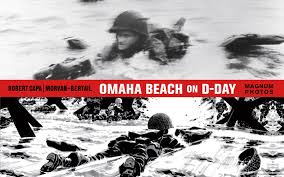
[READ: June 10, 2016] Omaha Beach on D-Day

Nobody picks up this book for fun.  I mean, look at that title. You know this isn’t going to be a laugh.  But it is an amazing book and I think  perhaps the title does it a bit of a disservice.

This book is not exactly about the massacre that was Omaha Beach on D-Day.  It is about that certainly, but the book is really about Robert Capa, the photographer who took the most iconic photos of Omaha Beach on D-Day.  This book is far more of a biography of him than an account of the war.  And in typical First Second fashion, they have made a gorgeous book full of photorealistic drawings that really exemplify the work that the book describes.

The book opens in Jan of 1944 with Capa carrying bottles of champagne amid the burned out wreckage of war.  He is bringing the celebratory drink to his fellow reporters who have been hiding out for a few days. Capa says he is leaving for London. (more…)

Read Full Post »

feynman SOUNDTRACK: LARA ST. JOHN-Tiny Desk Concert #530 (May 9, 2016).

laraWhen Lara St. John released her first CD it made ripples because of the way she appeared on it (presumably topless).  But if that was a stunt to get people to listen, it was a good one because the music on it was phenomenal (and the disc sold very well).  St. John is masterful on the violin and has released a dozen or so CDs of herself playing.

I have never seen her play before and it is a marvel watching her fingers  fly (and slide) all over the neck of the violin (including some absurdly high and fast notes).

The first piece is “Czardashian Rhapsody.”  It is an amazing mashup of two songs by Martin Kennedy: Czardas, the most familiar Hungarian melody for violin and Hungarian Rhapsody No. 2, the most familiar Hungarian melody for piano.  He merged them into a real barnstormer.  It’s 6 minutes of switching back and forth between the familiar melodies and very gypsy-esque sections (and some very long held notes).

The song is 6 minutes of musical acrobatics.

Although this is billed as St. John’s show, much recognition must go to her pianist Matt Herskowitz who is also magnificent.

St. John clearly has a sense of humor since she named her new album Shiksa.  She says the album actually has ten different titles because every culture has a word for “big Canadian chicks” like herself.

The second piece is “Sari Siroun Yar” by Serouj Kradjian.  She says it was the first song she heard when she went to Armenia in the lat 1980s.  It is a bittersweet Armenian troubadour song.  While this song is much more mellow than the first, it still showcases some amazing playing on both musicians’ parts.  The opening notes she plays high on the fret board which gives the violin a very different sound–almost breathy.  And the main melody is quite lovely.

The final song is once again a wild one.  “Oltenian Hora” is one that St. John arranged herself.  It plays off a catalog of violin tricks, St. John explains, practiced by traditional Romanian gypsy fiddlers: rapid-fire whistles, bird calls and slithery harmonics, all in a variety of off-kilter rhythms.  I’ve never seen some of the things she does on the violin (those bird calls are amazing).  And by the end she is bowing so hard the bow seems about to break.  It is way intense and really awesome.

I’m not sure I’ve ever seen a violinist get out of breath from playing so hard before, but she deserves all of the applause.

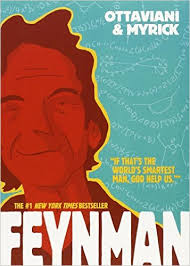
[READ: March 15, 2016] Feynman

This is a graphic novel biography of Richard Feynman.  Ottaviani worked as a nuclear engineer, programmer and reference librarian, so you can trust him.

I have respected Richard Feynman for years.  I have a few of his books, although I can’t say I have read them intensely.  I knew that he was considered an amazing professor–making really intense subjects easier for the layman to understand.  And many of his lectures are available as audiobooks.

But there was so much about him that I didn’t know.  And this biography (which runs nearly 300 pages and is jam packed with information) covers nearly all of it.  Including excerpts from his own publications and attaching a massive bibliography for more works by and about Feynman. (more…)

Read Full Post »

feb20156SOUNDTRACK: ANTHONY HAMILTON-Tiny Desk Concert #517 (March 28, 2016).

anthamI don’t know Anthony Hamilton, probably because he is a soul singer and I don’t listen to soul music.  He’s won Grammy’s and everything!  He and this band The Hamiltones (nice) had just played for the Obamas, and they came to the NPR offices afterward.

The first song, “Amen,” is new and he says was his attempt to write an R. Kelly song.  The other three songs are apparently the ones that have made him famous.  The songs are “Best of Me,” “Cool” and “Charlene.”

I love his American Flag jacket/sweater or whatever it is.  And his voice and the voices of The Hamiltones are pretty sweet.  No doubt if I listened to soul music, I’d have a lot of Hamilton’s discs.

[READ: January 26, 2016] “Family Business”

This essay was an interesting mash-up of two writers that I’d like to read more of.  I am a fan of Nabokov’s although I have read but a smattering of his work.  And I have enjoyed what I’ve read by Lipsky, although I have yet to delve into his fiction.

This is a book review of the recent publication of Vladimir Nabokov’s letters to his wife Vera throughout the length of their mostly happy fifty-two year marriage.  Sadly, Vera’s letters were destroyed (by her), although as it turns out, she didn’t write very much back to him anyway.

This is the kind of book review that I find exceedingly enjoyable. It sums up what the book has to say and then lets me know that while I might enjoy reading it, I don’t actually have to.  Not that he gives away spoilers–are their spoilers if you know what their life is like already?  But he really gets the gist of the letters and their life. And frankly, I don’t need to be that intimate with the writer, even if I do enjoy his works. (more…)

Read Full Post »

alansSOUNDTRACK: DO MAKE SAY THINK-Do Make Say Think [CST005] (1999).

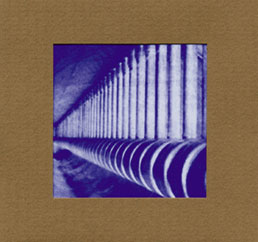
cst005web This album was self-released in 1997, but then the guys at Constellation took it and released it in a beautiful package in 1999.  And Constellation did it right: CD gatefold jacket made from 100lb. textured uncoated cardstock with foil-embossed text and window cut.  Three different two-sided duotone insert cards can be interchanged to show through the front cover window cut. Snazzy!

So this album was recorded in two different locations and it feels a bit more like  compilation of their songs than an album proper.  This doesn’t detract from the music at all, it’s just not as cohesive as their later releases.

“1978” has a raw sound.  It builds slowly, with waves of sorta static getting slowly louder for the first minute. And then the drums kick in. They sound very “live” and crisp. There’s a jazzy pattern accompanied by an unusual bass line.  At 3 minutes a big guitar riff breaks up the droning feeling as it rocks out and then disappears just as quickly.  There’s some saxophone and trippy headphone panning going on, too. This sets in motion a more funky bass line that runs like a lead instrument through the proceedings. There’s some noise bashing around at 8 minutes and a even wah wahed guitar solo at 9.  These occasional disruptions give an interesting melodic sense to this otherwise droney (in a good way) 10-minute song.

“Le’espalace”  feels a little warmer.  It opens with some analog synth trippy sounds and a pretty guitar riff. This is a lovely song that meanders around. The song gets more dense with a synth taking over the guitar line and another synth playing a contrasting melody, too.

“If I Only…”  is 7 minutes long.  It also has a rawer feel.  It’s more staccato with keyboard notes propelling the song forward. There’s a trippy middle section with a nice drum breakdown. It stops at about 5 & a half minutes and resumes with a fuller sound as it rides to the end.  “Highway 420” continues with that more raw sound.  It opens with washes of synths like Tangerine Dream or something.  There’s also a slick guitar line that begins about 3 minutes in.  It’s all rather atmospheric.

Do Make Say Think have always had a bit of jazz at their roots.  That’s evident in “Dr. Hooch” which has jazzy cymbals and slow atmospheric guitars.  About half way through, a wild synth riff comes in and takes over the song for a minute or so before returning to the atmospheric sound.

“Disco & Haze” is a warmer song that slowly builds with a spacey keyboard section.  Around 3 minutes in (of 9) a wah-wah’d guitar takes over—seemingly unrelated.   At 5 and a half minutes the song crashes into a big noisy “chorus,” probably the loudest thing on the record. There’s a noisy skronking sax solo to accompany this as well and it ends with washes of keyboards.   It really sounds like nothing else on the record.

“Onions” is only 90 seconds long.   It’s a simple keyboard riff with echo and little variation.  It’s an odd inclusion but maybe serves as a palette cleanser before the nearly 20 minute final song.  “The Fare to Get There” is warm with spacey keyboard washes and occasional woodwinds–there’s even flute at the end.  It’s 20 minutes long so just sit back and let it unfold over you.  Around 5 minutes in, eerie and spooky drums begin.  Then there’s some reverbed guitar chords and echoed notes which keep the song going.  About three-quarters of the way through, they add a simple guitar riff that continues for several minutes. With a couple of minutes left the song introduces some flutes as it mellows it way to close.

This is a pretty impressive debut.  The band knows the sound they are going for and they definitely achieve it.  Later records are more consistent (and consistently better), but this (especially the opening track) is a great place to start with this band.

[READ: February 7, 2016] Alan’s War

One of the things that First Second hoped for in their ten-year anniversary was that people might read books that they wouldn’t normally.  And boy was this ever one.  The title didn’t sound very appealing to me–I don’t really like war stories all that much.  And frankly I didn’t even know what to expect from the story, really.  Certainly not what I got!

This is the story of a man named Alan Cope.  And the origin of the story is as fascinating as the story itself (almost).  Turns out that Emmanuel Guibert met Alan Cope in the street in France.  Guibert asked the older for directions in June of 1994. Cope was 69, Gilbert was 30. They struck up a conversation.  And soon after, Cope began telling of his experiences in World War II.  What happened to him during and after the war and why this American solider now living in France.

Guibert asked if he could draw the stories that Cope was telling him and Cope said yes.  So this is a story of World War II but it is unlike any story I have ever read.  There is very little in the way of “familiar” WWII stuff in it.  Cope wasn’t in any of the major battles, he never came under heavy fire.  Rather, Cope had a fairly easy war, but he had a ton of stories that were interesting, funny, sometime unbelievable. And the number of famous people he encountered is pretty surprising.

I enjoyed this story so much.  On a side note, My father was in WWII and he also had a fairly easy war, although he was in the Pacific, he was on a small island that saw no action..  I wouldn’t say he enjoyed the war, but he came out with good experience and good friends, which is what Cope did, too.  My fathers stories were far less amazing than Cope’s, but it goes to show that everyone has interesting stories and that no amount of film or history channel commemoration will ever cover everyone’s story. (more…)

Read Full Post »

« Newer Posts