Feeds:
Posts
Comments

Archive for the ‘War’ Category

SOUNDTRACK: DINOSAUR JR.-Live at the 9:30 Club, Washington D.C. October 8, 2009 (2009).

This was one of the first shows I downloaded from NPR.  I’ve been a fan of Dinosaur Jr. since my friend Al turned me on to Green Mind back in college.

This is an amazing show created by the original Dino Jr. members.  This tour is in support of their second album since reuniting, Farm. This set-list is an outstanding mix of old songs, new songs, Barlow-sung songs and even some songs from when Barlow and Murph weren’t in the band.  (Green Mind is still my favorite album by them).

When the band reunited there was much joy, and I’ve said in reviews of the newer albums, I’m not entirely sure why.  I mean, Dino Jr has always been about Mascis, and it’s not like Barlow is such an unusual bassist (although Murph’s drumming is always solid).  I’ve nothing against Barlow (I love Sebadoh and Folk Implosion) or Murph, it just seems odd to get excited about having them back in the band aside from nostalgic reasons.

Having said that, the band sounds amazing (and yes, Barlow does get to sing on “Imagination Blind”).  What never really came across to me until hearing all of these great songs live was that Mascis has always been a great pop song writer.  These songs are catchy as hell. But Mascis buries them under loud squalling guitars and a voice that is almost whiny, almost off-key, a total slacker voice.  (But you’ll notice it is never actually off-key.  He must work very hard at that.)

By the nd of the show Mascis chastises the audience for not moving (we obviously can’t see what they’re doing), saying he forgets that people don’t move in Washington, D.C.  But during the encore break, NPR host, Bob Boilen, points out that Mascis himself doesn’t move either–he just stands in front of that wall of Marshall stacks (Boilen wonders how he can hear anything anymore).  And looking at the pictures it’s comical the way he looks, surrounded by amps.  The picture above doesn’t fully do it justice, but check out the extra photos at the NPR page.  And while you’re there, listen to this show. It is amazing.  For a total slacker, Mascis can rock a guitar solo like nobody’s business.

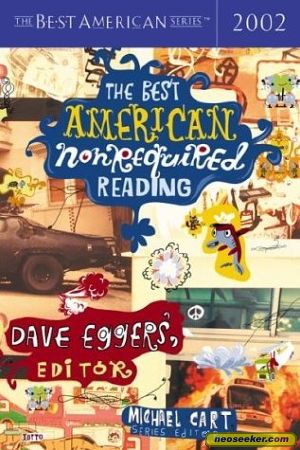
[READ: July 20, 2011] The Best American Non Required Reading

I’d been meaning to read this series for years (yup, Eggers fan), But I have a hard time starting “collections” because I feel like I’d rather be reading a novel.  Nevertheless, I have most of these Nonrequired books, so it seemed like I should dive into one and see what it was like (I don’t think the year really matters all that much–some of the articles are topical but most are not exactly).  Then Sarah said this would be a great book to read on vacation because it’s all short essays, and she was right.  It was perfect for late nights when I wanted something to read but didn’t feel like getting involved in the novel I was reading.

DAVE EGGERS-Introduction
Eggers’ introduction is actually a partial short story about kids who go swimming in pools around town. It reminded me of the opening of Life After God by Douglas Coupland, but of course, lots of kids did that so I’m not saying it was “lifted” from DC.  The story “ends” (it doesn’t really end so much as stop) with an interesting scene between two unlikely kids who get caught.

After this story Eggers includes these three notes about the collection: It’s not scientific, It’s alphabetical, and We had a lot of help with this.  Of the three, it’s the middle one that’s most useful because Eggers says that you shouldn’t necessarily read them in order just because they are printed this way: “In the first half of this collection, you get a good deal of hard journalism, primarily about war and refugees, from Afghanistan to the Sudan, followed immediately by a number of less serious pieces, about malls and Marilyn Manson.  We didn’t group anything by theme , and won’t be offended if you skip around.”  This was good to know (not that we needed the permission of course), but yes, the beginning of the book is pretty heavy. (more…)

Read Full Post »

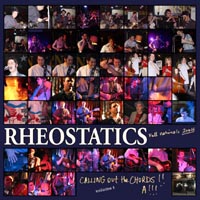
SOUNDTRACK: RHEOSTATICS-Calling Out the Chords Vol 1 (2005).

In addition to the Rheostatics’ main catalog, the cool label Zunior has released a couple of “official” bootlegs.  Calling Out the Chords Vol. 1 (no Vol. 2 has been released as of yet) is a collection of 2004 live recordings from The Legendary Horseshoe Tavern.  The Rheos do multiple nights at the Tavern, and this is a selection of songs from those shows.

It’s an interesting mix of essential live recordings and weird tracks that die-hards will appreciate but that newbies may scratch their heads at.  Some essential recordings are the wonderful version of “California Dreamline” that segues into a blistering version of “Horses.”  The version of “Mumbletypeg” with The Fall National Horns adding brass is also pretty great.

But there’s a number of songs here that are peculiar.  Great for fans, but perhaps hard to explain otherwise: an instrumental version of the 1996 song “Four Little Songs.”  I’m not sure why they went instrumental, as the lyrics are pretty essential, but there ya go.

There’s a crazy song “We’re All Living in a Chemical World” sung by special guest Ford Pier.  The intro says that this was one of Tim Vesely’s first songs, and it’s written in their early synth pop style (Pier is an insane vocalist too).  It’s quite a surprise.  And speaking of guests, there’s a lot of music from special guest Kevin Hearn (who has been with Barenaked Ladies since 1996–Hearn is a touring machine, apparently).  Anyhow, he contributes two songs to this disc “Who is that Man and Why is He Laughing?” and “Kevin’s Waltz” and he helps out on “I am Drummstein” and “Weiners and Beans.”   “I am Drummstein” and “Weiners and Beans” are unusual tracks as they come from their children’s album and their tribute to the Group of 7.

The final track is “Legal Age Life at Variety Store,” one of their staple live songs.  But this one has a twist contest in the middle.  Audience members are invited onstage to twist.  It is quite long (and without the actual visuals, it’s a bit hard to listen to more than once or twice) but it’s a fun way to hear the band interact with the audience and it shows what a fun live show they put on.

This is a great recording and a bargain for $5.55.

[READ: August 31, 2011] “Home”

I read this story twice.  The first  time, I didn’t really like it, I found it to be  kind of jumbled and confused.  I don’t know if that’s a typical reaction to this story or if I was feeling lazy, because the second time through I followed it okay and I enjoyed it quite a bit.

It’s a social commentary from Saunders, although exactly what the comment is is a bit unclear to me (even after the second reading).  The main character is a veteran who has just returned from one of the wars we’re fighting, “…the one that’s still going on.”  When he gets back home, his mother has shacked up with an unemployable guy, his sister won’t let him see her new baby and his wife has taken their son and has shacked up with some asshole he knew in high school.

And every time someone finds out he just got back from the war (like the sheriff who is evicting his mom), they all say, amusingly, as if by rote: Thank you for your service. (more…)

Read Full Post »

SOUNDTRACK: WAVVES-Live at Sasquatch, May 28, 2011 (2011).

I learned about Wavves from NPR–in fact I listened to their other NPR concert before even getting their album.  So this marks my second concert from them.  What makes me laugh about Wavves is that the songs are really short and Nathan Williams is a total chatterbox. When I burn these concerts onto CD, I use Audacity and I make tracks for songs and band chatter.  Which means that this Wavves show, which is just under 40 minutes has 20 tracks.  (Whereas S. Carey, at about the same length, has only 11).

This show has 14 songs.  Four of the songs are from their second album, called Wavves (which is also their second album called Wavves).  The rest come from King of the Beach (except “Wavves” from their first album and a couple of newer tracks).

The band blasts through these songs (I’m not even sure who is in the band, since the Wavves albums are a solo endeavor), and they all sound very good.  The album has kind of a tinny sound (on purpose, I suspect), whereas live the songs sound a bit fuller.

Lead Wavves guy Nathan Williams wasn’t that friendly in the previous show; he seems to be having a bit more fun here.  But really it doesn’t seem like you don’t go to a Wavves show to hear him talk, you go for what is undoubtedly the pogofest that is Wavves’ punk.  It’s a good set.

[READ: July 2, 2011] “Friendly Fire

Pam runs a small but successful cleaning business–but her workers are pretty unreliable.  So her friend Shelley, the real protagonist of the story, helps out once in a while.  Shelley enjoys the work once in a while (she has a real job after all)–she can use the extra cash.

This job was cleaning a warehouse–not the warehouse section itself, but the bathrooms, kitchens and offices.  They arrive early, but the workers come in while they are working and Shelley enjoys teasing/flirting with the men when they come in to use the bathroom and find her bent over, ass waving in their face. (more…)

Read Full Post »

SOUNDTRACK: BATTLES-“Ice Cream” (2011).

My friend Lar told me about Battles way back in 2007.  I listened to the concert he sent me, and it was great. But my memory of the band was that they were really heavy (the drummer was in Helmet and Tomahawk for cripessakes).

But they’re not so much heavy as noisy and crazy.  And this track is a head-spinning amalgam of keybaords, unsettling rhythms, processed guitars and singing from Argentinean techno producer Matias Aguayo.  The lyrics sound like they are not English, but they are (with heavy effects on them).

The song is weird, indeed. But after just one listen, I was totally hooked.  It’s catchy and bouncy and very sunny and it’s a real joy to listen to.   I absolutely must go back and check out their debut Mirrored.

Listen at NPR.

[READ: April 28, 2011] Five Dials Number 6

Five Dials Number 5 was an excellent issue that I enjoyed immensely.  They followed it up with Number 6, which deals with a subject that I was very passionate about in the early 90s: censorship/obscenity.  When I was in high school and college, the PMRC was the big bogeyman for advocates of free speech (of which I am one).  I still advocate passionately for freedom of speech (now that I’m in a library, the issue can be part of my daily life), but it seems like there are so many more important issues in the world, that stickers on a record seem kind of silly.

Nevetheless, as this issue reminds us, those who control what is said control what we hear.  And that’s true for music and books, as well as our everyday news.  So, free speech should never be taken lightly.  Although this issue looks largely at obscenity in England, they also pull up some good information from Jello Biafra as well.

CRAIG TAYLOR-A Letter from the Editor: On John Mortimer and Obscenity
John Mortimer appears later in the issue. He was the lawyer who defended Lady Chatterly’s Lover against accusations of obscenity.  And Taylor points out that Mortimer’s attitude was that he “understood the silliness of censorship.”  And with that attitude, he was able to work to convince juries of that silliness.  The rest of the issue looks at important cases of censorship over the years, from The Dead Kennedys to NWA (it’s nice to be reminded about how “dangerous” they were when they came out).  He also laughs at the lame attempts at putting adult content on network TV (Fudge you!). (more…)

Read Full Post »

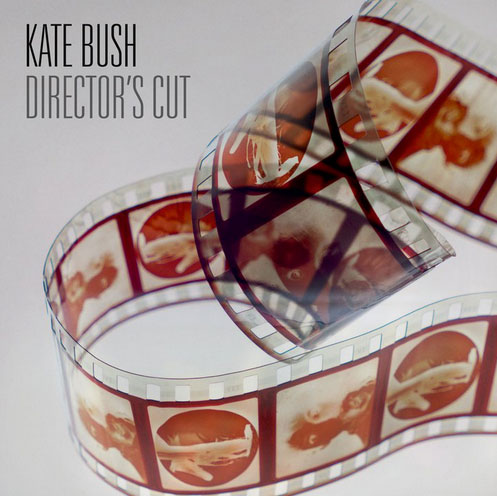
SOUNDTRACK: KATE BUSH-Director’s Cut (2011).

Kate Bush has re-recorded eleven songs from her two least-loved discs, The Sensual World and The Red Shoes.  According to the story at NPR, this seems to have been inspired by the Joyce estate’s granting Kate the right to use part of Ulysses as the lyrics for the song “The Sensual World” (in the original version she paraphrased the book).  So, she decided to re-record a bunch of other songs from those two albums as well.

I admit that neither one of those discs is high on my repeat play list, with The Red Shoes being a particular disappointment.  (Although there are some great songs on each).  When I read that these songs from those two albums I wasn’t terribly excited to hear them.  But I must say that these new versions have really reinvigorated these tracks.

I’m surprised by some of the choices (redoing “This Woman’s Work” is something of a shock, as is redoing her only real hit from The Red Shoes, “Rubberband Girl”), but whether it’s that she chose the best songs, or the new version have more life to them, this is a wonderful collection of songs.

Actually, rechecking the track listing, it does appear to be the best tracks from both discs, but I’m pleasantly surprised to seen how many good songs were actually on The Red Shoes to begin with,

from The Sensual World

  • Sensual World (retitled “Flower of the MOuntain”)
  • Deeper Understanding
  •  This Woman’s Work
  • Never Be Mine

from The Red Shoes

  • The Song of Solomon
  • Lily
  • The Red Shoes
  • Moments of Pleasure
  • Top of the City
  • And So is Love
  • Rubberband Girl

For the most part, the music seems to be the same (although there are some glaring exceptions).  I admit to not remembering the originals for all of them all that well).  But she has mostly rerecorded her voice (and possibly other lyrics, if NPR is accurate).  Her voice is unmistakably Kate, but in some places she sounds noticeably older (which she is, so duh).  She doesn’t seem to be able to hit quite the highs of before, but her voice has a throaty excellence to it now that brings something new to the songs.  It’s not noticeable on every song, although it is most notable on “This Woman’s Work,” which began with high sopranos, and now begins with lower alto notes.  But she can still hit some of the cool screechy notes on “Top of the City”

There are some tracks that are very different, “A Deeper Understanding” (a song about love via modems) replaces the earlier style of singing with a heavily autotuned computer voice.  It’s unsettling but very cool sounding.

The biggest changes come in “This Woman’s Work” and “Rubberband Girl.”

“This Woman’s Work” is a far more sedate track now. It doesn’t have any of the soaring moments of the original.  It seems to have more depth in this version, but I miss the “Oh darling make it go away” moment.  Nevertheless, it sounds really pretty in this more mature version.  It’s simply a very different song now.

As for “Rubberband Girl,” I’ve always had a real fondness for the original, so I don’t know how I feel about the rerecorded version (which is so very different).  The original is very elastic with cool music and weird vocals and is kind of trippy (and may not even be all that good), but I have grown quiet attached to it.  The new version is a simple guitar sound (it reminds me of a sort of unplugged Rolling Stones song now).

Overall, this is an exciting revitalization of Kate’s back catalog, and I hope it inspires her to make another new album in the next few years or so.

[READ: May 14, 2011] Austerlitz

I read about Sebald in Five Dials. And the glowing talk about him made me want to read one of his books (specifically, this one).

Austerlitz is a strange novel which I enjoyed but which I never really got into.  I feel like rather than absorbing me into its words, the book kind of held me aloft on the surface.  As such, I have a general sense of what happened, but I’d be very hard pressed to discuss it at length.

The basic plot summary is that an unnamed narrator runs into a man named Jacques Austerlitz.  Austerlitz talks to him at length about his life. They run into each other at various points over the years, and Austerlitz’ story is continued.  And literally, that is the book.  Now, of course, Austerlitz’ story is multifaceted and complex.  But we will never forget that this is a story within a story (it’s impossible to forget because the phrase “said Austerlitz” appears about 500 times in the book. (more…)

Read Full Post »

SOUNDTRACK: SURFER BLOOD-Live at SXSW (2010).

I really enjoyed Surfer Blood’s album Astro Coast.  There was something familiar about it, yet it never aped any sound exactly.  It’s a fun collection of upbeat almost-summer music.

This live set is a great representation of the band.  They don’t break from the CD all that much, but the band is lively and generous.  They play 7 songs, all of them fast and fun (they say that one song is going to be slow, but it seems to wind up as fast as the rest-and someone in the crowd shots “Play another slow one”).

There’s some good banter and the audience is very appreciative.  It’s great set and worth checking out even if you don’t know them yet.

[READ: March 28, 2011] “Pericles”

This story is set in Greece in 1941.  Bulgarians have occupied the land.  And as the first few paragraphs explain, a thief has come to steal some goats.  The goatherds catch the man (a Bulgarian) and kill him.

When the Bulgarians find out, they take it very seriously.  The army travels to the village and rounds up every single male and all of the young females and intend to shoot them in the center of the city.

The story pulls back to explain that during the occupation all of the men were forced to do labor.  This even includes Pericles, the strongest man in the village.  Before the occupation, he was a helpful giant, able to throw four bundles of hay at a time.  Of course, Pericles was also fearsome, and if he got drunk (which he did from time to time) everyone in the town hid until he sobered up (except for his diminutive wife who could calm him down with a look). (more…)

Read Full Post »

SOUNDTRACK: SONIC YOUTH on World Cafe, August 21, 2006 (2006).

Travelling back even further on the NPR timeline, Sonic Youth appeared on World Cafe in 2006 to promote Rather Ripped.

This is a brief session (only three songs) but as with the interview with Thurston Moore, David Dye does another great interviewing the band here.  Although it must be said that saying the band is once again a four piece (when clearly there are five people in the picture and in the studio and when he later says two guitars, two basses and drums–which I also think is incorrect, as I’m pretty sure Kim switched to guitars at this point, although I don’t know if she did during this set) is not a great way to start the interview.

Facts aside, the interview is informative and interesting and provides a glimpse into the band’s psyche all these years into their career.

The set is also good (although Thurston’s voice sounds a little off on the opener “Incinerate”).  The surprising thing about the set is that even with the five of them, the feeling is one of restraint. True, the songs on Rather Ripped are not as noisy as previous records, but this feels like they are trying not to wake anybody up the NPR folks.  It’s a weird feeling for a Sonic Youth set, but the plus side to it is that you can really hear everything clearly.

The other two songs are sung by Kim: “Jams Run Free” and “What a Waste” (why do they never promote any of Lee’s songs??).  And there’s the very amusing comment that the first time they played “What a Waste” Thurston and Kim’s daughter said it sounded like the theme from Friends.  Ha!

[READ: April 15, 2011] The Best American Comics 2006

I just recently learned about this series from The Best American line of books.  I had known about the Best American Short Stories and Essays and even Non-Required Reading (which I have not yet read).  But once I found out about the best comics, I knew I had to check it out.

The first issue came out in 2006.  The series editor is Anne Elizabeth Moore and the Guest Editor for this volume was Harvey Pekar.  Each of them has an introductory essay in the book.  To me the amazing thing about Pekar”s essay is how aggressively defensive he sounds (a sort of, “you may not like this one, but try this one” attitude) about these comics and comics in general.  I don’t know much about Pekar’s work.  I know he’s a kind of underground icon, but I seem to have missed him.  My impression of him is that this sort of antagonistic/defensive attitude seems to go along quite well with his comics, so I guess that makes sense, but I didn’t find it very welcoming.

But that’s okay, because I really enjoyed the comics.  And quite a few were by artists that I had never read before, which is even better! (more…)

Read Full Post »

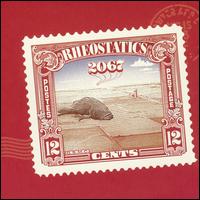
SOUNDTRACK: RHEOSTATICS-2067 (2004).

This was the Rheostatics’ final release.  I’m not sure if they knew this would be their last disc, but it kind of feels like they are throwing everything they can into it.

It opens with a delicate song from Martin which reminds me of Jane Siberry (the “row upon row” section).  Although at about 4 minutes it starts rocking out.  It’s a kind of meandering song, which is odd to open an album with.

It’s followed by “Little Bird Little Bird” a great folky song form Bidini.  But the disc really come alive with “Marginalized” a song that reminds me in some ways of “Horses,” as it is rocking and a little twisted (it seems surprising that it came from Tim Vesely).  It’s got some great guitar and an impressive keyboard solo (!) from new member Michael Phillip Wojewoda.

“The Tarleks” follows (with some fun frog noises). It opens slowly (as Martin songs tend to do) but once it really takes off, its got a great riff with his wonderful dramatic pauses and really funky sound from the bass/keyboards.  Then we get the wonderfully odd “Power Ballad for Ozzy Osbourne.”  It’s a kind of joke (but not really) about rock performers aging gracefully.  Bidini gets a bunch of songs on this disc, and here he gets two in a row, with the bizarrely wonderful “I Dig Music.”  The subtitle is “The Jazz Animal” and it tells you a lot about the song…it is indeed a kind of high-octane jazz.  But it has many different segments (and a lyric that references Squarepusher).

“Here Comes the Image” is a 6 minute track from Vesely which sounds very much like his more mellow tracks.  I’m not sure his tracks belong in the middle o f a disc because they tend to really bring the momentum to a halt.  Although it is a pretty song, it’s quite mellow (the organ solo at the end is pretty sweetly retro).  It’s followed by the five-minute slow instrumental “Who is This Man and Why is He Laughing?”  It really feels like an album ender.

So when “The Latest Attempt on Your Life” comes in, it revitalizes the sleepiness that those two songs imbue.  This track has the wonderful repeated chant “Everyone hates you, you sing like a woman”).  “Polar Bears and Trees” follows and it’s another kind of crazy song from Bidini.  It has such simple verses but the chanted “hey hey ho ho” rocks hard and is wonderfully fun.  (The lyrics are clever too).

Vesely returns with the beautiful, wonderfully catchy “Making Progress” which has another great retro keyboard solo at the end. The final track “Praise This Mutilated World” is one of the most beautiful songs in their output.  It starts as a fairly simple acoustic track (Bidini knows a good melody).  At about two minutes in, the band joins in with amazing harmonies.  The quiet parts keep coming back only to be overwhelmed by the harmonies once again.  The last two minutes are a spoken section.  It goes on a bit long, but is redeemed by another gorgeous chorus.

There’s a bonus track which is a very electronic version of  “Record Body Count.”  So this disc is definitely overly long in some places.  There are some great parts to the disc, but it feels like it could have used a good editor.  Nevertheless, since it’s the band’s final release, respect is due.

[READ: March 15, 2011] “Water Spider”

This very short (three-pages) story turned very dark rather quickly.

It opens with an African man, Bokarie, settling into his life as a convenience store clerk in Ottawa.  We learn that he was granted asylum, and that he has the scars to prove it.  He was quite nervous about leaving his country, and he still puts cinder blocks behind his door, to discourage uninvited guests.

At the same time, the action of the story concerns the accidental drowning of Caitlin, a young girl who presumably got too close to the creek when it overflowed.  The town is obviously distraught that one of their youngest and most innocent kids was killed, and they are planning a memorial service.  They are encouraging everyone to wear pink to the service and are even hoping to get a wreath put on the town’s crest.

Bokarie looks on this entire scene with a kind of bemusement.  His life in Africa was full of death.  Most of it horrifying.  So he seems somewhat unsure of what to make of the town’s outpouring for one lost child.  And then the story slowly reveals a shocking truth.

The truth is NOT that he killed Caitlin.  That’d not how the story is going (I didn’t really think it would go there, but it was a possibility).  Rather, the truth comes out about Bokarie himself, and his life back in Africa.  And it’s frankly horrible.

As the story draws to a close, Bokarie makes a decision that is going to impact the community.  It’s a little unclear what his motivation is, but it opens so many possibilities, that it really brings out a whole new realm to the story,

In some ways this story reminded me of Damon Galgut’s “An African Sermon (from The Walrus July/Aug 2004)  which also had an African character whose past has a hidden element and which turns out to be much darker than originally laid out.

Read Full Post »

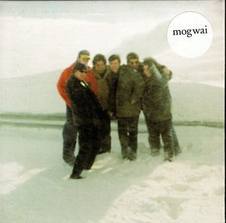
SOUNDTRACKMOGWAI-No Education = No Future (Fuck the Curfew) (1998).

This is a 3 song EP. The opener “Xmas Stripes” is one of my favorite early Mogwai songs.  The opening melody is really great, with a cool interesting bass and a nice guitar over the top.  At about 3:30 the song grows from a silent track to a menacing, growing beast until the drums start and the song and the main riff begins.  By 5 minutes it’s all out rock noise.  By 6 minutes the song is scaled back for the violin solo.  The remaining 7 (!) minutes are a denouement for the song.  Even though I love the track, I mostly love the first 8 or 9 minutes.  The ending tends to drag a bit.

But for all of their noise, Mogwai’s early releases were really quieter instrumentals, meditative songs that were really quite pretty.  “Rollerball” is a beautiful, sad three-minute track.

The last song “Small Children in the Background” continues in this quieter vein.  At nearly 7 minutes, it allows for a noisy middle section.  This noisy section is indeed mostly noise.  And yet the pretty melody of the rest of the track is just as loud throughout the mix, making for a very cool and very brief explosion mid-song.

Not all EPs are essential, but this one is pretty fantastic.  And I have Lar to thank for getting it for me.

[READ: March 10, 2011] Changing My Mind

It’s funny to me when that when I get into an author, I seem to wind up not reading the books that people most talk about until much later.  Take Zadie Smith.  Her debut, White Teeth, is something of a touchstone for many readers.  I missed it when it came out, but I loved On Beauty and figured I’d go back and read it.  That was almost a year ago.  And in that time I have read lots of little things by her and now this collection of essays.

Regardless, this collection of essays is a wonderful look in to the nonfiction world of a writer whom I admire.  And it was quite a treat.  Zadie is an intellectual, and that comes across in all of these paces.  Whether it’s the subjects she’s writing about, the footnotes she uses or just the acknowledgment that she likes art films and not blockbusters, we know where she’s speaking from.  And, of course, I’m right there with her.  The funny thing about this book then is how few of the subjects I know.

The book is broken down into five sections: Reading, Being, Seeing, Feeling and Remembering.  The Reading section is basically book reviews.  The Being section is about her experiences.  The Seeing section is about films.  The Feeling section is about her father and the Remembering section is about David Foster Wallace. (more…)

Read Full Post »

SOUNDTRACK: MOGWAI-Young Team (1997).

When Mogwai released Young Team there was quite a bit of buzz around them.  I remember when I bought the album, that I had no idea where they were from.

With the Asian-looking characters on the cover and a picture of Fuji Bank (and no band members names listed) I assumed they were Japanese.  Of course, a closer listen reveals a lot of Scottish voices quietly chatting away during some of the songs (which doesn’t necessarily mean they are Scottish…but indeed, they are).

Young Team is a great debut and Mogwai shows a lot of versatility.  It opens with a spoken word bit about Mogwai (If the stars had a sound it would sound like this).  It’s a slow instrumental, actually quite pretty, with picked guitar and continual bass and even harmonics.   It gets loud by the end, yet even that is restrained.  But just when you think that Mogwai is going to be another post rock instrumental chill out band, they hit you with “Like Herod.”

“Like Herod” is one of the more amazing songs in instrumental rock.  It plays with loud and soft dynamics like nobody’s business.  Opening with a slow rumbling bass, the guitars pick out intricate melodies.  Then at 3 minutes, all hell breaks loose in the form of big guitar chords and screaming guitar notes.  Things slow to a crawl about 6 minutes into the song. But we’re only half way done.  And those quiet notes are once again blown away by those same chords and screaming notes.

You could pretty much end the disc right there and call it a success.  But “Katrien” shows off another side of the band: a spoken word side.  Behind some gorgeous melodies there’s something of a rant.  It’s followed by “Radar Maker,” a 90 second piano-based instrumental.  It’s quite delicate and it leads right into “Tracy” a beautiful 7 minute song with a pretty melody and lovely washes of sound.

The middle of the album has two shot songs: “Summer [Priority Version]” is a condensed version of that quiet/loud dynamic that Mogwai does so well.  And “With Portfolio” plays havoc with a pretty piano song by throwing in washes of noise and sound effects which completely take over by the end.

The unfortunately titled “R U Still In 2 It” belies its bad name with some beautiful quiet guitar work played behind a vocal turn by Aidan Moffat.  There’s even a sung chorus!

“A Cheery Wave from Stranded Youngsters” is a two-minute sort of intro to the final track on the disc, the amazing “Mogwai Fear Satan.”  A 16 minute instrumental that is quite beautiful as it opens: distorted chords that don’t overpower the melody.  They bolster it as it builds and builds until it reaches a moment of silence which is filled by…a flute (!).  The song continues to build with a gorgeous repeating motif.  Then it slows down again to let the flute really sync with the song until it reaches its beautiful end.

It’s a great debut, deserving all of the praise that was heaped on it.

[READ: March 3, 2011] To Ruhleben and Back

This is a true account of one man’s escape from Ruhleben prison in Germany during WWI.  I admit that I had never heard of Ruhleben before (and frankly I’m really surprised I never have, as roughly 4,000 British citizens were interned there from 1914-1918).

This story was published in 1916 as one man’s account of his escape from the prison.  And then it quietly went out of print. McSweeneys’ Collins Library has now (well, in 2002), seen fit to get it reissued once again.

The introduction explains the historical veracity of the book, and also promises a rather ripping yarn.  And indeed, Pyke does not disappoint.

Well, maybe a little in the beginning.  The early parts of the book are a little slow.  It explains who he was and how he wound up in Germany during the war.  The short version is that he was a journalist who was frustrated that he wasn’t hearing proper news from the war, so he volunteered to go to Germany (even though at this point all English men and women were being incarcerated).  He moved there and since he spoke fluent German, he was able to blend in.  Until he was caught. (more…)

Read Full Post »

« Newer Posts - Older Posts »