Feeds:
Posts
Comments

Archive for the ‘War’ Category

deogrataisSOUNDTRACK: JOSH RITTER-Tiny Desk Concert #119 (April 11, 2011).

ritterNot too many performers mention the actual day that they are performing their Tiny Desk Concert.  But Ritter mentions Valentine’s Day twice during his set so I thought I’d post it on Valentine’s Day even if the actual date of the posting is much later.

I don’t really know Ritter, I’ve heard of him, but I’m not too familiar with him.  Nevertheless, I was quickly won over by him.  He is charming and polite and is certainly having a good time (he even laughs at some lines in his songs).

His first song “The Temptation Of Adam”sounds vaguely familiar.  The melody is very catchy and his voice is strong and excellent.  Lyrically the song is quite interesting.  I especially loved this section: “We passed the time with crosswords that she thought to bring inside/ ‘What five letters spell apocalypse?’ she asked me/ I won her over saying, W.W.I.I.I.’/ She smiled and we both knew that she misjudged me.”

“Lark” is a faster song, but still very folksy and clever.  I love that although the melody is fairly simple, the way he plays it (with very fast fingerpicking) makes the song sound more complicated.  “Rattling Locks” is a dark minor chord song, louder and heavier than the other two.

The site says there is an audio only track called “Pale Blue Eyes,” but I can’t find it.  For the last track, his 2003 song “Kathleen,” he introduces the song by saying, “I think Valentine’s Day is the most awkward self-imposed holiday — even worse than New Year’s — so this is an awkward song.”  It’s a louder song, with Ritter’s voice reaching great intensity.  It’s a great way to end the set.

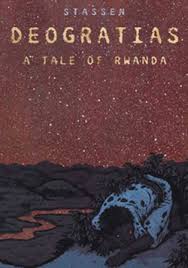
[READ: February 14, 2016] Deogratias

Here’s another story that I would never have read if it were not for First Second’s #10yearsof01 challenge.  The thought of reading a story about the genocide in Rwanda just seems to depressing to undertake.  And yet in the spirit of reading things outside of your comfort area, I decided to read this this weekend.

And I am incredibly glad that I did.

I feared that this story would be one of rampant genocide–struggle and death and mutilation and everything else that I could imagine.  But rather, what Stassen has done is created a story about how the toll of genocide can impact one person.  Yes, it affects him directly and the story is incredibly sad, but it was a very different story than I expected, and it was so personal that it made it more tragic without having the oppressive unreality of millions of dead people in the plot.

The introduction alone is worth reading, as translator Alexis Siegel gives a brief summary of the Rwandan tragedy.  I’ve always found the conflict to be really hard to grasp.  Hutus and Tutsi, a privileged minority, a brutal majority.  The back and forth was so hard to grasp, and the names of the tribes were similar as well.  It is hard for a lazy person to keep straight.

But I found Siegel’s explanation to be succinct and very effective. (more…)

Read Full Post »

aboveSOUNDTRACK: DO MAKE SAY THINK-& Yet & Yet [CST020] (2002).

DmstandyetandyetAfter the previous album, keyboardist Jason McKenzie departed the band.  I’m not entirely sure how this impacted the band, but this album is warmer and a little more delicate feeling.  It’s also their first album that was recorded all in the same place (in band member Justin Small’s house).

The disc opens with static and effects before a jazzy drumbeat comes in.   “Clasic Noodlanding” is mellow with a complex (for them) riff on the guitar and nice washes of keyboards.  It is primarily atmospheric until about two minutes in when it suddenly changes with the introduction of a great bass line.  And then this atmospheric song turns really catchy. The five and a half-minutes feel too short in this song.

“End of Music” opens with jazzy drums and keyboards.  It’s a slow piece that stretches to nearly 7 minutes.  About half way through the song, the drums come crashing in and a brighter, noisier melody takes over.  This end section is really catchy with some great chords and excellent drumming.

“White Light Of” opens with a cool slow bass line and drum pattern.  As the song grows in complexity I like the new bass rumble that is added and the way the guitar lines seem to intertwine. About half way through horns get added to the mix, quietly at first and then they slowly take over the song. About five minutes in the song comes to abrupt halt with some interesting echoed effects on the drums. It resumes again with a stranger version of the song—it feels unsettled and really interesting, with a nice riff interspersed with one that feels off somewhat.

“Chinatown” opens unlike any DMST song.  The bass sounds electronic and skittery with some interesting keyboard sounds over the top (it actually sounds a bit like later period Radiohead).  The song is slow and moody for all of its 5 and half minutes with keyboard washes and skittery guitars.  There are quotes thrown in throughout the song but I can’t tell what they are saying.  This song was features in the film Syriana.

“Reitschule” is one of two songs that are 9 minutes long. It opens with a slow meandering guitar line interspersed with another guitar playing an interesting counterpoint.  A cool bassline comes in around 2:30 which takes the song in a new direction.  Horns propel the song along until about 4 minutes when a jangly guitar takes over the song. It builds with some abrasive guitar chords until everything washes away except the bass.  And then it rebuilds as something else.  Distant horns play in the back as the guitars play overlapping lines.  It’s an epic song that demonstrates how much this band can do.

“Soul and Onward” has a pretty conventional melody line. It’s warm and friendly It also features wordless vocals by Tamara Williamson. I love the little tiny guitar lick that works as a bridge between the two sections.  This is my favorite song on this record.

“Anything for Now” is the other 9 minute song. It is slow and pastoral to start with a beautiful multi-guitar piece with gentle drums. At around 4:30 all the instrument vanish except for a single organ note. It plays for a bout a minute and it seems like the disc will end that way but then the chords build up again from the drone.  An acoustic guitar lick begins around 7 minutes in and runs through the end of the song.

Overall this album is more mellow than their previous discs, and there are some amazingly beautiful sections of music on this album.

[READ: February 8, 2016] Above the Dreamless Dead

I’m continuing with books that I wouldn’t normally read, to celebrate First Second’s #10yearsof01 challenge and to read something out of my comfort range.

This is a collection of poetry about World War I, written before during and just after the war.  Each of the poems is illustrated by a different contemporary artist.

As you can imagine, the book is pretty gloomy.  But the poetry is pretty spectacular and the illustrations were really interesting.  Obviously this book is not going to be a happy one.  But some of the artists do add a more positive spin on the poems (while some are just brutally violent as well). (more…)

Read Full Post »

alansSOUNDTRACK: DO MAKE SAY THINK-Do Make Say Think [CST005] (1999).

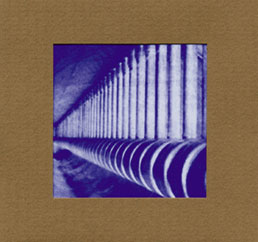
cst005web This album was self-released in 1997, but then the guys at Constellation took it and released it in a beautiful package in 1999.  And Constellation did it right: CD gatefold jacket made from 100lb. textured uncoated cardstock with foil-embossed text and window cut.  Three different two-sided duotone insert cards can be interchanged to show through the front cover window cut. Snazzy!

So this album was recorded in two different locations and it feels a bit more like  compilation of their songs than an album proper.  This doesn’t detract from the music at all, it’s just not as cohesive as their later releases.

“1978” has a raw sound.  It builds slowly, with waves of sorta static getting slowly louder for the first minute. And then the drums kick in. They sound very “live” and crisp. There’s a jazzy pattern accompanied by an unusual bass line.  At 3 minutes a big guitar riff breaks up the droning feeling as it rocks out and then disappears just as quickly.  There’s some saxophone and trippy headphone panning going on, too. This sets in motion a more funky bass line that runs like a lead instrument through the proceedings. There’s some noise bashing around at 8 minutes and a even wah wahed guitar solo at 9.  These occasional disruptions give an interesting melodic sense to this otherwise droney (in a good way) 10-minute song.

“Le’espalace”  feels a little warmer.  It opens with some analog synth trippy sounds and a pretty guitar riff. This is a lovely song that meanders around. The song gets more dense with a synth taking over the guitar line and another synth playing a contrasting melody, too.

“If I Only…”  is 7 minutes long.  It also has a rawer feel.  It’s more staccato with keyboard notes propelling the song forward. There’s a trippy middle section with a nice drum breakdown. It stops at about 5 & a half minutes and resumes with a fuller sound as it rides to the end.  “Highway 420” continues with that more raw sound.  It opens with washes of synths like Tangerine Dream or something.  There’s also a slick guitar line that begins about 3 minutes in.  It’s all rather atmospheric.

Do Make Say Think have always had a bit of jazz at their roots.  That’s evident in “Dr. Hooch” which has jazzy cymbals and slow atmospheric guitars.  About half way through, a wild synth riff comes in and takes over the song for a minute or so before returning to the atmospheric sound.

“Disco & Haze” is a warmer song that slowly builds with a spacey keyboard section.  Around 3 minutes in (of 9) a wah-wah’d guitar takes over—seemingly unrelated.   At 5 and a half minutes the song crashes into a big noisy “chorus,” probably the loudest thing on the record. There’s a noisy skronking sax solo to accompany this as well and it ends with washes of keyboards.   It really sounds like nothing else on the record.

“Onions” is only 90 seconds long.   It’s a simple keyboard riff with echo and little variation.  It’s an odd inclusion but maybe serves as a palette cleanser before the nearly 20 minute final song.  “The Fare to Get There” is warm with spacey keyboard washes and occasional woodwinds–there’s even flute at the end.  It’s 20 minutes long so just sit back and let it unfold over you.  Around 5 minutes in, eerie and spooky drums begin.  Then there’s some reverbed guitar chords and echoed notes which keep the song going.  About three-quarters of the way through, they add a simple guitar riff that continues for several minutes. With a couple of minutes left the song introduces some flutes as it mellows it way to close.

This is a pretty impressive debut.  The band knows the sound they are going for and they definitely achieve it.  Later records are more consistent (and consistently better), but this (especially the opening track) is a great place to start with this band.

[READ: February 7, 2016] Alan’s War

One of the things that First Second hoped for in their ten-year anniversary was that people might read books that they wouldn’t normally.  And boy was this ever one.  The title didn’t sound very appealing to me–I don’t really like war stories all that much.  And frankly I didn’t even know what to expect from the story, really.  Certainly not what I got!

This is the story of a man named Alan Cope.  And the origin of the story is as fascinating as the story itself (almost).  Turns out that Emmanuel Guibert met Alan Cope in the street in France.  Guibert asked the older for directions in June of 1994. Cope was 69, Gilbert was 30. They struck up a conversation.  And soon after, Cope began telling of his experiences in World War II.  What happened to him during and after the war and why this American solider now living in France.

Guibert asked if he could draw the stories that Cope was telling him and Cope said yes.  So this is a story of World War II but it is unlike any story I have ever read.  There is very little in the way of “familiar” WWII stuff in it.  Cope wasn’t in any of the major battles, he never came under heavy fire.  Rather, Cope had a fairly easy war, but he had a ton of stories that were interesting, funny, sometime unbelievable. And the number of famous people he encountered is pretty surprising.

I enjoyed this story so much.  On a side note, My father was in WWII and he also had a fairly easy war, although he was in the Pacific, he was on a small island that saw no action..  I wouldn’t say he enjoyed the war, but he came out with good experience and good friends, which is what Cope did, too.  My fathers stories were far less amazing than Cope’s, but it goes to show that everyone has interesting stories and that no amount of film or history channel commemoration will ever cover everyone’s story. (more…)

Read Full Post »

dq25SOUNDTRACK: ARCHER PREWITT-“O, KY” (2005).

wikldernessArcher Prewitt formed The Coctails (a kitschy lounge act) in the early 90s, several years before the lounge revival.  Then he joined The Sea and Cake and has been making amazing music with them.  And he has also released several solo albums.

He has also published some comics (Sof’ Boy) with Drawn & Quarterly.

This song comes from his album Wilderness.  The title of the song is clever, too.

It’s upbeat and folky with a little psychedlia and rock thrown in.  I like Prewitt’s voice quite a bit–it’s simple but really strong.  But the selling point on this song (and others from this album that I have listened to) is the composition and arrangement of these songs.

I like the way this one goes from simple guitar to orchestration (although presumably not a real orchestra) for the chorus.  And how post chorus there are flutes and other instruments to pick up the momentum which adds a vaguely psychedelic feel to it.

At four minutes (the song is five) it changes direction entirely and turns into a nearly new song with big guitars and drums. And it rather rocks.

And just to make Archer the all around dude that he is.  He also drew the cover art.  Jeez.  He’s probably super nice and friendly, too.

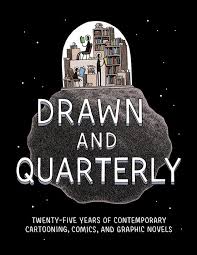
[READ: January 3, 2016] Drawn and Quarterly: Twenty Five Years 

I have liked a lot of D+Q books for a long time, although I never really considered a comprehensive look at their publishing house.  This book–about 775 pages long–is about as comprehensive as it gets.

This book contains a few previously published cartoons and excerpts as well as a whole slew of previously unpublished pieces.  There are essays and histories and reminiscences and love love love for the little Montreal graphic novel publisher.

I didn’t know much about the history of D+Q–that Chris Oliveros started the publisher in 1989 out of his house.  That he was the only employee for years.  And that he was essential in getting the term “graphic novel” used by everyone–including the library of congress!

He weathered distribution problems, he weathered the rise and fall of indie comics in the late 90s and he has come through with some of the most beautiful books published.  D+Q has also brought attention to foreign artists as well as out of print artists.

Really, if you have any respect for graphic novels (that aren’t superhero-based) you owe thanks to D+Q. (more…)

Read Full Post »

resist3SOUNDTRACK: CHARLIE SIEM-Tiny Desk Concert #134 (June 15, 2011).

siemWhen he was 3 years old, Charlie Siem heard violinist Yehudi Menuhin play Beethoven’s Violin Concerto. That was all it took to inspire him to pursue the violin. Siem studied at Eton and the Royal College of Music, and now he plays one of Menuhin’s old violins—a stunning 1735 Guarneri del Gesu.  Upon describing this centuries old instrument he says “it helps me a lot when I’m doing my… little thing.”  He is also greatly amused when NPR’s Stephen Thompson asks if he can borrow it.

Siem recently discovered that he’s related to the 19th-century Norwegian violin virtuoso and composer Ole Bull. So he started off his Tiny Desk show with Bull’s bucolic Cantabile.  His introduction is great.  He says that Bull was a precursor to Paganini, who emigrated to the States and set up a colony on Pennsylvania.  He calls him a “really crazy guy.”  It’s a beautiful piece with occasional really high notes.  This violin seems to have an unreal sound to it, bringing it what sounds like harmonic notes or something.

Paganini’s Introduction and Variations on Paisiello’s “Nel Cor Piu”  (an aria from a now-forgotten Paisiello opera), contains a grab bag full of violin special effects.  This is just incredible.  His fingers move faster than can be believed.  There are trills all up and down the neck, there’s pizzicato plucking with his left hand (how?).  In a section of “harmonics” he even whistles the final note.  It’s amazing to watch.

Leopold Godowsky: Alt Wien (“Old Vienna”) (arr. Heifetz)  This is a lovely piece with lots of high keening notes in an arrangement by the incomparable Jascha Heifetz.

It’s amazing that Siem can be so good and yet somehow I’d never heard of him.  His kind of virtuosity is amazing.  And, as it turns out he’s a total hunk with a deep resonating actor’s voice as the pages of Italian Men’s Vogue magazine.  He’s also the 2011 spokesman for Dunhill, the men’s fashion house.  The write up says that for his Tiny Desk Concert appearance, you could say Siem dressed “casual, but with an understated elegance,” right down to his left-hand pinky, with its pink-painted fingernail.

I definitely need to hear more from him.

[READ: December 8, 2015] Victory

This final book in the trilogy sees the culmination of French Resistance against the Nazis.

We learn in the introduction that it has been four years since the occupation began and although victory seems within sight, things have been getting worse.  There’s hardly any food or resources and the Nazis are growing even more angry and vicious.  On June 6, 1944 the Allies landed in Normandy.  But they had a lot of fighting to do before they could liberate Vichy.

As this book opens we see Paul called into the prison because of his drawings.  He looks older now (a great detail on the drawing) and he finds it much easier to lie to the guards.  After an interrogation, Lucie’s father–the policeman we saw in the previous book who seemed to turn a blind eye to Paul’s activity–accuses him of sneaking around to see Lucie.  Paul catches on quickly that the man is helping him and when they are free together, Paul learns that there are people on his side who he never suspected. (more…)

Read Full Post »

resist2SOUNDTRACK: SIERRA LEONE’S REFUGEE ALL STARS-Tiny Desk Concert #118 (April 6, 2011).

sierraSierra Leone’s Refugee All Stars are famous for their story.  Its members met in refugee camps during Sierra Leone’s civil war and formed a band to spread joy during an otherwise difficult time.  But the band’s music is what has stood the test of time.  Ten years, two albums and an award-winning documentary later, these eight men are still riding that upbeat reggae groove.

The band consists of three drummers (all with hand-held drums) and one percussionist.  There’s 2 guitars (one electric and one acoustic) a bass and everybody sings.  Their music has a reggae feel, although it’s not exactly reggae, I don’t think.

“Jah Come Down” opens the show. The acoustic guitar keeps the melody while the electric guitar plays a riff throughout.  Occasionally the bass comes in with a cool line or two adding a nice low end.

“Living Stone” has a different singer (the percussionist).  His vocals are a bit more mellow, as this song is.  It’s amazing to see the age range of the players.

“Tamagbondorsu (The Rich Mock The Poor)” is the final song.  It opens with a guitar lick that reminded me of Paul Simon’s Graceland until i re-thought and realized that Graceland sounded like this.

The songs are fun and lively, perfect for dancing (as the singer does during the long instrumental outro).  Most reggae sounds the same to me, and these three songs do tend to blend together quite a lot.  But the music is fun and the players’ skill is undeniable.

Here;s to ten more years.

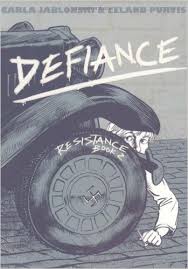
[READ: December 4, 2015] Defiance

This book is set three years into the Nazi occupation of France.  Things are sort of the same but worse for the residents of Vichy.  Neighbors inform on neighbors, and some residents collaborate with the Germans (and are more successful because of it).  And then in 1943, a new French-based Nazi police force called the Milice begin keeping watch over their own people

This aggressiveness causes more resistance, of course. And Paul has been drawing detailed and insulting pictures and posting them all over town (which is making the Milice quite upset).

Of course the kids are taking more aggressive stances now, too.  Some say that the posters are causing more harm because it makes the police mad.  But other kids’ parents have joined the police–some of whom are nice to the kids.  Even Paul’s sister, Marie, believes what her teachers say about Marshall Philippe Pétain (there’s a lesson about Pétain at the end of the book) and his governance.  And no one is going to say anything about the Resistance.   (more…)

Read Full Post »

resistSOUNDTRACK: LUISA MAITA-Tiny Desk Concert #100 (December 26, 2010).

maitaI’ve not heard of Maita.  The NPR write up speaks about the electronic flourishes and deep grooves of her songs.  Felix Contreras worried that their stripped down ensemble (only guitar, bass and fascinating bongos) would have a hard time creating that sound.

And in one way they do.  Except that it’s clear they didn’t even try.  Rather, they play a simple, but engaging kind of mellow Brazilian dance music.  In the first song, “Ai Vem Ele,” the guitar and bass play the same grooves except when they each take some meandering moments.  The percussion keeps a quiet but steady rhythm and Maita sings vocals and accent notes all over the place to keep the song interesting.  I really enjoyed at the end of the song when the bassist played exactly the vamping solo that she was singing.

“Alento” is a much faster song, with quickly sung lyrics.  It allows for rapid guitar playing and more uptempo feel.

They only play two songs (about 8 minutes long), but it really shows the kind of range she is capable of.

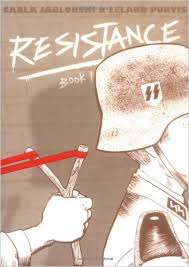
[READ: December 1, 2015] Resistance

This First Second graphic novel is about the Nazi occupation of France.  It’s not exactly light reading and yet Jablonski has taken this incredibly dark story and found an excellent and compelling narrative about one family who works as part of the resistance to fight back against their oppressors.

This is the first book in a trilogy and I am curious to see what the next two books bring as this story was nicely wrapped up but there are so many more stories which could be told.

Jablonski also helpfully sets up the situation in the introduction.  She explains how France was split in two as a result of the armistice agreement.  She gives a very brief but powerful explanation for why they would agree to splitting their country in half.  Paris and the upper portion of France became Occupied while Vichy and the southern part of France were “Free” (but still with a large Nazi presence).

This story is about an average family.  Paul Tessier and his parents and little sister live in the free part of France. Paul is an artist, and I love the way Purvis juxtaposes Paul’s art with what is actually happening (placing Paul’s “drawing” in the middle of the action so we know he is observing everything. (more…)

Read Full Post »

1967 SOUNDTRACK: JULIAN LAGE TRIO-Tiny Desk Concert #140 (July 7, 2011).

lageJulian Lage is a jazz guitar prodigy.  he normally plays with a quintet but for this set he brought only a trio which includes bassist Jorge Roeder and percussionist Tupac Mantilla.

This was my first exposure to Lage and he does some really impressive lines and riffs.  He plays a hollow-bodied electric guitar that sounds an awful lot like an acoustic guitar. He does some phrasings that are really pretty or really interesting

But I was more impressed with Mantilla on percussion.  He uses thick brushes, he uses his hands on bongos and cymbals.  He uses his hands on his body–playing his lap and chest).  He even uses little dusts brooms (which must be unwieldy).  He’s also got some kind of drum (perhaps a loose snare?) with a great sound and even a bell.

They play three songs.  “Welcoming Committee” is a new song not recorded as of then.  At the end of the song, they all laugh as an office phone rings the end.  Julian is a sweet funny guy with some interesting stories about his songs.

“However” is an upbeat bouncy song (with some less noodling).  Interestingly, it was written by their saxophonist who is not playing in the trio today.

Before introducing the final song “Untitled (No. 24)” he says he started a blog for inspiration–to get people to bounce ideas off each other–healthy peer pressure with incentives for song writers.  The most recent one was a song a day for 30 days.  This was number 24.  (Hhe jokes that the first 23 sucked).  It’s a really fun piece that doesn’t feel incomplete at all.

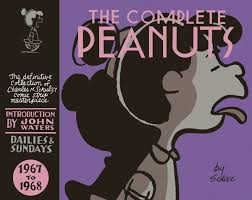
[READ: December 8, 2015] The Complete Peanuts 1967-1968

It’s 1967 and Schulz has had huge success with Snoopy’s Red Baron plots.  In December 1966 The Royal Guardsmen made a song called “Snoopy Vs the Red Baron” which made it to number 2 on the charts.  So The Red Baron plot takes over a lot of this year.  And while I enjoy seeing him like that and I get how it’s funny, I don’t really like it all that much–the jokes are too samey for me.  But despite all of the Red Baron excitement there are other things going on this year too.  Like the introduction of the Easter Beagle.  And of Franklin!

The kids get involved in many different sports this year.  In Feb 1967 Lucy begins arm wrestling (and beating) everyone.  She even takes on the Masked Marvel (Snoopy).  In Oct 1967 Snoopy plays hockey for the first time (I think).  He references Bobby Hull).  Later in Jan 1968 all the kids play hockey together.  Lucy beats everyone up and say how much she likes the game.  And at one point Snoopy smiles and is missing teeth.  In Oct 1968 Snoopy shoots and scores (on his doghouse) and says “they’re not sleeping well in Montreal tonight.”

In December 1967 Snoopy considers going to the Olympics in France for his ice skating.  He says he misses skating with Sonja Henie).  In April 1968 Snoopy is going to the Masters in Augusta.  When that doesn’t work out (we never see him there), later in April Snoopy is a wrist wrestler who is going to go to Petaluma for the world competition.  (There are many jokes about Petaluma).  Snoopy is disqualified because he has no thumbs.

In August 1968 Snoopy says “jogging is my thing.”  And in Nov 1968 we learn that Snoopy has a pool table but that Minnesota Fats won’t play him.

And of course there is baseball.

Peppermint Patty comes back in March 1967 to play against Charlie’s team.  She has a new player, Jose Peterson, who doesn’t really hang out in the strip for very long, but who is an awesome slugger.  In November of 1967, there’s a reference to the lousy New York Mets.  I didn’t realize it but at the time of this strip, the New York Mets were a recent expansion club with a terrible record.

In summer of 1967 Charlie and snoopy return to camp and they see Peppermint Patty is there.  Patty strikes out Charlie a whole bunch and says she considered letting him hit one but he wouldn’t want that, right?

In march of 1968 snoopy takes over as manager and is really mean.

And of course, Snoopy has a lot going on too.  We learn that August 10 is Snoopy’s birthday.  He also says a lot of things are gauche.

In a very funny skit, in May 1968 Snoopy watches a bird chomp a worm and then says “I’m going to be very very very very very very very very sick.”

June 1968 introduces Lila again, and how Snoopy pines for her.  Then in August she writes to Snoopy again.  And finally on Aug 24 we meet Lila for the first time.  Lila is a girl in the hospital.  But it’s not until the end of the month that we learn that Lila was Snoopy’s previous owner who lived in an apartment and had to get rid of him.  AND THAT’S ALL THAT’S SAID ABOUT IT!

On a lighter note, in March Snoopy pretends to be a piranha for a few strips.  In April 1967 there’s some Cheshire cat jokes from snoopy (who is only a smile)  April 1968 sees the first mention of the Easter Beagle (Lucy doesn’t believe Linus who is the only one to see him).

Linus and Lucy pop up a lot of course.  They revisit a lot of the same ideas with variations.  In August Linus’ grandma agrees to give up smoking to get Linus to give up his blanket.  He thinks she’ll never do it, but he goes through the real withdrawal.

In Dec 1967 Lucy ups her psychiatrist booth’s price to 7 cents (winter rates).  And then as the book ends in Dec 1968, Linus is taking shorthand notes for her.

Father’s Day this year had Peppermint Patty writing a card.  She says that her dad calls her a “rare gem,”  This phrase is used as a joke in the strip and then a few more times.

It seems like summer is a good time for new things as well.  There are two weeks of strips starring Peppermint Patty at camp!  She is a counselor of littler kids.  There is a little girl who looks like Marcie but isn’t (her name is Clara).  And then later that week another little girl, Sophie, calls her “Sir.”

And then July 31, 1968 introduces Franklin!  He and Charlie play at the beach for a few days.

Religion pops up from time in the strips, especially with quotes from the Bible.  But in March 1967, Violet asks Charlie if they go to church.  He says yes, but she says her family “used to…now they belong to a coffee house.”  And in April Schulz revisits the “here’s the church gag.”

[From the Peanuts wikia] On February 8, 1963, Sally watches while her big brother uses his hands to illustrate that old rhyme: “Here’s the church…here’s the steeple…open the door…and see all the people!” After carefully examining his closed fingers, she announces, “It looks like a rather small congregation!” Four years later, on April 8, 1967, Sally watches as Linus delivers the same rhyme…and then she provides an almost exact response: “Sort of a small congregation.”

Most of the strips are totally timeless, with me even thinking that I read some of them when I was much older than I did.  I can’t say as I remember a lot of specific strips, but I always remember the one from Dec 5, 1968 (which is from before I was born, so I obviously read it in a collection).  Peppermint Patty says that it snowed last night Her dad says that “when it snows you should always take a slice of bread out for the birds.”  She places a whole slice on the bird’s head.

I think the timelessness of the strips are what make reading these volumes so much fun.

In May 1967, Charlie asks Linus if he wants to be the first man on the moon.

In July 1967, the bird (unnamed yet) has “long hair” and Snoopy calls him a bird hippie.

Charlie writes to his pencil pal in Nov 1967 and says, “According to what I read, your country hates my country and my country hates your country.  I don’t hate you, and I don’t think you hate me.  I think about this a lot.  It makes sleeping at nigh very difficult.”

In Jan 1968, the girls are going to have a “crab-in.”

Dec 18 1968 Snoopy has a sled and Charlie looks at it and says “Rosebud?”

In June 1968, Snoopy says he thinks he is in love with Twiggy.

In August, Snoopy says that you never hear anyone sing “Chloe” anymore (although which song that is, I’m not sure.  Perhaps the Al Jolson one).

In Nov, Snoopy says he is feeling groovy (the Simon and Garfunkel song came out in 1966).

There are references to the election year with the birds holding ups signs that say ? and !!  Snoopy say he’ll vote for the one with the paw print on it.

My two favorite jokes in the book have to do with math.

Sally is trying to learn her times table and guesses answers like “Four-thousand six? elventy-twelve? fifty quillion? overly-eight?  twiddelty-two?”  Then she  asks “Am I getting close?” And Charlie responds, “Actually it’s kind of hard to say.”

In Dec 1968, Peppermint Patty says she loves numbers.  “Twos are sort of gentle, threes and fives are mean, a four is always pleasant.  I like sevens and eights too, too but nines always scare me.  Tens are great.”  When a classmate asks if she has prepared her division homework, she says “Nothing spoils number faster than a lot of arithmetic.”

~~~~

In my edition the May 1 strip is repeated instead of the May 3rd strip! (The missing strip will apparently be printed at the end of the next book).

John Waters give the best foreword yet.  He actually references strips in this book!

He says he became obsessed with peanuts when he had mono in 6th grade.  He loves the depression paranoia and delusions.   But John was all about Lucy.  He loves her politics, her manners “Get out of my way!” her narcissism and her rants.   He says he has a niece named Lucy and Schulz got the expression perfect when she yells “No” on page 61.

He also says that for the most part the strips don’ age at all (with a few exceptions).  He talks about Lucy shouting “police brutality” at Charlie as a crossing guard!  He also says that Schulz was criticized for including the minority characters (which is shocking).  Waters is also fascinated by characters like Roy who are rarely if ever heard.

Pig-Pen was an inspiration for Dingy Dave in A Dirty Shame; Divine cutting up her daughter’s jump rope in Female Trouble is inspired from a Peanuts strip.

He sums up with the attitude that Peanuts presents:

You are dealt a hand.  Deal with it.  But most importantly he teaches all ages that if you can learn to laugh at the things that cause you the most pain, you will be the strongest of all.

Read Full Post »
percy3SOUNDTRACK: TROMBONE SHORTY-Tiny Desk Concert #162 (September 29, 2011).

tromb Trombone Shorty is from New Orleans and his backing band is called Orleans Avenue.  I can’t think of too many bands that are fronted by a trombone player.

This is a super fun set.  It opens with “Dumaine St.” a short (just over 2 minutes) jazzy number that comes from his then recent album For True.  There’s some great rhythm in the low end–the baritone sax and bass guitar keep a great groove, especially during the trombone solo (!).  It’s short, but it’s great.

Dan “Uncle Potato Chip” Oestreicher, opens the second song with a great bass line on the baritone sax.  The song is called “Lagniappe which is “a little gift you get for buying something. It’s an especially common practice in certain corners of the world, including Louisiana, where the term originates.”  It’s an improvisational piece built around the great bass line.  It features a trombone solo and great tenor sax solo by Tim McFatter.  The song builds (for about 5 minutes) to an exciting  conclusion (“a light workout,” Shorty calls it).

The final song has lyrics sung by Shorty. It’s probably my least favorite of the three as the lyrics aren’t that great (although his voice is good).  It’s got a good funky rhythm, but it slows things down when he is singing.  And I just want to hear him play.  Once he picks up the trombone again, the song springs to life and is a super amount of fun–with another great melody.

I wasn’t sure I’d like this set but I enjoyed it a lot.

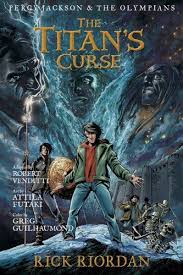
[READ: November 22, 2015] The Titan’s Curse

The good news was that I could get both the second and third graphic novels at the same time (both with art by Attila Futaki).  The bad news is that apparently the fourth (and fifth) books were never made!  I don’t know if there are plans for them to get made but as of right now, we’re stuck at a to be continued.

Of the three, I found this book to be the most confusing because so many characters looked alike.  There was also the addition of several new characters (and as with the previous book, there was very little in the way of introduction).

We don’t know why, but Percy and Annabeth have gone to a specific place to rescue two orphans, Bianca and Nico.  They are both half-bloods, unbeknownst to them.  Bianca is initially suspicious of the heroes, but Nico is right on board.

In terms of action, there’s quite a lot.  We meet Artemis, goddess of the hunt who has arrived with her hunters.  She speaks formally and is suspicious of men.

After careful consideration Bianca decides to join Artemis’ hunters (which gives her immortality–death may only come in battle–as long as she forswears romantic love, which she has no problem doing).  Meanwhile, Nico decides to return to the camp with the others.

Oh and Annabeth, while fighting a manticore, is thrown over the side of a cliff, presumably lost forever.  Percy is freaking out but they convince him to head back to camp for reinforcements.

A new quest is decided upon, but Percy’s first goal is to rescue Annabeth.  Although we soon see that she is not dead, she just has the weight of the world on her shoulders.  Literally.

And then Apollo shows up in his golden chariot (which is a sports car naturally).

Back at camp, the director has them don helmets for more training, this time hunter against half-blood.  The hunters win every time.  This was a hugely confusing scene since everyone is in battle gear. The book is also hugely confusing because several of the scenes are done with characters in close up and Zoe (whose origin I can’t even recall) and Percy look quite a lot alike

But there’s some really wonderful scenes, like when the horse speaks to Percy and later when Percy rescues the Ophiotaurus (which he calls Bessy).

I liked that the middle section takes place in the Museum of Natural History–which allows for some cool details.  The dinosaur teeth are actually dragon teeth and the lion is really the Nemean Lion.  And when the bad guys get some skeletons to rise from the earth, they are sent on a single mission–to destroy Percy.  And they cannot be stopped by half blood weapons.

There’ a great scene with a large flying statue and then a cool scene at the Hoover Dam.

I typically enjoy when the scenes turn mystical but I was confused a bit when Artemis returned to her sisters.  I think the character of Zoe perplexes me too much, even when she reveals her true identity.

And speaking of true identity, Nico’s reveal is pretty fantastic, too.

The final scene shows a meeting of the Gods again, which I liked.  Unfortunately it seems to set the stage for book four, which we won’t seem to ever get.

More reason to rad the actual novels, then, right?

Read Full Post »

percy2SOUNDTRACK: JENNY LIN-Tiny Desk Concert #160 (September 6, 2011).

linJenny Lin is an amazing pianist.  So it’s slightly disconcerting that she is playing these beautiful pieces on a Korg keyboard.

The write up says

It’s rare to see a world-renowned pianist willing to make such a sacrifice, but that’s how strongly Lin feels about getting the music out there, knowing that (with even more downsizing) folks could watch her perform this Tiny Desk Concert on their iPhones.

And while I wouldn’t think that a great pianist would have a problem playing an electronic piano, I had to wonder if the keyboard weight impacted her at all.  It sure doesn’t seem like it.

She plays five pieces altogether.  And they are all modern pieces.  I don’t know a lot about Shostakovic, but the blurb says that  Shostakovich, inspired by Bach wrote his own set of Preludes and Fugues in all 24 keys in 1950.  I would have guessed they were Bach, but you can hear differences in his more modern style (and not just because of the keyboard).  The notes are fast and furious (and beautiful).

I don’t know Federico Mompou at all, but the blurb says  “Barcelona-born Federico Mompou was a contemporary of Shostakovich’s, but that’s where the comparisons end. In the 1960s, he completed four volumes of piano music he called Musica Callada, or “Silent Music.” Mompou’s sound, [features]  austere beauty and emphasis on the spaces between notes.”  And you can really hear the way the notes ring out (I’ll bet even more so on a grand piano).

The final song is an arrangement of Gershwin’s “Fascinatin’ Rhythm” which has been “souped up by the late American virtuoso pianist Earl Wild. His arrangement turns the Gershwin song into a kind of stride-jazz extravaganza.”

Watch Lin’s hands fly around the keyboard.  It is hard to comprehend.  I don’t know which hand I am more impressed by.

It’s amazing to be able to watch a master so closely.

The setlist:

  • Dmitri Shostakovich: Prelude and Fugue No. 2 in A minor, Op. 87
  • Dmitri Shostakovich: Prelude and Fugue No. 7 in A major, Op. 87
  • Federico Mompou: Musica Callada — Nos. 1, 15
  • Gershwin (arr. Earl Wild): “Fascinatin’ Rhythm”

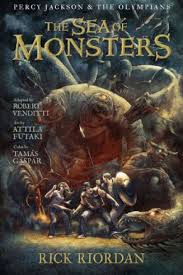
[READ: November 22, 2015] The Sea of Monsters

Clark really liked the first graphic novel and asked me to get the rest.  So I did.  And then I had to see how the story continued, too.

Book two of the graphic novel series (also with art by Attila Futaki) begins with Percy at home.  He is told he shouldn’t return to Camp Half -Blood, but his mom won’t say why.  At “regular” school, he is still picked on, but he now has help from a huge boy known as Tyson.  The bullies make fun of Tyson too, calling him a retard, but Percy sticks up for him. [The one problem with the graphic novels is they have to edit down so much, there’s no real introduction to Percy’s school or to Tyson].

On the next page, though, we learn that the bullies are actually demons and that Tyson is able to fight them off because he is …a cyclops.  (It must be very hard to create a cyclops–visually, they are just so wrong–where do you put that eye?  Do the normal eye sockets still exist? I always find them disconcerting to look at). (more…)

Read Full Post »

« Newer Posts - Older Posts »