Feeds:
Posts
Comments

Archive for the ‘Virginity (Loss of)’ Category

SOUNDTRACK: ORMONDE-“Cherry Blossom” (2012).
This song was also mentioned in the July 31 All Songs Considered Post.  The album had been singled out because the cover is so awful. It had even made their repository of awful covers.  And then they actually listened  to it.

It opens with some female vocals, but they are quickly replaced by a kind of whispered/sung male vocal.  Behind the vocals are some simple guitar melodies and a straightforward drum.  But there’s something otherworldly about the whole proceedings–not least of which comes when the whole thing shifts to a minor key.  The keyboard solo (which sounds like it’s a $5 Casio) brings more ethereal female vocals (maybe Cocteau Twins-y) and introduces a kind of Middle Eastern mysticism to the whole thing.

The track is so strange and so pretty (the vocals are not unlike Mark Lanegan or a mellower Josh Homme) and the pieces fit together very well.  I’m very interested in hearing more from this album, regardless of the cover.  Bob and Robin admitted that although they can usually judge an album by its cover, they had no idea that the music inside would be this interesting.

[READ: July 30, 2012] “Unprotected”

I love Simon Rich’s comedy.  Simple as that.

But there are some things of his that I like more than others.  I like his really short (like one paragraph) absurdist jokes quite a lot.  I have liked less his longer story-jokes.  So I was a little bummed that this was the latter.

Especially since it seemed kind of obvious at first (and  I really don’t care for this type of “uneducated” narration: “I born in factory.  They put me in wrapper.  They seal me in box.  Three of us in box.”  It seemed like it was going to be obvious.  And I guess it was kind of, except that Rich found a new angle on the life of a condom.

A boy steals the box and puts him in his wallet.  But where that could have gone in a very bad direction, it doesn’t.  Rich is clever and funny and introduces us to all of the other things in the wallet (Blockbuster Card (when was this set?), Learners Permit etc).   And we see that as the condom goes unused, the makeup of the wallet changes–in comes a Metrocard (who is all hilariously knowledgeable) and a creepy lady named Visa.

By the end of the story, the narrator has been taken out twice–both results are funny.  And the end of the story is surprisingly touching.

It’s a more mature outing from Rich, even if it is about a condom.

Read Full Post »

SOUNDTRACK: K’NAAN-“Wavin’ Flag” (2009).

Like most people in America I don’t know much about K’naan.  This is despite the fact that this song (in a modified form) was the anthem for Coca-Cola and the 2010 World Cup and was HUGE (except in America where we like one and ignore the other).  There’s an article about K’naan in the July/August issue of The Walrus.  He is a Somali-born Canadian rapper and he is looking to break into the US market.

And that’s as much as I knew of him.  So imagine my surprise upon listening to this song to realize that it is an acoustic-pop song not unlike Coldplay (lots of Whoa-ohs) set to a martial beat.

It’s a catchy anthem indeed–made perfect for an event with lots of waving flags like the World Cup.  However, the original lyrics are impressive (and talk obliquely about his life in Somalia).

Out of the darkness, I came the farthest Among the hardest survival
Learn from these streets, it can be bleak Accept no defeat, surrender, retreat

So many wars, settling scores Bringing us promises, leaving us poor
I heard them say ‘love is the way’ ‘Love is the answer,’ that’s what they say

And yet the chorus is pretty uplifting:
When I get older I will be stronger They’ll call me freedom just like a wavin’ flag And then it goes back, and then it goes back And then it goes back, oh
Chorus aside, these lyrics aren’t exactly going to sell product, so it’s not surprising that the Coca Cola Celebration Remix has changed some lyrics:
Saying forever young Singing songs underneath the sun Let’s rejoice in the beautiful game
And together at the end of the day, we all say
Although this lyric could have been in either version
In the streets our heads are liftin’ As we lose our inhibition
Celebration, it surrounds us Every nation, all around us
And the chorus remains the same.
The remix is a bit more interesting musically.  The original is just him on an acoustic guitar with some drums.  It reminds me of Bob Marley (and references “Buffalo Soldier”).  The remix has a really cool drum intro.  It’s beefed up throughout as well.  I guess it’s easy to say it’s a sell out (but well, duh), but it’s still as catchy as the original without being too obnoxiously overproduced.  And heck, maybe people learned a bit about Somalia from it.  Stranger things have happened.

[READ: July 4, 2012] “And They Danced by the Light of the Moon”

Some stories are one thing at heart.  No matter how much you gussy them up and make them look all fancy, they’re always going to have heavy metal T-shirts under their formal wear (I should know).

And so it with this story set in the 70s in the Quebec town of Val de Loups (the fact that it is set here changes enough of the story that although the story is not atypical, it is at least in an unfamiliar setting (to me)).  Jules knows that he is in love with Manon.  Manon doesn’t know anything about love.  Jules is an only child, living in a trailer park, trying not to get beaten by his father. Manon is the youngest of 11 children (her mother kept trying until she had a girl).  She is beautiful with golden ringlets and a magical laugh and she is under the constant supervision and protection of her ten massive brothers (one is a wrestler, three work in the mines).

Jules is an intelligent boy who always gets in trouble.  He’s a class clown because he likes it when people pay attention to him, although he doesn’t really have any friends per se (when he gets in trouble, they aren’t there with him).  His last prank was an invitation to the aliens–spray painted in the school parking lot.  This gets him kicked out of the upcoming dance (even though he did a lot of the getting it setup).  He’s really bummed because Manon said she’d go with him.  Manon likes him because of the way he can roller skate.

Despite not being allowed into the dance, they meet up outside the building and go to a house in town where Jules is plant-sitting.  With the right music, the right lighting, the right setting, this would be a joyous romp of explored sexuality and post-dance bliss.  But this is Val de Loups, where no one leaves, where everyone is trapped. (more…)

Read Full Post »

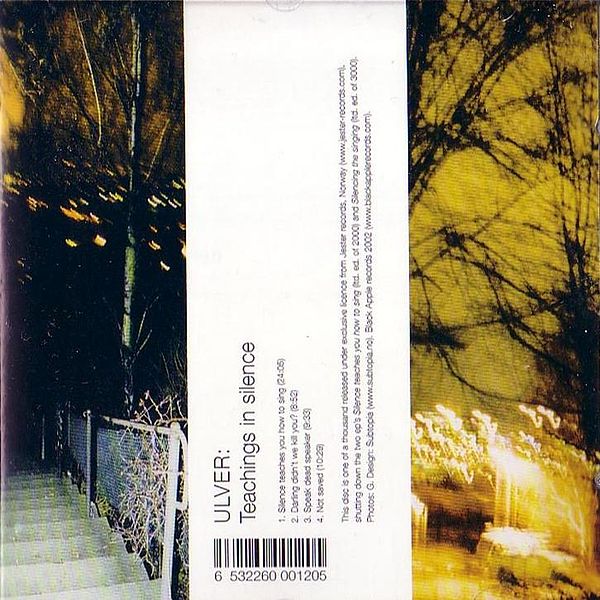
SOUNDTRACK: ULVER-Teachings In Silence (2002).

This EP is a collection of Ulver’s two previous limited edition EPs: Silence Teaches You How to Sing and Silencing the Singing.  It was originally released as a limited edition of 1000 copies, but has since been given wide release.  The two EPs that it replaced were officially retired (after print runs of 2000 and 3000 respectively).

“Silence Teaches You How to Sing” seems like perhaps Ulver has pulled a fast one.  The song starts with static…waves of static.  And you think, what, 24 minutes of THIS?  But after about four minutes, some quiet guitars layer through the static.  By 5 minutes a melody emerges, rather Twin Peaks theme-like.  Static resumes and then another wave of music bursts through and then, around 11 minutes, distant voices can be heard.  As the track nears the end you can hear a distant choir.  And by the end you’re listening so intently that you hear all kinds of things.

That was the only track on the first EP.  The second EP had three shorter tracks.  They are in a similar style to Silence, although there is more music.  “Darling Didn’t We Kill You” has a somber guitar melody and distant choral voices or a buzzing drone.

“Speak Dead Speaker” is more static (it’s easy to see why these two EPs were bundled together).  There’s more Twin Peaks style washes over the static.  I keep picturing the Pacific Northwest.  The last two minutes are a surprise cello version of the themes from the first 7 minutes.  It’s lovely and sorrowful.

The final track is a beautiful melody that repeats itself more and more quietly (with a wonderful loud funeral bell keeping time).  It repeats its cycle three times before ending.

Ulver continues to confound listeners.  Neither one of these EPs is really essential, but they are both interesting and really create a mood.

[READ: November 3, 2011] “Nilda”

This is the final uncollected story (according to Wikipedia anyhow) by Junot Díaz that I was able to access online.  There are two more stories “Invierno” (Glimmer Train 1998) and “Flaca” (Story, Autumn 1999) that I can’t seem to access online.  The rest of the listed short stories appear in Drown

This story is about longing and making the wrong choices.  Having read a bunch of Junot Díaz stories lately, this feels very much like a story he would write (I probably should have read Drown before I read these stories, but when I get to it, I’ll be able to confirm my suspicions).

In this story, Yunior, who is evidently the constant narrator in his earlier works (and in Oscar Wao) knows Nilda from school.  She was a friend of his–a kind of teasable friend–until puberty hit and her chest was to die for.  Unfortunately for Yunior, they were already friends, and she was off with other boys.

Indeed, Nilda was trouble more or less from the start–“brown trash,” he calls her.  Her mother was an alcoholic and Nilda was defiant.  She even spent time in a group home.  But she was nice and easy to talk to.  Dammit, why did she have to start dating Yunior’s brother Rafa? (more…)

Read Full Post »

SOUNDTRACK: MOGWAI-Batcat (2008).

“Batcat” is one of my favorite Mogwai songs.  The melody is intense and the drumming is wonderful.  I picked up this single for the B sides (which will undoubtedly be collected somewhere one of these days anyhow, but that’s okay. 

It was very hard to pass up a song called “Stupid Prick Gets Chased by the Police and Loses His Slut Girlfriend”  Given that the song has “Chased” in the title, this is a surprisingly slow tune.  It builds slowly over a series of keyboard waves.  There’s also a slow guitar melody that keeps the piece grounded.  It’s one of their more subtle songs, which again, is rather surprising given the title.

“Devil Rides” is quite jarring in that it features vocals by Roky Erickson.  I don’t really know anything about Roky.  I picture him as a large, unkempt man with crazy hair and a beard.  His voice is otherworldly and seems to be maybe just a wee bit off from what the music is playing.  It’s a strange track and works very well with Mogwai’s history of slightly off-kilter vocalists. 

[READ: November 3, 2011] The Discomfort Zone

After reading The Corrections, I planned to read one of Franzen’s earlier novels.  But they were all quite long (even his debut!) and I wasn’t ready to get so immersed yet.  Then I found The Discomfort Zone in the biography section of the library.  It was less than 200 pages and seemed like just the thing.  It turns out, however, that I had read most of it already.  Three of the pieces were published in slightly different form in the New Yorker: “The Retreat,” (here as “Then Joy Breaks Through”) “The Comfort Zone,” (here as “Two Ponies”) “Caught” (Here as “Centrally Located”) and one “My Bird Problem” (here as “My Bird Problem”) which appears to be unchanged. 

That leaves two essays that were new to me: “House for Sale” and “The Foreign Language.”

The collection works as something of a biography, although really it’s not–it’s a collection of essays about his life, but I don’t think I would go so far as to say biography.   The book also doesn’t follow a chronological order. (more…)

Read Full Post »

SOUNDTRACK: KISS-Unmasked (1980).

It was hard to like Unmasked, but, being an 11-year-old boy, who loved Kiss, I never doubted its awesomeness.  Despite kids in school telling me Kiss sucked and, peculiarly, even the cover of this album telling me they stink (whose idea was that?) I knew in my heart of hearts that Kiss was the best.

In a stroke of marketing genius, this album teased the audience with the idea of finally seeing who was under these “masks” (which is weird since everyone knew they weren’t wearing masks, but whatever).  There’s even a poster that came with my vinyl copy!  Yahoo.

I just recently found out that “Is That You?” is a cover.  I always liked the high-pitched part of the song (“you always get the boys you like”), although in retrospect it’s really not very good–simplistic in a way that Kiss songs weren’t but then became.   I always joke about Kiss doing a tour and playing “Shandi.”  It’s such a cheesy ballad and yet I think it’s really good (for a cheesy ballad–Paul sings this type of song so well).  I constantly have the “there’s another mess I’ve got myself in” line in my head all the time.

I liked “What makes the World Go ‘Round” but even I can acknowledge that the song is pretty poor.  “Tomorrow” sounds like another song off of Paul’s solo album and probably should have been a huge hit.  In fact, they could have re-released it in the 80s and it would have fit right in with their non-makeup success–Paul’s soaring choruses are always a hit.  “Easy as it Seems” is kind of the album encapsulated in one song–very sleek, very soft, lots of choruses vocals and really kind of bland.   There’s even a wimpy keyboard solo (gasp!).

Ace was the star of Dynasty, and he gets three more songs on Unmasked.  “Talk to Me” is one of his repetitive songs that drives me a bit nutty (never liked that “talk to me-e” part).  It’s interesting how much Ace moved into prominence on these albums, especially since he was headed for the door soon.  “Two Sides of the Coin,” is a decent rocker, but listen to those crazy synth drums during the instrumental break.  “Torpedo Girl” is the most interesting track on the disc.  It has the cool opening “man battle stations torpedo,” a really funky (!!) bass line from Gene (who knew he had that in him) and a cool weird riff at the opening.  It’s then got a very catchy chorus (although honestly, “c’mon get your feet wet”?).

Gene has a bit more prominence here.  “Naked City” has a pretty menacing riff to open with, but Gene turns in one of his more melodic turns (with some pretty high notes in the chorus)!  The solo, while not blistering, is pretty great (as with Dynasty, the solos are too short).  “She’s So European” aside from being a really stupid title and lyric is the song that really puts this album over the edge–the twinkly keyboards, the “you ought to see her” falsetto, and, basically the same chord structure as “Living in Sin” on the verses.  Gene ends the disc with “You’re All That I Want,” a rather uninspired song that reminds me of the songs on side 4 of Alive II.

You’ll notice that Peter doesn’t get a vocal turn on this album.  In fact, he didn’t play anything on it at all (Anton Fig on drums again), but he was contractually obligated to appear on the cover (perhaps that’s why they did a cartoon).

No matter how much I listened to it back then, I can still admit that this album isn’t really very good.  Although interestingly, some of the songs and sonmg styles foreshadow the kind of music they’d play on Lick It Up: simple songs without a lot of substance, and that album was huge!

[READ: November 2, 2011] “Wildwood”

After reading “The Brief Wondrous Life of Oscar Wao” in the New Yorker, I saw that they had also published Lola’s “Wildwood” adventure as an excerpt from Oscar Wao the novel.

As you can see, this excerpt came out around the same time as the novel.  And as far as I can tell, this excerpt is exactly the same as the novel except for one line that was in the excerpt but not in the novel (the part in italics):

Hija de Liborio she called you after you picked your tia’s winning numbers for her and when you guessed correctly how old to the day she’d been when she left home for the U.S. (a fact she’d never told anyone).  You assumed….

The only other noticeable difference is that the first section of this excerpt is not really separated from the rest of it.  The first section is told in the second person, while the rest is in the first person.  In the novel, the second person section is set off by itself, so it’s a little less jarring when you jump to first person, but I think any reader could cope with that pretty well. (more…)

Read Full Post »

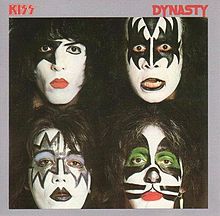
SOUNDTRACK: KISS-Dynasty (1979).

I was pretty excited to buy this album when it came out–a new Kiss album that wasn’t solo albums!  Woo hoo!  And the fact that it was disco?  Well, even though I said I “hated disco,” I didn’t really know what disco sounded like then (and really, aside from the middle “I Was Made for Lovin’ You” it’s not really a disco record) and plus my other favorite band was the Village People (and really, that makes a lot of sense–tw0 bands in over-the-top costumes talking about sexuality that I totally didn’t understand).

So, this album is hard for me to be critical about because it was such an essential part of my childhood, especially “I Was Made for Lovin’ You.”  I love it, and yet I can listen critically and appreciate that it’s really not that good.

But I’ll move on to the other songs.  “Sure Know Something” and “Magic Touch” really don’t seem that out of place chronologically with, say, the Kiss solo albums–they sound an awful lot like something off of Paul’s album.  So, despite the sort of slinky 70’s bass on “Sure Know Something”, they can’t have been that much of a surprise.  The guitar solos are short but have some interesting Ace sounds (I like the harmonics on “Magic Touch”).  It seems that while the other guys were embracing disco, Paul was keeping the Kiss sound alive.

Then there’s the Ace songs.  “2,000 Man” made total sense as an Ace song. I had no idea it was a Rolling Stones cover until fairly recently (and I like Ace’s version much better).  “Hard Times” feels like the sequel to “New York Groove.”  Not the music so much although maybe a little, but the lyrics–now that he’s in the city here’s what happened–the gritty reality. It’s one of Ace’s great, lost songs.  And check it out, Ace sings on three songs here!  (Guess having a #1 hit wasn’t lost on the Kiss powers).  “Save Your Love” has a cool descending chorus and a nice bass feel to it.  Ace certainly wins on this record.

Peter got only one song, “Dirty Livin'”.  In fact, this is the only song that Peter had anything to do with (his drums were re-recorded by Anton Fig).  It reminds me (in retrospect) of the Rolling Stones disco era even more than “2,000 Man,” the backing vocals remind me of something like “Shattered.”  I always liked this guitar solos on this (cool feedback).  Although I liked the song (along with the rest of the album), I don’t think it holds up very well.

Gene only gets two songs.  It amuses me how little he has to do with these late 70s albums even though he is always the leader of the band.  I always liked “Charisma” (I had to look the word up back then) even though it is, admittedly, rather discoey and really not very good.  It is fun to ask “What is my…charisma?”  But “X-Ray Eyes is the better Gene song on this record.  It harkens back to earlier Kiss songs and even has a bit of menace in it.

So, Dynasty was a huge hit for the band.  And they even got to mock it in Detroit Rock City the movie.  Cynical marketing ploy or genuine fondness for disco?  Who would ever know.

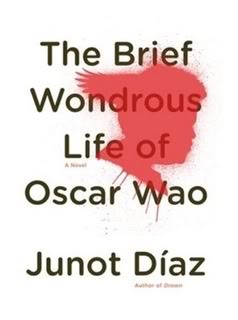
[READ: November 1, 2011] “The Brief Wondrous Life of Oscar Wao”

Readers of this blog know that after finding an author I like, I will try to read everything that he or she has written.  Close readers will know that if a writer is reasonably young and reasonably unpublished, I will try to read his or her uncollected work as well.  Well, I really enjoyed Oscar Wao the novel, so I decided to see what else Díaz had written. There’s really not a lot, to be perfectly frank.  There’s his short story collection Drown and a few fiction pieces published here and there (mostly in the New Yorker) and a few non-fiction pieces as well.

So this “short story” from the New Yorker (with the same title as the novel) is in fact an early, mostly the same, version of the Oscar story in the novel.  The thing here is to note the date: 2000(!).  The novel came out in 2007.  So, Junot had been working with this character for easily five years (giving time for the publishing industry to get a book out and all). The remarkable thing the is just how accomplished and polished this piece is and how much of it was used in the novel.

I’m curious to know whether this was written as a short story (it’s quite a long short story) or if it was always intended as a part of a novel.  Interestingly, when you read this story by itself and you realize that it is pretty much all of Oscar’s story in the novel, you realize just how little of Oscar is actually in the novel.  The novel is about Oscar, obviously, but it is really about his family and the fukú that was placed on them by the Trujillo clan.  Oscar is sort of the touchstone for the fukú, and the person whom the narrator knows most intimately but his story is also brief. (more…)

Read Full Post »

SOUNDTRACK: COLIN STETSON-Live at All Tomorrow’s Parties, October 4, 2011 (2011).

In addition to playing SXSW, Colin Stetson also played All Tomorrow’s Parties, and NPR was there.  Unlike with SXSW, this set appears to be full length (about 50 minutes–which is a pretty amazing amount of time for him to blow that horn).  Like SXSW (and the album) Stetston starts with “Awake on Foreign Shores” and “Judges.”  What I love about this recording is that after Stetson finishes “Judges” a guy in the audience shouts (in a voice of total amazement) “That shit was off the hook!”  And he is right.  It’s not even worth me going into how amazing Steston is once again (check previous posts for  that), but man, just look at the size of that horn he’s playing (seriously, click on the link to see it bigger).

Stetson plays a few more songs from New History Warfare, Vol. 2: Judges like “The Righteous Wrath of an Honorable Man” (which is outstanding) and “A Dream of Water” (which works without Laurie Anderson, although he does say he’s sorry she’s not there).  He also introduces two news songs “Hunted 1” and “Hunted 2” which show new levels and new styles that Stetson employs.

This is a remarkable set, and Steston is clearly in his element (and the crowd is rapt).  The only problem I have is the recording level.  It must be very difficult to maintain recording levels for Stetson’s brand of noise–his louds are really loud–but you can’t hear him talk at all.  And most of the time, the introductions to his songs are worth hearing.  I’m sure if they tried to get the speaking level a little louder the music would have sacrificed though, so I think they made the right choice–I only wish there was a transcript available.

[READ: October 31, 2011] The Brief Wondrous Life of Oscar Wao

Apparently it’s pronounced, “Wow”, by the way.

Because of my new job, I don’t have a  full hour of lunch-time reading like I used to.  And so this book took considerably longer than I intended.  However, once I set aside some time to read it, I flew through the book.

I’m going to get this part out of the way because I was thinking about it throughout the book and I want to mention it without having it bog down the post.  This story reminded me a lot of Roberto Bolaño.  On the surface, sure this is because they are both writers from “Central America” (Diaz is originally from the Dominican Republic but moved to the US, while Bolaño is originally from Chile but moved to Mexico and then Spain).   But I’m not really talking about their origins so much as the style of storytelling.

Without going into a lot of Bolaño here, I’ll just say that Bolaño tends to write very detailed character studies–stories that follow one person throughout his whole life on something of a fruitless quest.  And the details of that person’s life include information about family members and distant relatives.  Further, Bolaño has written about the brutalities of both Chile and Mexico and how a person can survive in such a place.  Similarly, Díaz follows the life of Oscar and his extended family and he talks about the brutalities of the Dominican Republic.

This is in no way to suggest that there is any connection between the two writers. I mean, The Savage Detectives came out in the States in 2007 (same years as Oscar Wao) and while he certainly could have read it in Spanish, I have no evidence that he did (and as I recently found out, the first draft of the Oscar story was written in 2000).  Again, the parallels are only from my reading and have nothing to do with Díaz himself.

Okay, now that that’s out of my system…

This is the story of Oscar de Leon.  But more than that, this is the story of a fukú–a curse that befalls the de Leon family and follows them through several generations.  Oscar is the youngest member of the family and the person whom the narrator knows best.  So we see this fukú as it impacts Oscar.  And although the book is ostensibly about Oscar, it is about much more.

Oscar was born in Paterson, NJ (the town next to where I grew up!) and went to Don Bosco Tech High School (where many of my friends went).  Oscar is Dominican (his mother is from the DR, but he and his sister were born in NJ), but unlike every other Dominican male, Oscar is totally uncool, into geeky sci-fi and D&D and is clearly destined to be a virgin because he is fat with terrible hair and no social skills.

And, (no spoiler), as the title states, his life will be short. (more…)

Read Full Post »

SOUNDTRACK: RA RA RIOT-Live at the Black Cat, Washington DC,  October 12, 2008 (2008).

I really like Ra Ra Riot’s album The Rhumb Line, and this concert is basically a showcase for that album.  There’ s an interview at the end of the show (all downloadable from NPR), in which the  band says that critics raved about their live show as much as their album.

I don’t really hear that the show is more energetic than the album (maybe visually they are wild), but it did sound fantastic.  It’s amazing to hear a rock band that is dominated by strings–the cello and violin are often louder than the guitar (but not in a competing/drown you out kind of way,  more of a strings do the melodies and the guitar adds bulk to the sound).

I always enjoy hearing a band that is grateful to their audience for showing up (this is most evident in young bands, who seem so much more genuine about their love of the audience) and Ra Ra Riot are certainly that .  They seem genuinely surprised at the turn out, and they play a great set accordingly.

There are two songs that aren’t on the album here “A Manner to Act” and the encore “Everest.”  They both feel like they came off the album, which bodes well for their second album, Orchard, which just came out in May.  Ra Ra Riot also do a great cover of the obscure Kate Bush song “Suspended in Gaffa.”  At the end of the show they tack on a cover of “Hounds of Love.”  Lead singer Wesley Miles has a wonderfully strong voice and he can reach some pretty high notes–not soprano or anything like that, just strong enough to be able to pull off a Kate Bush cover.

This is a great show.  And when you read about the tragedy they suffered just as they were starting to take off, their obsession with death may not be so surprising.  I’m looking forward to Orchard.

[READ: 1995 and August 18, 2011] Microserfs

After reading Life After God and thinking about Microserfs, I looked up Coupland’s bibliography and saw that indeed Microserfs came next.  And I was really excited to read it.  I have recently watched the JPod TV show and I knew that JPod was a kind of follow-up to Microserfs, so I wanted to see how much of it rang true.  And I’ve got to say that I really rather enjoyed this book.

While I was reading this, I started taking notes about what was happening in the book.  Not the plot, which is fairly straightforward, but about the zeitgeisty elements in the book.  And, since I’m a big fan of David Foster Wallace, I was also noting how many zeitgeisty things this book had in common with Infinite Jest.  I’m thinking of tying it all together in a separate post, maybe next week.  But I’ll mention a few things here.

My son also loved the cover of this book because it has a Lego dude on it and he has been really getting into Lego lately.

So Microserfs is the story of a bunch of underpaid, overworked coders who work for Microsoft.  The book is written as the journal of Daniel Underwood (Coupland still hadn’t really branched out of the first person narrative style, but the journal does allow for some interesting insights).  The story begins in Fall 1993.  I felt compelled to look up some ancient history to see what was happening in the computer world circa 1993 just for context.  In 1991, Apple released System 7.   In 1993, Windows introduced Windows NT, Intel released the first Pentium chip, Myst was released and Wired magazine launched.  In 1994, Al Gore coined the term Information Superhighway.  Yahoo is created.  The Netscape browser is introduced.  So we’re still in computer infancy here.  It’s pretty far-seeing of DC to write about this.

Daniel works at Microsoft with several friends.  Daniel is a bug tester, Michael (who has an office, not a cube) is a coder, Todd (a bodybuilder) is a bug tester.  There’s also Susan (smart and independent), Abe (secret millionaire) and Bug Barbecue (an old man–he’s like 35).  The five of them live in a house on “campus.”  There’s also Karla (a type A bossyboots who doesn’t like seeing time wasted) who works with them but lives up the street.

As the story opens, Michael has just received a flame email from Bill Gates himself and has locked himself in his office.  This leads to a very funny scene and ongoing joke in which the office mates feed slide two-dimensional food under his door and he vows to eat only things that are flat. (more…)

Read Full Post »

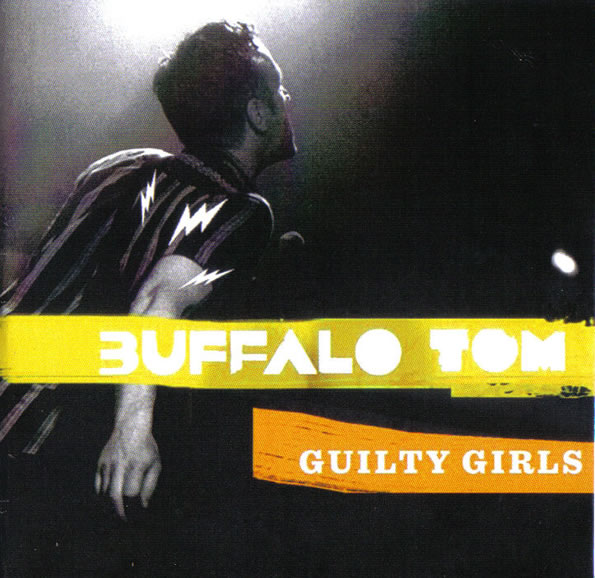
SOUNDTRACK: BUFFALO TOM: “Guilty Girls” (2011).

Holy cow, Buffalo Tom!  I more or less forgot about these guys (who I really liked back in the 90s).  Some of their songs from that period are fantastic.  They never had any major success, but they had a series of great releases.  Evidently they reformed a few years ago and released a reunion album.  And now, in 2011, they have a brand new record.  Wow.

I haven’t listened to them in a few years, (although their albums covers are still very fresh in my head).  But I listened to a few older songs for comparison’s sake.  To me the biggest difference between Tom in 1999 and Tom in 2011 is that the singer now sounds even more like Elvis Costello.  Bill Janovitz has always had a strong baritone voice, but with a few extra years thrown on, it has maturity that it lacked back then (not that it needed it, but the songs are more mature lyrically now, and the voice fits it well). 

This song is a kind of punky (poppy punk, but still punky) rocking anthem.  It’s under three minutes and it aims for mega catchiness.

[READ: July 18, 2011] “The Orderly

Having read the brief story by Arthur Bradford in Five Dials, I realized that I knew the name and decided to see what else I had read by him. It wasnt much, but I enjoyed what I’d read.  I decided to look him up and discovered that he really only wrote one book, a short story collection called Dogwalker, before switching media to TV (and a show called How’s Your News?).

On his website, he has links to a number of published stories (fiction and non-); since the Esquire pieces have been collected in his book, there’s really only three unique fiction stories available here.  So i decided to read them all.

Now Nerve.com was a site for “literate smut.”  I remember when it came out and it was somewhat revolutionary in the sex world because it tried to raise the bar of quality and to include some decent writers.  I didn’t actually know that nerve.com was still active (it is, and there’s some really good stuff there).  As such, I feel like perhaps the stories at nerve aren’t entirely top-notch.  Not Penthouse forum, mind you, but not Hemingway either. (more…)

Read Full Post »

SOUNDTRACK: THE KOPECKY FAMILY BAND-Tiny Desk Concert #131 (June 6, 2011).

I’d never heard of The Kopecky Family Band, but the write-up about them was pretty interesting, so I decided to give the Tiny Desk concert a listen.  The band (all 7 of them) play a great collective of music: two guitars (acoustic & electic) bass, cello, violin, drums and keyboard.  They play a sort of traditional folk with a very full sound.

Indeed, they remind me an awful lot of The Head and the Heart (the singer’s voice in particular), although they are from different edges of the continent and have been playing music about as long as each other (indeed, The Kopecky Family Band released an EP in 2008 whereas Head and the Heart formed in 2009).

And the Kopecky website offers lots of free music (which is very cool).

“Howlin’ at the Moon” is a full acoustic sounding track.  “Birds” has a simply gorgeous whistle/xylophone melody that is as beautiful as it is catchy.  “Disaster” is a tender ballad with wonderful harmonies.  And “Red Devil” is a somewhat more rocking song, which really helps to demonstrate the bands’ diversity.

And the band is charming.  Keyboardist/singer Kelsey admits to having left a trinket of some kind of the office bookshelves (which are littered with things).  It’s a wonderful set, and because of it, I downloaded the band’s first EP from their site.

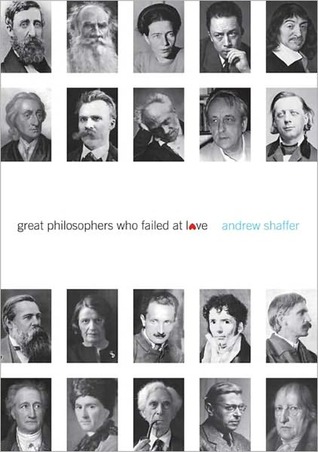
[READ: June 5, 2011] Great Philosophers Who Failed at Love

Shaffer was signing books at BEA this year.  My coworker told me that he was very funny and that he signed her book in an amusing way.  He happened to be signing at the table next to the line I was on. Sadly, he finished before I was able to get to him.  But I was pretty close to the beginning of the line, so I asked if I could grab a copy of his book, which I did (although no autograph for me).

This is a silly book of nonfiction.  It looks at thirty-seven philosopher or thinkers and their utter failure at love.  Each man (and occasional woman) has had some distinguishing characteristic that made them pretty lousy in the emotional range.

The title of the book is funny and is meant to be kind of surprising: these smart folks were terrible at love.  Of course, spending a minute or two thinking about who these people were and what they did, it’s not surprising that they were lousy at love.  These were intellectuals, people who spend most of their time in their own mind.  Of course they couldn’t have a serious relationship.

Nevertheless, these stories are all more or less amusing (Louis Althusser accidentally strangled his wife to death(!) which isn’t amusing per se, but the story of it is, kind of).  Shaffer does a great job at keeping each entry brief but really retaining the salient points of the thinker’s philosophy and a cogent example of his or her lousiness at love.  He also throws in some amusingly snarky comments of his own as he goes along.

I was delighted that the book order was done alphabetically rather than chronologically.  A chronological list would have been a little too samey in terms of each person’s context.  The alphabetical list allows for jumping around from say Plato to Ayn Rand which keeps the stories interesting and fresh.

At the end of each person’s piece, there’s an “In His Own Words” which offers a quote that details his or her written philosophy regarding love.

Dare I say that this is an ideal bathroom book?   It certainly is. And it makes you feel a little better about yourself (if you haven’t for instance, adopted your mistress as your daughter (Sartre)).

Read Full Post »

« Newer Posts - Older Posts »