Feeds:
Posts
Comments

Archive for the ‘Violence’ Category


SOUNDTRACK
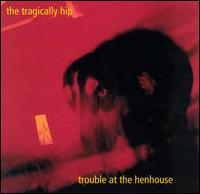
: THE TRAGICALLY HIP-Trouble at the Henhouse (1996).

After the major high of Day for Night, The Hip followed it up with Trouble in the Henhouse.

It opens with “Giftshop” which sounds like it could have come straight from Day for Night.  “Springtime in Vienna” is a marvel.  The opening is quiet with Downie’s almost whispered voice telling a compelling story until it blasts out with a wonderful chorus.  “Ahead by a Century” opens with a catchy acoustic intro.  Again, the harmony vocals add wonders to the verses.

But overall the album feels like the Hip exhausted their angst and anger on Day for Night and have chosen to go with a more mellow sound here.  It almost seems like Day for Lite.  Songs like the final track, “Put It Off” dabble with intensity, but have more atmospherics than powerful guitar and verses.  It’s like the come down after a big party.

The most peculiar song on the disc is “Butts Wigglin” which was used on the Kids in the Hall Brain Candy soundtrack.  It doesn’t really fit on this disc, but it’s such a great song that I understand them not leaving it off.  It’s very silly and musically groovy with  almost no guitars and all keyboards.  It’s a goof, but nice to see the lighter side of the band.

I find Trouble to be really enjoyable in itself, but it kind of pales in comparison to the previous two.  Nevertheless, these three albums are a wonderful trio of discs released by a great Canadian band.

They celebrated this era of the band with a live album the following year.

[READ: January 26, 2011] “An African Sermon”

Of all the stories in this Summer Reading Issue of The Walrus, this one was the most powerful.  (It wasn’t my favorite because it was rather distrubing) but it had a strong impact on me.

The bulk of the stoiry is set on a train in Africa.  Two white men introduce themselves to each other; the older one confides that he hopes no Blacks come into thier car.  Of course a Black does come into thier car and the younger man, who is a preacher, tries to embarass the racist man but immediately shaking the black man’s hand.

The black man is hostile to the young man’s advances, more or less shutting him out entirely.  Indeed, when the young man follows him to the dining car to talk (he is genuinely sympathetic to people, but he’s also very curious about the man and wants to pry a bit) the black man (whose name is Leonard Sagatwa) listens briefly and then, claiming a headche, returns to the cabin  room and goes to sleep.

During the night, the train stops because of a malfunction and it will be some time before it is fixed.  The priest goes out to the landing to find something to occupy himself when Leonard comes down.  He says to the priest that he wants to tell his story.  He wants to tell it once, to a complete stranger so that he can unburden himself and then be done with it.  The priest is tickled to hear the story.

But the story is one of Rwandan genocide:  Hutu vs Tutsi, brothers who turn  against each other; Leonard’s brother turning on him and his family.  Killing family members slowly, cruelly, calling them cockroaches.  It is harrowing and the priest is taken aback by the brutality.

But at the end of the story, the priest is resilient and insists that Leonard can forgive his brother.  Never, says Leonard.

The priest is able to use this story for his very first sermon in Africa.  He pretties up the story somewhat and makes it moral, and it works.  The new congregation accepts him and he feels welcomed to Africa.

When, several months later, the priest sees Leonard again, everything has been turned upside down.  And I’ll just leave it at that.

It is a great story.  Wonderfully powerful.

Read Full Post »

SOUNDTRACK: LIGHTS-“February Air” (2006).

Lights is a Canadian singer who is managed by Jian Ghomeshi.  She is a young cute pop singer and this was her second hit (I think–Wikipedia says it was used in an Old Navy ad).  I admit that I’d never heard of her before seeing her on Jian’s page.

I think of everything that Jian touches to be unique and always interesting.  And although this is certainly poppy and catchy, it’s only mildly  interesting and is kind of indistinguishable from a lot of other poppy catchy songs (the middle section stands out a bit, admittedly).

She’s received a number of accolades (best new artist at the 2009 Junos), so good for her (and Jian).  But I think I’ll be passing on her discs.

[READ: January 10, 2001] “Minnows”

This very short story (two pages) is dark and quite twisted.  Both in content and in structure.

The story opens with a woman seeing her daughter at the door.  We quickly learn that the daughter is not happy, but when the visit turns violent it’s unclear whether the older woman is crazy or hallucinating or if the violence is really happening.

Then we get some background story about their relationship.  Which sets things straight (sort of). (more…)

Read Full Post »

SOUNDTRACKLOS CAMPESINOS! Live in studio at WEXP, July 31, 2008 (2008).

For this brief in studio performance Los Campesinos! play four songs from their debut album Hold on Now, Youngster.  The band sounds great in this setting.  I don’t have this album, so I don’t know if they deviate at all from the originals, but the live versions are tight and very effective.

The interviews are informative and rather gushing (I’ve never heard a DJ kiss the ass of a performer in such a nice way before…and the band seems really flattered by it…it’s all very sweet).  The DJ also has a funny conversation about their tendency to scream in their songs.  (It’s cathartic).

What I didn’t notice so much on Romance is Boring was how many different lead singers the band has.  With these four songs, there are enough lead vocalists to show a lot of diversity (and a lot of screaming, too–“don’t read Jane Eyre!”).  And, as one might expect if you know their later disc, the lyrics are smart, funny and wicked.

The difference between Romance and Hold On, seems to be that the band were much punkier on this early disc, and that all comes out in these live tracks.  And the songs are all short: 3 minutes and under.  They really pack a lot in here.

[READ: January 13, 2011] Voyage Along the Horizon

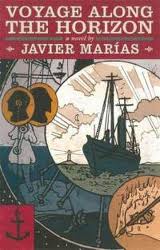
Most of Javier Marías’ books are translated and released through New Directions. But for reasons I’m unclear about, this book, Marías’ 2nd novel, was published by Believer Books (an imprint of McSweeney’s).   I haven’t read any of Marías’ other novels, so I have no idea if this is similar to any of the others (there’s a Q&A at the back of the book which suggests that this is typical of his earlier novels), but it absolutely makes me want to read more by him.

What I loved about this story first off was the sense of distance we received from the main story itself.  (Marías is Spanish, but this is a technique employed by Roberto Bolaño (Chilean) extensively…. Obviously, others do this as well).

The set up of the story is this:  1) An unnamed narrator has a party at his house.  At this party, two individuals, Miss Bunnage and Mr Branshaw (or is it Bragshawe?–he never learns) discuss author Victor Arledge.  Miss Bunnage is a scholar of Arledge and Mr Branshaw has in his house an unpublished novel that investigates the disappearance of Arledge and why he stopped writing.  And so, Branshaw invites Bunnage and the narrator to his house the next day to have the novel (called Voyage Along the Horizon) read to them.

2) So, the next morning, the two go to Branshaw’s house where he does not let them see the book, preferring rather to read the novel aloud (which gives us essentially 3 levels of remove from the action of the story).  That’s a long way to go before you even get to the meat of the book. (more…)

Read Full Post »

SOUNDTRACK: TAME IMPALA-“Lucidity” (2010).

I heard this song on the NPR’s 5 Artists You Should Have Known in 2010.  The album, Innerspace, is only available in Australia (imported on Amazon for big bucks) but I guess that’s why people download music.

This song is really cool. It feels very My Bloody Valentine to me.  However, inevitable comparisons to The Beatles abound, but that’s mostly in the vocals (which is kind of funny since they are Australian).  But it’s really a very sixties British vocal sound–not unlike early Who).

The big difference comes in the music which is psychedelic and wild in ways that The Beatles never quite managed.  There are great big washes of noise, and the sound quality sounds retro, even though it obviously isn’t.  Comparisons to the great Swedish band Dungen are not misplaced either.

I’ve listened to a few more tracks by them on YouTube, and I think this album could easily be one of the best of 2010 if only more people could hear it!

[READ: January 3, 2010] The Return

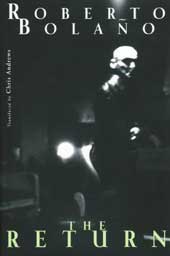
With the completion of this collection of short stories, I have now caught up with all of the published works of Roberto Bolaño (in English of course).  [The next book, Between Parentheses, a collection of nonfiction, is slated for June].

So The Return contains the 13 short stories that were not published in Last Evenings on Earth.  That collection inexplicably took shorts stories from his two Spanish collections Llamadas telefónicas (1997) and Putas asesinas (2001) and combined them into one collection in English.  It wasn’t quite as evident in Last Evenings, but it seems more obvious here that the stories in Putas asesinas are grouped together for a stylistic reason.  So, to have them split up is a bit of a bummer.  And yet, having them all translated is really the important thing.  And, again, Chris Andrews does an amazing job in the translation

This collection of stories was very strong.  I had read a few pieces in Harper’s and the New Yorker, but the majority were new to me.  Bolaño is an excellent short story writer.  Even if his stories don’t go anywhere (like his novels that never quite reach their destination), it’s his writing that is compelling and absorbing.

This collection also had some different subject matter for Bolaño (it wasn’t all poets on searches). (more…)

Read Full Post »

SOUNDTRACK: RADIOHEAD-Hail to the Thief (2003).

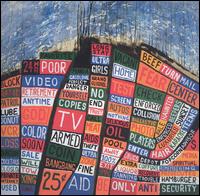
After the claustrophobia of Amnesiac, Hail to the Thief was a nice compromise between their earlier guitar rock and the ambience and the technology of Kid A.  “2 + 2 =5” is one of their most satisfying songs, opening with a nice guitar lick and Thom Yorke’s keening vocals, it abruptly jumps into a full-fledged rocker.  “Sit Down Stand Up” has similar properties–it opens quietly with a distant guitar riff.  The song builds and builds into a manic intensity.  By the end, when the pace is much faster and the lyrics are repeating “the raindrops” over and over, it’s a glorious mess.

“Sail to the Moon” is a keening piano-based ballad.  Not one of their best, but with very nice melodies.  “Backdrifts” flashes back to the experimental side of Kid A, with lots of percussive noises tapping into the electronic groove.

The band surprises everyone with a very acoustic sounding song, “Go to Sleep.”  It’s a really wonderful track, especially placed amidst the electronica of the other tracks.  The bridge brings Yorke’s vocals into the stratosphere (and the guitars get noisier and noisier).  “Where I End and You Begin” is a noisy staccato piece of fun with effects and more effects trying to hide Yorke’s voice.

“We Suck Young Blood” is a spare, almost completely stripped song composed of pianos and handclaps.  It is eerie and not a little disturbing.  While “The Gloaming” is practically all electronics.  It’s one of those transitional songs, not terribly exciting in itself, but not throwaway either.  And it leads into the gorgeous quintessential Radiohead of “There There” which could be an OK Computer outtake.

“I Will” is mournful dirge with just guitar and multitracked voice that lasts only 2 minutes and leads into the experimental “A Punchup at a Wedding.”  “Punchup” opens with that rarest of Radiohead sounds: a solo bass.   But it is quickly swallowed by more electronica.

“Myxamytosis”  is a nother great rollicking track with a great slinky keyboard riff that propels the song through the murky depths.  “Scatterbrain” features a cool guitar motif that shows that they can still play pretty music and which leads to the album closer, “A Wolf at the Door.”  “Wolf” ends the disc wonderfully with a cool guitar song and awesome almost-spoken lyrics.  It is kind of sinister and kind of sad at the same time.

This is a disc that rewards repeated listens (and headphones). If OK Computer was difficult, Thief is much more so, but for very different reasons.  But it pays wonderful dividends.

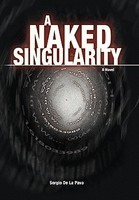
[READ: January 6, 2011] A Naked Singularity

I received a copy of this book about a year ago in March.  It is self-published and seems to have been sent to many folks who blogged during Infinite Summer (because it’s a big book, you see).  I was interested in reading it, but I had a lot of other things that I was reading first, so I put it aside until last month.  And I am really bummed that I waited this long.

A Naked Singularity is a wondrous, beautiful mess of a book that I was so absorbed in, I couldn’t put it down.  The writing style is great: funny, clever, funny, philosophical, funny, legal, funny and at times rather violent.

I’m torn when writing this how much of the “story” to give away.  I didn’t know anything about the book (the blurb on the back is just a quote from the book–there’s no summary or anything).  So I’m going to rob you a little of the “what the hell is going on in this story” aspect that I had, but I’m not going to give anything major away.

The story opens in a the middle of a conversation between a prisoner and a lawyer.  It’s a bit confusing until the story pulls back and we get the whole deal.  The story is about Casi.  He is a wunderkind lawyer who has never lost a trial (in 14 attempts).  He plays the system, but he’s also dedicated to getting his clients off (even though he–and everyone else on staff–knows they are guilty) mostly because he is undefeated.

The entire first Part of the book (320 pages) introduces us to Casi, to his workload, to his clients, to his coworkers and to his family.  His clients are mostly drug dealers. His coworkers are mostly jaded and are no longer excited by their jobs.  His family is wonderful, a group of Colombian immigrants who love each other and fight with each other loudly.  (The early scene at his family’s house is hilarious scene in which unattributed dialogue overlaps–it’s wonderful).

And yet for all of that, the first part never quite gives us a plot.  This might be a problem for some books, but the whole set up is so compelling that you just go with it, from one amusing (or hilarious) segment to the next.

In addition to introducing us to his cast of drug addicts and low level criminals, Casi also indicts the New York Justice system (in hilarious detail).  There are quite a few chapter spent talking about “bodies” (criminals) and how many of them sit in jail for 72 hours until they see a lawyer.

Of course, when he gets home, all is not normal there either.  His apartment is free (because his downstairs neighbor’s father owns the building and Casi squats there).  The neighbors are a curious bunch of college students.  One of them is a total TV junkie.  And, there’s a bizarre, wonderful subplot about him trying to bring Ralph Kramden from The Honeymooners to life in his room by watching the shows nonstop for weeks.  Yes.

Textually, the story also plays with lots of styles.  In addition to the dramatic scene with his family, we also see many court transcripts.  The second one with Mr McSlappahan is quite funny not least of which because the judge cannot get the poor man’s name right and the official transcript changes his name throughout the case.  There are also letters to and from one of the clients.   There’s a chapter-long epic poem (which was probably the hardest thing in the book for me to digest).  There’s even a recipe for empanadas (which sounds delicious).

In addition to some wonderful wordplay and punning there is also childish gross-out humor.  A scene with frozen burritos (pp. 150-158) had me laughing out loud for several pages.  But there’s also a lot of commentaries on society.  For instance Television is always capitalized and treated as a proper noun.  The mayor of New York is named Toad.  There are street vigilantes with cameras everywhere and, most amusingly, there’s an in-the-making TV show: Clerical Confessions.

By the time Part Two comes around a plot starts forming.  I was concerned that all of part two would follow this nascent plot, but it doesn’t. The book continues in a similar vein with the plot-instigator [coworker and lawyer, Dane, one of the most consistently amusing characters I’ve read in a long time] continually popping up on Casi’s periphery to try to get him to help him with…the perfect crime.

And that’s when boxing comes into play.  Casi is a fan of boxing, specifically a fan of Wilfred Benítez (who I didn’t know was a real boxer, but whenI looked him up I found this part of the story even more compelling).  And so, interspersed throughout the rest of the book is Benítez’ biography and fight history. It’s a rather lengthy character study of the man himself and boxing in general.  Now, I’m not a fan of boxing, I’ve never watched a fight, but I was totally engrossed by the storytelling.

Because he is setting up a whole story about muiddleweight champiosn, the novel follows many boxers who I had heard of and knew from pop culture (I checked and even Sarah knew who most of these boxers were, so they really must get into the pop culture world): Sugar Ray Leonard, Marvelous Marvin Hagler, Thomas Hearns (I didn’t know him, but De La Pava’s description of the 3 round Hearns-Hagler fight is so exciting that I’m going to watch them on You Tube) and Roberto Durán (she didn’t know him).  And so the story of these middleweight fighters trying to knock each other over for the title becomes something of a metaphor for the Casi’s life pre- and post- crime.  In fact, when they go to execute the perfect crime, the first half of that chapter is taken up with a story about Benítez…that’s quite unexpected.

While the crime is beign set up, Toom, one of Casi’s coworkers asks him to help with a case in Alabama.  A severely mentally retarded man is to be executed and Toom has taken on the case to rescue the man.  This plot adds a surprising amount of pathos to the story, especially when Casi flies to Alabama and meets the man.  But even that sequence is lightened by a wonderfully absurd hotel scene.  I totally want to stay at this hotel.

Part Three of the story is where the whole thing devolves into a crazy quilt of insanity.  The crime has happened, and it is messing with everything. There is a city-wide blackout, Casi has no heat, no cars are allowed on the streets so he can’t even escape to his mother’s house.  There’s also a strange guy in is building who looks and sounds suspiciously like Ralph Kramden.  And, Casi is accused of contempt (and is about to be ousted by his law office’s morals group, the childish but amusingly named Committee to Oust Casi Kwickly). Both trials are as absurd as a Marx brothers movie (Karl of Groucho?).

The lead up to the end is very satisfying will all kinds of loose ends tied together (things that I thought he’s never address were in fact cleared up!).  But with a story this all over the place, it’s hard to imagine how you would finally end it.  The ending goes in a direction that is supported by the title (and is a little overwhelming).  It’s a little unsatisfying, but aside from a tidy happy ending (which you knew you weren’t getting) I don’t know how else you could have ended the book.

Ending aside, this is a fantastic novel.  There is just so much going on in it (I didn’t even mention the discussion of Hume vs Descartes “I guessed there was nothing wrong with Hume provided it was acknowledged that Descartes was The Man” (510)) or the whole subplot about the two kids who kidnap a baby), and it is very well constructed and tied together.

Somebody please publish this book officially!  Yes it’s long, yes it’s multifaceted, yes it demands a lot of the reader,but the payoffs are wonderful and, frankly, this is the kind of unexpected story that could be embraced by, well, not the general public, but a niche market who enjoys clever books (and yes, probably fans of David Foster Wallace (and his progenitors)).

Give De La Pava a contract, huh!  You can read an excerpt here.

Read Full Post »
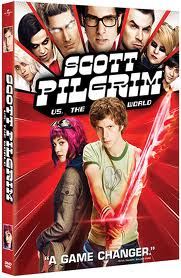
[WATCHED: December 17, 2010] Scott Pilgrim vs the World.

I was delighted to finally get to see Scott Pilgrim vs the World on DVD. And man, it did not disappoint.  I love Michael Cera, so even though he’s not who I pictured as Scott Pilgrim, he played the character quite wonderfully (although he was within the realm of the “Michael Cera” character, he had an air of the sinister about him which was quite captivating).

The movie did  great job at capturing the hyper real video game quality of the books (I love all the little extra details which were not cute comic book details (like the phones printing RIIIIIIIIING) but simply part of the world they lived in.

I thought that the compression of this long (but not too long) series was wonderfully done.  Although I missed some aspects of the book, I thought it was all handled very well.  Plus, I liked the increased presence of the awesome Wallace and I really liked the way they adjusted the Knives storyline so that it could conclude at the same time as Ramona’s.  That’s very different from the final book, and, while I think the book’s version is more elegant (and fitting a longer story), for the movie, that truncation worked very well and allowed for a fantastic conclusion.  The end was great thanks to the introduction of the cool video game that Scott and Knives play early in the movie–a game which was made up for the movie.

I’m also thrilled to finally know how to pronounced Sex Bob-omb and I’m also thrilled to hear how much they rocked (Beck did most of the band music and über-god Nigel Godrich made the score for the rest of the film. Other great bands on the soundtrack include Metric, Broken Social Scene, Dan the Automator and Kid Koala.  I sort of ignored the soundtrack when it came out but I think i may have to go check it out now.

So in the movie, Scott must battle Ramona’s seven evil exes to win her love.  As for the seven evil exes themselves, they were all fun (and nicely diverse).  I enjoyed seeing Ann Veal (her?) working with George Michael Bluth again and Jason Schwartzman was simply terrific as the evil Gideon.  Also terrific was Satya Bhabha as the over-the-top first evil ex and Chris Evans as the bad-ass actor boyfriend.  I was only bummed that the Katayanagi brothers were given kind of short shrift (but hey you can only have so many characters).  The fight scenes were really well executed and fun.

The only weakness I would say in the film is that I thought Ramona was a little flat.  It was hard to know just what was so compelling about her for Scott (aside from the act that she was in his mind-portal all that time).  The book gives more details that show their relationship build, but the movie left that out.  I’ve never seen her in anything else, so I don’t know whose fault that was.  This compromises the ending a little bit because the decision between Knives and Ramona is actually kind of difficult (where it really shouldn’t be).  And yet, I thought the ending was really well done, with Ellen Wong really stealing the show).

The DVD itself is pretty awesome and there are a ton of special features.  Although Scott Pilgrim vs the Bloopers was a major let-down.  The movie is so understated that none of the bloopers are over-the-top hilarious.  However, the trivia track that you can play during the movie (I watched about ten minutes of it) was very interesting.  I especially enjoyed reading how parts of the movie that were finished before the book actually made their way into the book because O’Malley liked them so much.

I’m also thrilled that they filmed the movie in Toronto.  The trivia track points out all kinds of interesting locations.  From The Torontoist:

The first thing Wright did when he met O’Malley here in 2005 was visit all the real-life locations.”Pretty much everything that was in the book, we shot the same place Bryan had drawn,” he says.

A perfect example is the house in which Scott and his pal Wallace live. In reality, O’Malley lived at 27 Alberta Avenue, though he thinly disguised it as “Albert Avenue.”

As any true fan knows, however, the drawings in the book are actually at number 65, down the street. So, that’s where they shot, turning the garage door into the apartment door.

And there’s plenty more details in that article.  Like that those romantic and perilous stairs are real stairs on Baldwin St.  (I love crap like that).

It’s a really enjoyable romp of a film, unjustly ignored in the theaters.  And perhaps best of all…in no way is it setting itself up for a sequel!  A movie that just ends….how novel!

Read Full Post »

SOUNDTRACK: LOS CAMPESINOS!-Tiny Desk Concert #67 (July 5, 2010).

This Tiny Desk show really accentuates what fun can be had with the Tiny Desk format. Los Campesinos! are an eight piece band, but only four of them could come (or could fit, anyhow) in the tiny office.  And so we get a hugely stripped down set from the wonderful Welsh band.

One of the real benefits of these Tiny Desk shows is that it really highlights the songs themselves.  I enjoy Los Campesinos!, but sometimes I feel like their songs are so busy it’s not always easy to know exactly what’s going on.  This set shows how cool and interesting these three songs are underneath all the wild sounds and effects.

It’s also fascinating to watch these four folks perform in this room with nothing to hide behind.  The singer doesn’t even have a microphone, he’s just standing there with his arms behind his back singing to a small room.  And how odd it must be to sing to a dozen or strangers the a capella ending of “Straight in at 101.”

The three tracks all come from Romance is Boring and include the wonderfully titled: “A Heat Rash In The Shape Of The Show Me State; Or, Letters From Me To Charlotte”, “Straight In At 101” and “The Sea Is A Good Place To Think Of The Future.”

As you might be able to guess from the titles, the band is wordy and articulate.  What you might not be able to guess is just how sexually explicit their lyrics are.  Not dirty (well, a little dirty) just unabashedly frank (and its made even more so in this quiet setting).

You can watch (and download here).

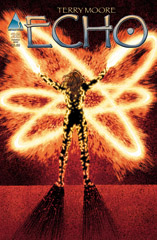
[READ: December 15, 2010] Echo #25 & #26

These next two books in the series are really fantastic.  Issue #25 brings the confrontation with Cain to a head.  It almost comes too quickly–there has been so much lead-up to it that when they finally meet the confrontation is (necessarily) brief and explosive.  They finally meet at the top of a mountain (where yet another really gruesome act is done to someone–although really it pales to what happened to the guy who was practically a skeleton).  The intensity of the confrontation, and the excitement of the denouement made me think that the series was just about to end.

But them comes Issue #26 in which the final panel changes the entire game!  (more…)

Read Full Post »

SOUNDTRACK: CAIFANES-El Silencio (1992).

Caifanes was another of the Rock en Español bands that I bought back in the 1990s.  I bought two of their records, El Silencio and El Nervio del Volcan.  In retrospect I’m not sure why I bought two from Caifanes and only one from Tijuana No! as I find Tijuana No! to be much more satisfying overall.  But El Silencio is a fun album as well.

As with a lot the rock en Español bands, the album starts with a really heavy track.  “Metamorfeame” is a raging, screaming punk blast.  But it’s followed by a Latin-infused mellow second song “Nubes” with a great weird guitar solo.  “Piedra” rocks, and Saul Hernández’ voice soars over the heavy bass work (he was meant for stadium rock).  It also ends with a little mariachi music as a coda.

“Nos Vamos Juntos” showcases some more great guitar work and “No Dejes Que…” practically sounds like the Alarm or some other stadium rock band.  “El Comunicador” is an interesting understated minor key song with interesting production.

The production is by Adrian Belew and you can tell as it seems very much like what I know of Adrian Belew: gleaming and bright and well polished.  And, like Belew himself, the album jumps from style to style.  Depending on your tastes, this is either great or tiring (and sometime both).

Wikipedia tells me that this album is considered one of the most influential albums from the most influential band to come out of Central Mexico.  Well how about that.

[READ: December 16, 2010] Amulet

This book is an extended version of an episode in The Savage Detectives.  InDetectives, Auxilio Lacouture has a ten-page story in which she was hiding out in the bathroom of UNAM (Universidad Nacional Autónoma de México) in 1968 during the military takeover (in real life, this is known as the Tlatelolco Masscare).  She hid in the bathroom for thirteen days, reading and writing poetry (Auxilio is the mother of Mexican poetry).

The episode in Detectives was  pretty exciting recollection.  She was in the bathroom when the soldiers broke in.  She could see the tanks outside and she could hear the gunshot.  So she hid with her feet in the air while the soldiers searched the premises.  She promised herself she would not to make a sound until she was discovered. So she read poetry and wrote poetry on the only paper available. (more…)

Read Full Post »

SOUNDTRACK: ART BRUT Live from the 9:30 Club, November 29, 2007 (2007).

I’ve really enjoyed Art Brut’s two albums.  They are funny but they are not jokey.  They also rock really hard with wonderful, angular punk.

Sometimes I’ve felt the albums are a little bit…shall we say…perfect.  They are very tight and polished on record (which actually serves the records very well).  But I wondered what a live show would be like for them.

And I’m delighted to say that their live set is more shambolic than their records.  The shambolicness suits them very well, because they are clearly a lot of fun live.  As you might expect from the vocals on the records, Eddie Argos is practically a ringleader on stage.  He has playful funny banter; I love the way he introduces almost every song with “Are you ready Art Brut?”

I was also quite delighted with the way he introduced every band member with a song that he was the first musician on.  It allowed for spreading out the various interruptions of the music and really kept the flow.

Some of the guitar bits sound muddied (and I have to admit the recording level is a little lower than I would like–or maybe that’s the radio I’m playing it out of), but again, that adds to their punkier stylings.  But my favorite song “My Little Brother” sounds like it’s on fire!  The band plays it magnificent and the bass sounds amazing.  I was surprised that my second favorite song “Formed a Band” was more or less tacked on as a segment of the final track, but it works well in that location.

Perhaps the most surprising thing was the “drum solo” at the very end.  I kept expecting Argos to tell him to knock it off.  It’s a great live show.

The end of the show includes an interview with Eddie Argos and the singer from The Hold Steady (Art Brut opened for them on this tour).  The questions are mostly for The Hold Steady, but there’s enough or an Art Brut fan to keep listening all the way through.

[READ: December 15, 2010] “Agreeable”

So this is the final work that I printed out from the New Yorker by Jonathan Franzen.  And this means that I am done reading short Franzen works (actually, there’s one other piece that was available in Harper’s but I’m going wait on that one for a while).  Starting sometime in 2011, (although not right away) I’m going to begin reading his novels.

So, I assume this story is also excerpted from Freedom.  It concerns the same character as in the previous short story, “Good Neighbors” although she is not yet Patty Berglund.  She is still Patty Emerson and is a jock in high school.  Tying this in to yesterday’s story, Patty was an outcast even in her own family.  She was taller than all of her siblings and was much more athletic and aggressive.  Her mother had little time for her (she loved her artsy other daughters) and her father, a defense attorney, was often too busy for her.

The interesting set up of the story comes when we see her as a young girl.  She is, as mentioned, an outcast in her own family, and it seems that her father is quite a joker, often at her expense.  As a defense attorney, her father deals with many clients who are guilty and he is not above mimicking them to his family.  And this carries over when it comes to Patty as well.  He mocks her intellectual gaffes in front of everyone. And it’s unclear whether this is an odd way of showing love or just a nasty thing to do (well, it is nasty, but it’s unclear if it’s a clumsy attempt at affection). (more…)

Read Full Post »

SOUNDTRACK: DUDLEY MOORE & PETER COOK-“Bedazzled” (1967).

I learned about this song when John Lydon was a DJ on NPR’s All Songs Considered.   His collection of songs included Black Sabbath’s “Paranoid,” Jimi Hendrix’ “All Along the Watchtower” and Planxty’s “The Well Below the Valley.”  The other song was this Dudley Moore/Peter Cook number from the movie Bedazzled (the Brendan Frasier movie was a remake which Lydon says was a travesty compared to the original).

This song is wonderfully bizarre.  It’s got a groovy 60’s beat with female singers seducing Peter with their come on lines.  And after each line from the women, Peter deadpans a line about how disinterested he is.  As Lydon says, the best couplet is:

THE GIRLS: You drive me wiiiiild
PETER: You fill me with inertia.

Obviously the song is comic, but the music is cool and slinky and fun in a completely retro sort of way.   I’m only disappointed that I’ve never heard it before.  Thanks Mr. Rotten.  Oh, and I see the soundtrack just got a reissue!

Hear the song (and all of Lydon’s) DJing here. http://www.npr.org/templates/story/story.php?storyId=126559893

[READ: December 9, 2010] “On the Show”

I don’t really care about carny stories (and yet I’m surprised by just how many there are).  But this story was interesting because of the twist that sucked me into the carny.

The story opens with the narrator describing his carny boss.  And what I loved about this set up is that the carny boss is a tough-guy, braggart, asshole.  [He knocked out Steve Martin on the set of one of his movies].  And the stories are wonderful precisely because we hear them through the ears of the narrator who thinks this guy is full of shit.  I realize that I dislike tough guy stories in general, but you could tell me a tough guy story and have the guy he’ talking to say he’s a jerk and I’ll think it’s okay.  Call me the anti-Hemingway.

We flashback to how this narrator, who we don’t know all that much about, got here.  Turns out the flashback is about twelve hours ago (which is also pretty funny).  The narrator is a young college kid who was home for the summer.  His stepfather really doesn’t like him and they have a huge fight (which gets physical) so he runs off and, yes, joins the circus. (more…)

Read Full Post »

« Newer Posts - Older Posts »