Feeds:
Posts
Comments

Archive for the ‘Violence’ Category

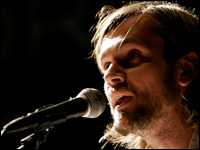
SOUNDTRACK: FUJIYA AND MIYAGI-Live at the 9:30 Club, Washington, DC April 30, 2007 (2007).

I was turned onto Fujiya & Miyagi through a sampler CD from WXPN (the song “Ankle Injuries” was included).  “Ankle Injuries” has such a simple template.  It’s an electronic song, full of washes and beats–nothing too high or low–with the repeated lyrics (sort of whispered) “Fujiya, Miyagi.”  I kind of forget that there are other lyrics, since that “chorus” is repeated some seventy times during the song.  The rest of the lyrics are also whispered (but mixed loud so they are audible) and are sort of weird, rambling nonsense.

It’s slick and catchy and with the simple lyrics, it’s really easy to sing (or whisper) along.  The problem is that pretty much all of their songs (in this live NPR show, anyhow) sound like this.  That’s dismissive and not entirely true, but they all tend to follow this similar template: smooth, catchy keyboard melodies and whispered vocals.

The thing is that it works quite well, and the show is kind of fun.  And yet, it’s also rather repetitive.  This seems to be the kind of show that I need to be in the mood to enjoy.  It also makes me glad I didn’t buy the album.  I think little doses are enough for me.

This concert (available from )

[READ: April 1, 2011] “Where Are the Men”

This is  another story that, once I was about halfway through, I remembered reading the first time.  This one in particular was quite memorable because of the middle section.  But let’s go back to the beginning.

As the story opens, a woman is talking, out loud, to herself.  Her name is Eye-Dora; she’s in a dark basement and sees searchlights flooding into her room.  But she herself is dark: her skin is dark, her house is dark so she feels safe.

She is from Barbados, a single mother (her husband left many years ago and is now dead) with a son who wears a robe and now goes by a muslim name.  Eye-Dora is pissed.  She is pissed at the state of black men in Toronto.   She is pissed that a black man is going through her garbage and leaving it strewn all around.  She is pissed that a black man was killed for wandering down the street claiming to be Jesus.  She is pissed. (more…)

Read Full Post »

SOUNDTRACK: FIREWATER-Performance from KEXP, July 3, 2008 (2008).

I loved Firewater when their first two albums came out and I even saw them once open for Letters for Cleo (a great show by both bands).  Then I more or less lost touch with them.  And it turns out that lead Firewater dude Tod A. had been out of the country for a while.

The interview (and concert) with them details his distaste for the Bush administration and his decision to get the hell out of the country for a while.  So he spent three years traveling around India, Turkey, Pakistan and then returned with this album.  I wasn’t aware of any of that, or even that they had a new album out in 2008.

Firewater had a very cool (and reasonably original) sound when they came out back in 1996.  They had a middle eastern vibe even back then which they blended nicely with theatrical pomp and a whole lot of punk.  They threw everything together into a rollicking good time (even if the lyrics were very dark indeed).

The 2008 album The Golden Hour seems a bit more upbeat (touring the world did him good) although it hasn’t changed the overall style of the music.  This live set includes several new musicians for Firewater, and their array of skills (and instruments) is great.  But the most surprising thing to me is how friendly and jovial Tod A. is.  As I said, I knew the band as being kind of angry, so hearing him be fun (and inviting the KEXP volunteers to sing gloriously chaotic backing vocals on “Beirut”) is really cool.

In total the band does four songs: “Hey Clown,” “Electric City,” “6:45,” and “Borneo.”  I think the biggest surprise for me is how short the songs are.  Not punk short, but more like pop song length.  And super catchy as well.

It’s a welcome return to a great band.  Although I see they haven’t released anything else since 2008.

[READ: April 4, 2011] “The Principles of Exile”

This was a fascinating and very sad story which had multiple layers and went in many unexpected directions.  It was really great.

As the story opens, Manny is sent to get some “special” cheese from a shop.  The cheese is called halloumi, and the best kind is made in a bucket behind their counter.  He is sent for this cheese because his mother is making a special dinner.

The dinner is in honor of Monsieur Sarkis’s new book.  There was a fatwa leveled against Sarkis for his previous book.  And that previous book (naturally) went on to be a best seller.  Well, Manny’s father had the publishing rights to the book (normally his publishing house was on the verge of bankruptcy, so a huge best seller was a big deal for them).  They didn’t even mind the fatwa.

Until it started to affect them personally. (more…)

Read Full Post »

SOUNDTRACK: BATTLES-“Ice Cream” (2011).

My friend Lar told me about Battles way back in 2007.  I listened to the concert he sent me, and it was great. But my memory of the band was that they were really heavy (the drummer was in Helmet and Tomahawk for cripessakes).

But they’re not so much heavy as noisy and crazy.  And this track is a head-spinning amalgam of keybaords, unsettling rhythms, processed guitars and singing from Argentinean techno producer Matias Aguayo.  The lyrics sound like they are not English, but they are (with heavy effects on them).

The song is weird, indeed. But after just one listen, I was totally hooked.  It’s catchy and bouncy and very sunny and it’s a real joy to listen to.   I absolutely must go back and check out their debut Mirrored.

Listen at NPR.

[READ: April 28, 2011] Five Dials Number 6

Five Dials Number 5 was an excellent issue that I enjoyed immensely.  They followed it up with Number 6, which deals with a subject that I was very passionate about in the early 90s: censorship/obscenity.  When I was in high school and college, the PMRC was the big bogeyman for advocates of free speech (of which I am one).  I still advocate passionately for freedom of speech (now that I’m in a library, the issue can be part of my daily life), but it seems like there are so many more important issues in the world, that stickers on a record seem kind of silly.

Nevetheless, as this issue reminds us, those who control what is said control what we hear.  And that’s true for music and books, as well as our everyday news.  So, free speech should never be taken lightly.  Although this issue looks largely at obscenity in England, they also pull up some good information from Jello Biafra as well.

CRAIG TAYLOR-A Letter from the Editor: On John Mortimer and Obscenity
John Mortimer appears later in the issue. He was the lawyer who defended Lady Chatterly’s Lover against accusations of obscenity.  And Taylor points out that Mortimer’s attitude was that he “understood the silliness of censorship.”  And with that attitude, he was able to work to convince juries of that silliness.  The rest of the issue looks at important cases of censorship over the years, from The Dead Kennedys to NWA (it’s nice to be reminded about how “dangerous” they were when they came out).  He also laughs at the lame attempts at putting adult content on network TV (Fudge you!). (more…)

Read Full Post »

SOUNDTRACK: PJ HARVEY-Live at the Warfield Theater, San Francisco, April 14, 2011 (2011).

NPR was given permission to share this PJ Harvey concert.  However, they were only allowed to share about half of it.  The show is fairly short to begin with (about 75 minutes) but the downloadable portion is barely 40 minutes.  It turns out that NPR was given the rights to all of the songs from the new album, Let England Shake.

Now, I have no idea how things like this work, why they are only given access to these songs as opposed to the other ones, or why an artist (or management) would not let her fans hear the ten or so other songs she played that night.  Legal restrictions are weird and usually stupid. But as I’ve mentioned before, you shouldn’t complain about free stuff.

So, what we get here is a spliced together concert (it sounds seamless, although they have removed all of the banter (if there was any)).  The album is played in its entirety (although we were not given “Written on the Forehead” which happens to be the song they are playing the most on the radio here), but it’s not played in order.  It was also interspersed with older songs “The Devil” and “Silence” from White Chalk, “The Sky Lit Up” and Angeline” from Is This Desire, “Pocket Knife” from Uh Huh Her, “Down by the Water” and “C’mon Billy” from To Bring Her My Love, (I’d like to hear how she handles the older songs, now that’s she’s singing primarily in the higher register).  And, “Big Exit” from Stories from the City.

It’s pretty clear that Harvey is no longer the young woman who made those first couple albums.  And she sounds strong and confident here.  It’s a great set; the autoharp never sounded better.

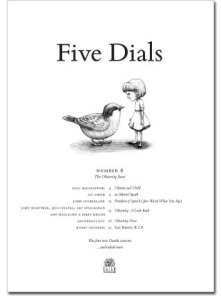
[READ: April 20, 2011] Five Dials Number 5

I have been enjoying all of the Five Dials, but this issue is easily my favorite so far.  The “theme” of this issue is translation.  Translators are the unheralded workers in literature, and while I have been trying to give them credit in my posts, I don’t always pay them enough attention (except when a translation is awkward or clunky).

But in addition to the theme (and the really cool interviews with some translators, I thought the fiction was outstanding and I loved Alain de Botton’s Advice column.  The whole issue was great. (more…)

Read Full Post »

SOUNDTRACK: BUKE AND GASS-Tiny Desk Concert #95 (December 6, 2010).

Buke and Gass’ album Riposte made the NPR’s 50 Favorites of 2010.  I listened to a track and liked it but I wasn’t blown away by it.  Nevertheless, I wanted to check out this Tiny Desk concert because I was sure it would be interesting.  And so it is.  And it makes me like them infinitely more–enough to check out their whole album.

The initial attraction to Buke and Gass is their homemade instruments (and if you watch the video, you can kind of see how they work, except I want to know more details (there must be foot pedals of all kinds to make these exquisite sounds)).  Arone Dyer sings and plays a modified baritone ukulele (who even knew such a thing existed) and makes incredibly squalling, cool effects come from it.  Aron Sanchez plays a modified guitar/bass hybrid (there’s bass and guitar strings-the bass are filtered through one amp, while the guitar goes through another).  And someone is playing a tambourine and a bass drum (I think it’s Sanchez with his (unseen) feet).

The songs are weird but incredibly catchy.  Dyer’s voice is wonderful, and perhaps the most amazing thing is that she seems to be playing guitar harmonies to complement her voice and it makes it sound like there are two singers.  It’s also amazing how much noise they make with these two instruments.

The whole set is wonderful and if they can do this on live, I can’t wait to see what the can do with studio magic. Now, just what the hell does their name mean?

[READ: April 15, 2011] “Why I’m a Pacifist”

I enjoyed Nicholson Baker’s earlier works quit a bit, but I have missed a lot of his more recent releases.  Nevertheless, Baker is unafraid of controversy and I enjoy reading what he has to say.

In this article he defends his belief in pacifism. What’ surprising to me is that in his biographical introduction he talks  about his earlier life as a red-blooded Young Republican.  I never would have figured that Baker has such a past, but he evidently did. When he grew out of that phase, he opened himself up to the possibilities of pacifism (which his wife thoroughly supported). (more…)

Read Full Post »

SOUNDTRACK: PJ HARVEY-Uh Huh Her (2004).

After the sort of mellow, almost commercial release of Stories from the Sea, PJ Harvey throws the fans a left turn once again with Uh Huh Her.  It’s a heavy, raw album although not raw like Dry was.  It seems  simpler, somehow.  And I think it’s with this disc that you realize that every PJ Harvey record is going to be different.  It was apparent that she had a trajectory on those first few discs, but this one changes everything, and she proves that you’ll never know what’s going to come from her.

“The Life and Death of Mr Badmouth” has a very simple blues riff with kind of chanting (and occasional creepy backing vocals) by PJ.  While “Shame” adds more texture (melodica?) and some more washes of sound.  “Who the Fuck?” is a wonderfully vulgar and raw track with brutal guitars and overly loud vocals.  “Pocket Knife” is a buzzy but quiet track which feels like a demo (the guitar even seems out of tune), while “The Letter” has a great fuzzy guitar sound and a cool melody.

“The Slow Drug” is one of several slower pieces.  As with many of her quieter stuff this does nothing for me, although it’s a nice change on the disc.  “No Child of Mine” is a brief acoustic number.  It feels more like an excerpt or a transitional song than any actual song (being only a minute long).  It leads to the rocking “Cat on a Wall.”  “You Came Through”  mixes things up very nicely with a heavy percussion.  The effects in the song are really captivating.

“It’s You” is a slow piano-based song, while “The End” is a brief instrumental (more melodica).  And “The Desperate Kingdom of Love” is a dark ballad.  The oddest track is “Seagulls” which is a minute of actual seagulls squawking…an unusual addition for any disc.  The album ends with “The Darker Days of Me & Him.” It’s a quiet acoustic song which shows just how many different style she’s willing to experiment with even on one disc.  Even though to me this is a raw rocking disc, there are still a number of acoustic tracks as well.

This album feels like some kind of psychic purge.

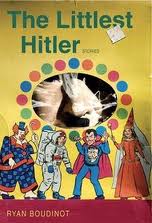
[READ: March 31, 2011] The Littlest Hitler

I picked up this collection of stories because I enjoyed Boudinot’s story in the BlackBook collection very much.  I didn’t realize that that story was in fact part one of a two-part story (although part two bore no relation to part one, as you’ll see).  The story in BlackBook was funny and dark, but it didn’t prepare me for just how dark these stories would get.  And for the most part, it seemed like the darkness came at the very end; a surprise, a shock.   I admit i grew a little weary of the device by the end of the collection, although not all of the stories employed it, so there was some diversity. (more…)

Read Full Post »

SOUNDTRACK: SURFER BLOOD-Live at SXSW (2010).

I really enjoyed Surfer Blood’s album Astro Coast.  There was something familiar about it, yet it never aped any sound exactly.  It’s a fun collection of upbeat almost-summer music.

This live set is a great representation of the band.  They don’t break from the CD all that much, but the band is lively and generous.  They play 7 songs, all of them fast and fun (they say that one song is going to be slow, but it seems to wind up as fast as the rest-and someone in the crowd shots “Play another slow one”).

There’s some good banter and the audience is very appreciative.  It’s great set and worth checking out even if you don’t know them yet.

[READ: March 28, 2011] “Pericles”

This story is set in Greece in 1941.  Bulgarians have occupied the land.  And as the first few paragraphs explain, a thief has come to steal some goats.  The goatherds catch the man (a Bulgarian) and kill him.

When the Bulgarians find out, they take it very seriously.  The army travels to the village and rounds up every single male and all of the young females and intend to shoot them in the center of the city.

The story pulls back to explain that during the occupation all of the men were forced to do labor.  This even includes Pericles, the strongest man in the village.  Before the occupation, he was a helpful giant, able to throw four bundles of hay at a time.  Of course, Pericles was also fearsome, and if he got drunk (which he did from time to time) everyone in the town hid until he sobered up (except for his diminutive wife who could calm him down with a look). (more…)

Read Full Post »

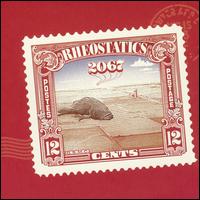
SOUNDTRACK: RHEOSTATICS-2067 (2004).

This was the Rheostatics’ final release.  I’m not sure if they knew this would be their last disc, but it kind of feels like they are throwing everything they can into it.

It opens with a delicate song from Martin which reminds me of Jane Siberry (the “row upon row” section).  Although at about 4 minutes it starts rocking out.  It’s a kind of meandering song, which is odd to open an album with.

It’s followed by “Little Bird Little Bird” a great folky song form Bidini.  But the disc really come alive with “Marginalized” a song that reminds me in some ways of “Horses,” as it is rocking and a little twisted (it seems surprising that it came from Tim Vesely).  It’s got some great guitar and an impressive keyboard solo (!) from new member Michael Phillip Wojewoda.

“The Tarleks” follows (with some fun frog noises). It opens slowly (as Martin songs tend to do) but once it really takes off, its got a great riff with his wonderful dramatic pauses and really funky sound from the bass/keyboards.  Then we get the wonderfully odd “Power Ballad for Ozzy Osbourne.”  It’s a kind of joke (but not really) about rock performers aging gracefully.  Bidini gets a bunch of songs on this disc, and here he gets two in a row, with the bizarrely wonderful “I Dig Music.”  The subtitle is “The Jazz Animal” and it tells you a lot about the song…it is indeed a kind of high-octane jazz.  But it has many different segments (and a lyric that references Squarepusher).

“Here Comes the Image” is a 6 minute track from Vesely which sounds very much like his more mellow tracks.  I’m not sure his tracks belong in the middle o f a disc because they tend to really bring the momentum to a halt.  Although it is a pretty song, it’s quite mellow (the organ solo at the end is pretty sweetly retro).  It’s followed by the five-minute slow instrumental “Who is This Man and Why is He Laughing?”  It really feels like an album ender.

So when “The Latest Attempt on Your Life” comes in, it revitalizes the sleepiness that those two songs imbue.  This track has the wonderful repeated chant “Everyone hates you, you sing like a woman”).  “Polar Bears and Trees” follows and it’s another kind of crazy song from Bidini.  It has such simple verses but the chanted “hey hey ho ho” rocks hard and is wonderfully fun.  (The lyrics are clever too).

Vesely returns with the beautiful, wonderfully catchy “Making Progress” which has another great retro keyboard solo at the end. The final track “Praise This Mutilated World” is one of the most beautiful songs in their output.  It starts as a fairly simple acoustic track (Bidini knows a good melody).  At about two minutes in, the band joins in with amazing harmonies.  The quiet parts keep coming back only to be overwhelmed by the harmonies once again.  The last two minutes are a spoken section.  It goes on a bit long, but is redeemed by another gorgeous chorus.

There’s a bonus track which is a very electronic version of  “Record Body Count.”  So this disc is definitely overly long in some places.  There are some great parts to the disc, but it feels like it could have used a good editor.  Nevertheless, since it’s the band’s final release, respect is due.

[READ: March 15, 2011] “Water Spider”

This very short (three-pages) story turned very dark rather quickly.

It opens with an African man, Bokarie, settling into his life as a convenience store clerk in Ottawa.  We learn that he was granted asylum, and that he has the scars to prove it.  He was quite nervous about leaving his country, and he still puts cinder blocks behind his door, to discourage uninvited guests.

At the same time, the action of the story concerns the accidental drowning of Caitlin, a young girl who presumably got too close to the creek when it overflowed.  The town is obviously distraught that one of their youngest and most innocent kids was killed, and they are planning a memorial service.  They are encouraging everyone to wear pink to the service and are even hoping to get a wreath put on the town’s crest.

Bokarie looks on this entire scene with a kind of bemusement.  His life in Africa was full of death.  Most of it horrifying.  So he seems somewhat unsure of what to make of the town’s outpouring for one lost child.  And then the story slowly reveals a shocking truth.

The truth is NOT that he killed Caitlin.  That’d not how the story is going (I didn’t really think it would go there, but it was a possibility).  Rather, the truth comes out about Bokarie himself, and his life back in Africa.  And it’s frankly horrible.

As the story draws to a close, Bokarie makes a decision that is going to impact the community.  It’s a little unclear what his motivation is, but it opens so many possibilities, that it really brings out a whole new realm to the story,

In some ways this story reminded me of Damon Galgut’s “An African Sermon (from The Walrus July/Aug 2004)  which also had an African character whose past has a hidden element and which turns out to be much darker than originally laid out.

Read Full Post »

[WATCHED: March 19, 2011] Until the Light Takes Us

Soon after finishing Lords of Chaos, I heard a radio interview on the Sound of Young America with the directors of this movie (which is about the same black metal scene in Norway).  I finally got around to watching the film, and I’m really glad I did.

It covers much of the same terrain as Lords of Chaos (although the book covers much more stuff), but what’s cooler about the movie is actually seeing these guys talk to you.  And seeing how “normal these guys are.”  The two “stars” of the movie are Fenriz from Darkthrone and the main man in the scene, Varg Vikerens.

In the radio interview, the directors talked about the way they structured the film. And, I’ll reveal a bit of that.  So if you don’t know this particular fact, I’ll give the next line as a spoiler alert:

SPOILER ALERT: (Highlight the blank space to read it) Varg is in jail for murder and for the burning of several churches and was sentenced to 21 years in prison.

They don’t reveal this information until very late in the film.  So when we first meet Varg, he is a clean cut, handsome man in his late 30s.  He is in jail (although not explicitly stated, it is clear he is in jail).  And he is talking about the Norwegian black metal scene.  Vikerens formed the band Burzum in 1991.  He later joined the band Mayhem.

Mayhem is at the center of the black metal controversy.  The singer of Mayhem, Dead, killed himself with a shotgun.  The guitarist Euronymous found him and took pictures of him (one of which was used as a bootleg album cover–ewww) before calling the police (and it is believed he took some “souvenirs” from the scene).

Vikerens talks about growing up in idyllic Norway, which is peaceful and beautiful–but he undermines all of that by talking about the fairly typical suburban ennui that kids face.  Of course, in Norway it surfaced in violence and death.   Later, he talks about Christianity and how when it came into Norway there was no respect for the Norwegian culture.  Christians built churches on top of ceremonial grounds.  And it seems that he and his mates became very interested in Norwegian folklore and avenging the wrongs done to it. (more…)

Read Full Post »

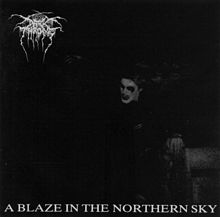
SOUNDTRACK: DARKTHRONE-“Kathaarian Life Code,” (1992), “Sacrificing to the God of Doubt” (2004), “Canadian Metal” (2007).

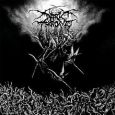
After watching Until the Light Takes Us, I wanted to check out some of Darkthrone’s music.  According to their Wikipedia page, over the years the band who pioneered black metal has morphed away from the sound.  They’ve added elements of punk and speed metal to their bludgeoning sound.  In the movie Fenriz says that he listens to all kinds of music and is very open-minded.

Kathaarian Life Code” is a ten minute dirge of black metal.  It opens the band’s second album (considered to be a black metal classic) with chanting and guttural spoken words.  Then it blasts forth with the jackhammer style of drums that is now standard in black metal.

It slows down from time to time, allowing for the really heavy parts to blast through the chaos of the fast parts.  It’s pretty intense and not for the faint of heart.  You can hear occasional guitars screaming through the din, but the production is intentionally murky, dark and noisy.  As they say in the movie, the bands intentionally recorded on the shittiest equipment they could find.

Sacrificing to the God of Doubt” is a later song, taken from what is considered their final album in the black metal style.  The band was turning away from the traditional black metal sound, and there are elements of punk (guitar riffs that are audible, and a sound that is less bass heavy) present.  And the production, while still mired by noise is relatively cleaner.

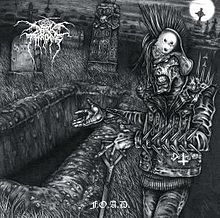
Canadian Metal” is from their third most recent album, after the shift from black metal was more or less official.  It sounds more like an early death metal song.  There’s low tuned notes, audible vocals (growled, but you can actually hear words) and a kind of headbanging aspect to it.  The album is called F.O.A.D. which was a song by Venom (and others, obviously), and this track reminds me of Venom somewhat.  I wouldn’t say that the band has sold out because there’s no way anyone is playing this on the radio, but it’s interesting to see how a band has managed to change things up and add new elements to its sound even though they were the forerunner and grandfather of a scene.

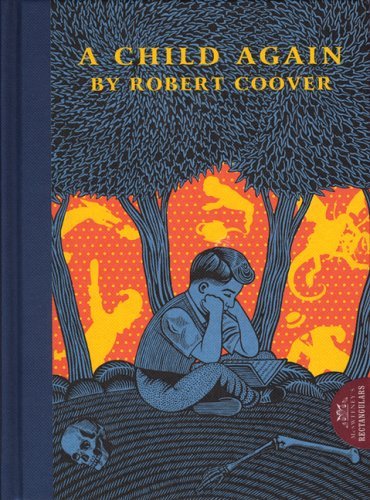
[READ: February and March 2011] A Child Again

This is a collection of short stories from Robert Coover.  There is a kind of theme throughout (most of) the stories about returning to childhood.  But the overall sense is one of despair, sadness, pointlessness and sex.  Lots and lots of sex.  And the sex is usually as vulgar and nasty as the tone of the book suggests it would be.  It’s a little off-putting, actually.

I was planning to say that I didn’t like this collection at all because I really didn’t enjoy the first half-dozen or so stories.  I continued because Coover has a great reputation that I didn’t want to give up after a few misfires.

The real disappointment came because the stories seem so promising: many of them are a kind of retelling of classic fairy tales that looks at “what happened afterward.”  However, and this was true for almost all of them, Coover tries to do two contradictory things with the stories.  He is playing with fairy tales but he is also writing stories that are completely unlike fairy tales.  By that I mean, Coover’s stories are long and very detailed, they bring far too much information to the story.  And a fairy tale is almost by definition short.  I mean, “Puff the Magic Dragon” is a song that’s about five paragraphs long.  But Coover’s “Sir John Paper Returns to Honah-Lee” is 26 pages long.  So instead of playing with the original, it feels like an original story that uses someone else’s characters.  It’s unsettling and unsatisfying.

It’s also not very funny.   And I’m not sure fit’s supposed to be.  But with a title like “Sir John Paper Returns to Honah-Lee” you expect the funny.  And there are funny moments.  I mean the whole premise is that little Jackie Paper has grown up into Sir John Paper.  He’s now an old Knight and he is sent to slay the dragon (Puff) who is plaguing the city.  Even though that is a tragic story, it is also inherently humorous.  And there are laughs when they reunite.  But it gets so bogged down in details, that the essence of the story seems to get lost.  Perhaps I’m just disappointed because it (they) turned out so unlike I wanted them to be. (more…)

Read Full Post »

« Newer Posts - Older Posts »