Feeds:
Posts
Comments

Archive for the ‘Violence’ Category

SOUNDTRACK: THE FLAMING LIPS-“Dinosaurs on the Mountain” (2020).

After a series of much harsher, darker albums, The Flaming Lips’ new record, American Head (due out next month) promises a much brighter, warmer experience.

They have already released a few singles from the new album, like this one.

“Dinosaurs on the Mountain” starts with a pretty, almost childlike musical synth melody.  Wayne Coyne’s (older and more raspy) falsetto voice floats above the music as he sings “I wish the dinosaurs were still here and now.  It would be fun to see them playing on the mountain.”

The song builds with slow drums and acoustic guitars as the it shifts to a large bridge with appropriate soaring backing vocals.  The song also has a suitably vibrato-filled guitar solo.  In other words, it sounds a lot like classic Flaming Lips.

This song (and album) is meant to hearken back to The Soft Bulletin, which it does, somewhat.  But the biggest difference is that the whole song feels like it’s hiding under an extra layer of distortion–like they couldn’t escape the production style of their latter albums.  Bulletin was very clean, and I do rather miss that cleanness on this lovely song.

[READ: July 20, 2020] “Jack and Della”

I had read an excerpt from this series of books a couple years ago.  I was really interested in that first excerpt.  Although this one I found a little less interesting.  Possibly because the main character of this story (who is briefly in the other excerpt) is down and out.  And without having seen how he got that way (which I think the other book showed), it’s hard to get fully into this character.

But he certainly comes across as an interesting fellow and knowing his past makes him somewhat more compelling.

Jack (full name John Ames Boughton) is the son of a preacher.  Most of his father’s sermons were directed at Jack, who was not always the best boy he could be.

Jack didn’t take much away from his father’s sermons, but the one about always having good manners did stick with him. So when a young black lady dropped some papers on the pavement, he crossed the street to help her gather them.  Her name was Della Miles. She thanked him and called him Reverend because of the black suit he was wearing (he had bought it for his mother’s funeral and was about to return it. (more…)

Read Full Post »

SOUNDTRACK: LUCINDA WILLIAMS-Tiny Desk (Home) Concert #55 (July 27, 2020).

I don’t really like Lucinda Williams.  Her voice really bugs me. I don’t know if she always sang like this but this sort of drunken drawl just hurts my head.

I know that she’s a legend and everyone loves her, but I have a hard time getting through her songs.  And that’s a shame because her lyrics are great.  Well, maybe not her lyrics, but her sentiments.

Because the lyrics to “Bad News Blues” are not great.  It’s a pretty standard blues song in which she lists all of the bad news that she has around her.

Bad news on my left
Bad news on my right
Bad news in the morning
Bad news at night

The only thing interesting about this song really is the bluesy lead guitar work from Stuart Mathis.  Otherwise, it’s a blues song.

“Big Black Train” is a slower bluesy song about not wanting to get on board the train that’s barreling towards us.  Wow, her singing the chorus really hurts my ears.

“You Can’t Rule Me” is on the radio a lot and I’ve been turning it off when it comes on.  It’s obviously a song of empowerment but I can’t stand the drawl of her voice.  Although once again Stuart’s lead is pretty tasty.  In fact the guitar work from both of them is great throughout.

The set ends with “Man Without A Soul” and this is the song that made me think more highly of her.  Musically the song isn’t much.  In fact, it sounds pretty close to “Bog Black Train” in the chorus.  But its’ the words that are impactful.

It’s pretty clear who this song is about:

You’re a man without truth
A man of greed, a man of hate
A man of envy and doubt
You’re a man without a soul
All the money in the world
Will never fill that hole
You’re a man bought and sold
You’re a man without a soul
You bring nothing good to this world
Beyond a web of cheating and stealing
You hide behind your wall of lies
But it’s coming down
Yeah, it’s coming down
You’re a man without shame
Without dignity and grace
No way to save face
You’re a man without a soul

She says she wrote this to shake people up and wake people up.  I don’t know if it will do either, but I hope some people’s minds are changed by it.

[READ: July 31, 2020] “The Lottery”

This issue of the New Yorker is an Archival Issue.  It’s weird to me that at a time of unprecedented everything, the magazine would choose to have virtually no new content.

Except that the articles in it are strangely timely.

Calvin Trillin (he was writing in 1964?) was on a flight that Martin Luther King, Jr. was on and he overheard a white preppy-looking post-college boy who disagreed with King (believing that King was advocating violence and was therefore unChristian).  It was a remarkably peaceful conversation even if the boy never saw King’s point of view.

The second article is about Black Lives Matter with the subtitle “A new kind of movement found its moment.” What will its future be?”  But this article was written in 2016 and it ends “Black Lives Matter may never have more influence than it has now.”  How wrong that was?

And then there is the Shirley Jackson story, originally written in 1948.

I read this story in sixth or seventh grade and it has stuck with me all of these years.  I remember being rather blown away by it in school, thinking it was one thing and then realizing it was something else entirely.

I have not read it since. I felt that I didn’t really have to read it because it stuck with me so much.  But I’m glad I did re-read it, because although some details were still there, I had forgotten some pretty intense stuff.

(more…)

Read Full Post »

SOUNDTRACK: A moment of silence (July 30, 2020).

[READ: July 30, 2020] “Together, You Can Redeem the Soul of Our Nation”

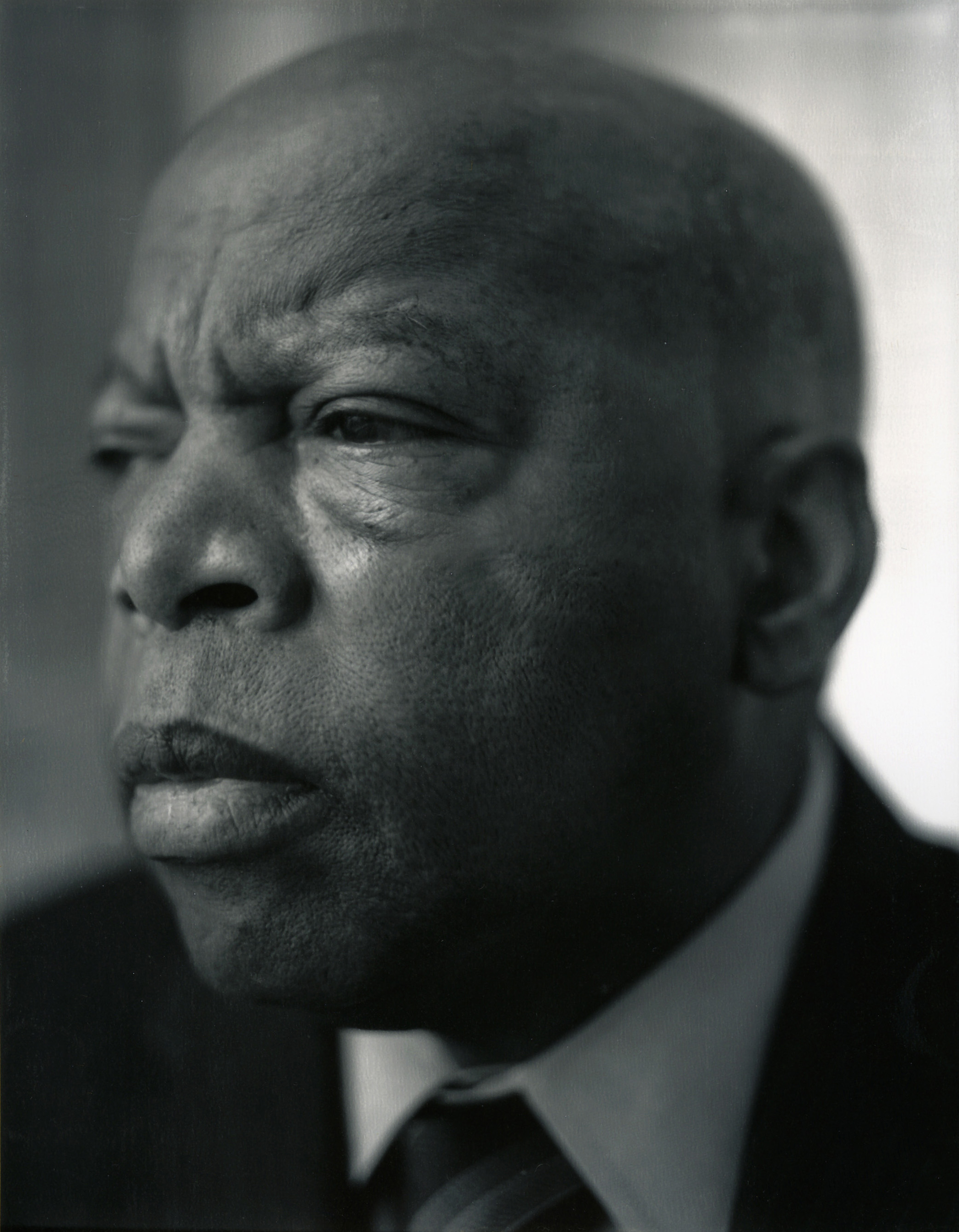
Congressman John Lewis is one of the most important civil rights leaders of the 20th and 21st century. His graphic novels March are required reading.

Lewis died on July 17.  He had the presence of mind to write this essay shortly before his death and asked The New York Times to publish it on the day of his funeral.

I am presenting it here in full because it is so full of hope, so full of love and so meaningful, that everyone should read it.

~~~~

While my time here has now come to an end, I want you to know that in the last days and hours of my life you inspired me. You filled me with hope about the next chapter of the great American story when you used your power to make a difference in our society. Millions of people motivated simply by human compassion laid down the burdens of division. Around the country and the world you set aside race, class, age, language and nationality to demand respect for human dignity.

That is why I had to visit Black Lives Matter Plaza in Washington, though I was admitted to the hospital the following day. I just had to see and feel it for myself that, after many years of silent witness, the truth is still marching on.

Emmett Till was my George Floyd. He was my Rayshard Brooks, Sandra Bland and Breonna Taylor. He was 14 when he was killed, and I was only 15 years old at the time. I will never ever forget the moment when it became so clear that he could easily have been me. In those days, fear constrained us like an imaginary prison, and troubling thoughts of potential brutality committed for no understandable reason were the bars.

Though I was surrounded by two loving parents, plenty of brothers, sisters and cousins, their love could not protect me from the unholy oppression waiting just outside that family circle. Unchecked, unrestrained violence and government-sanctioned terror had the power to turn a simple stroll to the store for some Skittles or an innocent morning jog down a lonesome country road into a nightmare. If we are to survive as one unified nation, we must discover what so readily takes root in our hearts that could rob Mother Emanuel Church in South Carolina of her brightest and best, shoot unwitting concertgoers in Las Vegas and choke to death the hopes and dreams of a gifted violinist like Elijah McClain.

Like so many young people today, I was searching for a way out, or some might say a way in, and then I heard the voice of Dr. Martin Luther King Jr. on an old radio. He was talking about the philosophy and discipline of nonviolence. He said we are all complicit when we tolerate injustice. He said it is not enough to say it will get better by and by. He said each of us has a moral obligation to stand up, speak up and speak out. When you see something that is not right, you must say something. You must do something. Democracy is not a state. It is an act, and each generation must do its part to help build what we called the Beloved Community, a nation and world society at peace with itself.

Ordinary people with extraordinary vision can redeem the soul of America by getting in what I call good trouble, necessary trouble. Voting and participating in the democratic process are key. The vote is the most powerful nonviolent change agent you have in a democratic society. You must use it because it is not guaranteed. You can lose it.

You must also study and learn the lessons of history because humanity has been involved in this soul-wrenching, existential struggle for a very long time. People on every continent have stood in your shoes, through decades and centuries before you. The truth does not change, and that is why the answers worked out long ago can help you find solutions to the challenges of our time. Continue to build union between movements stretching across the globe because we must put away our willingness to profit from the exploitation of others.

Though I may not be here with you, I urge you to answer the highest calling of your heart and stand up for what you truly believe. In my life I have done all I can to demonstrate that the way of peace, the way of love and nonviolence is the more excellent way. Now it is your turn to let freedom ring.

When historians pick up their pens to write the story of the 21st century, let them say that it was your generation who laid down the heavy burdens of hate at last and that peace finally triumphed over violence, aggression and war. So I say to you, walk with the wind, brothers and sisters, and let the spirit of peace and the power of everlasting love be your guide.

Read Full Post »

download (62)SOUNDTRACK: NILÜFER YANYA-Tiny Desk (Home) Concert #54 (July 22, 2020).

download (61)Nilüfer Yanya is a pretty mesmerizing singer.  I feel lucky to have seen her live and would like to see her again.

In the meantime, this Tiny Desk (Home) Concert will have to do.

There’s something unique about the way Yanya constructs songs.  And her singing voice is really unlike anyone else’s that I’ve heard.

For this Tiny Desk (Home) Concert, she plays four songs.  Three from her 2019 album and one new one.  All four are different from when she played Tiny Desk last year.

In her previous Tiny Desk Concert and when I saw her live, she had a full band. But for this one, it’s just her guitar and her voice.

For “Heat Rises,” she plays spare guitar lines and quiet chords as she sings in her unique style.  As the song moves along she adds high notes to the chords–fleshing things out in a subtle but effective way.

After performing “Heat Rises,” Nilüfer Yanya pauses to say a few things about herself, something we’ve been asking artists to do for these Tiny Desk (home) concerts.

“One of the things that’s been on my mind a lot is the racism and violence and injustice going on towards Black people and people of color, not only in America but here in the U.K. and all over the world. As a person of mixed heritage” — Nilüfer’s father is Turkish and her mother is of Irish and Barbadian descent — “this issue is something close to my heart.” Nilüfer urges us all to see the hurt being done. It’s the only way forward.

She then plays “Paralyzed,” a song that she says relates to the issue.  She’s never played it live before.  The song has a cool four note chord progression followed by a sinister feeling five note riff.

Bob Boilen writes: “I hear these words so differently now:”

I hear strained screams from Heaven singin’
“save me”
This can’t be okay
Shadow’s lyin’ here
And it’s blocking out the light
(I am paralyzed)

The above part of the song turns musically bright as she sings those dark lyrics.

“Day 7” is the new song.  She sings in a similar style to the one she uses on “Baby Luv” where she sings with an accent or inflection that is impossible to place but is very compelling.  This song also features a simple but unusual riff as she builds the song using all of the neck of her guitar (the chords she plays during the “go go” section are so interesting).

She ends the set with the final track from her album, “Heavyweight Champion of the Year.”  This is the only song from this set that she played when I saw her.  I was blown away by the song when I saw her live because the song mixed quiet and range perfectly.  It’s more subtle here and demands that you listen closely to the words.

[READ: July 20, 2020] “Nobody’s Business”

I’ve wanted to read more from Jhumpa Lahiri for years–she’s yet another writer who I feel like I need more stories from.  And I really liked this story a lot.

The story is written in the third person.  It’s about a woman named Sang.  She is living in Boston, having just dropped out of a graduate program from Harvard.   Sang has two roommates, Paul and Heather.

What was so interesting about the way that it was written is that it seems to be Sang’s story.  She is, after all, the person with all the action.  But by the end of the story it becomes more about Paul.  I thought that shift of perspective was quite engaging.

Sang is Bengali and every so often she would receive a call from a Bengali man who was courting her. These men had heard that she was pretty and smart and unmarried at thirty, so they were trying to arrange something with her.  Sang was never rude to these men.  She even met some of them.  But Sang was very serious about her boyfriend, Farouk, who was presently in Cairo.  That’s not a ruse, she is really dating him. (more…)

Read Full Post »

SOUNDTRACK: LENNY KRAVITZ-Tiny Desk (Home) Concert #52 (July 20, 2020).

Few people are as cool as Lenny Kravitz.  Look at how amazing this room in the Bahamas looks.  Listen to how good his voice sounds (both when he’s singing and when he’s speaking).  When he speaks between songs he sounds otherworldly.

This Brooklyn-raised bohemian rock icon brings us to his home and tropical paradise in Eleuthera in the Bahamas for this visually alluring Tiny Desk (home) concert.

The set begins with the wonderful “Thinking Of You.”  The guitar sound(s) of this song are just amazing. Between Craig Ross’s acoustic echoing notes and Lenny’s strums the room fills with warm echoing guitars.  Midway through the song Bahamian native Yianni Giannakopoulos plays a chill lead guitar with expressive wah wah.  I hadn’t heard this song before, and it’s really terrific.

After wrapping an evocative rendition of “Thinking of You,” a touching song he penned in 1998 about his late mother, Lenny Kravitz imparts what’s really weighing on him during this historic time. “In the midst of all that’s transpiring on our planet right now,” he says, “it’s a blessed time for introspection, more importantly action. … What side of history are you standing on?”

For “What Did I Do With My Life?”, Lenny and Craig step outside (under palm trees) to play this questioning ballad.  Ross gets a really good electric guitar sound out of his acoustic guitar.  Over the course of the song as Lenny asks the title question, it grows more intense with him searching for an answer.

And it’s only fitting that he ended with “We Can Get It All Together,” a message about the power of unity and oneness.

For this final song, all three players are back, this time in front of an expansive (stormy?) sky. Once again Craig’s acoustic guitar sounds huge.  And this time Yianni’s electric guitar has a Middle Eastern twang to it.

I often forget how much I like Lenny’s music.  This was a great reminder.

[READ: July 20, 2020] How to be an Antiracist 

This book has been on the top of everyone’s recommended lists for being proactive about understanding systemic racism.

There’s a lot of reasons people might have for not reading this book.  I’m not talking about people who are racist and simply would never read a book like this, but about decent people who think they are doing their part.  Maybe they’re afraid of being preached at or of being told they’re doing things wrong.  Or maybe they feel that they can’t handle a book that seems especially intense.

I had some of these concerns myself before reading this book.  But I can say that if you have those fears or concerns about reading this book, put them aside and jump in.

Ibram X. Kendi is not writing this to make you feel bad about yourself.  He is not here to tell you that you are bad and should be ashamed of yourself.

He is writing to tell his story–his realization that racism is a cancer that is eating away at the country and that we can all work together to change things.

He is also writing to talk about antiracism.  Antiracism is a fairly simple idea, but it is very hard to achieve.  Indeed, his first point is to undo accepted ideas of racism. (more…)

Read Full Post »

SOUNDTRACK: BENNY SINGS-Tiny Desk (Home) Concert #50 (July 14, 2020).

I watched a Benny Sings Tiny Desk Concert back in 2016.  I wasn’t that impressed.  I thought it sounded fine, describing him as a slower Elton John.  Since then, he has apparently gone on to bigger things (and must have many fans).

I’ve never come across a moderate Benny Sings fan. The Dutch singer-songwriter and producer has maintained a cult following for over 15 years and performed in the United States for the very first time at the Tiny Desk back in 2016.

Benny and his band play three songs.

Recorded at his studio in Amsterdam, the set list reads like an inventory of quarantine essentials, opening with “Apartment” from last year’s Free Nationals LP (shout out to Anderson .Paak).

As with all of the songs, the music is lightly R&B with some disco flavors.  Each song has a loud low end from  Bram Wassink’s bass and crisp drums from Colin Lee.  The songs are gentle and catchy.  “Apartment” is less than three minutes long.

“Sunny Afternoon” was written with PJ Morton and is a bit catchier (and sweeter).  There’s a nice backing vocal “oooh” solo from June Fermie while Adam Bar Pereg play s anice piano solo.

The set ends with “Music.”  Honestly I can’t imagine a worse title for a song than “Music,” but it is about music.  And the blurb admires the sentiment:

The hook reminds me that I’m not the only one who continues to seek refuge in song. He sings, “Music help me through this / I can’t do this on my own / But music help me through this / Whenever I’m down.”

I will not be an immoderate Benny Sings fan.  His music is pleasant, but forgettable.  Although he seems like a very nice fella.

[READ: July 20, 2020] “The Dinner”

As the United States roils with protests about institutional racism and out immoral leaders conduct illegal schemes of violence against citizens, it was an very charged time to read this story about racism in Ireland.

As Roddy Doyle stories tend to do, this story has a lot of heart and humor in it.  It begins by introducing Larry Linnane and his family.  He loves his family.  He loves his girls (he and his wife have four) and his son.

But he especially loved hearing his intelligent girls as they talked about everything at the dinner table.  And, as usual, Doyle’s ear for dialogue is spot on.  Larry is a pretty open minded guy, he doesn’t even mind hearing his daughters talking about their love lives.  Nothing they said or did ever shocked him.

Until Stephanie brought home the black fella. (more…)

Read Full Post »

SOUNDTRACK: JACOB COLLIER-Tiny Desk Concert #48 (July 9, 2020).

collierI had never heard of Jacob Collier until his recent Tiny Desk Concert.  He was an impressive fellow to be sure.  He has an amazing vocal range and he can play just about any instrument you can think of.

So it should come as no surprise that Collier’s Tiny Desk (Home) Concert is over the top as well.

But even knowing all of that, it is a still mind-blowing.  Because he has seamlessly spliced four videos of himself together.  So you have four Jacobs in four outfits playing everything in a room that is full of instruments.

The set starts with “All I Need.”  Lead singer Jacob is sitting on the floor in front of a steel drum.  This Jacob also plays the melodica solo.  On the left is keyboardist Jacob who plays the organ and, of course, mid song switches to piano and back again.  On the right is bassist Jacob who plays some excellent bass–including a nice solo at the end.  Way in back is Jacob on drums.  You can’t see him all that well, but you can hear his contribution perfectly.

Polymath musician Jacob Collier has been championing this style of one-man-band music videos since 2012, singing every note and playing every instrument. His cover of Stevie Wonder’s “Don’t You Worry ‘Bout a Thing”earned him a devout YouTube following at the age of 19, and he hasn’t slowed down since. The London wunderkind owns four Grammy Awards already, including two at the age of 22 in 2017…. Now 25, and with nearly a decade of experience producing every aspect of his own music from his home, Collier is uniquely positioned to crank out his best work from quarantine. In this video, each of the four parts was recorded in a single take. Pay close attention ; it’s easy to get tripped up inside Jacob’s head as he arranges this Rubik’s Cube of a video production, which feels both like a magic trick and a no-strings-attached bedroom session.

Introducing the next song, one of the Jacobs (they fight over who is the actual Jacob), says that “Time Alone With You” is a little funky–hope you don’t mind.  It’s groovy bass line and smart snapping drums.   The end of this song is a wonderful musical freakout with a vocal section that leads to a series of four fast drum hits (including Jacob banging on the piano and some bass rumblings as well).  There’s even a jazzy breakdown (real jazzy bass lines) which allows one of them to whisper “jazz.”  Because even though he is super talented and a very serious musician, he’s also goofy (look at his clothes).

He’s in the middle of releasing his ambitious four-volume record, Djesse. The last song in this video is the premiere of his new single “He Won’t Hold You,” which will appear on Vol. 3, due out later this year.

When piano Jacob changes the mutes in the piano bassist Jacob talks about the record.  “He Won’t Hold You” song starts a cappella in four part harmony (with himself). He can ht some really deep notes and the harmonies are super.

The only problem for me is I don’t really like his style of music.  Which is a shame because he’s so talented, I want to watch him all day.  It’s just not my musical scene.

[READ: July 10, 2020] “Immortal Heart”

This is a lengthy, somewhat complicated and ultimately devastating story.

The story is quite long and it revolves around a woman and her Precious Auntie living in the Western Hills south of Peking.  Their village is called Immortal Heart and The Liu clan (her family) has lived there for six centuries.  They were ink stick makers. They had expanded to a shop in Peking–a sign of great success.

Precious Auntie was born across the ravine in a town called Mouth of the Mountains.  The village was known for dragon bones, which poor men collected from the Monkey’s Jaw cave.  Precious Auntie’s father was a renowned bonesetter and he used these dragon bones as part of his work.

Precious Auntie could not speak.  She communicated with the narrator. Lu Ling, through sign language which only the two of them knew.  Precious Auntie was rather naughty and their silent language allowed her to speak her mind freely (she disapproved of bound feet for instance). (more…)

Read Full Post »

SOUNDTRACK: LOS BITCHOS-“Tripping Party/FFF” (2018).

fff

 Los Bitchos are a London-based quintet who play “tequila cumbia instrumentals.”

Although they reside in London the band has an international base, with members hailing from Perth, Montevideo, Stockholm and Croydon.  The band is made up of Serra Petale on lead guitar, Carolina Faruolo (guitar), Augustina Ruiz (keytar), Josefine Jonsson (bass), and Nic Crawshaw (drums/percussion).

The band has been around for two years but only have eight songs on bandcamp (spread over five releases).  This is their first single.  Both songs are terrific evocative instrumentals.

“Tripping Party” has a great Western swing sound, but with a rock foundation.  After about a minute the guitars take on a kind of ska vibe with a slinky lead guitar solo.  A lower guitar solo comes in after the first one–adding a new dimension to the sound.  By the end of the song, the swinging sound returns and ends with a great vibe.

“FFF” is a slower, some what more Middle Eastern sounding song.  There’s some great percussion throughout as the Middle Eastern soloing vibe runs throughout.

This is a great introduction to the band whose newer songs are even better.

[READ: July 14, 2020] “The Book of My Life”

This issue of the New Yorker has a series of essays called Influences.  Since I have read most of these authors and since I like to hear the story behind the story, I figured I’d read these pieces as well.

This essay is surprisingly dark.

Hemon grew up in Sarajevo and studied under Professor Nikola Koljevic.  The course was in Poetry and Criticism and Hemon learned the New Critical method.  When he graduated he phoned his professor to thank him.  This was unusual, but Koljevic was flattered and invited him for a walk to discuss literature.

Soon after, Hemon began working for an independent Sarajevo magazine and Koljevic gained a high position in the Serbian Democratic Party run by Radovan Karadzic, “a psychiatrist and talentless poet.”  He would soon become the most wanted war criminal in the world.

Whenever Karadzic gave a speech on TV, Koljevic was there beside him. (more…)

Read Full Post »

SOUNDTRACK: DARLINGSIDE-“Ocean Bed” (2020).

oceanToday, Darlingside announced the release of a new song–a wonderful surprise–and an upcoming new album.

The basic sound of Darlingside doesn’t change (thank goodness), but on their last album, they mixed things up by throwing in some electronic sounds.

There’s no electronic sounds on this song (which doesn’t mean there are non on the album) but there is a lot more percussion than usual.

It opens up with some thumping drums.  Is there a drummer?  It’s more than the kick drum they usually use.  Then comes the mandolin and some clapping.  A smooth grooving bass slides in and then, as the voices come in, everything settles down into pure Darlingside.

The verses are individual voice but the bridges are gorgeous harmonies.  The song moves swiftly with a percussion backing as the lead voices sing.

Then the surprise–the middle is practically a drum solo–with rumbling percussion and some kind of low pulsing note (is that secret electronics after all) that adds almost a sinister feel. But that segue leads right back to the mandolin.

I love that this song can sound so much like Darlingside and yet also shows them changing things up. In some ways it’s a step back since their first album had a drummer and their later ones did not.  But this drumming and percussion is a very different sound.  very exciting–how will they do it live?

[READ: July 10, 2020] “Black Mountain, 1977”

This issue of the New Yorker has a series of essays called Influences.  Since I have read most of these authors and since I like to hear the story behind the story, I figured I’d read these pieces as well.

Donald Antrim’s essay is considerably shorter and much more harrowing than the previous one.

Antrim tells of the horrible situation that his mother grew up in.  His mother’s mother was a cruel parent, carrying out “an aggressive campaign against her daughter’s body, even going so far as to advocate unnecessary surgeries for her only child,”

His mother’s father was a meek and cowed alcoholic who never stood up to his wife. (more…)

Read Full Post »

SOUNDTRACK: KING GIZZARD AND THE LIZARD WIZARD-“Honey” (2020).

honeyA new King Gizzard and the Lizard Wizard song is never a surprise (few bands are as prolific) but it is always a delight.

After the seriously heavy metal of their last album and accompanying live records (I do wish they’d release a live show that’s not so heavy metal-dominated since they have such a wonderfully diverse catalog), this song drifts back to their more psychedelic sound.

Stu Mackenzie says he wrote it a few years ago.  It starts out with a middle eastern microtonal acoustic guitar (I’ve never seen an acoustic microtonal guitar).  It’s lovely melody, fluid and open.  After about a minute, the bass comes in and rumbles the song along adding a complex texture to this mostly mellow song.

Stu’s guitar is simple but has some tasty bending notes.  But since nothing is simple, there some wild drum fills and unexpected falsetto vocals.

The third part shifts gears a little with what I think is a (processed?) flute solo.  and because no KGATLW can be traditional, there’s another part in the middle that’s almost  a bass solo with a few sitar-like strummings.

It’s always exciting to get more music from KGATLW and this promises some great new stuff in the near future.

[READ: July 10, 2020] “The Constant Muse”

This issue of the New Yorker has a series of essays called Influences.  Since I have read most of these authors and since I like to hear the story behind the story, I figured I’d read these pieces as well.

Although I have never read anything by John Le Carré.  I don’t even really know what he writes–spy novels?

Anyhow, as I started this I recognized the name of his novel The Constant Gardener, although as I say I don’t know anything about it.  He says the novel follows a British diplomat as he searches for the people who killed his wife, Tessa.  The story opens with Tessa dying on the shores of Lake Tukana in northern Kenya.

When he finishes a novel, John asks where the ideas came from–a stupid question, but one he likes to ask himself.  He says he got the initial idea for this story twenty years earlier when he saw a man come into the restaurant where he was eating and begin handing out flowers to everyone–refusing to accept any money.  The proprietress gave him a glass of wine and a kiss. She told John that they call him the mad gardener.  He had suffered a great loss and he felt better handing out the flowers from his large garden. (more…)

Read Full Post »

« Newer Posts - Older Posts »