Feeds:
Posts
Comments

Archive for the ‘Unreliable narrator’ Category

SOUNDTRACK: COSMO JARVIS-“My Day” (2011).
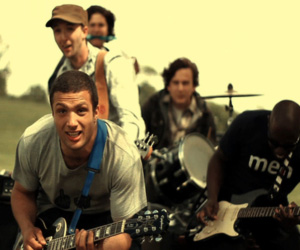
I learned about Cosmo Jarvis through NPR.  The DJs called it a love it AND hate it song.  But I find that I mostly love it.  The video is a blast to watch, but even without the video, the song is quite catchy and fun.  It’s a half punk song and half folkie/trad song.

So who the hell is Cosmo Jarvis?  Well, he was born in NJ, but is really from England.  He’s a filmmaker and musician and he’s had a hit with the song “Gay Pirates” that Stephen Fry raved about on his Twitter feed!  “Gay Pirates” is a fun shanty, but “My Day” is a full-on punk blast.

The song laments the state of things today and talks about how things were back in “my day” (which is of course funny since he’s 21).  The verses are a kind of folkie/storytelling style (but with electric guitars) and the end of each verse has a guitar riff that sounds traditional to me.  But when the chorus jumps in, it’s heavy, rocking, screaming punk.

Okay so the song is nearly 8 minutes long, which is probably overkill.  There’s a fairly lengthy instrumental bridge about 5 minutes in which features guitar and tin whistle solos.  And then the final 2 minutes are just fast metal screams of “My Day” with some wild soloing.  Yes, it’s too much (I’ll bet the single mix is awesome), but it’s still an enjoyable song.  Even without the video.

But you should watch the video, if only because it’s what the guys from Jackass would do if they were in a band and lived in the English countryside.

[READ: July 15, 2011] The Corrections

My company recently asked us if we had read any books over the summer.  I was able to pony up this review for our company newsletter.  I’ll be fleshing it out, but it’s pretty apt.

I’d put off reading this for a number of years, and I wish I had read it sooner.  It’s a very detailed look at one family: Elderly parents, thirty-something kids, and a few grandkids.  The depth of character development is amazing (and includes even depth of characters that the main characters interact with).  It’s a long book but it is very rewarding—comic scenes, moving scenes and one or two shocking moments.  It’s also the first time I’ve read a book where I thought, “even though I like this character, I think it would be better for everyone if he died.”  It’s an unnerving thing to think, but Franzen really makes you think about how family members impact one another.

It took me forever to start reading this book, obviously.  I wasn’t really interested in Franzen when all of the Oprah commotion came out, so I blew off this book entirely.  I’ve recently grown more interested in him.  But rather than reading his novels, I had decided to read all of Franzen’s New Yorker pieces.  (And even though I wanted to read Freedom when it came out, I felt that I should read this one first).  I wasn’t hesitant about reading it, I think I just wanted time to devote to it.  Much like I needed time to devote to writing up this post.  It’s been well over two months since I finished the book.

The Corrections is a wonderful, engaging story about three generations of the Lambert family (and many of the people they interact with).  The matriarch and patriarch of the family, Enid and Alfred, live in the midwestern town of St. Jude.  They have three children: Gary, a banker in Philadelphia who is (more or less unhappily) married with three children; Chip, a former school teacher and current playwright who sponges off of his younger sister while he tries to live the high life in New York City; Denise, a very successful chef who also lives in Philadelphia.  She has no children.  Gary’s children play a small but significant part in the story, keeping the three generations aspect working very well.

I found the first chapter a little slow and somewhat off-putting.  I read an excerpt from the novel in the New Yorker, which was a piece about Chip.  So I was surprised that the book opened with an older couple.  The chapter deals with Alfred and Enid.  Alfred’s dementia is hitting their household quite hard but Enid just feels that Alfred isn’t trying very hard.  Because Enid has very little in her life, she wants nothing more than to have her whole family together “one last time” for Christmas.  Enid and Alfred are long-married and this chapter picks up in the middle of a typical day.  So it takes a few pages to get up to speed.  Of course, once I did, I felt that the whole family was completely real and believable. (more…)

Read Full Post »

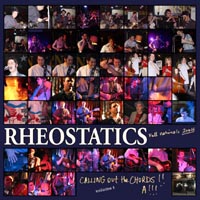
SOUNDTRACK: RHEOSTATICS-Calling Out the Chords Vol 1 (2005).

In addition to the Rheostatics’ main catalog, the cool label Zunior has released a couple of “official” bootlegs.  Calling Out the Chords Vol. 1 (no Vol. 2 has been released as of yet) is a collection of 2004 live recordings from The Legendary Horseshoe Tavern.  The Rheos do multiple nights at the Tavern, and this is a selection of songs from those shows.

It’s an interesting mix of essential live recordings and weird tracks that die-hards will appreciate but that newbies may scratch their heads at.  Some essential recordings are the wonderful version of “California Dreamline” that segues into a blistering version of “Horses.”  The version of “Mumbletypeg” with The Fall National Horns adding brass is also pretty great.

But there’s a number of songs here that are peculiar.  Great for fans, but perhaps hard to explain otherwise: an instrumental version of the 1996 song “Four Little Songs.”  I’m not sure why they went instrumental, as the lyrics are pretty essential, but there ya go.

There’s a crazy song “We’re All Living in a Chemical World” sung by special guest Ford Pier.  The intro says that this was one of Tim Vesely’s first songs, and it’s written in their early synth pop style (Pier is an insane vocalist too).  It’s quite a surprise.  And speaking of guests, there’s a lot of music from special guest Kevin Hearn (who has been with Barenaked Ladies since 1996–Hearn is a touring machine, apparently).  Anyhow, he contributes two songs to this disc “Who is that Man and Why is He Laughing?” and “Kevin’s Waltz” and he helps out on “I am Drummstein” and “Weiners and Beans.”   “I am Drummstein” and “Weiners and Beans” are unusual tracks as they come from their children’s album and their tribute to the Group of 7.

The final track is “Legal Age Life at Variety Store,” one of their staple live songs.  But this one has a twist contest in the middle.  Audience members are invited onstage to twist.  It is quite long (and without the actual visuals, it’s a bit hard to listen to more than once or twice) but it’s a fun way to hear the band interact with the audience and it shows what a fun live show they put on.

This is a great recording and a bargain for $5.55.

[READ: August 31, 2011] “Home”

I read this story twice.  The first  time, I didn’t really like it, I found it to be  kind of jumbled and confused.  I don’t know if that’s a typical reaction to this story or if I was feeling lazy, because the second time through I followed it okay and I enjoyed it quite a bit.

It’s a social commentary from Saunders, although exactly what the comment is is a bit unclear to me (even after the second reading).  The main character is a veteran who has just returned from one of the wars we’re fighting, “…the one that’s still going on.”  When he gets back home, his mother has shacked up with an unemployable guy, his sister won’t let him see her new baby and his wife has taken their son and has shacked up with some asshole he knew in high school.

And every time someone finds out he just got back from the war (like the sheriff who is evicting his mom), they all say, amusingly, as if by rote: Thank you for your service. (more…)
Read Full Post »

SOUNDTRACK: RADIOHEAD-The King of Limbs: From the Basement (2011).

The TV channel Palladia has been showing this BBC production since it became available.  And it’s scheduled to be broadcast a few more times in the next couple of months. 

From the Basement is a show in which (very cool) bands play in this recording studio (presumably in the basement of wherever it is recorded).  The show is filmed in HD and the sound is fantastic.   The Wikipedia page gives some context for the show–it was originally designed as a program to showcase several bands playing a few songs.  Several of these episodes aired (the Wikipedia page gives details).  The show was created by Nigel Godrich, Radiohead’s producer.  Thus, it makes sense that Radiohead have now done live sessions shows for their last two albums.

So this is a recording of The King of Limbs.  I’m not sure if the album had come out by then, but this is basically the complete album and two extra songs: “The Daily Mail” and “Staircase.”

The session sounds amazing.  There’s a brass section for a number of songs, there’s two drummers (both completely bald, which is kind of neat to see), and you get to see Thom Yorke up close (sometimes a little too close) on all kinds of instruments.   I feel a little bad for Jonny Greenwood as it seems like Thom plays most of the guitar parts (unless Jonny is on keyboards too–it’s not always clear who is playing what).

I liked King of Limbs, but I must say that this live recording brings much more depth to the album.  While the band sounds tight as a drum, paradoxically, they also seem looser in their overall feel.  They seem like they’re really enjoying themselves.  It doesn’t have the same vibe as a concert (they’re not playing off the crowd or improvise at all), rather it has a feeling of jamming with friends–trying to get a perfect take, without the tension of fretting about the perfect take.  It’s really a great show and worth watching for any fan of Radiohead.

[READ: September 5, 2011:] ” What Have You Done”

I had a hard time getting into this story.  It’s about a man named Paul.  Paul is headed home to visit his family in Cleveland and he is more than a little apprehensive about it.  He deliberately hasn’t been home in about ten years, so this is quite a chore for him.  And it is quite clear from the outset that Paul is something of an asshole.  We don’t really learn why in the beginning (and that’s why the story was hard for me to get into–more on that)–he’s just sort of accepted as an asshole and that his family will give him shit.

And that’s what families do, this idea is in no way new.  But what’s is odd about the story is that we don’t really have any context for Paul’s attitude.  We seem to jump into the story with him feeling like an asshole and assuming that his parents will treat him like crap.  That they won’t believe anything he says and that they’ll give him a hard time.  Indeed, when he finally gets to his parents’ house (and his sister and her husband are there) he is so aggressively defensive that he’s quite unlikable.  And yet we still don’t know if he is defensive or if they are nasty.  Paul seems to flare up at anything anyone says and yet we don’t know if he has a right to.

The crazy thing is that Paul’s major fault seems to be that he’s fat.  Quite a bit is made of the fact that he is fat.  And he seems to be so very lonely–hateful of his family and resentful of his sister’s happiness–that when we finally learn the truth about him and what he’s been up to these last ten years, it’s hard to believe it’s really true.  His family doesn’t believe him, and the only reason we do is from a phone call that comes in to him.  But he’s so paranoid, it’s hard to know what to believe. (more…)

Read Full Post »

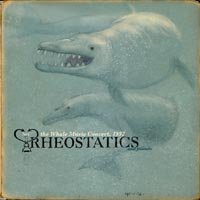
SOUNDTRACK: RHEOSTATICS-The Whale Music Concert, 1992 [Sets 1 and 2] (2005).

This is the second Rheostatics live CD that’s available from ZuniorWhale Music is a simply stellar album, and this concert focuses primarily on that disc, although there are a couple older tracks (and the then-new “Michael Jackson”) as well.  The big surprise about this concert is that they consider it a night of 1,000 stars: there are a ton of guests in this show (the majority of whom are even more obscure than the Rheostatics, I believe–the only two that I knew of before hand were Kevin Hearn and Andy Stochansky (who drummed with Ani Difranco for a while).  But guests like Tannis Slimmon, Doug Feaver, Tim Mech, Kevin Gould, Richard Burgman, Mitch Perkins and The Bird Sisters (and if you like Canadian music, the link for The Bird Sisters is to a cool blog called Raised on Canadian Radio: 1 Song per Day by 1 Uniquely Canadian Artist) add to the party atmosphere.

Anyhow, sometimes guests can really heighten a show.  And that’s the case for some of this show.  Of course, anyone who has read my criticisms of rap knows that I feel that too many guests spoil a good thing. None of these guests are “too much” here, but it does seem odd that there are so many!

The first set of this concert is awesome (the whole show was recorded to DAT and although there are a few weird drop outs, the set sounds great).  It’s like a greatest hits of early Rheos songs; the band sounds tight and they really respond to the audience.  “Rock Death America” is blistering, “Green Sprouts” is a fun little treat and “Palomar” and “King of the Past” sound fantastic.  It’s also funny to me how many great songs Tim Vesely is responsible for.  And they all seem to be featured here.

Set 2 is a little different.  It feels looser, a bit sillier, and is filled with much more Dave Clarke.  I’ve always known that Clarke was the goofball of the band.  He’s the chatty one when they’re onstage–he is full of goofy banter and he introduces most of the guests.  While it’s true that the Rheos aren’t entirely serious, I find Clarke’s goofiness to be a little off-putting.  And by the end of Set 2, he sees to have taken over the show.  He’s an excellent drummer, no doubt, but he hams it up on “Full Moon Over Russia” and I think he rather ruins “Queer” (one of my favorite songs) with his , yes, bad, singing.  And on “When Winter Comes,” the bridge is so beautiful, that his rantings in the verses are just too much for it.  Having said that, while I like the sentiment of “Guns” (although it is oversimplistic), the drum solo bit is quite cool.

The other thing that I kind of dislike in Set 2 is that the songs are really extended, but not in a good way.  I mean, “Queer” is 9 minutes, but it’s a lot of Dave Clarke and Kevin Hearn’ keyboard silliness.  And “Record Body Count” seems really slowed down or something.  However, the band closes strong with a great version of “The Wreck of the Edmund Fitzgerald” and what sounds like an amazing version of “Horses” (the beginning of “Horses” is cut off, which is a shame).

So overall, despite some flaws, this is a really good live release.  And since, it’s only $8.88, it’s totally a bargain.  Plus, there’s some great artwork by Martin Tielli as well.

[READ: August-September 2011] Tree of Codes

I first heard of this book through the Five Dials news feed (and there’s an excerpt of the book in Five Dials Issue 20 which you can see here).  Anyhow, I read about it and decided I wanted a copy for myself.  It’s not cheap, but you can just look at it to see how complicated it was to make (or you can watch this video) .

So this book follows the exact same logic as Of Lamb.  But unlike Harveys’ execution, in which she wrote out the words and made them into her own pages, Safran Foer creates a story out of an extant book.  The way the book is presented, he literally cuts out what he doesn’t want you to read. It’s also fascinating to me that this book came to my house in the same week as Of Lamb did (even though this came out much earlier–but as Foer says, there was no way for him to advertise the book).  They are absolutely similar ideas and yet their execution is so radically different.

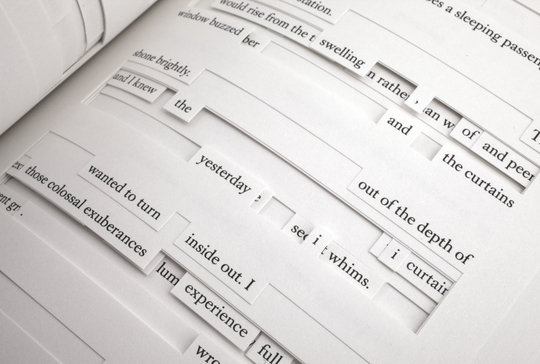
When you open this book, you see holes.  Lots and lots of holes.  The pages have massive squares of text missing.  When you first open it, you can see many layers of text, some penetrating thirty pages down.  So you can read words that comes later in the book (you often read words from the following page if you don’t hold the page up correctly or put a piece of paper under each page).  Don’t believe me?  Here’s a picture:

Safran Foer’s explanation (at the end of the book) is that he loved the book The Street of Crocodiles by Bruno Schulz (which I’ve never heard of and have no idea what it’s about).  And he often saw a story within the story.  So, he decided “to use an existing piece of text and cut a new story out of it,” using only Schulz’s words.  But rather than presenting it in a conventional way (or even in an unusual way like Of Lamb), he wanted to push the boundaries of what a physical book could do. He was “curious to explore and experiment with the die-cut technique.” (more…)

Read Full Post »

SOUNDTRACK: TINDERSTICKS-Claire Denis Film Scores 1996-2009: Vendredi Soir [CST077] (2002).

This score was created by Dickon Hinchliffe and the liner notes indicate that it was something of a jumping off point for his future film scores.  This was the third score that the band created for Denis (after Nenette & Trouble).  Stuart Staples was working on the latest Tindersticks album so Dickon took over all of the duties on this one.

This is a beautiful, melancholy soundtrack, full of gorgeous swelling strings and simple piano notes.  It doesn’t remind one all that much of  Tindersticks, but it’s not terribly far removed from their sound either.

The whole score (which is paired here with the score from L’Intrus) is 25 minutes, which made me wonder whether this is a full length film, or just a film with lots of silence (or, perhaps non-Hinchcliffe music that wasn’t included here).  [The film is 90 minutes long].

Pairing it with L’Intrus makes sense in terms of space, but the two scores could not be more different from each other.

[READ: June 15, 2011] “The Cat”

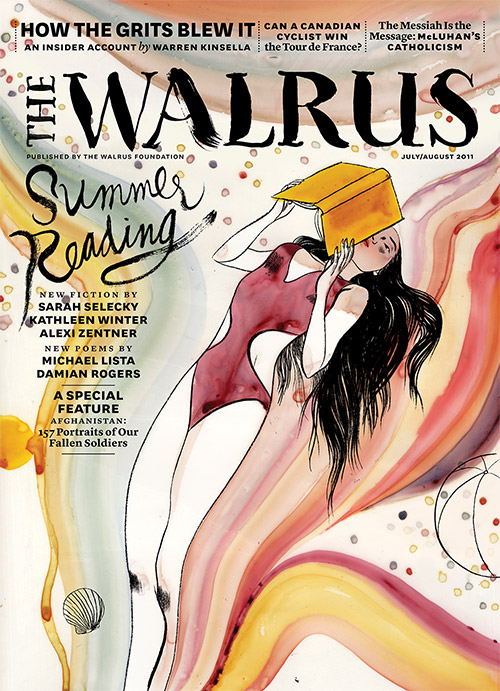
This is the first story in The Walrus’ Summer Reading issue.  As I mentioned, the intro states: “We asked five celebrated writers to devise five guidelines for composing a short story or poem. They all traded lists–and played by the rules.”  Sarah Selecky was given rules by Kathleen Winter (which I posted below).

The first line of the story really sets up the whole thing: “I am not at all surprised that my father has come back to earth in the form of a grey and white cat.”  And indeed, the rest of the story discusses her relationship with her father (those awful fishing trips when she could neither speak nor move) and how he never seemed to be pleased about her.

Now that he’s back as a cat, the dynamic has changed.  Although there’s still fish in their relationship.

I really enjoyed this story,  For although it was brief, it was wonderfully evocative.

Kathleen Winter imposed these rules on the story: (more…)

Read Full Post »

SOUNDTRACK: VAMPIRE WEEKEND-KEXP performance & interview (2008)

While trolling around NPR’s Favorite Sessions Pages (an amazing place to look for live music!), I found this Vampire Weekend in-studio session from KEXP in Seattle (whose site features some amazing shows that you can listen to (but I don’t think any are downloadable).  This interview and performance was before the band’s debut album had come out (and they had only been playing live for about six months).

So the set has four songs.  All will appear on the debut album, but they sound a little different.  Perhaps it’s the in-studio sound recording or perhaps they play them a tad bit slower, but you can hear the words more clearly (which is cool) and some of the beats are sustained a bit longer.  It’s a wonderful set.

The interview is also fun.  The interviewer is pretty well gushing all over the band.  But he asks interesting questions–it’s amazing to be reminded just how young the guys are.  The DJ also asks about their influences and that’s kind of an interesting discussion, although thy don’t really admit to any specific influences (rats).

It’s a wonderful (if not too brief) session, and well worth a listen.

[READ: March 27, 2011] “The Man on the Island”

I really enjoyed the way this story was constructed. It went through several different teasers before settling down into what the story would ultimately be about.

It opens with a taxi driving through Bridgetown in Barbardos.  The passenger, a reporter from Canada, asks the driver, Calvin Braithwaite, to drive him all over the island on a special commission.  Braithwaite agrees, and they spend the reporter’s few days in Barbados together.  When the reporter leaves, he asks for Calvin’s email address and phone number, for possible follow-up.

This introduction leads us to assume that the story is about the reporter.  And also that Calvin is “the man on the island.” (more…)

Read Full Post »

SOUNDTRACK: THE HEAD AND THE HEART-SXSW, March 18, 2011 (2011).

Just months after their in-studio session, The Head and the Heart played South by Southwest.  This set seems somehow louder than the in-studio (which seems a very common phenomenon–the bands just seems to be quieter in-studio somehow, even if they are playing hard, it still seems subdued, which isn’t bad at all, just odd).  So here, the band really lets loose (or maybe it’s because they’ve been playing no for six extra months?) and they sound like they’re really having fun.

Their sound is loud and (somewhat) chaotic, and it really suits them.  The set list is similar to the in-studio (they also play “Cats and Dogs” which segues into “Coeur d’Alene”).  “Ghosts” and “Lost in My Mind” are also here (“Lost” sounds great in this rambling, somewhat shambolic format).  They also play “Down in the Valley.”  Added to the set are “Winter Song” and “River and Roads.”  These two songs feature vocals by violinist Charity Thielin, and I have to admit I don’t love her voice.  Perhaps it’s in this context or that she is mixed a wee bit to loud (because I didn’t dislike her voice in the in-studio).  As I said, I haven’t heard the studio version yet, so I’ll chalk it up to a very large crowd.

But otherwise the set is outstanding, and I’m becoming a huge fan of the band.

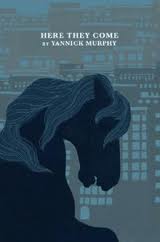
[READ: March 28, 2011] Here They Come

I had been thinking about reading this book for a while (the blurbs on the back are quiet compelling) but I kept putting other McSweeney’s books in front of them (I had hoped to finish an entire stack of McSweeney’s novels before The Pale King came.  But it shipped two weeks early and threw off my plan).

I have read two pieces by Murphy in previous McSweeney’s issues, but looking back they didn’t prepare me for this strange story. And the strangest thing is the point of view of the narrator (but more on that later).

This is actually a simple enough story.  Set in New York over an unspecified time period (there’s a couple of winters and a couple of summers, but I’m not sure if it’s new seasons or flashbacks), the (as far as can tell) unnamed narrator girl leads a pretty crap existence.

Firs there is John, the hot dog vendor.  He’s a married man from a middle eastern country (his family is back there).  And basically the narrator lets him feel her up (for what it’s worth on a flat chested 13-year-old) for free hot dogs and candy bars.  She doesn’t seem to upset by the groping and keeps going back to pass the time with him.

Then there is her brother, an obnoxious boy who walks around in a silk dragon bathrobe all the time. When he is not smashing things with his guitar when he walks past the furniture, he is smashing things in his room or threatening to shoot himself with their old, unloaded gun.

Her mother works all the time but really can’t afford to take care of them or feed them.  And she says “Merde” night and day (she is French).  But worse is her mother’s mother, la mere, who stays with them from time to time.  la Mere seems like she has money but she never gives them any. (more…)

Read Full Post »

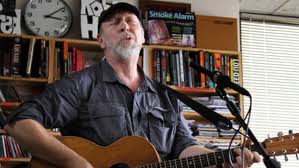
SOUNDTRACK: RICHARD THOMPSON-Tiny Desk Concert #107 (February 1, 2011).

This Tiny Desk concert sees Richard Thompson playing three songs from his most recent disc Dream Attic.  I really enjoyed this album, but because it was recorded live, and there’s lots of instrumentation on it, I wasn’t sure how well these songs would translate to a simple acoustic guitar.

I needn’t have worried.  RT is a master songsmith and even stripped down to just him and his guitar the songs swell where they should and haunt when they ought.  “The Money Shuffle” doesn’t need the horns that accompany the original (he supplies the power with his voice), and “Stumble On,” a gorgeous ballad, works fine solo.  I appreciated the introduction he gives to the final song “Demons in Her Dancing Shoes” as I didn’t realize it was about something specific.  He plays all the fast bits (including a brief solo) wonderfully on that acoustic guitar, too.

This is not to say that I think these songs are better solo than with the band.  It’s just to say that RT can play anything and make it sound great.  It’s an excellent (if not brief) set.

[READ: April 4, 2011] “Atria”

I hated this story as I read it.  I felt like it was deliberately trying to manipulate me.  I felt like it was playing some very obvious cards and leading to an obvious conclusion.  By the end I wanted to scream at it, yet it kept surprising me.

The story is about Hazel, a sophomore in high school.  She has not had any kind of experience with sex until one afternoon when circumstances conspire for her to have sex behind a 7-11.  She doesn’t really enjoy it but she didn’t really protest it either.  She was just sort of there.

Soon afterward, she is raped (I know), by a man who is clearly not all there.  The rape occurs behind the church (I know), and once again, she probably could have gotten away, but she was just sort of there.

Now, of course she’s pregnant (I know).  She doesn’t know who the father is obviously, but now she has a scapegoat.  The man is vilified but never found (the police artist was a joke).  The town puts up a bunch of Hazel-inspired alert phones all over town (fat lot of good they do her now).

She is treated with kid gloves in school.  Even the religious girl doesn’t blame her for being raped (I know).  All the time she is pregnant she imagines the kind of animal that will come out of her.  It’s never a baby, just different kinds of animals: birds with beaks pecking at her and having multiple babies themselves–which are crushing each other, even a four-legged beast.  It’s very trippy, and she seems to be as well.

When the baby is finally born she determines that it is a seal.  And she realizes that it needs to be kept wet.

The ending of the story was very, VERY disturbing and I simply couldn’t believe what I was reading.  And yet for all of the obvious (and by contrast highly disturbing) stuff that happened, I didn’t want to stop.  There’s was something strangely compelling about this story.  I will keep an eye out for her in the future.

Read Full Post »

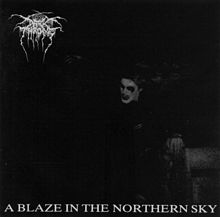
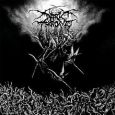
SOUNDTRACK: DARKTHRONE-“Kathaarian Life Code,” (1992), “Sacrificing to the God of Doubt” (2004), “Canadian Metal” (2007).

After watching Until the Light Takes Us, I wanted to check out some of Darkthrone’s music.  According to their Wikipedia page, over the years the band who pioneered black metal has morphed away from the sound.  They’ve added elements of punk and speed metal to their bludgeoning sound.  In the movie Fenriz says that he listens to all kinds of music and is very open-minded.

Kathaarian Life Code” is a ten minute dirge of black metal.  It opens the band’s second album (considered to be a black metal classic) with chanting and guttural spoken words.  Then it blasts forth with the jackhammer style of drums that is now standard in black metal.

It slows down from time to time, allowing for the really heavy parts to blast through the chaos of the fast parts.  It’s pretty intense and not for the faint of heart.  You can hear occasional guitars screaming through the din, but the production is intentionally murky, dark and noisy.  As they say in the movie, the bands intentionally recorded on the shittiest equipment they could find.

Sacrificing to the God of Doubt” is a later song, taken from what is considered their final album in the black metal style.  The band was turning away from the traditional black metal sound, and there are elements of punk (guitar riffs that are audible, and a sound that is less bass heavy) present.  And the production, while still mired by noise is relatively cleaner.

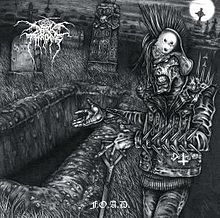
Canadian Metal” is from their third most recent album, after the shift from black metal was more or less official.  It sounds more like an early death metal song.  There’s low tuned notes, audible vocals (growled, but you can actually hear words) and a kind of headbanging aspect to it.  The album is called F.O.A.D. which was a song by Venom (and others, obviously), and this track reminds me of Venom somewhat.  I wouldn’t say that the band has sold out because there’s no way anyone is playing this on the radio, but it’s interesting to see how a band has managed to change things up and add new elements to its sound even though they were the forerunner and grandfather of a scene.

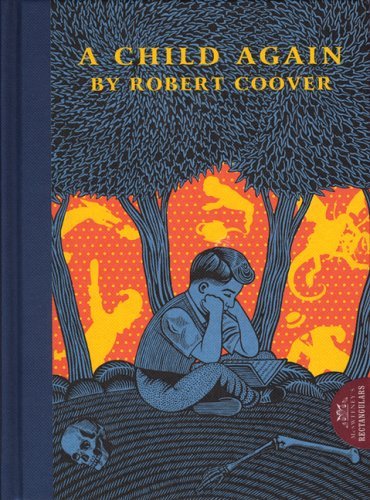
[READ: February and March 2011] A Child Again

This is a collection of short stories from Robert Coover.  There is a kind of theme throughout (most of) the stories about returning to childhood.  But the overall sense is one of despair, sadness, pointlessness and sex.  Lots and lots of sex.  And the sex is usually as vulgar and nasty as the tone of the book suggests it would be.  It’s a little off-putting, actually.

I was planning to say that I didn’t like this collection at all because I really didn’t enjoy the first half-dozen or so stories.  I continued because Coover has a great reputation that I didn’t want to give up after a few misfires.

The real disappointment came because the stories seem so promising: many of them are a kind of retelling of classic fairy tales that looks at “what happened afterward.”  However, and this was true for almost all of them, Coover tries to do two contradictory things with the stories.  He is playing with fairy tales but he is also writing stories that are completely unlike fairy tales.  By that I mean, Coover’s stories are long and very detailed, they bring far too much information to the story.  And a fairy tale is almost by definition short.  I mean, “Puff the Magic Dragon” is a song that’s about five paragraphs long.  But Coover’s “Sir John Paper Returns to Honah-Lee” is 26 pages long.  So instead of playing with the original, it feels like an original story that uses someone else’s characters.  It’s unsettling and unsatisfying.

It’s also not very funny.   And I’m not sure fit’s supposed to be.  But with a title like “Sir John Paper Returns to Honah-Lee” you expect the funny.  And there are funny moments.  I mean the whole premise is that little Jackie Paper has grown up into Sir John Paper.  He’s now an old Knight and he is sent to slay the dragon (Puff) who is plaguing the city.  Even though that is a tragic story, it is also inherently humorous.  And there are laughs when they reunite.  But it gets so bogged down in details, that the essence of the story seems to get lost.  Perhaps I’m just disappointed because it (they) turned out so unlike I wanted them to be. (more…)

Read Full Post »

SOUNDTRACK: PJ HARVEY-“Let England Shake” [Live on the Andrew Marr Show] (2011).

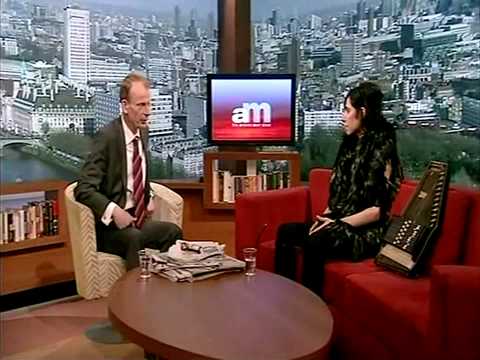
PJ Harvey has a new album out.  I’ve listened to it free on NPR, and in the introduction, they mention this live version on the Andrew Carr show.  Harvey (solo) plays an autoharp, and the melody is provided by a sample of the original version of “Istanbul (Not Constantinople)”  (done by The Four Lads).

The album version doesn’t use the sample, although the melody is the same.

I loved PJ Harvey back on her first few albums, but I didn’t even get White Chalk.  Harvey has undergone a bizarre transmogrification, where not only is she no longer a rocking guitar woman, her voice has lost its growling edge and his been replaced by an amazing falsetto.

This version also differs from the official release in that this one is shorter (probably time constraints on the show) and has fewer verses.  It also has Harvey singing the “Istanbul” chorus which isn’t on the disc.  So, this is a unique interpretation of the song, one that likely won’t be available anywhere else.

I wasn’t expecting to like this as much as I did.  It’s not the PJ I know, but this new PJ is certainly interesting.

[READ: January 31, 2010] Lemon

Krauser hand-scribbled the covers of all 10,000 extant copies of this book.  So if nothing else, the covers are all unique!  (Click here for a larger scan).

This is one of the first half-dozen or so books that McSweeney’s published and to me it speaks volumes about the kind of absurdist books that they initially released.  Those early titles were weird and possibly ironic and maybe post modern and were kind of interesting but not necessarily enjoyable.  Thankfully, they have since published very very readable books, but everyone has growing pains, right?

That sounds like I didn’t like this book, which is not exactly true.  I was bemused by it, but mostly I kept thinking I can’t believe that this guy did this much research about lemons, he was practically as obsessed about lemons as his main character.  For indeed, that is what this book is about: a man’s obsession with lemons.  Or, specifically, one lemon. (more…)

Read Full Post »

« Newer Posts - Older Posts »