SOUNDTRACK:BELLE AND SEBASTIAN-Live in Glasgow, TODAY! December 21 at 4PM eastern: NPR simulcast (2010).
It’s very rare that I have news before it happens, especially on this blog. But I do. Today at 4PM Eastern time, NPR is simulcasting Belle and Sebastian’s live show from Glasgow.
I don’t know if it will be downloadable (I do know that I am at work…boo!). But I have to assume it will be pretty great.
After a few years away from lengthy New Yorker articles, Franzen returns with this 13 page (!) article about China. The last article that we saw from Franzen was about his birding passion. That passion has not subsided at all, and his co-passion of environmentalism is what sends him across the globe to the Yangtze Delta.
Franzen receives a Puffin-shaped golf club head cover, which he finds quite adorable. But when he sees that it’s made in China, he wonders about the environmental impact of this adorable item. He calls the company that makes the puffins (Daphne’s Headcovers), and is told that they use environmentally conscientious Chinese labor. She also tells a (heartwarming) story about karma and how a good deed will get repaid manifold. She tells Franzen about the workers in China and invites him to go check them out. This leads to Franzen’s most “reporter”-like piece, and probably his least personal.
At first I wasn’t that interested in the piece. I feared it was going to be a long slog through environmental degradation and depression. And while it was that, Franzen also humanizes the story through the efforts of that rarest of birds: the Chinese environmentalist. (more…)
SOUNDTRACK: TRACY BONHAM-Live on Mountain Stage, September 29, 2010 (2010).
I loved Tracy Bonham when she first came out. Her EP and first LP were amazing explorations of controlled anger with great bursts of violin.
As with many angry songwriters from the 90s, Bonham seems to have become, shall we say, happier. She has a new album out this year called Masts of Manhatta.
I haven’t heard the album, so I don’t know if this Mountain Stage performance represents it well or not. I’m guessing that the Mountain Stage setting has made it somewhat more mellow than the original (steel guitars and fiddle solos?), but that may not be the case.
Regardless of the tone of the album, the songwriting tricks that Bonham has always employed are still in evidence here. In fact, even though I’d never heard these songs before, the chord progressions (and of course, her voice) make these songs sound distinctly hers. And lyrically she’s still clever as anything–witness most of the lyrics to “We Moved Our City to the Country” which also features a very conventional fiddle (no, not violin) solo.
It seems like Bonham has grown as an artist and is exploring lots of different styles. And although I really love her early rocking stuff, and I was a little concerned that she had gone soft, it’s clear she’s just channeled her hardness in a different direction. She’s also got great stage presence.
[READ: October 12, 2010] “The Third and Final Continent”
Jhumpa Lahiri was the final writer in the 1999 New Yorker 20 Under 4o issue.
I have heard such wonderful things about Jhumpa Lahiri, and I have been intending to read her novels and short story collections for quite some time. I’m a bit saddened that this is the first fiction by her that I’ve read. But it was an excellent place to start.
The story is a masterful telling of what, even the main character admits, is “quite ordinary.” And yet it is touching and moving and a wholly realized experience. [DIGRESSION: I have been listening to old interviews with David Foster Wallace and in most of his interviews he argues that good writing should be “real” as opposed to ironic and sarcastic. He worries that hipster irony has eroded people’s ability to tell real stories.] Well, this is a very real story. It is simple and honest and wholly believable–just what the doctor ordered].
The story opens with an Indian man leaving India for London in 1964. In 1969 he gets a job offer to work in the library at M.I.T. Before leaving though, he confirms his arranged marriage, meets his bride and officially weds. But days later he has left for America with the intention of her following in about six weeks. He lands in Massachusetts on the day of the moon landing.
After staying at the YMCA, and adjusting to American life, he finds an apartment at an old woman’s house. He tells the old woman that he is married bit she is insistent that he has no female visitors. The old lady is strict and a little crazy (she makes him marvel about the moon landing on a nightly basis). And yet, despite herself, it is clear that she approves of this polite man. (I was a little surprised that she would be so approving of a foreigner, but maybe she was more progressive than I give her credit).
And the bulk of the story is made up of his life in this small apartment with this ever-present landlady who he feels somewhat indebted to, even though all he really owes her is $8 a week. (more…)
When I first played this disc I was really disappointed by it. I’ve grown to expect crazy magic from Danger Mouse, and I assumed that this collaboration with James Mercer of The Shins would be crazy awesome. But it seemed very mellow to me. Mellow in a way that just kind of sat there. So I put it aside for a while.
Then I listened to it again a little later and I found that I really liked it this time. In fact, it rapidly grew into one of my favorite releases of 2010.
The disc is a wonderfully paced mixture of acoustic guitars, interesting keyboard sounds and, often, downright bizarre electronic choices (subtle, yet bizarre). The weird sounds that open the disc, a kind of backwards keyboard, are disorienting but also very catchy. And the song itself is instantly familiar. It’s followed by “Vaporize” a simple acoustic number that bursts out with some great organ and (very) distorted drums. It also features a fascinating horn solo!
“Your Head is on Fire” settles things down a bit with a mellow track which, after some cool introduction, sounds like a pretty typical sounding Shins track (ie, very nice indeed–and more on this in a moment).
“The Ghost Inside” feels like a ubiquitous single. I’m not sure if it is or if it’s just so catchy (with dancey bits and hand claps and a great falsetto) that it should be everywhere. “Sailing to Nowhere” reminds me, I think, of Air. And the great weird drums/cymbals that punctuate each verse are weird and cool.
One of the best songs is “Mongrel Heart” it opens with a western-inspired sound, but quickly shifts to a quiet verse. The bridge picks up the electronics to add a sinister air (and all of this is accompanied by nice backing vocals, too). But it’s the mid section of the song that’s really a surprise: it suddenly breaks into a Western movie soundtrack (ala Morricone) with a lone trumpet playing a melancholy solo. And this surprise is, paradoxically, somewhat typical of the disc: lots of songs have quirky surprises in them, which is pretty cool.
Having said all this, there are a few tracks where it feels like the two aren’t so much collaborating as just playing with each other. And that may have been my initial disappointment. I was expecting a great work from a combined powerhouse, and I think what we get is two artists writing great stuff while seemingly respecting each other too much to step on each others toes.
There is another Broken Bells disc in the works. And I have to assume that they’ll feel more comfortable with each other and simply knock our socks off next time. But in the meantime we have this really wonderful disc to enjoy.
[READ: October 21, 2010] The Broom of the System
It dawned on me sometime last summer that I had never read DFW’s first novel. I bought it not long after reading Infinite Jest and then for some reason, never read it. And by around this time I had a not very convincing reason for not reading it. DFW seemed to dismiss his “earlier work” as not very good. I now assume that he’s referring to his pre-Broom writings, but I was a little nervous that maybe this book was just not very good.
Well I need not have worried.
It’s hard not to talk about this book in the context of his other books, but I’m going to try. Broom is set in the (then) future of 1990. But the past of the book is not the same past that we inhabited. While the world that we know is not radically different, there is one huge difference in the United States: the Great Ohio Desert. The scene in which the desert comes about (in 1972) is one of the many outstanding set pieces of the book, so I’ll refrain from revealing the details of it. Suffice it to say that the desert is important for many reasons in the book, and its origin is fascinating and rather funny. (more…)
I found this CD through a connection to The Divine Comedy (Neil Hannon plays on a few of their tracks). Pugwash (what a crazy name–it comes from a series of children’s books (and a TV show) called Captain Pugwash) is an Irish band with four CDs (and this collection). And man, it’s hard to find their stuff over here (although their website has a wonderful collection of videos and such).
Giddy is a collection of songs from all of their albums. Their first album is represented by two songs here “The Finer Things in Life” and “Two Wrongs.” These two songs sound, with no disrespect intended, like great Oasis ballads. Say what you will about Oasis’ originality, they wrote some great songs, and these two sound like the best Oasis songs you’ve never heard.
Their other three albums sound far less like Oasis and far more like XTC. In fact, the XTC comparisons are well-founded as Andy Partridge eventually co-wrote a song with them and eventually signed them to Partridge’s Ape House records (which is how this collection was released in the U.S.).
The XTC comparison is unavoidable on a few tracks. The opening of “Song for You” (the “when we die” part) sounds like an uncanny XTC outtake, but when the chorus kicks in it sounds nothing like them and moves into more of the gorgeous orchestral pop that overflows on this disc. And the Partridge co-written “My Genius” is also a wonderful near-XTC outtake, clever, witty, and perfect.
And the song “It’s Nice to Be Nice” is just a wonderful cheery pop ditty. It sounds retro and charming; if the simple lyrics (and gorgeous harmonies) don’t bring a smile to your face you must be made of stone.
Although the album is primarily orchestral pop, there’s a wonderful array of styles on here. “Anyone Who Asks” has chipper keyboard bits in the verses, but the chorus is a wonderful mix of dark minor chords. And then, the absolutely bizarrely wonderful “Monorail” sounds like a fantastic Beck song (with lyrics that are as decidedly unusual as anything Beck himself might write). It even opens and closes with wonderful circa 1920s banjo.
Despite the obvious nod to XTC, Pugwash does something that XTC doesn’t. XTC is a very mannered band. They always seemed very rigid and formal (and were wonderful because of it). Pugwash uses XTC as a springboard, but Thomas Walsh seems like a guy who likes to let loose with unchecked silliness, so he can move past the strictures of XTC (and sound like Beck!)
And the packaging is just wonderful. The carnivalesque appearance of the cardboard case is enhanced by not just a cardboard sleeve but also by a second cardboard half-sleeve that you slide on top. Depending on which way you slide it on, it creates a different set of pictures. It’s a little thing but it’s a nice nod to the fun of non-digital products.
This is certainly one of my favorite albums this year (even if it came out last year).
[READ: September 21, 2010] One False Note
I enjoyed the first book of the series so much, I couldn’t wait to get to Book Two. In particular, I was interested to see if Gordon Korman’s writing style would differ much from Rick Riordan’s. As I said last time, I hadn’t read Riordan before, (although I have read a few by Korman) and while I wasn’t expecting them to write in the same manner, I wondered if they would try to keep the style the same (or if it would be really obvious that they were different writers).
I have to say that I didn’t notice the difference between the two. Korman’s seems a bit faster paced (but he had no exposition to deal with), and it’s possible that he made things seems a bit more scary/dangerous than Riordan, but not much.
The question I have with the series is three-part: Is the basic plot given to each new writer–like the writer is told what the 39 Clues are–or, possibility two, are they told very specifically, the clue is this and it is here and the writer has to figure out how to get the kids there, or possibility number three, they are free to do whatever they want.
Either way, this is an exciting series, and I’m looking forward to Book Three.
So in Book Two, Amy and Dan continue their adventure. This time, they go to Saltzburg and Venice. The Saltzburg trip leads them to the Mozart house. There’s a wonderful sorta subplot about Mozart’s sister, Nannerl (real name Maria Anna), who was also a great pianist and harpsichordist, oftentimes getting top billing when they played together. I’s never heard of her, and didn’t know of her talent, and that’s the point of the subplot–how Nannerl had to put her musical skills to the side because she was a woman. This works nicely with the pairing of Dan and Amy and how they are both good at different things and are both very useful on the quest. (more…)
Although The Yellow Tape was the major catapult, their previous cassette (known as Buck Naked) was their first demo tape. Wikipedia explains that it came in many versions with several covers.
The initial release had 5 songs. The final release bumped it up to 15.
I wasn’t even aware of this cassette until I was browsing around for The Yellow Tape. And, thanks YouTube for supplying all of the tracks.
The recording is just Steven Page and Ed Robertson and a couple of acoustic guitars. And it’s totally a home recording. But for all of that, it’s delightful to see how fully released some of their songs were. It includes these songs which appeared on later releases” “King of Bedside Manor,” “Great Provider” “Be My Yoko Ono” and “If I Had $1,000,000.”
The rest of the tape is a mix of a few silly things and a lot of not at all silly songs.
“Road Runner” is a cover. But not THAT cover. Rather, it’s a cover of the Saturday morning Road Runner cartoon theme song: “Road Runner, the coyotes after you….” They also cover “Psycho Killer” which is pretty hard to mess up (their version is a good campfire version, although it devolves into nonsense). “Rudi, a Message to You” one of the great, mellow ska songs also get something of an acoustic cover here. Although it’s more lackluster than the original (no horns). Finally “Wishing Well” is a cover of the Terence Trent D’arby song and is full of amusing cheap casio sounds.
“Really Don’t Know” also has a delightful excerpt from the Geddy Lee/Bob and Doug MacKenzie song “Take Off”
The other songs are decent folkie songs. Primarily they seem to be about relationships (but it’s not always easy to tell). Although “Careless” is a fun pop-culture mocking song (that would probably still work well live).
Sadly, the last track, the 5 second “How’s the Level,” does not seem to have made it to YouTube. It’s obviously a goof of some sort, but I would have liked to have heard it.
I can’t imagine how many times this cassette was played before it was sent to YouTube, some of the songs sound very faded which is certainly a problem of the tape, not the original recording, but even those song (where the lyrics are hard to decipher) still sound good (and their harmonies were solid back then too).
[READ: September 13, 2010] The Maze of Bones
For two years now, this series has been red hot. All of the kids want to read these books (probably second only to the Percy Jackson series). What fascinated me about this series is that it is written by several different authors (which is a nightmare for libraries who shelve their books bu authors). There are ten books in all. The authors are: Rick Riordan [Book 1], Gordon Korman [Books 2 and 8], Peter Lerangis [Books 3 and 7], Jude Watson [Books 4 and 6], Patrick Carman [Books 5], Linda Sue Park [Book 9] and, and Margaret Peterson Haddix [Books 10].
I’ve not read any of Riordan’s other books, so I don’t know how this compares. I felt the story opened a little slowly (there’s quite a lot of information to impart) but once it took off I couldn’t put the book down.
Amy and Dan are orphans living with their mean and controlling aunt. They learn that their grandmother (whom Amy loved and Dan thought was weird but had cool stuff) has just died. When they go to the funeral, their grandmother Grace has set up a fascinating contest for the surviving families. They can either take their allotment ($1 million) or they can give it back in exchange for the first of 39 clues. Solving the clues will give them the secrets they need to become, literally, the most powerful people in the world (although at the stage we don’t even really know what that means). (more…)
The Yellow Tape is legendary in terms of demos. It was an indie cassette-only release and it went platinum in Canada.
Before the internet, it was really hard to come across this cassette (again, even though it went platinum in Canada, I don’t know that it ever even made it south of the border). Of course, now with the web, you can hear all 5 tracks on the cassette (thanks YouTube).
Four of the 5 songs appeared on their first album anyhow, and they don’t sound dramatically different from the “Yellow” versions (“Brian Wilson” still has that awesome bass from Jim Creeggan for instance). It basically sounds like an early live recording. (The harmonies are spot on, the only difference is Steven Page’s vamping, which is a bit more than on the release). Although I think “Blame It on Me” sounds a little less exciting than the Gordon version.
And of course, the final track is their original cover of “Fight the Power.”
It’s interesting that the band chose these 5 songs, two of which talk about famous people and are sort of funny. (And then a cover of a Public Enemy song!) It really sets them up as a goofy band (which they are, although they are much more than that), but it kind of put them in a novelty niche right off the bat. A niche which they never really outgrew, even if their later discs were much more serious.
[READ: August 17, 2010] “Second Lives”
Daniel Alarcón is another New Yorker 20 Under 40.
I love the way this story begins. It informs us that the narrator’s parents had the foresight to have their first child in the United States. His parents were in Baltimore on a visa. His father enrolled in school and his mother worked in the health care profession. They were comfortable enough in their lives to have their son Francisco there. But then a coup broke out back home, their visas are not renewed and they were forced to return home. Their second son, the narrator, with whom his mother was pregnant at the time wound up being born not in America.
And so, when your brother has American citizenship and can freely roam the American countryside, what exactly are you supposed to think when you are denied this freedom? (more…)
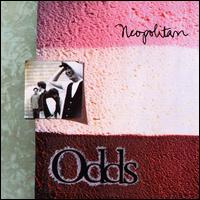
This was the first Odds album. For such a quirky name, Odds played some pretty standard music. I’m not even sure if the first song qualifies as “alternative” as it sounds not unlike an early Phish song, only less quirky (and much shorter).
The disc offers a pretty nice range of poppy tracks, from acoustic based songs like “Are You Listening?” to louder guitar rockers liked “Evolution Time” (probably the most interesting track here).
Another notable song is “Wendy Under the Stars” a surprisingly explicit song about the day Elvis died. The other track that stands out is “Love is the Subject” which has a harder more abrupt sound that is actually a bit premature for that style and sounds quite funky for this album.
Lyrically, the cleverest song (and one that seems to foreshadow their future songs is “Domesticated Blind” “Making babies, buying houses. A French guy’s name is on our trousers. We used to be such rabble rousers. Before the world revolved around us; I’ve been domesticated blind”
I like this album, but I admit that it’s not the kind of disc that makes people go, “Ooh, who is this? I want to get it!”
[READ: September 12, 2010] “Vogalooooonga”
This is the last of the Outside pieces that Tower wrote (not chronologically, just for my reading schedule). And I’m really pleased that I saved it for last.
It does what Tower does best: tell a story while relating an event. In fact, if he just changed a few details, this would make a great short story.
Wells and his brother have apparently been on many “assignments” together, and it transpires that when they travel together they often end up at each others throats. So the piece opens with them agreeing to never do another story together again. Then they get a call to go to Venice together to ride in the Vogalonga, “a 19-mile noncompetitive rowing regatta, held in late May, that promises a breathtaking tour of the old republic’s lagoon and outer islands” and that is traversed only in vehicles that can be paddled. Wells’ brother says that they can’t pass up a trip to Venice, so he agrees to go along.
Based on the other stories that Wells has written, he is an athletic guy (and his brother is evidently bigger and stronger than he is). Nevertheless, a 19 mile canoe trip in the canals of Venice can only lead to trouble.
And so this piece reads a bit like a David Sedaris story of familial in-fighting (although it’s a lot more manly than any of Sedaris’ pieces). They fight from the get go (including his brother’s suggestion that they assemble their 17-foot canoe in their 10-foot hotel room. And aggressive hilarity ensues. (more…)
SOUNDTRACK: BARENAKED LADIES-“Fight the Power” (1993).
Public Enemy’s “Fight the Power” is one of the greatest anthems of the late 80s and 90s. It’s got everything: noise, strength, rebellion great lyrics and Chuck D. So, what can five white Canadians do with it?
Well, they keep the intensity of the song very strong–even in an acoustic setting–by overloading their version with a whole mess of music. Between the noisy piano, the occasional sound effects and the fantastic noisy drumming, they manage to really capture what a great “song” this is (as opposed to being a powerful anthem and protest). Divorced from the awesome cacophony of the original, you realize that it’s really catchy, too.
BNL are usually goofy, and they do put a bit of nonsense in the song (during the Elvis was a hero to most section). And they clean up one of the words, with a great twist (changing “motherfuck” to David Duke” in “David Duke him and John Wayne).
BNL has been performing this song for years. Their first version appeared on The Yellow Tape [1991] (a much simpler version with drums, bass and two vocals). But this version (which as far as I can tell only appears on the Coneheads soundtrack, ugh) is really solid and (aside from the fact that nobody’s voice could ever compare to Chuck D’s) sounds like an good Unplugged version of the track.
[READ: September 14, 2010] “An Arranged Marriage”
Freudenberger is one of the New Yorker‘s 20 Under 40. I have to say I was (unfairly) surprised that a story written by a woman named Freudenberger was about a woman named Amina who lived in Bangladesh.
Nevertheless, the story was a good one and was an interesting twist on the concept of the titular arranged marriage. Amina meets George online at AsianEuro.com (after having met several men who were not what they said they were). Amina (and her parents) had always planned for her to move to America. Somehow. She had considered applying for a college degree, but found that even that was prohibitively expensive. So why not, as the Voice of America radio suggested, find a mate? (more…)
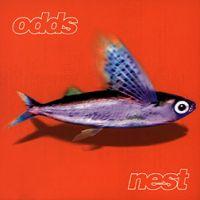
My friend Amber from Vancouver copied this disc onto cassette for me sometime around when it came out. I had heard “Heterosexual Man” when it was a minor novelty hit in the early 90s, but Amber wanted me to hear more from this Vancouver band.
Since the Odds dissolved, Craig Northey has become a proficient soundtrack man (Corner Gas, Kids in the Hall, and much more). But back in the 90s, Northey was simply put, a great pop songwriter (his bandmate Steven Drake was no slouch either).
“Someone Who’s Cool” is a fantastic song that should have been huge: powerful pop with a hint of 90’s rock added to keep it from being treacly. And, of course, Northey’s voice is great. There’s nothing particularly notable about it: it’s not whiny or deep or twangy or anything, it’s just a good singing voice (which is kind of unusual these days).
“Make You Mad” and “Hurt Me” have really catchy opening guitar riffs (and are a bit heavier than “Cool,” and yet they feature choruses that are full of harmonies and sing alongs.
“Tears & Laughter” has a jagged, wild guitar sound that, while not overtly heavy or anything, really rocks on this disc. “Nothing Beautiful” should have been a huge indie rock hit, but maybe it was too polished for indie cred. It’s a great minor key song with, yes, a very catchy chorus.
This was the final Odds record. It’s a solid collection of songs. Of course, the band has recently sort of reunited as the New Odds, so we’ve not heard the last from them.
[READ: September 11, 2010] “My Kushy New Job”
This article sees Wells Tower heading off to Amsterdam for a crash course in learning to sell drugs. He is assigned a two-week job as a dealer in a Dutch coffeeshop.
I’ve been to Amsterdam and I checked out a coffeeshop while I was there, but this article provides more information than I ever knew about them (and suggests that they are trying to spruce up their image since then). It seems that the selling of pot in Amsterdam is still a nebulous area, legally.
Shops can only have a certain amount of supply on hand (which means that most stores have offsite premises where they keep their extra stash; they house more than the legal amount and are therefore illegal. And, technically, the people who transport the stash from offsite to onsite can be arrested up until the moment they enter the shop. Customers can only by a small amount at time and, strangely enough, coffeshops cannot advertise (more on this later).
Tower finds the whole experience to be far less “woah, cool man” than everyone who hears about the job thinks it will be. First, he finds that the buyers are really intense (and don’t appreciate how long it takes him to measure a gram of hash). But by the end, he finds most of them to be simply rude and a little dead inside. (more…)
This is the first single from The Mommyheads’ new Dromedary release Finest Specimens. The album (which is sort of a greatest hits, but not) comes out next month, but until then you can hear th is new track at a number of places, including the blog largehearted boy (which has all kinds of cool free listens on it).
This is a 7 minute (live) track. It opens with some cool keyboards. They feature what I’ve come to think of as Mommyheads style, in which the bass and guitars (or in this case keyboards) play different things that seem unrelated but which work together. A great chorus pulls it all together.
This live song has about 3 minutes of instrumental jamminess at the end. It doesn’t really help the memorableness of the song (as you’ve long forgotten the catchy “That’s right” hook by the end of it), but man they sound great jamming together like that: a tight, psychedelic freakout that just builds in coolness. It’s almost like two songs in one.
[READ: September 11, 2010] “The Tuber”
This essay is about Wells Tower riding the rivers of Southern Florida in a tube. It’s also about John Cheever’s “The Swimmer.”
One of the things that I like about Wells Tower is that even in his non-fiction, he ties things together with literary substance. And so, he sets up this adventure as a twisted take on Cheever’s Neddy Merrill swimming the 8 miles of swimming pools in suburban New York: Tower wants to try to tube the rivers of Florida all the way down to the Gulf of Mexico. (more…)
 SOUNDTRACK:BELLE AND SEBASTIAN-Live in Glasgow, TODAY! December 21 at 4PM eastern: NPR simulcast (2010).
 It’s very rare that I have news before it happens, especially on this blog. But I do. Today at 4PM Eastern time, NPR is simulcasting Belle and Sebastian’s live show from Glasgow.



 SOUNDTRACK: BROKEN BELLS-Broken Bells (2010).





 SOUNDTRACK: BARENAKED LADIES-“Fight the Power” (1993).



 I Just Read About That...