Feeds:
Posts
Comments

Archive for the ‘Travel’ Category

SOUNDTRACK: BIG DIRTY BAND-“I Fought the Law” (2006).

I just found out about this “supergroup” which was created for the Trailer Park Boys Movie.    The group consists of Geddy Lee and Alex Lifeson from Rush, drummer Jeff Burrows from The Tea Party and three people I don’t know: the singer from Three Days Grace, the singer/guitarist from Thornley and on lead vocals Care Failure from Die Mannequin.

I have to say that I’m not that excited by this cover.  The song has been covered so many times (some very good: The Clash, some very clever: The Dead Kennedys, and some terrible: many others).  And frankly there’s not much that you can do with this song.  It’s simple in structure with potential for shouting (which everyone likes), but little else.

For Rush fans, you can’t tell that Geddy or Alex are even on it.  So really it’s just a kind of metal-ish version of this old song.

Oh well, they can’t all be zingers.  You can hear it here.

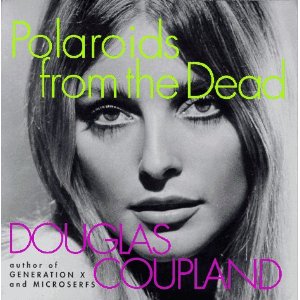
[READ: February 1, 2011] Polaroids from the Dead

After reading Shampoo Planet, I wanted to see if I remembered any of Coupland’s books.  So I read this one.  It’s entirely possible that when I bought this book I was disappointed that it was not a new novel and never read it.  Because I don’t remember a thing about this book.  (This is seriously calling into question my 90’s Coupland-love!).

But I’m glad I read it now.  It’s an interesting time-capsule of the mid-90s.  It’s funny to see how the mid 90s were a time of questioning authority, of trying to unmask fame and corporate mega-ness.  At the time it seemed so rebellious, like everything was changing, that facades were crumbling.  Now, after the 2000s, that attitude seems so quaint.   Reading these essays really makes me long for that time when people were willing to stand up for what they believed in and write books or music about it (sire nothing changed, but the soundtrack was good).

So, this collection is actually not all non-fiction.  Part One is the titular “Postcards from the Dead.”  It comprises ten vignettes about people at a Grateful Dead concert in California in 1991.  As Coupland points out in the intro to the book, this was right around their Shades of Grey album album In the Dark, and huge hit “Touch of Grey”, when they had inexplicable MTV success and it brought in a new generation of future Deadheads.  He also points out that this is before Jerry Garcia died (which is actually helpful at this removed distance).

These stories are what Coupland does best: character studies and brief exposes about people’s lives.  The stories introduce ten very different people, and he is able to create a very complex web of people in the parking lot of the show (we don’t see the concert at all).  As with most Coupland of this era, the characters fret about reality.  But what’s new is that he focuses on older characters more (in the first two novels adults were sort of peripheral, although as we saw in Shampoo, the mother did have millennial crises as well).  But in some of these stories the focus is on older people (Coupland was 30 in 1991, gasp!).  And the older folks fret about aging and status, just like the young kids do. (more…)

Read Full Post »

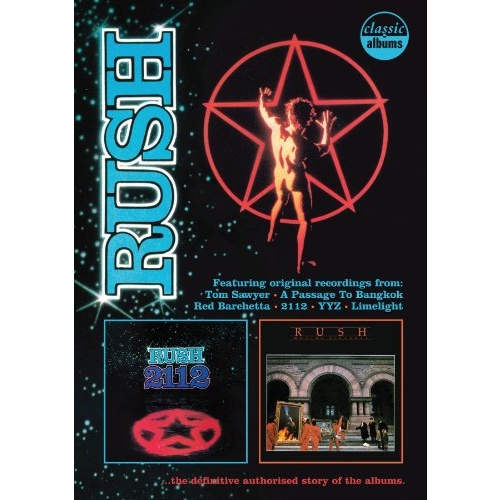
[WATCHED: January 3, 2011] Classic Albums: Rush–2112 • Moving Pictures

Sarah got me this disc for Christmas.  Thank you, Sarah!

This DVD is from the Classic Albums series.  The series is shown on VH1 in the states and BBC (and other places) elsewhere).  There’s been about 35 episodes of the series, with Rush being one of the few bands to have two albums for the show (which is an honor, but which also cuts down on the content for each album by half…boo!).

The show is an hour, and there’s almost an hour of bonus footage on the DVD  (which die-hard fans will enjoy more than the actual show).

The main show itself looks at the creation of these two classic albums.  There are interviews with the band members as well as many people associated with the band (and a couple completely random musicians).  We get their manager Ray Daniels and the producer for these albums Terry Brown (his segments are my favorite because he gets behind the mixing console and plays around with the songs).  We also get Cliff Burnstein (the guy with the crazy hair) who was instrumental in getting Rush publicity. (more…)

Read Full Post »

SOUNDTRACK: RHEOSTATICS-Double Live (1997).

After mentioning the two live shows that comprise the majority of this disc, I figured I’d mention the disc itself.  Rheostatics are a great and engaging live band: Dave Bidini has wonderful repartee with the audience and Martin Tielli’s live guitar work is amazing. The band sounds tight but not stiff and there are a number of tracks here that are goofy (but not throwaway) like the acoustic version of “Bread, Meat, Peas & Rice” and the weird and wonderful “People’s Republic of Dave.”

The songs that were taken from the two Bathurst Street concerts have been professionally mixed and mastered (of course) so even if you’ve listened to the bootleg concerts, you’re going to hear a different quality (and mix, as boots tend to be recorded from one side, usually missing some aspect).

My only gripe is something that they’d never really be able to accomplish live anyway.  It’s in “King of the Past” which is one of my favorite Rheos songs.  On the album, after the break, there’s an electric violin (or something) that plays a really cool dramatic melody.  But live they never play it like that, they rely on Tielli’s guitar.  The guitar sounds fine, but that majestic string section provides such a great contrast that the live version lacks just a little.

On the other hand, the live version of “Horses” is stunning.  As are “A Midwinter Night’s Dream,” “Palomar,” and “Christopher.”

[READ: February 8, 2011] Tropic of Hockey

I bought this book when I was in Toronto sometime in 2001.  I was pretty excited to get another book by Dave Bidini.  And then I proceeded to not read it for a decade.  Hey, these things happen.

But I have to say in many ways I’m glad I waited this long to read it.  The book was written pre 9/11 and as such it has a kind of sweetness about international travel that I miss now.  And I can appreciate it all a lot better with a decade’s distance from everything.  As of 2011, I know that I never want to go to the UAE, but reading Bidini talk about the UAE circa 1999 it sounds like a really fun place to go.

So anyhow, this book, as the subtitle suggests, is Bidini’s attempt to find hockey in weird places around the globe.  Bidini has gotten tired of the NHL: it is bloated, is it full of obnoxious rock anthems during stoppage and the spirit of the game has been overwhelmed by the Almighty dollar (specifically the American dollar).  And so, he wanted to see if he could find people who played hockey the way he and his pickup team play on the weekends: for the love of hockey.  And he was amazed to find hockey fans in these four unexpected places: Hong Kong, China, The United Arab Emirates and Transylvania.

The book is really three things though: it is the story of hockey in different places, it is a chance for Bidini to play hockey in these places and write about the experience and it is a history of Canadian hockey. (more…)

Read Full Post »

SOUNDTRACK: THE TRAGICALLY HIP-Fully Completely (1993).

Even thought Road Apples was good, Fully Completely is amazing.  The band has traded in some rawness for textural complexity and yet they haven’t lost the rocking groove of their earlier sound.

This album has some of my favorite Hip songs: “Courage” (the Sarah Polley cover in The Sweet Hereafter is also beautiful in a very different way). “At the Hundredth Meridian” (a title which should tell you that the lyrics of the song aren’t going to be typical rock fodder), and “Fifty Mission Cap.”   “Fifty Mission Cap” is about the fascinating story of Toronto Maple Leaf Bill Barilko, another atypical lyrical concept and an amazing song from start to finish (although, honestly the opening chords make it sound like it’s going to be a lame 80′ metal anthem…maturation as a band made this song brilliant instead).

The duel guitar opening of “Pigeon Camera” is also gorgeous, as are the wonderful vocal harmonies on the bridge.  And the rawness isn’t all gone either.  “Locked in the Trunk of a Car” rocks as hard as anything on Road Apples.  There’s also a mellow folk song in “Wheat Kings.”  It slows the disc down a bit after the intensity of the amazing “Fully Completely,” and “Fifty Mission Cap,” but the last two songs are a string ending to an already great disc.

Even though I think that Fully is an amazing record, I think that mostly it’s preparation for the even more amazing Day for Night which came out two years later.

[READ: January 26, 2011] “Platanus”

Anyone playing along might have noticed that February is Canada month here.  All of the authors this month have been from the Great White North.  This story breaks with that, but I feel that it still counts because it came in a Canadian magazine.  But Banana Yoshimoto is Japanese (no, really!).  With a name like “Banana” (which is a pseudonym), it’s hard to forget this author.  I even bought Kitchen (her first translated book) when it came out (although I haven’t read it yet).

This story is translated from the Japanese by Michael Emmerich.  It is set in Mexico, specifically in the village of Mendoza.  The narrator (aged 35) and her husband (aged 60) enjoy escaping Tokyo and spending time in this sleepy village.

The story provides some interesting familial background of the two characters (both of their families disapprove of the marriage) and the kinds of things that they get up to in Mendoza.  And really that’s all there is to the story. (more…)

Read Full Post »

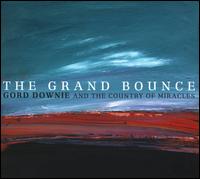
SOUNDTRACK: GORD DOWNIE AND THE COUNTRY OF MIRACLES-The Grand Bounce (2010).

I knew I was going to write about Canadian musicians for this series of Extraordinary Canadians, but I wasn’t sure who would get matched to whom. I figured I’d match Gord Downie to Mordecai Richler, but when I saw this in the liner notes to this disc, I knew I’d made the right choice:

Thank you to the Richler Family for the font you are presently reading.  The Richler font, not publicly available, was created and named for the great Mordecai Richler.  It was commissioned by Louise Dennys, designed by Nick Shinn and graciously made available by Florence Richler.  I am grateful for this honour.

So Gord Downie is the driving force behind The Tragically Hip.  I’m always curious when a guy who pretty much runs a band needs to do a solo album (or three).  And in this case, since the last Hip album was much more mellow and almost country, it seemed like he got some of his less rocky side out on that disc, so what’s the need?  Unless, of course, it’s just the need to play with some other folks once in a while.

Well, whatever the reason, this disc finds Downie in incredible form.  In fact, I think I like this disc better than the last Hip disc (which I did like, but which was a little too mellow overall).  The songs are all great, from the simple folk tracks to the more elaborate rockers.  And, yes, while the disc never rocks as hard as some Hip songs tend to, this is not a simple acoustic guitars and solo vocals record.

“The East Wind” is a wonderful starter.  It’s fairly simple with awesomely catchy lyrics.   I learned that the lyrics are from a quote by Todd Burley.  And they are an awesome way to describe a hostile and violent wind: it’s lazy, because “it doesn’t go around you, it goes right through you.”  Fantastic.

“Moon Over Glenora” sounds a lot like a Hip song.  Downie’s lyrics are almost mumbled and understated until he gets to the end of each verse when he raises his voice an octave for maximum effect.   The stops and starts in the bridge are also great.  “As a Mover” is also smoothly catchy with a wonderful rising chorus.

“The Dance and the Disappearance” is another great conceit.  This song is inspired by a quote from Crystal Pite: “Dance disappears almost at the moment of its manifestation.”  It is suitably dramatic with some great verses.  “The Hard Canadian” is a gentle acoustic number that would not be out of place on the more recent Hip records.  “Gone” feels like a continuation of “Heart,” almost like the slightly more rocking second half of it.

My favorite track is “The Drowning Machine” (I seem to like anything that Downie writes that’s about the sea).  It’s a minor chord wonder, dark and mysterious and wonderfully catchy.  The rock comes back on the rather simple “Night is For Getting.”  It’s probably the least essential track on the disc except that once again the chorus/bridge is really great and memorable.

The last three tracks bring on the mellow, which is a fitting ending for the disc, although since the three t racks take up about 12 minutes, it makes the end drag a bit.  “Retrace” is a country-tinged (steel guitar) mellow track (again, Downie’s voice brings out the excitement) .  “Broadcast” has an extended outro of gentle guitars and piano that for all the world sounds like the end of a disc, so I’m always surprised that there’s a final track after it.   And so the final track “Pinned” feels like filler.  It has a movie projector clicking sound and gentle piano with almost inaudible vocals.  It’s actually a pretty song, but it feels almost discarded here.

One of things I’ve always liked about Downie’s lyrics is that they are atypical of rock songs.  They’re not “about” sex or rock or drugs or swagger or anything like that.  In this case they are about locations and events.  And it really paints a picture.  And speaking of painting, Downie painted the cover art.  The beautiful simplicity of the painting is not unlike the beautiful simplicity of the music on the disc.

Oh and my copy is autographed too! (although I wasn’t there when he autographed it, so it could have been anyone who scribbled on the cover).

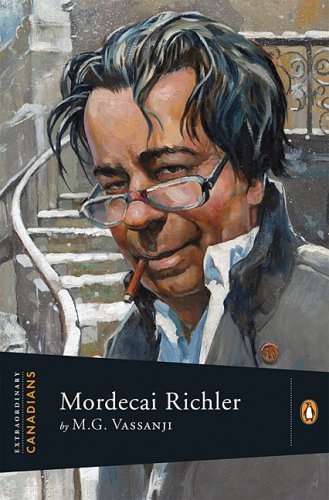
[READ: November 15, 2010] Mordecai Richler

I don’t know a lot about Mordecai Richler, although I feel like whenever I read about him it’s in hushed tones (a neat trick, that).  Nevertheless, for a number of reasons I have wanted to read him for many years but have just never done it.  Now, the stars are aligning with me for Richler.

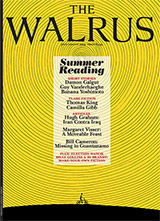
There’s this book, there’s the cover of the October 2010 issue of The Walrus and the recent filming of his book Barney’s Version (the filming of which is discussed in the same issue).  And then a patron asked for the film of The Apprenticeship of Duddy Kravitz.  So, it’ about time to read one of his books.  But here’s the rub…do I start with the great books or do I start at the beginning and work my way through his career?  And, there’s also a huge new biography coming out (the review of which mentions a wonderfully offensive event in which Richler absolutely dismisses his Jewish audience).

This book was written by M.G. Vassanji.  I feel that I’ve heard of him but I’ve never read him.  And yet listen to this incredible biography:

M.G. Vassanji was born in Kenya and raised in Tanzania.  He attended University in the United States, where he trained as a nuclear physicist, before coming to Canada in 1978.  Vassanji is the author is six novels and two collections of short stories…and he has twice won the Giller Prize.

Damn.

Since I read this right after Coupland’s McLuhan it’s tempting to compare them.  And yet, as I said in that review, it seems quite apparent than Coupland’s book will be like no one else’s, so I won’t say much about that.  Instead, Vassanji opens the book by talking about the similarities between himself and Richler and their few awkward but pleasant meetings.  (In this respect yes, it is sort of like Coupland’s book in that the author puts himself into the text). (more…)

Read Full Post »

SOUNDTRACKLOS CAMPESINOS! Live in studio at WEXP, July 31, 2008 (2008).

For this brief in studio performance Los Campesinos! play four songs from their debut album Hold on Now, Youngster.  The band sounds great in this setting.  I don’t have this album, so I don’t know if they deviate at all from the originals, but the live versions are tight and very effective.

The interviews are informative and rather gushing (I’ve never heard a DJ kiss the ass of a performer in such a nice way before…and the band seems really flattered by it…it’s all very sweet).  The DJ also has a funny conversation about their tendency to scream in their songs.  (It’s cathartic).

What I didn’t notice so much on Romance is Boring was how many different lead singers the band has.  With these four songs, there are enough lead vocalists to show a lot of diversity (and a lot of screaming, too–“don’t read Jane Eyre!”).  And, as one might expect if you know their later disc, the lyrics are smart, funny and wicked.

The difference between Romance and Hold On, seems to be that the band were much punkier on this early disc, and that all comes out in these live tracks.  And the songs are all short: 3 minutes and under.  They really pack a lot in here.

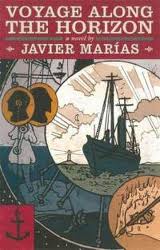
[READ: January 13, 2011] Voyage Along the Horizon

Most of Javier Marías’ books are translated and released through New Directions. But for reasons I’m unclear about, this book, Marías’ 2nd novel, was published by Believer Books (an imprint of McSweeney’s).   I haven’t read any of Marías’ other novels, so I have no idea if this is similar to any of the others (there’s a Q&A at the back of the book which suggests that this is typical of his earlier novels), but it absolutely makes me want to read more by him.

What I loved about this story first off was the sense of distance we received from the main story itself.  (Marías is Spanish, but this is a technique employed by Roberto Bolaño (Chilean) extensively…. Obviously, others do this as well).

The set up of the story is this:  1) An unnamed narrator has a party at his house.  At this party, two individuals, Miss Bunnage and Mr Branshaw (or is it Bragshawe?–he never learns) discuss author Victor Arledge.  Miss Bunnage is a scholar of Arledge and Mr Branshaw has in his house an unpublished novel that investigates the disappearance of Arledge and why he stopped writing.  And so, Branshaw invites Bunnage and the narrator to his house the next day to have the novel (called Voyage Along the Horizon) read to them.

2) So, the next morning, the two go to Branshaw’s house where he does not let them see the book, preferring rather to read the novel aloud (which gives us essentially 3 levels of remove from the action of the story).  That’s a long way to go before you even get to the meat of the book. (more…)

Read Full Post »

SOUNDTRACK: LUDICRA-“A Larger Silence” (2010).

Ludicra’s The Tenant came in at #9 on Viking’s Top Ten.  Ludicra was the first band they played in the (downloadable) show and I knew that this was going to be a different Top Ten list as soon as it started.  Ludicra plays pounding black metal but they have a real difference: both of their singers are women.  True, they use the same growling screaming vocals (and I first thought it was a guy with a higher pitched voice) until the two-minute mark hits and both women harmonize beautifully.  Suddenly the song jumps several notches ahead of its peers.

It’s quite disconcerting to hear thudding double-bass drums and pounding snares behind two women who are harmonizing (a little creepily) over extended notes.  At the end of the track (about 5 minutes in) the song shifts gears into an acoustic guitar and drum thumping near-folk song.  It doesn’t last long, but the respite prepares you for the wailing end which features a really catchy guitar solo.

This is band I’d like to watch a live video of to see how they do their singing and harmonizing (oh, here ya go–wow, the singer looks inSANE!).  Man, I’d be afraid to see them live.

[READ: January 5, 2011] “Radical Will”

I’ve enjoyed Unferth’s fiction quite a bit.  And fortunately, this memoir uses her distinct writing style to huge advantage.  At age 18 (in 1987), Unferth ran away from college and traveled to Central America with her boyfriend to be in a revolutionary movement.

In this excerpt, Unferth and “George” travel to San Salvador.  Unlike other stories where the young, innocent Americans are stopped at gunpoint and left to endure excruciating torments, for the most part these two seem to be ignored.  By almost everyone. (more…)

Read Full Post »

SOUNDTRACK: HARVEY MILK-“I Did Not Call Out” (2010).

This album is #2 on Viking’s Metal and Outer Sound list of 2010 CDs (from NPR).  During the radio show when Viking revealed his Top Ten albums, he mentioned that Harvey Milk is his favoirte band of all time.  I’d never heard them before, so this was eye opening (confusing them with Harvey Danger is a big mistake).  This song comes from the album A Small Turn of Human Kindness.

The melody is dark (pretty but in a bleak sort of way), but the instrumentation is sludgy and menacing.  It is very slow-paced with occasional “riffs” that run through the “verses.”  It has a sort of Melvins meets Swans kind of vibe, but run through the menace of a black metal band.

The lyrics are sung/growled, but unlike a lot of growled vocals, there are only a few words and they are stretched and held for several beats.  It’s a weird thing to hear the demon voice hold notes and actually sound like it is singing!

Interspersed within the ponderous heaviness are some beautiful if not uplifting guitar melodies and soaring solos.  Until, that is, the very end when the song slows to a crawl… deep notes and ambient noise stretch out and the track ends with crackling silence.

It’s menacing, but after several listens, I’m hooked.

[READ: December 30, 2010] “Empire Records”

This is the second of the one page articles labelled “Something Borrowed.”  I have also never read anything by Mistry before.

A few months before leaving Bombay for Toronto, Mistry loaned a friend his LP of A Hard Day’s Night (this was circa 1975).  Albums were very important to him because his father ritualized the playing of the gramophone.  When they eventually progressed to 45s and LPs the family got into pop music and from there, obviously, The Beatles. (more…)

Read Full Post »

SOUNDTRACK: All Songs Considered Year End Music Roundup (2010).

Every year, I like to check various sources to see if there were any albums that I missed.  My definition of good resources: allmusic, amazon, pitchfork.  (There’s another fascinating list available here at Best Albums Ever, a site I’ve never seen before, and I have a large portion of the Top 50 albums.  I didn’t buy a lot of music this year, but evidently I chose wisely!).  I don’t necessarily agree with these lists, but if I see the same album on a few lists, I know it’s worth at least listening to.

This year, since I spent so much time on All Songs Considered, I thought I’d see their Best of Lists.  What’s awesome about the site is that you can hear not only selected songs in their entirety, you can also download the audio of the original show…where the DJs talk about their selections and play excerpts from them.   There are many different lists to investigate.

The most obvious one to star with is 50 Favorite Albums of 2010.  This shows the staff’s 50 favorite albums in all genres.  I admit that there’s going to be a lot on this list that I won’t bother exploring (I’m not really that interested in new classical or jazz and I’m not too excited by most pop music, although I was pleasantly surprised by how much I enjoyed the Kanye West songs here).

But some albums did stand out that I hadn’t heard, and I will investigate them further in 2011:

Buke And Gass, ‘Riposte’
Deerhunter, ‘Halcyon Digest’ (I know, this is on many best of lists)
The National, ‘High Violet’ (This is also on everyone’s list)

Bob Boilen, All Songs Considered’s most awesome host, picks his Top 9 of the year.  I’m on board with about 1/2 of his list (haven’t heard the other half).  Sufjan Stevens is his #1.

Robin Hilton, Boilen’s partner in crime, has a Top Ten which is remarkably similar to Boilen’s.  It has most of the same albums just appearing in a slightly different order.  Lower Dens is #1. (I’ve never heard of them).

Carrie Brownstein (of beloved Sleater-Kinney and now evidently a permanent member of the NPR team) has a Top Ten (Plus One)–funny that she liked more than ten when Boilen liked less than ten.  I’m really surprised by her selection of albums because her own music is so punk and abrasive, but her top ten features R&B and some folky bands.  Her top album is by Royal Baths, a band I’ve never heard of.

Stephen Thompson also picked his Top Ten.  He has an interesting mix of alt rock and jazz.  His number one is by Jonsi from Sigur Rós. (A great album).

Perhaps the best list comes from 5 Artists You Should Have Known in 2010.  I didn’t know any of the 5.  Sarah bought me two CDs for Christmas (and she was pleased to have gotten me good music that I hadn’t heard of!).  The Head and the Heart hasn’t arrived yet, but The Capstan Shafts is great.  I’m also really excited by Tame Impala.

Another great list is Viking’s Choice: Best Metal and Outer Sound (stay tuned for much more from this list).  It is dominated by black metal, but there are a few surprises in there as well.

Even the All Songs Considered Top 25 Listener’s List was great.  I had most of the list (except for The Black Keys who I simply cannot get into).

Although I enjoyed a lot of new music this year, it’s always nice to see that there is some new (to me) stuff to investigate.  Who knows maybe some day I’ll even have listened to enough new music in a year to make my own Top Ten.

[READ: December 31, 2010] McSweeney’s #36

With McSweeney’s #36, it’s like they made my conceptual ideal.  Its weird packaging is fantastic and the contents are simply wonderful.  But let’s start with the obvious: this issue comes in a box.  And the box is drawn to look like a head.  You open up the man’s head to get to the contents.  Brilliant.  The head is drawn by Matt Furie (with interior from Jules de Balincourt’s Power Flower.

Inside the box are eleven items.  The largest are smallish books (postcard sized) running between 32 and 144 pages.  The smaller items are a 12 page comic strip, a nineteenth century mediation (8 pages) and 4 postcards that create a whole picture.  The final item is a scroll of fortune cookie papers.   The scroll is forty inches long with cut lines for inserting them into your own fortunes (I wonder if they will sell this item separately?)

Aside from the bizarre head/box gimmick (and the fact that there is ample room in the box for more items), the contents are really top-notch.  For while many of the books included are individual titles, there is also an actual “issue” of McSweeney’s (with letter column and shorter stories) as well.  So let’s begin there

ISSUE #36: New Stories and Letters.  The resurrected letters page continues with more nonsense.  I’ve often wondered if these are really written like letters or if they are just short pieces that have no other place to reside.  (Oh, and the back of this booklet contains the bios for everyone in here as well as assorted other folks who don’t have room for a bio on their items).

LETTERS (more…)

Read Full Post »

SOUNDTRACK: TIJUANA NO!-Transgresores de la Ley (1994).

In the mid 90s, when I was living in Boston, I discovered MTV Latino, and the Rock en Español resurgence.  Since I’m always interested in new music, I bought a few CDs by these Spanish-singing bands.  For most of my life I’ve thought about the rabid Japanese audiences who loved bands that sand in English.  Did they understand the lyrics?  And did it matter?  Well, here was a test for me.

Tijuana No! was the first band I bought and I really liked it (and still do).

The disc opens with a rollicking ska rocker “Goples Bajos” which features a wonderful horn filled breakdown and ends with a blistering guitar solo.  The title track, “Transgresores de la Ley” opens with a military beat and a military sounding flute before taking off with a heavy verse and, more impressively, a punk/shouty chorus.

My favorite song is “Tu y Yo,” it’s funky all over the place and has a super heavy midsection.  And “Borregos Kamikazes” has a wonderful juxtaposition of speedy, almost loco lyrics in the verses with some great group vocals in the chorus.

The first surprise (for me) comes with “La Esquina del Mundo” because suddenly there’s a female vocalist on lead.  She sounds great (her voice has a cool echo on it) and although she doesn’t quite convey the heaviness of the rest of the track, it’s an interesting juxtaposition.

The second surprise is that the track “Conscience Call” is mostly in English (I got so used to not understanding the lyrics that I was quite surprised to hear words I understood).

The final surprise comes with the penultimate track: an excellent cover of The Clash’s “Spanish Bombs.” Again sung by the female vocalist, her voice works wonderfully with the track.  The chorus, sung in Spanish, is really perfect.

So, in answer to the question, do you need to understand the lyrics to enjoy the music?, I’d say no.  Although it is nice once in a while.

[READ: November 20, 2010] The Savage Detectives

This was the Bolaño novel that I had initially wanted to read because the reviews were so glowing (amusingly enough it turns out to be virtually the last book of his that I read).  And now that I have read almost all of his books, it’s obvious how this book fits into his larger scheme of writing (I wonder what I would have thought if I hadn’t read the other books, too.  In fact, I wonder if I would have liked 2666 more at the time if I had read this one first.  As it is, I think I enjoyed this more having read 2666 first).

[DIGRESSION: When I was reading 2666 I found a fantastic review of 2666/The Savage Detectives by Daniel Zalewski, which reviews 2666 and The Savage Detectives in context of Bolaño’s life].

In a previous post I noted how Bolaño doesn’t really write conventional novels.  And this one is no exception.  Part I is the diary of Juan Garcia Madero, a 17-year-old aspiring poet.  It covers from November to December 31, 1975 .

Garcia Madero talks about his introduction to the visceral realists, a group of Mexican poets whose legacy is more or less unknown to us now (in the book–in reality there was no such group).  The two main visceral realists are Arturo Belano and Ulises Lima, and we will follow or look for these two for the rest of the book.

As with other Bolaño books, there is a massive obsession with sex.  At first Garcia Madero is a virgin and thinks about sex a lot.  Then he finally has sex with first one woman and then many women.  And he writes about them in his diary and spares no details.  (Many entries reveal him having sex with one of his girlfriends 5 or 6 times a night).  And there are of course whores and other deviant sexual individuals (including a guy who carries a large knife by which he measures his penis–we never see this, it’s all hearsay, but it’s in there).

And during this time, he is writing poetry as well–a fully welcomed member of the visceral realists.   (more…)

Read Full Post »

« Newer Posts - Older Posts »