Feeds:
Posts
Comments

Archive for the ‘Translators’ Category

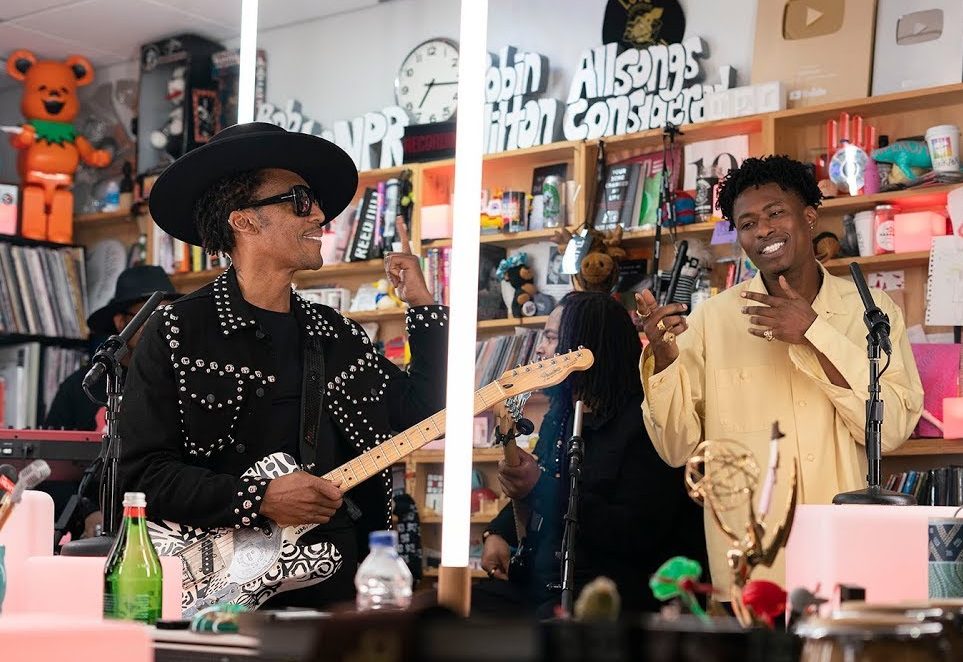
SOUNDTRACK: BOB WEIR AND WOLF BROS.-Tiny Desk Concert #953 (March 2, 2020).

Bob Weir is, obviously, a founding member of Grateful Dead.

This set goes on much longer than a typical one (and they’re not rappers or R&B singers).  I got a kick out of this comment in the blurb:

When I produce a Tiny Desk Concert, one of my most important jobs is to make sure they run on time and that the performance sticks to our set time limit (roughly 15-minutes). So when Bob Weir and Wolf Bros achieved lift-off during a pre-show sound-check, it was my unthinkable responsibility to tell the guy who practically invented the jam band to… stop jamming.

It also fell to me to keep looking at my watch during the performance, even as I realized that my favorite “Dark Star” jams alone lasted well beyond our fifteen-minute performance window.

I’ve never been a big fan of the Dead (despite how much I enjoy jam bands).  Their music is a bit too slow for my tastes.  But in the right mood (like a rainy Sunday), they can be right on.

These songs are slow and expansive and allow for a lot of jamming.  There’s not a lot of opportunity for jamming here as this is just a trio, but Weir is very comfortable stretching things out.

The trio make an interesting look with drummer Jay Lane in a tie-dyed shirt and upright bassist Don Was in all black.  Weir stand between them in a gray T-shirt and his gray hair.

The first song

“Only a River,” from Weir’s 2016 solo album Blue Mountain, feels like a memorial to Jerry Garcia, with a reference to the Shenandoah River, a body of water Garcia famously made reference to on the song, “A Shenandoah Lullaby.” Weir turns the chorus into a mantra and seems to evoke the spirit of his fallen bandmate.

This song references the melody of “Shenandoah” pretty directly n the middle, but the “hey hey hey” let’s you know that this is a very different song.

Before the second song, he says they just got clearance to play it.  I didn’t realize that “When I Paint My Masterpiece” was a Bob Dylan song, but I guess maybe I should have.

And what would a Grateful Dead-related performance be without a Bob Dylan song? The intimacy of the Tiny Desk turns Weir into a sage Master Storyteller during a version of “When I Paint My Masterpiece” with its reference to Botticelli and a lonely Roman hotel room.

The set really comes to life when special guest, Mikaela Davis comes out to play harp.

The harp is always a magical-sounding instrument and amid the quietness of this trio, it really shines.  Davis basically takes the lead on “Bird Song” including bending strings (I’ve never seen a harpist do that before).

Midway through the song, Weir waves his hand and allows Davis to take a solo while Weir puts down his acoustic guitar.

When Weir switches to electric guitar midway during “Bird Song,” I looked at my watch because I knew we were in for some time travel. And the band didn’t disappoint as the rhythmic interplay between Weir and Davis showed off his singular rhythm guitar style, honed from more than thirty years of playing alongside one the most idiosyncratic lead guitarists in modern music.

Davis does some more note bending in her solo, which is so interesting.  When Weir joins in, their music melds really beautifully.

They jam the song out for 8 minutes and as the music fades Bob says, I’m pretty sure we’re over our time limit.

He says they were slated for 20 minutes and they’re at forty now (sadly we only get to see 26 minutes).  Someone shouts “keep going” and they do one more.

They play “Ripple” Grateful Dead’s fifty-year-old sing-along from their album American Beauty.  It demonstrates

the song’s celebration of hope and optimism, found in the spirit of all of the band’s music. Bob Weir continues to evoke that spirit every time he picks up a guitar; and as we all sang along at the end, we evoked that spirit too: “Let there be songs, to fill the air.”

I suppose it’s never too late to start enjoying a band, right?

[READ: March 25, 2020] “In the Cards”

This is exactly the kind of story I don’t like.  It seemed to go nowhere and in an oblique fashion. Plus the narrator was really hard to relate to.

The point of the story seems to be the last line: “You’re crazy when you’re a good writer.”

It starts with a discussion of playing cards and moves on to tarot cards.  Her friend Michel gave her a deck and she felt ill at ease just reading the directions.  But what most disturbed her was the image of The Fool.

The narrator says she is unfamiliar with playing cards and yet later she says when she was a child they played Mistigri which is a card game.  So go figure.  (more…)

Read Full Post »

SOUNDTRACK: RAPHAEL SAADIQ-Tiny Desk Concert #920/Tiny Desk Fest October 31, 2019 (December 5, 2019).

This Tiny Desk concert was part of Tiny Desk Fest, a four-night series of extended concerts performed in front of a live audience and streamed live on YouTube, Twitter and Facebook.

Back in October, NPR allowed fans to come watch some Tiny Desk Concerts live.  October 31st was R&B night featuring Raphael Saadiq.

Saadiq did a Tiny Desk Concert in 2009 and I was surprised at how much I enjoyed it.  It was a stripped down show–more acoustic than R&B and I was really impressed with his guitarist Rob Bacon.  I either forgot or didn’t know that he “lit the fuse for soul’s popular revival as the lead for Tony! Toni! Tone!”

Well, Bacon is still with him and he is the highlight of this set for me.

This was  the final Tiny Desk Fest show and it runs just over 30 minutes, with Saadiq playing seven songs.

“I’m Feeling Love” is slow and sexy with some quiet wah wah (from Bacon and Saadiq) guitar running through it.  I rather enjoyed this part

I live my life like Willy Wonka
It’s that TV Edith Bunker
Uncle Fred and Jimmy Walker
George Jefferson had that walk

After this first song Saadiq brings out a special person.  After a big introduction it turns out to be Lucky Daye (whom I’ve never heard of) although the blurb says he is a “rising soul singer and songwriter.”

They sing Saadiq’s song “Be Here.”  I liked Saadiq’s voice last time but I found Lucky Daye’s voice to be way too poppy for my taste.  But this song features some funky slap bass DaQuantae “Q” Johnson and cool synths from Daniel Crawford.  Without question, though, the highlight is Rob Bacon’s ripping guitar solo.

Up next is my favorite song of the set.  It’s called “This World Is Drunk” (and the people are mad).  It is slow and pretty, with thoughtful lyrics.  I like the story telling better than the macking.

Lucky Daye comes back out and they’re going to do two of his songs. He says he wants to sing “Call,” but Saadiq says No, let’s do “Love You Too Much” first.  Daye sings and I really don’t think much of this R&B ballad.

I like “Call” better because Bacon switches to acoustic guitar and there some nice percussion (rim shots) from Alvin Ford.  I feel like this song is a bit less poppy and more interesting.

Before the last song Saadiq jokes about when he played there ten years ago: “it was really a tiny desk.”

“And honestly we were kinda complaining about it,” Saadiq laughs, recalling that performance in 2009, back when hosting intimate little concerts behind Bob Boilen’s desk was still a fledgling idea at NPR Music. “Like, we kinda didn’t wanna do it,” he admits in hindsight. It wasn’t until the video-taped version of his set hit the Internet and began picking up views that the lightbulb went off for Saadiq, too. “It’s like probably the biggest streaming I ever had, so it’s kinda good to be back — not kinda good; it’s really good to be back.”

The final song, “Still Ray” was inspired by southern marching bands… black colleges.  I didn’t go to one of those and my school did not have a marching band.  But one day I was gonna put a tuba in my song and it was gonna be the main thing in the song.  They asked where the hook?  The hook is the tuba!

Brent Gossett comes out (technically with a sousaphone) and I really like this song a lot.  He’s right, the tuba is the hook.  Near the end of the song he cuts out the music:  Just me and the tuba.  I’ve been waiting for this my whole life!

I still prefer his 2009 set, but there’s no denying Saadiq’s charisma.

[READ: March 1, 2020] “Spellbound”

This is an excerpt from the novel Hurricane Season translated by Sophie Hughes.

This except opens with an estate, agent saying that the woman never really died, even though her body was found in the irrigation cancel. They say she changed shape as she was being stabbed.  Perhaps she was a bunny or a lizard or bird.

But once her body was found people were quick to break into her house to see if they could find treasure.

The say Rigorito and his men broke down walls and dug up the floors. They even broke down the door of the Old Witch in the back of the room–where the Old Witch’s mummy lay preserved.  The mummy crumbled in front of them and those men fled town never to return.

That’s what some people say. (more…)

Read Full Post »

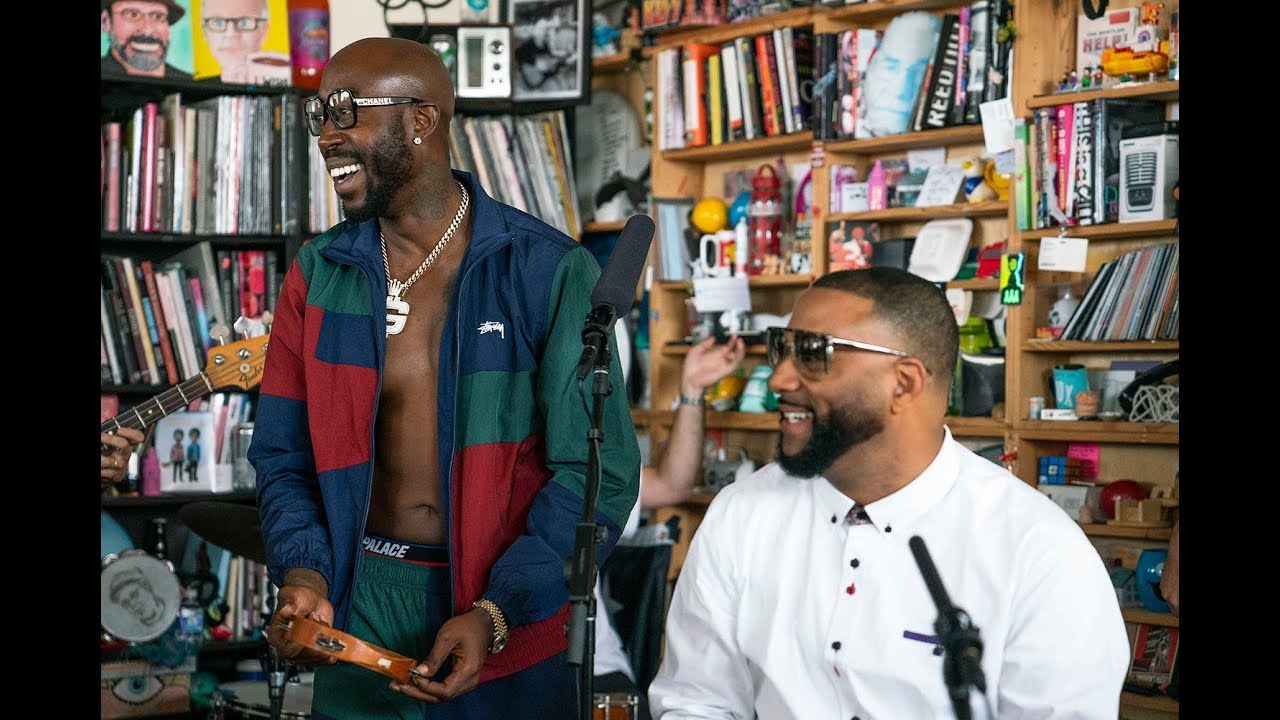
SOUNDTRACK: FREDDIE GIBBS AND MADLIB-Tiny Desk Concert #921 (December 6, 2019).

I was watching this video and I thought–that piano player looks like Marco Benevento.  And holy cow it is!

And he is amazing–playing his jazziest, prettiest melodies.  In fact, the whole band is fantastic.  They’re a band that I didn’t know Benevento was part of called El Michels Affair.  Okay, maybe he’s not.  It turns out that El Michels Affiar is a band founded by Leon Michels (who plays saxophone here).  And check this out

After performing with Raekwon at a concert, the group began working with other members of the Wu-Tang Clan and covered several of their songs … [which]…  yielded an album released in 2009 as Enter the 37th Chamber, a play on the album Enter the Wu-Tang (36 Chambers).  El Michels Affair followed this with a second album of arrangements of songs by Wu-Tang Clan and from its members’ solo releases, titled Return to the 37th Chamber.

And evidently producer Madlib really wanted to work with El Michels Affair

This Freddie Gibbs and Madlib Tiny Desk performance was a year in the making, largely because Madlib insisted on playing with El Michels Affair, a vintage funk and soul band based out of New York. But it was worth the wait. When pianist Marco Benevento opened with a delicate, almost jazzy run, it created the perfect opening — and juxtaposition — for hard-hitting emcee, Gibbs to jump in and ride the hell out of that beat.

Gibbs brags about Madlib the legend while Marco plays and Madlib makes all ind of weird sounds with the thunder stick.  Marco opens with a pretty rill, the funky bass from Nick Movshon kicks in and the horns (Leon Michels and Dave Guy in trumpet) play a wonderful melody. Its jazzy and improvish.

From the moment they launched into “Education,” a cut off the latest MadGibbs project Bandana, it was obvious Gibbs has spent countless hours honing his style. Meanwhile, Madlib, an enigmatic and reclusive producer known for his analog head-nodders, brought along a small thunder tube and vintage electric bongos circa 1960. Just getting a chance to see him ignited excitement in the NPR crowd.

I love the way drummer Homer Steinweiss shifts gears in what seems like mid song to a faster beat for “Gat Damn.”  Marco is on a soft synth sound while Madlib plays electronic bongos.  Of course, there’s some funky bass too.  Gibbs does some impressive quick jazzy rapping through the middle part.

“Soul Right” sounds great with some soft keys and horns. It’s slow and smooth and has a really catchy chorus.

Throughout the set, Gibbs’ uses the N-word about a million times and this song has a fantastic refrain of

‘Cause I been struggling my whole life, yeah
So I broke it down and it was all white, yeah

I had to wonder if it was awkward that everyone in the band is white.  Although Freddie says that there’s a white nigga up there-Leon.  The band is all his fam.  Leon… My boy!

But the conclusive jam in this killer set was “Freestyle S***,” a track that drips with the smoothness of satin and swagger of the seventies. It and the rest of the set elevated the room for both longtime purists and new fans alike.

“Freestyle Shit” opens with a great horn riff and Gibbs does some great fast rapping in the middle.  It is a fantastic musical jam.

But the way Gibbs emphatically showed his love for Madlib was just as beautiful to witness. There’s little doubt about their deep admiration and appreciation for each other. It was hands down, for me, the best Tiny Desk of the year.

This has turned into one of my favorite Tiny Desks.  Let’s hope this gets Marco Benevento his own show!

[READ: March 1, 2020] “Koftaesque”

This is an excerpt from Szabłowski’s book How to Feed a Dictator: Saddam Hussein, Idi Amin, Enver Hokha, Fidel Castro and Pol Pot Through the Eyes of their Cooks.

This sounds absolutely fascinating and this excerpt was certainly enough tom make me want to read more.

I’m also fascinated that this book was written in Polish (translated into English by Antonia Lloyd-Jones) and was most likely translated to him from whatever the chef’s language was.

The example in the except is from Saddam Hussein’s chef Abu Ali.  He says that Hussein invited a bunch of friends on his boat and Ali, his personal chef, was to cook for them.  They were not at war with anyone and everyone was in a good mood. (more…)

Read Full Post »

SOUNDTRACK: JONATHAN SCALES FOURCHESTRA-Tiny Desk Concert #943 (February 7, 2020).

I assumed that by this name, that this band would be contemporary classical.  I didn’t really consider that they would be jazzy (or that there would be three of them).  I certainly didn’t expect to hear steel drums!

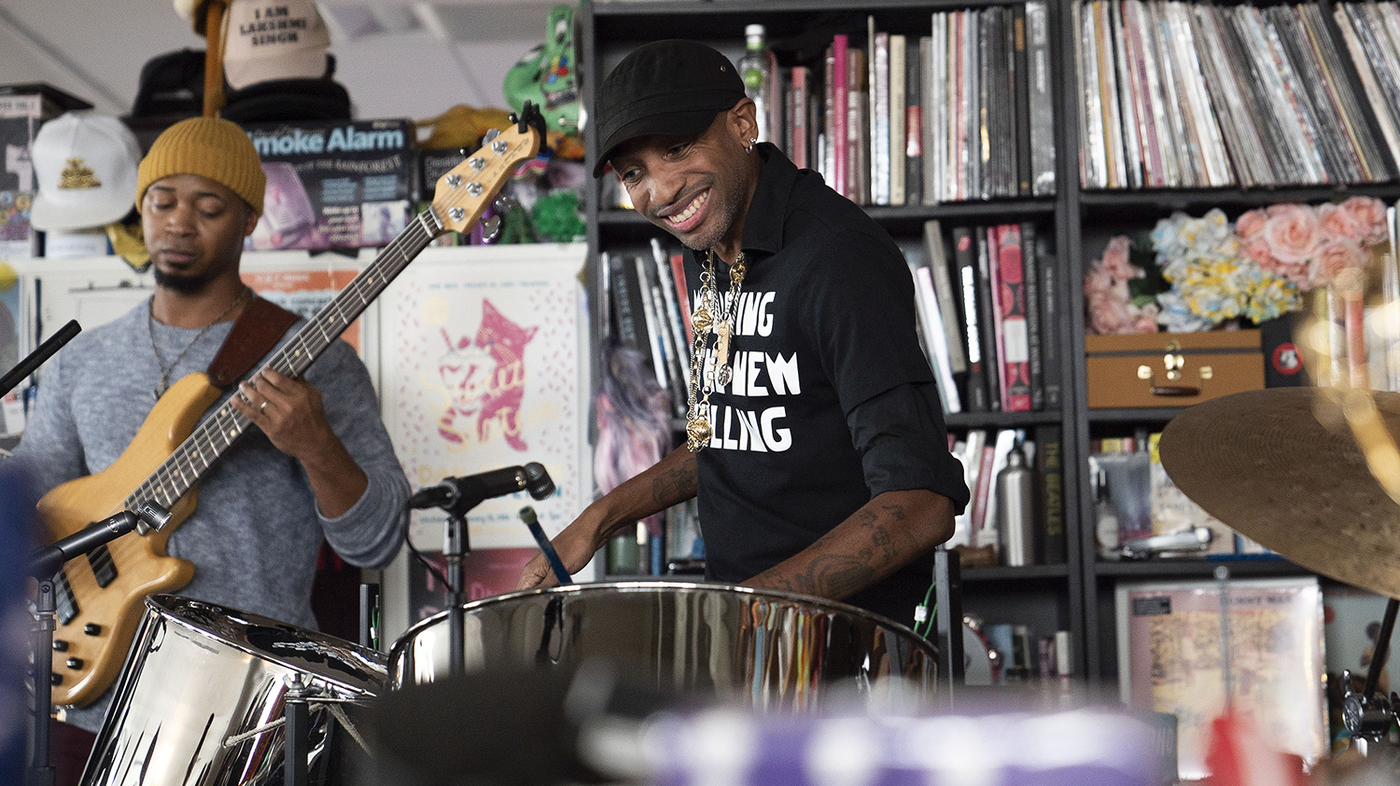
Here’s a first: Steelpans at the Tiny Desk. It’s true. Nearly a thousand performances into the series and the instrument has never been featured, until now. While the two bowls look shiny and new in this Jonathan Scales Fourchestra set, they were once authentic oil barrels, pounded, finished and tuned for bandleader, Jonathan Scales. But instrumentation and singularity aside, Scales’ virtuosity, energy and connection to his bandmates wowed the NPR crowd, many of whom had never heard this music before.

The first song “Focus Poem” opens with spectacular bass from E’Lon JD and complicated drums from Maison Guidry.  Then the huge surprise comes when Scales plays the steel pan drums.

Scales’ musical hero, Béla Fleck, happened to be performing in the Washington, D.C. area on the same day as this performance, with just enough time to stop in for one song,”Focus Poem.” It’s a cut Fleck originally played banjo on for the band’s 2018 album Pillar. While the tune is a regular on the trio’s setlist, this performance marks the first time they’ve played it live with Fleck. Scales later revealed that it was a little risky to open with such a technically complicated piece, but the execution was still superb.

Fleck is, of course, fantastic too and he plays a fantastic solo at the end.

So it’s like jazz but with banjo and steel pans.

I assumed that the band was fairly new but

Jonathan Scales Fourchestra has been performing for 13 years, now, redefining the steelpans as a signature jazz instrument. The first iteration of the band was a trio-plus-guitar, hence the “four” in the name. But when drummer Maison Guidry and bassist E’Lon JD joined Scales later, it was clear the trio’s sound was complete. JD grounds the music with powerful bass lines, combined with guitar-like melodic and harmonic embellishments.

The other two songs in this set are also from Pillar. While it’s not his most recent album, Scales calls it his most potent work to date, a quintessential representation of his music.

Introducing “We Came Through The Storm,” he says he’s always wanted to compose for cinema, so for this song he pretended he was writing music for a movie.  There’s a repeating four-beat rhythm (with complex drumming on top, of course) and great lead steel pans and wild bass.

With its heavy arrangement, is one of their most popular tunes, partly because of the dazzling drum riffs Guidry nails with playful proficiency.

The final song they play is “Fake Buddha’s Inner Child” is a lullaby to your inner child.  We have an outer shell he calls the Fake Buddha which says “we can handle this, I’m cool.”  Meanwhile, the inner child is exposed, full of anxiety and depression.  He considers this song to be a “Lullaby to the inner spirit.”  It’s a quieter song with high notes on the bass and a lot of cymbals.

It’s a great quiet ending to a wild set.

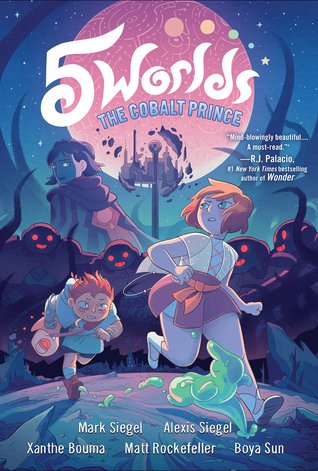
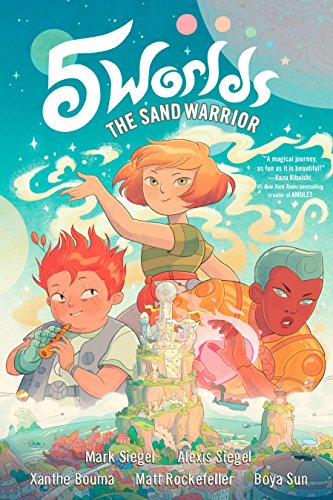
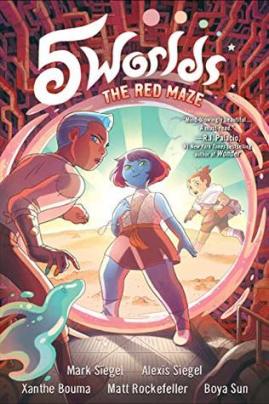
[READ: February 10, 2020] 5 Worlds Book 3

The story is magical and fairly complicated with a lot of parts.  But the crux is the dire situation on the five worlds.  Moon Yatta is a desert; Salassandra’s animals are all dying; Grimbo(e) is covered in ocean moss and there are water riots on Toki, where the plant people are dying.  The Mon Domani Elder says that they need to light the beacons on the roof.  The other leaders are less convinced of the need for beacons and some are hostile to the idea.

Behind all of the trouble is a creature known as The Mimic–a super nasty fellow that is able to possess people.

At the end of book two our hero, Oona Lee and her friends An Tzu and Jax Amboy were unable to light the second beacon.  It turns out they have to be lit in a certain order and so they are off to Moon Yatta and the red beacon.

The opening of book 3 is a flashback to what happened to Jax when the escape pod crashed at the beginning of book two.  He was rescued by the Salassi Devoti and one of them put its spirit inside of Jax.  They never thought it would be possible to put a spirit in an android but Uncle Jep had left a space inside of Jax–a space that is perfect for this creature to infuse Jax with life.  Noe Jax is more than he was before.

An Tzu is very excited to go to Moon Yatta because it is the land of the free where they elect their leaders, where hopes and dreams come true.   The citizens hate to break it to him but things are not perfect there–the mimic is there, too.

When they arrive the beautiful lush moon (from An Tzu’s postcard) is now desert wasteland.  It turns out that Stan Moon bought all of the crops.  All water has been diverted to irrigate the Stan Moon fields. Stan Moon also bought the Mon Domani lands which is why Sao Sablo is a slum and why An Tzu’s life has been miserable.

The Red Beacon is in the center of Moon Yatta under a maze of tubes and tunnels.  The beacon is powering everything on the moon. How will they ever get to the beacon through the maze?  An Tzu says an old joke: “The best way to get there is to not start from here.”  Nobody gets it.

When they land on the moon, Oona is a celebrity–the beacon lighter–and they are preparing to introduce them to the Head Citizen.

Felizia is the Head Citizen and she is charming and delightful.  She has a feast for them which makes An Tzu pretty excited.  But she admits that the feast would be even more special if the shapeshifters were allowed to do their transforming dances.  The transforming dances are now illegal–they must wear collars that prevent them from changing shape.  Those who refuse are sent to the ruby desert.

When Oona says she wants to light the red beacon Felizia says, its an election season, they cant go changing things right now.

Felizia’s second in command Brightley whispers that Oona should talk to Eldridge and Derrick Stoak, heads of Nanotex Corporation–they have a bit more sway with the beacons.

The next morning the first order of businesses is getting An Tzu’s disappearing disease looked at.  They find the best doctor in the city and she insists on a large payment before even looking at him.  Moon Yatta is not the land of dreams that An Tzu imagined.

Oona has a similar problem with Derrick Stoak.  He wants to know what she will do for him if he lets her light the beacon–he is a businessman not an idealist.  What he wants most is for Jax A,boy to return to the Starball field–playing for Stoak’s Leaterheads team, of course.  Oon says she will ask Jax but she doesn’t think he’ll agree (and hopes he doesn’t).

An Tzu has started having vision. He comes out of one and believes that Stan Moon is the mimic.

Even Derrick Stoak is concerned is about Stan Moon, but his brother Eldridge thinks that Stan Moon is a great fit for Nanotex.

In order to assist Oona, Jax agrees to play one special Starball game.  But when Jax asks about the beacon, Derrick says too bad.  So Jax refuses to play but Derrick seems to know how to override and control Jax.  Dax still has that spirit in him but Derrick believes his doctors can reset Jax to his original Starball playing self.

Meanwhile, Oona, An Tzu an Ram Sam Sam are in the red maze looking for a way to the beacon and also looking for Etta Zelle, a Yattan Sand Master and shapeshifter.  While they are looking around they meet some street urchins. The urchins recognize Oona as the person who lit the beacons.  Thet tell her that they are rebels although they are all wearing the form-lock collars to prevent them from shapeshifting.

When they try to blast through the maze, they are arrested and sent out to the dessert.  Although it turns out Brightley had them sent to the desert rather than prison so that they could meet Zelle.  Oona confesses to a man there that she needs to find Zelle.  She also weeps a bit that she was in the red maze and couldn’t even summon the fire needed to light the beacon.  The stranger says “perhaps you were too busy–carrying the weight of the world on your shoulders.”  Then the man transforms into Etta Zelle.

Etta Zelle is great, comforting and instructive.  She also confirms that Stan Moon is the Mimic, but even if they kill Stan Moon, the mimic will live on.

Then Etta Zelle shows Oona how to make a portal (it’s pretty amazing).  Oona can’t actually control the portal yet–to rather amusing results.

Back at Nanotex headquarters, the board are talking about the situation on Moon Yatta and Eldridge reveals that they are basically going to be rigging the election in favor of Stan Moon.  The leaders are outraged and don’t want to undermine Yattan democracy.  Mr Tarney says he quits, but as he does so, Stan shapeshifts into a fearsome creature to frighten Mr Tarney into going along with them.   The only one having any misgivings now is Derrick, but he keeps his mouth shut.

Part of the propaganda for Stan Moon comes in the form of Peet Bowl a fat , sweating outraged TV person–this character is so clearly any one of a number of Fox news anchors–hysterical, unhinged and strangely persuasive.    He shouts things like

Our very way of life, our own Yattan way is under siege.

If only he said they would make Yatta great again.

Meanwhile the police track Oona and her crew to he desert  They storm in with the intent on grabbing them all but Etta Zelle and Oona make portals and everyone escapes except Zelle.

Although Derrick is upset about what happened, he still wants to ensure that Jax Amboy is back on board with him.  Soon we see Jax in a commercial urging criminals and rebels to quit and to turn in the beacon lighter.  But before Oona and An Tzu can get too upset, the person who actually reprogrammed Jax finds An Tzu and says that he an be deprogrammed if he says “Do it for Laaniel.”   And so, during the important Starball game, when Jax collapses, An Tzu is able to shout those magic words to him.

As the book comes to an end we see that Stan Moon and Eldridge have created an army of Jax Amboy look-alikes.

When Stan Moon walks away, Derrick asks Eldridge to try out the cryotech pod.  Which he closes up and sends off to the Y-26 System.

He then apologizes to Jax Amboy and sets a bomb amid all the fake Jaxes.

Oona, An Tzu, JAx and Ram Sam Sam are reunited, but before they celebration the election results are in and Stan Moon has won

And this surely has to do with the 2016 election

An Tzu looks at the screen on Stan Moon talking and shouts “Liar! It’s the Mimic!  They elected the Mimic!”  And Oona says “Most wont believe it. Some won’t even care.”

The security forces close in on Oona and her group but she uses some advice that An Tzu gave her earlier to get to the beacon.

The book end with An Tzu’s eyes glowing in a strange way and when they they ask him what he sees, he says Home!

Continued in the next book!

The illustration style continues to be excellent and very trippy–soft and delicate with fine lines and gentle coloring. It looks very anime and yet it’s not.  It’s hard to know which artist’s style dominates.  I feel like Boya Sun, but they all have a similar aesthetic.  I really like the character design as well.  I found it very refreshing that none of the characters look like superheroes (well except for Jax the athlete).  Oona is a short girl who has wide hips and thighs and An Tzu is a chubby boy.  Even the other creatures are all interesting and uniquely designed.

Read Full Post »

SOUNDTRACK: ANOTHER SKY-Tiny Desk Concert #942 (February 5, 2020).

I have watched this video many times because I love everything about this band.  I love the unexpectedly intricate guitar, the adventurous bass and complex rhythms, and I love singer Catrin Vincent’s voice.

Drummer Max Doohan open “Brave Face” with really fast hi-hats.  Some very high bass notes (from Naomi Le Dune) and a smooth, slinky guitar (Jack Gilbert) makes the melody as Katrin sings in her unique, deep and clearly accented voice.

After a verse or so, Katrin plays a piano chord while the guitar opens a clean catchy melody.  The  song stops musically for a moment before it kicks back in with some rocking guitars and fast drums.  Despite the rhythmic changes, all the while her vocal style remains unchanged–a great contrast.

There’s so much dynamism in this song.  It builds and builds to a dramatic ending.

There’s intensity and clear intention to the music of Another Sky. I knew that from having seen this London band perform at SXSW. But in the confines of an office, hearing Catrin Vincent’s unique voice, raw and un-amplified, brought it to another level. They came to NPR back in December to perform, opening their Tiny Desk set with a new song, released just this week. “Brave Face” is a window into the uncompromising sound and message of Another Sky, as Catrin sings in her impassioned voice:

“You must put yourself first
believe you will be loved
only you can demand all you deserve
You put on your brave face, now girl.”

This isn’t a message that is easy to punctuate with music, but matching message with music is the strength of Another Sky. You can hear it in the way Jack Gilbert weaves his guitar lines around the haunting vocals, the way the rhythm section sets up a tension with the melody.

“Avalanche” “another song that deals with toxic masculinity, there’s such ferocity, such commitment to the message.”   It opens with guitar harmonics and Katrin singing along on a slow piano melody.  A complex bass line adds some lower notes to the song which teases quiet moments before getting loud again with a nifty guitar solo.  The song once again gets huge before the music cuts out for just some piano and voice.

Before the final song,

Catrin brought some levity in the form of thanks. “I used to work in an infamous thrift shop in London,” she said, “that paid me to sit and watch NPR Tiny Desks on loop, and I used to think, ‘Oh we’ll never get here,’ and we did, so thank you.”

“All Ends” opens with a quiet introduction and more great guitar work.  Once again I love the bass work–chords played at the high end of the neck, along with ringing guitars and Katrin’s voice.

This band is so interesting, I can’t wait to hear more from them.

[READ: February 10, 2020] 5 Worlds Book 2

The story is magical and fairly complicated with a lot of parts.  But the crux is the dire situation on the five worlds.  Moon Yatta is a desert; Salassandra’s animals are all dying; Grimbo(e) is covered in ocean moss and there are water riots on Toki, where the plant people are dying.  The Mon Domani Elder says that they need to light the beacons on the roof.  The other leaders are less convinced of the need for beacons and some are hostile to the idea.

Behind all of the trouble is a creature known as The Mimic–a super nasty fellow that is able to possess people.

At the end of book one our hero, Oona Lee and her friends An Tzu and Jax Amboy were able to light the first beacon.  Lighting the beacon made it rain on Mon Domani for the first time in years.

This book opens with a flashback.  In book one we knew of Oona’s sister, and how she fled just before it was her time to light the beacons.  By the end of the book we saw that she was actively trying to prevent Oona from lighting the beacon.

Master Elon pulls aside a young Jessa Lee and tells her about the Mimic–he is not a legend, he is real and a real threat.  He tells her that the Cobalt Prince wants to destroy the Mimic and only a great sand dancer (and Jessa is the best) can defeat the Mimic.  But just before the lighting is to commence, Elon tells her the true consequence of lighting the beacons (which we don’t hear). (more…)

Read Full Post »

SOUNDTRACK: SHARON VAN ETTEN-“Radio Cure” (from WILCOvered, UNCUT Magazine November 2019).

The November 2019 issue of UNCUT magazine had a cover story about Wilco.  It included a 17 track CD of bands covering Wilco (called WILcovered or WILCOvered).  I really enjoyed this collection and knew most of the artists on it already, so I’m going through the songs one at a time.

Sharon Van Etten continues down her more ambient and mellow style with this cover of “Radio Cure.”

She plays everything–keys and piano–hushed and echoed while her voice soars around the song.  About a third of the way in, the drums kick in, giving it a but of oomph.

I really like the original of this song and I don’t quite like the direction she went with this cover.

[READ: February 17, 2020] “With the Beatles”

I have realized that I really enjoy reading Murakami’s words.  I don’t always understand what’s happening.  I don’t often understand why one part of a story is put with another part. And often when I’m done I’m not entirely sure what happened.  But I really enjoy the journey.

This was one where some parts seemed mysteriously tucked into the story.  It kind of all works thematically, but it’s still a bit disjointed.  Nevertheless, I enjoyed reading the whole thing.

The narrator starts by saying that he doesn’t mind getting older, it’s seeing other people who have gotten older that is so weird.  Really it forces him to admit that his youthful dreams are gone.

He will never forget a girl (a woman who used to be a girl) whom he didn’t actually know.  It was 1964 and this girl was hurrying down the hallway of their school, skirt aflutter, clutching the LP of With the Beatles–the original British version.  Their black and white faces were facing out as she ran.  He has turned this memory into a beautiful moment–he thinks he remembers the way she smelled even (if that is possible).  The moment was thrilling.

But he never saw her again in two more years at school.

He has met many women over the yeas and always tried to recreate that moment to no avail. (more…)

Read Full Post »

SOUNDTRACK: OHMME-“Kicking Television” (from WILCOvered, UNCUT Magazine November 2019).

The November 2019 issue of UNCUT magazine had a cover story about Wilco.  It included a 17 track CD of bands covering Wilco (called WILcovered or WILCOvered).  I really enjoyed this collection and knew most of the artists on it already, so I’m going through the songs one at a time.

I will always associate OHMME with Wilco because they opened for Jeff Tweedy when I saw him.

This song sounds immediately like OHMME–their guitars and voices up front and very distinctive.  There’s some intense backing vocals (ahhhhs that sound like The B-52’s) over a spare bass and drum.  They add some of their now patented hocketing for the middle of the chorus (which sounds fantastic) and then come together to harmonize or the “television” part.

The song is manic and wild with some great weird guitar sounds (that are very apt for latter-day Wilco).  But it’s also really catchy.

I love the original of this song.  This version is so different and it’s also fantastic.

[READ: February 10, 2020] 5 Worlds Book 1

This is an ongoing series that is something of an indie supergroup of creators.  Mark and Alexis Siegel wrote the amazing Sailor Twain, Xanthe Bouma draws for The Amazing World of Gumball, Matt Rockefeller illustrated the children’s book Pop, and Boya Sun created the quirky Chasma Knights.  So this was very promising indeed.

The illustration style of this book is very trippy–soft and delicate with fine lines and gentle coloring. It looks very anime and yet it’s not.  It’s hard to know which artist’s style dominates.  I feel like Boya Sun, but they all have a similar aesthetic.  I really like the character design as well.  I found it very refreshing that none of the characters look like superheroes (well except for Jax the athlete).  Oona is a short girl who has wide hips and thighs and An Tzu is a chubby boy.  Even the other creatures are all interesting and uniquely designed.

The story is magical and fairly complicated with a lot of parts.

On the land of Mon Domani, we see a young girl, Oona, with a halo (which turns out to be sand, I think) sitting alone.  Elders pass and say she looks a lot like her sister, but they shall not speak of her.  Oona is in school learning how to do the summoning dance (which has to do with the sand), but she’s not very good at it because she can’t control the sand.  She and her friend practice but when it goes wrong the bratty boys in class call her Oona Oopsa.  When her sand dancer runs off she chases it and overhears something important. (more…)

Read Full Post »

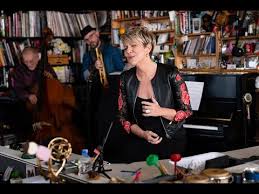
SOUNDTRACK: JOYCE DiDONATO-Tiny Desk Concert #933 (January 15, 2020).

I was sure that Joyce DiDonato had performed a Tiny Desk Concert before, but I actually knew her from a gorgeous NPR Field Recording from 2015.

the last time we filmed the down-to-earth diva, she insisted on singing an opera aria at the Stonewall Inn, the iconic gay tavern in Greenwich Village.

DiDonato is an opera singer and her voice is amazing–she can soar and growl and everything in between.  But this Tiny Desk is not what you’d expect.  For although DiDonato sings in her beautiful operatic voice, the music the band is playing is anything but.

When opera star Joyce DiDonato told us she wanted to sing centuries-old Italian love songs at the Tiny Desk we weren’t surprised. But when she said she was bringing a jazz band to back her up, we did a double take. But that’s Joyce, always taking risks.  On paper, the idea of jazzing up old classical songs seems iffy. At the least it could come across as mannered and at worst, an anachronistic muddle. But DiDonato somehow makes it all sound indispensable, with her blend of rigor, wit and a sense of spontaneity.

The first song is by Alessandro Parisotti.  “Se tu m’ami” sets the stage for what this show is going to be like.  Gorgeous jazz with DiDonato’s impressive voice.

The musical formula for these unorthodox arrangements makes room for typical jazz solos while DiDonato molds her phrases to the flexible rhythms and inserts old-school trills and flamboyant roulades.

A cool trumpet solo from Charlie Porter takes a cool trumpet solo while DiDonato admires his skill.

After three minutes they segue seamlessly into Salvator Rosa’s “Star vicino.”  This one features a piano solo from Craig Terry which he begins with a line from “Twinkle Twinkle Little Star.”  The song also features a muted trumpet solo with a few drum breaks for Jason Haaheim

My favorite moment in the set comes just before 6 minutes where she sings a beautiful lilting melody and then hits a growly note that I was sure was the trumpet until Porter played the same note on his muted trumpet.  It was very cool and kind funny.  Especially when she says

there’s no soprano in the world who could get away with that

Less than a minute later she runs through her enormous vocal range from low to very high to soaring.  It’s amazing.

She says that in the classical world, the standard is perfection–rarely achieved.  Young singers try so hard to get it perfect that they lose the “grease” as the jazz players say.  So this project was designed to put the swing back in these old love songs.

The third song she says is by anonymous, but it is credited to Giuseppe Torelli. “Tu lo sai” is a love song that says, “you have no idea how much I love you.  No matter how much you scorn me, I still love you,”  She says they giving this the Chet Baker treatment.  I’m not exactly sure what that means, but there is some wonderful trumpet work in this song.

It has a slow opening with piano and voice.  The other instruments slowly come in and there is a wonderful moment during Porter’s trumpet solo where she picks up the note from him and runs with it.

Bassist Chuck Israels (who has played with everyone from Billie Holiday to the Kronos Quartet) never solos but he keeps the whole enterprise running perfectly.

For the final song Francesco Conti’s “Quella fiamma” they bring out Antoine Plante on the bandoneon.  She says, “Yea we’re going to South America in a minute.”

Porter uses a different kind of mute which creates a unique sound.  Then the bandoneon comes in and the South American flair is complete.  There’s an incredible moment at the end of the song where Joyce just trills away–showcasing so much of what she can do.

As the blurb says, despite how great the band is

the star of the show is the continually amazing DiDonato, whose voice is certainly one of the great wonders of her generation. The flexibility of the instrument, the colors she conjures and her fine-tuned dynamic range are a few of the reasons she’s still at the peak of her powers. She looks and sounds like she’s having the time of her life.

I see that she sings in Princeton pretty often.  Next time she;s in town I will make sure to check her out.

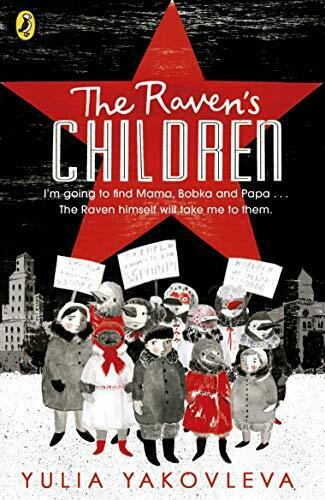
[READ: December 20, 2019] The Raven’s Children

This story was fascinating in the way it started as a very real story, suddenly added magical realism and then turned into an utterly fantastical story.  And yet it all works perfectly well as an allegory of the oppressive regime under Stalin.

Not bad for a book with talking animals.

This book was translated by Ruth Ahmedzai Kemp and she brings this story to life.

Shura is a young boy living in Leningrad.  He lives with his mama and papa as well as his older sister and a little brother.  They live in an apartment building and he and his sister are lucky enough to have a room to themselves.  The amusing set up is that they have to walk through a wardrobe that their father set up to separate the rooms (he removed the back but you can’t tell from the front).  This weird construction actually saves them later in the story.

Shura’s friend is named Valya.  His parents don’t want him hanging out with Valya, but they like to do the same things, so he disobeys.  Today they are putting pennies on a railroad track.  They had been doing this for long enough that they can tell how heavy a train is by the way the resulting items come out.

On this occasion the train that went by seemed to be full of people.  People crammed into each car.  As it sailed past, a piece of paper sailed out.  Valya grabbed it. Neither of the boys could read very well but they could see some numbers on it.  Shura was sure that the paper was important and he desperately wanted it. But he didn’t know how to get it from Valya without making him want it more.

They walked home and by the time they got to Shura’s place, they were physically fighting.  Shura manged to snatch the paper and Valya threw a rock at him.  The rock smashed a window of an older lady’s apartment in their building.  Shura knew he was in trouble for the window.  But it was Valya’s fault.  Of course, he wasn’t supposed to be playing with Valya. (more…)

Read Full Post »

SOUNDTRACK: JORDAN RAKEI-Tiny Desk Concert #932 (January 13. 2020).

I’ve never heard of Jordan Rakei.  I didn’t enjoy the first song of this Tint Desk, but that probably because I don’t really like “soulful R&B artists.”  But the other songs are a bit more jazzy and fluid and I enjoyed them more.

It also seems like Tiny Desk sets that I don’t enjoy are longer than the ones I like.  This one is four songs in 17 minutes–how do artists I’ve never heard of get more screen time than artists that Bob and Robin love?

The blurb is really glowing about the band and musically they are really tight.

The band opened with “Say Something,” from the group’s 2019 album, Origin. It’s a song that encourages people to take action and speak up for themselves.

It’s got a simple riff on the bass (Jonathan Harvey) and the guitar (Imraan Paleker).  The main feature of this song seems to be the backing vocalists: Linda Diaz, Sam Wills and Opal Hoyt who dominate the song.  I think this song just overstays its welcome since the “say something” refrain is sung about a hundred times.

They followed with “Mind’s Eye,” a commentary on technology that questions whether advancements are always a good idea.

I enjoyed the opening looping synth riffage (presumably from Jordan).  Then it kicks in with a vaguely Latin rhythm with percussion from Ernesto Marichales and a cool drum pattern of rim shots from Jim Macrae.  I liked this song a lot more.  bothe because of the really interesting middle section with cool bass lines and swirling synths and guitar as Rakei switches to piano.

This song is jazzy and it segues into the even jazzier “Talk To Me,” from the group’s 2016 debut album, Cloak.  I guess I prefer the clean piano sound and more sparing backing vocals on these two middle songs.   The end is fun with just about everyone playing some kind of percussion instrument.  Jordan sings something although i don’t know if it’s in another language or is just interesting sounds.

The final song “Speak,” was inspired by the TV show The Handmaid’s Tale, it imagines a world where nuclear war has left half the women infertile, as technology runs amok.

For this track it’s just him on piano.  I thought i would enjoy him solo a bit more than with the band, but I don’t find this song all that interesting, so bring the percussion back!

[READ: January 18, 2020] “Protocol”

This was a strange story and I didn’t really understand what was happening for the most part.

The coolest part of the story is that it was a translation and translator David Short managed to write passages with a heavy British accent even though it was originally written in Czech.  I can’t imagine what was happening in the original that would give a sentence like

An’ on top o’ that being a purveyor of love, ‘aving everyone ‘ang on till his death…

Of course, I have no idea why the character would have a heavy accent–it was never alluded to.  In fact, I don’t know why any of this story was the way it was. (more…)

Read Full Post »

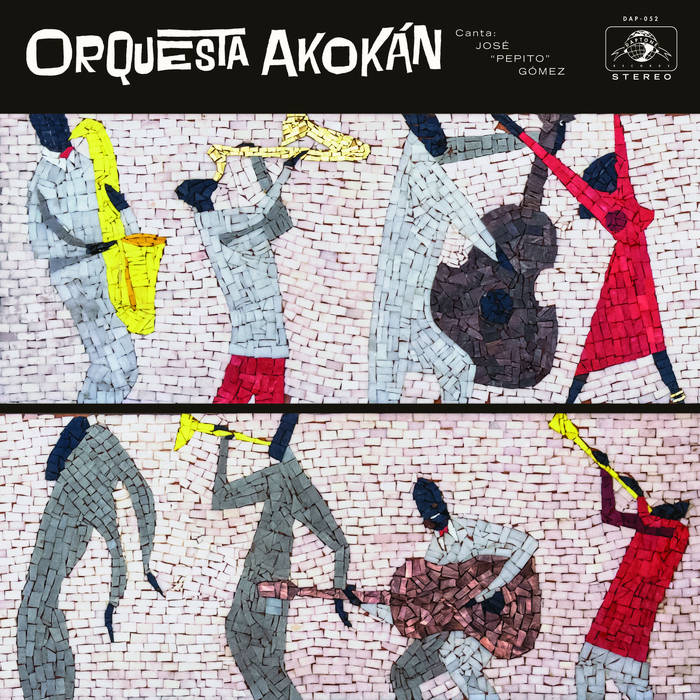
SOUNDTRACK: ORQUESTA AKOKÁN-“Mambo Rapidito” (2019).

Since this story is about something shameful in Cuba, I thought I’d tie it to something that is wonderful in Cuba: Orquesta Akokán

Orquesta Akokán is a band comprised of Cuban musicians and “Latin music freaks” from New York.   They play the kind of Cuban music that filled New York nightclubs in the 1940s and 1950s.  As their website explains:

Robust, time-tested musical architectures of son cubano and mambo are honored and modernized through a synthesis of the rich compositional styles of Havana, New York, and beyond.

This song begins with a descending piano riff that quickly gives way to horn hits and a cowbell that doesn’t stop for the whole three minutes.

The main melody comes in as a swinging, wholly danceable riff with shouted refrains of “baile!”

Then lead vocalist José “Pepito” Gómez shows where the rapidito comes in as he sings an insanely fast vocal part ( I wouldn’t even guess what he’s saying).

The song is fun and swinging and should make everyone want to baile!

Then comes an awesome flute solo.  There’s a cool swinging instrumental sections in the middle before the call and response of the backing vocalists and Pepito.

Then a wild and cacophonous piano solo sprinkles the end of the song.  It is a ton of fun.  The NPR blurb says that

when globalFEST decided to host this year’s edition at New York’s Copacabana nightclub — a venue with a history that stretches back nearly 80 years and boasts a long association with Latin music — the festival’s organizers decided that Akokán had to be the first group they invited this time around.

Mambo!

[READ: December 23, 2019] Guantánamo Kid

This is a story of injustice.

Injustice at the hands of Americans.

Americans should be humiliated and outraged by this injustice.

Injustice that is utterly horrific to behold–and I suspect that this graphic novel holds back a lot of the really unpleasant details to make it readable.

This is the story of Mohammed El-Gharani, an innocent kid who was sent to Guantánamo Bay for seven years.

At the age of 14, Mohammed El-Gharani made money in the streets of Medina, Saudi Arabia.  His family was from Chad and, as such, he was treated like an outsider in Saudi Arabia.  He wasn’t allowed to go to school and the locals treated him badly.  He and his friend knew this was no way to make a living.

One day his friend told him that if he went to Pakistan he could learn how to fix computers.  He even knew people there who would put him up while he studied. (more…)

Read Full Post »

« Newer Posts - Older Posts »