Feeds:
Posts
Comments

Archive for the ‘Translators’ Category

SOUNDTRACK: GOGOL BORDELLO-Tiny Desk Concert #66 (June 28, 2010).

I had heard a few minutes of Gogol Bordello before this concert but it was during a TV show that I was half watching.  When I sat down and listened to this show, I was blown away by hem and immediately bought two of their CDs. Gogol Bordello is a multi-piece, multi ethic band that plays rocked-up Russian folk music (mor or less).  The sound is very traditional, with a kind of gypsy edge sprinkled onto it.  I’m not sure how many people are in the band, or how may people showed up for this concert but it sounds like about 100 in the tint room.  This is also the longest Tiny Desk show that I’ve heard (it runs almost 25 minutes).

The band plays five songs (and there’s a little chatting in between) and as the session goes on the band gets more rowdy (and more fun).  The video (also available at the same site) shows the singer sitting in the laps of the NPR folks and jumping on some desks and just having a blast.  And even though I enjoy shoegazing music, this is the kind of rollicking fun that I would love to see in concert.

The songs are political, but not overtly so, it’s more of a communal feel, of people uniting (which is indeed political).  I think they could get old kind of quickly, but in small doses the band is energizing and wonderful.

[READ: March 27, 2011] “U.F.O. in Kushiro”

This story was originally published in the March 19, 2001 issue and was inspired by the incidents of the 1995 earthquake in Kobe, Japan.  It was reprinted here to memorialize the recent earthquake in Japan.  The story is accompanied by rather devastating photos (and some surreal ones) of the aftermath of the earthquake in Kobe.

The story (translated by Jay Rubin) opens a few days after the Kobe Earthquake.  And even five days after the Kobe earthquake, Komura’s wife is still engrossed in the TV footage from Kobe.  She never leaves the set.  He doesn’t see her eat or even go to the bathroom.  When he returns from work on the sixth day, she is gone.  She has left a note to the effect that she’s not coming back and that she wants a divorce.  Komura’s wind is knocked out of him. (more…)

Read Full Post »

SOUNDTRACK: THE TRAGICALLY HIP-Fully Completely (1993).

Even thought Road Apples was good, Fully Completely is amazing.  The band has traded in some rawness for textural complexity and yet they haven’t lost the rocking groove of their earlier sound.

This album has some of my favorite Hip songs: “Courage” (the Sarah Polley cover in The Sweet Hereafter is also beautiful in a very different way). “At the Hundredth Meridian” (a title which should tell you that the lyrics of the song aren’t going to be typical rock fodder), and “Fifty Mission Cap.”   “Fifty Mission Cap” is about the fascinating story of Toronto Maple Leaf Bill Barilko, another atypical lyrical concept and an amazing song from start to finish (although, honestly the opening chords make it sound like it’s going to be a lame 80′ metal anthem…maturation as a band made this song brilliant instead).

The duel guitar opening of “Pigeon Camera” is also gorgeous, as are the wonderful vocal harmonies on the bridge.  And the rawness isn’t all gone either.  “Locked in the Trunk of a Car” rocks as hard as anything on Road Apples.  There’s also a mellow folk song in “Wheat Kings.”  It slows the disc down a bit after the intensity of the amazing “Fully Completely,” and “Fifty Mission Cap,” but the last two songs are a string ending to an already great disc.

Even though I think that Fully is an amazing record, I think that mostly it’s preparation for the even more amazing Day for Night which came out two years later.

[READ: January 26, 2011] “Platanus”

Anyone playing along might have noticed that February is Canada month here.  All of the authors this month have been from the Great White North.  This story breaks with that, but I feel that it still counts because it came in a Canadian magazine.  But Banana Yoshimoto is Japanese (no, really!).  With a name like “Banana” (which is a pseudonym), it’s hard to forget this author.  I even bought Kitchen (her first translated book) when it came out (although I haven’t read it yet).

This story is translated from the Japanese by Michael Emmerich.  It is set in Mexico, specifically in the village of Mendoza.  The narrator (aged 35) and her husband (aged 60) enjoy escaping Tokyo and spending time in this sleepy village.

The story provides some interesting familial background of the two characters (both of their families disapprove of the marriage) and the kinds of things that they get up to in Mendoza.  And really that’s all there is to the story. (more…)

Read Full Post »

SOUNDTRACK: FROU FROU-Details (2002).

Many years ago I bought Imogen Heap’s debut album because it was described as being similar to Tori Amos’ work.  I think that it’s really closer to someone like Heather Nova, but regardless, it was enjoyable, with her cool voice that had an unexpected falsetto thing that I rather liked.

I promptly forgot about her, although the single “Come Here Boy” stuck with me.  I was recently turned on to Frou Frou somewhere even though this album came out almost ten years ago.  Since a decade is a long time I can’t recall if 2002 was the time of this sort of music or not (well, Dido came out in 1999, so maybe this was the tail end?)

Anyhow, this album plays nicely into the continuum of slightly more complex than normal pop songs sung by a woman with a cool if not unique voice.  Heap provides the vocals, and I suppose the most notable quality is her breathiness.  She seems to be able to sing in a whisper, which is pretty neat and, again, there’s that falsetto which doesn’t seem to get higher so much as otherwordly.

She’s an excellent match for Guy Siggworth who creates music (at least I assume he did the music, I’m not sure how it was divided exactly) that is interesting and electronic but also soft and welcoming.  Despite the fact that the music is obviously a dude with a keyboard, his choices are not electronic and dancey, they are more enchanting (although they are also very catchy and dancey).

They work wonders as a team, and if you miss this sort of not-pure pop album (circa 2000), this is a great disc to pick up.  Heap’s voice may be one to get used to, but I find it far more engaging than the autotuned voices circa 2010.

A couple of stand out tracks include: “Must Be Dreaming” which has some especially nifty effects that make the song stand out.  The most Björkian song “Psychobabble” also offers cool sound effects which take it well out of the pop realm (her voice is particularly cool on this track).  And “Maddening Shroud” is probably the best poppy song I’ve heard in a long time.

[READ: January 11, 2011] “The King of Norway”

In my mind Amos Oz is a capital-A Author, somehow promising Thoughts.  Maybe it’s because he writes in Hebrew.  Maybe it’s because of the mystical name Oz, but he seems like a Prophet or something.  And in that respect, I suppose I am simply not full of Grace enough to get the Point of this story.

I know that it is utterly unfair to hold this man up to these made up standards, especially since I’ve never actually read him before.  But that’s all moot, because I feel like there’s more to this than meets the eye and I am just not that interested in finding out what.

It’s utterly coincidental that tonight we watched the first half of A Serious Man (which also features Hebrew prominently), but I am suffused with Jewish thought this evening.  (I enjoyed A Serious Man a lot more than this story, by the way). (more…)

Read Full Post »

SOUNDTRACKLOS CAMPESINOS! Live in studio at WEXP, July 31, 2008 (2008).

For this brief in studio performance Los Campesinos! play four songs from their debut album Hold on Now, Youngster.  The band sounds great in this setting.  I don’t have this album, so I don’t know if they deviate at all from the originals, but the live versions are tight and very effective.

The interviews are informative and rather gushing (I’ve never heard a DJ kiss the ass of a performer in such a nice way before…and the band seems really flattered by it…it’s all very sweet).  The DJ also has a funny conversation about their tendency to scream in their songs.  (It’s cathartic).

What I didn’t notice so much on Romance is Boring was how many different lead singers the band has.  With these four songs, there are enough lead vocalists to show a lot of diversity (and a lot of screaming, too–“don’t read Jane Eyre!”).  And, as one might expect if you know their later disc, the lyrics are smart, funny and wicked.

The difference between Romance and Hold On, seems to be that the band were much punkier on this early disc, and that all comes out in these live tracks.  And the songs are all short: 3 minutes and under.  They really pack a lot in here.

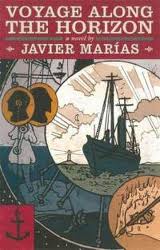
[READ: January 13, 2011] Voyage Along the Horizon

Most of Javier Marías’ books are translated and released through New Directions. But for reasons I’m unclear about, this book, Marías’ 2nd novel, was published by Believer Books (an imprint of McSweeney’s).   I haven’t read any of Marías’ other novels, so I have no idea if this is similar to any of the others (there’s a Q&A at the back of the book which suggests that this is typical of his earlier novels), but it absolutely makes me want to read more by him.

What I loved about this story first off was the sense of distance we received from the main story itself.  (Marías is Spanish, but this is a technique employed by Roberto Bolaño (Chilean) extensively…. Obviously, others do this as well).

The set up of the story is this:  1) An unnamed narrator has a party at his house.  At this party, two individuals, Miss Bunnage and Mr Branshaw (or is it Bragshawe?–he never learns) discuss author Victor Arledge.  Miss Bunnage is a scholar of Arledge and Mr Branshaw has in his house an unpublished novel that investigates the disappearance of Arledge and why he stopped writing.  And so, Branshaw invites Bunnage and the narrator to his house the next day to have the novel (called Voyage Along the Horizon) read to them.

2) So, the next morning, the two go to Branshaw’s house where he does not let them see the book, preferring rather to read the novel aloud (which gives us essentially 3 levels of remove from the action of the story).  That’s a long way to go before you even get to the meat of the book. (more…)

Read Full Post »

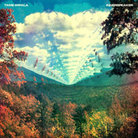
SOUNDTRACK: TAME IMPALA-“Lucidity” (2010).

I heard this song on the NPR’s 5 Artists You Should Have Known in 2010.  The album, Innerspace, is only available in Australia (imported on Amazon for big bucks) but I guess that’s why people download music.

This song is really cool. It feels very My Bloody Valentine to me.  However, inevitable comparisons to The Beatles abound, but that’s mostly in the vocals (which is kind of funny since they are Australian).  But it’s really a very sixties British vocal sound–not unlike early Who).

The big difference comes in the music which is psychedelic and wild in ways that The Beatles never quite managed.  There are great big washes of noise, and the sound quality sounds retro, even though it obviously isn’t.  Comparisons to the great Swedish band Dungen are not misplaced either.

I’ve listened to a few more tracks by them on YouTube, and I think this album could easily be one of the best of 2010 if only more people could hear it!

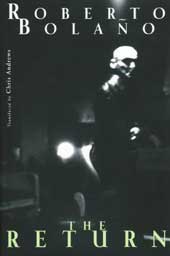
[READ: January 3, 2010] The Return

With the completion of this collection of short stories, I have now caught up with all of the published works of Roberto Bolaño (in English of course).  [The next book, Between Parentheses, a collection of nonfiction, is slated for June].

So The Return contains the 13 short stories that were not published in Last Evenings on Earth.  That collection inexplicably took shorts stories from his two Spanish collections Llamadas telefónicas (1997) and Putas asesinas (2001) and combined them into one collection in English.  It wasn’t quite as evident in Last Evenings, but it seems more obvious here that the stories in Putas asesinas are grouped together for a stylistic reason.  So, to have them split up is a bit of a bummer.  And yet, having them all translated is really the important thing.  And, again, Chris Andrews does an amazing job in the translation

This collection of stories was very strong.  I had read a few pieces in Harper’s and the New Yorker, but the majority were new to me.  Bolaño is an excellent short story writer.  Even if his stories don’t go anywhere (like his novels that never quite reach their destination), it’s his writing that is compelling and absorbing.

This collection also had some different subject matter for Bolaño (it wasn’t all poets on searches). (more…)

Read Full Post »

SOUNDTRACK: BUKE AND GASS-“Page Break” (2010).

NPR has selected the 50 best CDs of 2010.  I knew a few of them but had never heard of a bunch of other ones (about 20% are classical).  This CD with the bizarre cover has a great write up:

The wannabe tech-geek in me was initially attracted to Buke and Gass for the band’s two handmade instruments, which modify a baritone-ukulele and a guitar/bass hybrid run through heavy-duty amps (also handmade, mind you).

The problem (and perhaps its because I’m listening at Xmas time) is that the main melody line of the bridge makes me want to sing “Hark, Hear the Bells” and so this feels like a Christmas song even though it’s not.

Whoops– check that.  That melody is certainly there, but I just learned that I was listening to it in mono.  The other speaker presents all kinds of interesting things that distract from that melody (and project much more coolness).

I like the intensity of the track (and the fact that it’s under 2 minutes long).  It’s pretty heavy and the female vocals are nicely aggressive.  And by the end of the song, the syncopation is downright awesome.

It’s amazing how listening to the ENTIRE song can really change your mind.  This is definitely a cool track and will make me investigate the band more.

[READ: December 22, 2010] “One Night of Love”

I had recently gotten interested in reading Javier Marías when I was looking for information about Roberto Bolaño.  I discovered that New Directions Press, the publisher of all of Bolaño’s smaller books also published translations of all of Marías’ books too.  This story comes from his new collection of short stories While the Women Are Sleeping.  (I had also forgotten that McSweeney’s published his book Voyage on the Horizon a few years ago).

I didn’t know where Marías was from when I first started this (I assumed he was Mexican because of the New Directions connection–he’s actually from Spain).  Anyhow, when I thought he was from Mexico, I wondered if there was some kind of connection between his style and Bolaño’s, but also if he was trying to reintroduce magical realism to Bolaño (who abhorred magical realism).

Well that’s moot, (he may be doing that but not because he is from Mexico).

So this story concerns a man who is dissatisfied with his wife’s sexual appetite and performance.  He has taken to visiting prostitutes (see why the Bolaño thing rang true?), but he is concerned because the prostitutes  have grown “increasingly nervous and increasingly expensive” ([Nervous]?). (more…)

Read Full Post »

SOUNDTRACK: CAIFANES-El Silencio (1992).

Caifanes was another of the Rock en Español bands that I bought back in the 1990s.  I bought two of their records, El Silencio and El Nervio del Volcan.  In retrospect I’m not sure why I bought two from Caifanes and only one from Tijuana No! as I find Tijuana No! to be much more satisfying overall.  But El Silencio is a fun album as well.

As with a lot the rock en Español bands, the album starts with a really heavy track.  “Metamorfeame” is a raging, screaming punk blast.  But it’s followed by a Latin-infused mellow second song “Nubes” with a great weird guitar solo.  “Piedra” rocks, and Saul Hernández’ voice soars over the heavy bass work (he was meant for stadium rock).  It also ends with a little mariachi music as a coda.

“Nos Vamos Juntos” showcases some more great guitar work and “No Dejes Que…” practically sounds like the Alarm or some other stadium rock band.  “El Comunicador” is an interesting understated minor key song with interesting production.

The production is by Adrian Belew and you can tell as it seems very much like what I know of Adrian Belew: gleaming and bright and well polished.  And, like Belew himself, the album jumps from style to style.  Depending on your tastes, this is either great or tiring (and sometime both).

Wikipedia tells me that this album is considered one of the most influential albums from the most influential band to come out of Central Mexico.  Well how about that.

[READ: December 16, 2010] Amulet

This book is an extended version of an episode in The Savage Detectives.  InDetectives, Auxilio Lacouture has a ten-page story in which she was hiding out in the bathroom of UNAM (Universidad Nacional Autónoma de México) in 1968 during the military takeover (in real life, this is known as the Tlatelolco Masscare).  She hid in the bathroom for thirteen days, reading and writing poetry (Auxilio is the mother of Mexican poetry).

The episode in Detectives was  pretty exciting recollection.  She was in the bathroom when the soldiers broke in.  She could see the tanks outside and she could hear the gunshot.  So she hid with her feet in the air while the soldiers searched the premises.  She promised herself she would not to make a sound until she was discovered. So she read poetry and wrote poetry on the only paper available. (more…)

Read Full Post »

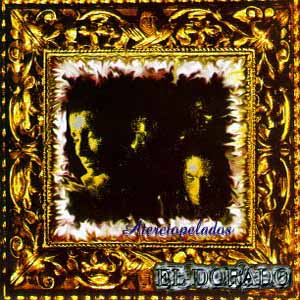
SOUNDTRACKATERCIOPELADOS-El Dorado (1995).

One of the other Rock en Español bands I bought in the 90s was Aterciopelados (the hardest to pronounce).  Aterciopelados come from Colombia and they play a variety of styles of music.  They also feature a female vocalist (Andrea Echeverri) who has a great voice in a variety of styles.

The opening song “Florecita Rockera” is a heavy blast of punk.  “Suenos del 95” is a kind of a lite pop song.  “Candela” is a latin-infused song that sounds not unlike a more psychedelic Santana track.  And “Bolero Falaz” is a winning acoustic ballad.  Meanwhile “Las Estaca” is a sort of county/cowboy song that breaks into a fun rocking chorus.

“No Futuro” starts as a slow balald and builds and builds to a heavy rocker.  I would have liked this song to go a bout a minute longer to get really crazy.  The rest of the disc works within this broad framework: ballads that turn into heavy rockers (“De Tripas Corazón”), hints of punk and latin accents.  And then there’s a song like “Colombia Conexión” which reminds me a bit of The Dead Milkmen: simple sparse verses with heavy punk choruses.  Meanwhile “Pilas!” is straight ahead punk.  The final song “Mujer Gala” has some ska-lite aspects as well (and I have to say that it seems like No Doubt may have been inspired by them).

Although for all of the different styles of music, the disc is really a venue for Echeverri’s voice.  She’s not a rocker or a screamer and she could easily sing pop ballads, but because she chooses to sing over so many styles, she really showcases the multifacted nature of her voice.  She can hold a note for quite a while and although she never really shows off, it’s clear that she’s got a powerful voice.  She even sings beautifully over the punkier tracks, never devolving into a scream, but never losing her edge either.

Aterciopelados is a hard band to pin down (especially with this one disc).  Of the rock en Español bands, Aterciopelados had one of the longer lifespans.  They released several albums with very different styles.

El Dorado suffers from weak production, some more highs and lows would really makes the listening experience better, but it’s a solid disc overall.

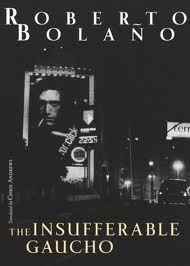
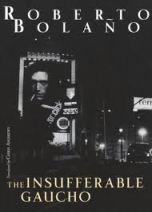
[READ: December 10, 2010] The Insufferable Gaucho

This is a collection of five short stories and two essays.  Two of the short stories appeared elsewhere (which I read previously).  This is the first time I’ve seen the essays translated into English.  The fabulous translation is once again by Chris Andrews, who really brings Bolaño’s shorter books to life.  They are vibrant and (in light of The Savage Detectives, this is funny) visceral.

“Jim” is a four page story which focuses very specifically on a man named Jim.  As the story ends, we see Jim locked in an existential struggle.  For such a short work, it’s very powerful.

“The Insufferable Gaucho” (which I had read in The New Yorker) was even better after a second read.  I find this to be true for much of Bolaño’s work.  He tends to write in a nontraditional, nonlinear fashion so you can’t always anticipate what is going to happen (quite often, nothing happens).  In this story, a man in Buenos Aires, feeling that the city is sinking, heads out to his long neglected ranch in the country.  He spends several years there, slowly morphing from a cosmopolitan man to a weather-beaten gaucho who doesn’t shave and carries a knife.  But there is much more to the story.  The countryside is virtually dead: barren, wasted and overrun by feral rabbits.  The rabbits offer an interesting metaphor for the wilderness as well.  His interactions with the few other people he encounters are wonderfully weird, and the ending is thought-provoking.  It’s a wonderfully realized world he has created.

“Police Rat,” is that strangest of Bolaño stories: a straight ahead narrative that works like a police procedural.  I assumed from the title that it would be something about a metaphorical rat in the police force.  Rather, this is a story about an actual rat who works on the rat police force.  Bolaño spends a lot of time setting up the story (details are abundant) making it seem like perhaps there would be no plot.  But soon enough, a plot unfurls itself.  And although the story is basically a police story, the underlying reality behind it is fantastic and quite profound.  The story is beyond metaphor.

“Álvaro Rousselot’s Journey” was published in The New Yorker.  This story was also better on a second reading.  In many ways this story is a microcosm of Bolaño’s stories: a man goes on a quest for an elusive man.  Unlike the other stories, he actually catches up to the elusive guy.  But, as if Bolaño were commenting on his other stories, actually catching the guy doesn’t really solve the crisis.

This basic premise is that a writer believes that a filmmaker is stealing his ideas for his films (even though he is from a different country).  But more than just the simple plot, when Álvaro Rousselot leaves the comfort of his homeland things change fundamentally within him.

“Two Catholic Tales” is, indeed, two tales.  I had to read this piece twice before I really “got” the whole thing.  There are two separate stories (each story is a solid block of text but there are 30 numbered sections (which don’t seem to correspond to anything so I’m not sure why they are there).  The first tale is of a young boy who desires to be like St. Vincent, with designs for the priesthood.  As the story ends, he is inspired by a monk who he sees walking barefoot in the snow.  The second tale (we don’t realize until later) is about the monk himself.  It rather undermines the piousness that the boy sees.  On the second reading I realized just how dark of a tale this turned out to be.  It’s very good.

“Literature + Illness = Illness”
This is the first non-fiction by Bolaño that I have read.  It is a meditation about his terminal illness.  The essay is broken down into 12 sections about Illness. They range in attitude from the realization that when you are gravely ill you simply want to fuck everything to the fear that grips you when you finally accept your illness.  Despite the concreteness of the subject, the essay retains Bolaño’s metaphorical style.  Each subdivision is “about” an aspect of illness.  “Illness and Freedom,” “Illness and Height,” “Illness and Apollo,” “Illness and French Poetry.”  But it’s when he nears the end and he’s in a tiny elevator with a tiny Japanese doctor (who he wants to fuck right there on the gurney but can’t bring himself to say anything), and she runs him through his tests showing how far advanced his liver failure is, that the reality of his illness really sinks in.

“The Myths of Cthulhu” is the other essay in the book and I have to say it’s the only thing in the book that I’m a little frustrated by.  About midway through, he reveals that this is a speech and I wish that an introductory note would have given context for this speech, or indeed, indicated whether it was really a speech or not.

One of things that struck me about it (and also about “Literature +Illness=Illness” is how frequently he is unspecific about his research (and just never bothered to go back and fix it).  For instance:

For books about theology, there’s no one to match Sánchez Dragó.  For books about popular science, there’s no one to match some guy whose name escapes me for the moment, a specialist in UFOs.

Because I don’t know his non-fiction and I don’t have context (and I’ve no idea who Sánchez Dragó is) I don’t know what to make of that unspecific recommendation.  As for Sánchez Dragó, in the speech he’s noted as a TV presenter (Wikipedia confirms this).  But why the uncertainty in a written piece?  Laziness or deliberate commentary?

This essay has many elements of local information that are completely lost on me.  However, by the end, he brings it back to folklore and literature.  He also makes some biting criticisms of George Bush, Fidel Castro, Penelope Cruz (!) and Mother Teresa. Actually, I’m not sure if he’s mocking Penelope Cruz, although he is definitely mocking Mother Teresa.

The ending is general moaning about the state of Latin American fiction.  Even though I didn’t follow all of what he was talking about, there’s something about his delivery which is so different from his fiction. It’s honest and fast and kind of funny and enjoyable to read.

——

This may be something of a minor work, and yet the stories are really wonderful and are certainly a treat to read.  The essays definitely need more context, but it is interesting to finally have a chance to read the “real” Bolaño.

Read Full Post »

SOUNDTRACK: TIJUANA NO!-Transgresores de la Ley (1994).

In the mid 90s, when I was living in Boston, I discovered MTV Latino, and the Rock en Español resurgence.  Since I’m always interested in new music, I bought a few CDs by these Spanish-singing bands.  For most of my life I’ve thought about the rabid Japanese audiences who loved bands that sand in English.  Did they understand the lyrics?  And did it matter?  Well, here was a test for me.

Tijuana No! was the first band I bought and I really liked it (and still do).

The disc opens with a rollicking ska rocker “Goples Bajos” which features a wonderful horn filled breakdown and ends with a blistering guitar solo.  The title track, “Transgresores de la Ley” opens with a military beat and a military sounding flute before taking off with a heavy verse and, more impressively, a punk/shouty chorus.

My favorite song is “Tu y Yo,” it’s funky all over the place and has a super heavy midsection.  And “Borregos Kamikazes” has a wonderful juxtaposition of speedy, almost loco lyrics in the verses with some great group vocals in the chorus.

The first surprise (for me) comes with “La Esquina del Mundo” because suddenly there’s a female vocalist on lead.  She sounds great (her voice has a cool echo on it) and although she doesn’t quite convey the heaviness of the rest of the track, it’s an interesting juxtaposition.

The second surprise is that the track “Conscience Call” is mostly in English (I got so used to not understanding the lyrics that I was quite surprised to hear words I understood).

The final surprise comes with the penultimate track: an excellent cover of The Clash’s “Spanish Bombs.” Again sung by the female vocalist, her voice works wonderfully with the track.  The chorus, sung in Spanish, is really perfect.

So, in answer to the question, do you need to understand the lyrics to enjoy the music?, I’d say no.  Although it is nice once in a while.

[READ: November 20, 2010] The Savage Detectives

This was the Bolaño novel that I had initially wanted to read because the reviews were so glowing (amusingly enough it turns out to be virtually the last book of his that I read).  And now that I have read almost all of his books, it’s obvious how this book fits into his larger scheme of writing (I wonder what I would have thought if I hadn’t read the other books, too.  In fact, I wonder if I would have liked 2666 more at the time if I had read this one first.  As it is, I think I enjoyed this more having read 2666 first).

[DIGRESSION: When I was reading 2666 I found a fantastic review of 2666/The Savage Detectives by Daniel Zalewski, which reviews 2666 and The Savage Detectives in context of Bolaño’s life].

In a previous post I noted how Bolaño doesn’t really write conventional novels.  And this one is no exception.  Part I is the diary of Juan Garcia Madero, a 17-year-old aspiring poet.  It covers from November to December 31, 1975 .

Garcia Madero talks about his introduction to the visceral realists, a group of Mexican poets whose legacy is more or less unknown to us now (in the book–in reality there was no such group).  The two main visceral realists are Arturo Belano and Ulises Lima, and we will follow or look for these two for the rest of the book.

As with other Bolaño books, there is a massive obsession with sex.  At first Garcia Madero is a virgin and thinks about sex a lot.  Then he finally has sex with first one woman and then many women.  And he writes about them in his diary and spares no details.  (Many entries reveal him having sex with one of his girlfriends 5 or 6 times a night).  And there are of course whores and other deviant sexual individuals (including a guy who carries a large knife by which he measures his penis–we never see this, it’s all hearsay, but it’s in there).

And during this time, he is writing poetry as well–a fully welcomed member of the visceral realists.   (more…)

Read Full Post »

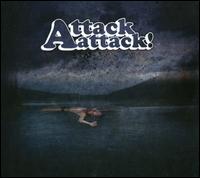
SOUNDTRACK: ATTACK ATTACK!-“Stick Stickly” (2010).

I discovered this video (again, considerably later than the controversy for it) because my friend Rich said he didn’t know there was a genre called “crabcore.”  A search for crabcore suggests that it is a goof “genre” named specifically for this band and the goofy way they dance around.

This song starts with very heavy riffing and some growls and screaming and then jumps quickly into an auto-tuned very catchy chorus (they sound like a more polished and poppy version of Alexisonfire).

Then comes the verses which are screamed very loudly and heavily followed by a bridge (?) that is even more cookie monster-vocals like (with a strange cartoon effect thrown at the end of each line of the chorus).  It’s almost like commercial death metal, and I kind of liked it.  They’re pushing boundaries

Then there’s more chugga chugga heavy riffing and the song is reaching the end and then WHAT? the songs shifts gears into a keyboard fueled discoey dance song.  First it’s hi energy and then it slows into a mellow auto-tuned bit that proceeds to the end.

What the hell?  I’m all for a band pushing the boundaries of genres, but holy cow.  And just to add one more gimmick, they’re a Christian band as well (although you’d never know from the lyrics, whatever the hell he’s singing about).  This is no “Jesus is My Friend,” let me tell you.

So yea, I don’t really know what to make of it. The video makes me laugh with their all black outfits and synchronized everything–and that may be why they have replaced it with a new video which is much more boring.  I assume they’re just anther trendy band that will disappear soon enough (there’s a lot of snarky fun at their expense at this definition of “crabcore“).

I don’t have a clue what the title is supposed to mean, nor half of their other titles on the album: “Fumbles O’Brian” “Renob, Nevada.”  I listened to some samples of the other songs and they seem far more dancey/discoey than death metal, so I’m not really sure what’s up with the rest of the record.

But whatever.  In the meantime, enjoy the silly video

[READ: July–September 10, 2010] K Blows Top

I heard about this book through a great interview on NPR in June of 2009.  It sounded like a really funny book and I was seriously considering reading it.  Of course, then I forgot about it.

About 8 months later, the library received a huge donation of books, and this was right on top, just begging me to read it.  So, I saved it for myself and decided it was about time to crack it open.  Several months after that I finally opened it and was totally hooked.

I didn’t know much about Khrushchev before reading this.  I knew vaguely about “the shoe” incident, but that was it.  In fact, the whole beginning of the cold war era was a bit of a mystery to me.  Since I lived through Reagan, I never felt compelled to find out what had caused the 80s.

But I’m super glad that I read this.  The book follows Khrushchev’s visits to the United States when he was premiere of  the Soviet Union. Carlson combed through tons of newspaper reports about his visit here (ostensibly to visit with Eisenhower, but more just to enjoy himself in the American heartland), and pulls together a fascinating story from a number of sources.

But more than just an interesting look at history, this book is very funny. (more…)

Read Full Post »

« Newer Posts - Older Posts »