Feeds:
Posts
Comments

Archive for the ‘Translators’ Category

SOUNDTRACK: PHOENIX in Studio at KEXP (2009).

For this in-studio  performance, two members of Phoenix showed up to play a stripped down acoustic performance.

They play four songs (and all of the songs are quite short, as well).  Three songs from Wolfgang Amadeus Phoenix (“Listzomania” “1901” and “Armistice”) and a cover of Air’s “Playground Love.”  Given how different Phoenix and Air sound (even if they are both French), it’ an impressive change of style for the set.

This stripped down version really shows what a great voice the singer has.  And these songs, while not quite as catchy as the originals, still sound fantastic.  There’s also a brief chat with the DJ about their then recent appearance on Saturday Night Live.

If you like Phoenix, this is a great show to download.

[READ: September 1, 2012]  An Iliad

Since I really enjoyed the two Baricco stories that I’ve read so far, I decided to try something else from him. An Iliad is a fascinating book from conception to execution.

Baricco wanted to read Homer’s Iliad aloud on the radio.  But when he investigated the project further he found that a) it was way too long and b) it wasn’t really well suited to contemporary audiences.  So (and he gives details about exactly how he modified it), he decided to remove sections of the original, restructure it and try to give it a more contemporary feel.

But he also tried to keep as much of the original as he could.  So, rather than rewriting the book, he worked with a prose translation (poetry being way too convoluted for his project) and used his  translation of that translation  (which for us gets further translated into English, yipes, although the translation is again a very good job by Ann Goldstein) to create his Iliad.  One of the major excisions he did for the book was to remove all of the sections with the gods.  They are alluded to, but he removed the gods (and all supernatural aspects) from the book reasoning that the mortals reference what the gods say and do so anyway, so he simply took away the duplication.  Plus, the gods aren’t really relevant to contemporary listeners. (more…)

Read Full Post »

SOUNDTRACK: OF MONSTERS AND MEN-Live from Iceland Airwaves (2011).

This brief set was recorded at KEX hostel in Reykjavik, Iceland (how on earth KEXP in Seattle was there I don’t know).  This set was performed before the release of their debut EP, although “Dirty Paws” which they play was not on that EP.  “Little Talks” their (reasonably) huge hit them was on the EP and is on their full length album–it’s a great duet (and reminds me a bit of Stars).

There’s an amusing fail in the horn solo on “Lake House,” which is kind of surprising, but not terribly tragic or anything.  The band sounds great, especially in front of a home country crowd (I love hearing them say “Takk” at the end of the songs).  There’s five songs in all, and by  the final one, they feel  sound like they’re really enjoying themselves.

[READ: September 1, 2012] Wampeters, Foma & Granfaloons

This collection contains essays reviews and speeches.  So it’s non-fiction.  Except that, ever the contrarian, Vonnegut includes one fiction piece–a short play.  The title of this book comes from three words from his novel Cat’s Cradle: “a wampeter is an object around which the lives of many otherwise unrelated people may revolve.  The Holy Grail would be a case in point.  Foma are harmless untruths, intended to comfort simple souls.  An example: ‘Prosperity is just around the corner.’ A granfallooon is a proud and meaningless association of human beings.”

That all comes from the preface.  The preface also says that there are people who have collected everything he has ever written (even stuff he has forgotten about) but he will not let most of that see the light of day.  Here he has whittled down the least embarrassing stuff for publication.  He also explains that at some point (supported by reading this) he decided to stop giving speeches; to stop “talking” and to concentrate on writing.  So he did.

The final straw for this was a comment from the President of the American Academy of Arts and Letters.  Vonnegut had prepared a speech.  The president reread it and hated it, but the president told Vonnegut that nobody would actually listen to the words: “People are seldom interested in the actual content of a speech.  They simply want to learn from your tone and gestures and expressions whether or not you are an honest man.”

While Vonnegut’s essays are powerful and effective, it’s the Preface that really tells it straightg.”Not nearly as many Biafrans were butchered by the Nigerians at the end of the war as I had thought would be.  At a minimum those damaged children at the exact middle of the universe will be more honorable than Richard M Nixon.  [Nixon] is the first president to hate the American people and all they stand for.”

Get ready for a happy collection. (more…)

Read Full Post »

SOUNDTRACK: MOGWAI-Music for a Forgotten Future (The Singing Mountain) (2011).

This track is a 23 minute instrumental that was used for an art installation by Douglas Gordon (who made the film Zidane, for which Mogwai provided the score) and Olaf Nicolai called “Monument for a Forgotten Future”.  The more I learn about  his installation, the more intrigued I am by it.  According to wikimedia, “Monument for a Forgotten Future” is a sculpture by Olaf Nicolai and Douglas Gordon on the so called “Wilde Insel” (wild island) in Gelsenkirchen-Horst, Germany. It is 1:1 replica of a rock formation in Joshua Tree National Park with a sound installation by Mogwai that can be heard from within the “rock.”  Someone has even posted a video of their trip to it.  In the video (which is literally of a rock), as the filmer approached you can hear the music only when he or she gets pretty close to the installation. It’s just barely audible.  Cool.

As for the music itself, it is very mellow an atmospheric, quite perfect for being on a Wild Island and sitting by/staring at a rock.  There are definitely hints of Mogwai’s sound in the music, although there are a lot more keyboards than guitars (which befits their more recent albums).  It’s very peaceful and quite beautiful.  At about 19 minutes it fades out and seems to being another string laden piece into the mix as well, but it more or less fades into static (which would be a lousy time to get to the installation!).

The music comes free with most editions of Hardcore Will Never Die But You Will.

[READ: August 2, 2012] “Without Blood”

After reading Baricco’s Emmaus, I wanted to see what else he had written.  I found this short story (which is also the name of one of his novels, although I’m not sure if this is an excerpt or the inspiration for the novel–Wikipedia says it is a “revised form” of the novel, whatever that means).

I was a little disconcerted by this story when it opened because it has a very violent introduction.  The farmhouse of Manuel Roca is the site of bloodshed.  Three men, Salinas, El Guerra, and Tito pull up in a Mercedes.  Manuel Roca is the man they are looking for.  He has two children a boy and a girl, Nina.  He tells Nina that she must hide when the men come.  Hide in the cellar and be absolutely still, no matter what happens.  And to not be afraid.  The son, slightly older, wants to help, he even has a gun, but Manuel tells him to hide in the woodshed.  And then the house was riddled with bullets.

Manuel survived that first round but when he looked up, Tito (who was described as a boy but was in fact 20) was standing there with a gun pointed at Manuel.  And he shouted to  Salinas “IT’S TITO.  I’VE GOT HIM.”  When the threesome get inside, they see that Tito has shot Roca in the arm because he had a gun.

When the two men come face to face we learn that this fight has to do with the war.  Roca says the war is over, although Salinas, says “Not yours, Not mine, Doctor.”  Salinas was known as the rat because he deciphered Roca’s men’s coded messages.   But despite the war, Salinas has only shot a gun twice.  The first one was at no one, the second was at his brother who was in the hospital when the war ended.  Salinas went to the hospital with the intent of killing Doctor Roca and his men, but they had fled, leaving all of the sick and dying unattended.  When Salinas’ brother asked him to kill him…please, he could only comply.

After this flashback, Roca’s son came into the room with a shotgun.  From here the scene gets really violent with both Roca and his son killed.  The men realize that Nina must be there as well, so they look all over for her.  It is the boy Tito who finds her in the cellar.  They stared at each other, but Tito let her live.  And the men left.  After they set the house on fire.

Three days later a man on horseback found Nina and took her away.

Wow. (more…)

Read Full Post »

SOUNDTRACK: KISS-Alive III (1993).

Kiss put out Alive! after just three albums.  Alive II also came out after three albums.  Alive III has 14 albums between it and Alive II (if you count the solo albums as 4).  I guess poor sales and poorly attended concerts don’t really suggest live albums.  But Revenge revitalized them somewhat so it was time for a new one–their first with no makeup!  And it’s a pretty good one.

But it’s also like Kiss has forgotten all about being Kiss.  There’s no “You wanted the best, you got the best, the hottest band in the world…Kiss” (which would have been untrue at the time anyhow, but since when has that stopped Kiss?)  The tracklisting is pretty darn good though.  For Alive II, the band didn’t want to repeat any tracks from Alive! (that’s such an endearing thing to say about the band with 400 repackaged hits records).  Since there are tons of records since Alive II, you’d assume Alive III was all 80s songs.  But that’s not the case.  There are a few inevitable duplicates (how could there not be–all their biggest hits were from the 70s), but I’m surprised they didn’t throw more current stuff on the disc.

It opens with “Creatures of the Night” a great heavy version.  Then they go way back to “Deuce” which is a cool surprise.  Since this was the tour for Revenge, you’d think there might be more songs from it, but there’s only three: “I Just Wanna” “Unholy” and “Domino.”  “I Just Wanna” was perfectly crafted for Paul to banter with the audience and get them to sing “I just wanna fuck” (which was edited from the album I understand).  And in this live setting “Unholy” sounds great.

“Heaven’s on Fire” works well live, even if I don’t really like the song–but the band can really ham it up here.  The big surprise has got to be “Watching You,” a totally unexpected song form the past.  And even if it was on Alive!, this version is quite different (no Peter Criss cowbell).  I don’t think much of “Domino” anyhow (well, the music is great but the lyrics, ick), but in this version Gene just seems kind of bored.

Another surprise comes in “I Was Made for Lovin’ You”  true it’s one of Kiss; biggest hits but they often try to distance themselves from the “disco” era.  Nevertheless this version sounds revitalized.  And since there were no live albums in the 80s, there’s no official live recordings of it.  “I Still Love You” is another great chance for Paul to shine.  “I Love It Loud” sounds great (although the harmonies get a little sketchy at times.  But it’s weird to hear “Rock N Roll All Nite” in the middle of the set instead of at the end.  It’s also odd to start off this song with “It ain’t bullshit when you say rock and roll all nite and party every day.”   The intro to “Detroit Rock City” is also very strange “It doesn’t matter where you’re born ,it doesn’t matter where you come from, it matters where your head is at. This one;s called Detroit Rock City.”  Huh.

There’s not much you can do with a dreadful song like “Lick It Up,” and ad-libbing “I wanna lick you” doesn’t make it any better.  The disc ends with “God Gave Rock n Roll to You II,” which I don’t like, but which sounds good live, a lot of energy.  And it wraps up with a very odd thing–a guitar solo version of the Star Spangled Banner.  It doesn’t compare to Alive! or Alive II, but Alive III is a good live album from a good live band.

[READ: August 15, 2012] “From the Pencil Zone”

This is a review of the microscripts of Robert Walser, an author whom I have never heard of.  Walser was born in Switzerland in 1878 and he published several shorts and several novels (which were admired by Kafka!).

As the market for shorts dried up, so did his career, and he moved into smaller and smaller places.  Accordingly, his handwriting grew smaller and smaller, too.  Eventually he cheeked himself into a series of mental institutions.

Walser’s early novels dealt with everyday life, like the “young boyish man” who wants to become a bookshop proprietor in The Tanners.  The character (whose name we don’t learn for a long time) is effusive, praising the job to the heavens as a divine calling!  And lo he is given the job.  A week later he declares, “the entire book trade is nothing less than ghastly.”  Wasler himself had a multifaceted career: butler, inventor’s assistant, clerk, journalist.  But he was eventually diagnosed with schizophrenia and is responsible for this quotable quote: “I’m not here to write.  I’m here to be mad.”

After Walser died, people discovered a treasure trove of 526 pages of “microscripts.”  The writing was so small that these 526 pages, when written in book form came to six VOLUMES of books.  They were released as Aus dem Bleistifsebiet (From the Pencil Zone).  Galchen’s review here is for the short one volume New Directions collection called Robert Walser: Microscripts.  Interestingly, most of the stories have no title and some seem unfinished.  New Directions (and Harper’s) include images of this man’s microscopic writings (all done in pencil of course).  He wrote in Kurrent, a widely used script at the time which was a version of medieval shorthand and which dramatically reduced the number of strokes per character.  His letters were often one or two millimeters tall.  He was able to fit six stories on a postcard received from a newspaper editor. (more…)

Read Full Post »

SOUNDTRACK: NADA SURF-The Stars Are Indifferent to Astronomy (2012).

Nada Surf continues to put out poppy guitar rock.  I tend to link them with Guster, in that they write really catchy pop songs about unexpected things.  The songs are usually fast, but they also writes some slower songs too.  They would make a good double bill.

This album with the wonderful title is 38 minutes long, a perfect light summer album.  If you don’t get “Waiting for Something” (which I agree is repeated waaay too often in the chorus) stuck in your head, then you haven’t been listening to this record.

All ten songs feature bouncy guitars (except “When I Was Young” which opens as a slow ballad), although even this song, after about 2 minutes, calls forth loud electric guitars.  There are some elements that show the band “maturing”–strings on “When I Was Young” horns on “Let the Fight Do the Fighting.”  But one of the songs references Gilligan’s Island, so they’re not maturing too much.

And some of the songs sound like throwbacks to other eras too, the 60s guitar intro of “Jules and Jim,” the R.E.M. ish intro of “Waiting for Something.”  It’s a great album, fun, catchy and perfect for driving.

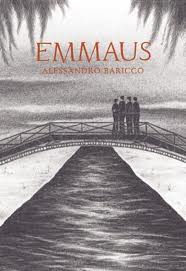
[READ: July 24, 2012] Emmaus

I had no idea who Alessandro Baricco was when I got this book as part of my Book of the Month deal with McSweeney’s.  But I’ve never been disappointed by one of their new books before, so it was worth checking out.

The book is short–134 pages–and is novella length, which is the perfect length for this story.  [I had just read about Jim Harrison and his novellas, and I believe that there needs to be more novellas published].  This book was originally written in Italian and was translated by Ann Goldstein.

There is a prologue which is completely exciting and absolutely wonderful.  It’s only a page and a half, but it is intriguing, funny, deep and, most of all, really surprising.

The opening of the book doesn’t quite match the excitement of the prologue, but that’s because this novella has two aspects–deep, thoughtful introspection and base, animal instinct.  And Baricco/Goldstein does an excellent job keeping the flow and continuity going between these two very different writing extremes.

The book reminds me of Jeffrey Eugenides’ The Virgin Suicides for two reasons.  One: it is written about a group of boys and is written in the second person plural (at least the beginning is) and two: they are all watching a girl who is beyond their ken–someone of their world but not, someone who is en route to hurt herself.  And there’s nothing they can do about it.

But this book is entirely its own.  There are four boys who make up the initial “we” (and when it diverges from plural to singular, you really feel the loss of the other boys).  And so the book starts: “We’re all sixteen or seventeen years old, but we aren’t really aware of it.”  The four boys are good boys–Catholic (and believers, at that), who play in the church band, who volunteer removing catheters at the poor person’s hospital and who plan to not have sex before marriage (heavy petting is okay but it never goes too far).  The four boys are: the narrator, whose name is never given I don’t think; Luca, whose father is rumored to be suicidal; Bobby, the most outgoing of the bunch and The Saint, a very pious young man who has designed for the priesthood and who is not afraid to be seen as more pious than you. (more…)

Read Full Post »

SOUNDTRACK: SISKIYOU-Keep Away the Dead [CST083] (2011).

I really enjoyed Siskiyou’s first album. This album updates the sound and makes it a bit bigger.  And yet somehow the album still sounds fragile.

The album is full of songs that are catchy, but not really easy on the ear.

The first song reminds me of Arcade Fire.  Something about the ringing guitar and crescendos.  But the recording feels more like a demo, much more intimate that Arcade Fire.  “Where Does That Leave Me” is an even more spare number, just vocals and guitar although it slowly builds.  “Twigs and Stones” is the first song that sounds like the bulk of the album—where Colin Huebert’s vocals really come to the fore.  His vocal style is loud and verging on the whiny (again, like Arcade Fire).  This song also has a lot of other instruments that percolate to the top—reminding me of older Mercury Rev.

“Revolution Blues” is the standout track for me, it’s incredibly catchy (and fun to try to sing in his eccentric voice).  The accordion and the minor key intensity is really powerful.  I guess it’s a shame that it was written by Neil Young, then (although the Siskiyou version is much better).  “Dear Old Friend” is a more country sound (which for me is shorthand for slide guitars), but it keeps the same style and feel as the other songs.  “Fiery Death” is the first song where percussion makes itself known very loudly.  It’s a cool introduction of loud thumping.  “Sing Me to Sleep” is a 2 minute lullaby and “Dead Right Now” is a 2 minute coda that ends the album nicely.

The disc is short (about 30 minutes) but a lot of emotion and craft is packed into it.  It’s really enjoyable.

[READ: May 24, 2012] “Sweet Dreams”

I’m always disconcerted when a story is in English but is set in another country.  Well, that’s not exactly right.  When it seems like it’s set in another country because the author is from that other country and he or she is writing about that other country without specifying it (usually because it is translated).  It’s very Amerocentric, but perhaps everyone thinks a story is set in their town unless told otherwise.  So I didn’t realize that this story was originally written in German (it was translated by Michael Hoffman), but it felt like it was taking place in Europe.  I actually guessed France, until later on it was revealed to be Switzerland.

There’s something cool about stories that are written elsewhere, especially if you don’t know the place well, it allows for almost anything to happen.  A couple riding a bus in Europe doesn’t mean the same thing as a couple riding a bus in, say Tallahassee.  But having set up that distinction, this story is about love.  And love is universal.

The story is written from the point of view of Lara, a shy bank worker.  She has been dating Simon for several months and they have recently moved in together.  They should be in the first bloom of love—on their own for the first  time (they never felt comfortable fooling around at their parents’ houses)—but her shyness in particular won’t loosen.  She doesn’t like him to see her naked, and they are very reserved in their love-making.  And from the start Stamm places a dark tone over the story.  The get a place in the town that he likes but it’s pretty run down.  He hadn’t brought much to the apartment, and he seems critical of some of her purchases.  He even comments that “forever is a long time” when she says that the towels she bought will last forever.  And then on the bus, a man, dressed in a long black coat stares at Lara over and over.  It may be innocent, but it’s still disconcerting.

When they get home, she takes a bath (she won’t let him in the bathroom) and asks him to go to the restaurant downstairs to buy a bottle of wine.  She finishes the bath and he’s not back yet, so she reads the paper.  Which is full of more grim news.  When she reads about a dead body found in the lake nearby and since we know she doesn’t feel comfortable about the restaurant downstairs, we know something bad has happened. (more…)

Read Full Post »

SOUNDTRACK: LAMBCHOP- “2B2” (2012).

I don’t have much exposure to Lambchop.  I know of  them mostly as a slow, country-type band.  And that’s why I haven’t listened to them much.  So I picked one song from their latest album, Mr. M, to talk about (because they are associated with Five Dials, see below).

And, indeed, they are slow.  I wouldn’t say country so much as roots, maybe, traditional folk or something.  It’s certainly slow.  This song reminds me in someways of Tindersticks, although a very stripped down Tindertsicks.  Of course, what I like about Tindertsicks is that they are not stripped down.  So this song kind of leaves me a little flat.  I like it, but I’ve already got music that’s like this ti listen to.

I’ll bet though, that it would make great background music to an engaging story (see below).  I wonder what song they chose to remix.  It’s be crazy if I picked it.

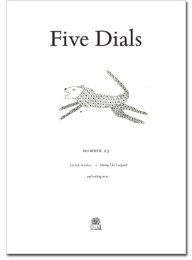
[READ: May 3, 2012] Five Dials 23

Five Dials 23 was recently released with quite little fanfare.  That may be because it is like an appetizer for the soon to be released Issue 24 which promises to be very large.

Five Dials 23 contains only one piece (and an Letter from the Editor).  The piece is by Javier Marías, whom I’ve read and enjoyed and have put on my list of authors to explore more.

CRAIG TAYLOR-“On That Fiction Feeling and Lambchop”

Craig Taylor’s introduction wonderfully encapsulates why I prefer to read fiction to non-fiction.  I have friends who say they only like to read non-fiction because at least they’re learning something (or some variant of that).  And while it’s compelling to argue that you learn stuff from fiction too, it’s not always easy to prove.  So Taylor’s Letter from the Editor is where I can point people in the future:

I remember it happened when I read part of Runaway by Alice Munro, specifically the three linked short stories ‘Chance’, ‘Soon’ and ‘Silence’. I remember the names of the North London streets I was compelled to walk – from Messina Avenue to Woodchurch Road to Greencroft Gardens – just to free myself from the sensation that had blossomed within me after I set down the book. During that walk, the neighbourhood seemed raw and responsive. I was unsettled, but in the best possible way; I was in the midst of experiencing the kind of sadness that can only be induced by fiction, which is more potent sadness than most. Also in this jumble of sensation brought on by Munro was a vow to live better, to somehow dodge the mistakes of her characters. There was a bit of a ‘what the hell am I doing with my life?’; a bit of a ‘pay attention to the details’; a bit of an ‘appreciate life more’. In short, the great inner churning that comes at the end of a few extraordinary pieces of fiction.

The details aren’t relevant, it’s the overall mood and idea that he conjures that is.  Although he mentioned Munro, he begins to talk about The Leopard by Tomasi di Lampedusa.  How this debut (and only) novel has left a strong impact not only on him and many more who have read it but also on Marías.  And that that it was Marías’ essay is about: The Leopard.

The second half of his introduction talks about the next issue and that a 10″ vinyl album will be released with it.  It will feature a double A side with author Hollis Hampton-Jones reading from her novel Comes the Night, while backed by Lambchop.  The other side features a remix of a song by Lambchop from their Mr. M album.  The end of the Letter from the Editot is given over to Hampton-Jones and her remembrance of the recording session.  (It’s very cool).

EMILY ROBERTSON and TUCKER NICHOLS drew the cool pictures of leopards.

JAVIER MARÍAS-“Hating The Leopard

This essay, translated by Margaret Jull Costa,talks about the novel The Leopard and how as a novelist, Marías hates it, even though as a reader, he loves it.

I love the surprising way he opens this: There is no such thing as the indispensable author or novel.”  Because even if the best novelist in the world never wrote, the world woul dnot be different.  I also love this insight, which I actually used recently when talking about Ulysses to someone (yes, I’m that guy) that books which “aspired to being ‘modern’ or ‘original’… leads inevitably to an early senescence or, as others might say, they become ‘dated.’  …. They can sometimes seem slightly old-fashioned or, if you prefer, dated, precisely because they were so innovative, bold, confident, original and ambitious.”  But he quickly points out that The Leopard does not fall into this dated category.

Before explaining why The Leopard has stayed with him, he gives some basic background about its publication and near lack of publication.  Indeed, Tomasi di Lampedusa (how do you say that last name?) died before it was published (but not before receiving several rejection letters).  What’s especially surprising is why he wrote the novel in the first place: “the relative late success of his cousin, the poet Lucio Piccolo…led Lampedusa to make the following comment in a letter: ‘Being absolutely certain that I was no more of a fool than he, I sat down at my desk and wrote a novel.'”  Nothing inspires like jealousy!  He also wrote because he was a solitary person.  He was married, but he seems to spend a lot of time alone.  He wanted the book published but not at the expense of his heirs (that’s nice).

Marías talks a bit about why he finds the book so extraordinary (although he says that so much has been written about the novel that he is reluctant to add more).  But one thing that impressed upon him was how the book is about preparing for death, but how, “Death stalks the book not in any insistent way, but tenuously, respectfully, modestly, almost as part of life and not necessarily the most important part either.”  As far as hating the book, Marías feels that perhaps some novelists have earned the right to hate it.

I always enjoy Five Dials.  I can only hope that my posting about it here can get more people to check it out.  Now to see why my library doesn’t have a  copy of The Leopard.

For ease of searching I include: Javier Marias.

Read Full Post »

SOUNDTRACK: FIONA APPLE-“Every Single Night” (2012).

Many things have been said about Fiona Apple, and I’ll not repeat them here.  I will say, however, that she has put out some of the most consistently interesting music over the years.  From her introspective pop to her lavishly orchestrated pop, to the two mixes of her last album (one official, the other leaked), I’ve enjoyed all of it.

This is her first song in some seven years.  And it doesn’t skimp on what makes Fiona Fiona.  Specifically, it really showcases her voice.  And that’s because it is practically a capella.  The music is very spare–simple instrumentation (which sounds like a music box) and it more or less simply keeps the pace for Fiona’s voice (which sounds more full and powerful than ever) which creates the wonderful melody.  This may sound like a weird comparison, but I actually hear a bit of Eddie Vedder in her voice, too.

It’s a haunting song and the arrangement is curiously cool.

And I’ll share it here (well, actually I won’t share it, I’ll give you the link because it doesn’t want to embed):

http://w.soundcloud.com/player/?url=http%3A%2F%2Fapi.soundcloud.com%2Ftracks%2F43923280&show_artwork=true

[READ: April 18, 2012] Varamo

Varamo is the most recently translated of César Aira’s hundred or so books.  It was written in 2002 and translated by Chris Andrews.  So far it is my favorite of the Aira books I’ve read.

It’s a fairly simple premise, although like most of Aira’s books, the premise isn’t exactly followed from start to finish.  And like his other books, there are fun avenues of detours.  But unlike his other books, it is a remarkably consistent story.  Except of course, that even though the book is set on the day that Varamo writes his famous poem, we never even get to see him entering his house to do so.

What?

Well, I’m going to quote from the beginning because it really summarizes the “plot” of the story: (more…)

Read Full Post »

SOUNDTRACK: MEGAFAUN-Live from the World Cafe, November 9, 2011 (2011).

I loved the Megafaun song “Get Right,” a trippy 8 minute workout.  So I was interested to hear them in this live setting.  There’s a lengthy interview with WXPN’s Michaela Majoun (full of all kinds of details about Bon Iver–whom they used to play with before they broke up and he became Bon Iver–and about, North Carolina and Wisconsin and lutefisk).  And the band plays three songs, too.

“Real Slow” opens with a banjo (and it is real slow).  It has a very Grateful Dead feel to it and beautiful harmonies.  After the freak out of “Get Right” I was quite surprised to hear such a traditional folky song from them.  “Second Friend” is a but more upbeat–bright guitars and more beautiful harmonies.  It’s a simple song.  “State/Meant” has a bit more electric guitar, but it continues in the folkie vein.

I admit I didn’t enjoy this set as much as I expected.  The songs were really nice, but they didn’t really push any envelopes sonically, especially compared to “Get Right.”  But at the same time, what they do, they do very well.

You can hear it here.

[READ: April 23, 2012] “The Investigation”

This is an excerpt from a novel called The Investigation which is coming out in English (translated by John Cullen) in July.

I don’t know what the story is all about because this excerpt is really bizarre and wonderful, but it’s certainly not any indication of what the storyline will be.  However, it is a huge indication (I imagine) of what the story will be like.

The word “Kafkaesque” is thrown around a lot (well, in my house it is anyhow), but this excerpt is really and truly Kafkaesque.  The Investigator wakes up in a tiny hotel room to the sound of a telephone ringing.  He is naked and has no idea how he got there. And the telephone appears to be attached to the ceiling.  He has a confusing conversation on the phone that opens more questions about his situation. (more…)

Read Full Post »

SOUNDTRACK: UNDER BYEN-“Samme Stof Som Stof” from Viva Piñata! (2008).

Under Byen is a Danish band and has only one song on Viva Piñata.

I had originally written a review under the impression that it was different song (the CD and even iTunes confuses this song with “Kiss ME” by Uncut.  And you can see my initial impression below).  Now, knowing that this band is not singing in English changes a lot about my perception of what the sounds actually are.

This is one of the few remixes on the disc where I listened to the original first (to make sure I had the right song).  The original is an interesting mix of peculiar instruments and some cool soundscapes.  This remix chops it up into pieces and puts it back together.  It’s an interesting twist on the song but man, the original is so much better.

[Here’s my original thoughts, when I read a bit about the song when I thought it was by the band Uncut and I thought that it was not a remix.  And I saw that they were described as a poppy fuzzy band.

this song comes from one of their official releases.  “Kiss Me” is not a remix but it sure sounds like one.  It is kind of warped and the sounds feel manipulated in crazy ways. The vocals are mostly moans and noises. But it has a catchy beat and some interesting sounds. This is a weird song, and I’m not sure how it fits in with the rest of the album.  I do kind of like it, but I wouldn’t hunt them down for more.

Of course, now that I know it’s supposed to sound like that, I change my tune completely. And I will hunt down some other songs for comparison.

[READ: March 23, 2012] An Episode in the Life of a Landscape Painter

This is the third novel from Aira that New Directions has released (translated wonderfully by Chris Andrews). It’s the first one they published and the first one of his that I had heard of.  I actually heard of it long before I knew of Aira because the Preface is by Roberto Bolaño.  And if you do a search for Bolaño, this title always comes up.

And so now I finally got to read this mythical essay.  Sadly, it turns out to be an essay called, “The Incredible César Aira” which was recently published (2011) in Between Parentheses–bad timing for me.  It also has nothing to do with this novel specifically

But on to the novel itself.

This short book is about the German painter Johann Moritz Rugendas.  Little did I know that he was real.  He was a landscape painter (a profession which became obsolete with the invention of cameras) and he was very well-regarded.   Twice during his career he went to the Americas to paint the land.  On his second journey (from 1831-1847) he went to Mexico, Chile, Peru, Brazil and Argentina, which resulted in thousands of paintings.

The opening of the book is rather philosophical (and a little dry).  But after about ten pages, the book picks up with the titular episode.  Rugendas and a German painter named Robert Krause set off in 1837 from Chile.  They got on well.  Rugendas was far superior technically and Krause, although also quite talented, was always respectful.  Rugendas had sold prints and books and his Picturesque Voyage through Brazil was printed on wallpaper and China. (more…)

Read Full Post »

« Newer Posts - Older Posts »