Feeds:
Posts
Comments

Archive for the ‘Translators’ Category

pablo SOUNDTRACK: BUILT TO SPILL-Live (2000).

btsliveSoon after releasing “Carry the Zero,” Built to Spill released this, their first (and so far only) live disc.

This disc shows a jamming side of the band that their records up to now hadn’t really displayed (sure there was some evidence of the jam band within, but who would have guessed 2 songs on this disc would stretch to 20 minutes?).

The live set also shows a rather contrarian spirit in that there are only 9 songs in 70 some minutes and only 5 of the songs are actual Built to Spill songs.

The disc opens with “The Plan,” a great version of their most recent disc’s opener.  Then they jump right into Perfect from Now On’s  opening track “Randy Described Eternity.”  That song has a lot of parts and sections, and they do them perfectly.  They follow it with another song from Perfect, “Stop the Show” which also has multiple parts and again, they nail it.  These three songs were recorded in New York.  Brett Netson joined them for “Randy,” and “Stop” which really helps to flesh out those songs.

The next song is a cover of The Halo Benders’ “Virginia Reel Around the Fountain.”  And if it sounds very fitting for Doug, he was in The Halo Benders with Calvin Johnson before he started Built to Spill.  Then comes the centerpiece of the record–a 20 minute version of Neil Young’s “Cortez the Killer.”  And it is amazing.  He sounds enough like Neil to be totally respectful, without just being a rip off.  It’s probably the best version of this song I’ve heard (until I saw Neil do it this summer).

They switch gears to their first single, “Car,” a delightful 3 minute song.   And then, to fill out this almost all covers section, they play “Singing Sores Make Perfect Swords” a song originally done by Love as Laughter.  I don’t know the original, but it fits in with Doug’s style.  These four songs were record in Seattle.

There’s one song that was recorded in Denver, “I Would Hurt a Fly,” which is yet another song from Perfect, and is one of my favorite songs of theirs.  It does not disappoint.

The final song on the disc is a nineteen minute version of the song “Broken Chairs” (which is 8 minutes long on Secret).  They do the whistling section and a ton of solos.  Indeed, the way they stretch out the song out with guitar solos and noise (and the way the song ends with feedback) is really cool.  Netson joined them for “Fly” and “Broken Chairs” (which is why that ending solo is so intense.

It’ s a great live collection of songs and the sound is outstanding.  You’d never know it was recorded in different venues, either.

[READ: October 4, 2015] Pablo

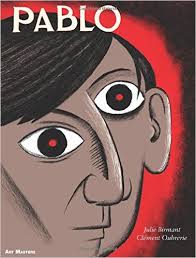
Judging this book by its cover you would be correct in assuming that it is about Pablo Picasso.  But rather than being a simple history of the Art Master (the title of the series), this is a thorough recounting of Picasso’s life.  And what’s even more interesting is that the story is told from the point of view of Picasso’s lover and model Fernande Olivier.

And Fernande’s diary entries make up the bulk of the story and allow for a very personal look into the man and the stylistic choices that Picasso made over the years.  As the book says on the back, the authors show “how Picasso’s style developed in response to his friendships and rivalries.”  And of his rivals none was greater than Henri Matisse.  (The book also covers Picasso’s life before she met him too, of course).

The original work was published (in French) in four volumes.   This edition was translated by Edward Gauvin.

I especially like the way the book begins from the point of view of Fernande as an old woman, still alive and reminiscing about her life. (And yes, it’s amazing to realize that Picasso died in 1973…in my lifetime!).  (more…)

Read Full Post »

godboutSOUNDTRACK: BUILT TO SPILL-“Carry the Zero” (1999).

zeroI loved “Carry the Zero” so much that I immediately bought the CD single (that’s what you did back in the 90s).

The Ep contains 6 songs.  There’s two tracks from Keep It Like a Secret (“Carry the Zero” & “Sidewalk” which is good in itself), 2 new songs (“Forget Remember When” and “Now & Then”) and 2 live songs “Kicked it in the Sun” and “Big Dipper.”

The two unreleased songs are good, but neither one is quite as immediate as anything on the album.  Of course, if you’re looking for extra BtS tracks, these are just waiting for you.

The real gems are the two live songs.  Both of them are solo acoustic guitar recordings recorded in a tiny setting.  They are quite different from the album.  I feel that “Big Dipper” fares a little better since the song is simpler.  There are some complex chord changes in “Kicked It in the Sun” which lose a little of their immediacy in the stripped down version.  Which is not to say that it’s bad–the first half of the song sounds great–it’s when it gets to the middle that it feels a little cumbersome.

So this is certainly a die-hards only release, but if you’re looking for some unusual BtS recordings, this is a great place to start.

[READ:October 2, 2015] Amerika

This is a graphic novel version of Franz Kafka’s Amerika.  And it is really well done.  The artwork is fantastic–clean lines, distinctive characters and wonderfully detailed background scenes.

I don’t know the original story at all, so I assume that Godbout was faithful to it (the back of the book says he was). Actually, this graphic novel was translated by Helge Dascher, so I wonder if she translated Godbout of Kafka?

Unlike so much of Kafka, this story isn’t really “Kafkaesque.”  There is some darkness to it and there are machinations of trouble for the main character, but it is not a perpetual state of nightmarish life.

Karl Rossmann is a young immigrant to America.  (Kafka had never been to America, but he gets quite a lot right).  He was sent to America because of an embarrassing sexual incident (which is rendered rather humorously).  When he arrives in New York harbor, he disembarks from the ship but forgets his umbrella.  So he races back on the ship.  But instead of finding it, he runs into the ship’s engine stoker.  The hulking man is suspicious if him, but after they talk for a few minutes Karl convinces the stoker to air his grievances about his supervisor to the ship’s captain. (more…)

Read Full Post »

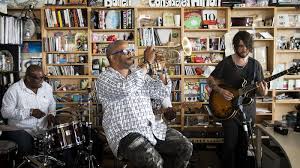
zweigSOUNDTRACK: TERENCE BLANCHARD FEAT. THE E-COLLECTIVE-Tiny Desk Concert #460 (August 5, 2014).

blnachAfter a few quiet Tiny Desk Concerts, it was fun to get something big and bouncy.  I don’t know Blanchard, but I really enjoyed his band set up.  Blanchard plays trumpet, and with the E-Collective, he’s got a guitarist, bassist, pianist and drummer.

In the first song “Soldiers”, I was sort of amused because when Charles Altura (a guitarist he met online) plays his 2 minute guitar solo, Blanchard isn’t doing anything.  It was  funny way to start the concert with the main guy doing nothing.  But Altura has a great sound–jazzy and interesting with a flair not unlike Frank Zappa.  It continues with a lengthy solo from Blanchard.  I like the jagged edges of this song–the funky bass and the angular rhythms.  It’s about 8 minutes long and it’s fun to watch Blanchard just digging the music when he’s not actually playing.

“Confident Selflessness” begins with a cool drum setup by Englishman Chris Bailey.  Over the great beat, Donald Ramsey, (Blanchard’s high-school classmate) lays down a great funky bass line.  And then it’s a wild solo from pianist Fabian Almazan.  I love the way the song switches back to that angular/funky sound during the refrains.  Blanchard seems to be playing the trumpet with some kind of effect on it during the first part–or he’s playing very quietly.  But later, he gets a good solo in.  Bailey also plays some wild drums fills while the rest of the band repeats the staccato motif.  This song is also about 8 minutes long.

He introduces the final song, “Breathless” by saying that there is typically a spoken word section, but he’s not going to do that.  The title references the police brutality and the dying words “I Can’t Breathe.”  This song is much more mellow, with a lengthy piano solo.  There’s a soaring, uplifting trumpet solo in the middle of the song (which is about 10 minutes long in total).  It’s a really pretty song, although I do prefer the more lively bouncy tracks.

As I was saying after the last two, quieter Tiny Desks, it’s fun to hear the audience whoop it up so much.  And Blanchard even plays a jokey riff at the end.

[READ: May 15, 2015] The Last Days of Stefan Zweig

This is one of those interesting books that I find at work whose pedigree takes some time to unravel.  This is a graphic novel.  It is based on the novel by Laurent Seksik called  “Les Dernier Jours de Stefan Zweig” (2010) which was released in English as “The Last Days.”  This graphic novel was illustrated by Guillaume Sorel and translated by Joel Anderson.

I didn’t know who Stefan Zweig was when I read this book (more shame on me, i suppose).  Zweig was an Austrian novelist, playwright, journalist and biographer.  According to Wikipedia, in the 1920s and 1930s he was one of the most popular writers in the world.

When Hitler came to power, Zweig left Austria for London (where he was considered an enemy because he was German). He was Jewish, although in an interview he said “My mother and father were Jewish only through accident of birth.”  Yet he did not renounce his Jewish faith and wrote repeatedly on Jews and Jewish themes.

He traveled with his second wife Lotte to Petrópolis, a German-colonized mountain town 68 kilometers north of Rio de Janeiro known for historical reasons as Brazil’s Imperial city.  And this is where the story actually begins. (more…)

Read Full Post »

murakamiSOUNDTRACKRHEOSTATICS–The Media Club, Vancouver, BC, (October 23, 2004).

media clubEvery year, the Rheostatics would perform what they called Green Sprouts Week in Toronto.  In 2004 they did a West Coast version. Five nights in a row at The Media Club (with each show being crazier than the last).  There aren’t always recording available for these shows, but on this leg there are recordings from the third, fourth and fifth nights.

This recording is the best of the 3 available shows.  Although in the notes, Tyson reveals that he had technical difficulties and was only able to record about an hour of the show.  In addition to the songs he missed for technical difficulties, there were also some quieter acoustic songs “Don’t Say Goodnight and “Joey” which he couldn’t get.

And yet, this is an amazing set of music–outstanding by any barometer, with great sound quality (aside from a few drop outs) and an amazing collection of songs. The final night of a run is usually really long, so it’s fun to imagine how much more they would have thrown into this set.

The 7 songs included are “Shaved Head” which is slow and amazing.  A raw and raging “Feed Yourself” with a dash of The Jam’s “Eton Rifles” and The Tragically Hip’s “Bobcaygeon” thown in.  “Saskatchewan” is broody but also great.  “Horses” is intense and goofy at the same time, with someone on the voice modulator doing a computerized “Play that funky music, white boy” recitation.

Torben Wilson from the Buttless Chaps plays drums on “Claire.”  “A Midwinter Night’s Dream” is one of those rare songs that the band throws out once in a while, and it sounds great here.  They invited the crowd on stage to sit around campfire style.

And “Fan Letter to Michael Jackson” is great here too.

It’s a fantastic collection of songs, leading me to think the entire show must have been amazing.

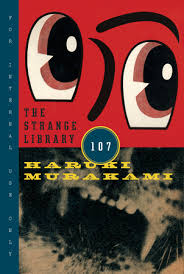
[READ: May 11, 2015] The Strange Library

I saw this book when we were in a bookstore in Denver.  I mentioned it to Sarah and she clearly bought it then and gave it to me for my birthday.

It wasn’t exactly risky because it is by Murakami with art direction and design by Chip Kidd (how could you go wrong?) but the book was shrink wrapped in the store, so you couldn’t flip through it.

Imagine my surprise when the slipcase proved to be not a slipcase at all, but a double flip cover that does not get removed but opens up like a secret document.  And every (or every other) page is chock full of art from Kidd.  My guess is that all of the art is found (rather than created) by Kidd as it appears to be old Japanese pictures and designs.  And they reflect (more or less) the action of the story.

The story itself is one of Murakami’s more surreal ones. (more…)

Read Full Post »

nymay156SOUNDTRACK: RHEOSTATICS-Evolve Festival Antigonish, NS (August 28, 2004).

evolveBestThe Rheostatics do a lot of festivals, and they always seem to have a good time.  But it also means a shorter set.  Unlike yesterday’s Nova Scotia show, this one doesn’t focus on new music too much (although they mention that 2067 is coming out Oct 5).

The sound quality isn’t great in this show either–there’s a lot of rumbling which sounds like winds, but who knows.

But they are even more charming in this setting.  Dave compliments someone one on their excellent sign and says that the sign demographic has let everyone down for this show–so her request will be honored.

The show starts with a cool jam from the Whale Music soundtrack (mostly “Song of Flight”).  When they play “Four Little Songs” one of the verses is a verse from Gordon Lightfoot’s “Early Morning Rain.”

Later they play a great version of “Saskatchewan” and perennial festival mates Chris Brown and Kate Fenner are there to help.  During “Stolen Car” they sing a few lines from “Another Brick in the Wall Pt 2.”

There’s great versions of “California Dreamline” and “Claire.”  The show ends with the new song “Power Ballad for Ozzy Osbourne” and there’s a breakdown during the song (no way to know what happened, but they have a laugh about it).

You can see photos from the day here (although none of the Rheostatics).

[READ: July 21, 2015] “The Freezer Chest”

I found Nors’ previous story to be a little odd.  And so I find this one.  There’s something about the way it was written (or translated) that I found it very stiff to read.  It is also told in a flashback which is later revealed to be a very-long-ago flashback.

What is particularly strange about the story is that the “action” of the freezer chest is all of about three paragraphs.  And while the story isn’t long overall, it takes a circuitous route to get to that part.

The narrator is a young girl, Mette.  She is on a boat with her classmates and their English teacher. Mark is also part of the group and he has made it clear that he does not like the narrator (that happened in a previous instance).  The crux is that Mark claimed to be an amazing guitarist.  And he is trying to get the narrator to respond to this information.  She genuinely does not care although she says she believes him. (more…)

Read Full Post »

reunionSOUNDTRACK: KATE TEMPEST-Tiny Desk Concert #456 (July 21, 2015).

kateKate Tempest is a British poet/rapper (and darling of NPR).  She raps with a really heavy South London accent and raps about the “everyday.”  But because she is a poet, her lyrics are really incisive.  And, when she sings, she throws in some really catchy choruses as well.  Her song “Lonely Daze” surprises when the big catchy chorus come in.

Although she doesn’t do that for this Tiny Desk.

Rather, she opens with an incredibly moving poem called “Ballad of a Hero.”  It is an anti-war poem that takes an amazingly personal look at soldiers and the sons of soldiers.  The NPR blurb says “Kate Tempest will connect you with your emotions and the cold, callous world around you. You may cry.”  When I first started listening to her Tiny Desk, I wasn’t really paying attention to the words of this poem, but by the end, I was totally hooked, and yes, I did cry.

The final lines:

I don’t support the war my son.
I don’t believe it’s right,
but I do support the soldiers
that go off to war to fight.

Troops just like your daddy, son;
soldiers through and through.
Who wear their uniform with pride
and do what they’re told to do

When you’re grown my sweet, my love
Please don’t go fighting wars.
But fight the men that start them
or fight a cause that’s yours.

It seems so full of honour, yes,
So valiant, so bold,
But the men that send the armies in.
Send them in for gold.

Or they send them in for oil,
And they tell us it’s for Britain
but the men come home like Daddy
and spend their days just drinking.

Despite the intensity of the poem (and her other lyrics), it’s fun to watch her rap because she always seems to be smiling.  And on the two songs she does “The Beigeness” and “Truth” she is so into it.  Her hand gestures and emphasis really complete the song.  And there’s also the matter of her accent–so noticeable and strangely musical.

I don’t know what the original music of these songs is like.  I gather from the official titles (“The Beigeness (KwAkE BASS remix)” and “The Truth (KwAkE BASS remix)”) that they must sound different on the record.  And KwAkE BASS plays around with her voice, adding echoes and interesting effects that add to the music).

I’ve enjoyed everything I’ve heard from Tempest, I’m just not entirely sure I would listen to a whole album of hers.

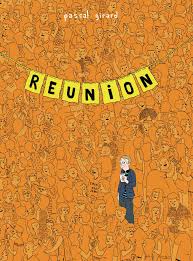
[READ: July 23, 2015] Reunion

When I saw this book by Girard in the library I immediately flashed back to reading his other book.   I recognized his style (the self-portrait of the main character Pascal made him look much older and more frumpy than he actually was.  But what I’d forgotten was just how much of a dick everyone in the book was.

And it’s even more so in the this book.

It’s clear that Girard has a style and that his humor comes from everyone in the book (including the protagonist) being jut awful.  Last time I wasn’t sure if it was just the way Helge Dascher translated the book (and again, it may be her since she does this one too) but I now think that Girard may just have a very poor opinion of people.

This book culminates in a ten-year reunion. And all of Pascal’s actions leads up to it. (more…)

Read Full Post »

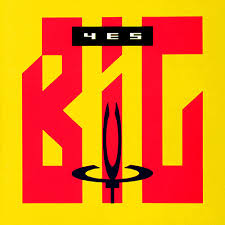
profxSOUNDTRACK: YES-Big Generator (1987).

big genAfter the huge success of 90125, Yes released that solos EP and then buckled down to make the follow up.  It took a few years and sounded an awful lot like 90125, although not as good. I remember enjoying the singles, but when I listened to it recently I felt that it didn’t hold up at all.

Wikipedia tells me that there was lots of trouble while making the album (really??).

Big Generator’s sessions dragged on for two years, largely because of creative differences. Guitarist Trevor Rabin was aiming to progress beyond 90125, while founding lead vocalist Jon Anderson was beginning to yearn for more traditional Yes music. Trevor Horn, who was a major factor in the success of Yes’ previous disc 90125, was part of the early recording sessions. However, he dropped out after a few months due in major part to his inability to get along with keyboardist Tony Kaye. Anderson stated that Horn had told Anderson to stay away from the rehearsal and recording sessions for three months, presumably so that Horn could develop material with the other band members.

Given all that, is it any surprise that the album isn’t all that good.  90125 inspired a lot of music, including this album.  So this album sounds more like a retread rather than a moving forward.

“Rhythm of Love” opens with lovely Beach Boys harmonies (although at this point I’m imagining more “Kokomo” than “California Dreaming” even if “Kokomo” came out 2 years later).  That opening guitar section sounds so much like a pop 80s song (in a not so good way).  The chorus is quite good although it takes that group harmony one level further into uncomfortably sterile pop land.

“Big Generator” sounds like the b-side follow up to 90125.  The guitars are meaner and there are more orchestral hits.  There’s some interesting sections that Yes of old might have played–but they are recorded very differently here.

“Shoot High, Aim Low” is fairly uninspired (even if it was popular on the radio) and at 7 minute it’s way too long.  “Almost Like Love” is another song that sounds so much like 80s pop, it’s kind of icky.  “Love Will Find a Way” is credited solely to Trevor Rabin who really did sort of take over the band in the 80s (what does Chris Squire do at band meetings anyway?).  It is also very poppy but it has some interesting guitars and textures.

“Final Eyes” would be good if it was 2 minutes, but once the second part of the song starts, it drifts into less interesting territory (especially at over 6 minutes).  “I’m Running” is quite polarizing for me.  I like the interesting bass line that opens the song (occasionally Squire does something cool on this disc), but the overall Caribbean Feel is just so wrong.  If the song ended at 3 minutes after that interesting guitar riff it would be much better.

“Holy Lamb (Song for Harmonic Convergence)” ends the disc.  It is written (surprise) entirely by Anderson.  It’s pretty good and a surprisingly decent ending to the album, although there’s an awful 80s synth sound on it.

This was the last Yes album I bought.  I think I heard about Union when it came out in 1991 and featured nearly every person who ever recorded a Yes song, but I wasn’t interested in it.  Since that album they have released 8 studio albums and countless live albums, but I’m content with what the past has given.

Incidentally, this whole travel through Yes started when Chris Squire died recently.  Squire is the only person to have played on every Yes album.  But as I said earlier, I often wonder what he was like to work with.  It seems like when new players come in they kind of take over the sound and Squire is often shunted to the background.  I don’t know a thing about him personally or professionally for that matter. I just know that he could play an amazing bass and wish he’d shown it off more.

[READ: May 20, 2015] Who Killed Professor X?

This graphic novel intrigued me, in part because it was originally written in Greek (can’t think of too many modern Greek books I’ve read–translated by Phil Holland) and in part because it is a comic about mathematics.

The Foreword explains that the book is intended for two kinds of readers: those who have some knowledge of mathematics and those who have no knowledge of mathematics…. The first category of readers can try to solve the problems and determine whether or not each suspect has a valid alibi, whereas the second can simply skip this step.

So the (fairly thin, I must admit) premise of this book is that Professor X was killed while at a conference for mathematicians.  The room was empty for 20 seconds, so the killer must have been more than x meters away from the Professor in order to be considered innocent.

The suspects (we learn later) are all of history’s greatest mathematicians.  They go only by first name in the story, but the end of the book gives biographies of all of the real people they were based on (from throughout history).

Each of their alibis is a mathematical explanation of why they could not be the killer.  And as the Foreword mentioned, if you know math (high school level or so) you could figure out where each suspect was based on the clues given. (more…)

Read Full Post »

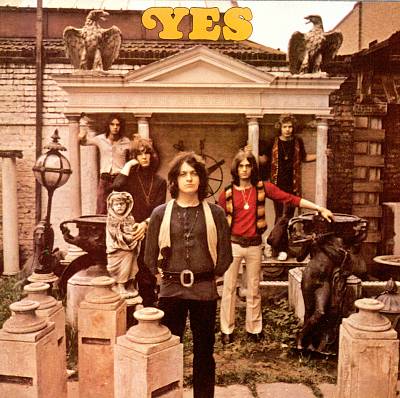
6SOUNDTRACK: YES-Yes (1969).

yesThis past weekend bassist and founding member of Yes died.  Up until about six weeks ago he was supposed to tour with Yes this summer.

It was surprising and sad news.  I was a huge Yes fan in college, and of course I love all things prog. But I started to lose patience with Yes since they had such a revolving door policy it wasn’t even clear is the people in the band even were part of the band (although Squire has played on every Yes album).  I hadn’t listened to anything new from them since the 1990s, and I was genuinely shocked to see how much new material they had released since then (about ten).

So here’s a bunch of their albums that I own.  I’m not going to pretend I don’t know their peak period stuff, so I’m looking at their first two albums with the hindsight of the 70s masterpieces.

Their debut album (look how 1969 that cover is) opens with a Chris Squire penned song called “Beyond and Before.”  Loud (and high) bass notes announce that this might just be a Yes album, even the vocal harmonies suggest Yes, and yet once the verse begins, it is a much more psychedelic version of Yes. The music feels very Summer of Love. And while Squire’s bass does come out from time to time, after that initial flurry it kind of settles down a bit. The song itself is quite good, as long as you’re not expecting classic Yes.

I feel the biggest sound difference is Anderson’s vocals which, while still powerful have a more gentle/sensitive feel (not too far off from his more famous style later on, but slightly mellower perhaps).

Next come s very jazzy cover of The Byrds’ “I See You” (a song I don’t really know, but the lyric “the cave of your hair” is pretty awesome.   This version is 7 minutes long with an extended jazzy solo from Peter Banks and suitable jazzy percussion from Bill Bruford. Tony Kaye on keyboards also features prominently.  The end is quite loud for such a hippie offering.

“Yesterday and Today” is a piano & vocal performance. It’s very delicate.  “Looking Around” has very heavy keyboard opening. The bass sounds like Squire but this is a very keyboard heavy song.  “Harold Land” opens with a kind of church organ and singing, but then the Yes sound comes in (you can almost hear the band forming). It feels, again very synthy, but certainly heading in the direction of Yes.

“Every Little Thing is a Beatles cover (! two covers on the debut album).  It begins with much chaos—noisy drumming, bass rumblings and keyboard noodling. The song is 5 minutes and the intro is almost 2 minutes. The big bass and drum really makes the song rock and the keyboards build some real drama into the track.

“Sweetness” is indeed a sweet slow track with a lot of acoustic guitars and soft keyboards.  It has a great descending chorus vocal line. If this were rerecorded and made a bit more modern sounding I think it could be a hit (well, maybe update the lyrics a bit too).

“Survival” is probably the most enduring track on the record. It opens with some great fuzzy bass and some actual catchy riffs. The opening vocals sound more like what latter-day Yes would sound like (subtle distinction, yes but it’s there). The chorus is very catchy and it’s a fun romp right until the end.  It’s a good send off, with a promise of better things.

Since almost every Yes album had different personnel, I’m going to keep a running tally here:

Chris Squire-bass
John Anderson-vocals
Bill Bruford-drums
Tony Kaye-keyboards
Peter Banks-guitar

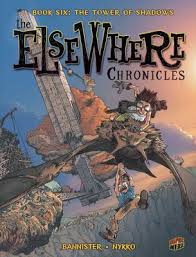
[READ: February 16, 2014] The ElseWhere Chronicles Book Six

I ended my review of the last book by saying “now I’m hooked.”  But in the year since I read the last book I lost all the momentum of the series (since I’d read the first five in quick succession).  Which is a shame since the book was every bit as exciting as the rest, but I wasn’t quite as into it as I wanted to be.

Since Ilvanna died in the last book I should have been more upset about it and been more excited at the prospect of her return in this one, but I’d forgotten about it all.

As for the rest of the story, Theo, Max and Rebecca meet up with an old man who seems to know the secrets of the Other World.  He convinces Theo and Max to capture a creature who can take them to the Other World.

Meanwhile, in the Other World we see that the spirit of Rebecca is held be a mean looking guy known as the Master of Shadows.

At last the Master of Shadows meets the old man and Rebecca meets her double–a creature which he has created from a photo of Rebecca–he just needs her soul to complete the creation.  The final battle is pretty epic with swirling shadows all over the place and Rebecca’s grandfather pleading with her to destroy her doppelganger.

Meanwhile Theo and Max find Ilvanna who may or may not be dangerous, but she seems to want to help them.

This was the final book of series two of the series.  And the cliffhanger shows that the boys have found Dolean and the two Rebeccas have emerged–to what end?

The story was certainly exciting, but I recommend reading the whole second series together to really maximize the impact.

Read Full Post »

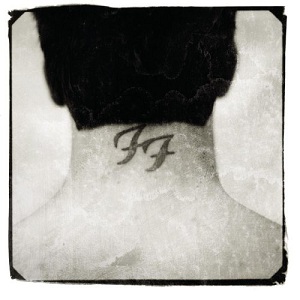
gipiSOUNDTRACK: FOO FIGHTERS-There is Nothing Left to Lose (1999).

Foo_Fighters_-_There_Is_Nothing_Left_to_LoseThis album introduces drummer Taylor Hawkins and is considered the first “band” record from the Foo Fighters. The album was recorded as a trio—Grohl, Hawkins and Nate Mendel on bass (who played on Colour as well).  As with a bunch of these middle Foo Fighters records, I feel that it starts really strong and then kind of fades a bit by the end.

I love the big fuzzy sound that opens this record. It doesn’t sound like anything Grohl has recorded before. “Breakout” is a poppy song with a very summery opening. It’s propulsive and super catchy. “Learn to Fly” is another wonderfully poppy song with a great chorus (and a hilarious video).

The opening riff of “Gimme Stitches” has a total classic rock radio sound, which really shows the diversity they were going for here.  “Generator” opens with a talk box—toally retro man. Even though it a silly thing to add to the song, the song is really catchy.

“Aurora” is a lengthy mellow song. I guess I never really thought to much about it, but on reading about it, it proves to be one of the bands’ (and Dave’s) favorite songs.

I feel like the second half of the album suffers a little bit as the songs don’t really stand out.

“Live-In Skin” is a solid song although there’s nothing too special about it (especially given the other songs on the album). The riff is pretty cool though.  “Next Year” is a mildly catchy mid tempo song. It seems like it could have been Foo Fighters’ version of Green Day’s “Time of Your Life” if they had played their cards right.

“Headwires” has an interesting 80s sound in the guitar and Grohl’s whispered vocals. But the big chorus returns to the Foo Fighters sound.

“Ain’t It the Life” is a mellow ballad. It doesn’t quite reach the heights of the Foo’s other ballads though the slide guitar solo is a nice touch.  “M.I.A.” opens quiet as well.  It has a chorus that is pretty typical of the Foo Fighters, but it seems to either lack some oomph, or it gets stuck at the end of the album.

[READ: February 10, 2015] Notes for a War Story

I’m fascinated by how many translated works First Second publishes.  And it seems like a great resource for non-English writers to get published in the United States.

Gipi is an Italian artist and writer (this book was translated by Spectrum) and as with many other European artists, I could tell right away that the style here was not done by an American.  I wonder why that is.

In general, I don’t really care for Gipi’s books.  They are a little too bleak, a little to “ugly” for my tastes.  And yet the stories are quite compelling.  This one revolves around an unspecified war that is happening around the countryside (but not, for some reason, in the city).

The protagonists are young men adrift in a world where they are clearly lost.  Guiliano is a slightly richer kid than the other two and he is the narrator.  The other two are his friends Christian and Little Killer.

They learn about a man named Felix, who is leader of a militia.  When they go see him, he immediately takes a shine to Little Killer.  They talk and bond while Giuliano and Christian feel left out (and are rather naive I feel–I mean its obvious that Felix is a killer). (more…)

Read Full Post »

may4SOUNDTRACK: THE ANTLERS- Tiny Desk Concert #51 (March 15, 2010).

antlersThe Antlers is one of those bands that is critically lauded and whom many people really like but whom I just can’t get into.  (I always think I do, but I believe it’s because I’m thinking of other similarly named bands, because when I listen to a Antlers song, I immediately think, oh it’s that band.)

The band, to be blunt, sings really depressing songs.  (Their then new album was called Hospice, for god’s sake).  And that’s just not my thing.  The music is beautiful, it’s just not for me.

The songs (elegies to a dying friend full of grief and longing) are quite lovely and singer Peter Silberman has a pretty amazing falsetto and the songs feel so fragile that they may fall apart at any minute (and they nearly do a few times at the Tiny Desk).

They play three songs: “Bear,” “Atrophy,” and “Sylvia.”  It’s just three of them.  Silberman on super quiet atmospheric guitar and Michael Lerner and Darby Cicci on drums and keys (not sure who is who).   The drums are simply a snare and a shaker.  And the keyboard is one of those hilariously tiny Korg two octave jobs that is basically like a laptop (I love that he can make so many different sounds with that).

This Tiny Desk is very nice.  The songs are really pretty (I like “Bear” especially with the lyric: “All the while I’ll know we’re fucked and not getting unfucked soon”).   “Atrophy” is similarly fragile with keening falsettos and lyrics like “I’d happily take all those bullets inside you and put them inside of myself.”  When Silberman starts actually playing the guitar at the end the sound is nearly broken.  The final song “Sylvia” is also delicate.  Although the drum is played with mallets (and is rather martial) the song is not any louder.  Indeed, with lyrics like, “Sylvia, get your head out of the oven. Go back to screaming, and cursing, remind me again how everyone betrayed you,” it’s not going to get too crazy.

The band doesn’t talk to the audience.  They play their three songs, seemingly wrapped in a cocoon of their own making.  It’s really quite lovely, just something I wouldn’t want to get involved in too often.

In the notes, it says that the band can really rock out live.  These songs are pretty mellow, so I can’t exactly imagine them rocking out, but I’d be curious to hear what they do as a rocking band.  And, I will admit that after listening to the show twice, I did start to like it a lot more. I’m just not sure I need more music that’s going to make me cry.

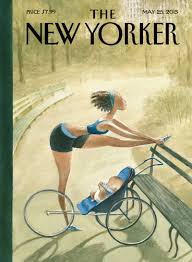
[READ: May 10, 2015] “The Apologizer”

I’m not sure why I surprised to see Kundera in the New Yorker.  I guess I don’t think of him as writing much anymore (based on utterly nothing, although I see that his last novel was in 1999) or maybe of not writing short stories (he has but one collection).  So it was a surprise for me  to see his name here.

Regardless, I really enjoyed the way this story was set up.  There were many different small sections that seemed unrelated but then united in a rather unusual way.

The first section: “Alain Meditates on the Navel” was wonderful itself.  Alain notices how all the young girls walk around with their navels showing and he wonders about the seductiveness of the navel.  He compares the navel to the thighs as a center of desire (long thighs indicate the long road towards pleasure) or the buttocks (signifying brutality, the shortest road to the goal) or breasts (the center of female seductive power).  But what of the navel?

Then he reflects back on the last time he saw his mother.  He was ten years old, she touched his navel, maybe gave him a kiss and was gone. (more…)

Read Full Post »

« Newer Posts - Older Posts »