Feeds:
Posts
Comments

Archive for the ‘Chris Andrews’ Category

SOUNDTRACK: THE DEAD MILKMEN-Soul Rotation (1992).

And lo, the Milkmen grow up.

This disc is not funny (well maybe, a little funny); mostly it is  “thoughtful” (and sometimes absurd).  But what is most striking about it is how mature (mellow) it is.  For this is the first album by The Dead Milkmen on Hollywood Records (a subsidiary of Disney).  This combination raises far more questions than is worth looking at.  But suffice it to say that even though this disc is the Milkmen, its a very different Milkmen.

The most obvious difference is that the majority (10 out of 13) of the songs are sung by the artist formerly known as Joe Jack Talcum, now known as Butterfly Fairweather (perhaps Hollywood knew that “”Punk Rock Girl” was their big hit?).  Past DM records were mostly sung by Rodney Anonymous (who goes by H.P. Lovecraft on this disc).  And his were the heavier, weirder, funnier, absurdist tracks, for the most part.  So, when the first four songs here are sung by Butterfly, you know something different is afoot.  Oh, there’s horns on the disc as well!

The disc feels like a pretty typical alt-rock band from the 90s.  But it’s missing the sass, it’s missing the vulgarity.  Basically, it’s kind of dull.

That’s not to say there aren’t good songs on here, because there are.  “If I Had a Gun” is a great screamy Butterfly song, and “Wonderfully Colored Plastic War Toys” is full of Lovecraft’s snark. As is “The Conspiracy Song” a lengthy rant of absurdity.

The rest of the songs drift between mellow and alt-rock rockers.  And it works as a product of the alt rock 90s.  It’s just not much of a DM album.

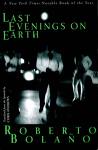
[READ: April 8, 2010] Last Evenings on Earth

I have been reading Bolaño’s short stories for a while now.  And so I have read a couple of the stories in this collection already. The stories in this collection were taken from his two Spanish collections of short stories: Llamadas telefônicas (1997) and Putas aseinas (2001).  And I have looked at about a dozen sources but I can’t find which stories came from which original collection (I like  to know these hings).  I can’t even find a table of contents for the original books.  Anyone want to help out?

I enjoyed these stories more than I expected to.  I have read some of his stories in The New Yorker and elsewhere, and I’ve been okay with them, but this collection blew me away.  Whether it’s being immersed in his writings or just having them all in one place, I was thrilled by this book.

There so many delightful little things that he does in his stories that I find charming or funny or something.  Like that his narrators are usually two or three people removed from the details.  Or if they’re not, they act like its been so long they doesn’t need to get all the details right:  “U insults and challenges him, hits the table (or maybe the wall) with his fist” (“Days of 1978”).

I also get a kick out of all the stories with the protagonist named B.  Which seems a not so subtle way of saying he’s the narrator (even though I ‘m sure these things never happened to him quite like it says (despite all the biographical consistencies with his own life).

The opening story “Sensini” has the narrator working as a night watchman at a campground (much like Enric in The Skating Rink…a bit of biography perhaps?).  A number of his stories are simply biographies of interesting characters (something he went to extremes with in Nazi Litearture in the Americas): “Henri Simon LePrince” a failed writer in Post-WWII France.  “Enrique Martin” a delightfully twisted story about jealousy (aren’t they all, though?) and acting impulsively and foolishly (aren’t they all though?).  This one featured  a riddle that I’m not even sure we’re meant to get:

3860+429777-469993?+51179-588904+966-39146+498207853

which the narrator thinks is a word puzzle. (more…)

Read Full Post »

SOUNDTRACK: THE DEAD MILKMEN-Metaphysical Graffiti (1990).

You know that it would be untrue, you know that I would be a liar if I were to say to you I didn’t set your house on fire.
You don’t have to be a philosopher to appreciate the joke of this album title (actually that may hurt the joke a little). But the “runes” that accompany the disc are quite amusing.

I haven’t listened to this disc in ages, and it turns out that I remembered about half of these songs really well.  And that’s because half of the songs are really good.  And the other half are, well, okay.

It opens with a children’s chorus which morphs into one of their heaviest rocking (although fairly uninspired) songs, “Beige Sunshine.”  The disc comes into focus with track two: “Do the Brown Nose” a funny song that outlines exactly how to do the titular dance (although at nearly 5 minutes, it’s a bit long).

The single (!) “Methodist Coloring Book”: features Joe Jack Talcum singing (clearly his success with “Punk Rock Girl” had an impact on that decision).  But on this track, he sings with a dark and distorted voice (which pales to Rodney’s dark voice) and is less interesting than his whiny normal singing voice. It’s a good song (and amusing) although as a single it’s less than successful.

I’ve always enjoyed the premise of “I Tripped Over the Ottoman” although I’m not sure it’s a very good song.  While “If You Love Somebody Set them on Fire” is funny and catchy (and astonishingly irritating with the screechier higher register notes in the chorus).

“In Praise of Sha Na Na” makes the valid point that they played at Woodstock and aren’t dead.

Joe Jack’s other songs are the very slow ballad “Dollar Signs in Her Eyes” and the rollicking (and more distorted singing) of “I Hate You, I Love You.”  But the ending tracks “Now Everybody’s Me” and “Little Man in My Head” (which is musically quite a good reggae track) just don’t have a lot of oomph.

However, the final track, “Anderson Walkmen, Buttholes and Howl!” (which parodies a short-lived but much talked about prog rock band) is delightfully twisted.

The problem with the disc overall is the four or five “improv pieces”  They all feature the same bassline, and by the end of the disc you start to cringe when you hear it (especially since the last one is 6 minutes long).  Each one is a mildly funny rant (along the lines of “Stuart” from Beelzebubba, but less focused and less interesting).  Some of them are certainly funny (Earl’s maggots and the “chills me to this day” refrain is pretty good), but they feel like comedy skits that you only want to hear once.

Erlenmeyer Flask!

[READ: April 3, 2010] By Night in Chile

In continuing with my Bolaño obsession, I moved onto yet another of his short books (144 pages).  Interestingly, By Night in Chile is written in a complete different style than the other two titles I’ve recently read (Bolaño is nothing if not diverse).

This is a stream of consciousness reminiscence told by Father Sebastián Urrutia Lacroix.  The entire book is one paragraph (actually that’s not true, the final line of the book is its own paragraph).

As the book opens, Father Urrutia is dying.  But worse than that, he has been disparaged by a wizened youth.  And his entire memory/rant is a response to the accusations of this (unseen by us) wizened youth.

And Father Urrutia uses this opportunity to describe the highlights of his life.  When he was very young he decided to join the priesthood against his family’s objections. There’s a running joke about people calling him “father,” I especially enjoyed the scene where his mother calls him father. (more…)

Read Full Post »

SOUNDTRACK: THE DEAD MILKMEN-Bucky Fellini (1987).

C’mon, I’m the walrus, damnit.

Bucky Fellini ups the ante from Eat Your Paisley in that the band sounds really accomplished at this point.  The songs are still silly, but they’re not quite as jokey (except for the hit single, but more on that in a second). There’s even lap steel guitar, violin and backing vocals!

Dave Blood’s bass is really something of a force at this point, propelling songs with interesting riffs.  Rodney  “Cosloy” Anonymous sounds great.  And, Joe Jack Talcum gets quite a number of songs to sing: the mellow (and very twisted) “Watching Scotty Die” and the more rocking “Rocketship.”

“Big Time Operator” is a supremely silly song based on a very simple blues riff.  It features the first (utterly wretched) DM guitar solo (look out Stevie Ray Vaughn!) and even showcases a “humming” solo from Rodney (just me!).  While  on the other end of the spectrum, “Surfin’ Cow” is mostly instrumental which is catchy and full of surprising intricacy.

“Instant Club Hit (You’ll Dance to Anything)” was indeed a club hit.  It’s snarky and silly (complete with a drum machine) and it name-checks some of the most prominent college radio bands of the time.  You could easily have built a good collection of British college rock from their list of who you’ll dance to. (instead of giving your money to a decent American artist like himself).

The Dead Milkmen keep getting better and better.  They’re still funny, but they’ve proven themselves to be far more than a novelty act.  Blow it out your hairdoo cause you work at Hardees.

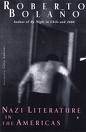
[READ: April 1, 2010] Nazi Literature in America

I’ve read a lot of books that are, shall I say, weird.  But this one is definitely the most unusual when I think:  what would possess a person to write it?

Nazi Literature in the Americas is written as an encyclopedia of Nazis writers who have lived in North, Central and South America.  Except that all of the writers are fake.  So, essentially Bolaño has invented 30 characters, and created rich, fully detailed biographies about all of them.

Some of them are very short (a couple of pages) while a few are over ten pages long, with details of books/poems published, critical reception and even untimely deaths.   The biographies are grouped according to categories (The Mendiluce Clan; Itinerant Heroes or the Fragility of Mirrors, Forerunners and Figures of the Anti-Enlightenment; Poètes Maudis; Wandering Women of Letters; Two Germans at the End of the earth; Speculative and Science Fiction; Magicians, Mercenaries and Miserable Creatures; The Many Masks of Max Mirebalais; North American Poets; The Aryan Brotherhood; The Fabulous Schiaffino Boys; The Infamous Ramírez Hoffman).

And although they are not chronological, Luz Mendiluce (whose bio I read separately) features prominently as a constant “reference point” and creator of one of the prominent Nazi publishing houses.  She had created a publishing empire where Nazi works were spread throughout the continent, and it seems that everyone had a title published by her company Fourth Reich.

What’s so weird about the book is that the people are fake, everything about them is fake (although they are placed firmly within history) and yet their stories are still compelling.  Bolaño has employed a mildly sympathetic tone to these people.  Not sympathizing with the Nazi aspect, but sympathizing with them as humans.

There were one or two who I didn’t really enjoy.  And I admit that I enjoyed the North Americans more; since I know more about North than South America, the facts surrounding these authors resonated more.  But I thoroughly enjoyed most of these biographies.

Of course, just when you think the book is all the same, the final biography changes everything.  In this one, Bolaño himself appears as the writer of the book.  He writes about Ramírez Hoffman in the first person, mentioning himself by name and getting personally involved in the story of this final, skywriting author.  It completely subverts the work before it and leaves you more confused than when you started (although a lot happier for having read it).

The final section of the book is an Epilogue foe Monsters.  It provides a brief biography for all of the secondary characters mentioned in the main body.  It also details the publishing houses and magazines, and finally lists  a bibliography of all books published.  The amount of detail that Bolaño created here is staggering.

But aside from all the Nazism, the book can be quite funny.  Like the conclusion for Luz Mendiluce Thompson, which ends with her driving a car into a gas station.  The final line: “The explosion was considerable.”

It’s tempting to say that this “novel” is not representative of Bolaño’s writing, but I think that’s false.  From what I’ve read so far, Bolaño doesn’t conform to any style in his books: each book is designed differently.  But like this one, they all deal with South America, with violence, with politics and are filled with humor.  So, yes, I guess this is pretty representative.

Oh, and the translation by Chris Andrews is, once again, fantastic.

For ease of searching I include: Bolano

Read Full Post »

SOUNDTRACK: THE DEAD MILKMEN-Eat Your Paisley (1986).

Who has angered the volcano gods?

My friend Paula is the only person I know who truly appreciated the Dead Milkmen.  And we spent many a car trip singing/shouting lyrics like “B.F. Skinner has eaten my dinner” (“Where the Tarantula Lives”).  While this may not be great literature or even terribly clever, there’s not too many songs (punk or otherwise) who name check B.F. Skinner.  So there.

Of course, “Beach Party Vietnam” is not quite as clever, although

– Hey Frankie, aren’t you gonna give me your class ring?
– Oh I’m afraid I can’t do that, Annette
– Why not?
– ‘Cause I don’t have any arms!

Never fails to entertain.

This second Milkmen disc jumps light years above the first.  The band sounds more accomplished, the recording is fuller and the lyrics are more bizarre and often funnier.  Rodney Anonymous Melloncamp does wondrous things with his vocal stylings (he’s still very bratty, but he does different “accents” this time).

It even features an interesting instrumental “KKSuck2” which, while under 2 minutes, holds up quite well as a solid song. And there’s some fun being poked at Hüsker Dü on “The Thing That Only Eats Hippies” (“Now it’s got  a sweet tooth for long hair so Bob and Greg and Grant you should beware.”)

Joe Jack Talcum is featured on vocals on “I Hear Your Name.” (a rather tender ballad) and on prominent background vocals on the wonderfully chaotic and super fun to sing along to “Two Feet Off the Ground.”  And “Moron” has the delicious opening verse: “Hanging out on the commode listening to Depeche Mode.”

Only six songs are under two minutes here, and that’s a good thing: their songs seems more fully realized (with actual parts!).  “Earwig” has three  different sections, even.  And while two songs are around 5 minutes long, the bulk are just under 3, the perfect length for a punk pop song (well, not quite pop, but at least pop-skewering.)

This is definitely the album to pick up for early DM fun.  ‘Scuse me while I puke and die (ha ha ha ha).

[READ: March 31, 2010] The Skating Rink

I simply can’t keep away from Bolaño these days.  I don’t even love 2666 and yet I’m very happily tracking down Bolaño’s other books, starting with this one.  (Which I guess technically is his third written novel if this bibliography is true–and why wouldn’t it be?).

This story is written in a fascinating way:  There are three narrators.  Each gets a chapter (from 1 to 10 pages) to tell the next part of the story.  The narrators are: Remo Morán, Gaspar Hereda and Enric Rosquelles.

As the story opens we learn pretty quickly that a murder has taken place.  But we don’t learn any details at all.  We also learn that the titular skating rink is going to play an enormous part in the story.  The story is set in Spain in the city of Z (which is quite close to the cities of X and Y).

In the first story line, we learn that Gaspar has gotten a job from Remo.  He knew Remo a long time ago, and when he returned to town, although he didn’t seek Remo out, it was quite fortuitous that they were acquainted.  And this job is as a night watchman at a local vacation campground.  He hangs out with El Carajillo and learns the ins and outs of the camp.  Eventually he becomes infatuated with two women, an opera singer and her younger charge.  He shares many conversations with the younger woman, and she seems (distantly) fond of him. (more…)

Read Full Post »

SOUNDTRACK: BLUE ÖYSTER CULT-Heaven Forbid (1998).

After Imaginos, it seemed like Blue Öyster Cult was all wrapped up.  (Of course, they tour all the time, so I guess they’ll never officially go away).  So it was something of a surprise to hear that they had a new album out back in 1998.

The album cover is dreadful, but the music is actually pretty good.  It sounds like a good compendium of BOC styles, all updated with a late 90s sound.  You get heavy songs, light ballads, and even a cover of an old BOC hit.

The album opens with “See You in Black” a really heavy chuggy guitar sound, much heavier than anything BOC has done before.  (And lyrically, he wants to see her in black because that means her husband is dead).  And yet by the time of the fourth song, “X-Ray Eyes” we’re back in familiar keyboard-heavy poppy territory.

The second song, “Harvest Moon” is actually quite nice, and would likely have been a hit single a decade or so earlier.   By the time we get to “Damaged” we’re in the pretty traditional heavy boogie sound of their earlier discs.

“Cold Gray Light of Dawn” sounds like late period BOC.   And “Real World” offers one of the first tweaks of the BOC sound: acoustic guitars in a rocking song. The disc ends with a reprise of the earlier hit “In Thee.”  It’s live and sounds good in this all-acoustic guitar format (and since Allan Lanier plays on the disc, it’s okay that they re-recorded it).

There’s very little in the way of mind blowing songs here, but if you’re a fan of BOC, and you’re not sure what you’ll be getting with this disc, fear not.  Bloom’s heavy songs are typical of the heavy BOC sound and Buck Dharma has hit his stride with his poppy tracks ala “Burnin for You.”

[READ: March 21, 2010] “The Return”

I intend to read the other Bolaño books once I’m done with 2666, but the publishing world seems to be conspiring to make me read them all before that.  This story is another one from the forthcoming The Return, translated by Chris Andrews.

And whether it was the unusual subject matter or the translation itself, this is one of my favorite of his short stories so far.  The premise of this story is quite simple, and it is set up in the first paragraph.  The narrator has recently died, and he shares two pieces of news: there is life after death and Jean-Claude Villeneuve is a necrophiliac.

The story follows the narrator after his death (he died on the dance floor).  His spirit leaves his body (like that scene from Ghost) and floats around following the body as it goes through the process of post-death existence.  The narrator is funny, with snide comments about himself and the workmen who are caring for him (and how he can’t watch his own autopsy).  But it’s when his body is carted off the premises that things get really interesting. (more…)

Read Full Post »

SOUNDTRACK: lions.chase.tigers: To Their Blood EP (2009).

I learned about lions.chase.tigers from the Dromedary compilation Make The Load Lighter.  When I looked them up online I found this site, where you can download their debut EP.  (Normally I’d encourage purchasing the CD to give the band some £, but it ships from the UK and would probably take weeks and cost a fortune in shipping.  So, download and spread the word).

lions.chase.tigers play a fascinating mix of noisy shoegazey guitar rock combined with very delicate quieter ballady bits.  There are only four guys in the band.  I was sure there were at least five maybe six.  They have  one guitar which plays beautiful picked guitar chords (high notes), and another which plays harmonized lower notes and sometimes big power chords.  The drums and bass complement perfectly.  And the vocals offer this great understated focus to these dramatic songs.  I imagine Sigur Rós jamming with Mogwai with vocals by Bob Mould.

All of their songs work to a dramatic climax; the tension builds like a mini epic.  The title track is the most dramatic (with that crazy screaming in the background!), and I think it’s the best track on the EP, but with each listen I hear more in the other songs to like, too.

I’m also delighted that one guy’s last name is the same as another guy’s first name: Fraser Sanaghan (guitar/vocals) and Seoridh Fraser (bass/vocals) [and no I can’t pronounce his first name but I love Gaelic names like that].  There’s also Iain Thomson (vocals/guitar), David Watson (drums).  There’s a live video on their myspace page, which shows that they sound amazing (possibly better?) live.

Scotland has been producing some amazing indie bands over the last few years, and lions.chase.tigers sis definitely a great one to add to that list.

[READ: February 5, 2010] “William Burns”

This was the first short story I’ve read since beginning 2666, (before I decided to find everything I could Bolaño).  I saved this story for last because it is the most recent release.  I initially noted: I’m in the midst of 2666, and lo, here’s a Bolaño story to read (and to hopefully not confuse matters).  It didn’t confuse matters, but I was a little concerned when I saw that it was set in the same town (Santa Theresa) as the bulk of the 2666 action.

One of the things I have grown to like about Bolaño is his multiple layers of removal from the action of the story.  So in this one, William Burns tells the story to a guy named Pancho Monge who tells the story to the narrator who tell it to us.

After that brief introduction, the rest of the story (in Burns’ own words, mind you) come in one long passage with no paragraph breaks.

Burns is living in Santa Theresa and is bored.  (Is there any other state of mind in Santa Theresa?).  He is living with two women and their dogs.  They asked him to stay with them for protection from a man who is coming to kill them.  (And, of course, they are each his lover as well). (more…)

Read Full Post »

SOUNDTRACK: NOTHING SMELLS QUITE LIKE ELIZABETH compilation (1992).

This was Dromedary Records’ first big release: a statement of purpose if you will.  This is a compilation of unsigned Jersey indie bands.  I listened to this all the time as it was being compiled and mastered.  It’s been a while since I listened to the disc start to front.

It’s funny to hear some of these tracks now 18 years later, to see what stands up.

Melting Hopefuls’s “Gondola” has always been a favorite of mine, a weird intertwining vocals/guitars mix.  I’ve no idea what it’s about, but it sounds great.  Oral Groove’s “She’s Still Here” is okay.  The opening riff is pretty great, but the rest of the song isn’t all that memorable.

Planet Dread’s “What We See” is all over the place but manages to be a reasonably cohesive metal song. The time changes are still unexpected and are quite interesting.  This was a band who liked to throw everything into a song, so when the trippy middle section comes in, it sounds almost like a different band until that same crazy riff brings it back to metal territory.  The triangle at the end is a nice touch too.

When this disc came out, Eternal Vision was this huge buzz band, Jersey’s (specifically my home town of Hawthorne’s) up and coming Dream Theater.  And you can hear the talent in this song.  I have to say I much prefer the instrumental section to the parts with vocals.   Bassist Frank LaPlaca (who yes I played little league with) is now in the prog rock band 4front. His bass work has always been amazing and no doubt still is.

Footstone’s “Forbidden Fruit” is one of the poppier/groovier numbers here.  It’s always made me smile, as it’s about office furniture: “That’s not your chair.”  The unexpected funk freak out in the middle is just a bonus.  And cuppa joe’s “Meanings” is one of their lighter songs with some of my favorite lyrics on the disc.  When the song starts I think it’s going to be a bit too twee, and yet it always redeems itself wonderfully.

Ya-Ne-Zniyoo’s “The Man in My Dream” is as peculiar as the band’s name.  Jangly guitars, tribal drums, and cool vocal twists (nice background vocals in particular).  And, like a lot of these songs, there’s a wild middle section, this one with heavy groove guitars.  Ya-Ne-Zniyoo have a disc available on Amazon (at least I assume it’s the same Ya-Ni-Zniyoo).

Godspeed have a really raw, heavy sound on “Child Bride.”  When I was younger I always laughed at the “So soft, it makes me hard” line (that’s mixed quite loudly), but now it seems a little too silly.  However, it’s a good set up for the weird and almost jokey mosh section that ends the track.  I also enjoy any song with a coda that has nothing to do with the rest of the song.

Rosary was my friend Garry’s band. They were a really interesting band out of Hasbrouck Heights.  “Asylum”  holds up quite well.  The guitars sound great and the vocals at the end sound fantastic.  There’s something about the overall mix that’s a little muddy, which I think hides how good this song is.  The disc ends with Grooveyard’s “Child Bright” (huh, two songs with almost the same title).  It’s probably the most metal song of the bunch, even though it has a very jam-band guitar opening.  But with the heavy guitars and strong vocals, (and the “time to die” lyrics), this is easily the heaviest song on the disc.

So, 18 years later, this is still a fun compilation.  I’m not even sure how many of thee bands are still around.  You can hear a few songs on Dromedary Radio.  He might even have a few CD compilations left over, if you ask nicely.

[READ: February 18, 2010] “The Insufferable Gaucho”

This is the longest Bolaño short story of this batch.  This is a slow paced story following a man in his steady decline (or is it?) from urban lawyer to small town rabbit hunter.

As the story opens, we meet Héctor Pereda an irreproachable lawyer and caring father who lives in the wonderful city of Buenos Aires.  His son Bebe and daughter Cuca later accused him of sheltering them from life’s harsh realities.  But when Pereda’s wife died (the kids were 5 and 7) he wanted to respect her memory, so he never remarried (and he didn’t want to burden his children with a stepmother).

Cuca eventually married and Bebe became a very successful writer. Both kids eventually moved away.  And Pereda seemed to age prematurely.  Then the Argentinian economy collapsed.  He couldn’t afford to pay his cook or maid, so he decided he would move to his country house where he could be more frugal.

When he gets out to the country, he find the place to be desoltae.  His house is in terrible disrepair.  He tries to fix it himself, but he finds that he needs to call on the help of some lazy gauchos (who do, in fact, play guitar all day). He buys a horse, meets with people and slowly, slowly starts building a small farm.

By the end of the story he is unrecognizable: unshaven, dirty and dressed like one of the gauchos.  But the real question is, is he happy?

There’s some (to me) unbelievable parts of this story: rabbits attacking people on horseback?  But it occurs to me that Pereda may be going slowly crazy.  Surely his son (and writer friends) think so.

It’s a long story where not very much happens, but I still enjoyed it.  Despite the apparent lunacy, it was a very engaging portrait.

For ease of searching I include: Bolano

Read Full Post »

SOUNDTRACK: FOOTSTONE-Lippy (1995).

This is the debut CD put out by Footstone.  Dromedary has made it available for download on their site. This disc jibes nicely with the songs the band was releasing at this time: kinda heavy, but mostly melodic indie rock (emphasis on rock).

Unlike some of the other dromedary releases, there’s not a lot of diversity on the disc.  And that’s not a bad thing, it’s 12 (well, really 11 if you discount the silly first track) tracks of first rate 90s rock. There’s a few surprises, like the cool bass break in “Supwerworld”, or melodic expanses on other tracks there, but largely you get loud rock songs.  And there is something creepily irresistible about the track “Watermelon.” I’m not exactly sure what it’s about but I can’t stop listening to it.  It reminds me vaguely of Mother Love Bone, but I think more in spirit than anything tangible.

Ralph, the singer, has a really strong voice.  He can hit a note and hold it which works really well with most of these choruses.  And the music is consistently solid.  There’s even a cover of the Juicy Fruit jingle!

The downloadable tracks make this available for the first time in 15 years.  And you can listen at Dromedary Radio at any time.

[READ: February 18, 2010] “Álvaro Rousselot’s Journey”

This story, translated by Chris Andrews,  starts out with a delightful bit of Bolaño dark humor.  “Keen readers of mid-twentieth-century Argentine literature, who do exist…”  It follows the life of Álvaro Rousselot, who published his first book in 1950 at the age of thirty.  It sold poorly but was eventually, surprisingly, translated into French.

A few years later, a French film came out which was petty clearly an adaptation of Rousselot’s book, although Rousselot’s name was never mentioned in connection with the film. He never addressed the issue directly with anyone, but lawyers suggested he take action.  He never did, besides, by then, he had written a second book, quite different from the first.  This was later followed by a collection of short stories and then a third novel.

Shortly after this third book came out and before it was even translated into French, Morini made a film that was clearly based on this book (again, Rousselot was unacknowledged).  This time he was enraged, but he remained passive, preferring to get on with his life, but always preparing for another shock.

But that shock never came.  Morini’s next film was wholly unrelated to anything Rousselot has done.  In fact, Morini seemed to move in a new direction for the remainder of his films.

Some time later, Rousselot was invited to Frankfurt for a literary festival.  Being so close to Paris, he couldn’t resist trying to track down Morini, just to talk to him.  The rest of the story concerns Rousselot’s long and winding journey in trying to track down this mysterious filmmaker.  He receives numerous leads, all of which lead him closer to his man.

This was a peculiar story which I enjoyed quite  bit.  It had all of the trapping of a thriller, but it was written with such a slow meandering pace, with so little in the way of suspense, that it was more of a road trip.  The ending was very strange indeed, unsatisfying in some ways and yet inevitable in others.

I’m really starting to enjoy these meandering Bolaño stories.  It seems so unusual especially when compared to his fast paced poetry.

For ease of searching I include: Bolano  Alvaro

Read Full Post »

SOUNDTRACK: THE MOMMYHEADS-Flying Suit (1994).

The Mommyheads continue the Dromedary catalog’s streak of consistently poppy indie rock.  Throughout the disc, the The vocals are gentle and falsettoed, setting kind of a trend on the label thus far.

What sets this disc apart from a lot of comparable acts of jangly, light-on-the-bass 90s rock is the subtle complexity of the songs.  Even though most of the songs are fairly simple pop confections, there’s usually an unexpected moment that pops up, making things a little more than what they appear.

The opening chords of “Sandman” are, well, weird, angled and minor, but they somehow lead into a very poppy catchy verse about a sandman.

“Saints Preserve Us” opens with a crazy, no wave guitar lick that, somehow, is matched by a vocal line.  And yet, they can’t resist a smooth an catchy bridge, even if it is only two chords long.  Meanwhile, “Spiders” sounds like a long lost Moxy Fruvous track, kinda funny but kinda serious at the same time.

The only thing odd about “Bottom Out” is how normal it is…a fairly simple, undeniably catchy little pop song that would have fit in very nicely on the Juno soundtrack

“Annabell Ann” plays with the listener’s head by sounding for all the world like an orchestral pop song with a weird arrangement until the chorus pops in with poppy chords and harmonies.  And what of “Worm”?  An opening set of bizarre chords that sounds like it’s coming from next door, followed by a delightfully obscure jazzy bassline.  The song wanders around into interesting corners for a few minutes before ending just as suddenly.

The wonderfully titled “Henry Miller is Dead” shows the heavy side of the band, with noisy guitars and raucous lyrics until the very gentle bridge grounds the song back into familiar Mommyheads sound.  The disc ends with “Valentine’s Day” a gentle sorta jokey sounding song about, well, Valentine’s Day.  It sounds like an even indier version of something off of The Replacemnets’ Hootenanny disc.

The disc is less than half an hour long, making it close to an EP.  But it’s a wonderful half an hour.  You can hear the tracks on Dromedary Radio.

[READ: February 17, 2010] “Gómez Palacio”

This short story comes from Last Evenings and Other Stories, and was translated by Chris Andrews.

Bolaño is from Chile and Mexico City, and he seems to have a rather disparaging view of small Mexican cities.  Gómez Palacio is a small Mexican city where the narrator is assigned to teach a short term writing workshop.  The narrator is a poet himself.  His class is attended by only 5 people, none of who are very good.

The bulk of the story concerns his relationship with the director of the Arts Council where the class was held.  She has bulging eyes and is quite short.  Yet every day she picks him up from his seedy motel and drives him to school.  While driving one day she asks him to take the wheel but he doesn’t drive.  Regardless, he drives down the road until a car pulls over in front of them.  The director says that it’s her husband.  She then regales him with a story about her unhappy marriage. (more…)

Read Full Post »

SOUNDTRACK: CUPPA JOE-Nurture (1995).

Fuzzy guitars, distortion, rocking noise and…that delicate voice.  cuppa joe breaks out their harder side with this album. What’s nice about this full length is the way the band really pushes the boundaries of its indie pop sound.  They explore different styles but never go so far as to lose their identity.  It’s most notable in the bass, which sounds so different on different songs, quick and jazzy on “Swinging on your Gate” full of high notes and full on “Broken Arms.”

And, of course, “Bottlerocket” is back for another go.  This sounds like a re-recorded version than the EP, louder and fuller.  And frankly, after writing a song like this how do you compare?

But just showing some of the diversity on the disc, “Sitting Limit” has some major distortion on the guitars.  It’s funny how almost deadpan the vocals are in comparison.  I’ve finally concluded that the vocals sound kind of like the alternate leads singer from The Dead Milkmen (Joe Jack Talcum, the one who sang “Punk Rock Girl”).  In fact, a few of their slower songs sound like Talcum’s ballads.

“Decline” offers some vocal harmonies which bring an interesting depth to the song (which in this case is much lighter in the jangly guitars) and almost sounds like a demo.

“Poster” stands out for its deep almost punk bassline and aggressive (relatively) vocals (and fr the fact that it’s under 2 minutes long).  It’s funny how much more intense the vocals can sound on these tracks.  And just when you think you have them figured out as a pop band with punk leanings, they throw in a song like “long Walk” with some wild music lines and an almost world music influence.

Even as the disc comes to a close, “Beauty of of an Unshared Thing” is like a long lost 90’s college radio gem.  It’s got the wash of guitars, the great bassline and a propulsive beat.

Listening carefully to the lyrics, the word that comes to mind most is earnest.  A song like “Self Confidence” is a mellow song about empowerment.  Or “Medium Well” with the line  “A kiss means so much more when it doesn’t taste like alcohol.”

The bonus track on the disc is a cover of an old Irish song by the band Bagatelle.  The song “Second Violin” is astonishingly catchy.  Given my proclivities, I prefer the harder rocking stuff on the disc, and there is certainly plenty of that.

It’s going to be re-released from Dromedary, with extra bonus tracks!

[READ: February 17, 2010] “Luz Mendiluce Thompson”

This story is taken from Nazi Literature in the America.  It’s translated by Chris Andrews.

The book is evidently a collection of fictional biographies of Nazi writers who live in the Americas.  The contents is simply a list of names (and this is the only one I have read, so I can’t confirm that the rest of the collection is like this).

But, lo, that summary is true of this piece.  Luz Mendiluce, born in Berlin 1928, died in Buenos Aires in 1976.  Her proudest memory and most sacred possession is of her being dandled on Hitler’s lap.  This is the photo she would rescue if her house was on fire.

And this story, which is quite easily my favorite short fiction by Bolaño thus far is a fast paced, exciting and strangely moving portrait of this fascist poet. (more…)

Read Full Post »

« Newer Posts - Older Posts »