Feeds:
Posts
Comments

Archive for the ‘Translation’ Category

SOUNDTRACKLOS CAMPESINOS! Live in studio at WEXP, July 31, 2008 (2008).

For this brief in studio performance Los Campesinos! play four songs from their debut album Hold on Now, Youngster.  The band sounds great in this setting.  I don’t have this album, so I don’t know if they deviate at all from the originals, but the live versions are tight and very effective.

The interviews are informative and rather gushing (I’ve never heard a DJ kiss the ass of a performer in such a nice way before…and the band seems really flattered by it…it’s all very sweet).  The DJ also has a funny conversation about their tendency to scream in their songs.  (It’s cathartic).

What I didn’t notice so much on Romance is Boring was how many different lead singers the band has.  With these four songs, there are enough lead vocalists to show a lot of diversity (and a lot of screaming, too–“don’t read Jane Eyre!”).  And, as one might expect if you know their later disc, the lyrics are smart, funny and wicked.

The difference between Romance and Hold On, seems to be that the band were much punkier on this early disc, and that all comes out in these live tracks.  And the songs are all short: 3 minutes and under.  They really pack a lot in here.

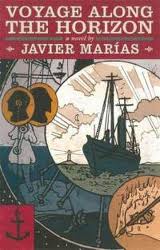
[READ: January 13, 2011] Voyage Along the Horizon

Most of Javier Marías’ books are translated and released through New Directions. But for reasons I’m unclear about, this book, Marías’ 2nd novel, was published by Believer Books (an imprint of McSweeney’s).   I haven’t read any of Marías’ other novels, so I have no idea if this is similar to any of the others (there’s a Q&A at the back of the book which suggests that this is typical of his earlier novels), but it absolutely makes me want to read more by him.

What I loved about this story first off was the sense of distance we received from the main story itself.  (Marías is Spanish, but this is a technique employed by Roberto Bolaño (Chilean) extensively…. Obviously, others do this as well).

The set up of the story is this:  1) An unnamed narrator has a party at his house.  At this party, two individuals, Miss Bunnage and Mr Branshaw (or is it Bragshawe?–he never learns) discuss author Victor Arledge.  Miss Bunnage is a scholar of Arledge and Mr Branshaw has in his house an unpublished novel that investigates the disappearance of Arledge and why he stopped writing.  And so, Branshaw invites Bunnage and the narrator to his house the next day to have the novel (called Voyage Along the Horizon) read to them.

2) So, the next morning, the two go to Branshaw’s house where he does not let them see the book, preferring rather to read the novel aloud (which gives us essentially 3 levels of remove from the action of the story).  That’s a long way to go before you even get to the meat of the book. (more…)

Read Full Post »

SOUNDTRACK: LOS CAMPESINOS! Live in studio at KEXP, July 31, 2008 (2008).

For this brief in-studio performance Los Campesinos! play four songs from their debut album Hold on Now, Youngster.  The band sounds great in this setting.  I don’t have this album, so I don’t know if they deviate at all from the originals, but the live versions are tight and very effective.

The interviews are informative and rather gushing (I’ve never heard a DJ kiss the ass of a performer in such a nice way before–and the band seems really flattered by it–it’s all very sweet).  There’s also some fun comments about their screaming tendencies.

What I didn’t notice so much on Romance is Boring was how many different lead singers the band has.  With these four songs, there are enough lead vocalists to show a lot of diversity (and a lot of screaming, too–“don’t read Jane Eyre!”).  And, as one might expect from the later disc, their earlier lyrics are smart, funny and wicked, too.

The difference between Romance and Hold On, seems to be that the band were much punkier on the early disc, and that all comes out in these live tracks.  And the songs are all short: 3 minutes and under.  They really pack a lot in here.

[READ: January 6, 2011] The Facts of Winter

This book is, apparently, an elaborate joke.  It is set up as a book written by French author Paul Poissel.  But unlike the other things that Poissel wrote (his most famous and lasting works were written after this book), this is a collection of dreams.  Specifically, it’s a collection of dreams from random unnamed people in France, circa 1841.

The book is laid out with the original French story on the left page and the translation on the facing page.  I don’t know French, but my minimal French comprehension leads me to think that the translations are accurate.

So, each entry (most about a half a page, some stretch to two pages) is a recounted dream. I didn’t count how many dreams there were, but there’s more or less one a day from January to March.  None of them are outlandishly crazy or dirty or anything like that, but they are amusing to read.  There is a preponderance of canoes in the dreams.

After the dreams we get a lengthy Afterword (which all told, may be longer than all of the dreams combined).  The Afterword details La Farge’s work while translating and learning more about Poissel.  It is rather funny and goes into all kinds of personal details about La Farge and his ex-girlfriend as well as the friend he met in the city of Aix who takes him to all kinds of old ruins. (more…)

Read Full Post »

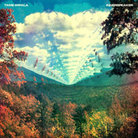
SOUNDTRACK: TAME IMPALA-“Lucidity” (2010).

I heard this song on the NPR’s 5 Artists You Should Have Known in 2010.  The album, Innerspace, is only available in Australia (imported on Amazon for big bucks) but I guess that’s why people download music.

This song is really cool. It feels very My Bloody Valentine to me.  However, inevitable comparisons to The Beatles abound, but that’s mostly in the vocals (which is kind of funny since they are Australian).  But it’s really a very sixties British vocal sound–not unlike early Who).

The big difference comes in the music which is psychedelic and wild in ways that The Beatles never quite managed.  There are great big washes of noise, and the sound quality sounds retro, even though it obviously isn’t.  Comparisons to the great Swedish band Dungen are not misplaced either.

I’ve listened to a few more tracks by them on YouTube, and I think this album could easily be one of the best of 2010 if only more people could hear it!

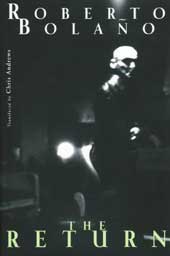
[READ: January 3, 2010] The Return

With the completion of this collection of short stories, I have now caught up with all of the published works of Roberto Bolaño (in English of course).  [The next book, Between Parentheses, a collection of nonfiction, is slated for June].

So The Return contains the 13 short stories that were not published in Last Evenings on Earth.  That collection inexplicably took shorts stories from his two Spanish collections Llamadas telefónicas (1997) and Putas asesinas (2001) and combined them into one collection in English.  It wasn’t quite as evident in Last Evenings, but it seems more obvious here that the stories in Putas asesinas are grouped together for a stylistic reason.  So, to have them split up is a bit of a bummer.  And yet, having them all translated is really the important thing.  And, again, Chris Andrews does an amazing job in the translation

This collection of stories was very strong.  I had read a few pieces in Harper’s and the New Yorker, but the majority were new to me.  Bolaño is an excellent short story writer.  Even if his stories don’t go anywhere (like his novels that never quite reach their destination), it’s his writing that is compelling and absorbing.

This collection also had some different subject matter for Bolaño (it wasn’t all poets on searches). (more…)

Read Full Post »

SOUNDTRACK: BUKE AND GASS-“Page Break” (2010).

NPR has selected the 50 best CDs of 2010.  I knew a few of them but had never heard of a bunch of other ones (about 20% are classical).  This CD with the bizarre cover has a great write up:

The wannabe tech-geek in me was initially attracted to Buke and Gass for the band’s two handmade instruments, which modify a baritone-ukulele and a guitar/bass hybrid run through heavy-duty amps (also handmade, mind you).

The problem (and perhaps its because I’m listening at Xmas time) is that the main melody line of the bridge makes me want to sing “Hark, Hear the Bells” and so this feels like a Christmas song even though it’s not.

Whoops– check that.  That melody is certainly there, but I just learned that I was listening to it in mono.  The other speaker presents all kinds of interesting things that distract from that melody (and project much more coolness).

I like the intensity of the track (and the fact that it’s under 2 minutes long).  It’s pretty heavy and the female vocals are nicely aggressive.  And by the end of the song, the syncopation is downright awesome.

It’s amazing how listening to the ENTIRE song can really change your mind.  This is definitely a cool track and will make me investigate the band more.

[READ: December 22, 2010] “One Night of Love”

I had recently gotten interested in reading Javier Marías when I was looking for information about Roberto Bolaño.  I discovered that New Directions Press, the publisher of all of Bolaño’s smaller books also published translations of all of Marías’ books too.  This story comes from his new collection of short stories While the Women Are Sleeping.  (I had also forgotten that McSweeney’s published his book Voyage on the Horizon a few years ago).

I didn’t know where Marías was from when I first started this (I assumed he was Mexican because of the New Directions connection–he’s actually from Spain).  Anyhow, when I thought he was from Mexico, I wondered if there was some kind of connection between his style and Bolaño’s, but also if he was trying to reintroduce magical realism to Bolaño (who abhorred magical realism).

Well that’s moot, (he may be doing that but not because he is from Mexico).

So this story concerns a man who is dissatisfied with his wife’s sexual appetite and performance.  He has taken to visiting prostitutes (see why the Bolaño thing rang true?), but he is concerned because the prostitutes  have grown “increasingly nervous and increasingly expensive” ([Nervous]?). (more…)

Read Full Post »

SOUNDTRACK: CAIFANES-El Silencio (1992).

Caifanes was another of the Rock en Español bands that I bought back in the 1990s.  I bought two of their records, El Silencio and El Nervio del Volcan.  In retrospect I’m not sure why I bought two from Caifanes and only one from Tijuana No! as I find Tijuana No! to be much more satisfying overall.  But El Silencio is a fun album as well.

As with a lot the rock en Español bands, the album starts with a really heavy track.  “Metamorfeame” is a raging, screaming punk blast.  But it’s followed by a Latin-infused mellow second song “Nubes” with a great weird guitar solo.  “Piedra” rocks, and Saul Hernández’ voice soars over the heavy bass work (he was meant for stadium rock).  It also ends with a little mariachi music as a coda.

“Nos Vamos Juntos” showcases some more great guitar work and “No Dejes Que…” practically sounds like the Alarm or some other stadium rock band.  “El Comunicador” is an interesting understated minor key song with interesting production.

The production is by Adrian Belew and you can tell as it seems very much like what I know of Adrian Belew: gleaming and bright and well polished.  And, like Belew himself, the album jumps from style to style.  Depending on your tastes, this is either great or tiring (and sometime both).

Wikipedia tells me that this album is considered one of the most influential albums from the most influential band to come out of Central Mexico.  Well how about that.

[READ: December 16, 2010] Amulet

This book is an extended version of an episode in The Savage Detectives.  InDetectives, Auxilio Lacouture has a ten-page story in which she was hiding out in the bathroom of UNAM (Universidad Nacional Autónoma de México) in 1968 during the military takeover (in real life, this is known as the Tlatelolco Masscare).  She hid in the bathroom for thirteen days, reading and writing poetry (Auxilio is the mother of Mexican poetry).

The episode in Detectives was  pretty exciting recollection.  She was in the bathroom when the soldiers broke in.  She could see the tanks outside and she could hear the gunshot.  So she hid with her feet in the air while the soldiers searched the premises.  She promised herself she would not to make a sound until she was discovered. So she read poetry and wrote poetry on the only paper available. (more…)

Read Full Post »

SOUNDTRACK: TIJUANA NO!-Transgresores de la Ley (1994).

In the mid 90s, when I was living in Boston, I discovered MTV Latino, and the Rock en Español resurgence.  Since I’m always interested in new music, I bought a few CDs by these Spanish-singing bands.  For most of my life I’ve thought about the rabid Japanese audiences who loved bands that sand in English.  Did they understand the lyrics?  And did it matter?  Well, here was a test for me.

Tijuana No! was the first band I bought and I really liked it (and still do).

The disc opens with a rollicking ska rocker “Goples Bajos” which features a wonderful horn filled breakdown and ends with a blistering guitar solo.  The title track, “Transgresores de la Ley” opens with a military beat and a military sounding flute before taking off with a heavy verse and, more impressively, a punk/shouty chorus.

My favorite song is “Tu y Yo,” it’s funky all over the place and has a super heavy midsection.  And “Borregos Kamikazes” has a wonderful juxtaposition of speedy, almost loco lyrics in the verses with some great group vocals in the chorus.

The first surprise (for me) comes with “La Esquina del Mundo” because suddenly there’s a female vocalist on lead.  She sounds great (her voice has a cool echo on it) and although she doesn’t quite convey the heaviness of the rest of the track, it’s an interesting juxtaposition.

The second surprise is that the track “Conscience Call” is mostly in English (I got so used to not understanding the lyrics that I was quite surprised to hear words I understood).

The final surprise comes with the penultimate track: an excellent cover of The Clash’s “Spanish Bombs.” Again sung by the female vocalist, her voice works wonderfully with the track.  The chorus, sung in Spanish, is really perfect.

So, in answer to the question, do you need to understand the lyrics to enjoy the music?, I’d say no.  Although it is nice once in a while.

[READ: November 20, 2010] The Savage Detectives

This was the Bolaño novel that I had initially wanted to read because the reviews were so glowing (amusingly enough it turns out to be virtually the last book of his that I read).  And now that I have read almost all of his books, it’s obvious how this book fits into his larger scheme of writing (I wonder what I would have thought if I hadn’t read the other books, too.  In fact, I wonder if I would have liked 2666 more at the time if I had read this one first.  As it is, I think I enjoyed this more having read 2666 first).

[DIGRESSION: When I was reading 2666 I found a fantastic review of 2666/The Savage Detectives by Daniel Zalewski, which reviews 2666 and The Savage Detectives in context of Bolaño’s life].

In a previous post I noted how Bolaño doesn’t really write conventional novels.  And this one is no exception.  Part I is the diary of Juan Garcia Madero, a 17-year-old aspiring poet.  It covers from November to December 31, 1975 .

Garcia Madero talks about his introduction to the visceral realists, a group of Mexican poets whose legacy is more or less unknown to us now (in the book–in reality there was no such group).  The two main visceral realists are Arturo Belano and Ulises Lima, and we will follow or look for these two for the rest of the book.

As with other Bolaño books, there is a massive obsession with sex.  At first Garcia Madero is a virgin and thinks about sex a lot.  Then he finally has sex with first one woman and then many women.  And he writes about them in his diary and spares no details.  (Many entries reveal him having sex with one of his girlfriends 5 or 6 times a night).  And there are of course whores and other deviant sexual individuals (including a guy who carries a large knife by which he measures his penis–we never see this, it’s all hearsay, but it’s in there).

And during this time, he is writing poetry as well–a fully welcomed member of the visceral realists.   (more…)

Read Full Post »

When I started reading 2666, I didn’t know anything about Bolaño.  I didn’t even know any of his other books (except I had heard The Savage Detectives was excellent).  But I didn’t know anything about him, personally.

You shouldn’t need to know an author’s biography to appreciate a novel.  And that’s the case with Bolaño, certainly.  However, knowing his biography adds a new dimension to his work that explains why he writes what he writes.

So, the brief outline: (more…)

Read Full Post »

I’ve waited to post this, my wrap up of ideas abut 2666, until I saw what others had to say about it.  Which is kind of a cop out but also kind of understandable.  This book is a giant mess of information, and I’m not entirely sure how to process it all.  So I’ve been looking for help.  And I’ve gotten some, but it’s all kinds of contradictory.  Most people seemed to hate the book.  A few people enjoyed it somewhat, and one or two people really felt moved by it.

I think I fall squarely in that middle camp.  As anyone who has been reading here knows, I became obsessed with Bolaño’s books, and read all of his short fiction (saving Savage Detectives for a read in a few weeks).  And yet I’m not exactly sure WHY I felt compelled to read these stories.  (I’m very glad I did…there will be more on Bolaño himself in a day or two).

I’ve decided to look back over what I wrote to get a sense of what I thought of the book (I knew these posts would come in handy). (more…)

Read Full Post »

SOUNDTRACK: FUGAZI-Steady Diet of Nothing (1991).

Jangly noisy guitars open the track (and then a lengthy silence after a minute or so).  And this loud/soft dynamic is pretty dramatic on this disc.

There’s a slot of really cool sounds (within the framework of loud noisy alterna-punk).  “Reclamation” opens with some harsh guitar harmonics over a kind of spoken verse, but it bursts into a great chorus.  “Nice New Outfit” is quite catchy (even if lyrically it’s very dark).  But by the middle of the disc, it feels like some of the songs aren’t quite as interesting.

Of course, the instrumental “Steady Diet” is noisy and wonderful.  And “Runaway Return” has a catchy noisiness to it.  But the band comes back to a high point with “Polish” and the thoughtful “Justice Letter” (written about favored  Supreme Court Justice William Brennan who retired in 1990).

This record is a cool departure from the first disc.  To me it’s not quite as immeiate as Repeater, and yet it still has some really powerful songs.  I find that no matter how many times I listen to it there’s a few tracks that never grab me, but overall, this is another great release from Fugazi.

[READ: Week of April 26, 2010]  2666 [pg 831-893]

Wow.

The book is over and I am blown away.  I don’t know if it was the set up, or my utterly lowered expectations or the complete lack of connections previous to this, but I had assumed that this story would end (well, actually exactly as it did, with him going to Mexico) but the 30 pages before the end blew me away.  I can’t get over how nicely he tied so much together and in such an unexpected way.  I could not tear myself away from the end.  Wow.

I’m still not sure how I feel about the whole book.  I’ll do a final thoughts post after I digest, but the ending of the book was immensely satisfying. (more…)

Read Full Post »

SOUNDTRACK: BEN FOLDS-University A Capella (2009).

The story goes that Ben Folds heard some a capella bands and decided to give them some airtime.  So he had them record a bunch of his songs.

I have been surprised at how much I enjoy some kinds of a capella music.  Ed Helms’ stuff on The Office is certain fun, but on a more serious level, it’s amazing what these singers can do with their voices in terms of diversity, range and even sounds.

But at the same time, it’s the lead vocalist on most a capella tracks that sell the song.  And, on this disc there are a lot of lead singers I don’t like. Part of it is because I don’t like R&B vocal stylings, which I find too over the top at times.  Although I do admit that there;s one or two on here that work very well.

Overall, I enjoy this disc.  It’s fun to hear different interpretations of songs that I know and like.  Although I think realistically its the songs that Ben himself sings that I enjoy the most.

[READ: April 25, 2010] Romantic Dogs

This is the final Bolaño book that I’m going to read before finishing 2666 (Savage Detectives you’re next).  And it happens to be a collection of Bolaño’s poetry.

I have a complicated relationship with poetry.  I have written (and had published) a few poems.  I dated a woman who was (and I suppose still is?) an excellent poet (hi, Paula).   When I worked for a literary magazine, I learned how to judge poetry.  And yet, I don’t really read it.  And I think the reason for that is that, in my head, poetry deserves more attention than I’m usually willing to give it.  I feel like a poem should be pored over, read and re-read and, if good enough, memorized.

I have memorized about two poems in my life.  And since I often don’t feel like devoting a ton of time to poems,  I just don’t really read them.  And that’s a shame for me, because while poetry does demand a closer look, it’s not a precious item that should be put on a pedestal and looked at only when company comes over.

And Bolaño is as good a poet as anyone to demonstrate that. (more…)

Read Full Post »

« Newer Posts - Older Posts »