Feeds:
Posts
Comments

Archive for the ‘Translation’ Category

SOUNDTRACK: C. TANGANA-Tiny Desk (Home) Concert #194 (April 20, 2021).

It’s surreal seeing this many people standing so close to each other singing and having a good time. It’s also an incredible reminder of how good it sounds when a lot of people sing together.

The blurb is surprisingly lax about explaining who C. Tangana is–but I gather he must be pretty huge.

From Mexican Regional to Spanish flamenco, C. Tangana is simultaneously coming home and reaching out to bridge Latin music boundaries. He’s building a community of cross-cultural collaboration, rooted in a unifying love of language and tradition, making it clear he’s intent on giving everyone a seat at the table.

The blurb does say that this gathering is Tangana’s extended family (the clinks of salud certainly suggest familia).

After more than 13 months amid a global pandemic, C. Tangana’s extended family basking in the warmth of sobremesa with easy smiles and effortless baile looks otherworldly. (Check his mama and tía vibing in the corner.)

They open the set with

This first live performance of his latest album, El Madrileño (including a global premiere of a fresh single, “Me Maten”) buzzes with communal energy, spotlighting talent from across Latin landscapes.

C. Tangana sings with Antonio Carmona, on “Me Maten” and the whole show gets off to a warm, relaxed feeling.  The backing singers (Lucia Fernada Carmona, Pilar Cerezo, Marina Carmona, África Heredia, María Rubio, Mariola Orellana, Patri Alfaro and Mari Estrada) do an amazing job of fleshing out this and the other songs.

The concert’s star-studded cast of Spanish collaborators, including long-time friends (producers Alizzz and Victor Martínez) and new contributors (rumba legend Kiko Veneno and flamenco-pop icon La Húngara), are each spotlighted for their contributions to the record.

Up next is C. Tangana and Kiko Veneno singing “Los Tontos.”  Kiko plays guitar and opens the song.  When everyone sings along (especially the la na na na) it sounds wonderul.  Then Alizzz, who has been playing the keys, sings the New Order line “Every time I see you falling…” into the vocoder and it fits perfectly.  Kiko ends the song with lovely guitar melodies.

Tangana switches positions for “Demasiadas Mujeres.”  He walks away from the table to a nearby string octet (Pablo Quintanilla, Paula Sanz, Franciso Palazón, Marina Arrufat, Paloma Cueto-Felgueroso, Adrián Vázquez, Irma Bau, Daniel Acebes).  Huberto Morales (I think) plays a martial drumbeat.  Tangana raps this track and it sounds pretty great with the strings–the octet is really into it–rocking and bopping around.  They play a pretty solo as Tanagana heads back to the table.

There’s lots of friendly chatter before “Tú Me Dejaste De Querer.”  Alizzz once again plays keys and sings into the vocoder to introduce this wonderfully catchy simple guitar riff.  I’m not sure who is playing guitar as there are so many guitarists: Victor Martínez, Juan Carmona and Niño De Elch who sings a verse.  He’s also joined by La Húngara whose female voice brings a wonderful change to this great set.

[READ: February 1, 2021] Hasta el Mismísimo

I saw Hasta el Mismísimo which Google translated as “Even the Very” at work.  It was in Spanish but the cover was cute and I was curious what it was about.  The translated title certainly didn’t help.  I flipped through the book and found that it was mostly cartoons.  So it seemed easy enough to translate.

The first text is a big thank you page, the final line of which is Thank you to @glorianietophoto who gave me the brilliant idea of drawing a talking pussy [Google translates that last word a bit more harshly when it is by itself].

So THAT’s what this book is about and what’s on the cover.

The second pages says A los Mismísimos del mundo, !Bienvenido!  which gets translated as “To the themselves of the world, welcome.”  Clearly “Mismísimo” is a hard word to translate inthis context.

The first cartoon shows the talking pussy with a cup full of blood painting on a cave wall: “It seems that a long time ago we painted in the caves, but really today there are still a lot of cavemen.  That’s why it’s easy to finish UP TO THE SAME [Hasta el Mismísimo]. (more…)

Read Full Post »

SOUNDTRACK: ACID MOTHERS TEMPLE & THE MELTING PARAISO U.F.O.-Pink Lady Lemonade ~ You’re From Inner Space (2011).

This album is something like the fortieth AMT album and somewhere in the middle of the band’s tenure with this lineup:

Tsuyama Atsushi: monster bass, voice, cosmic joker
Higashi Hiroshi: synthesizer, dancin’ king
Shimura Koji: drums, latino cool
Kawabata Makoto: guitar, guitar synthesizer, speed guru

The album consists of one song, the title track, broken into 4 parts all based around a simple, but rather lovely guitar melody

 “Part 1” is 32 minutes long.  It begins with the opening guitar melody which plays along with some trippy sounds.  Tsuyama is reciting the words (in Japanese?  English?  Gibberish?) and occasionally you hear the words “Pink lady Lemonade.”  At around 12 minutes drums and bass are added.  Once the bass starts meandering through some catchy riffs, Kawabata starts soloing.  It’s pretty far down in the mix (the main melody continues throughout).  Then around 22 minutes Tsuyama starts adding the monster bass–wild riffs that go up and down the fretboard.  With about 5 minutes left Kawabata starts playing s louder solo–louder than the rest of the music–and you can really hear him wailing away.   Part 1 fades out completely before jumping into Part 2.

“Part 2” is only 5 minutes, but it is utter chaos, with everyone making a big pile of noise–keyboard banging, sliding bass, thumping drums and wild, seemingly uncontrollable guitars.  It ends five minutes later with some warbling keys

Then comes “Part 3,” which runs just over the minutes.  It’s a faster chord version of the same guitar intro with slow bass notes and a big guitar solo.  It changes shape and adds some discoey bass lines.  About midway through the synths take over and while there is music in the background the song becomes mostly washes of sounds.

“Part 4” ends the disc at just over 18 minutes.  It picks up with the original guitar melody once more.  This time, it’s only a minute until the drums and bass kick in and the soling begins.  At five and a half minutes the guitar solo gets really loud and takes over.  The soloing is wild for over ten minutes and then around 13 minutes the song grows very quiet with only the lead guitar and the heavily echoed main riff playing.

There’s on online version here that has this entire record but adds six minutes at the end of the last part which is mostly the introductory melody and some washes of keys over the top.  i rather like this extra 6 minutes and it feels like a really nice ending.


[READ: May 1, 2021] “My First Passport”

This essay was translated from the Turkish by Maureen Feely.

Pamuk talks about people travelling from Turkey when he was young.  First it was his father, who left the country when Orhan was seven.  No one heard a word from him for several weeks when he turned up in Paris.  He was writing notebooks and regularly saw John-Paul Sartre.   He had become one of the penniless and miserable Turkish intellectuals who had been walking the streets of Paris.  Initially Orhan’s grandmother sent Orhan’s father money but eventually she stopped subsidizing her bohemian son in Paris.

When he ran out of money he got a job with I.B.M. and was transferred to Geneva.  Soon after Orhan’s mother joined his father but left Orhan and his brother with the grandparents.  They would follow when school was done.

Orhan sat for his first passport photo (included in the essay).  Thirty years later he realized that they had put the wrong eye color down–“a passport is not a document that tells us who were are but a document that shows what other people think of us.” (more…)

Read Full Post »

SOUNDTRACK: BORIS-Akuma No Uta (2003).

Boris albums are never an easy thing to find.  This album was originally released in Japan in 2003.  Then it was reissued in America in 2005 with a vastly superior cover.  The cover to the right, a hilarious mock up of Nick Drake’s Bryter Layter album (left).  The original album (cover way below) was only 31 minutes, but the reissue was extended to 39 minutes because that’s how long the Nick Drake album was.

So this new album is quite different from the original: In addition to running an additional 7 minutes, the opening track of the newer version is a totally different take; both use the same riff from “Akuma no Uta,” but the original, shorter track repeats it far less and opens with over a minute of ambient, resonant amp noise absent from the longer version.

I have the newer edition and don’t know the original.  “イントロ” (Intro)” opens with a slow, simple infectious riff and then a sort of soaring siren sound starts.  The four note riff is enveloped in distortion while the backing chords cycle through slowly.  Then comes soaring guitars and washes of noise which stretch this song out to almost 10 minutes.

The opening track lulls you into a false sense of mellowness until “Ibitsu” comes blasting out with heavy rocking guitars, pounding drums and screaming vocals.  Most of the verses are just drums and Atsuo’s singing with an occasional riff from Wata. Then Takeshi joins in on the chorus and turns it into a big old crashing metal song. The middle is a three note riffs before a brief Wata solo and some wild drumming. The end is so loud it seems to blow out the speakers.

There’s a brief pause and then “フリー” (Furi) kicks off even faster and more intense heavy rock.  There’s a fast riff and a chorus that is super fun to sing along to even though I have no idea what they are saying.

“無き曲” (Naki Kyoku)” is a grooving slower song.  The first three minutes are primarily a solo by Wata.  The middle turns into a slow jam with stops and starts.  A slow grooving solo resolves into a another catchy rocking singalong before feedbacking out.  Around five minutes, the vocals come in.  The middle has another solo and some meandering bass from Takeshi–almost like a call and response musical section.

“あの女の音量” (Ano Onna no Onryou) is another big crashing rocker with heavy ponderous chords.  It’s got screaming guitars and shouted vocals but plenty of room for noisy feedback.

The album ends with “”あくまのうた” (Akuma no Uta).  A big gong introduces the three note riff.  Around two minutes the fast guitar riff begins and the song rocks out–a classic short heavy Boris rocker.

[READ: May 1, 2021] “Casting Shadows”

I haven’t read a lot of Jhumpa Lahiri’s stories, but she was very popular a while back.  I’m not sure if she still is.

Perhaps the most fascinating thing about this story is that it was written in Italian (translated by the author, which is also interesting).

Lahiri used to write in English but she has recently begun writing in Italian.  I find that fascinating, especially since she translated this work herself–how different is it than if she had written it in English first, I wonder.

This is the story of an older woman and how she interacts with the world around her. particularly the men.  She was

Never married, but, like all women, I’ve had my share of married men.

It’s a really interesting character study and shows a powerful woman who some people might (foolishly) try to take advantage of. (more…)

Read Full Post »

SOUNDTRACK: KISHI BASHI-“Honeybody” (2016).

I love Kishi Bashi and am always excited to see him live and to hear new music from him.

Much like the story, this song is remarkably cheerful and happy.  It feels different and special in Kishi Bashi’s canon.  All of the Kishi Bashi elements are there: strings, looping, soaring vocals, but there’s a few novel moments as well.

The chorus, for instance has an island feel.  The way he sings “Maybe sipping a Coca-Cola with me, babe” you can feel your feet in the sand.

But first there’s an orchestral string opening, following by some manipulated pizzicato plucking and Kishi’s singing

Then the chorus

Cause everybody wants a Honeybody someday
Mama said they don’t grow on them trees easy
Hands down on the ground
I’m begging you to please, Honeybody, please me

Followed by some lovely soaring oooh oooh oohs in the post chorus.

The song seems like it could just end with another repeated chorus, but after the post chorus, the song shifts gears to a buzzy synth sound.  The song turns vaguely electronic with a soaring violin as he sings the chorus to a new melody.

Delightful happy music. #stopasianhate (I mean, really, knock it off).

For a delightful twist on the song, check out this version with the Nu Deco Ensemble

[READ: March 13, 2021] “Honey Pie”

Most of Murakami’s stories are abstract or, at the very least, kind of puzzling  There’s usually some vaguely supernatural element to them that you’re never sure exactly how to read (and it usually doesn’t matter because the story is good.)  This story, which like most of the others was translated by Jay Rubin, is it only the most straightforward story of his that I’ve read, it is one of the most beautiful.

The story begins with a man telling a little girl a story.  The story is about Masakichi the bear, the all time number one honey bear.  The girl, Sala, asks many questions about the story–good, thoughtful questions (“Can bears count money?”).  The storyteller, Junpei, loved the girl and the questions.  The questions helped him to guide the story that he was making up.

Junpei was a professional writer, but these storytelling gigs were for his best friend Sayoko and her child Sala.  Sala had been having some terrible nightmares ever since the earthquake hit Kobe.  They don;t live near Kobe, but tit’s been on the news every day.  Sala fears that the Earthquake Man is in the house and she can’t settle down until she checks every single possible place in their house.  Finally Sayoko called Junpei because he stays up all night writing anyway. (more…)

Read Full Post »

SOUNDTRACK: PICTUREHOUSE-“Sunburst” (1998).

Picturehouse drummer Johnny Boyle was in the Irish Drummers book.  I was unfamiliar with them, but apparently they were pretty huge back in the late 1990s (at least in Ireland).  Boyle played on this album (Karmarama) and the follow up.

“Sunburst” was apparently all over Irish radio when it came out.  After a fun opening drumfill, this song falls into a gentle indie rock vein.  There’s some lovely harmonies, some nice gravelly vocals from singer Dave Brown and a big soaring “what a day” chorus.

The end of the song bops along on series of bah bah bahs and and a tasty fuzzy guitar solo.

It’s a delightful jangly pop song and was understandably a big hit

[READ: March 15, 2021] “Girl with Lizard”

I was sure that I had read this story, or something like it, before.  But this is the first story by this author that I have read.  This story and the resulting short story collection Flights of Love were translated by John E. Woods.

The story concerns a boy and a painting.  It was a painting of a girl looking at a lizard on the beach.  His mother and father called it “The Girl with the Lizard” and his mother referred to the girl in the painting as “The Jewish Girl.”  The painting played a large role in the boy’s childhood.  He napped under the painting every day during nap time.  He became very familiar with the details of the painting, which had a pride of place in his father’s office.

He became so familiar with it that when asked to describe a painting in detail for school, he was excited to write about this one.  He stared at the painting and took in all the details. He marveled that when he was little he had to look up at the girl and now that he was older the two were at eye level with each other.

His father admired the essay but told him that the painting was very important and it would be much better if people didn’t know they had it.  He said it was valuable and din;t want anyone to steal it.  He refused to say anything more about it and over the boy’s life, he never learned the provenance of the painting,  But his father certainly believed it was valuable. (more…)

Read Full Post »

SOUNDTRACK: RHEOSTATICS-Jasper Heritage Folk Festival-Night set (August 3 2001).

The guys played a 40 minute set earlier in the day (playing the entire Harmelodia album).  Then in the evening they returned for an hour long set of new songs and some classics.

Night of the Shooting Stars was coming out soon and they were primed to play some news songs.  There’s also not a lot of goofiness–it’s a short set and they need to get it all out.

You can really hear Dave B’s acoustic guitar in “Mumbletypeg” and “In It Now.”

When they play “Aliens,” Dave sings “Artenings Made of Gold” at the end.  “Record Body Count” runs a little long with a lengthy solo at the end.

“Legal Age Life” has a country feel and when they do the “12 Bar Blues” part, they credit NRBQ–I never realized it was a song before–just thought they were making it up.
Dave asks, “Do the people of your generation still do the twist?  Because i saw very little twisting.  You twist now but there’s no music.

After a lovely “King of the Past,” They’re going to take it down for a couple of long slow songs.  They’re very poetic and we know how much the people of japer die for the poetry.  “Saskatchewan” is first and then “We’re gonna crank up the Hitmaker 2000” for “We Went West.”  Introducing the song:

The first time we toured was in 1987 across Canada.  I bet that was before you were born.  Every verse is devoted to a province–not every province but the ones we went to.  Yes, Alberta’s in it.  [cheers] Wait, you haven’t heard the verse about Alberta.

Someone shouts a request and Dave says, “We’re going to do a new song, but thanks for the request.”  Up comes a good “P.I.N.”

The set ends with a great “Stolen Car.”  The acoustic really rings and the end has a wicked loud and wild solo from martin.

These short sets are definitely less fun than the full length ones, but they sound fantastic.

[READ: March 14, 2021] “Austerlitz”

About ten years ago I read the novel Austerlitz, from which this excerpt comes.  At the time I had written

I read about Sebald in Five Dials. And the glowing talk about him made me want to read one of his books (specifically, this one).

This excerpt is quite long, but so is the novel.   It’s essentially the first few sections of the the novel.  I had written

Austerlitz is a strange novel [translated by Anthea Bell] which I enjoyed but which I never really got into.  I feel like rather than absorbing me into its words, the book kind of held me aloft on the surface.  As such, I have a general sense of what happened, but I’d be very hard pressed to discuss it at length.

The basic plot summary is that an unnamed narrator runs into a man named Jacques Austerlitz.  Austerlitz talks to him at length about his life. They run into each other at various points over the years, and Austerlitz’ story is continued.  And literally, that is the book.  Now, of course, Austerlitz’ story is multifaceted and complex.  But we will never forget that this is a story within a story (it’s impossible to forget because the phrase “said Austerlitz” appears about 500 times in the book.

It was interesting to me that the details I wrote about this novel ten years ago were the same ones I kept from this reading, more or less.  (Particularly the part about how it says “said Austerlitz” all the time). (more…)

Read Full Post »

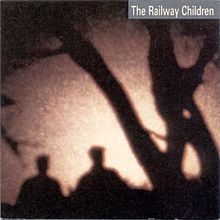
SOUNDTRACKTHE RAILWAY CHILDREN-“Brighter” (1987).

In Stuart David’s book, In The All-Night Café, he lists the songs on a mixtape that Stuart Murdoch gave to him when they first met.

Although I’ve been a fan of Belle & Sebastian for a long time, I knew almost none of the songs on this mixtape.  So, much like Stuart David, I’m listening to them for the first time trying to see how they inspire Stuart Murdoch.

In the book, David writes how much he does not like “rock,” especially music based around bluesy rock.  Most of these songs, accordingly, do not do that.  In fact, most of these songs are (unsurprisingly) soft and delicate.

A looping almost marimba-like sound opens before a jangly guitar and steady bass.  Here’s another song where the main instrument is the bass with guitar flourishes added on top.  This band reminds me of The Church (who had put outa couple of albums by now).

Singer Gary Newby has a nice crooning voice and the chorus is quite catchy.  The instrumental break allows the guitar to shine a bit with a meandering solo.  But the biggest surprise comes about 4 minutes in when there’s a drum solo of sorts–played on something like a metallic bongo.  After all of the short songs, this one pushes five minutes and is something of a surprise.

There’s some other good stuff on Reunion Wilderness, like “Gentle Sound” which I thought was a bit catchier.

[READ: January 30, 2021] “A Poor-Aunt Story”

In this story Murakami discusses a poor-aunt. I don’t know of this is a universal idea as I’ve never heard it before, although I do get where he’s coming from.

He says it was a beautiful day and he was out enjoying it when he suddenly had the idea of a poor aunt.  There wasn’t even a poor aunt around, the idea just came to him and it stuck.  He needed to write a story about a poor aunt.

He told his friend he wanted to write a poor aunt story.  She asked if he had a poor aunt.  He said no.  She said she did have a poor aunt bit didn’t want to write about her.

He admits that chances are “you don’t have a poor aunt relative, but you have seen one.”

Every wedding reception has a poor aunt.

No one bothers to introduce her.  No one talks to her.  No one asks her to give a speech.  She just sits at the table like an empty milk bottle.

When people look at the photo album they ask about her and the groom says she’s no one, just a poor aunt of mine.

He woke up the next day and a found that a poor aunt–a little one–was stuck to his back.

Nothing alerted him to her presence, he just felt it. She wasn’t heavy and didnt breathe across his shoulder. People had to look hard to see she was there.  But people did see her–she gives me the creeps, a friend said.  He said it felt like his mother was watching them.

The narrator was unable to see the poor aunt but other people cuid and they all saw her as something else–usually something unfortunate–a friend’s dog who had died.  Soon enough friends stopped calling him–they found it depressing.  But the media swooped in on him. He even made it on the show “Look What Else Is Out There.”  He tried to explain what had happened but the show tried to sensationalize him–looking for a horror story or a joke.

One of his friends said she wished it had been an umbrella stand on his back–that would be more pleasant to look at and more practical.  He could even have painted it different colors.

The poor aunt left him in autumn. He was on a train ride and watched as a mother tried to deal with her squabbling children.  The boy was teasing his sister–stealing her hat.  She was getting very upset and complaining to her mother.  The mother was trying to read and was getting angry at the daughter for bothering her. Finally the girl reached across the seat and slapped the boy’s face and took her hat, feeling very pleased with herself.

The mother was furious and made the girl sit in a different aisle–next to the narrator.  The child protested but the mother said “You’re not part of this family anymore.”  He wanted to say something to the girl, to cheer her up.  Like that she had done a good job, but he knew it would only confuse and frighten her so he said nothing.

Sometime during that interaction, the poor aunt left him.  He wasn’t aware of it, she was just gone.

This was one of Murakami’s first experiments with the short story form.  It was translated by Jay Rubin.

Read Full Post »

SOUNDTRACKHIT LA ROSA-GlobalFEST Tiny Desk (Home) Concert #134/144 (January 12, 2021).

Hit La RosaGlobalFEST is an annual event, held in New York City, in which bands from all over the world have an opportunity to showcase their music to an American audience.  I’ve never been, and it sounds a little exhausting, but it also sounds really fun.

The Tiny Desk is teaming up with globalFEST this year for a thrilling virtual music festival: Tiny Desk Meets globalFEST. The online fest includes four nights of concerts featuring 16 bands from all over the world. 

Given the pandemic’s challenges and the hardening of international borders, NPR Music and globalFEST is moving from the nightclub to your screen of choice and sharing this festival with the world. Each night, we’ll present four artists in intimate settings (often behind desks donning globes), and it’s all hosted by African superstar Angélique Kidjo, who performed at the inaugural edition of globalFEST in 2004.

The second band on the second night is Hit La Rosa from Peru.

Kidjo says their music is like a psychedelic surf-punk cumbia.  That’s true, but in a rather restrained way.  The music is cool and a little wild but it never gets out of control.  They play three songs and again, the musicians’ names aren’t given.

From the candle-lit home of their lead singer, Hit La Rosa comes in hot and doesn’t stop until the final measure. The band explores the many facets of Peruvian cumbia music, infusing it with pop music, folklore, jazz and dancehall to produce its distinctive grooves and hooks. The band’s precise-yet-dreamlike music and punk sensibility all come together to make music that explores life’s shadowy sides. Despite living through a political crisis in Peru, the band brings a message of hope and joy in the midst of struggle and upheaval.

“La Montañita” has a latin drum opening with a weird echoing surf guitar intro.  Sliding bass and trippy keys propel this danceable song along.

“La Marea” opens with a mellow keyboard and slow bass and guitars.  After a coupe of minutes,a drum fill introduces the faster part of the song.  An echoing vibrato-filled guitar solo and trippy synths are accented with Peruvian percussion and drums and it all works really well together.

“Salvia” is trippy and moody with more of the vibrato guitar soloing.  I really like at the end of the song the juxtaposition of the looping guitar melody and the bouncing bass.

[READ: December 14, 2020] Simantov

This story (originally written in Hebrew and translated by Marganit Weinberger-Rotman) was a combination police procedural and eschatological novel about the end times.

I read the summary of the book at work, but the summary really doesn’t indicate just how supernatural the book is going to get.

It would greatly help to have a solid foundation in Biblical lore to fully understand what’s going on in this book.  I mean, the first chapter title contains a footnote:

The First Day of the Counting of the Omer*
*According to the Torah (Lev. 23;15) Jews are obligated to count the days from passover tp pentecost. This counting is a reminder of the link between the Exodus and harvest season.

Things are supernatural right from the get go.  Elijah the prophet comes to Earth to prepare for its smiting (it’s quite an elaborate introduction).  Elijah lands in Israel and leaves a trail of destruction all the way to Shamhazai’s mansion.

So, obviously it helps to know who Shamhazai is (I didn’t–Shamḥazai and his companion Uzzael or Azael are fallen angels of Nephilim).  The Nephilim are literal giants in the Bible–often taken as fallen angels.  That’s a lot of background for the first 9 pages.

The next chapter reminds the reader of the first humans created by God–Adam and Lilith.  Shamhazai was gaga over Lilith.

Incidentally, after reading the book I was looking at what other readers had thought.  One reader on Goodreads said she had to stop reading the book on page 10 after this sentence:

[Lilith] was dark and comely, her eyelashes fluttered like turtledoves, her perky breasts like two erect towers.

I’m going to admit that I found this simile to be really awkward (translation problem or just poor writing?).  I mean, even if Lilith were a giant, her breasts wouldn’t be like towers, right?  It’s hard to know even where to begin with a simile like that.  But I pressed on. (more…)

Read Full Post »

SOUNDTRACKMINYU CRUSADERS-GlobalFEST Tiny Desk (Home) Concert #134/142 (January 12, 2021).

Minyo CrusadersGlobalFEST is an annual event, held in New York City, in which bands from all over the world have an opportunity to showcase their music to an American audience.  I’ve never been, and it sounds a little exhausting, but it also sounds really fun.

The Tiny Desk is teaming up with globalFEST this year for a thrilling virtual music festival: Tiny Desk Meets globalFEST. The online fest includes four nights of concerts featuring 16 bands from all over the world. 

Given the pandemic’s challenges and the hardening of international borders, NPR Music and globalFEST is moving from the nightclub to your screen of choice and sharing this festival with the world. Each night, we’ll present four artists in intimate settings (often behind desks donning globes), and it’s all hosted by African superstar Angélique Kidjo, who performed at the inaugural edition of globalFEST in 2004.

The first band on the second night is Minyo Crusaders from Japan.

Min’yō folk music was originally sung by Japanese fishermen, coal miners and sumo wrestlers hundreds of years ago, and the Minyo Crusaders are on a mission to make these songs relevant to an international audience. For their performance, the Crusaders found a unique take for their desk: a “kotatsu,” which is a heated Japanese table traditionally used for gathering in the winter months.

The diversity of music melding together here is quite impressive.

They open with “Hohai Bushi” (The album credits the style of this song as “afro”).

It starts with high notes like a theremin then quietly jangly guitars.  Cumbia-sounding horns (sax and trumpet) and complicated percussion (shakers and cowbells) flesh out the song.  Once everybody is established, a groovy bassline underpins the whole thing.  The male singing starts singing and the female adds some nice high backing oohs with it. Sadly, band member names are not given so I can’t credit anyone.

When the song is in full swing the guitars play loud and the keys play a retro sound including a retro fuzzed out keyboard solo.  Toward the end, a bass line slowly builds and the drums add intensity as they sing “ho hai ho hai.”

The guitarist speaks between songs.  He says his English is very poor but he does a fine job.

The second song “Yasugi Bushi” (bolero) is much more chill.  The male singer sits aside and the female singer takes lead.  There’s some nice basslines that repeat although for this song it’s really the saxophone that takes the lead with a lot of soloing.

The guitarist says these songs are old work songs and festival songs: “Minyo is dead in Japan but they are trying to bring it back.”

They end with “Aizu Bandaisan” (latin).  This song is much more dancey.  Lots of Latin horns, groovy bass and congas.  The lyrics are in Japanese (of course) but there’s a fun part where it sounds like they are singing “soy soy.”  As the song jams toward the end, there is lots of whooping and yelping and a wild trumpet solo.

This is a super fun set.

[READ: January 14, 2021] The Inugami Curse

Seishi Yokomizo was a hugely prolific writer.  He created Japan’s most famous detective (comparable to Sherlock Holmes in scope), Kosuke Kindaichi, who featured in seventy-seven books!  The Inugami Curse is apparently one of the best known of the stories and has been adapted into film and TV.

There are only two of his novels translated into English, this one (translated by Yumiko Yamazaki) and The Honjin Murders (1946) (translated by Louise Heal Kawai).

This book was an absolutely fantastic, complicated mystery.  There were many twists and turns.  And the way the story was plotted was perfect.

Sahei Imugami was a wealthy man.  He was called the Silk King of Japan and his business provided work for many many people.  He was a local celebrity to be sure and even had a biography written about him.

Sahei never married, but he did have three daughters with three different women.  The book opens with a character list which is quite helpful.

DAUGHTERS: Matsuko; Takeko; Umeko
GRANDONS:     Kiyo;       Také;    Tomo

There are some husbands involved as well.

There is also Tamayo Nonomiya, the granddaughter of a married couple who took Sahei in when he was just starting out.  He thinks of them as family, so when Tamayo was orphaned, he took her in. (more…)

Read Full Post »

SOUNDTRACK: BORROMEO STRING QUARTET-Tiny Desk (Home) Concert #127 (December 15, 2020).

This is the second of three Tiny Desk Home Concerts to honor Beethoven’s 250th birth anniversary. 

The Borromeo String Quartet consists of Nicholas Kitchen: (first) violin, Kristopher Tong: violin, Mai Motobuchi: viola and Yeesun Kim: cello (who is Kitchen’s wife).

Beethoven doesn’t score high when it comes to positive personality traits. Paranoid, litigious and a micromanager, Beethoven didn’t suffer fools and often fought with friends. Still, he possessed a well-developed funny bone, which Nicholas Kitchen and company put on display here, along with their own whimsical tiny “desks.” Because of the virus, and the confined space, the players wear masks.

The humorous side of Beethoven’s personality seeps into his music, such as the false stops and musical giggles that fuel his two-minute-long Presto from the Quartet Op. 130, which opens this performance.

“String Quartet in B-flat, Op. 130, II. Presto” has many fast moments and interesting parts where the first violin pays fast melodies but the rest of the quartet plays slow triplets over and over.  This is one of Beethoven’s shortest movements and is full of variety and energy.

For contrast, the Borromeos follow with a serious movement from later on in the same piece, the prayerful Cavatina, which Beethoven said even got him choked up.

This movement is full of serenity and tranquil beauty.  This is called the beklemmt section meaning trouble breathing. 

Kitchen can barely contain himself about the humor in the next piece, “String Quartet in F, Op. 135, II. Presto.”  He says this has a playful melody and “berserk” middle with instruments going all over the place.

More hijinks ensue in the Vivace from the Quartet in F, Op. 135, where Kitchen says the music becomes “completely berserk.”

And finally, in the last movement of the same quartet, Beethoven inserts a musical inside joke, the brunt of which falls on a wealthy music lover who displeased the great composer by not showing up at an important concert.

Kitchen says that Beethoven never met an occasion when he did not have a pun.  And he enjoyed injection his own brand of humor into his pieces.  In “String Quartet in F, Op. 135, IV. Der schwer gefasste Entschluss” there is an inscription: question must it be?  answer: It must be it must be!  Kitchen explains there was a patron who did not attend the premiere of opus 130.  The next day the patron  asked Beethoven to send him the music so his court musicians could play it. Beethoven said he’d send it but “you not only have to pay the price of admission for the concert you missed but for everyone in your family.”  The man looked at him and said “Must It be?”  Beethoven wrote a canon for four men to sing “it must be it must be.”  Then he made that joke the basis of the last movement of Op. 135.

[READ: January 3, 2021] Dinner

The Linden Tree was an interesting trip down memory lane for Aira.  

Dinner, by contrast is a wild violent fantasy (translated by Nick Caistor).  But its starts in the mundane–with a man and his mother going to dinner.

The two of them went to his friend’s house.  The friend was a terrible storyteller.  But he and the narrator’s mother had one thing in common–they were great at remembering the names of everyone in Pringles.  They knew the genealogies and configurations of nearly all the families.

But the narrator was terrible at remembering names–he had no facility for it at all.  He had plenty of memories from the town, but could never put a name to an event.

Evernatully the friend brought out a precious toy that he had.  It wa an old and rather sophisticated wind-up toy.  Two separate gears would go at the same time.  As it began to run, the door to a bedroom opened an a fat man came out and started to sing (as well as an old 19th century toy could sing). An old woman was in bed and she began to move back and forth “as a blind person does.” Then the second mechanism kicked in an the bedspread began to move and it looks like flocks of birds were flying out from underneath it. (more…)

Read Full Post »

« Newer Posts - Older Posts »