Feeds:
Posts
Comments

Archive for the ‘Translation’ Category

karlove1SOUNDTRACKWHITEHORSE-“Pins and Needles” and Kickstarter campaign (2014).

photo-mainI really enjoyed seeing Whitehorse live.  I would absolutely see them live again.  I was delighted then that their album was also fantastic (I didn’t think it could match their live show…and it doesn’t but it is great in a different way).  In a very short time I became a big fan of the band.

THey havea  new song, “Pins and Needles” and a Kickstarter campaign.  The song begins with Melissa McClelland’s voice singing in it beautiful way–there’s guitar in the right ear and bass in the left ear.  Then Luke Doucet comes in for verse two.  And when their voices fill the bridge it feels so complete.  Until they get to the chorus when they push it even further and it sounds amazing.

  They sing so well together.  Her voice has a slight country twang, and his is a low baritone.  Their harmonies are superb as they sing the compelling chorus: “Fake Your Death and I’ll Fake Mine”

Lyrics are certainly interesting for the band.  How many times do you hear a woman singing a line like: “I’m the villain in this piece  And back when I was a thief, I broke hearts like they were teeth.”

I love this song.  And it may or may not end up on the new album for which there is a Kickstarter campaign.

And I’m in.  I’m a little unclear about exactly what they aim to do with the money they raise.  They say quite plainly that there will be an album regardless of whether they raise the funds.  And their label, Six Shooter, is totally behind the band.

Rather seems to be a way to raise some money and some attention for the band.  And, apparently it will give fans a glimpse of the album as it is being made–a sort of behind the scenes featurette that comes before the disc itself.  The prizes are varied and moderate–from a download, to the CD, to a T shirt, to sheet music (all for reasonable donations), all the way to the grand prize–for $8,000 they will play a private show for you.

I’m in for a CD, and I’m happy to pay regular ticket price when they come around again.

Check out the Kickstarter campaign for more details where you can also hear “Pins and Needles.”

[READ: April 24, 2014] My Struggle Book Two
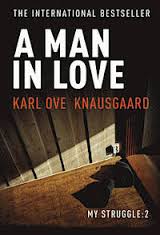
maninloveI read an excerpt of Book Two in Harper’s well over a year ago So when I got to that section again (it’s the end of the book) I was trying to remember why it sounded so familiar–an accident during a soccer match that leaves Karl Ove with a broken collarbone and an unhappy girlfriend (who will be looking after three kids without him), and then I remembered the excerpt that started it all.

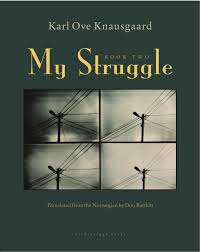
The translation of Book Two by Don Bartlett is fantastic, just as in the first book–I can only assume the original Norwegian is just as compelling.  Book one was 430 pages and now book two was 573, so I’m in to Karl Ove’s life for 1003 pages, and there’s four more books due (Book Three comes out next month).

As I mentioned for Book One, this series has caused some controversy because it is given the same title as Hitler’s Mein Kampf (Min Kamp in Norwegian), and also because he says some pretty mean stuff about people who are still alive.  Book One was about the death of his father.  It was pretty dark.  Book Two is about his first daughter and about falling in love with Linda, his children’s mom (although not yet his wife).  And it is also pretty dark.

I was trying to figure out why I like this series so much.  Not a lot happens, Karl Ove is not a very nice person and he seems to be pissed off most of the time.  And I think what I realized is that I share a lot of opinions as him, but he takes everything to the extreme.  And he is kind of an asshole.  I mean, anyone who writes a six part autobiography called “My Struggle” (okay, really it’s called My Head) is kind of an asshole.  But so when I see things that I would only think in my deepest recesses of my mind printed on a page, it’s strangely visceral to me.  I realize this means that I’m kind of an asshole too, but the key difference is that I don’t act on the things that I think, nor do I write 4,000 pages about them.

I told Sarah that she might laugh at some of the opinions that he lists but that she would not enjoy reading the books.  Indeed, this book, this series, is not for many, I’m sure.  But to me there is something strangely engaging about him and his strange life and his writing style.  And I really flew through this book, finishing it in about a week.

So this book begins (started in July 2008) with Karl Ove being pissed off.  He talks about finishing the first part of the novel (which I have to assume is Book One, given when this was written and how this book ends) just last month (in other words he is really churning this stuff out!).  He and Linda have been fighting (as the book opens they have three children, Vanja, Heidi and John–it’s also hard to believe that his children are young enough to not really know much about this series). The tension is high between them–glares, comments, nasty sniping.  Karl Ove says that he is afraid to say things around her because he knows how she’ll react.  But at the same time, some of things he desires are simply not defensible in a relationship or when you are parent.  And the main conflict seems to be that Karl Ove is selfish and Linda is (at least according to him) mildly suicidal and possibly bipolar).  And mind you, at the time of his writing this, I think they are still together….  (I could look that up, but it seems kind of fun not exactly knowing). (more…)

Read Full Post »

endofloveSOUNDTRACK: BECK/RECORD CLUB-LEONARD COHEN: Songs of Leonard Cohen (2010).

leonardcohenI won’t say anything because no one ever listens to me anyway. I might as well be a Leonard Cohen record.

-Neil from The Young Ones.

This second recording from Beck’s Record Club is, indeed, a Leonard Cohen record.  I like Cohen and have a bunch of his stuff.  Although he’s never been a huge favorite, I find his songwriting to be top notch.  And, since his arrangements are usually pretty sparse, it’s easy to cover his songs in a myriad of ways, which these artists certainly do.

But just to catch you up to speed about this whole Record club business:

According to the Beck/Record Club website:

Record Club is an informal meeting of various musicians to record an album in a day. The album chosen to be reinterpreted is used as a framework. Nothing is rehearsed or arranged ahead of time. A track is put up here once a week. As you will hear, some of the songs are rough renditions, often first takes that document what happened over the course of a day as opposed to a polished rendering. There is no intention to ‘add to’ the original work or attempt to recreate the power of the original recording. Only to play music and document what happens. And those who aren’t familiar with the albums in question will hopefully look for the songs in their definitive versions.

Introducing this second recording, Beck explains:

This time around the group includes Devendra Banhart, Ben, Andrew and Will from MGMT, Andrew from Wolfmother, Binki from Little Joy, and Brian and Bram returning from the first Record Club.  ‘Songs Of Leonard Cohen’ by Leonard Cohen was chosen by Andrew from MGMT. For those interested, our close second choice was Ace Of Base, which we’ll keep on the list for next time.

So, here we have Cohen’s debut.  I own it and am familiar with about half of the songs, but I didn’t want to listen to it before hearing their covers.  And so, the track listing and comments:

Suzanne (4:54)–A classic song, here given respectful treatment.  And yet they’re not afraid to play around with it, so they give it a dance beat and group vocals, all of which sound great.
Master Song (6:37).  I don’t know this song, and I don’t recognize it from this cover which is perhaps the greatest twist of a Leonard Cohen song ever. They sample Metallica’s “Master!” every time they sing the chorus.  The song is done as a rap with the voices pitched differently in every verse, there’s also a great funky bass throughout.  I assume the lyrics are the original, but I’m not sure.  The only problem with it is that it goes on for way too long.  But otherwise this is what record Club is about–having fun experimenting with songs.
Winter Lady (2:46). This is done as a pretty folk song, the way Leonard intended.
Stranger Song (5:26). This song is also dancey (with MGMT, that makes sense).  It has big drums and cool harmonies.
Sisters Of Mercy (4:36).  This is also pretty, done on an acoustic guitar with multiple singers taking turns.
So Long, Marianne (6:54).  This is also pretty faithful (of another classic).  There’s a group chorus which again sounds great.  The one difference is buzzy guitar solo.
Hey, That’s No Way To Say Goodbye (4:27).  This has a cheap Casio vibe, yet it still sounds good.  Beck sings and the whole things is quite nice.
Stories Of The Street (5:06).  The songs starts with a simple bass and xylophone, but it gradually builds into a full band song which sounds great.
Teachers (4:04).  This is an insane punk version of the song.  It is super fast with a crazy guitar section and shouted vocals.  It shows just how adaptable Cohen’s music is
One Of Us Cannot Be Wrong (5:42).  This is a pretty, slow version of this song with keyboards as the main instrument.  It’s a very nice song until it nears then end when the singer just starts screaming and going nutty  Which is okay, but that goes on for too long at the end.

So overall, this is a very enjoyable collection of covers.  The faithful ones sound wonderful and the silly songs are, yes, silly, but they are not just tossed off (except maybe Master Song.  This must have been a lot of fun to record.

[READ: March 14, 2014] The End of Love

The End of Love is four long short stories.  Each one is about the end of a relationship.  Even though I enjoyed all four stories quite a lot, the book was a lot slower to read than I would have anticipated from its scant 163 pages.  And surprisingly, the stories weren’t sad or mopey–rather, they looked at the relationships via a slightly distant narrator who was engaged and engaging.

I have been reading a lot of Latin American writers, but this book, which was written in Spanish and translated by Katherine Silver, was written by a Spanish writer.  So that’s a little bit different in feel.

“We Were Surrounded By Palm Trees”
This story is not set in Spain. It is set on an island in the Indian Ocean off the coast of Africa.  It is about a man and his girlfriend, named Marta.  They have gone to this remote island for some secluded time alone.  But it turns out that they have to share the small boat (and therefore the small island) with another couple.  Christine and Paul are a German couple who are not outgoing and friendly as the narrator fears (he doesn’t want to spent his romantic vacation with those two), but are cordial and looking to share some of the troubles of their vacation.  One such trouble is meeting with the village elder and the chief, which Paul offers to do.

The details of the island were a little unclear to me.  I think that is somewhat intentional, but there is some confusion about the nature of the power structure on the island and what exactly people get up to there.  So when Christine goes missing, Marta is instantly concerned.  And then when Paul and Christine don’t turn up for dinner, they decide to go and find them.  Christie and Paul are involved in something that I found a bit confusing, but which involved elders of the island.

As the story draws to a close and there is yet more confusion as to where the Germans are, Marta and the narrators are at odds with each other about what to do.  And the strain begins to form between them.   Even though the details of what happened with Paul and Christine are vague, the details of Marta and the narrator are very powerful and really tell the story.  It was wonderful. (more…)

Read Full Post »

Harpers-1404-302x410SOUNDTRACK: BECK/RECORD CLUB-VELVET UNDERGROUND: Velvet Underground & Nico (2010).

velvetAccording to the Beck/Record Club website:

Record Club is an informal meeting of various musicians to record an album in a day. The album chosen to be reinterpreted is used as a framework. Nothing is rehearsed or arranged ahead of time. A track is put up here once a week. As you will hear, some of the songs are rough renditions, often first takes that document what happened over the course of a day as opposed to a polished rendering. There is no intention to ‘add to’ the original work or attempt to recreate the power of the original recording. Only to play music and document what happens. And those who aren’t familiar with the albums in question will hopefully look for the songs in their definitive versions.

Introducing this first recording, Beck explains:

For this first edition, after lengthy deliberation and coming close to covering Digital Underground’s Sex Packets, all present voted in favor of the ‘other’ Underground’s The Velvet Underground & Nico. Participants included this time around are Nigel Godrich, Joey Waronker, Brian Lebarton, Bram Inscore, Yo, Giovanni Ribisi, Chris Holmes, and from Iceland, special guest Thorunn Magnusdottir, and myself. Thanks to everyone who helped put this together, and to all of you for indulging in this experiment. More soon.

That’s a lot of introduction for this record, which, as you have surmised is a full cover of the Velvet Underground’s debut album.  And, as the blurb promises, it is chaotic, but often charming.  I am not a huge Velvet Underground fan, although I have this and some of their other albums.  I appreciate them more for what they spawned than what they played.  But having said that I know this record pretty well.  I did make a point of not listening to the original before listening to this.

The track listing:

Sunday Morning (3:15).  This version is pretty faithful.  Beck sings and sounds a bit like Lou Reed.
I’m Waiting For The Man (4:04).  This song is very silly indeed–instruments detuned and loopy sounding.  It’s a little funny but a little annoying too.
Femme Fatale (2:42).  This is a straight version with Beck taking the Nico part and doing a nice job of it.
Venus In Furs (5:22).  This song is a little noisy & feedbacky but it’s a great version. Probably my favorite song of the bunch.
Run Run Run (4:25).  They’ve turned this into a little synth pop song.
All Tomorrow’s Parties (5:16).  This has vocals by Thorunn Magnusdottir.  She doesn’t quite have whatever Nico had and consequently although the songs tarts out pretty, the length and tempo turns it a little dull by the end.
Heroin (6:40).  This version is insane, with Brian Lebarton getting more and more frantic.  If the instruments didn’t sounds so cheap, the intensity would be pretty awesome.  But it’s a little wonky sounding (and a too long).
There She Goes Again (3:02).  This song is like “Waiting for the Man” detuned and silly.
I’ll Be Your Mirror (2:33).  This is a pretty version which would, once again sound a little better if the instruments didn’t sound cheap.
Black Angel’s Death Song (3:43). Beck sounds more like Dylan on this song, which i don’t know that well at all.
European Son (3:26).  This song is a little dull, I don’t recognize it.
Heroin (Bonus Alternate Version) (5:05).  This version of Heroin is a bit more reasonable than the other version, although I wish it had a little of the first version’s chaos.  Maybe a meeting of the two would be ideal.

So this is a fun project where talented friends get to make some music together.  It gets an even higher “grade” overall because he’s not releasing it officially, not asking money for it.  Not every song is a winner, but those that win are quite good.

[READ: March 17, 2014] “Family and Others”

Nadezhda Teffi was alive from 1872-1952 and wrote this in 1912.  It was translated from the Russian by Anna Summers.

This is a very simple story that doesn’t feel like a story so much as a friendly lecture about family.  The story begins with the statement that we tend to divide people in to family and others.  Which is true.  he continues that Family knows everything about us while Others know very little about us.  Sometimes when people get closer, they move from other to family.  However, it is the family that tends to give us the most grief.

When you are sick, others send you flowers but family interrogate you about when you caught the cold and what you were doing when you got it.  They don’t try to make you feel better, they want to know more about the problem.  He offers several similar situations in which family is less than cuddly with us.

(more…)

Read Full Post »

balladSOUNDTRACK: MOON HOOCH-“Number 9” (2011).

moonI don’t love the saxophone in rock music.  In fact, I often find the saxophone to be the single source of cheese in a lot of good music.  And yet when a saxophone is done right–Colin Stetson, John Zorn, Morphine, it can be an awesome instrument.

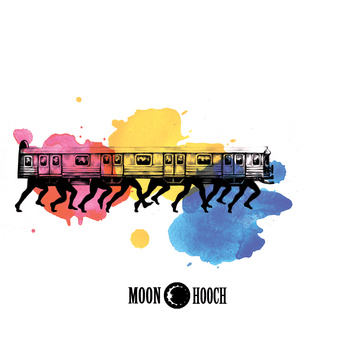
What about two saxophones?  And only a drummer with them?  Well, that’s Moon Hooch.  They play a bass saxophone and a squawking tenor (I guess) saxophone.  And, more like Morphine of the above bands they play fairly heavy riff rock songs like “Number 9.”  But these songs also make you move–dance, tap your foot, whatever it is.  After just a few notes, you’ll be hooked.

There’s not too much more to say about this song.  With the opening sounds of a subway platform, this song really sounds like a couple of guys busking o the platform, but man, it’s much more than that.  There’s some excellent drum work keeping this song grounded, but the stars are the two saxophones played off of each other.  There’s no words, just horns.  Get moving!

[READ: March 15, 2014] Ballad

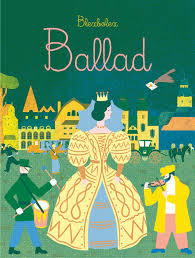
This is a beautiful and fascinating book.  It is a children’s book but it demands some close reading.  And yet there aren’t all that many words in the book.  It is the design of the book that is the “selling point.”

The story is a fairly simple one (although I admit I found it a little confusing).  There is a preface which explains that the story is about a child who goes home the same way every day.  And yet suddenly his whole world balloons around him.  [And yet there is no child in the book].  Chapter 1 begins with a paragraph explanation that the school clock has stopped and no one seems to care.

After that first page, each subsequent page has a (nearly) full page image and one or two words underneath it (the script is also charming).  And so we see the school, the street, the forest, home.  Each new chapter works in the same fashion—a small paragraph explaining the setup and then several pages of pictures—each picture (the school, the forest) is exactly the same (they look silk screened) with the same caption underneath (although in subsequent chapters they are modified somewhat).  Chapter 3 introduces us to a stranger and, even more unsettling, bandits and a witch. (more…)

Read Full Post »

univSOUNDTRACK: BECK-Mutations (1998).

mutationsThis is the first album that shows a wholly different side to Beck. It is pretty much an entirely traditional album.  There’s no samples, just consistently strong songwriting.  The overall feel is mellow and it comes as quite a shock after the chaos of Odelay!

Although the album has a very consistent vibe, it’s not all samey.  There’s a lot of different instrumentation like the harpsichord on “Lazy Flies,” and the old-timey piano and slide guitar on “Canceled Check” which has a very country feel.  It’s not all simple and normal though, as “Check” ends with a strange musical breakdown that keeps it from being a smooth song.  “We Live Again” is a very mellow track with Beck singing sweetly over the waves of music.

As befits the name “Tropicalia” has a very tropical feel, it’s totally danceable and was a very wise choice as a sample.  “Dead Melodies” has a classical music feel (with vocals of course).  “Bottle of Blues” is, unsurprisingly, a somewhat rowdy blues song.  “O Maria” is a slow but upbeat piano song that also feels old timey.  “Sing It Again” has a melody that is similar to “Norwegian Wood,” but the song is nothing like that Beatles classic.  This is gently sung and played acoustic guitar number.  And “Static” is a quiet disc ender.

This disc also feature a “bonus” track, and this is the first one that is actually enjoyable.  It is a fleshed out song (and a good one at that). It is comparatively rambunctious and noisy and quite different from anything else on the disc.  It’s called “Diamond Bollocks” and has a great bass line and cool backing vocals.  This song could easily have been a hit if it weren’t tucked away at the end of the disc.  (Well, and there are some weird moments to, but overall, easily a hit).

Despite all that Beck is known for his crazy songs and samples, Mutations is an extremely cohesive record with enough diversity to keep it from ever getting dull.  It’s a great record and is somewhat overlooked in his catalog.

[READ: March 16, 2014] The Unknown University

This is a collection of almost all of Roberto Bolaño’s poetry.  Some (but not all) of the poems from his collection The Romantic Dogs are included here, although some of those are apparently modified a little.  It also includes what was earlier released as Antwerp but is here called “People Walking Away.”  (I found Antwerp and “People” to be quite unusual and would never remember what is the same in the two.  But translator Laura Healy says that she more or less uses Natasha Wimmer’s translation of Antwerp for the parts that are the same (a task which must have been harder than it sounds if the two pieces weren’t exactly the same).

This book is 830 pages with facing pages of Spanish and English.  According to the publisher’s note, this collection was found on Bolaño’s computer as is—a collection of all of his poems from throughout his career.

Most of the early poems were written when Bolaño was young (in his 20s).  Even at such a young age, he writes powerfully.  Not all of his poems are great of course (how could they be when there are so many) but there are dozens and dozens of poems that I thought were fantastic.  I’m going to include some below, but I also wanted to get some criticisms out of the way too.

He tends to revisit ideas quite a lot, which is normal for a poet, but it seems weird to revisit an idea in subsequent poems (especially when the poems are just a few lines long each).  It almost feels like he fixated on a subject and thought of a number of ways to work with it and rather than make one long poem, he made several short ones.  Like this strange occurrence: (more…)

Read Full Post »

tintinSOUNDTRACK: BECK-Stereopathic Soulmanure (1994).

soulmanureDepending on who you believe, this was Beck’s first or second or even third album.  Certainly it was recorded earlier than the other records but who knows what the actual release date was, or if it even matters (it doesn’t).  This album plays like a demo tape of home recordings of a talented folksinger who doesn’t want to be labelled as a folk singer ans is experimenting with all kinds of other sounds, including tape manipulation, home recording and utter noise (there’s a Sonic Youth sound connection here, before they ever did anything together).

But anyway, that’s got nothing to do with this album.  My version has 23 listed tracks and two bonus tracks.  And since I’ve no intention of doing a track by track analysis of the album, I’m going to group some tracks together.

There are a few styles of music on the record.  There are about a half-dozen noise/nonsense tracks–distorted guitar, distorted voices, sometimes sheer noise–like the “bonus” track which is some ten minutes of just nonsense.  There are about a half a dozen tracks that are basically just talk–old home recordings from when he was a kid, and other spoken tracks.  There are even a few tracks from a guy named Ken who is apparently an older guy singing what sounds like hobo songs (which I suspect Beck does not play on at all).

There are also a number of different instruments which (I assume) Beck is playing. He plays banjo very well, there’s an accordion track, and of course guitar.

What sets this apart from being a simple nonsense album is that there are nearly a dozen “real” songs.  There are a couple of well sung country tracks, with a slide guitar. There’s also some anti-folk, rap and live numbers.  These are fleshed out, proper songs–musically complete.  It’s in the lyrics that you can hear Beck fighting the folk/country pigeonhole.  He has three songs that are more or less rapping (like “Loser”).  There’s a couple of songs that were recorded live (in a club with half a dozen people), and are mostly silly.  And then there’s a series of anti-folk songs.  These are pretty traditional sounding songs, but with layers of noise or weirdness that keeps them from being traditional folk.  Like “Satan Gave me a Taco” which is complete song but is obviously quite silly.  And yet, Johnny Cash covered the song “Rowboat” on one of his Americana albums.

None of the recordings sound more than lo-fi, but the good songs all sound good.   It honestly sounds like a guy trying desperately to show off what he can do–and hoping desperately to get accepted by just about any genre.  Except that he clearly has his own identity (as varied as it may be).  This record is certainly not for everybody (as suggested by the incredibly low sales), but if you like Beck’s early experimental stuff, there’s enough really good stuff here that’s worth checking out.

[READ: March 9, 2014] Tintin: The Art of Hergé

Sarah bought me this book for our tenth anniversary (which is “tin”, get it?).  We’ve both enjoyed Tintin over the years, more as an icon than as a collection of stories (which I believe she has not read and which I’ve read about 1/3 of).  The Spielberg film and subsequent video game are both really cool too.  This book is an amazing look at Hergé as an artist and at the Hergé museum, which looks amazing.

When Sarah and I were in Belgium, we went to an animation museum which featured Hergé heavily.  Since it was a decade ago, I actually thought that this book was about that museum, but no, the Musée Hergé opened in 2009 and was designed by French architect Christian de Portzamparc.  The first chapter of the book is dedicated to the Museum, and do de Portzamparc’s designs and execution in the spirit of Tintin.  And I have to say the building looks amazing.  The facade alone is beautiful, and his explorations light and dark and shape look really awesome. (more…)

Read Full Post »

dogSOUNDTRACK: RHEOSTATICS-The Music Hall, Toronto, Ontario (May 2, 1998).

musichalThis show sounds different from all of their other live shows on Rheostatics Live around this time.  I don’t know much about The Music Hall, but it sounds like a more formal venue–like a bigger, perhaps seated, crowd.

There is also a string section and the ever reliable Kevin Hearn playing along with them.  Well, string section might be stretching it–there are musicians from UofT playing along with them, including beautiful violins on “Self Service Gas Station” and a surprise flute on “Take Me in Your Hand.”  There’s also a bunch of the musicians playing along on “King of the Past” which means I finally get to hear the great end section with a violin–but it gets cut off!  Agh.

With Kevin playing with them, they showcase some tracks from the Group of 7 release (which they explain didn’t have titles but now sort of do).  So they play “Boxcar Song” and “Yellow Days Under a Lemon Sun.”  They also play “Monkeybird” which they say is from Harmelodia (even though it’s not out yet).

There are a lot of glitches and weird things happening with this tape which is kind of a shame as it is a pretty unique concert.  It’s also only 90 minutes, which might just means a lot of the show was cut off.

[READ: January 3, 2014] The Bridegroom was a Dog

I bought this book years ago based on some recommendation or other.  Then I recently received a new version of it from New Directions.  Their version was just the title story.  This original book (which had the same translator, Margaret Mitsutani) contains the title story and two other longish stories.

Because I just read the other book (and its the same translation) I didn’t re-read “Bridegroom.”  But I did read the other two stories “Missing Heels” and “The Gotthard Railway.”

“Bridegroom” was certainly a weird story.  But “Missing Heels” may be even stranger.  I say this because of what may or may not be deliberate ambiguity in the word heel.  As the story begins the protagonist is stared at by people because of her heels.  I assumed she meant the heels of her shoes.  But by the end of the story it seems that she means the heels of her feet, which is even stranger. (more…)

Read Full Post »

shantySOUNDTRACK: RHEOSTATICS-Mrs. Robinson’s, Kitchener, Ontario (December 20, 1997).

kitchener

What’s most fascinating about these Rheostatics live shows is coming across venues that have no internet presence.  I can’t find a photo or anything of Mrs Robinson’s in Kitchener.  Did it even exist?  Who knows?

The quality of this show is very good although the overall volume is too low. There are also complaints from Dave about his monitor not working.  It doesn’t impact the sound for us, but I guess he couldn’t hear very well.  The intro of “Michael Jackson” is all messed up, but they play on through it.  Then they actually take a pause for an unspecified length of time to fix it (but still do a show that’s over 2 hours long).

Martin and Dave are very chatty for this show.  The intro is quite long, with some good banter including a discussion of the weird table in front of the stage which people can use for stage diving or go go dancing.  Martin explains the origins of “Junction Foil Ball” (about a guy who makes a ball out of the tin foil in cigarette packs.  They make a joke about Don the drummer being from Kirkwood Lake which is where Alan Thicke is from.  And a joke about Polkaroo.

They also introduce Tim Mech (their guitar tech) whose band PEEP-SHOW was one of the winners of Musician magazine’s “Best Unsigned Band Competition” in 1997.  He takes a long solo in “Claire.”

This was their last show of 1997, so this wish everyone a Merry Christmas.

[READ: March 3, 2014] Shantytown

This has been my favorite Aira book so far (and I’m now caught up to his English language releases).  The plot was simple and interesting, and the fantastical elements really worked with the story instead of overshadowing it (which his stories sometimes allow, but which isn’t really a criticism per se, just a point of fact).

This story begins with Maxi, a kind-hearted, but not terribly smart or sensible young man.  He is unemployed, did not finish any real schooling and doesn’t have a lot to do.  He has been going to the gym daily, so he is very strong. And he has recently begun helping the garbage scavengers.

These scavengers are people who live in the Shantytown nearby.  It is a collection of houses, most very tiny and quickly constructed, where the poorest people live.  And many of these people collect and either sell or use rich people’s garbage.  They come up every night before a garbage pick up and root through the streets for anything they can use.  And Maxi has begun helping them shift their carts  Since he is so strong, he finds that none of the their carts are very heavy.  And although he has never spoken to any of them and they have not spoken to him, he decided to start helping them and now he gets great satisfaction in carrying their stuff.

The shantytown is an unsavory place where drugs are sold and not too long ago a young girl was murdered.  Recently a policeman, Agent Cabezas has been trying to get to the bottom of this whole drug thing.  The drug of choice is proxidine which makes things clearer. Even Cabezas himself takes it (even though it is illegal).  But there has been a lot of suspicious activity with a man dressed as a pastor who might be a dealer.  And then there’s Maxi who is suddenly hanging around the shantytown.  And, quite frankly, Cabezas has decided that he’s tired of being a good cop.  He is ready to take what is his. (more…)

Read Full Post »

hare1SOUNDTRACK: THE AVETT BROTHERS-Tiny Desk Concert #18 (June 22, 2009).

avettI have recently become a fan of The Avett Brothers.  Indeed, my first review of one of their songs was very mixed.  But I have come around.  And this Tiny Desk show is a great example of the power they have in a live setting–especially one as personal as this.

For this set the two brothers (Seth on guitar and Scott on banjo) play a song from their then new album (the beautiful “Laundry Room” complete with amazing harmonies and beautiful cello) I & Love & You.  It builds slowly but after about two minutes, it turns into a big (upright bass is included, too) catchy song.  And in the last minute it becomes a huge stompin’ track (predating those other banjo bands by a few years).

Scott’s voice is really powerful (Bob Boilen asks if he swallowed an amplifier).

The second song is a the time not released yet, “Down With the Shine” (they joke that they’re then going to play a song they haven’t written yet).  It’s full of phenomenal harmonies.  And the commentary afterward about traveling with the brothers is very funny.

The final track goes back to their previous EP and is called “Bella Donna,” a pretty ballad sung by Seth–he seems to do the more mellow tracks.  It’s a pretty ending to this all too short Tiny Desk Concert.

Watch it here.

[READ: January 10, 2014] The Hare

The Hare was the first of Aira’s books to be translated into English (back in 1998 with this simply gawdawful cover).  It has recently been republished by New Directions Press with a far more tasteful cover.  The translator, Nick Caistor, is the same although I noticed in an online excerpt that while the English language is the same, the New Directions version has translated a Spanish newspaper (El Grito) into English (The Crap) when it wasn’t translated in the earlier version.  But aside from that, it all appears to be the same.

I had been putting off reading this book because it is his largest book (most of Aira’s books are barely over 100 pages, while this one is almost 250) and I’d also read some lukewarm reviews of the book, so I saved it for last.  Of course, now he has a newly translated book out, so I decided it was time to read The Hare.

Not the best attitude for a book an it definitely impacted my early reading of the story.  And I’ll sum up that impact as saying I thought that the book itself was strangely flat but that the ending was fantastic.  Had I been more open t0 the absurdity I think I would have enjoyed the whole thing a lot more. (more…)

Read Full Post »

harper juneSOUNDTRACK: JOHN ZORN-“The Dream Machine” (2013).

dreamThis is the title track to the third installment of instrumental albums by composer Zorn (as opposed to wild sax-player Zorn).  The new album is called Dreammachines.  Evidently this trilogy is somehow related to William S. Burroughs (sure, why not).  The first was called Interzone (and was three 15 minute-plus suites), the second was Nova Express (which was shorter pieces) and now Dreammachines (which is also shorter pieces).

It’s impossible to know what Zorn will throw at us next, but this song proves to be a beautiful jazz piece with the quartet of pianist John Medeski, bassist Trevor Dunn, vibraphonist Kenny Wollesen, and drummer Joey Baron.  It opens with a quick but pretty vibraphone melody.  The melody shifts keys but stays in the same pattern until the main melody kicks in.

Variations on the theme continue until about 2 minutes in when Medeski gets a big piano solo and this sounds more like traditional jazz than most Zorn pieces.  Then there’s a very cool vibes solo.  It’s pretty standard jazz and it’s really quite beautiful.

[READ: September 20, 2013] 2 book reviews

Bissell reviews two books this month.

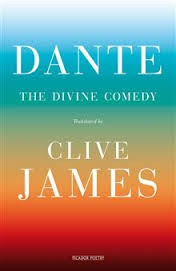
danteThe first is Dante’s Divine Comedy as translated by Clive James.  James has decided that since Italian is so easy to rhyme “For an Italian poet it’s not rhyming that’s hard,” rather than following Dante’s linked terza rima rhyme scheme, he chose the rhyming quatrain.  Bissell expects that academics and traditionalists will be very suspicious of the book because of that, but he says that for the average person (the average person who wants to read Dante, of course), it will be more fun and enjoyable.  Especially, James popularizes the book.  I have always resisted The Divine Comedy but this one sounds like it might be a bit more fun, and isn’t that what reading is all about?

magicalThe second book is The Magical Stranger by Stephen Rodrick.  When Rodrick was 13 his father died in a military plane crash.  His carrier was en route home when it was told to reroute to help with the hostage crisis in Tehran.  But his plane was destroyed.  The hardest part for Stephen was when he read that the accident was deemed “pilot error.”

This book is Stephen’s attempt to learn more about his father.  Through the course of the book, he discovers more and more unpleasant facts about his father—from the lies his father told his mother to a pilot who knew his father who calls his an asshole.  Bissell finds this part of the book very moving but not quite warranting a novel length treatment.

But there is a secondary story about the man who now commands his father’s squadron James Hunter “Tupper” Ware.  Bissell says that this part of the story is far more engaging (Stephen is a journalist and this section is more investigative).  Stephen more or less tries to live his father’s life through Ware, a man who finds the same level of difficulties in his job and his life as Rodrick’s father did.

This is definitely not the kind of book I would read, but for those with an interest in the military and pilots its sound like a good warts-and-all investigation.

Read Full Post »

« Newer Posts - Older Posts »