Some time ago, I reviewed all of the Superchunk EPs. After progresing to their most current music, returning to their first album is a bit of a shock. Superchunk’s first full length album is incredibly raw, with lots of screaming (two vocalists at once, even) and a very grungy attitude. It has a DIY aestethic, in keeping with the undeground scene at the time.
The first four songs fly past in a pretty quick blur of adrenaline (the longest is just over 3 minutes). The fifth song, the aptly named “Slow” slows things down and strecthes things out with a five minute track of slow distorted chords and a long solo.
Of course, the pinnacle comes with the next song “Slack Motherfucker” one of the best grunge anthems of all time.
The last four tracks speed things up again with the bratty attitude that Superchunk is so good at (see especially “Down the Hall”). But it’s not all just blistering speed. The band has some dynamics down and there are a couple of tempo changes as well.
The album is a lot of fun to listen to, especially if you’re lookig for grunge before it became Grunge. Although there’s very little indication that they would become the indie superstars that they eventually became you can clearly hear proto-Superchunk chunks–Mac’s voice is as it ever was and the noise is present but not overpowering. There are even hints of melody (although nothing as catchy as later albums). And yet for all that it sounds like a criticism, the album is really quite solid.
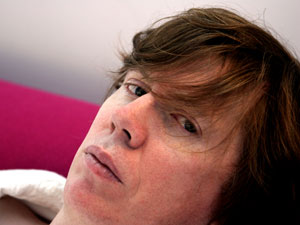
The backstory is that Scott Thompson had been working on this story for years and years. He imagined it as a movie (starring him, of course). When that didn’t pan out, he decided to sell it is a comic book. And while he was recovering from cancer, he worked on it extensively with Kyle Morton–character likenesses and whatnot. And now we have a cartoon rendering of Scott Thompson!
This story focuses on Scott’s character Danny Husk…
The book opens with Danny and his wife and kids at a carnival. After a few moments, Danny’s son gets lost on the merry-go-round. In the next scene we see just how much his wife is estranged from him (she may even be cheating on him), and how little his daughter thinks of him. Soon after, Danny goes to work, inserts a disc into his laptop and more or less brings down his company.
So far nothing out of the oridnary for this type of story–henpecked husband on a quest for revenge that he doesn’t know he wants yet.
Then Danny visits with his old friend Steve. They talk, they bond over Danny’s concern about his wife. And Danny feels better. Until he gets home. After a scene which I won’t spoil, the story suddenly takes off with a high speed car chase (no kidding) and with Danny entering the titular hollowness of the planet. (more…)
SOUNDTRACK: BOB MOULD-Sasquatch Festival, May 28, 2011 (2011).
I loved Hüsker Dü. I loved Sugar (a tad less). I loved Mould’s Workbook. And then I kind of loss interest in the guy. He recently wrote an autobiography, which I would consider reading, but musically, I assumed he was done.
So I wasn’t even that interested in listening to his set (shame on me). This turns out to be a really cool set in which it’s just Bob and his electric guitar. He plays a varied set of songs from throughout his career. He plays some of his hits (“See a Little Light,” “Hoover Dam”) but mostly he plays interesting non-hits (“Chartered Trips” (!!), “I Apologize”). (Is it possible that Grant Hart wrote all of Hüsker’s big hits?)
The most amazing thing about the set is Bob himself. He sounds so cool and chilled out (even though I think he was like the very first opening act of the concert–which is a pretty shitty time slot). He seems to be really happy playing (hearing him respond to a request with “I forgot how to play that one” is pretty darn funny.) Of course, a little later when he says “What’s that? I’m trying?” he almost sounds like Al Bundy.
But then, look at him, he’s an old man now. And sure, he’s been playing music forever, so gosh, he’s got to be super old, right? What? He was born in 1960? He’s nine years older than me? Oh good grief. So, wait the first Hüsker Dü album came out when he was 22? He really crammed a lot of music into just a few years. Not bad, Bob.
And yes, I’m fully invested in relistening to all the great music you’ve made now. Thanks, Sasquatch.
[READ: July 13, 2011] “Incident in the Orient”
This very short story features a dead dog. I’m getting that out of the way since I know some people won’t read any further once they know that.
I rather liked the brevity of this story, how Theroux is able to cram a lot of information and a lot tension into just a couple of pages. The story is also a strange little onion of a tale, with the narrator working for a man (Moses) who is a sort of mercenary construction boss. The narrator gives a lot of insight into Moses, although he also admits that he doesn’t really know the man very well (how could anyone know him).
He has done work in various war-torn countries and has effectively built a crew out of a small group of devoted men, mingled with local help. The most fascinating thing is that Moses is a short man with a lisp and yet he commands the respect of everyone who works for him. He takes no shit, but he pays well and uses local materials (including tearing down materials from destroyed buildings if necessary). (more…)
SOUNDTRACK: MOGWAI: GovernmentCommissions: BBC Sessions 1996-2003 (2005).
It’s unlikely that Mogwai will ever release a greatest hits (well, someone probably will, but the band themselves don’t seem likely to do so). As such, this compilation of BBC Recordings will certainly work well as one.
As I’ve mentioned many times, the BBC recordings are universally superb. The quality of the recordings is unmatched. And, typically the band takes the sessions very seriously. The major different between these sessions and the official studio release is that the band is playing these songs live. They are mixed well and sound great but they are live, so you can catch occasional subtle differences.
Mogwai, despite their seemingly improvised sound (all those noises and such) can recreate everything they do perfectly, and their live shows are tight and deliberate (except for the occasional moments where they really let loose).
The ten songs here span their career and are not played in chronological order. This allows all of these wonderful songs to play off the tensions of each other. And it shows that their later songs, which are less intense than their earlier ones, are still quite awesome and in a live setting don’t really lack for intensity after all.
The highlight of this disc is the scorching eighteen minute version of “Like Herod.” The original is intense and amazing, and this live version allows them to play with the original in small ways, including allowing the quietness to really stretch out before they blow the speakers off the wall with the noise section of the track.
Even though I’m a fan of Mogwai, I don’t hear a radical difference between these versions and the originals. Or should I say, it’s obvious which song they are playing. There are some obvious subtleties and differences as befitting a live album, but unlike some live discs you don’t immediately notice that this version is “live.”
And that works well for both fans of the band (because as you listen and you hear the subtleties) and for newcomers–(because you’re not listening to weird, poorly recorded versions or versions that are for fans only). And so, you get ten great Mogwai tracks. Just enough to make you want to get some more.
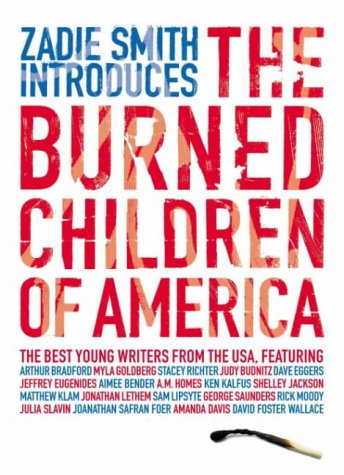
[READ: June 11, 2011] The Burned Children of America
I found this book when I was looking for other publications by Zadie Smith. This book kept cropping up in searches, but I could never really narrow down exactly what it was. As best as I can tell, it is a British version of a collection of American authors that was originally published in Italy (!). Editors Marco Cassini and Martina Testa work for minimum fax, an Italian independent publisher. In 2001, they somehow managed to collect stories from these young, fresh American authors into an Italian anthology (I can’t tell if the stories were translated into Italian or not).
Then, Hamish Hamilton (publisher of Five Dials) decided to release a British version of the book. They got Zadie Smith to write the introduction (and apparently appended a story by Jonathan Safran Foer (which was not in the original, but which is in the Italian re-publication). This led to the new rather unwieldy title. It was not published in America, (all of the stories have appeared in some form–magazine or anthology–in America), but it’s cool to have them all in one place.
The title must come from the David Foster Wallace story contained within: “Incarnations of Burned Children,” which is one of his most horrific stories, but it sets a kind of tone for the work that’s included within (something which Zadie addresses in her introduction): why are these young successful American writers so sad? So be prepared, this is not a feel good anthology (although the stories are very good).
Oh, and if you care about this kind of thing, the male to female ratio is actually quite good (for an anthology like this): 11 men and 8 women.
ZADIE SMITH-Introduction
Zadie Smith was a fan of David Foster Wallace (she wrote a lengthy review of the ten-year anniversary of Brief Interviews with Hideous Men which is republished in her book Changing My Mind), so she is an ideal choice to introduce this book. Especially when she provides a quote from DFW’s interview in 1995 about how living in America in the late 90s has a kind of “lostness” to it. With this in mind, she sets out the concerns of this collection of great stories: fear of death and advertising.
Zadie gives some wonderful insight into each of these stories. The introduction was designed to be read after the book, and I’m glad I waited because while she doesn’t exactly spoil anything, she provides a wonderful perspective on each piece and also offers some ideas about the stories that I hadn’t considered. And it’s funny, too. (more…)
SOUNDTRACK: The Best of Sessions at West 54th, Volume 1 (DVD) (1997).
Back in the 1990s, PBS ran one of their TV series devoted to contemporary music, Sessions at West 54th. It was primarily, but not exclusively adult alternative music, with a mixture of jazz and country thrown in as well. I never watched the show when it was on, but I was intrigued by this DVD because it has a number of artists that I liked quite a bit then. I haven’t watched it in ages, and when I watched it recently I was interested to see that I liked some other artists better than the ones I bought the disc for in the first place.
There was a recent radio show on All Songs Considered called Splitsville: Breaking Up with Your Favorite Band. This is something that I think about from time to time–bands that I loved and no longer do. Or bands that I loved and then stopped and maybe now love again. This show dealt with that very issue. Most amusingly, Robin Hilton, one of the cohosts had this wonderful quote that applies to me (and this DVD) almost directly.
It’s Not You, It’s Me (Bands We Grew Apart From): “I (dug) out my old CD books and dusted them off. And this recurring theme that came back at me, just haunting, I realized it was the whole Lilith Fair crowd. It was so painful. I had Shawn Colvin, Jewel, Sarah McLachlan, Indigo Girls, Paula Cole, Beth Orton. I just listened to that music non-stop. And now, maybe I’m not the sensitive, new-age guy that I used to be.” — Robin Hilton
So, what happened, Robin? The same thing happened to me. I still love the concept of Lilith, but I really just don’t care about the music anymore. And much of this DVD caters to the Lilith crowd. But it doesn’t start that way. It opens with
WYNTON MARSALIS-“Back to Basics” A fantastic jazz number. Wynton plays some wonderful stuff (I particularly like the “laughing” horns). It’s a really rousing opener.
SUZANNE VEGA-“Caramel” Vega is not a Lilith Fair person to me because I learned of her long before then. This is not my favorite song of hers.
RICHARD THOMPSON-“I Feel So Good” It’s funny to me that when I bought this I didn’t know who Richard Thompson was. It’s always great to hear him rock out like this.
SHAWN COLVIN-“Diamond in the Rough” I like Shawn Colvin, although not as much as most of the other Lilith Fairers. This is one of her songs that I don’t know very well
ANI DIFRANCO-“32 Flavors” I loved Ani and her self publishing empire. And her songs were good too. I saw her in concert once or twice and she totally rocked the house. Then sometime in the early 2000s she went in a new direction and I completely lost touch with her and pretty much stopped listening to her. It was nice to hear this song again, although it’s a bit slower than the way I know it.
NIL LARA-“How Was I To Know” I didn’t know who he was then, I’m still not sure who he is or if he’s still around. This is a pretty serviceable folk rock song
RICKIE LEE JONES-“Road Kill” I did not care for this song at all.
DANIEL LANOIS-“Orange Kay” this was a wild guitar solo and effects song. It was really quite different from anything else here.
EMMYLOU HARRIS-“Wrecking Ball” This song had cool harmonies although I’m not a fan of Emmylou in general.
BEN FOLDS FIVE-“Smoke” I love Ben Folds, and this song is wonderful (seeing him play the “strings” of the piano is very cool. And my god he’s so YOUNG!
KEB’ MO-“Just Like You” I like Keb’ Mo’ quite a bit and this is a good song by him.
SINÉAD O’CONNOR-“The Last Day of Our Acquaintance” Sinéad was another of those ladies who I loved before Lilith. I fact The Lion and The Cobra was one of my favorite albums. Then she got super political (and put out more amazing music) and then she got really weird. And I stopped listening. She’s an odd duck in this show as well (this was in her speaking only in falsetto phase, which is pretty odd. And she has a little grunted /spoken bit in the middle of the song which is pretty odd too). But for all of that, man is this song awesome. I haven’t listened to it in a long time, and holy cow I forgot how impactful it is. And live, with the electric guitars and the backing vocalists, it is really amazing. A definite highlight of the disc.
YO-YO MA “Libertango” Yo-Yo Ma is pretty awesome. I wouldn’t listen to a lot of his stuff (I like classical, but in small doses) but man, he rocks the cello. This is a great piece.
PATTI SMITH “People Have the Power” Patti Smith is a legend. An icon. Her early music is amazing. So why do I hate this song so much? The sentiment is wonderful, but gah, what a dreadful song.
JANE SIBERRY-“Love is Everything” I really like Jane Siberry. She’s a strange lady with a quirky but wonderful voice. This is a beautiful song, but a little slow (I find it works well amidst her other songs, but it’s a bit stodgy on its own).
It’s a fun collection of mellow songs (what I think of as the old PBS/NPR audience, since now they have shows that are much louder). And it’ always fun to see artists perform in an intimate venue.
[READ: April 12, 2011] “Shock Jock”
This is the first play that The Walrus has published. It is not so much in Acts as it is in Ten Scenes. Scenes 1-3 are printed in the magazine, while Scenes 4-10 are only available online. (Sadly 1-3 are not included online).
This is the story of a political shock jock, a Canadian version of Rush Limbaugh (these were the days before Glenn Beck). The opening scene shows him railing against everything and nothing. He proves to be very popular with his fans but when they call him up to tell him that, he abuses them too (but they don’t seem to mind–or to notice). It seems like a pretty straightforward parody of a radio blowhard.
But the next scene shows him at home, where he is not so much meek as completely incapable of making a decision. His wife seems like something of a harpy, but it’s clear that she has put up with this ineffectual man for nine years and has just had it with his inability to even communicate. These two scenes play off each other as somewhat obvious counterpoint and yet, they are strangely compelling enough to keep you reading. And it’s worthwhile to do so. (more…)
SOUNDTRACK: CHARLOTTE GAINSBOURG-KEXP in studio May 11, 2010 (2010).
Charlotte Gainsbourg is a fascinating individual. Between her acting and her singing, she’s had quite a life. And even moreso since she had a near fatal accident.
That accident formed the nexus of her album IRM. And this interview and performance is done in support of that disc. IRM was made with Beck. Beck’s not here, and the songs are more stripped down, but they sound really good in this format.
Gainsbourg sings the Beck-sung-on-IRM “Heaven Can Wait” and really makes it her own. The other three songs here work very well in this more acoustic setting. “Me and Jane Doe” is practically acoustic already and “Time of the Assassins” and “Trick Pony” are reworked very well. And Charlotte is a charming interviewee as well.
It’s another excellent in-studio performance from KEXP.
[READ: March 31, 2011] “The Dead Are More Visible”
I read all of The Walrus stories when I received the magazines. I wondered when I would completely recognize a story when re-reading them now. Well, this was the first one that I remembered parts of vividly. And why not–there’s a search for a missing eye on an ice hockey rink. That’s hard to forget. However, I didn’t remember the ending and in fact, my memory added many more details than actually occurred in the story.
The beginning of the story, which is very different from what I just described, was less memorable but perhaps more interesting. The story opens with a woman reflecting about her graveyard shift job. In this case the job is literally a graveyard shift, because the park she works in has a graveyard within it. However, her job is not really scary–she is there to make the ice for the upcoming skating season. It takes several nights of very cold weather and she must go out in all her gear and fill up the rink, several tousand litres of water at a time.
While the ice settles, her time is her own–to listen to music and read. She gets a few hundred pages read a night (dream job!) She prefers romance and horror novels. The introduction of horror novels into the story foreshadows a bit about the scene ewith the eye later on, although for this is not a horror story. (more…)
SOUNDTRACK: TRENCHMOUTH-Vs the Light of the Sun (1994).
I learned about Trenchmouth from an interview with Fred Armisen on The Sound of Young America. He informed us that he was the drummer in Trenchmouth before he was on SNL. And he and Jesse Thorn had an amusing discussion about how he was sure they would make it big. I can’t recall if they played a snippet of the band or not, but it’s a pretty laughable thought that Trenchmouth might be his claim to fame. Because they are awesome, but they are totally NOT commercial.
In fact, just a few seconds into the lead-off track “Washington! Washington!” will tell you how noncommercial they are. (It’s a sort of fast heavy punk version of prog rock–jazzy guitars, independent bass, wonderful drumming (Armisen kicks ass) and the screamed hyperkinetic vocals of Damon Locks (he’s passionate, man).
There’s a lot of atonal work here (“Washington! Washington!” opens with drums and Lock’s ragged voice), and once the guitars kick in, it actually makes the song more confusing. “A Prescription Written in a Different Language” opens with wavering harmonic notes before busting into a full on punk noisefest. The album lurches around to different styles of weird noise rock (most of the songs are quite short, although “A Man without Lungs” runs over 6 minutes).
But before making it sounds like this is a mess of a record, a few listens will reveal the sanity beneath the chaos. There are even some discernible choruses: “Here Comes the Automata”‘s “Everybody needs protection” and “Bricks Should Have Wings”‘ “Let the bricks fly” are fun to sing along to. Similarly, the guitar work that opens “Set the Oven at 400” is rather conventional and quite pretty.
This disc is not for most people, but Trenchmouth is a cool band that has been unfairly lost to the annals of history.
[READ: April 4, 2011] “Rome, 1974”
I had received a pre-pub of Bezmozgis’ novel The Free World, but I haven’t read it yet. I am interested in Bezmozgis’ writing and was planning to read the book. As it turns out this “story” is really an excerpt from the novel.
The story is about the Krasnansky family, a Jewish extended family emigrating from the Soviet Union to Italy. The opening scenes detail the physical hardship that such a move would have taken (it’s played for somewhat comic effect when the large duffel bags are thrown off the train). There is much dissent among the family members although they sem to settle in well–except for patriarch Samuil who is disconcerted by everything and unhappy to have left the communist country he feels comfortable in. (more…)
SOUNDTRACK: BEN FOLDS/NICK HORNBY-Lonely Avenue (2010).
As the cover of this album notes: “Ben Folds adds music and melody to Nick Hornby’s words.” And that is true. The only surprising thing about this combination is that Folds is quite a good lyricist himself, so it’s surprising that he would sacrifice his words. But regardless, the fit is a good one.
Sometimes it seems like Hornby is challenging Folds to come up with melodies for some of his more difficult lyrics which Folds lives up to). But they have such similar sensibilities that (aside from occasional references to British things) the words could have come from Folds himself (although, Hornby’s a better writer, so Folds wouldn’t have written exactly the same things).
The big surprise is the diversity of musical styles on the disc. Folds of course does play lots of different types of music on his previous discs, but I guess since the cohesion is Hornby’s words so Folds can really let loose.
The opener, “A Working Day” is a keyboard pop confection, a surprisingly 80s sounding synth song with some wry lyrics about being a writer/performer (“some guy on the net thinks I suck and he should know, he’s got his own blog”). “Picture Window” is a beautiful downer, a string-filled song that seems like a companion to Folds’ “Brick” (“You know what hope is, hope is a bastard”). It’s just as sad but the melody is gorgeous.
“Levi Johnson’s Blues” is a strangely topical song (in fact, it took me a minute to remember who he was when I first listened to the song. Anyhow, it’s a silly song about what happened to the father of Sarah Palin’s grandchild. And yet, despite the novelty of it, it’s actually a somewhat sympathetic portrait of the guy (sure he’s a redneck, but he’s just a normal guy thrust into a ridiculous spotlight–the liner notes say the chorus came from Levis (redacted) Facebook page).
“Doc Pomus” feels like a classic piano song. While “Young Dogs: is a fast romper (with great vocals) and more keyboards. “Practical Amanda” is a slow ballad (and Hornby says it’s not autobiographical at all). While “Claire’s Ninth” is a story about a young girl of divorced parents who hates having two birthdays. (With sweeping choruses!) Hornby states that this was his first accepted short story (modified for the song, of course) but the magazine that accepted it stopped publishing before his appeared. D’oh!
“Password” is a wonderful song which only makes sense when you know the name of it (which I didn’t at first, as I usually don’t look at titles right away). Throughout the song Ben spells words which leads to a cool conclusion–it’s wonderfully clever writing and it’s done in a fascinating R&B-lite style.
“From Above” is a jaunty rocker about people who never meet, although their paths cross quite often. “Saskia Hamilton” is the “single” from the record. It’s another great 80’s keyboard fueled romp. Since I have a friend named Saskia (hi, Saskia) I’m fond of this song–her name is fun to say. They have a bunch of fun in the recording too.
The final track, “Belinda” is designed like a classic 70s piano ballad (there’s a lengthy email printed in the notes that explains the construction of the song–reading that makes the song even more impressive).
It’s a great Ben Folds album. It’s not as tidy as some of his other ones–but all of that experimentation leads to some new avenues of melody. It’s a risk that paid off.
[READ: May 10, 2011] Five Dials Number 7
This issue of Five Dials was primarily about Memoir. Typically, I don’t like memoirs, but I’m finding (and this coincides with what one of the memoirs below states), that I just don’t like celebrity memoirs. Or perhaps I just like three page accounts of an incident in someone’s life (which these are).
Each of the writers below is given an introduction in which they summarize WHY they write memoirs. It’s interesting to see that many of them do, in fact, take other people’s feeling into consideration (not as seriously as Mark Twain who waited 100 years for the publication of his), but they try to do something or other to spare people’s feelings. I was intrigued also that several of the writers also talk about finding themselves through writing. One or two of them make the exercise of writing memoir sound obnoxiously solipsistic (which of course it is), but it’s nice to read ones that are interesting and not too self-centered.
CRAIG TAYLOR-A Letter from the Editor: “On Audio Detective Work and Memoir”
This letter explains the extent of the audio detective work that went into the interview (presented later) between Raymond Chandler and Ian Fleming. Since I love playing with audio software, this was of especial interest to me. And it made me really look forward to the interview. (more…)
SOUNDTRACK: FUJIYA AND MIYAGI-Live at the 9:30 Club, Washington, DC April 30, 2007 (2007).
I was turned onto Fujiya & Miyagi through a sampler CD from WXPN (the song “Ankle Injuries” was included). “Ankle Injuries” has such a simple template. It’s an electronic song, full of washes and beats–nothing too high or low–with the repeated lyrics (sort of whispered) “Fujiya, Miyagi.” I kind of forget that there are other lyrics, since that “chorus” is repeated some seventy times during the song. The rest of the lyrics are also whispered (but mixed loud so they are audible) and are sort of weird, rambling nonsense.
It’s slick and catchy and with the simple lyrics, it’s really easy to sing (or whisper) along. The problem is that pretty much all of their songs (in this live NPR show, anyhow) sound like this. That’s dismissive and not entirely true, but they all tend to follow this similar template: smooth, catchy keyboard melodies and whispered vocals.
The thing is that it works quite well, and the show is kind of fun. And yet, it’s also rather repetitive. This seems to be the kind of show that I need to be in the mood to enjoy. It also makes me glad I didn’t buy the album. I think little doses are enough for me.
This concert (available from )
[READ: April 1, 2011] “Where Are the Men”
This is another story that, once I was about halfway through, I remembered reading the first time. This one in particular was quite memorable because of the middle section. But let’s go back to the beginning.
As the story opens, a woman is talking, out loud, to herself. Her name is Eye-Dora; she’s in a dark basement and sees searchlights flooding into her room. But she herself is dark: her skin is dark, her house is dark so she feels safe.
She is from Barbados, a single mother (her husband left many years ago and is now dead) with a son who wears a robe and now goes by a muslim name. Eye-Dora is pissed. She is pissed at the state of black men in Toronto. She is pissed that a black man is going through her garbage and leaving it strewn all around. She is pissed that a black man was killed for wandering down the street claiming to be Jesus. She is pissed. (more…)
SOUNDTRACK: KANYE WEST-My Beautiful Dark Twisted Fantasy (2010).
Before buying this album I really only knew of Kanye West as a loudmouthed guy who tweeted a lot and told off George Bush. But then everyone was raving about this album (Pitchfork gave it a 10 out of 10!). So I decided to check it out. And I can’t get over how great an album it is.
Now I’m going to start this review by mentioning a few things I dislike about rap as a genre. 1) I dislike all of the “guests” that appear on a record–I bought the album because for you, not your friends. 2) I dislike excessive use of “unh” and “yeah” at the beginning of a track; when you have nothing to say–let the backing music flow, save your voice for actual words. 3) Rap is still terribly misogynist and vulgar–I’ve nothing against vulgarity per se (I do have something against misogyny) but excessive use is lazy, and it stands out much more in a rap song since you’re saying the words not singing them.
The Kanye West album is guilty of all three of these things, and yet I still think it’s fantastic. The first reason is because it goes beyond a lot of rap by introducing real musical content into the songs. This is not an “all rap is just a beatbox” dismissal of rap, it’s an observation that rap tends to be more about the lyrics and the musical accompaniment can get kind of lazy. West’s songs have (beautiful) choruses, strings, and samples that augment the rest of the song, as opposed to samples that ARE the song. And Kanye West’s voice is great. His delivery is weird and twisted, a little cocky but more funny, with a twisted attitude that is really cool–and to my rather limited palate of rappers, it’s original.
The opening of the disc “Dark Fantasy” has a chorus singing “Can we get much higher” which is catchy and cool (and is used in the promo for The Hangover 2). The switch from this opening to the rapping works well (aside from the FOUR “yea”s). Although I don’t love the yeahs, I love his delivery, and that he occasionally ends lines with these weird “hunh” sounds, that are wonderfully emphatic.
The guests start showing up on track 2, but even the guests can’t detract from the excellent guitars of the song (and the cool solo). And I’ll say about the guests that I like some of them, but for the most part I’d rather hear Kanye.
“Power” samples King Crimson’s, “21st Century Schizoid Man”; anyone who samples King Crimson is alright with me. But to use it so perfectly, to make it part of your song is real genius. It works musically as well as within the overall concept of the album.
“All of the Lights” (with the pretty piano intro) features scads of guests including John Legend, The-Dream, Elly Jackson, Alicia Keys, Fergie, Kid Cudi, Elton John (!), and Rihanna. I can hear some of these people but not Elton John (why would he agree to be on a track where you can’t even hear him?). It is a beautiful pop track nevertheless.
“Monster” is a monster of tracks with yet more guests (I like that some of these guests break with the typical guest, like Bon Iver (!)). And I really like Nicki Minaj’s verse. [I’m not familiar with her work at all (in fact I keep wanting to say Minja instead of Minaj) but her verse with the wonderfully crazy vocal styling she displays is weird and cool and very powerful–I would like to check out her solo album, but the samples I heard weren’t that interesting]. It also has a great repeated chorus of being a “motherfucking monster.”
It’s followed by the even more catchy “So Appalled” (with FIVE guest rappers–some of whom I’ve never heard of but who do a good job. I love Cyhi da Prince’s lyrics: “I am so outrageous, I wear my pride on my sleeve like a bracelet, if God had an iPod, I’d be on his playlist” or “So call my lady Rosa Parks/I am nothing like them niggas baby those are marks/I met this girl on Valentine’s Day/fucked her in May/she found out about April so she chose to March” or this line, “y’all just some major haters and some math minors.”
“Devil in a New Dress” opens with a bunch of “unhs” (which I dislike) but this is nice ballad in the midst of all of the noise (and it has some clever lyrics). It morphs right into “Runaway” one of the more audacious singles I can think of. The piano melody is so simple (a single note to start) and the lyrics show Kanye as a loser in relationships. It’s a surprisingly thoughtful song for a song with a chorus that goes: “Lets have a toast for the douchebags, let’s have a toast for the asshole; a toast for the scumbags every one of them that I know. You been putting up with my shit for way too long…runaway fast as you can.” It gets even more audacious when you realize the last 4 minutes of the song are a solo with distorted voice. And the video…the video is 35 minutes long!
The sentiment of that song is erased by the next one, “Hell of a Life”. It opens with a great distorted guitar riff and lyrics about sex with a porn star. “Blame Game” is a surprisingly honest song about being nasty to your girlfriend (“I’d rather argue with you than be with someone else”). It features a sample of Aphex Twin’s (!) “Avril 14th”. And it’s quite a sad but lovely track. It ends with a very long skit by Chris Rock. I like Chris Rock, but this dialogue is kind of creepy because the woman who Rock is talking to (about the great sex she gave him) seems to be a robotic sample–why not have an actual woman talk to him?
The final track, “Lost in the World” has a lengthy intro by an auto-tuned Bon Iver. It’s one of my favorite tracks on the disc, especially the end, where the processed vocals get even weirder but accent the beat wonderfully. This track morphs into what is the actual final track, “Who Will Survive in America” which is basically a long recitation from Gil-Scot Heron. It works great as an album closer.
So, despite several things I don’t like about the disc, overall, it’s really an amazing release. And I can overlook the few things I dislike because the rest is so solid. I can’t decide if it’s worth looking for his earlier releases. How can they live up to this one?
[READ: May 6, 2011] McSweeney’s #37
This is the first McSweeney’s book where I’ve had to complain about the binding. The glue peeled off pretty quickly from the center cover. Fortunately, the back cover held up well. I’m guessing it’s because there’s an extra book tucked into the front cover which prevents the book from closing nicely when it’s removed.
But aside from that, the design of the cover is very cool. It is meant to look like a book (duh), but actually like a 3-D book, so the bottom right and top left corners are cut on diagonals (this makes for a very disconcerting-looking book inside–with triangles cut across the top). The artwork inside is also cool. In keeping with this appearance, each two page spread looks like a book with a spine drawing in the gutter of the pages). And the bottom of each page has lines making it look like the bottom of a book. (The illustrated margins are by SOPHIA CARA FRYDMAN and HENRY JAMES and there are interior paintings by JONATHAN RUNCIO).
The front matter is wonderful. Although it gives the usual publishing information, the bulk of this small print section is devoted to counteracting all the claims that the book is dead. It offers plenty of statistics to show that not only are the public reading, they are reading more than ever. The introduction also goes a long way towards arguing against the idea that people are reading less now than in the past. When was this “golden age” of readers? There’s also the wonderfully encouraging news that 98% of American are considered literate.
SOUNDTRACK: THURSTON MOORE-World Cafe Studio, November 16, 2007 (2007).
This World Cafe set is a nice contrast to the all-acoustic performance mentioned yesterday (even if it was recorded earlier). Thurston has a full band with him (including Steve Shelly on drums). Samara Lubelski from the other session is here too. The band brings new dimensions to what are mostly the same set of songs. Both sets included “The Shape is in a Trance,” and “Fri/End” but this one also includes “Honest James.” The contrast is striking though. The songs are bigger with the band (and allow for more intricacies) but they are still intimate.
The interview is also interesting. David Dye is a fantastic interviewer and he gets some great (and funny) answers out of Thurston. The whole description of how the lyrics to “Fri/End” came about is really cool (if unlikely).
Thurston and NPR: perfect together.
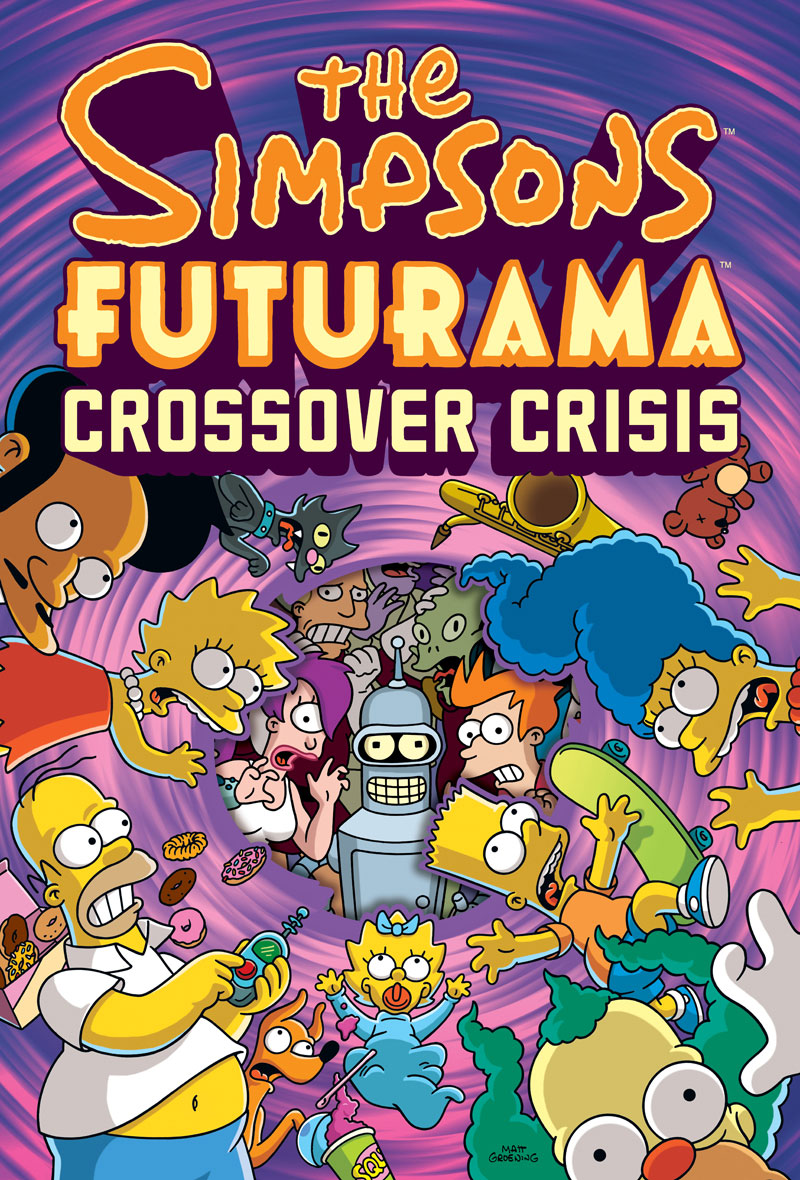
[READ: April 15, 2011] The Simpsons Futurama Crossover Crisis.
This was a wonderful Christmas surprise from Sarah this year. It is a beautifully packaged (slipcase with a cut-away opening) hardcover edition of the 2002 & 2005 Simpson/Futurama crossover comics issues.
Despite all of my fondness for The Simpsons and Futurama, I never really got into the comics (gotta draw a line somewhere). But they have Matt Groening’s seal of approval, and they play jokes with things that the show never really touches (not to mention, the shows never tries a crossover event–I can’t even imagine how that would work). (more…)
 SOUNDTRACK: SUPERCHUNK-Superchunk (1990).
 Some time ago, I reviewed all of the Superchunk EPs. After progresing to their most current music, returning to their first album is a bit of a shock. Superchunk’s first full length album is incredibly raw, with lots of screaming (two vocalists at once, even) and a very grungy attitude. It has a DIY aestethic, in keeping with the undeground scene at the time.










 I Just Read About That...