Feeds:
Posts
Comments

Archive for the ‘Threats’ Category

SOUNDTRACK: PEPPER RABBIT-“Alison” (2011).

Pepper Rabbit had NPR’s Song of the Day on September 19th.  “Alison” opens with a kind of circus organ pumping out a steady, thumping beat.  The beat continues until the quieter stated chorus: “You will know my name.”  The song is, as circuses are, light and bouncy with an air of the sinister floating all around it.  By the second chorus, we learn that “it’s all a game to get you to learn my name.”

The vocals are done in a kind of 70’s piano pop style–a bit high-pitched, a bit echoey– and they help to obscure exactly what’s going on.  But it’s the music that is so charming. 

Even if it’s unclear to me what the intention of the song is (stalker or just lost love) it’s a poppy ditty that will keep your toe tapping.  I’m looking forward to hearing more from them. 

[READ: September 14, 2011] Into the Gauntlet

And so the series ends. 

Or, actually, it doesn’t.  This isn’t really a spoiler because there are more books out in the series.  And I’m not going to say what happens at the end of this book, but for those of you wondering just what the heck is going on here with a Book Eleven coming out eight months after Book Ten, I’ll summarize (with no spoilers).  Book Ten ends the hunt for the clues–the goal is reached.  But at the end of the book, it is revealed that there’s another group, another family, who is also hunting for the Answer.  They hadn’t been hunting alongside the Cahill families, they were apparently watching alongside them waiting to see what would happen before setting their plan into action.  And thus….  Series Two.  

Book 11 is a kind of transitional book that fills in some back story on each of the families and shows Grace’s life.  I’m intrigued to read it, especially since most of the writers from the series contribute to it.

So Book Ten was written by the excellent author Margaret Peterson Haddix.  And this book comes in at 326 pages (over 100 pages longer than any other book in the series).  But Haddix earns her extra pages.  She totally breaks with the set-up of the series so far by following not just Dan and Amy but all of the branches of the family.  We actually get into the heads of all of the competitors (including Eisenhower Holt–who has feelings after all, Natalie Kabra–who is not quite as dim as she appears, and Ian Kabra–who might just be as evil as his mom).  Haddix also introduces a huge surprise in the beginning of the book–a surprise that may not have been such a surprise if I’d been reading the books close together but with this much remove from the early books, I was shocked!  And later on, when she doubles up on the surprise, it’s even more shocking! (more…)

Read Full Post »

SOUNDTRACK: JUNE TABOR & OYSTERBAND-“Bonnie Bunch of Roses” (2011).

Two artists that I have heard of for years but who I have never really listened to. This was described in the NPR music review as something The Decemberists might sing.  And indeed, it has a very Decemberists feel to it (which makes sense as this is a traditional song and, evidently, Tabor has been a master of this style for years.  ( I had no idea her voice was so deep–it adds a nice level of malice to this song about Napoleon.

The band is tight as they play this rollicking, dark shanty and Tabor’s voice is haunting (do I detect a similar style to Linda Thompson?) as she sings these lyrics of loss.  The music builds and builds as the song reaches its climax, but what’s neat is that Tabor never really changes her tone.  She is matter of fact, despite how sinister the music becomes.  It’s a very cool song.

I did some research and found out that tabor and the Oysterband got together in 1990 for the album Freedom and Rain, which was a collection of traditional songs as well as covers of Richard Thompson, The Velvet Underground, The Pogues, and Jefferson Airplane (I can’t believe that album is pretty well out of print–it sounds amazing).  This collaboration is more or less a follow-up, with more traditional songs and covers of PJ Harvey, Joy Division and others.

I’m really looking forward to listening to this disc and to what will certainly be the triumphant re-release of their first disc collaboration quite soon.

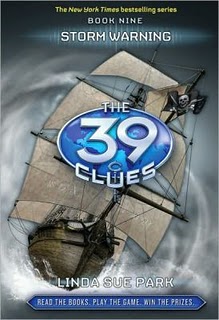
[READ: September 14, 2011] Storm Warning

Book Nine in the 39 Clues series made me feel like a kid again.  I started reading it when I got home from work and I stayed up till way late in the night to finish it.  Unlike when I was a kid, though, I am really suffering for staying up so late last night.

Storm Warning was written by Linda Sue Park, the first woman to write in the series.  And, appropriately, this is a very female-centered book.  We learn a lot about Nellie (finally, her story is explained!), the story focuses somewhat more on Amy than on Dan, there’s more evilness from Isabel Kabra, but most importantly, the clues lead them to two important women in history. 

They head down to the Caribbean–although they are undecided about whether to go to the Bahamas or Jamaica (Dan wants to go to the Bahamas to go to the greatest water park in the world: Oceanus–which is really the Atlantis Water Park) but Amy believes the answer is in Jamaica.  Dan convinces her and they decide to go to the Bahamas and the water park for a few hours of fun.  But the crazy thing is that before they even bought their tickets to the Bahamas, Nellie went into the bathroom and Dan received a message that the Holts were on their way to the Bahamas too.  Could Nellie be ratting them out?

On the flight down, they grill her about what’s going on.  But what happens is that for the first time in the series, we get into Nellie’s head.  Not completely, but we get to hear her thoughts.  So we know that she’s still hiding some truths, but she reveals that she has been working for Mr McIntyre and reporting to him about all of the family’s moves.  She was well paid for her services and she knew that there would be danger, but she had no idea exactly what the kids would be getting up to.  Dan and Amy are stunned.  They are betrayed and furious.  [I have to say I think they totally overreacted–Nellie saved their asses many many times along the way].  They agree to let Nellie come along with them but they’re not going to share any plans with her. (more…)

Read Full Post »

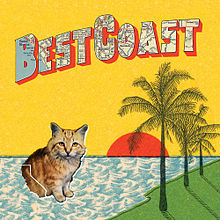
SOUNDTRACK: BEST COAST-Crazy for You (2010).

I really enjoyed the Best Coast concert that was downloadable from NPR.  I liked it enough for me to rethink my initial skepticism about this album.  But I have to say that I fall into a minority in that I really don’t like this album all that much.  In concert, the band is loud and raucous–the songs are poppy but they have a kind of growly edge and a punk veneer, and singer Bethany Cosentino has a sneer to her cutesy lyrics that gives them a nice edge.

But all of that is missing from the album.  In fact, to me this album sounds like a long-lost relic of girl groups from the 60s.  And, blasphemy as it may be, I just do not like girl groups from the 60s.  I hate the tinny sound and I hate the “my life sucks without a boy” sentiment that most of those songs project.  (I love a good love song, I hate an insecure love song).  And, for the first few songs at least, this album conveys both of those things. 

Nevertheless, there’s a lot I appreciate about this record.  I like that it’s lo-fi.  I like that it’s just the two of them making all this music.  I even like many of the lyrics (the lyrics that Cosentino describes as “about weed and my cat and being lazy a lot”).  I also like that the songs are super catchy and super short ( no songs are over 3 minutes and that most are only about 2 minutes long). 

So even if I don’t love the record sonically, I can appreciate the simplicity and ease of singing along that the album presents.  And there are a few songs on the disc that I do like.  I especially like “When I’m with You” (the bonus song) for being a stupid pop song but somehow transcending the stupidity. 

As for the lyrics.  They are little more than teen girl diary entries, except when they turn into college girl diary entries (and then they turn funny rather than sad).  From a lyrical standpoint I am much more in tune with “Goodbye” (“I lost my job, I miss my mom, I wish my cat could talk.  Everytime you leave the house, everything falls apart”) than with “Boyfriend” (“There’s nothing worse than sitting all alone at home.  And waiting waiting waiting waiting by the phone.  I hope that he’s at home.  Waiting by his phone”).

I guess, overall, there’s just something about California pop music that I don’t like as much as my East Coast bands.  [NYHC rules!].

[READ: September 14, 2011] The Emperor’s Code

Gordon Korman is back helming the series which is set in China. Now, I have seen pictures and movies of things in China, but the real scale of things has never come across to me until reading this book.  Which is kind of sad for me, but it’s really cool for the book.  I knew that the Great Wall of China was huge, but I never knew that it could stretch from Boston to San Diego with extra room at the end.  I never appreciated the kind of training the Shaolin monks undergo (the description of the statue of  Bodhidharma as being well over 750 steps up and taking over an hour to climb really sunk in for me just how big this place is!).  In short, while I know that parts of the story disregard history, the historical parts are fascinating and informative!

Dan and Amy’s first stop is the Forbidden City, where they sign up for a tour.  Dan sneaks out of the tour to enter an area where they think a clue is.  Much like with Pee Wee Herman looking for the basement of the Alamo, Dan Cahill looks for the attic of the Forbidden City.  And he finds it.  And then he is caught by guards.  But this little preview of Dan and Amy working separately doesn’t quite prepare us for the massive change in the series that Korman is preparing for us.  

Dan and Amy start talking about what the clues means and the fact that they are Madrigals–are they (and their whole family line) really killers?  This leads to much tension which ends with Amy wondering aloud if maybe their parents weren’t good people at all.  Dan and Amy fight and Dan storms off.  And through a series of scary events, he ends up in the clutches of Jonah Wizard (whom we have not seen for a long time).

And thus, for the bulk of the book, Dan is on his own.  Amy, Nellie and Saladin work hard to try to find Dan and maybe even a Clue.  Meanwhile, Dan is with Jonah, thinking that Jonah’s father is trying to contact Amy.  Dan is still pretty angry so he doesn’t really care what Amy is up to (and he believes she is not trying to find him).  But Amy is freaking out thinking of her 11-year-old brother in the most populous, hugest country all alone.  But he’s not alone, he’s got Jonah Wizard, yo.  And for much of the book, Dan lives the high life.  He hangs out with Jonah, plays video games, lives a first class lifestyle and even gets to be backstage to see what it’s like to have tens of thousands of fans screaming at you.  (more…)

Read Full Post »

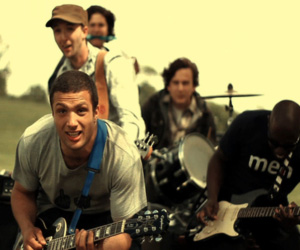
SOUNDTRACK: COSMO JARVIS-“My Day” (2011).

I learned about Cosmo Jarvis through NPR.  The DJs called it a love it AND hate it song.  But I find that I mostly love it.  The video is a blast to watch, but even without the video, the song is quite catchy and fun.  It’s a half punk song and half folkie/trad song.

So who the hell is Cosmo Jarvis?  Well, he was born in NJ, but is really from England.  He’s a filmmaker and musician and he’s had a hit with the song “Gay Pirates” that Stephen Fry raved about on his Twitter feed!  “Gay Pirates” is a fun shanty, but “My Day” is a full-on punk blast.

The song laments the state of things today and talks about how things were back in “my day” (which is of course funny since he’s 21).  The verses are a kind of folkie/storytelling style (but with electric guitars) and the end of each verse has a guitar riff that sounds traditional to me.  But when the chorus jumps in, it’s heavy, rocking, screaming punk.

Okay so the song is nearly 8 minutes long, which is probably overkill.  There’s a fairly lengthy instrumental bridge about 5 minutes in which features guitar and tin whistle solos.  And then the final 2 minutes are just fast metal screams of “My Day” with some wild soloing.  Yes, it’s too much (I’ll bet the single mix is awesome), but it’s still an enjoyable song.  Even without the video.

But you should watch the video, if only because it’s what the guys from Jackass would do if they were in a band and lived in the English countryside.

[READ: July 15, 2011] The Corrections

My company recently asked us if we had read any books over the summer.  I was able to pony up this review for our company newsletter.  I’ll be fleshing it out, but it’s pretty apt.

I’d put off reading this for a number of years, and I wish I had read it sooner.  It’s a very detailed look at one family: Elderly parents, thirty-something kids, and a few grandkids.  The depth of character development is amazing (and includes even depth of characters that the main characters interact with).  It’s a long book but it is very rewarding—comic scenes, moving scenes and one or two shocking moments.  It’s also the first time I’ve read a book where I thought, “even though I like this character, I think it would be better for everyone if he died.”  It’s an unnerving thing to think, but Franzen really makes you think about how family members impact one another.

It took me forever to start reading this book, obviously.  I wasn’t really interested in Franzen when all of the Oprah commotion came out, so I blew off this book entirely.  I’ve recently grown more interested in him.  But rather than reading his novels, I had decided to read all of Franzen’s New Yorker pieces.  (And even though I wanted to read Freedom when it came out, I felt that I should read this one first).  I wasn’t hesitant about reading it, I think I just wanted time to devote to it.  Much like I needed time to devote to writing up this post.  It’s been well over two months since I finished the book.

The Corrections is a wonderful, engaging story about three generations of the Lambert family (and many of the people they interact with).  The matriarch and patriarch of the family, Enid and Alfred, live in the midwestern town of St. Jude.  They have three children: Gary, a banker in Philadelphia who is (more or less unhappily) married with three children; Chip, a former school teacher and current playwright who sponges off of his younger sister while he tries to live the high life in New York City; Denise, a very successful chef who also lives in Philadelphia.  She has no children.  Gary’s children play a small but significant part in the story, keeping the three generations aspect working very well.

I found the first chapter a little slow and somewhat off-putting.  I read an excerpt from the novel in the New Yorker, which was a piece about Chip.  So I was surprised that the book opened with an older couple.  The chapter deals with Alfred and Enid.  Alfred’s dementia is hitting their household quite hard but Enid just feels that Alfred isn’t trying very hard.  Because Enid has very little in her life, she wants nothing more than to have her whole family together “one last time” for Christmas.  Enid and Alfred are long-married and this chapter picks up in the middle of a typical day.  So it takes a few pages to get up to speed.  Of course, once I did, I felt that the whole family was completely real and believable. (more…)

Read Full Post »

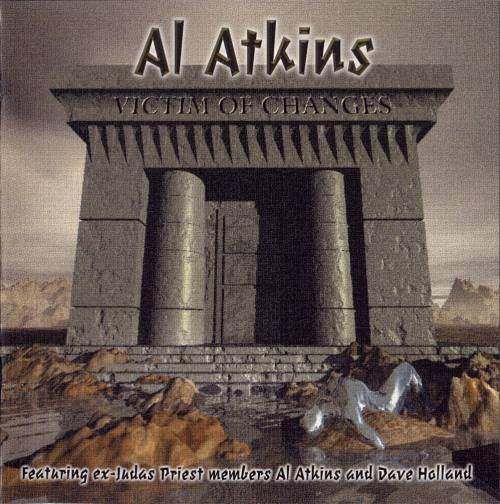
SOUNDTRACK: AL ATKINS–“Victim of Changes” (1998).

Al Atkins wrote “Victim of Changes,” one of Judas Priest’s greatest songs.  And then he left Priest to get a real job.  In 1998, he released the album Victim of Changes which contained a number of early JP songs, primarily ones from Rocka Rolla, but also this title track.

This version is quite faithful to the JP version (which is interesting because the early notes say that “Victim of Changes” was a melding of two songs).  It’s fascinating, in hindsight to wonder if this is how the song really sounded (there are a few differences in it) or he is now covering the JP version.  But the big difference of course if Atkins’ voice.  In the middle, slower section he sounds quite a bit like Rob Halford.  But he just cannot hit any of the notes that Halford brought to the song.  And there’s really just no way to compete with that (even with multitracked and over-processed vocals).

It’s really hard to compare this (and other songs from that album) to the original.  I mean, he wrote them, after all.  But man, the Priest version is just so much better.  Atkins has a strong, gruff voice.  It works well for the style of the songs, but it just isn’t anywhere near as compelling as Halford’s.  The other problem is the music–the guitars are full of cheesy pyrotechnics that overshadow the songs (I like guitar pyrotechnics if that’s what the song is supposed to be about, but not when it’s meant to “embellish” a song).  It sounds like he is trying way too hard here.  Atkins has his own solo career and his own band, he really needs to get past the JP thing, especially since he left of his own accord.

This is the version of “Victim of Changes” from Victim of Changes:

But for heaven’s sake, don’t listen to the more recently recorded version of “Victim of Changes” (yes a second recording–he’s got to let it go) from his 2007 release Demon Deceiver (available on Spotify!)–his voice is lower and gruffer (almost cookie monstery) and guitar solos are just covering all of the song.

Yipes.

[READ: September 12, 2011] The Viper’s Nest

When I finished the fantastic Book Six of the 39 Clues, I put it down and immediately picked up Book Seven.  It opens with a dramatic rescue from an exploding volcano.  When the ash settles, Dan and Amy find themselves on Irina Spasky’s boat.  And in this boat they find Irina’s bag, which contains all kinds of spy stuff (like IDs for every one involved in the 39 Clues search and fake fingerprints and whatnot).

They also find a letter with what looks like lyrics.  I have to credit Peter Lerangis with the wonderful work on this clue.  The clue is a line from a song: “I’m with you and you’re with me and so we are all together.”  Nellie (who is still under suspicion, but seems to have been given a free pass) says that she never guessed Irina would be so cool as to listen to the best song ever by Velvet Cesspool (on the album Amputation for Beginners).  It’s track three, “The Tracks of My Spit” and it goes: “I’m with you and you’re with me and so we are all together….  We are marching to Peoria!”  The kids are all set to go to the exotic locale of Peoria, Illinois when, through a series of events, they realize that the song Irina was referring to was a traditional folk song called “Marching to Pretoria.”  And that they are actually headed for South Africa.  [Incidentally, I just learned that the opening line of “I am the Walrus,” “I am he as you are he as you are me and we are all together” is actually a reference to this folk song].  Check out this video of “Marching to Pretoria” by a guy who has not doubt gotten a lot of hits because of this book.

Anyhow, this book spends most of its time in South Africa.  And Dan, the non-reader of the family, finally finds a book worth reading.  It’s all about Shaka the warrior of the Zulu nation.  Dan reads a lot of information about the man and his military techniques.  Which is a good thing because the kids find themselves in the center of a Tomas family stronghold (the Holt family are the members, so you know their speciality is tough fighting).  The details are quite fascinating.  In the end, they are able to find a clue and to create some wonderful battle scenes in the process.  (more…)

Read Full Post »

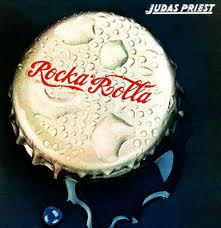
SOUNDTRACK: JUDAS PRIEST-Rocka Rolla (1974).

Unlike Sad Wings, Judas Priest’s debut album is more of a curiosity than a cool surprise. I love this original cover–the new release has a crazy drawing on them that doesn’t make any sense with the title.  Admittedly the title is kind of dumb, but the riff on Coke works.  With the new cover, see below, the title just sounds dumb now.

The album is mostly heavy blues songs.  Although the title track has some bizarre disco elements thrown in as well (including the lyrics).  The chugga chugga in the choruses is not the chugga chugga of metal, but the chugga chugga of disco.

The biggest surprise comes with the third track, the oddly titled, “Winter/deep freeze/winter retreat/cheater.”  It’s 9 minutes long and is not so much an epic as multiple weird little pieces thrown together.

“Never Satisfied” is the closest they get to their future metal sound.  But it owes a big debt to Black Sabbath (down to the guitar sound which has the little high note in the chords that Iommi plays on parts of “Paranoid”–a sound I was always confused by but which seems to have inspired K.K. Downing).  Nevertheless is rocks pretty hard.

“Run of the Mill” has the potential to be a good rocker.  But the 8 minutes of it are rather unfocused and there’s a trippy jam in the middle.  (Again with a major Black Sabbath debt underway).  “Dying to Meet You” also has a cool sinister sound.  Both of these tracks would be well served with a better producer. The second half of this nearly 7 minute song is probably  the most metal sounding of the whole disc, although the guitar solo sound has a very Allman Brothers feel to me.

The final track “Caviar and Meths” is a two-minute instrument that is very reminiscent of trippy” Planet Caravan” style Black Sabbath.  It’s rather groovy and I’ve always liked it.  The reissue has  the band’s cover of “Diamonds and Rust.”  Because all metal bands should cover Joan Baez!

Wikipedia explains something about this album which make me feel better about it.  Apparently the band was really unhappy with the production.  Several heavier tracks were left off the album by the producer (they were later recorded for Sad Wings).  And that odd little 2 minute instrumental “Caviar and Meths” was originally a 14 minute epic written by the guy who preceded Rob Halford.  (He evidently recorded a 7 minute version of the song).  Indeed, many of the songs were written by Halford’s predecessor and Downing, so they are lacking Halford’s input. (the page was very helpful for me).

[READ: September 11, 2011] In Too Deep

Since Book Five was so awesome, I couldn’t wait to move on to Book Six.  Book Six is the first book written by an author who has written a book already (Watson wrote Book 4 as well).  At first I feared that Watson was going to squash my enjoyment of the series; it felt like there was a lot of recapping going on (I know that in a series like this a recap is necessary for people who pick up book 6 instead of book one, but it can be frustrating when you know all that backstory already).  However, at the same time, Watson also started the story in the middle of a scene, so everything was brand new, fast paced and a little disorienting.

I’m happy to say that once the story got going Watson really pulled out all the stops and this made Book Six the most exciting book so far.  In this book they travel to Australia.  As anyone who has looked into Australia knows, most of the deadliest animals on the planet live in Australia (woo hoo!) so that makes Dan quite excited.  Australia is also a much looser place to explore than some of the tightly controlled areas they have recently visited–there’s no guards in the outback.  And, when the kids hook up with an old friend of the family, Shep, they have access to tasty waves, tasty barbie, and…most awesomely, a plane.

They also have access to Isabel Kabras.  Isabel is the mother of Ian and Natalie Kabras–two teens who are rich, spoiled and ruthless.  They tried to kill Dan and Amy once, and Ian, who is a hottie, has some kind of sway over Amy–especially when Isabel tells her that Ian secretly likes her.  Isabel tells Amy that she has information about how Dan and Amy’s parents died.  She will tell her all about it if they can meet in private.   And so, for the first time in the series that I can recall, Dan and Amy are separated.  She meets the Kabras, and Isabel is looking for a trade.  Amy is suspicious, of course, and that leads to the first of many deadly animals.  It’s safe to say that Amy survives but I won’t say how–it’s very cool. (more…)

Read Full Post »

SOUNDTRACK: JUDAS PRIEST-Sad Wings of Destiny (1976).

Before Judas Priest were the force behind “Breaking the Law,” they were still pioneers of heavy metal.  Except that their metal was tinged with all manner of odd progressive embellishments.  Like “Victim of Changes,” an 8 minute (!) multi-sectioned (!) epic. It’s got a great heavy riff and, damn, if Rob Halford’s vocals aren’t the highest-piched in music (I mean, we know he has a powerful voice, but the notes he hits–good grief man!).  The middle section is a delicate ballad that mellows out with breathy sighing and with very sixties-era backing vocals until Halford bursts out of that with his piercing wail.

It’s followed by “The Ripper” a classic metal song.  The best known version comes from Unleashed in the East, so it’s interesting to hear this earlier version where, for instance, “You’re in for a shock,” is followed by a different person’s scream, not Halford’s wail of the word “shock.”  It sounds a little slower but somehow a little more creepy (especially the quiet middle section).

“Dreamer Deceiver” is a creepy quiet song which seems to herald the vocal acrobatics of King Diamond, but this song has a lot more emotion to it, even if it is pretty trippy (like a cooler version of Black Sabbath’s “Planet Caravan,” perhaps).  The piano at the end is a really nice touch and leads into the confusingly named “Deceiver,” a very chugga chugga metal song with more great high notes. 

“Prelude” opens with more piano (technically this song opened the album when it was on vinyl…the cds all seem to have sides A nd B reversed so now this prelude is in the middle. It’s a dramatic near-orchestral opening (that many bands would imitate much later) to the killer track “Tyrant.”  “Tyrant” sounds just as menacing here as it does on the live album except for the backing vocals that sort of slouch through the word “tyyyyyrant”–in the live version Halford crams it all into one breath.   It’s followed by “Genocide” a brutal song that has withstood all of these years as an awesome metal track.

Unlike “Epitaph,” which is a completely strange ballad about a dying man.  It is all piano, it is quite poetic and is indeed quite sad (especially the final line reveal).  But the middle ‘upbeat” section sounds not unlike an Elton John track.  It’s quite peculiar, especially when it ends and the chugging riff slowly builds out of the ashes that turns into the stunning “Island of Domination.”  This is a disturbing track with really creepy lyrics but with awesome music.  The middle section (again with the middle section–did bands just forget about doing cool middle sections in the 80s?) slows the track down with all kinds of echoed vocals.

Although it sounds dated, it still holds up remarkably well as a precursor to later metal albums.  It’s one of my favorite Priest releases and one that I come back to time and time again.

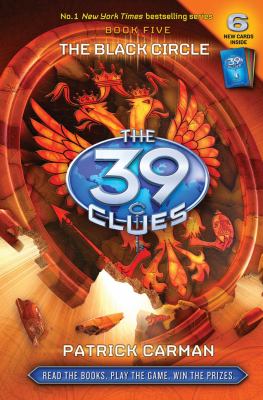
[READ: September 8, 2011] The Black Circle

I haven’t read a 39 Clues book in a couple of months.  It’s not that I was losing interest, I just had other things that I wanted to read more.  But I will admit that a ten-book series (and now a second series) can be a bit daunting.  I’d also never read anything by Patrick Carman before, so I wasn’t chomping at the bit to get into the story again.  Well, Patrick Carman has completely revived my interest in the series.  The first nice thing was that the book is only 168 pages (sometimes a short book can really pick you up).  But aside from that, Carman brings all kinds of cool elements into the story and has more than enough intrigue to keep you guessing and turning pages.

But I was initially concerned about reading this book because Carman reintroduces my least favorite nemeses in the book: the boring and doltish Holt family.  They are big, tough, meat- heads with ridiculous political first names like Eisenhower, Hamilton and Reagan.  And every time we’ve seen them, they’ve been brutish and mean and not terribly clever (and this series is chock full of cleverness, so these guys really stand out like a sore thumb).  But Carman does a wonderful thing with the Holts: he forms a (temporary) alliance between Dan and Amy and the Holt family.  And although it is an uneasy alliance, about midway through the book, we see Dan and Hamilton (the Holt’s son) bonding over driving big powerful trucks and flying helicopters.  It’s nice to see Dan have a “friend,” however tenuous. (more…)

Read Full Post »

SOUNDTRACK: EXPLOSIONS IN THE SKY-Take Care, Take Care, Take Care (2011).

I found out about Explosions in the Sky because of the events of 9/11.  Back when everyone was looking for albums to point fingers at in some kind of hysteria (that’s also how I found out about I am the World Trade Center who are not as exciting as Explosions…).

EITS make beautiful epic instrumental music (as well as the soundtrack for Friday Night Lights).  They play music in a similar vein to Mogwai, but they take their epic instrumentals in a different direction.  And this album is perhaps their most commercial to date (as commercial as you can be when you write 10 minute instrumentals).  And while “commercial” is not usually an adjective that I give as praise, for this album it is indeed.

Take Care, Take Care Take Care is a terrific album.  It ‘s not as visceral as past releases; rather, it seems like a more experienced band playing with their sound and tweaking it in subtle ways to make it less obviously dramatic but somehow more powerful.

On “Last Known Surroundings,” there are soaring guitars that give way to simple, pretty guitar riffs.  Martial drums propel the songs forward, even if they lead to unexpected places.  It’s soundtrack music that’s not background music.

Perhaps the biggest difference with this album and previous ones is that this album doesn’t quite live up to the band’s name.  There’s no major explosive crescendos.  There are noisy bits but they’re not climactic per se.   “Human Qualities” slows to a quiet drum beat and while you’d expect to come out of that with a cacophonous explosion, it doesn’t.  The explosion does come later, but only after it has worked up to it again.

“Trembling Hands” features “voices.”  Or maybe just one voice.  It’s on a loop that becomes more of a sound than a voice.  The song is only 3 minutes long, but it’s an intense 3 minutes–more great drum work on this one.

“Be Comfortable, Creature” has a beautiful delicate guitar opening that drifts into a kind of solo.  After 3 minutes it settles into the main riff, a winding guitar line that send you on a journey.  “Postcard from 1952” is a great song. It begins as quiet intertwining guitars and slowly builds and builds into a gorgeous rocking conclusion.  7 minutes of steady growth with a nice epilogue at the end.

The final song, “Let Me Back In” also has kind of spooky voices that appears throughout the song (distorted and repeated).  But you know this song is a winner from the get go (even if the opening chord structure is a bit like Duran Duran’s “Come Undone.”)  It’s a slow builder, a cool, moody ten minute piece.  When you get to the beautiful descending guitar riff that shoots out after about 2 minutes, it’s an ecstatic moment–air guitars are mandatory.

And let’s talk packaging.  The album comes in a gate-fold type of cardboard.  If you open it up all the way it can be folded into a little house (with windows and a door and a chimney).  That’s pretty cool, guys.

If I have one compliant about the album it’s that the quiets are really quiet and he louds are really loud.  That makes this a very difficult album to listen to say, at work, or basically anywhere where other people will be blown away by your speakers.  The middle of “Human Qualities” for instance, is really quiet, you feel like you need to turn it up to hear the drum beat–there’s too much volume fiddling (listening in the car by yourself negates any reason for this complaint, of course).

Keep it up, guys.

More “controversy” from the band

[READ: September 10, 2011] New Yorker essays

Ten years ago, The New Yorker published several short essays by famous and (to me anyway) not so famous writers.  They were all written directly in the aftermath of the attacks and they were moving and powerful.  I was going to wait until today to re-read them and post about them, but for various reasons, I decided to do it on May 12.

Now, ten years later, The New Yorker has published several more essays by famous and (to me anyway) not so famous writers.  I note that none of the authors are the same (that might have been interesting) although Zadie Smith does quote from John Updike’s piece of ten years ago.

The strange thing to me about these pieces is that ten years seems to have hindered the writers’ ability to focus on the incident and to talk about What It Means.  In this collection of essays, we have a few that talk about an individual and how his life has changed since 9/11.  These are pretty powerful, although it’s odd that they would talk about another person and not themselves. We have a couple of essays that talk about the writer him or herself, but these seem kind of unfocused.  And then we have ones that talk about the state oft he world; honestly, what can you say about that.

It’s possible that I’m jaded or in a bad mood and that’s why I didn’t appreciate these essays.  Or perhaps I’m just facing the futility of things.

This is not to say that I think that writing about 9/11 is easy (you’ll notice I’m not doing it).  Indeed, I think talking about it in any kind of meaningful, non-strident, non-cliched way is nigh impossible.

But these writers do give it a try.  And I am grateful for that. (more…)

Read Full Post »

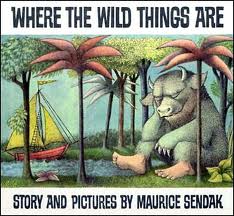
SOUNDTRACK: President Obama reading Where the Wild Things Are (2009).

A President who is literate!

Apparently my video won’t fit here unless I space this section out better.

I don’t really have anything to say, except that I enjoyed hearing him read this.

And it’s fun to watch the Secret Service pretend to be invisible.

One more line should do the trick.

See the video here.

[READ: August 24, 2011] Wild Things

Okay, so this is a novel.  It is based on Where the Wild Things Are, the film by Spike Jonze and Where the Wild Things Are, the book by Maurice Sendak.  Obviously, Sendak’s book came first.  But, it’s only got about 60 words in it.  So, how do you make a film based on it?  Eggers and Jonze worked together for a long time to craft a screenplay and then (as Egger’s Acknowledgments explain) Jonze more or less took over the film and Eggers went off to write this book.

Hence, the book is fully titled:

The Wild Things: A Novel by Dave Eggers Adapted from the Illustrated Book “Where the Wild Things Are” by Maurice Sendak and Based on the Screenplay “Where the Wild Things Are” co-written by D.E. and Spike Jonze

I had read Egger’s except “Max” that was printed in the New Yorker ages ago and I liked it well enough, but it seemed so much like WTWTA, that I wasn’t sure what the point was (I didn’t realize it was an excerpt and, strangely enough, it’s an excerpt from several sections).  And since I had seen the film not too long ago (and honestly was kind of bored by it) I wasn’t really that excited about reading this.

But since I loved Zeitoun and this fur-covered book has been sitting near my bed for a couple of years now, I decided it was time.  And I really enjoyed it.

Well, here’s the thing.  This book is not a novelization of the film.  You notice that right away because the first chapter (which is awesome) is not in the film at all.  In it, Max rides his bike to his neighbor’s house.  His friend is not home but his mother is and when she sees Max all by himself and on his bike without a helmet she freaks out (even though they live about four houses apart).  His reaction and her overreactions are really very funny.

There are scenes from the movie in the book, of course.  It is adapted after all.  Indeed, it is more or less the same as the book, but there are many scenes which Eggers has added that really help to flesh out the story and give depth to everyone involved.  As a matter of fact, Max doesn’t reach the Wild Things’ Island until page 100 (out of 285 pages). (more…)

Read Full Post »

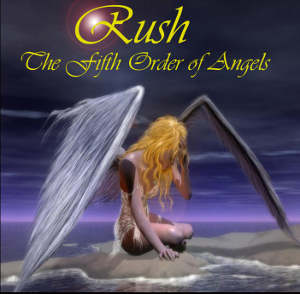
SOUNDTRACK: RUSH-The Fifth Order of Angels (bootleg from the Agora Ballroom,Cleveland, 26 August 1974) (1974).

I have mentioned this concert before, but I played it again today, and was struck by a couple of things.

1) According to the liner notes, Neil Peart had been in the band about two weeks.  How did they decide that their new drummer was going to be doing a drum solo during the show?  I mean, by now, everyone knows that the solo is its own song.  But, he’s been in the band two weeks.  It’s obvious he’s a good drummer, better than their original drummer, but a drum solo?  Is that just what rock bands did back then?

2) I’m struck by how much this show sounds like early Kiss.  I never really thought that  their first album sounded like Kiss, but in this live setting, a number of the songs, or perhaps just  the way they are recorded make me think of early Kiss.  In particular, during the crazy “one, two, three, FOUR!” of “In the End,” when the guitars kick back in, it sounds like a Kiss show from circa Alive!.

3) It’s amazing how guitar-centric the band was back then.  The mix is a little rough so it’s not entirely clear how insane Geddy is on the bass (when he gets a few solo notes, the bass sounds really tinny).  But the concert is like a showcase for Alex’s solos.  True, the whole first album really demonstrates what a great soloist he is, but it’s really evident here that Alex was the star.

4) Their earlier songs are really not very good.   I mean, every Rush fan knows that the first album is almost not even a real Rush album, but it’s shocking how pedestrian these songs are compared to even what would show up on Fly By Night.  Still, circa 1974 I’ll bet this show kicked ass.

It’s available here.

UPDATE: The missing content has been added!

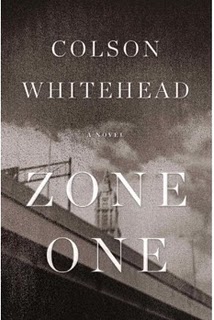
[READ: August 9, 2011] Zone One

After reading the excerpt from Zone One in Harper’s I decided it was time to read the book (which is due to be published in October).

I admit I haven’t read Whitehead’s other works, but I have read excerpts, and I thought I knew the kind of things he wrote.  So it came as a huge surprise when the excerpt ended the way it did. I didn’t want to spoil anything when I wrote the review of the excerpt, but since the entire book is set in the dystopian future and since it explain what has happened right on the back, I can say that Zone One is set in the aftermath of a kind of zombie apocalyptic plague.  And I can’t help but wonder if the rousing success of McCarthy’s The Road has more or less opened up the field of literature to more post apocalyptic, dare I say, zombie fiction.  [I haven’t read The Road, so there will be no comparisons here].

Actually there will be one.  Sarah read The Road and complained that you never learned just what the hell started the end of the world.  Indeed, in this book you don’t either.  There is an event called Last Night, and after that, there’s simply the current state of affairs.  I suppose you don’t really need to know, and since the story is all about dealing with the zombies, I guess it doesn’t really matter how it all started, but I think we’d all like to know.

Now what makes this story different from the typical zombie story is that for the most part there aren’t all that many zombies (or whatever these undead people are called) in the story.  There are some of course, and they are inconvenient to the main characters, but unlike a story like Zombieland, (which was awesome) or the more obvious Night of the Living Dead, the story isn’t really about fighting zombies, it’s more about the rebuilding of the country in a post-zombie world. (more…)

Read Full Post »

« Newer Posts - Older Posts »