Feeds:
Posts
Comments

Archive for the ‘Technology’ Category

misswyomingSOUNDTRACK: THE TALLEST MAN ON EARTH-Live at KEXP (September 8, 2012).

tmoeThe Tallest Man on Earth is Kristian Matsson a Swedish singer songwriter.  His albums have a very full sound, but when he plays live, it’s just him and his guitar.  And man, is he a compelling performer.  His guitar playing (primarily classical-sounding but often heavy and mostly rocking) is gorgeous–fast and pretty.  And his voice is gravelly and powerful.  I’ve enjoyed the studio songs I’ve heard, but he is transcendent live.

This set opens with a buzzy guitar that sounds like the show is not recorded well.  But that quickly goes away and the songs shine.  Matsson is a charming and self depreciating performer and when he has a malfunction as in “Love is All”and at the end he says “that was kind of embarrassing.”  But he not bothered by it and plays on with a great, short set.

The set includes some (then) new songs and a few older ones as well: “A Field of Birds,” “King of Spain”, “Tangle in This Trampled Wheat,” “Thrown Right at Me,” “The Gardener” and “Like a Wheel.”  It’s a great introduction to the guy and his amazing voice. which you can enjoy at KEXP.

 [READ: August 20, 2013] Miss Wyoming

I first read the book during my trip to Vancouver on the eve of Y2K (the best flight I’ve ever had—mostly empty and we were given champagne).  I started reading it on the plane and then in the second chapter the heroine is in a plane crash.  So I stopped reading.  I’m sure I finished it later, although I didn’t remember much of anything about it.

I read it again now and I was a little disappointed when I started reading it.  The first few chapters are so full of similes it is insane.  The word “like” is tossed around at an incredulous pace.  Like:

  • John’s teeth were big and white, like pearls of baby corn
  • …his skin like brown leather.
  • His eyes looked like those of somebody who’s lost big.
  • They crossed San Vicente Blvd, passing buildings and roads that once held stories for each of them, but which now seemed transient and disconnected from their lives, like window displays.
  • Susan was wrapped in a pale light fabric, cool and comfortable, like a pageant winner’s sash.
  • John was sweating like a lemonade pitcher,
  • …his jeans, gingham shirt and black hair soaking up heat like desert stones.
  • John felt as close to Susan as paint is to a wall.
  • Staring at the pavement, like Prince William behind his mother’s coffin.
  • This man with sad pale yes, like snowy TV sets

That’s all in the first chapter!

Now, I have come to see that the story is cyclical and it’s about people looking for their real selves.  So it’s possible that the simile heavy beginning is meant to reflect the fact that the protagonists are looking for themselves—they have no substance so they can only be compared to other things.  But man, it is hard going with that many comparisons.

The other major problem I had with the story was the really aggressive use of coincidence.  Susan and John both end up eating out of fast food dumpsters; just as Susan’s mother wants to sell their house, a pile of garbage from an airplane falls on it.  Right after we learn of a guy hoarding gasoline, the house explodes.  Again there are arguments for why these things might happen in this story (numerology is an important aspect of the book), but it seems too…easy.

But once the story starts moving the actual plot is really interesting and compelling. (more…)

Read Full Post »

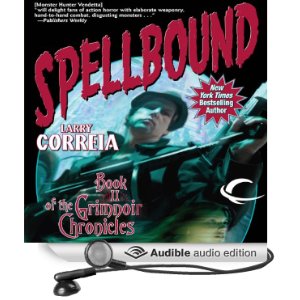
[LISTENED TO: July 27, 2013] Spellboundspellbound

I enjoyed Book I of The Grimnoir Chronicles immensely.  I wasn’t really sure what Correia could do to top it.  There’s the inevitable dread for sequels that everything has to be bigger bigger bigger with the cost to the heart of the story.  (That’s more true in movies, but books can suffer as well).

And indeed, Correia does go bigger, but he loses nothing.  Indeed, the higher stakes make this story all the more exciting without sacrificing the characters in any way.

As the story opens, we learn that it is a few months after the events of Book I.  The Grimnoir are dispersed somewhat, with things falling into a somewhat logical place.  Francis Stuyvesant is the head of United Blimp.  Faye and Francis are more or less dating and Heinrich is more or less his bodyguard. The other team members are up to assorted states of resting and recuperating.  And Jake Sullivan is lying low.

But no matter how low he thinks he is lying, he’s still very big.  And he is soon found by a woman named Hammer.  Of course, at first the story maintains the trappings of noir, with Hammer being a (beautiful) woman in distress.  Surprisingly, she is in distress at the library and she asks Jake for help (he is there studying magic and, well, lying low).  He tells her to ask the librarian.  But later when he is leaving, he sees her being robbed by some thugs.  He goes to rescue her (and easy job for a big guy like him), and Hammer uses her power to determine that he is indeed Heavy Jake Sullivan.  And he can still do what he can do.

Hammer wrangles him into a government facility where he accepts a phone call from the dead Chairman.  This whole section is lovingly described and far too cool to try to summarize.  So let’s just say that Alexander Graham Bell created a phone that could talk to the dead–but only if they wanted to talk to us.  The Chairman found the phone and, of all people, he wanted to speak to Jake.  (I’m skipping so much stuff here that it hurts me, but I don’t want to spoil the story or the humor). (more…)

Read Full Post »

CV1_TNY_08_05_13Cuneo.inddSOUNDTRACK: AMANDA PALMER-Amanda Palmer Performs the Popular Hits of Radiohead on Her Magical Ukulele (EP) (2010).

palmerradioAmanda Palmer made an album of Radiohead covers ,as the title says, on her magical ukulele.

I love the retro cover (and the way Radiohead is written).  It looks like a kitschy piece of nonsense.  And yet, contrary to appearance, it is actually a very respectful and very enjoyable collection of covers.  Despite the title, the album is not simply her on a ukulele, but the uke is the main instrument on most of the tracks, and it works surprisingly well to convey Radiohead’s particular brand of angst.  And one nice thing is that I now know a lot more words to the songs.

“Fake Plastic Trees” is done entirely on ukulele, which works well as the original is quite stripped down.  The ukulele gives it the appropriate kind of mournful angst.  “High and Dry” adds a piano—just a simple one note backing sound in the beginning, but which contributes greatly to the song.  Palmer sounds a lot like Aimee Mann here—understated and untheatrical–she has a lovely voice.

“No Surprises” is a song that starts simply so the ukuleles is well suited to it.  As with the original , the song builds, but much more simply here, with a pretty piano melody.  And her overdubbed voice works very well at the end.

“Idioteque” is absolutely great—she really captures the angst of the song and the ukulele in no way makes it a novelty—probably because the song is full of piano and great percussion.  The fact that the original is so techie and her version is so analog and yet it sounds this good is really a testament to Palmer’s transcribing skills.

“Creep” is done only on ukulele but the real instrument is her voice—where she manhandles the melody and whips it to all her needs—it’s a bravura  performance.  “Creep” live (a bonus digital version) is a bit more dynamic than the studio version as she plays off the audience.  And man she really shows off her voice at the end.

“Exit Music for a Film” opens on piano.  And adds strings. And adds more and more (allowing Palmer to exhibit her inner showwoman to really wail on the song).  Indeed, despite the title of the album, there is no ukulele on this track at all.  And while that may be cheating, this version really sounds great.

Palmer continues to impress me, although as I said last time, I’m still not sure what her real music sounds like.

[READ: August 7, 2013] “O.K., Glass”

Gary Shteyngart was one of the first 100 New Yorkers to get to test drive Google Glass (you had to tweet why you wanted it and then pay $1,500).  I was interested to read this because I like Shteyngart anyhow, but when I saw the reason why he wanted Glass—because his novel Super Sad True Love Story deals with people using a similar technology and he wanted to have a sense of what it would be like to use one for the upcoming movie version—I was even more intrigued.  (I read an excerpt in The New Yorker and I remember that funny device—the äppärät being mind-bogglingly futuristic.  I really need to read the novel before it becomes even less mind bending.

So he wears it out into New York.  (He was supposed to wear it only about an hour a day but he was totally hooked and wore them all the time).  And mostly he talks about how weird it is to have people (young people) approach him to talk about Glass.  People are even taking pictures of him!  He’s like a celebrity!

And of course he gets down to details—you twitch your head (what I imagine as the clicking of a mouse with your temple) to activate windows.  There’s a scroll bar type thing on the temple of the glasses.  But mostly you interact with it by saying “O.K., Glass” and then telling it what you want to do. (more…)

Read Full Post »

jetpackSOUNDTRACK: WE WERE PROMISED JETPACKS-“Quiet Little Voices” (2009).

jetpacksWhen you have a book with “Jetpack” in the title, the appropriate band is We Were Promised Jetpacks, no?  I’ve heard a lot of good things these guys.  But all I knew for certain was that they were Scottish.

I listened to their debut EP, The Last Place You’ll Look, which I liked a little.  But I didn’t care for the sound of the EP itself, it was rather flat.  A few listens got me enjoying the melodies and such but it never grabbed me.  Especially when I compared it to “Quiet Little Voices,” the lead single from their debut full length, These Four Walls.

The vocals are a bit stronger, the guitars and bass are both more clear.  The overall feeling is just brighter.  Now this may be a sign of selling out (is that something bands still do?), but really I think it’s just a better production for this song.  Which has a big chorus (and good backing vocals).

I listened to a few more tracks from These Four Walls and they are all good too.  I guess start with the albums and save the EP until after you’ve absorbed the band.

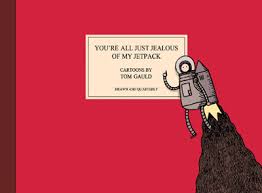
[READ: July 5, 2013] You’re All Just Jealous of My Jetpack

Gauld makes comics like no one else I know.  Most of his people are silhouetted or are the most rudimentary designs–simple triangle-shaped clothes, circle heads with dots for eyes and little else–maybe a nose if it’s profile. (Okay, there’s a bit of Chris Ware, but more like a much more relaxed Chris Ware).  And the wonderful thing is just how much he can convey with these painstakingly simple drawings.

The content of his comics is usually quite clever and often literary.  While I admit there were some I didn’t get (Like the Eric Gill cartoon–shame on me?–Aha: “[Gill’s] personal diaries describe his sexual activity in great detail including the fact that he sexually abused his own children, had an incestuous relationship with his sister and performed sexual acts on his dog.”  Geez, now the comic is very funny.).  There were some in which I liked the set up but would have preferred something funnier (like the Tom Waits comic–shame on him?)

But overall this collection was really enjoyable.  And I laughed a lot. (more…)

Read Full Post »

yitaSOUNDTRACK: WXPN (88.5 Philadelphia) xpnand wxpn.org online-Prog rock Marathon (2012-??).

Every January, Dan Reed plays a prog rock marathon on WXPN.  This year I was able to enjoy portions of it.  I rather wish the playlist was still available (you can search, but only by artist), because I’d love to rave about the tracks they played (like the live “Supper’s Ready.”)

I was delighted by the great mix of songs they played and (as I learned from reading this book) I was surprised by how many prog artists I didn’t even know.

In 2014 I’ll be listening again and maybe this time I’ll copy the playlist to document what I’ve missed.

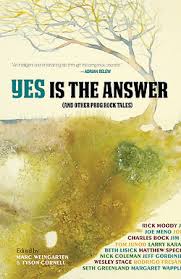
[READ: July 7, 2013] Yes is the Answer

This book was sitting on a cart outside of my cube.  I was intrigued by the title (it didn’t have that trippy cover, so I didn’t know what it was).  But “Yes is the Answer” was calling me.  Especially when I looked at the cover and saw that the cover had an excerpt from a William Vollmann story in which the protagonist plays In the Court of the Crimson King (track 5) for Reepah and watches her face as they band went Ahhhhhhhhhhhhhhhhhhhhhhhhhhhhhhhhhhhhhhhhhhhhhhhhhh!.

Quoting Vollmann (from The Rifles), playing King Crimson?  What could this book be?   Then I saw the subtitle and I knew I had to read it all.

I’m not going to review these essays because that would be like making a radio edit of a side long track, but I’ll mention the band the author focuses on and any other relevant details. (more…)

Read Full Post »

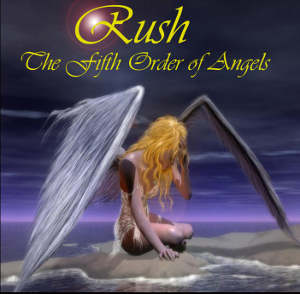
resetSOUNDTRACK: RUSH “Garden Road” and “Fancy Dancer” (from Fifth Order of the Angels) (1974).

I mentioned this bootleg a few years ago, but it has recently been updated to include the missing songs.  (Huzzah!).

So this set from 1974 is pretty great–rocking, noisy, screaming solos–a very heavy show (and the crowd is quite appreciative).

These two songs never made it on any Rush albums.  They were written before Neil joined the band and, when asked, he said they never made it on an album because they were written before he joined the band (bitchy!).  But evidently the songs were quite popular when they toured.

“Fancy Dancer” opens with a staccato riff and lyrics about a woman who leaves him.  The second verse allows Alex to noodle while Geddy is singing (which is why I never really notice the lyrics).  The chorus has some big chords and reminds me in some ways of “Making Memories.”  But mostly this seems like a chance for Alex to solo and solo and solo (and for Neil to play…only a bass drum!  (for a few measures)).  The song is 3:43 and the solo is over a minute and a half.  Although the end has some cool fast short chords that the band would use very effectively on 2112.

“Garden Road” has a faster riff (very bluesy), which is interspersed with some chugga chugga guitars during the vocals.  The chorus is completely unintelligible to me.  “This Garden Road is Whoa!.”

A few other things about this bootleg which I neglected to mention.  The solo in Working Man incorporates some sections of what would become “By-Tor and the Snow Dog.”  And it’s really funny hearing Geddy say, “We’d like to do something from our album.”  It’s pretty amazing how far the band progressed from these rocking beginnings.

Download the whole thing here.

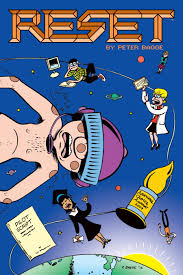
[READ: July 5, 2013] Reset

I recognized Bagge’s name, although I haven’t read his previous books.  I’m sure I’ve seen his work anthologized as his style is very familiar.  His drawings are dark (some might say ugly) and his characters always seem a little pained.

So it’s unsurprising that this book’s protagonist is Guy Krause, a former actor.  (His famous line is hilarious and I love that it is revealed very late in the story and then as a running joke).  He has recently come close to hitting bottom–his upcoming shows have been cancelled and his last resort is a reality show.  And when we first meet him, he is in a drunk driving class.

And that’s where Angela Minor comes in.  She offers Guy a chance to relive his life.  He’s obviously skeptical until she explains that it is a virtual experience.  They hook him up to a machine and he gets to try to change the virtual past.  This is all an experiment in seeing how people react to being able to change things that they fixate on.  It turns out the scientists have all kinds of information on him (because he is a celebrity) so it’s not a coincidence that they found him.

Guy balks.  Until she tells him how much they’ll pay him to do it.  Then he’s in. (more…)

Read Full Post »

[LISTENED TO: June 7, 2013] Hard Magichardmagic

My sister-in-law Karen raved about this book and then gave it to me for Christmas.  And holy cow.  I.  LOVED.  IT.

And before I even get into the story I have to say that a major reason why I loved it is because of the reader–Bronson Pinchot.  Yes, Balki from Perfect Strangers.  Yes, that goofy “foreigner” from the show has an utterly mesmerizing speaking voice.  It is amazingly deep–when he first started speaking the menacing drawl of Jake Sullivan, I was blown away.  And then he pulled out a couple dozen more characters, women and men–German, Japanese, Okies, military men, New Yorkers.  He brought this story to absolutely real life.

I have made a point of looking for anything else that he reads (although I see that he mostly reads books about war (which is not my thing))–but I see a Flannery O’Connor in there and–YES–he reads book two of the Grimnoir series (called Spellbound) and it’s already out!

Okay enough about Pinchot.  No, not enough.  He was stellar!

Okay, now enough.  What’s the story about?  Well, the best thing is that the story itself is also amazing.  It is set in the 1930s, in an alternate reality Untied States.  And in this reality, random people have been gifted with magic.  And there’s all kinds of magic–fades (people who can walk through walls); torches (people who can make and stop fires), mouths (people who can put thoughts in your head); brutes (people who are crazy strong and who can actually bend gravity to their will) and movers (people who can jump from place to place).  There’s also healers and cursers and cogs–really smart people–and other with more mysterious powers.

Each chapter opens with a quote from a real (in our world) person talking about how the magic or the people with magic–the Actives–impacted society.  So Einstein was a cog, and military leaders used brutes to fight in wars, etc. (more…)

Read Full Post »

CV1_TNY_04_15_13Sorel.inddSOUNDTRACK: AKRON/FAMILY-“Sand Talk” (2013).

akronfamThe folks on NPR played this song as part of a “new songs” segment and I couldn’t get over how noisy and chaotic it was.  I had always thought of Akron/Family as being kind of an indie folk outfit (I know they were on Swans’ label, but I still thought of them as more folkie than noisy).  So I was surprised by just how chaotic and wild this song was.

It opens with a distorted, echoey guitar that settles into a ringing sound which reminds me of Fucked Up.  Then the drums come in (tribal and various) until it all settles down into a thumping song with a kind of spastic guitar riff.  Then the vocals come in–full bodied and sounding like more than one person.  And after the first verse, it seems like everything that happened before happens again–this time all at once.  But now, the music occasionally pauses to let the vocals come to the fore.  And at one point everything stops and a chorus of voices sings a nice melody as the band slowly resumes playing.   And this echoing fugue-like music continues apace until it all kind of slows down and then ends.

It’s quite a challenging song and one that I found rewarding after just a few listens.  I have to reevaluate what I think this band sounds like, and I definitely have to listen to the rest of this album.

[READ: May 1, 2013] “The Night of the Satellite”

What I really liked about this story was the way that Boyle plays with two ideas of randomness.  The first is the possibility of a piece of a satellite falling out of the sky and landing on you.  The second is of running into a couple in several different and unrelated locations.

As the story starts, a couple (graduate-school aged) are excited that the summer is upon them.  They plan to take a trip to visit some friends (with their dog) to get away from it all.  En route they see a car pulled over at the side of the road facing the wrong way.  The young man is sitting on the hood, the young woman is crying near the road.  Mallory tells him to stop the car.  He is reluctant but does so (childlocking the doors).  The girl says that her boyfriend is a jerk.  She is crying but says she is not hurt.  The boyfriend is yelling across the road that she should just get in the car and leave with them.  But after a few minutes, she decides not too.  So he drives on despite Mallory’s protests. (more…)

Read Full Post »

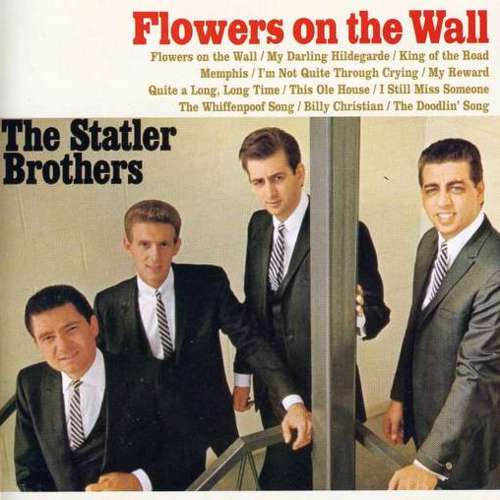
200px-FatesWorseThanDeathSOUNDTRACK: THE STATLER BROTHERS-“Flowers on the Wall” (1965).

flowersonthe Vonnegut mentions this Statler Brothers song in Palm Sunday as well.  I know this from Pulp Fiction–a song that I found very amusing and never would have guessed was a classic country song.  Country music was very different in 1965 than it is now.  I don’t even know if there was a folk or bluegrass category back then, and this song, with its banjo and bouncey acoustic guitar is a great example of the kind of country music I like.  And those harmonies!

This song certainly seems to be about insanity–about a man counting flowers on the wall, playing solitaire with a deck of 51 cards, smoking cigarettes and watching Captain KAN Kangaroo.  Don’t tell him he’s nothing to do.  What a weird little song.  And man is it catchy.  No wonder it was a #1 hit.

[READ: May 31, 2013] Fates Worse Than Death

After reading Palm Sunday I learned that Fates Worse Than Death was a kind of autobiographical sequel to that non fiction book.  I also learned that the two essays that make up Nothing is Lost Save Honor which is impossible to find (and for which I can’t even find a cover) are available in FwtD.  However, since there is no real contents or index, you do have to read the whole thing to find out which chapters contain the essays.  Or you can just look here and see that “The Worst Addiction of Them All” (which was published in The Nation) is in Chapter XIV and “Fates Worse Than Death” appears in Chapter XV.

The last time I read a bunch of Vonnegut together I got a bit burnt out on him and the same thing happened here.  The problem with Vonnegut’s nonfiction is that he tends to repeat himself.  A lot.  And while this book is ostensibly about the 1980s, he talks an awful lot about his family and his friends from the war and his other literary acquaintances., like he did in Palm Sunday.  In a number of places, he says that he doesn’t like to read himself in English, and it would seem that he doesn’t proofread to see if he said something already either.

This is not to say that the book is not worth reading.  Indeed, if you read Palm Sunday in the 80s and then this one in the 90s, you might not remember all of the details that pop up again, but when you read them days apart…well. (more…)

Read Full Post »

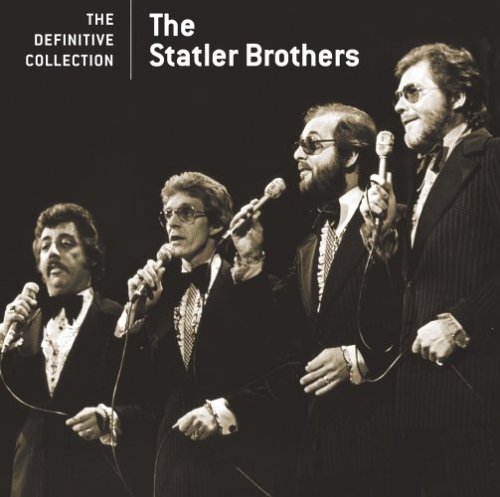
PalmSundayFrontandBackSOUNDTRACK: THE STATLER BROTHERS-“Class of ’57” (1972).

stalerI don’t know much about The Statler Brothers.  They are considered country, although this song is hardly country–it’s more folk with some bluegrass and, the real selling point–great harmonies (especially the bass singer with the big mustache).

The song is a wonderful coming of age song, sad and funny with a list of what happened to everyone in the class of ’57.  Like:

Betty runs a trailer park, Jan sells Tupperware,
Randy’s on an insane ward, Mary’s on welfare.
Charlie took a job with Ford, Joe took Freddie’s wife,
Charlotte took a millionaire, and Freddie took his life.

John is big in cattle, Ray is deep in debt,
Where Mavis finally wound up is anybody’s bet.

But the kicker comes at the chorus:

And the class of ’57 had its dreams,
Oh, we all thought we’d change the world with our great words and deeds.
Or maybe we just thought the world would change to fit our needs,
The class of ’57 had its dreams.

And then at the end:

And the class of ’57 had its dreams,
But living life from day to day is never like it seems.
Things get complicated when you get past eighteen,
But the class of ’57 had its dreams.

Vonnegut quotes the entirety of this song in the book and I’m glad he did, it’s a very moving song and really captures American life.

[READ: May 26, 2013] Palm Sunday

After writing several successful novels, Vonnegut paused to collect his thoughts.  And Palm Sunday begins: “This is a very great book by an American genius.”  It is also a “marvelous new literary form which combines the tidal power of a major novel with the bone-rattling immediacy of front-line journalism.”  After all the self praise, he decides that this collage–a collection of essays and speeches as well as a short story and a play which is all tied together with new pieces (in TV they would call this a clip show)–this new idea of a book should have a new name and he chooses: blivit (during his adolescence, this word was defined as “two pounds of shit in a one-pound bag.”  He proposes that all books combining facts and fiction be called blivits (which would even lead to a new category on the best seller list).  Until then, this great book should go on both lists.

This book is a collection of all manner of speeches and essays, but they are not arranged chronologically.  rather they are given a kind of narrative context.  What’s nice is that the table of contents lists what each of the items in the book is (or more specifically, what each small piece is when gathered under a certain topic).

Chapter 1 is The First Amendment in which he talks about Slaughterhouse Five being burned and how outraged he was by that–especially since the people so anxious to burn it hadn’t even read it (and the only “bad” thing is the word motherfucker).  The first speeches included are “Dear Mr. McCarthy” to the head of the school board where his books were burned and “Un-American Nonsense” an essay for the New York Times about his book being banned in New York State.  The next two are “God’s Law” for an A.C.L.U. fund raiser–it includes his confusion as to why people don’t support the A.C.L.U. which is working for all of our own civil liberties. (more…)

Read Full Post »

« Newer Posts - Older Posts »