Feeds:
Posts
Comments

Archive for the ‘Supernatural’ Category

SOUNDTRACK: MAC AYERS-Tiny Desk (Home) Concert #118 (November 30, 2020).

I’ve never heard of Mac Ayers and while I respect the fact that he plays everything in this Tiny Desk Home Concert (and syncs things up nicely) and even wears different clothes for each instrument, this 15 minute set was pretty torturous for me.

If you were to ask what kind of singing do I hate the most, my answer would now be Mac Ayers.  I hate the tone of his voice, I hate the way he does those whiny ooooooh at the end of his lines (note in the first song the first verse the way he says “you” and then the way he ends the rhyming word do (he even makes a face like it hurts him as much as it hurts me.

Obviously my opinion is not the popular one, because Ayers is apparently a big star.  But not in my house.

The 23-year-old Long Island native shot this in his basement back in September (hence the ‘register to vote’ comment). Mac’s modus operandi lends itself to the Tiny Desk naturally. No over-produced beats, lots of live instruments and a stunning vocal range — and he handles all duties: guitar, bass, keyboard and background harmonies for three songs from previous albums and the premiere of a new song, “Sometimes.”

He plays “She Won’t Stay Long” and then fiddles on the keyboard as he introduces “Walking Home.”  This song is a little bit more enjoyable for me.  There are fewer grace notes.  Although I do dislike the chorus.

He talks to us from his guitar to introduce the third song (I like that he’s mixing things up).

“Sometimes” is a new song.  It reminds me a lot of Billy Joel (not his voice, but the melody–must be a Long Island thing).

“Easy” has some terrific harmonies, although I hate the lead vocals.  I give him a lot of credit for being an exceptional musician, I just hate the music he makes.

We were well on the way to hosting Mac Ayres at our D.C. offices until we had to shut down and pivot.

I hope this Home Tiny Desk means he doesn’t have to do one in the office.

[READ: December 13, 2020] Modern Times
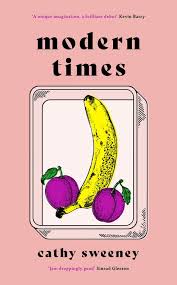
I saw this book at work and, given some of the blurbs, I thought it might be, if not fun then at least unusual to read flash fiction from an Irish writer.  I also prefer this Australian cover (right).

The book starts out with a bang.  “A Love Story” is bizarre and memorable.  In a page and a half, Sweeney talks about a woman who “loved her husband’s cock so much that she began taking it to work in her lunchbox.”  The story is bittersweet and outrageous at the same time.  It was a great opening.

But I feel like the rest of the book lost some steam.  Possibly because I assumed all of the stories would be this short.  It felt like the longer stories dragged on a bit (which is strange for stories about 4 pages long).

Interestingly, “The Woman With Too Many Mouths” even addresses this (to me anyway) as the narrator says, “I could expend many pages recounting my time…. but you would become bored, and worse, you would forget all about the woman with two many mouths.”  The woman with too many mouths had moths (among other things) fly out of these mouths.

“A New Story Told Out of an Old Story” is, as the title suggests, a story within a story.  It feels like a fairy tale with a Woodcutter and a Miller’s Daughter.  There’s even a Grandmother and a Wolf.   In the internal story, the wolf attacks the grandmother.  She survives, but the scar from the wolf makes her husband not want to look at her and the villagers treat her badly.  When you get to the Grandmother’s story, she has a different take on things.

This book is very current and I am reading “The Palace” as being about the pandemic.  Specifically, the outrageous bungling of the response by the current (and soon to be ex!) administration in the U.S.  

The palace was sick  no one believed it, but it was true.  

In the story the palace physically deteriorates.  The king patches it up but doesn’t actually do anything about the problem.

Soon reports of the sickness were breaking in the news on a daily basis. The king gave a rousing speech about battling the forces of evil that had created the sickness and people screamed ‘Long live the King’ until they were hoarse.’

(more…)

Read Full Post »

SOUNDTRACK: KURSTIN x GROHL-“Connection” (The Hanukkah Sessions: Night Six” December 15, 2020).

   Producer Greg Kurstin (who I have not heard of) and Dave Grohl (who I have) decided that, rather than releasing a Christmas song this year, they would record eight covers of songs by Jewish artists and release them one each night for Hanukkah.

“With all the mishegas of 2020, @GregKurstin and I were kibbitzing about how we could make Hannukah extra-special this year. Festival of Lights?! How about a festival of tasty LICKS! So hold on to your tuchuses… We’ve got something special coming for your shayna punims. L’chaim!!”

The sixth night is a 90s rocker: a short, fun, stomper from Elastica.

From Brit Milot to Britpop…here’s one of the coolest tracks from the 90’s….sung by the very cool…and Jewish…Justine Frischmann…ELASTICA!

“Connection” was a 90’s juggernaut (even if they did have to give money to Wire).  Justine Frischmann was a perfect frontwoman–sexy and snarly at the same time.

Kurstin plays the keyboards and gets the sound pretty spot on, especially the higher notes.

Grohl plays drums and sings.  After providing those opening low voiced “uhhs,” he sings in a slightly higher register, and his harmonies (in a video insert) are perfect.

Midway through the song they add in circles with handclaps.  It amuses me that hey start with two circles and move up to sixteen or so.  Once again, one of my favorite songs in the set is super short (not even three minutes).

[READ: December 16, 2020] “In the Mist of Everything”

This year, S. ordered me The Short Story Advent Calendar.  This is my fifth time reading the Calendar.  I didn’t know about the first one until it was long out of print (sigh), but each year since has been very enjoyable.  Here’s what they say this year

You know the drill by now. The 2020 Short Story Advent Calendar is a deluxe box set of individually bound short stories from some of the best writers in North America.

This year’s slipcase is a thing of beauty, too, with electric-yellow lining and spot-glossed lettering. It also comes wrapped in two rubber bands to keep those booklets snug in their beds.

As always, each story is a surprise, so you won’t know what you’re getting until you crack the seal every morning starting December 1. Once you’ve read that day’s story, check back here to read an exclusive interview with the author.

It’s December 16. Hilary Leichter, author of Temporary, is pretty sure she just felt a raindrop. [Click the link to the H&O extras for the story].

It strikes me that this story was created because the phrase “in the midst of everything” was misheard as “mist.”

At first I didn’t care for the way the story was structured, but it only took a couple of paragraphs before I rather appreciated it. (more…)

Read Full Post »

SOUNDTRACK: KURSTIN x GROHL-“Rainy Day Women 12 & 35″ (The Hanukkah Sessions: Night Five” December 14, 2020).

   Producer Greg Kurstin (who I have not heard of) and Dave Grohl (who I have) decided that, rather than releasing a Christmas song this year, they would record eight covers of songs by Jewish artists and release them one each night for Hanukkah.

“With all the mishegas of 2020, @GregKurstin and I were kibbitzing about how we could make Hannukah extra-special this year. Festival of Lights?! How about a festival of tasty LICKS! So hold on to your tuchuses… We’ve got something special coming for your shayna punims. L’chaim!!”

The fifth night is a classic rock staple: a singalong from Bob Dylan.

So now everybody must get stoned (not in the Law of Moses sense) as we put some blood on this track: Rainy Day Women 12&35 by the immortal Bob Dylan!

Anyone who has listened to classic rock radio has heard this song a hundred times.  And if you heard it when you were younger, it made you chuckle because he says “everybody must get stoned.”  I have often wondered if there is any more depth to the song than that.  Also, why it is called “Rainy Day Women 12 & 35.”

Kurstin plays the piano on this one–a bouncy barroom piano rag.  He also adds harmonica.

Grohl plays drums and sings.  These drums are about the simplest thing that he’s ever played–a two beat snare and bass drum. He doesn’t try to sing like Dylan (that would be too obvious), although he definitely sings more like Dylan than himself.

It’s a straightforward song and both of them have a lot of fun with it.

[READ: December 15, 2020] “The Game”

This year, S. ordered me The Short Story Advent Calendar.  This is my fifth time reading the Calendar.  I didn’t know about the first one until it was long out of print (sigh), but each year since has been very enjoyable.  Here’s what they say this year

You know the drill by now. The 2020 Short Story Advent Calendar is a deluxe box set of individually bound short stories from some of the best writers in North America.

This year’s slipcase is a thing of beauty, too, with electric-yellow lining and spot-glossed lettering. It also comes wrapped in two rubber bands to keep those booklets snug in their beds.

As always, each story is a surprise, so you won’t know what you’re getting until you crack the seal every morning starting December 1. Once you’ve read that day’s story, check back here to read an exclusive interview with the author.

It’s December 15. Kris Bertin, author of Use Your Imagination!, would like to buy a vowel. [Click the link to the H&O extras for the story].

This story is about allowing fate to control your life.

The narrator and his friend Brad both work at a University.  They are both published authors although neither has written anything since they got the jobs.

Brad believed in “all that shit”–he got his fortune told,  did Tarot, I Ching, Ouija–he did it all. He believes that he is fucked on a cosmic level.  He is trying to bring his wife and child to where he is working, but he can’t afford to do so yet.

The narrator tries to convince him it’s all junk and says he’ll do a fortune for him right now.  But Brad knows that having any of that divination shit in your house is bad luck.  However, he does have a can of dice.

The dice are a large assortment of letters–from multiple Boggle games.  Brad tells him you roll the dice and you read what it says–not all the letters obviously, just what speaks to you.

The first roll produced

GOGET ON THE ROOF QIUCK

So they did.  The roof was beautiful–a lovely night, a lovely view, and a flat surface to keep rolling. (more…)

Read Full Post »

SOUNDTRACKSHIRLEY COLLINS: Tiny Desk (Home) Concert #109 (November 10, 2020).

There is no denying the first line of this blurb: “Shirley Collins is a legend.”  But like many legends, I find that I know of her more than I know about her.  It’s possible that I’d never heard her before this set.  And that may not be an unreasonable thing

 Her life story took the sort of twists you hear in the songs she sings, in her case, a broken heart, a painful divorce, and the loss of her voice. For 30 years, she couldn’t sing.

I don’t exactly understand what happened to her voice (that link doesn’t explain it), but her first album in over 30 years came out in 2016.

Now, here she is playing songs from Heart’s Ease, only the second album she’s made in the past 40 years. You hear her sing of a young sailor boy who saves his ship from robbers and is promised by his captain both gold and his daughter’s hand in marriage. The lad sinks the robber’s boat, only to be left to drown by that very same captain.

These unimaginable tales and that unadorned voice have influenced both British and American folk music since the 1960s, from Fairport Convention’s Sandy Denny to The Decemberists’ Colin Meloy. These tales of woe and whimsy are as timeless as Shirley Collins

So here is Shirley Collins, at 85, seated in the living room of her cottage in Lewes, East Sussex, accompanied by guitarist Ian Kearey, singing along to a few stringed instruments

She sings five songs.  At 85, her voice doesn’t sound amazing, but it does sound good.  And it’s more about the emotion she puts into these songs than the power of her voice.

She explains that in the 1950s, she took a field recording trip across the United States with Alan Lomax.  She heard “The Merry Golden Tree” in Arkansas.  It was still sung in England but had traveled across the Atlantic and then across the continent.

Kearey plays guitar for the first song, but switches to banjo for “Sweet Greens and Blues” a song her first husband Austin John marshall wrote 50 years ago.   She says the first line seems apt in 2020: “If we don’t make it this year let’s see what next year will bring.”

She heard “Wondrous Love” from a rural Alabama congregation.  The church was full of people from all over.  They sang this hymn in their old voices–“shrill and beautiful at the same time: the most incredible lovely noise you could hope to hear.”  Kearey gets a very cool metallic slide guitar sound for this song.

Before singing “Tell Me True” she tells the story of an American friend in Montana who sent her a vast British ensign flag from the Royal Navy.  He found it in a barn when he was 16 on holiday in rural Vermont.  He took it!  Now he sent it to her.  She thinks its from 1812, the Battle of Lake Champlain in vermont.  Woah

“Old Johnny Buckle” is a nonsense song, an upside down song that’s good fun to sing.  I imagine it could have been sung by Boy and Girl Scouts.  With silly lyrics like this

Old Mrs. Buckle went a’fishing one day
She caught her left leg in the clay
The toads and frogs all wobbled about
She ran to get a shovel to dig herself out

[READ: December 8, 2020] “Reflections”

This year, S. ordered me The Short Story Advent Calendar.  This is my fifth time reading the Calendar.  I didn’t know about the first one until it was long out of print (sigh), but each year since has been very enjoyable.  Here’s what they say this year

You know the drill by now. The 2020 Short Story Advent Calendar is a deluxe box set of individually bound short stories from some of the best writers in North America.

This year’s slipcase is a thing of beauty, too, with electric-yellow lining and spot-glossed lettering. It also comes wrapped in two rubber bands to keep those booklets snug in their beds.

As always, each story is a surprise, so you won’t know what you’re getting until you crack the seal every morning starting December 1. Once you’ve read that day’s story, check back here to read an exclusive interview with the author.

It’s December 8.  Sofia Samatar, author of A Stranger in Olondria, is glad she remembered to pack those seasickness tabs..  [Click the link to the H&O extras for the story].

This story was a challenge for me.  First because I didn’t realize that the two letters (the story is two letters on facing pages) were meant to be read separately.  At first I thought it was a series of disjointed, unfinished letters–a sort of failed attempt at communication.  Obviously that is very far from what the story is mean to be about. (more…)

Read Full Post »

SOUNDTRACK: NADA SURF–North 6th Street (1999).

In 1999, Nada Surf released this collection of songs.

It was named after the street in Brooklyn where we first got together. It has our first singles, some 8-track demos we made in our practice space, some alternate versions, french versions, a couple of unreleased songs and a cover.

Collections like this can be hit or miss, especially when a band had progressed from their original sound.  But there’s nothing embarrassing about this collection at all.  In fact, there’s a lot of really charming stuff on here.

The first two songs, “The Plan” and “Deeper Well” are labelled as 7″ Version.  I don’t really know what that means.  Both songs appear on High/Low.  “The Plan” is a little shorter than the record and “Deeper Well” is a little longer.  They sound similar, although there’s a different drummer, Aaron Conte.  But they both sound really good and are a nice reminder that Nada Surf can really rock out.

The next three songs are demos of songs from High/Low: “Ice Box,” “Psychic Caramel,” and “Popular.”  These also have their first drummer.  These aren’t boombox recordings.  They sound well produced, although they do feel a little more grungy than the album.  “Popular” sounds the most different.  There’s female vocals in the beginning.  The tone of this version seems a bit angrier, but otherwise similar.

The next two songs are French versions of songs from High/Low.  Matthew Caws and Daniel Lorca met at a French school in New York, so their French is quite good.  It’s weird, but cool to hear familiar songs sung in a different language by the same vocalist.  These songs, like the whole High/Low album were produced by Rik Ocasek, so I’m assuming they were done a the same time.

“Traffic” and “Me and You” are (I believe) previously unreleased.  “Traffic” is a quiet instrumental propelled by Daniel’s bass and some gentle pretty guitar picking.  The ambient noise of an ambulance is a nice touch.  “Me & You” is a full-on folk song–acoustic guitars and possibly a suitcase for drums.  Each of these songs is 1:47 long–snippets into bits of songs.

“Silent Fighting” and “Spooky” are alternate versions of songs that appeared on the band’s reissue of their album The Proximity Effect.  They weren’t on the original album (which was lost in record label hell for quite a long time), but they are the final songs on the version that’s largely available.  “Silent Fighting” is a demo version, but again, it sounds professionally done.  And “Spooky” is listed as an Alternate Version.

The next two songs are also unreleased elsewhere.  “The Manoeuvres” is a quiet acoustic ballad.  “Sick of You” is an Iggy Pop song!  Like the original, this song is slow and moody with a distinctly Iggy tone in the vocal delivery.  And like the original, it rocks out in th emiddle with a full on punk assault.  It runs over five minutes long

Up next are two more demos from The Proximity Effect.  “Robot” is a lot quieter.  You can hear the lyrics more clearly and the heaviness is toned down.  “Amateur” sounds pretty similar–full with a great bass sound.  Although it’s missing the wonderful “ooh ooh ooh” part.

“River Phoenix” is a rocking song with a spoken vocal line and fascinating lyrics like:

River Phoenix
Ian Curtis
And river Phoenix
And me and you

And it’s quite catchy.

“Mother’s Day” is another demo from The Proximity Effect.  This is a fantastic anti-rape song with brutal, angry lyrics.  This version sounds a little different–a little less distorted, a little less loud, but still angry.

“Dispossession” is an alternate version from The Proximity Effect.  The album’s guitars sound a bit rawer, the guitars a little crisper and the whole things feels a bit more wild.  This version is a bit cleaner, except for the wild guitar solo.

[READ: November 7, 2020] The Midnight Library

S. brought this home and really enjoyed it.  She thought I’d enjoy it too.  Of course she was right.  I’d probably enjoy most of the books she reads, but I already have my own dozen dozen authors that I like to read already.

The book opens with the fascinatingly dramatic opening sentence:

Nineteen years before she decided to die, Nora Seed sat in the warmth of a small library at Hazeldene School in the town of Bedford.

Nora is playing chess with Mrs Elm the librarian when Mrs Elm gets a call that Nora’s father has just died.

The book jumps nineteen years ahead to “twenty-seven hours before she decided to die.”  The next few chapters list the miseries of her life: her cat is hit by a car, she gets fired from her lousy job (her boss has the funniest, meanest line I’ve read: “I can’t pay you to put off customers with your face looking like a wet weekend.”) (more…)

Read Full Post »

SOUNDTRACK: AND THE KIDS-When This Life Is Over (2019).

I’ve seen And the Kids twice and they put on a fantastic live show.  I highly recommend seeing them when live shows start again. 

The core of the band is Hannah Mohan on guitar and vocals and Rebecca Lasaponaro on (fantastic) drums.  For this record they were a four piece (although no names are included on the disc).

“No Way Sit Back” starts the record with a slow swinging song that features the wonderful wordless hook of Mohan singing “oooh oh oh no.” Midway through, the song shifts gears to a kind of glockenspiel melody over the lyrics “the world is never made for us.”  Even though lyrically this album is dark, musically it is really lovely.

“Butterfingers” lopes along at an unusual pace before a really catchy guitar melody kicks in midway through.  There’s some more catchy melodies as the two vocals line intertwine with each other.  Then comes “Champagne Ladies” a remarkably catchy song right from the get go.  The quietly rumbling guitar and the great vocal melody is nicely mimicked by the bass.  It’s a really fantastic song and should have been a big hit, even with the uplifting chorus: “life is a bastard, it wants to kill you don’t let go.”  But if the lyrics are too dark, there’s another fun wordless “ah ah ah” melody near the end.    

“2003” opens with a penny whistle introduction (when I saw them live, Mohan played the whistle and then just tossed it aside before she started singing).  There’s some excellent unusual and complex drumming at the top of this song. 

“The Final Free” has grooving guitars and a cool part in the middle where the guitar follows the vocal line in a quiet but catchy melody.  “When This Life Is Over” has a kind of hawaiian feel to it with guitars and choral vocals.   “Special For Nothing” is a quieter song that builds into a gorgeous soaring chorus. When the song shifts to the middle part and the music all falls back except for the vocals, it’s really quite lovely.  I love when the backing vocals do counterpoint over the refrain

“Get To That Place” is a short song, less than two minutes and sounds like a bedroom recording (lots of hiss) but as the song gets bigger there’s some cool vocal tricks (so much soaring highs) and glockenspiel.  It’s followed by another short song.  The mellow “Somethings (Are) Good” is just over two minutes with more overlapping vocals and a dynamite melody. 

“White Comforters” sounds bigger and more full sized.  It’s much slower with a bouncy guitar melody and a lot of spare playing. It starts a little too quietly but it builds very nicely.  “Religion” brings back the rocking guitars with a loud opening and a simple but catchy guitar melody, the joyous vocals with two layers of oh ho ho s really makes this song soar to glorious heights.

The disc ends with “Basically We Are Dead” a longer song that opens with a quieter guitar melody and vocal.  Atmospheric keys fill in the backing moments along with a bouncy synth melody and some joyful bah bah bahdahs.  But before the song ends, some familiar chugging guitar chords enter the song and they sing the chorus to “Champagne Ladies” one last time before it’s all over.

And the Kids play wonderful indie pop with plenty of unexpected twists.  And they are terrific live, too.

[READ: November 5, 2020] The Divided Earth

This is the final book in the The Nameless City trilogy.

The book opens with the leaders of the city agreeing that their sacred fire, Napatha, must be destroyed, lest it be used by one of the splintering factions.  But one copy of the recipe spared–given to the monks to hide for as long as was necessary.

Then we flash forward.

Kaidu is sitting with Rat and the others, resting up for what’s to come.

We see Mura, the woman who was abandoned by the monks as a little girl, receiving that copy of the book from the monks (they are hesitant).  She has every intention of learning the formula and creating the Napatha again. She imagines giving the formula to all of the other Dao generals for maximum production against the Yisun.  But Ezri, who has forcibly put himself in charge of the Dao people, wants to keep it under wraps.  Being a treacherous person, he anticipates treachery from everyone else as well.

The Yisun army is marching on the city.  Ezri hopes to have the Napataha ready to use against them.  He has just enough to show how powerful it is.  And it has the desired effect.

When Rat and Kaidu see what happened, Kaidu announces that he is going to steal the book from Mura’s clutches.  How?  Well, that’s where most of this book’;s adventure comes in.  It’s clever and stealthy and very exciting with switches and crosses and trouble everywhere.  They even get help from their minstrek friends (it’s always nice to see minor characters come back). 

At the same time, Kaidu’s parents (Kata and Andren) are (unbeknownst to Kadi and Rat) planning to negotiate with the Yisun army to save the city  Kata explains that she is in charge of the Dao tribe Liuvedao and she is no friend to the Dao regime currently ruling.

The soldier in charge of the Yisun army scoffs at this idea.  Until Kata’s secret weapon (which she didn’t know she had) steps forward and explains why the Yisun leader might want to hear them out. Kata proposes an dambush on the city, using an equal amount of Kata’s forces and the Yisum army. 

None of the attacking plans go smoothly.  Rat and Kaidu face very difficult odds (and many soldiers) and the ambush team literally walks into a dead end and needs to be rerouted through a sewer tunnel (ew).

There is a terrific showdown between Rat and Mura, two women whose lives began in a similar way but who took very different paths. And there are many many pages of battle scenes.  Hicks does a great job of keeping the action exciting and clear, with lots of one one one combat as well as an army of warriors.

The story has an epilogue set three years later, which is fun. It’s neat to see Kadi and Rat grows up some, although I could have used a dozen more pages of epilogue to see what things are like now.  And to see them catch up (there’s no Facetime back then). 

But even so, this was a great series, full of excitement and very emotional moments,.

Read Full Post »

SOUNDTRACK: BORIS-präparat (2013).

präparat is Boris’ 18th album.  It contains a huge variety of styles in its 40 some minutes.  It also features a couple of guests.  Michio Kurihara plays guitar on track 3 and 5 and Gisèle Vienne offers spoken word on track 6.

So this album starts with one of the band’s most beautiful instrumentals.  “december” is slow with a cool bassline and gentle drums. The lead guitar perfectly matches the strummed bass.  It’s a lovely post-rock instrumental complete with a section that manipulates the volume knob to bring in extra soft notes.

The pretty guitars continue to ring in on “哀歌 -elegy-” for about 20 seconds before the ominous distortion means an oncoming crash of chords.  But this is a slow crash of chords with some gentle singing (from Takeshi?) in the melodic verses.  About three minutes in the song jumps into a fast rocking section with a great guitar riff and heavy drumming. It’s excellent.

It segues into the 57 second noise fest that is “evil stack 3.”  It’s just distortion and wild soloing, a noisy interlude that is abruptly ended by the gentle “砂時計 -monologue-”  This song is four minutes long complete with gentle drums, and pretty guitars.  About halfway in, it takes off in another postrock spectacle of pretty guitars and a gentle melody.

“method of error” features Michio Kurihara on guitar and starts with some slow heavy thumping chords.  Church bells come echoing in followed by soaring guitars.  The drums interject crashing sounds from time to time.  Two guitars provide an extra wailing solo as the rest of the band jams a heavy chunky riff.  This song runs over 7 minutes.

“bataille sucre” starts off quietly but then brings in a loud ringing guitar.  Then an old school heavy metal riff begins with some screaming lead guitars.  The guest vocals are whispered (presumably in French) and add texture (if you don’t know what she’s saying).

Then comes two songs in under a minute.  “perforated line” is 34 seconds of fast heavy guitar (and synth) that feels like the beginning of song, but it abruptly ends and jumps into the oddball, almost dance stylings of “コップの内側 -castel in the air-” all SEVEN SECONDS of it.  It’s followed by “mirano” which is a warped, carnivalesque waltz with keys and possibly vibes.

“カンヴァス -canvas-” has the tone of a Kim Gordon Sonic Youth song with fuzzy guitars and an almost whispered vocal, although the chorus is pure shoegaze with layers of soft vocals.  About half way through the band add a noisy wall that sounds like it’s going to explode, but it just drops away for some clear crooning from Takeshi.

The disc ends with the eight and a half minute “maeve.”  It opens with skittery percussion and faraway gongs.  Then comes a distorted slow riff.  It’s a slow drone-like song that lumbers along for about six minutes.  The last two are a wave of distortion that sounds like a slow heavy train echoing through your head. 

I love the diversity of this record and the tracks that are not experimental are just dynamite.  I’m really glad this album is no longer hidden away.

[READ: November 12, 2020] The Proof

The Little Buddhist Monk (written 2005) has been bundled with The Proof (written 1989) together in one book.  Both stories were translated by Nick Caistor.

The Proof is about as different from The Little Buddhist Monk as you could get.  It’s also the most visceral story I’ve read by Aira, whose stories tend to be very “of the mind.”

Indeed, you can tell this story is quite different just from the way it starts.

“Wannafuck?”

This question is asked to Marcia (a senior in high school?–she’s “fourth year”) as she is walking down the street.  There are groups of teenagers hanging around,and this question comes from one of the girls.  (more…)

Read Full Post »

SOUNDTRACK: BORIS-Vein (2006/2013).

Boris continues to reissue their back catalog in streaming format.  Which is pretty amazing since so much of their work is so hard to find.  Possibly not great for collectors, but great for those of us who actually want to hear the music.

Vein is Boris’ thirteenth album.  Because they are Boris, the released two different albums under the same title in 2006.  The packaging was identical on both records and the only way to tell them apart was to check out the surface of the vinyl itself.

The “Hardcore version” had punk, hardcore, and drone.with vocals that are screamed rather than sung.  The  “Noise version” had drone and noise music as well as punk. This version of the album does not include any vocals.

In 2013, the band announced that the album would be released as a 2-CD set not as a reissue, but rather a re-arrangement of both albums combined.

Given all of this, it’s not even entirely clear to me what has been released her on bandcamp.  But it seems like the first two tracks (here labeled “v” and “e” are the hardcore version.  The third and fourth tracks “i” and “n” are a little harder to place.

“v” is 14 minutes long, broken up into several small pieces:

It starts with a wall of noise–static and low feedback swirling and manipulated until 4.01 when it segues into segues into ringing bells and effects that sound like a jet taking off and broken glass swirling and zipping around.   Then some drums and chords are introduced.   At 6:15, there’s a samples from the 1979 film Stalker, by Russian director Andrei Tarkovsky. A man says “И пусть посмеются над своими страстями” (Russian for “Let them laugh at their own passions”) followed by a blistering hardcore song  until 7:52.  After an abrupt halt comes the next screaming hardcore song which is more fuzz than chords with screams and feedback which at 9:06 segues into another super fast song which is distinguished from the others because of a riff where the chords go up and up higher and higher and faster as if they are going to explode, although it rumbles unto feedback at around 10:24 when a new tone of fuzzy nose feedback and a much slower introductory opens before before the pummeling hardcore resumes until 12:03.  This first song ends with a moment of silence and then a woman saying “unpleasant dreams” before a Wata fast high note solo is balanced by slow pummeling chords and drums and cymbals. After a minute or so, the hardcore returns this time with a solo all over the top of the song.  The song ends with a humming and what sounds like car keys jingling

“e” is over 15 minutes long and is one third hardcore punk and two thirds slow lengthy drone.  It starts with an Atsuo scream and hardcore drums. There’s a blistering hardcore song–fast riffage and screamed lyrics (which I assume are in Japanese).  Although the hardcore songs sound similar (and are unnamed) the riffs are distinctive enough to tell them apart.  Some backwards masked sounds come in at 1:05 and a similar riff at 1:15.  I have never seen them play this kind of set–it must be exhausting.  At 2.01 a loud bass comes in with a lot of cymbals and the song is buried under a blanket of distortion.  two minute song starts with.  At 3:04 a buzzsaw sound and a cool riff is coupled with some intense screaming.  At 4:45 it morphs into feedback that contains another sample from an Andrei Tarkovsky film, this time the 1986 film, The Sacrifice.  A man say “I hela mitt liv har jag väntat på det här. Hela mitt liv har varit en enda väntan på det här.” (Swedish for “All my life I’ve been waiting for this. My whole life has been a long wait for this.”)  The rest of the song feels like it might stay a lengthy drone, but at 5:46 after some cracks of the snare, a slow powerful Boris riff emerges.  But the riff dies away for some slow Wata soloing over droning chords.

Track 3 is probably the “noise version” (which is 17 minutes long) or the 2013 re-release (which is 17:25) but this track is 18:04.  Of course, if the “noise” version has no vocals, it can’t be this because it does have vocals.

It opens with a similar kind of noise that opens “v” but more staticky and with distant riffing going on.  At 1:58 a riff comes in.  The songs are like “v.”  A shorter version of the jet sounds are followed by some slow heavy chords.   At 3.22 there’s some chirping feedback that introduces the first hardcore song in “v.”  At 5.22 [#4 above] segues into a scream-filled hardcore song followed at 6:14 by the riff that goes higher and higher.  At 7:36, there’s slow thumping with noise and feedback (this might be new and not on “v”) then a sudden drop off of sound and near silence before the screeching feedback that starts at 8:39 with a blistering hardcore song that sounds unlike anything before. There’s heavy fast riffing with a pause and a big scream before resuming.  At 11:50, warping sounds and a thundering drum compete with a really fast riff which sounds like the first part of “e.”  At 13:05 song 2 from “e” begins–short, fast and loud.  Then at 13:51 comes track 4 from “e” (there’s no track 3) with the buzzsaw opening. At 15.21 there’s some backwards recording which eventually becomes the guitar solo that ended “v,” although this time it’s just under 3 minutes long.

Track 4 is “n.”  Perhaps it’s the “noise version” as there are no words.    It’s 17:59 and is a noisy composition of drone and feedback.  There’s some heavy chords and some quieter moments.  The high soaring notes seem to fit in very nicely with the sludgy bottom parts.  About half way through it turns into a fast, heavy hardcoreish track with a lot of drums, but buried under a wall of feedback and distortion.

[READ: November 12, 2020] The Little Buddhist Monk

The Little Buddhist Monk (written 2005) has been bundled with The Proof (written 1989) into one book.  Both stories were translated by Nick Caistor.

The Little Buddhist Monk is an absolutely bizarre, borderline stream of consciousness story.  It jumps from topic to topic like a fever dream and resolves itself in an even more unexpected way.

The story opens with us meeting the little monk who would very much like to leave Korea (where he was born and where he studied). But he has no money and no reasonable expectation for ever emigrating.  

Then one day a French photographer, Napoleon Chirac, and his wife Jacqueline Bloodymary (!) happened in his path.  They were on vacation and spoke French to each other.  The monk knew French and joined in the conversation.  They were delighted to meet a fellow French speaker in such a foreign land.  He imagined that they could be his ticket out of Korea.  So he decided to help them throughout the day.

They talk a lot about art.  Napoleon photographs empty rooms with a 360 degree camera and then splices it together as one image.  He has traveled the world filming places and he is looking to do a Korean monastery.  What luck, the monk can take them to a good one. (more…)

Read Full Post »

SOUNDTRACK: BORIS-tears e.p. (2019).

Boris tends toward being a very heavy band.  Their two recently albums D.E.A.R. and NO are some intense heavy metal.  They also do a lot of noise and heavy drone.  But they are not afraid of melody.  And they are not at all afraid to make pretty, dancey music.

There are five songs.  The first song “どうしてもあなたをゆるせない (doushitemoanataoyurusenai)” is on the disc twice.  The first version of this song is a remix by Narasaki under his name “Sadesper.”  It opens with a grooving bass line and some pretty guitars.  The drums are metronomic and there’s a sprinkling of keys.  I’m not sure who sings, but there’s a lot of falsetto. I love how just before the chorus there’s some orchestra hits.  It’s pretty much a full on dance song and it suits them perfectly.  You’d never guess it was Boris, but it makes sense once you realize it.  It even ends with a nifty guitar solo that sadly fades out.

“u fu fu” opens with a fast simple guitar chugging riff.  After a good ol’ “Whoo!” from Atsuo, the song pulses forward on the insistent grunted  “ooh ah” that works as a foundation to the song.  There’s a lots of great backing vocals in each ear. With about a minute to go, the bass takes over with a fast, heavy rumble before the harmonizing vocals kick in.

Up next is a fantastic cover of a Coaltar of the Deepers song “To the Beach.”  I didn’t know Coaltar of the Deepers before this release, but I have listened to them a bunch since and they are a terrific Japanese band unknown in the States.  I’m not sure how much this differs from the original , but this version is fantastic–slow and moody with lots of build and release.  The song starts with a pretty guitar melody and then a series of crashing chords and cymbals while Wata’s guitar soars.  The verses are slow with a whispered vocal.  But the choruses resume the crashing chords to punctuate things perfectly.  In the middle of the song as the vocals overlap and blend, it sounds magnificent.

“Peaches” comes next, it’s a 2 minute song sung by Wata.  A pulsing bass line propels the song forward as Wata chants the the word “peaches” over and over with an occasional “la la la” fleshes things out.  A repeating piano is added for a bit and then a shift to a kind o funky bass line that leads to the end of the songs.  It’s only two minutes long and kind of goofy but I wish it was longer.

The disc ends with an instrumental version of “どうしてもあなたをゆるせない.”  The song is so catchy and wonderful that hearing it a second time in the EP is a great thing.  It’s one of the few instrumentals that I think might sound better than the original because you can really hear what the musicians are doing–and its some great stuff.

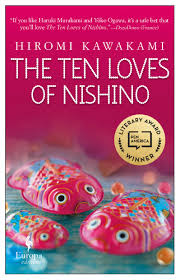
[READ: October 29, 2020] The Ten Loves of Nishino

I have a stack of books waist high next to my desk which I intend to read.  And yet, I continue to find new (to me) books that I jump in and read first.  This book was recommended by the most recent Tiny Desk Contest winner Linda Diaz.  Why on earth would I read a book recommended by a person I’d never heard of before?  She said it was her favorite book ever (which seems weird since it only came out in English last year, but whatever).  It was also pretty short.  So I decided to check it out.

I have enjoyed many of the Japanese writers that I’ve read, so I was intrigued to read a contemporary female author (this book was translated by Allison Markin Powell).

So this book is written in ten chapters–each one written by a lover of Nishino, an enigmatic figure whom we only learn about from the women writing about him.

There is something strangely seductive about Nishino that these women find hard to resist.  He is aloof and puzzling, but that seems to make women want him even more.  But he is perpetually with women (more than these ten, it would appear). (more…)

Read Full Post »

SOUNDTRACK: MAGIC SWORD-Endless (2020).

Not long after the release of the Awakening EP, Magic Sword is back to conclude the story arc that the previous albums have created.

The Keeper (red, keyboard, audio-visual), The Seer (blue, guitar), and The Weaver (yellow, drums) are Immortal and they have seen a story like this one unfold many times.  So they are not surprised by the direction it goes in.

“Depths of Power” opens this chapter with a slow pulsing matched with occasional power chords.  “Invincible” adds a new sound palette to the band’s music.  This song sounds a bit more like Tangerine Dream but with some more contemporary techno type sounds.

“Aftermath” adds some swirling uneasy sounds to the album.  It contains curlicues of sound that wiggle around and segue into “Empress” which has a low rumble underneath the propulsive synths.

“Shores of Oblivion” is a more eerie soundscape of wind and slow pulsing waves of emptiness. When the fast melody comes from out of the waves it feels like something sinister heading right for you.

“rophecy” adds some light to the proceedings with an uplifting melody which is eventually corrupted by “Corruption” and turns into a more threatening tone.

“Ritual” introduces a fairly heavy bassline and some more modern sounding synths.  Then “A New Quest” returns to the pulsing sound of old.  “Hope” starts quietly but brings am uplifting melody that continues throughout the song.

“Endless” ends the disc with strings–ominous at first but which move into a more stately melody that fades out slowly over a long time–continuing endlessly

The band also released a single of “Invincible” with a remix by Waveshaper.  I don’t typically like remixes, because mostly they just dump a new drum beat over an old melody, but this one plays around with the song in interesting ways.  It turns it into something different without losing the original.  I rather like the new bass line they add to the song.

In the comic book, Magic Sword says that this ends the cycle.  Does that mean the end of Magic Sword … or the beginning of a new cycle?

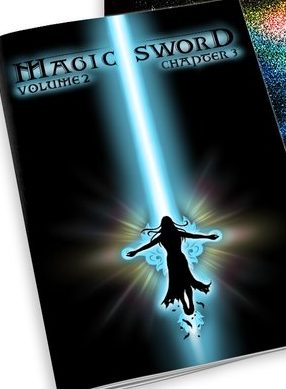
[READ: October 29, 2020] Magic Sword Volume 2, Chapter 3

Chapter 3 concludes this cycle somewhat unexpectedly for me (although it makes perfect sense once it is explained).

When Chapter 2 ended, Nayia came face to face (or more like face to big toe) with The Colossus.  It was the size of a mountain and seemed to be covered in bark.  It quickly grabbed hold of her with its tendrils, trying to burrow into her orifices.

But the power of the Magic Sword was still within her and it fought back where she couldn’t.  With its help she was easily able to best this beast.

But the story doesn’t end there. (more…)

Read Full Post »

« Newer Posts - Older Posts »