Feeds:
Posts
Comments

Archive for the ‘Supernatural’ Category

SOUNDTRACK: SONIC YOUTH on World Cafe, August 21, 2006 (2006).

Travelling back even further on the NPR timeline, Sonic Youth appeared on World Cafe in 2006 to promote Rather Ripped.

This is a brief session (only three songs) but as with the interview with Thurston Moore, David Dye does another great interviewing the band here.  Although it must be said that saying the band is once again a four piece (when clearly there are five people in the picture and in the studio and when he later says two guitars, two basses and drums–which I also think is incorrect, as I’m pretty sure Kim switched to guitars at this point, although I don’t know if she did during this set) is not a great way to start the interview.

Facts aside, the interview is informative and interesting and provides a glimpse into the band’s psyche all these years into their career.

The set is also good (although Thurston’s voice sounds a little off on the opener “Incinerate”).  The surprising thing about the set is that even with the five of them, the feeling is one of restraint. True, the songs on Rather Ripped are not as noisy as previous records, but this feels like they are trying not to wake anybody up the NPR folks.  It’s a weird feeling for a Sonic Youth set, but the plus side to it is that you can really hear everything clearly.

The other two songs are sung by Kim: “Jams Run Free” and “What a Waste” (why do they never promote any of Lee’s songs??).  And there’s the very amusing comment that the first time they played “What a Waste” Thurston and Kim’s daughter said it sounded like the theme from Friends.  Ha!

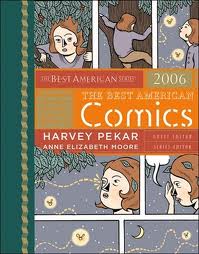
[READ: April 15, 2011] The Best American Comics 2006

I just recently learned about this series from The Best American line of books.  I had known about the Best American Short Stories and Essays and even Non-Required Reading (which I have not yet read).  But once I found out about the best comics, I knew I had to check it out.

The first issue came out in 2006.  The series editor is Anne Elizabeth Moore and the Guest Editor for this volume was Harvey Pekar.  Each of them has an introductory essay in the book.  To me the amazing thing about Pekar”s essay is how aggressively defensive he sounds (a sort of, “you may not like this one, but try this one” attitude) about these comics and comics in general.  I don’t know much about Pekar’s work.  I know he’s a kind of underground icon, but I seem to have missed him.  My impression of him is that this sort of antagonistic/defensive attitude seems to go along quite well with his comics, so I guess that makes sense, but I didn’t find it very welcoming.

But that’s okay, because I really enjoyed the comics.  And quite a few were by artists that I had never read before, which is even better! (more…)

Read Full Post »

SOUNDTRACK: THURSTON MOORE-World Cafe Studio, November 16, 2007 (2007).

This World Cafe set is a nice contrast to the all-acoustic performance mentioned yesterday (even if it was recorded earlier).  Thurston has a full band with him (including Steve Shelly on drums).  Samara Lubelski from the other session is here too.  The band brings new dimensions to what are mostly the same set of songs.  Both sets included “The Shape is in a Trance,” and “Fri/End” but this one also includes “Honest James.”  The contrast is striking though.  The songs are bigger with the band (and allow for more intricacies) but they are still intimate.

  The interview is also interesting.  David Dye is a fantastic interviewer and he gets some great (and funny) answers out of Thurston. The whole description of how the lyrics to “Fri/End” came about is really cool (if unlikely).

Thurston and NPR: perfect together.

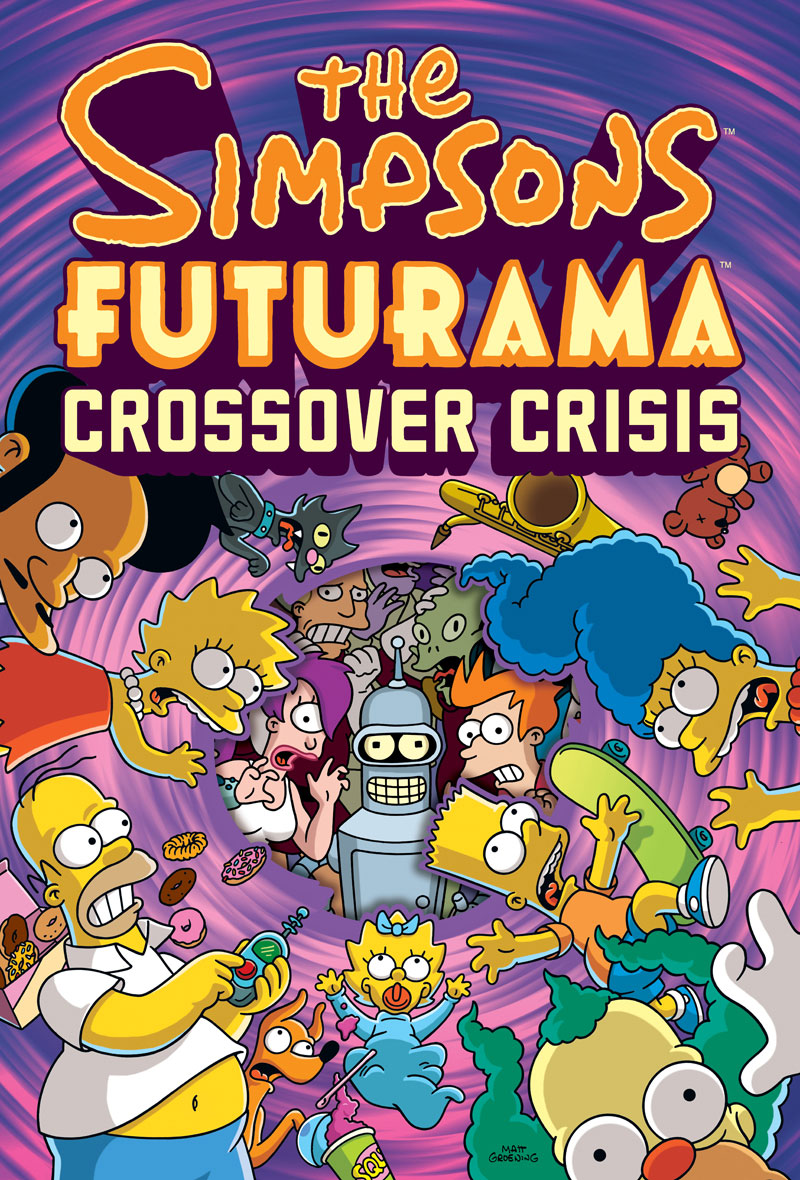
[READ: April 15, 2011] The Simpsons Futurama Crossover Crisis.

This was a wonderful Christmas surprise from Sarah this year.  It is a beautifully packaged (slipcase with a cut-away opening) hardcover edition of the 2002 & 2005 Simpson/Futurama crossover comics issues.

Despite all of my fondness for The Simpsons and Futurama, I never really got into the comics (gotta draw a line somewhere).  But they have Matt Groening’s seal of approval, and they play jokes with things that the show never really touches (not to mention, the shows never tries a crossover event–I can’t even imagine how that would work). (more…)

Read Full Post »

SOUNDTRACK: FLEET FOXES-Live at The Black Cat, Washington, DC, July 7, 2008 (2008).

I still love the Fleet Foxes debut album, and I listen to it quite often.  One of the most impressive aspects of the band is their amazing harmonies.  So how does a band that is so vocal-centric perform live?

In an interview included with the concert, Bob Boilen asks that question.  They explain that the bigger venues are a bit harder because they have to crank up their monitors.  They also try to stay close to each other to be able to hear the harmonies clearly.  Well, they did something right because the harmonies sound very impressive here.

The main problem comes because lead singer Robin Pecknold is sick.  As in, just getting over a major cold, sick. As in, he admits that their last few shows were something of a rip off for the attendees.  Tonight’s show, he says is half a ripoff.  And that is most evident in my favorite Fleet Foxes song, “Mykonos” in which Pecknold’s voice cracks with abandon.  I would feel bad for the audience if the band wasn’t so personable and friendly and generally cool.  They make the best of a rough situation, and again, the backing vocals sound fantastic.

There are also a ton of delays in this show.  Most of them seem technical, although there seems to be a lot of tending to Pecknold’s voice, too.  But as I said, the band is engaged with the audience, telling stories (someone in the band is from DC and he asks if anyone went to high school there), and generally keeping everyone entertained.  It’s probably not their best show ever, but it still sounds great.  You can listen and download at NPR.

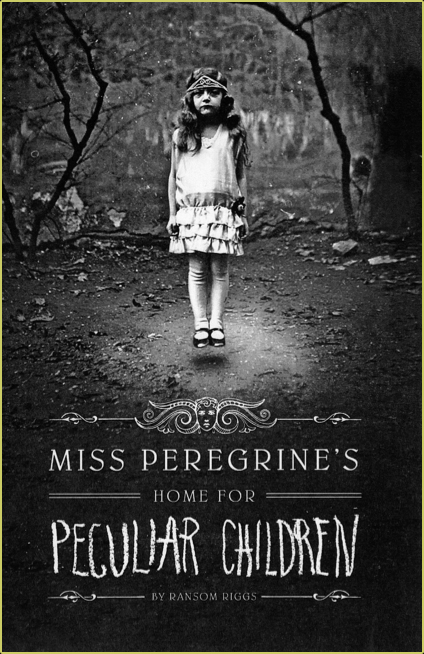
[READ: March 27, 2011] Miss Peregrine’s Home for Peculiar Children

Quirk Books, publishers of mash-ups like Pride & Prejudice & Zombies (as well as many other, well, quirky, titles) has published this fantastically exciting novel.

The cover depicts a creepy girl who is hovering off the ground.  But the girl herself is SO creepy that I didn’t even notice the hovering part.  She is just one of the peculiar children within the book.  And this picture is one of 50 included within the book (I’m only bummed that two pictures were not available in my copy).

So the story opens with Jacob Portman talking about his grandfather.  His grandfather (Abe) was a young boy in Poland during the 1940s.  When the Nazi’s invaded, his family was killed and he was sent to Wales, to the titular Miss Peregrine’s Orphanage (not widely known as a home for peculiar children).  But as details emerge from his grandfather’s version of the tale, things seem not right.

Abe talks about the monsters that chased him out of Poland–but he wasn’t describing Nazis, he was describing actual monsters, with multiple tongues and horrifying faces.  They followed him to Wales and were actually chasing him to that very day, in America.  And when he talked about Miss Peregrine’s house, he talked about the special kids who live there: the girl who could call forth fire out of thin air, the girl who could levitate, and the boy who had bees living inside of him.

Of course, that was all nonsense, just post traumatic stress from being attacked by Nazis, right?

That explanation works until the night that Abe is murdered.  He calls Jacob for help (they think he is going senile).  When Jacob gets to his house, he finds the screen door torn open and Abe missing.  The follow a trail and find Abe, bleeding in the woods.  Jacob thinks he can see the same kind of monster that Abe had always described lurking right nearby in the woods.  Although Jacob’s friend (who drove them to Abe’s house), didn’t see anything.

And now, Jacob’s dreams are plagued by scary monsters.  And he can’t get his grandfather’s cryptic last words out of his head.  Time to see a therapist, obviously. (more…)

Read Full Post »

SOUNDTRACK: MOGWAI-Come on Die Young (1999).

Mogwai’s second full length record goes in a slightly different direction than Young Team. Although it is still full of somewhat lengthy instrumentals, for the most part, the loud and quiet dynamic that they’ve been mastering over their EPs and Young Team is dismissed for a more atmospheric quality.  There’s also a few vocal aspects that comprise some tracks.  One in particular is very puzzling.

The disc opens with “Punk Rock.”  The music is actually not punk at all; rather, it’s a pretty melody that plays behind a rant about punk rock spoken by Iggy Pop. It’s followed by “Cody,” a kind of  sweet slow song.  This one surprises even more because it has gentle vocals which are actually audible.  The track is surprisingly soporific for Mogwai.

And then comes the real puzzler, “Helps Both Ways” is another slow track. But this time in the background is a broadcast of an American football game.  The announcers begin by telling us about an 89 yard run that was called back due to a penalty, but the game stays on throughout the track.  And I have to admit I get more absorbed in the game than the music. After these few quiet tracks,”Year 2000 Non-Compliant Cardia” is a little louder (with odd effects).  It’s also much more angular than songs past.

“Kappa” is the song in which I realized that much of the songs here are more guitar note based rather than the washes of sounds and noise.  “Waltz for Aidan” is indeed a waltz, another slow track.  It’s followed by “May Nothing” an 8 minute track which, despite its length, never gets heavy or loud or noisy.

“Oh! How the Dogs Stack Up” changes things.  It features a distorted piano which creates a very eerie 2 1/2 minutes.  And it leads into the 9 minute “Ex Cowboy.”  Although the general feeling of “Ex Cowboy” is mellow, there are some squealing guitars and noises as well.  By about 6-minutes the song turns really chaotic, its “Chocky” is another 9-minute song (the disc is very backheavy), there’s noise faintly in the background as a simple piano melody is plucked out.  It’s probably the prettiest melody on the disc, and the noisy background keep its unexpected.  The disc more or less ends with “Christmas steps.”  This is a rerecording of the awesome track from the No Education = No Future (Fuck the Curfew) EP.  It is shorter but slower and it sounds a little more polished than the EP. I actually prefer the EP version, but  this one is very good as well (it’s honestly not that different).

“Punk Rock/Puff Daddy/Antichrist” ends the disc with a fun track sounds like a drunken Chinese western  It’s two minutes of backwards sounds and is actually less interesting than its title.

This is definitely their album I listen to least.

[READ: March 15, 2011] Icelander

It’s hard to even know where to begin when talking about this story.  So I’ll begin by saying that even though it was confusing for so many reasons, I really enjoyed it (and the confusions were cleared up over time).  This story has so many levels of intrigue and obfuscation, that it’s clear that Long thought quite hard about it (and had some wonderful inspirations).

The book opens with a Prefatory note from John Treeburg, Editor (who lives in New Uruk City).  The note informs us that the author of Icelander assumes that you, the reader, will be at least a little familiar with Magnus Valison’s series The Memoirs of Emily Bean.  As such, he has included notes for clarification.  He has also included a Dramatis Personae.  The characters in the Dramatis Personae are the characters from Valison’s series (not necessarily Icelander), and are included here for context.  He also notes that his afterward will comment on the disputed authorship of this very novel.

The Dramatis Personae lists the fourteen people who Valison wrote about inThe Memoirs of Emily Bean.  Except, we learn pretty early on that the The Memoirs were based directly on the actual diaries of the actual woman Emily Bean Ymirson.  Emily Bean died in 1985, but before she died she was an extraordinary anthropologist and criminologist.  She kept meticulous journals of all of her exploits, and Valison fictionalized it (to some people’s chagrin, but to general acclaim).

Emily Bean was also the mother of Our Heroine.  Our Heroine is, indeed, the heroine of Icelander, although her real name is never given.  We learn pretty early on is that Our Heroine’s friend Shirley MacGuffin has been killed.  MacGuffin was an aspiring author (whose only published work appears on a bathroom wall).  Her final text was meant to be a recreation of Hamlet.  Not Shakespeare’s Hamlet, but Hamlet as written by Thomas Kyd.  And, indeed, Kyd’s Hamlet predated Shakespeare’s.

There’s also a lot of excitement with The Vanatru.  The Vanatru lived underground, and had a serious quarrel with surface dwellers who worked hard at keeping them down. The Queen of the Vanatru is Gerd.  She controls the Refurserkir, an inhuman race of fox-shirted spirit warriors who appear literally out of nowhere.

Okay, so how confused are you now? (more…)

Read Full Post »

SOUNDTRACK: BUKE AND GASS-“Page Break” (2010).

NPR has selected the 50 best CDs of 2010.  I knew a few of them but had never heard of a bunch of other ones (about 20% are classical).  This CD with the bizarre cover has a great write up:

The wannabe tech-geek in me was initially attracted to Buke and Gass for the band’s two handmade instruments, which modify a baritone-ukulele and a guitar/bass hybrid run through heavy-duty amps (also handmade, mind you).

The problem (and perhaps its because I’m listening at Xmas time) is that the main melody line of the bridge makes me want to sing “Hark, Hear the Bells” and so this feels like a Christmas song even though it’s not.

Whoops– check that.  That melody is certainly there, but I just learned that I was listening to it in mono.  The other speaker presents all kinds of interesting things that distract from that melody (and project much more coolness).

I like the intensity of the track (and the fact that it’s under 2 minutes long).  It’s pretty heavy and the female vocals are nicely aggressive.  And by the end of the song, the syncopation is downright awesome.

It’s amazing how listening to the ENTIRE song can really change your mind.  This is definitely a cool track and will make me investigate the band more.

[READ: December 22, 2010] “One Night of Love”

I had recently gotten interested in reading Javier Marías when I was looking for information about Roberto Bolaño.  I discovered that New Directions Press, the publisher of all of Bolaño’s smaller books also published translations of all of Marías’ books too.  This story comes from his new collection of short stories While the Women Are Sleeping.  (I had also forgotten that McSweeney’s published his book Voyage on the Horizon a few years ago).

I didn’t know where Marías was from when I first started this (I assumed he was Mexican because of the New Directions connection–he’s actually from Spain).  Anyhow, when I thought he was from Mexico, I wondered if there was some kind of connection between his style and Bolaño’s, but also if he was trying to reintroduce magical realism to Bolaño (who abhorred magical realism).

Well that’s moot, (he may be doing that but not because he is from Mexico).

So this story concerns a man who is dissatisfied with his wife’s sexual appetite and performance.  He has taken to visiting prostitutes (see why the Bolaño thing rang true?), but he is concerned because the prostitutes  have grown “increasingly nervous and increasingly expensive” ([Nervous]?). (more…)

Read Full Post »

SOUNDTRACKPHISH-LivePhish 10.21.95 Lincoln, Nebraska (2007).

This Phish show is pretty unusual, even for a band whose live sets are by definition unusual.  It opens with a reprise (“Tweezer Reprise”) which is basically the end of a song.  There’s also a song that is not itself unusual but it’s one that I’ve never heard before:  an all acoustic guitar song called “Acoustic Army.”

But aside from those minor oddities, it also features the craziness of “Kung” which is more or less just nonsensical screaming.  Then Set One ends with a great cover of “Good Times Bad Times.”

Set Two is where the madness comes full bore.  After some great versions of “David Bowie” and Lifeboy” we get a 24 minute version of “You Enjoy Myself.”  After about twenty minutes the song devolves into a vocal extravaganza, with each of the four guys trying to outdo themselves with weird noises and vocals sound effects for 5 minutes.  And just when you think the nonsense is over, the band covers Prince’s “Purple Rain.”  Fish, the drummer, sings the song (rather poorly, it must be said), but the “highlight” is his vacuum cleaner solo.  Yes, vacuum cleaner solo.

I have included a video from this portion of the show to see just how odd this concert must have been (although I believe that other concerts featured similar nonsense too).  If you get bored by the noise in the beginning of the video, remember that it’s out of context and not really representative of the rest of the  show, but do fast forward to when the guy in the dress pulls out the vacuum cleaner and tell me that that’s not the best damn vacuum cleaner solo you’ve ever heard.

The set ends with Trey noodling the riff from “Beat It,” although they never play the full song.   Then there’s an encore cover of “Highway to Hell” (which rocks).  The disc comes with a bonus track, a twenty some minute soundcheck where you can hear the band experimenting with sounds and ideas for the show.  Not essential but interesting.

Lest you think this whole show is weird, there’s some great renditions of “Chalk Dust Torture” and “Guelah Papyrus.”

[READ: December 15, 2010] “The Yellow”

This story opens with a forty-something year old guy who has moved home with his parents.  To the consternation of his father (“have you turned faggot?”), he paints his attic bedroom yellow.  Who would have guessed that this (four-page) story about a sad middle-aged man would end with casual sex and zombies?

Roy is frustrated with his life (obviously).  He gets out of his parent’s house and goes for a drive.  While scanning the classic rock stations looking for the next great thing, he feels a thump and realizes that he has hit an animal.  He’s fairly certain it’s a dog. (more…)

Read Full Post »

SOUNDTRACK: LOS CAMPESINOS!-Tiny Desk Concert #67 (July 5, 2010).

This Tiny Desk show really accentuates what fun can be had with the Tiny Desk format. Los Campesinos! are an eight piece band, but only four of them could come (or could fit, anyhow) in the tiny office.  And so we get a hugely stripped down set from the wonderful Welsh band.

One of the real benefits of these Tiny Desk shows is that it really highlights the songs themselves.  I enjoy Los Campesinos!, but sometimes I feel like their songs are so busy it’s not always easy to know exactly what’s going on.  This set shows how cool and interesting these three songs are underneath all the wild sounds and effects.

It’s also fascinating to watch these four folks perform in this room with nothing to hide behind.  The singer doesn’t even have a microphone, he’s just standing there with his arms behind his back singing to a small room.  And how odd it must be to sing to a dozen or strangers the a capella ending of “Straight in at 101.”

The three tracks all come from Romance is Boring and include the wonderfully titled: “A Heat Rash In The Shape Of The Show Me State; Or, Letters From Me To Charlotte”, “Straight In At 101” and “The Sea Is A Good Place To Think Of The Future.”

As you might be able to guess from the titles, the band is wordy and articulate.  What you might not be able to guess is just how sexually explicit their lyrics are.  Not dirty (well, a little dirty) just unabashedly frank (and its made even more so in this quiet setting).

You can watch (and download here).

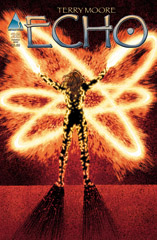
[READ: December 15, 2010] Echo #25 & #26

These next two books in the series are really fantastic.  Issue #25 brings the confrontation with Cain to a head.  It almost comes too quickly–there has been so much lead-up to it that when they finally meet the confrontation is (necessarily) brief and explosive.  They finally meet at the top of a mountain (where yet another really gruesome act is done to someone–although really it pales to what happened to the guy who was practically a skeleton).  The intensity of the confrontation, and the excitement of the denouement made me think that the series was just about to end.

But them comes Issue #26 in which the final panel changes the entire game!  (more…)

Read Full Post »

SOUNDTRACK: CAIFANES-El Silencio (1992).

Caifanes was another of the Rock en Español bands that I bought back in the 1990s.  I bought two of their records, El Silencio and El Nervio del Volcan.  In retrospect I’m not sure why I bought two from Caifanes and only one from Tijuana No! as I find Tijuana No! to be much more satisfying overall.  But El Silencio is a fun album as well.

As with a lot the rock en Español bands, the album starts with a really heavy track.  “Metamorfeame” is a raging, screaming punk blast.  But it’s followed by a Latin-infused mellow second song “Nubes” with a great weird guitar solo.  “Piedra” rocks, and Saul Hernández’ voice soars over the heavy bass work (he was meant for stadium rock).  It also ends with a little mariachi music as a coda.

“Nos Vamos Juntos” showcases some more great guitar work and “No Dejes Que…” practically sounds like the Alarm or some other stadium rock band.  “El Comunicador” is an interesting understated minor key song with interesting production.

The production is by Adrian Belew and you can tell as it seems very much like what I know of Adrian Belew: gleaming and bright and well polished.  And, like Belew himself, the album jumps from style to style.  Depending on your tastes, this is either great or tiring (and sometime both).

Wikipedia tells me that this album is considered one of the most influential albums from the most influential band to come out of Central Mexico.  Well how about that.

[READ: December 16, 2010] Amulet

This book is an extended version of an episode in The Savage Detectives.  InDetectives, Auxilio Lacouture has a ten-page story in which she was hiding out in the bathroom of UNAM (Universidad Nacional Autónoma de México) in 1968 during the military takeover (in real life, this is known as the Tlatelolco Masscare).  She hid in the bathroom for thirteen days, reading and writing poetry (Auxilio is the mother of Mexican poetry).

The episode in Detectives was  pretty exciting recollection.  She was in the bathroom when the soldiers broke in.  She could see the tanks outside and she could hear the gunshot.  So she hid with her feet in the air while the soldiers searched the premises.  She promised herself she would not to make a sound until she was discovered. So she read poetry and wrote poetry on the only paper available. (more…)

Read Full Post »

SOUNDTRACK: THERION-Theli (1997).

I bought this disc when I was living in Boston and I immediately fell for it.  I seem to recall I was doing a lot of driving at the time, and this mix of extreme metal, orchestral accompaniment and twinned vocals was very captivating.  It was also really fun to play very loud on a dark highway.

I’d read a very good review of this disc that claimed it was a big step forward in styles of thrash/black metal (and if you Google reviews for this album they are pretty universally great).  The disc is exemplified by the track “To Mega Therion” which is almost entirely a full choir singing what I guess is the chorus.  The verses are populated by a guy screaming in a guttural voice who is answered by an almost mechanically twinned voice which sounds great but is even harder to understand.  Follow this with a beautiful piano (!) solo not unlike something Randy Rhoads put together for Blizzard of Oz, and add a pounding double bass drum all the way through (truth be told the album could be a little heavier in the bass) and you get a crazy mix of styles which is catchy and creepy at the same time.

It’s hard to match a song like that.  And, admittedly, the band doesn’t quite manage to do so, but the rest of the album keeps up this orchestral death metal throughout.

Reading about Therion has taught me that this album is something of  touchstone for a new genre of metal, called variously symphonic or operatic metal (I suppose we have this to blame for the Trans Siberian Orchestra?).

In addition to the choirs and guitars there are a lot of keyboards. They are disconcerting when you’re thinking death metal and yet really they add an even fuller sound, even if at times they are not as grand or powerful as anything else.  At times the album seems cheesey, but that may have more to do with thirteen years distance than the music itself.

Anyone who has seen The Exorcist knows that choirs can be spooky.  And when you mix it with the heavy guitars and guttural vocals, you get a really cool sinister yet catchy (and possibly uplifting) album.  There are certainly a lot heavier albums, but this one is pretty stellar.

[READ: Summer of 2010, finished December 12, 2010] Lords of Chaos

My brother-in-law gave me this book for my birthday this year.  I was familiar with it as it is fairly well-known in heavy metal circles as a fascinating read.  And so it was.

This book is basically a history of black metal in Norway and how some bands’ antics went beyond music into burning churches and even murder.  The authors present a pretty neutral account of the story.  They let the main participants (criminals) have their say and the interviews don’t comment on their answers, they just let them tell their side of the story.  The authors also know a lot about the music scene.  Of course, in the end, the authors (thankfully) disapprove of the violence.  It makes for an interesting and somewhat conflicting read. (more…)

Read Full Post »

SOUNDTRACK: SPOON-Transference (2010).

The first thing I think of when I think of this disc is staccato.  I’ve read that the disc sounds like a demo, which I don’t quite agree with, although it does sound very raw and spare (in the way the Peter, Bjorn and John’s Living Thing does).

Although the opener “Before Destruction” has a lot of guitars washing around, the dominant sound is a loud short chord and drum combination.  And from the second song on pretty much, things get very chunky.

“Is Love Forever?” has a riff based on tight military beat with guitar chords that match.  There’s very little in the way of extended notes or washes of sound.  “Mystery Zone,” an insanely catchy little ditty, has a similar staccato/spare sound.  Britt Daniel’s voice is pretty much the only instrument that holds a note for more than a beat.  (That’s not literally true, but it seems like it).  Meanwhile, “Who Makes  Your Money” is all drum beats and single keyboard notes.

It’s surprising that this spare musical accompaniment works so effectively, but it does.  Especially on “Written in Reverse” a predominantly pizzicato piano track that rocks in a maniacally-echoed fashion.  Or even more so on the 5 minute “I Saw the Light” which is basically drums and a propulsive bass.  There’s occasional guitar chords which build until the 2 minute mark, when a  3 minute minor chord piano & drum coda takes over.

“Good Night Laura” is a simple piano ballad (again with pizzicato piano chords), while the final song “Nobody Gets Me But You” is full of cacophonous piano runs, most of which sounding precariously on the verge of being random and out of tune, but which always manage to be weird and cool.

Spoon’s last album had a pretty big hit with “Don’t Make Me a Target” which was similar in style to these songs but which had more orchestration.  These songs feel like an attempt to strip away as much as possible and see what remains.  And I guess it’s a testament to the quality of the songs that it works.

[READ: December 1, 2010] This Isn’t What It Looks Like

Is it the nature of children’s books in the 21st century that they are all parts of a series?  Do authors write singular books with no plan of a sequel?  I don’t know.  And I’m not sure that I mind all that much.

This is the fourth book in the “Secret” series, and Bosch hasn’t lost any steam or quality for this part of the saga.  When we last left our heroes, Cass was in a “coma,” induced from eating a time traveling chocolate bar.  Max-Ernest has more or less given up speaking (which is impossible for him) because he feels so guilty about encouraging Cass to eat the chocolate.  And, Yo-Yoji, their erstwhile third member, is off in Japan with his family.  What is M-E to do?

Luckily for M-E, an old friend has returned to school, and he’s causing quite a stir.  Benjamin Blake (the awkward synesthetic artist from the first book) has returned from his finishing school.  He is polished and refined, he uses words like “chum,” and people seem to be well, interested, in him.  And most interesting of all (as only M-E knows), he seems to be able to read people’s minds!  And that’s just what M-E was hoping to do with Cass while she’s in the coma.

For Cass, you see, is “living” in the past.  In our time, she is in the coma, but her mind has traveled back in time to meet The Jester, the man who holds “The Secret” and the man who is her great- great- great- (etc) grandfather.  She is fully conscious in Renaissance times.  The big difference, though, is that she is invisible!  And, in a wonderful publishing joke (the kind of thing that Bosch does so well) all of the chapters that are about Cass are listed as negative (so the book starts with Chapter “-Ten”).  M-E’s chapters start at one, mind you, so you have positive and negative chapters which all converge at a hilarious interlude called Chapter Zero.

The bit about the Renaissance also works very well because their school is having its annual Renaissance Faire (I wish I went to THAT school!) which is sponsored by a theme restaurant which features jousting and medieval times (but which is not Medieval Times, ha ha–I love that everyone says how bad the burgers are but they love the experience).  The Ren Faire is a wonderful plot set-up because with Cass lost in “real” Renaissance, the parallels to the Ren Faire are very clever and often very funny.  (I also love that M-E keeps trying to explain that there is a big difference between Renaissance and Medieval but no one will listen).

And, indeed, cleverness is the word of the book (and the series).  Bosch is having continued great fun with word play (and footnotes!).  He also has some clever puzzles to solve.  The biggest one is the “Hint to the Secret” that the Jester leaves for Cass (and which even a fortune teller tells her about).  I was convinced I had the puzzle sorted out but I was wrong (and it was so obvious when it was revealed!).  And, there’s also a revelation as to the true identity of Pseudonymous Bosch (not the real life author, but the “author” of the books).  I had put a little of this together myself when reading the dialogue in M-E’s head.  But I won’t spoil the revelation of that.

The only secret I will reveal is to say that this is not the final book in the series.  For awhile it seemed like it was heading towards a conclusion.  But as we dramatically learn, there will be more adventures to come.  And that’s pretty cool.

I love an exciting series, but I especially love an exciting series that doesn’t talk down to its readers.  The footnotes and clever games are very fun and thought-provoking (there’s even two emails that are written in code that you need to decipher (unless you cheat and look in the appendix).  And speaking of the Appendix, there’s also a one-way staring contest and directions on how to make a camera obscura (which features in the book and seems like a fun project).

I honestly have no idea how nay books Bosch plans to write in this series (and I have no idea who Pseudonymous Bosch (the author) is for real.  It’s all part of the mystery that I enjoy quite a lot.

Read Full Post »
« Newer Posts - Older Posts »