Feeds:
Posts
Comments

Archive for the ‘Supernatural’ Category

slowreadSOUNDTRACK: DIRTY THREE-Tiny Desk Concert #245 (October 15, 2012).
dirty-3For a Murakami collection I should really have picked a jazz Tiny Desk Concert.  But none jumped out at my on my list.  So I decided to do something that might be jazzy in spirit, even if it is nothing like jazz at all.

Dirty Three are a three-piece band which consists of violinist Warren Ellis (who works closely with Nick Cave), drummer Jim White (who I had the pleasure of seeing live with Xylouris White), and guitarist Mick Turner (who has released a string of gorgeous instrumental solo albums and worked a lot with Will Oldham).

I’ve liked Dirty Three for years, although I kind of lost touch with them back around 2000.  So it was fun to see that they are still working.  (They’ve released all of 3 albums since 2000).

Jim White plays an eccentric but very cool style of drum–it always feels improvised and random, and maybe it is, but it’s never “wrong.”  Turner is the only one who is keeping the song, shall we say, “stable.”  He’s got the rhythm and melody both with his strumming.  And Ellis is all over the place with melody lines and bowing.

For this Tiny Desk, they play three songs.  Their music is ostensibly instrumental although Warren Ellis is not above shouting and yelling and keening when appropriate.

The first two songs are from their 2012 album and the last one is from Ocean Songs.

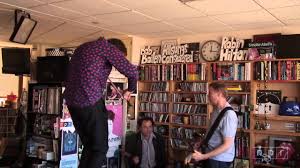
“Rain Song” opens with Ellis strumming the violin while Turner plays slightly different chords.  Then Ellis takes off on a series of spiralling violin rolls.  As always, White is back there waving his arms around with the loosest grip on drumsticks I’ve ever seen.  He plays brushes on this song but the drums are far from quiet.  Meanwhile Ellis is soloing away, yelling where appropriate and doing high kicks when White hits the cymbals.   As the song comes to an end, White is going nuts on the drums and Ellis takes off his jacket (revealing a wonderful purple shirt) .  He starts screaming wildly as he physically gets into his violin playing.

“The Pier” is about realizing that it’s the rest of the world that is driving you crazy.  It’s about “trying to undermine Facebook and realize a new way of communicating with people beyond the internet.”  It’ about… are you ready Mick?  Okay.  “The Pier” is a slower song with some plucked violin.  Ellis climbs up on the desk and dances around as he plays.  This one feels a but more controlled but in no way staid.

For “Last Horse in the Sand,” white switches to mallets and adds a tambourine to his cymbal.  It’s really interesting to watch White play around with things–moving his gear around as he plays.  He switches sticks and seems to be not even paying attention, but without ever really losing momentum or timing.  For this song, Ellis and Turner are the mellow ones while White is just all over the place with his amazing drumming.

I haven’t said anything about Turner because he is really the grounding of the band, while the other two are taking flights of fancy.

This is a wild and untamed set and it’s a lot of fun.  It’s also amusing to watch the audience witnessing this seeming chaos.

[READ: December 16, 2016] Slow Reader Vol. 1

Madras Press had released 16 small books, which I enjoyed reading quite a lot.  I have posted about some and will post about more in the new year.  But word is that they have given up on the small books and have switched their attention to a new magazine/journal called Slow Reader.  The first issue came out this month and it collects stories, essays, poems, illustrations, and other things that center around novelist Haruki Murakami.

Support this small press!  You can order this issue directly (and name your price, although I think the asking price is $6).

From an article elsewhere I’ve learned that future issues will cluster around M.F.K. Fisher, Kazuo Ishiguro, and Patricia Highsmith.

This issue contains essays, fiction and illustrations, some dating back as far as 2000.

CHIP KIDD-cover illustration (wind-up bird)
Chip Kidd is awesome

GRANT SNIDER-Murakami Bingo Board
This bingo is hilariously apt–covering most of the bases of Murakami’s writing: cats, jazz, running, and even a Chip Kidd cover.

JESSE BALL-Sheep Man
A line drawing of a sheep standing upright with the caption “The sheep man’s peculiar tail was never visible to me.”

HARRIET LEE-MERRION-Diner illustration
A nice line drawing of a corner diner

KAREN MURPHY-Sputnik and two moon illustrations
Two simple drawings of Sputnik and two moons.

BEIDI GUO-Hard Boiled Wonderland and the End of the World map
A cool map of the locations of the novel.

DINA AVILA–Murakami Tasting Menu at Nodoguro in Portland, OR
I don’t really get if the menu items are related to the stories but it’s a neat idea that there are foods named after his works. But why are so many called IQ84?

EUGENIA BURCHI–IQ84 menus
A drawing of foods with what I think are character names (I haven’t read the novel yet).

FABIO VALESINI-train illustrations taken from the book trailer for Colorless Tsukuru Tazaki and His Years of Pilgrimage
No idea what the original context is, but it’s a neat, clean drawing of a train station.

JEFFREY BROWN-“In Conversation” What Jeffrey Brown Thinks About
The first piece is an amusing cartoon in which Brown scores a job at an indie bookstore by mentioning Murakami.  The little blurb says that it is an only slightly exaggerated account. There’s also a later picture by Brown of Murakami’s face posted on a bulletin board (with a lost cat flier), that’s really great.

DANIEL HANDLER-“I Love Murakami”
Handler begins his piece by apologizing to dozens of authors before saying that Murakami is our greatest living practitioner of fiction.  He mentions a few books but heaps a ton of praise on Wind Up Bird Chronicles and mentions his excitement at  finally getting Norwegian Wood in English (it had been untranslated for many years).  He wrote this essay in 2000.

YOKO OGAWA-“On Murakami’s “The Last Lawn of the Afternoon” [Translated from the Japanese by Stephen Snyder]
Ogawa writes about a house in her neighborhood which has a lawn that she finds unsettling–it’s perfectly manicured and a pale, cool shade of green.  She is reminded of the Murakami story in which a boy mows a woman’s lawn and she asks him an unexpected question.  Ogawa imagines a woman in that home asking the same kinds of questions.

ETGAR KERET-“What Do We Have in Our Pockets?”
This was inspired by Murakami’s story “On Seeing the 100% Perfect Girl One Beautiful April Morning.”  This story is about a man whose pockets are always bulging with unusual items.  People often say to him, “What the fuck do you have in your pockets?”  And his answer is that he carries things that he imagines the perfect woman needing–a stamp or a toothpick.  It is a wonderfully charming story.

RIVKA GALCHEN-“The Monkey Did It”
Of all of the items in this collection, this is  the only piece I’d read before.  I remembered parts of it (particularly the excerpts from “A Shinagawa Monkey,” and her talking about Colorless Tsukuru Tazaki.  I also recalled her saying that she liked his short stories better than his novels, but that she was perhaps wrong in thinking that.  The one thing I didn’t pick up on last time was that in the beginning of the essay she writes about Toricelli’s Trumpet or Gabriel’s Horn–an item with finite volume but infinite surface area.  She says this perfect describes Murakami’s work.  And I love that she ties it to translator Philip Gabriel who is a gentle and modest translator–perfect for the watery novel.

TESS GALLAGHER-“Murakami and Carver Meet at Sky House”
Before he had written any substantial works, Murakami translated Raymond Carver’s works into Japanese.  Ray was excited and bemused that Haruki and his wife Yoko would travel from Japan to meet with him.  This essay tells us that the following poem came about as Ray tried to imagine how his poems could possibly be appreciated in Japan.  Murakami told him how both the Japanese and American people of the 1980s were experiencing humiliation at being unable to make a decent living.  Gallagher says that if they were to meet today Ray would be awkward about Haruki’s stature.  But he would have loved knowing that Murakami had translated everything he had written.

RAYMOND CARVER-“The Projectile”
This poem is wonderful. It begins with Carver speaking about his meeting with Murakami and then flashing back to when he was 16 and was hit with an ice ball.  It was thrown from someone in the street through a small crack in the window of the car he was riding in–a chance in a million.

RICHARD POWERS-“The Global Distributed Self-Mirroring Subterranean Neurological Soul-Sharing Picture Show”
This is the most abstract and “intellectual” of the essays here.  It speaks of a team of neuroscientists discovering a lucky accident–that neurons in the brain fire when someone else makes a motion that we recognize.  Similarly, in Murakami–representation is the beginning of reality.  He speaks of the parallel narratives in Hard Boiled Wonderland.  He wonders at the universality of dreams and ideas in Murakami.  “But if his own stories are steeped in the endless weirdness hiding just inside everyday life, how then to account for Murakami’s astonishing popularity throughout the world?”

MARY MORRIS-“The Interpreter”
I loved this story.  An American business woman is giving a series of lectures in Japan.  She is assigned a translator who goes with her nearly everywhere.  She is a little annoyed that he is always there, but he is very respectful of her and only speaks when spoken to.  She assumes he is translating her speeches correctly, but during one, the audience laughs where there was nothing funny.  She doesn’t want to disrespect him, but she can’t imagine what he said to them.  In the next one, they are practically doubled over with laughter at what he says.  Finally she has to confront him about it.  He reveals astonishing insights into her personal life.  And the next day he is called away–just as she has begun to feel close to him.

In the author’s note, she says that the she was at an writer’s meeting in Princeton (where she teaches) and Murakami was there eating with them. He was by himself, and she talked to him because she was a fan of his work.  She relates a story of holding up a sign for him when he ran the New York City Marathon.  She says that the part about the translator and his family (which I didn’t mention) is from an actual translator she met in Japan.

AIMEE BENDER-“Spelunking with Murakami”
Bender speaks of trusting Murakami.  She says when the cat started speaking in one of his books, she began to mistrust him.  Nevertheless, she says, she loves a lot of writers but only trusts a few of them.  She’s not trusting Murakami’s honesty or his ability to make her smarter.  Rather, she trusts him like a man with a torch in a cave–someone who is willing to explore–and to be in front leading the way.

SUMANTH PRABHAKER-Editor’s Note
Prabhaker would like to ask the world’s philosophers why some things seem to happen to us in a random fashion.

Read Full Post »

lumberjanes-3 SOUNDTRACK: YOUTH LAGOON-Tiny Desk Concert #490 (November 23, 2015).

youthI thought I knew who Youth Lagoon was, but this Tiny Desk surprised me.  Lead singer/keyboardist Trevor Powers sings passionately.  But I was surprised that his voice is quite the falsetto (and at times sounds a bit like Pee Wee Herman).

At first I found this distracting, but after listening for a while I started to enjoy his voice, especially for what it did for the music.  They play three songs.  Two are new and one is older.

“Kerry” is a pretty song with a simple keyboard melody that is nicely duplicates on the guitar at times.  In fact, even though the keyboard is the main instrument, I love the various riffs and melodies that the guitar plays to accompany him.  There are some absolutely gorgeous musical passages in this song and Powers’ fragile voice is perfect for them.  In the middle, when the guitar plays a great solo section, it’s quite something.

“July,” is a wistful reflection on youth and regret from the band’s debut.  It’s a much more spare song with just voice and keys starting for the first minute or so.  About half way through, the rest of the band adds some real beauty to the melody as he sings more intensely.  I particularly like when the bass comes in at the end with a cool pattern of high notes.

“Rotten Human,” is a meditation on the passage of time and search for purpose in life.  I like this lyric: “I’d rather die than piss way my time.” It’s a slow song but once the drums come in the song builds.  I love the melody just before the next part which he sings with much more passion.  The “No I won’t” section sees his voice getting more ragged and angry-sounding–quite a change from the other parts of the songs.  Again there’s some great bass lines near the end of the song.

It took me a couple of listens to warm up to Youth Lagoon, but I really liked them by the end.

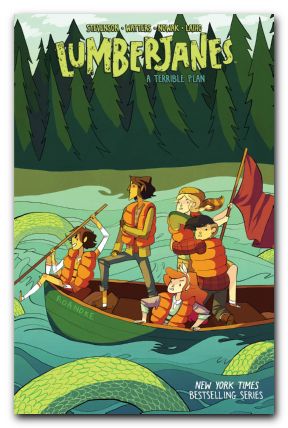
[READ: July 18, 2016] Lumberjanes 3

This is the third volume in the Lumberjanes series and I liked it a lot more than the second one.  This book collects issues 9-12.

The focus in the middle chapter on Mal and Molly was a nice change of pace.  And I thought it was very very funny that the girls tried to spend a chapter collecting “boring badges” for a change of pace.

There were lots of different illustrators in this book, because in the first chapter each the girls tells a story and each has her own illustrator. (more…)

Read Full Post »

castle SOUNDTRACK: TINDERSTICKS-The Waiting Room (2016).

tinderstIt had been four years since the previous Tindersticks album.  And this one was not released on Constellation Records, but rather on Lucky Dog.  Whether or not that had anything to do with the sound of this record I don’t know, but I really like this album a lot.

“Follow Me” is a slow broody melancholy instrumental with a high accordion playing a lovely melody.  It’s completely evocative.  “Second Chance Man” has a kind of unsettling vibrato on Staples’ voice.  But the melody (sparsely played initially on keyboards) is really catchy.  The rest of the band fleshes out the sound after a verse and chorus.  I love that it builds in the middle and then again at the end with horns lifting the gloom off the song.  “Were We Once Lovers” has a thumping bass line and an uptempo feel as Staples’ sings in a kind of falsetto.  I love the way all of the parts form together in the chorus that’s introduced by a simple but effective guitar: “How can I care if it’s the caring that’s killing me.”

“Help Yourself” opens with some soulful horn blasts and Staples’ whispered vocals.  The bass keeps the song going as occasional horn blasts accent this strangely catchy song.  Staples also sings in an uncharacteristically angsty style in this song, which is strangely unsettling as well.  I love the way the song keeps circling round and then almost surprising the chorus when it comes back.

Whenever Tindersticks use a female guest vocalist, they really seem to step up their game.  “Hey Lucinda” is an incredibly catchy song, starting with simple bells and an accordion playing a great melody.   When Staples’ deep voice is balanced by the exotic voice of Lhasa, it makes for a great pairing.  It’s unusual for a catchy song to be so spare, but the simple accordion accents really hold the song together before it takes off near the end.

“This fear of Emptiness” is another gentle instrumental with bass and acoustic guitar accompanied by accordion sections (sometimes dissonant near the end).  “How He Entered” is another spare song with mostly bass and keys and an occasionally scratching sound as an ascent.  But it’s still a very catchy melody.

“The Waiting Room” has that same echo on his voice as he slowly sings over a keyboard melody.  His anguished singing of “don’t let me suffer” totally makes the song.  “Planting Holes” is a short delicate instrumental with a sweet but melancholy keyboard riff running through it.

Perhaps the most dynamic song on the disc is “We Are Dreamers!”  It’s the angriest song I can think of from Tindersticks, with rumbling keyboards and tribal beats as Staples sings bursts of vocals.  But it’s when Savages’ singer Jehnny Beth adds her voice that the song turns really aggressive.  They sing the chorus “This is not us/ We are dreamers!”  And as Beth takes over the chorus, shifting pitch and intensity, Staples is commenting including lines like “You can rob us/ You can trick us/ Peer over our shoulders and steal our ideas”

The final song is “Like Only Lovers Can.”  The delicate and pretty keyboards belie the sadness in the lyrics: “We can only hurt each other the way lovers can.”  The quiet keyboards end the disc.

[READ: March 15, 2016] Castle Waiting Volume 2

I loved Castle Waiting.   And I couldn’t wait to read Volume II.

And I loved it even more.  Linda Medley is such an engaging storyteller.  Her characters feel utterly real and funny and charming.  I could read more and more and more from her.  Which is why I am so bummed that the series ends here (with rumors that she is doing more).

This volume is a bit more playful.  The characters are well-established and settling into their lives at the castle.

As in the previous volume, there are a lot of flashbacks to Jain’s childhood.

But there’s also a lot of wonderfully meandering stories in the present. The man who looks like a horse (literally) has injured his hoof, so he is hobbling around and is not as useful as he might be (and is cranky about it).

But the main story centers around the arrival of two dwarves, I mean hammerlings–only racists would say dwarves.  They are the relatives of Henry, the quiet blacksmith (who is actually human, but was adopted by the dwarves).  Henry is super excited to see them (as excited as his monosyllabic grunts allow him to be).  Actually, we finally learn why he is so standoffish and quiet most of the time.

They are here for a very specific an(and embarrassing) purpose.  They need women’s clothes for the human who works with them back home.

Their presence enlivens everyone in the Castle. They are fun and interesting–enjoying hard work and being very playful. It is with their help that the Castle dwellers do some remodeling, find a booby trap and even learn how to play nine pin bowling.  The older women who still live in the castle take some bets about who will win–with much merriment.  I love that there a whole chapter about them bowling.

There’s a subplot about Jain’s son Pindar being a leshie–a species we learn a bit about, although we also learn that they are extinct.  This plot line is never concluded properly, though.

We also finally learn about Doctor and his crazy mask (it was a sort of gas mask for the plague).  They are all worried about his sanity, especially when he starts walking around wishing everyone a happy Yule (the Christmas stocking subplot is outstanding).

Speaking of Jain, she has decided to move into the Castle (where there is indeed a ghost).  But her kindness appeases the ghost somewhat.  Especially when she teaches Simon to read (I love the scene where he learns to read and then sits at the table reading instead of eating–just like in my house).

There’s a hilarious thread about a very stubborn goat (whom Simon can outsmart).  And a multi-chapter thread about Sister trying to get a cross for Jain’s room.  We finally get to the bottom of the house sprites (they are adorable when we finally find out what they want).  Finishhtory!  Finit!  Reetoomee.

I am so attached to these characters, that I need to hear more about them.

As in the previous book,Medley’s art is simply gorgeous.  She does realism like no one I know and her characters have an awesome blend of realism and hyper-realism that makes them so enjoyable to look at (and unbelievably detailed as well).

There have been a number of graphic novels that I have gotten completely attached to, but none like this.  It was so bittersweet to finish this, knowing there’d be no more–but holding out hope for a surprise some day.

Read Full Post »

castlewaitingSOUNDTRACK: TINDERSTICKS-The Something Rain [CST086] (2012).

tinders This was Tindertsicks third and final full length album for Constellation.  It has some noisy elements–especially the distorted guitar–that feel different from their other releases.  Although overall I find the album a bit too slow and drawn out.

The first song on this disc, “Chocolate” is quite unlike other songs by the band.  It is a 9 minute slow song with a spoken word story delivered by by keyboard player David Boulter.  The music sets a nice tone for this story of living in a squalid bedsit and heading into town.  As the song picks up momentum, the guitar lines and the rest of the band add more atmosphere.  In the story, he goes to the bar to play some pool and picks up a woman–a regular.  By six minutes, the whole band, including horns is playing and the song is louder and more noisy while the story continues.  For the final two and a half minutes the band drops out and the denouement reveals a secret.  It’s a cool story, well delivered.

“Show Me Everything” opens with some slow bass and a buzzy electric guitar as the backing voice sings “show me…”  And, after ten minutes on the disc, we finally hear Stuart Staples’ iconic voice sounding deep and whiskery as lawyers.  I love the songs with the female backing vocals like this one.  “This Fire of Autumn” is a faster song with a throbbing bass line and catchy chorus (with more backing vocalists).  The addition of the vibes makes this a great Tindersticks song.

“A Night so Still” slows things down almost to whisper with the gentle keyboard riff under Staples’ languid delivery.  “Slippin’ Shoes” is a bit more upbeat and the horns come in right at the front of the song.  I love the way the bridge seems almost sinister and slick before resolving into a bright chorus.  “Medicine” is another slow song with multiple layers of guitars and slow horns and strings.

“Frozen” opens with slow horns that sounds like feedback, almost.  When the fast bassline and almost discoey drums come in, it’s kind of surprise, but a nice pick me up from the previous slower songs.  Staples is singing quickly over himself–the echoes of his voices catching up to his new lines. And the scratchy guitars and jazzy horns make a nice moody soundtrack of him pleading “If I could just hold you, hold you.”

“Come Inside” is  7 minute song with a simple keyboard riff that floats over the slow beat.  There’s a long slow jazzy outro–too long frankly.  The final song is the 2 minute “Goodbye Joe.”  Its all tinkling bells and a shuffling bass, a pleasant instrumental to end the disc.

While Tindertsicks albums tend to be kind of slow, this one has a few too many extended slow parts and not enough of Staples’ magical crooning or the more dramatic sounds that the band does so well.  I’m not sure why their next album was not put out by Constellation, ether.

[READ: February 15, 2016] Castle Waiting 1

I have been aware of Castle Waiting for a long time.  I believe I have even picked up an individual book at the comic book shop (of course I never read it because I wanted to start from the beginning).

So this book collects Chapters 1-19 (plus an epilogue).

I was instantly hooked by Medley’s outstanding drawings–so believable and realistic while exaggerated enough to make them all unique characters.  Not to mention the fact that there are humans and human hybrid creatures (and no one bats an eye).  And then top it off with the incredibly creative first chapter.

The story opens with a king and queen having a baby.  Actually they couldn’t have a baby so they employed a local witch for assistance.  The nice witch gives them good advice but when the town’s evil witch hears of this betrayal she plans to curse the baby.  And thus on the girls’ fifteenth birthday, the evil witch says she will prick her finger on a needle and die.  This should sound vaguely familiar to fans of fairy tales   But Medley puts a twist on things immediately by removing all needles form the castle and hiring a creature named Rumpelstiltskin to do all of their work off site.  Rumpelstiltskin has been cut in half and stitched together so when the creature asks for the Queen’s child in payment, the King yells at him and says he knows what kind of trouble that leads to.

The good witch is able to deflect the curse somewhat to make her sleep for 100 years (that should also sound familiar) rather than dying.  So, when the girl’s fifteenth birthday arrives, the bad witch comes and brings a needle to set the plan in motion.  The princess falls asleep–the whole castle falls asleep and, in a neat twist, the bad witch is killed.

And then Medley has a ton of fun with the story.  When the prince comes to wake up the princess, they run off an get married.  And there’s a hilarious multiple paneled spread of the rest of the castle sanding there, mouths agape.  As the scene ends, we see three older women telling a man with a bird’s head that that all happened along long time ago.  And the castle has been a refuge ever since. (more…)

Read Full Post »

decomposSOUNDTRACK: COLIN STETSON & SARAH NEUFELD-Never Were the Way She Was [CST113] (2015).

colinThis is kind of a show offy disc because both Stetson and Neufeld proudly state:  “All songs performed live (no overdubs/loops).”  And so we get Neufeld ’s cycling violin and Stetson’s cycling saxophone playing seemingly endless series of trills and melodies.

Despite Neufeld’s excellence on the instrument, the violin does play a kind of support role to Stetson’s sax (mostly because the sax is louder and more obtrusive).  But while the disc does sound like a Stetson disc, the violin adds some really interesting textures.  The disc opens with “The sun roars into view” and the violin playing a fast two note melody as the sax seems to rise up from the initial static slowly overtaking the song.  About 2 minutes in, the violin plays some loud trills that remind you it’s there, but when the sax quiets a few seconds later, the repetitive violin picks up the melody.  About half way through the 7 minute song the violin soars.   Around five minutes the sax drops away to a single bass note repeated while the violin takes some fanciful runs.  A voice, (not sure whose, but I assume Sarah’s) then soars above the music.

“Won’t be a thing to become” begins with a slow bass melody (with audible sax clicks).  The violin plays a similar melody—slightly different to accentuate the notes.  It’s a shorter piece (only 3 and a half minutes) and these shorter pieces tend to explore quieter moments in an interesting way.  “In the vespers” starts with some fast violin notes once the sax kicks in, it adds a new sense of urgency to the melody.  It’s all very pretty.  The middle turns into rapid fire violin alternating with some noisy sax.  As the song winds down, the fast sax notes continue but a bit more quietly and they are accented by long slow bows of the violin.

“And still they move” is a slow piece.  It’s primarily violin with the occasional sax note adding low end.  It’s barely 3 minutes long.  “With the dark hug of time” stays slow but with some incredibly deep rumbling bass notes underneath the squeaky violin.  It’s a cool and menacing sound.  There is a quiet section near the end which resolves as a low rumble and Stetson’s unusual vocalizations through his sax.

“The rest of us” is a kind of bouncing,thumping song with some high tense violin strings running along it.   I love the part where Stetson “sings” the four note discerning riff and the violin plays along with it—it’s the highlight of the disc for me.  The 8 minute “Never were the way she was” opens with a low rumble and feedbacky sounds.  The melody comes in slowly with some incredibly low notes from the sax.  After about 6 minutes the sax drops out leaving just the bowed violin.  The last two minutes are a pretty, somewhat mournful violin section with the sax providing low bass notes.

Flight is only a minute and a half and it opens with a gentle static/rain and slow notes.

Given these two great musicians, I expected a bit more from this.  Either Neufeld really keeping up with Stetson (rather than accompanying him, which i what it feels like) or perhaps Stetson playing differently to accommodate someone else.  I suspect I have just been spoiled by their other works to expect something mind blowing.

[READ: February 15, 2016] Princess Decomposia and Count Spatula

I have really enjoyed Andi Watson’s work in the past.  I haven’t read much from him lately, but when I was really into graphic novels twenty years ago, he was an artist I would always gravitate towards.

This is his first book for First Second (he used to do a lot of his books for Oni Pres).  It’s a romance (like many of his stories) but with a twist.

The story is set in the underworld.  Princess Decomposia is the overworked daughter of King Wulfrun.  The kind is old and infirm and never gets out of bed.  Indeed, he won’t even eat, declaring that any food is too much for his poor stomach.  Of course, he reads Wellness Weekly to get new ideas for broths to eat–but he never likes them.

Since he never gets out of his bed that leaves the Princes to do all of his diplomatic work.

She meets with the lycanthrope delegation and almost has a disaster on her hands because her father has fired the chef.  But when they see uncooked meat the werewolves are quite pleased. (more…)

Read Full Post »

margoSOUNDTRACK: COLIN STETSON-New History Warfare Vol. 3: To See More Light [CST092] (2013).

stetson3 After the raucous wildness of Stetson’s Vol. 2, I wasn’t expecting the first song to be so gentle.  Justin Vernon sings (with many layers of processing) the rather pretty opening track.  When I first heard it I didn’t like it—I wanted Stetson to do Stetson and it seemed like the track was all voice (nad very different from Stetson).  But Stetson is there, and he plays his normal unceasing melodies behind the voices.  The track seems especially light since it is followed by the aggressive “Hunted” which prominently features Stetson’s “voice” (he has a microphone on his throat or something to pick up his grunts), making an almost growling noise as he plays.   It’s worth repeating that Stetson does circular breathing, is able to play nonstop and can somehow to play different things at the same time (no overdubs) as well as vocalize in interesting ways.  You can also hear him taking breaths while he platys—the breaths are part of the percussive nature of his playing. It’s pretty amazing.  About four minutes in, the tone changes a bit, becoming a little sharper which seems to make the growl even more pronounced.

“High Above A Grey Green Sea” is a quieter song with more vocalizing, but this one feels mournful and lonely as opposed to intense and scary.  “In Mirrors” opens with a deep breath as he plays a slow quiet 90 second song full of unexpected high notes.

“Brute” is appropriately named as it sounds like he is forcing the song out of his sax.  He places mics on his sax so you can hear the clacking of the keys.  And that is readily apparent on this song which is full of clacking and clicking and grunting all the way.  After about a minute, a discordant melody comes in and establishes a tone that plays or a few bars until Justin Vernon returns, but this time with growled words.  It’s a pretty intense and rather scary track—and nothing like Bon Iver at all.

“Among The Sef (Righteous II)” is a brighter song—higher notes played in a very fast style.  There are some vocalized melodies as well.  But the main song is a rolling series of high notes.  “Who The Waves Are Roaring For (Hunted II)” opens with an interesting vocalized melody—he is really using that technique a lot on this record.  It also featured Justin Vernon.  “To See More Light” opens with slow echoed notes as he begins to build a melody out of a four note string.  He starts adding more and more notes.  The melody grows faster and faster until about five minutes when it starts to really slow down—dramatically so.  Around 7 minutes in, the song slows to a crawl, almost drunkenly it seems.  And the song feels like it has ended.  But Stetson has more on his mind.  The notes are held longer and shift more slowly.   Then the song starts to build up again with a different 4-note pattern that adds some squeaky feedback notes and then a catchy melody.  All 15 minute of this song done nonstop, pretty impressive.

“What Are They Doing In Heaven Today?” begins with voices from Vernon (in a softer voice than we’ve come to expect) as he sings a verse before the sax comes in.  “Bed” features some loud key clacking a great rhythmic pattern and some quiet notes from both the sax and his voice.

The final song is “Part Of Me Apart From You.” It really emphasize his “singing” the melody in his throat while playing the repeating lines on the sax.   The song seems to emphasize the lower notes in this song even as he “sings” higher notes.

[READ:October 20, 2016] The Creepy Case Files of Margo Maloo

The title of this book implies that it is a series, and I rather hope it is.  I loved the premise of this book.  Most of the characters were interesting and the mystery behind Margo herself was really cool.

I didn’t love Weing’s drawing style, though.  It really never resonated with me at all, and at times I found it off-putting.  Which is a shame since the story is so fun.

Charles is moving to Echo City and he hates it.  His mom tries to convince him that big cities are fun.  Plus, his dad is fixing up a big old hotel and they get to live there for free (suspension of disbelief there).  There are already some people living there, too.

Charles’ dad is hip and cool (he is seen with Dead Kennedys and Black Flag logo tattoos).  All of the things that Charles finds creepy about the place, his dad calls “character.”   Like the giant chandelier that was in a closet.  Whatever his dad says, Charles’s comment is simply, “This place is definitely haunted.” (more…)

Read Full Post »

olymmp SOUNDTRACK: WATKINS FAMILY HOUR-Tiny Desk Concert #471 (September 18, 2015).

wfhThe Watkins Family Hour began a dozen or so years ago as a way for a group of friends to get together and play old and new tunes. For Sean and Sara Watkins, it served as a monthly bit of magic: a musical variety show filled with extraordinary talent in the world of folk, bluegrass and beyond at L.A.’s famous Largo.

Sara and Sean Watkins took this fun on the road, with pianist Benmont Tench, drummer Don Heffington and bassist Sebastian Steinberg, and they made a stop at the Tiny Desk. They even brought along Fiona Apple to sing on “In the Pines” the old blues song.

The first song “Steal Your Heart Away” is sung by Sara (with violin melodies between verses) and Sean (on guitar).  It’s a bouncy folk song with a lovely piano added (which seems to move it out of the folk style a bit).  It’s a really catchy song with a great melody.

For “In the Pines” Fiona Apple sneaks out from behind the desk to sing.  Sean jokes that there’s some howling moments in this song and Fiona (who seems pretty nervous) jokes that she gets to be a dog.  I don’t know that I would have recognized Fiona’s voice as she puts on an accent and whoops (And Sean is a pretty good whoop-er, too).

The final song is “Hop High” another old song written by the hills–burbled up from the ground.   Sara and Sean take lead again on this slow brooding song.  Well, slow and brooding for the first verse, as the rest of the song takes off with Sara singing in her best gravelly voice the verse and Sean Sara and Fiona singing the chorus.

It’s a fun set full of great bluegrass-ish music

[READ: Summer 2015] Olympians 7-8

Last summer I read the first six book in the Olympians series. I’m not sure how many books he has planned for this series, although I see that he has another book planned for 2017.

Since I like what I wrote about the series for my previous post, I’m going to keep that here and then talk about each book.

George O’Connor is a massive geek and Greek scholar.  He has done lots of research for these books, including going to Greece and visiting sites and antiquities as well as comparing all manner of ancient stories to compile the most interesting pieces. He explains that since these stories were orally passed down, they were modified over the years.  He doesn’t change the myths, he merely picks the story lines that are most interesting to him.  And then he adds a lot of humorous modern touches (and dialogue) which keep it from being at all stuffy.

O Connor’s drawing style is also inspired by superhero comics, so his stories are presented in a way that seems much more like a super hero than a classical hero, which is also kind of fun.

Each book ends with an author’s note which is hugely informative and gives plenty of context.  It also has a bibliography, but more importantly, it has a list of notes about certain panels.  Do not skip these notes!  In addition to providing a lot of insight into the myths of the characters themselves, there are a lot of funny comments like “Greeks raced in the nude (point and laugh)” which really bring new depths to the stories. (more…)

Read Full Post »

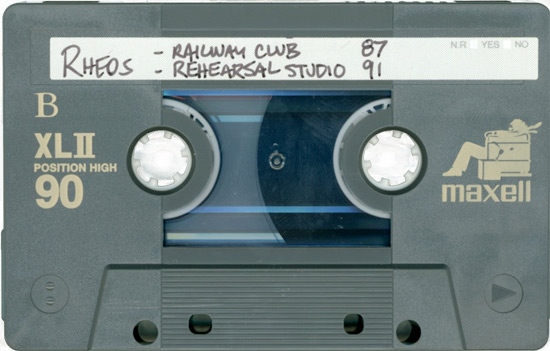
liofriends SOUNDTRACK: RHEOSTATICS-Railway Club, Vancouver, BC (November 1987).

RailwayClub87-PROD91It’s pretty impressive that this show (ostensibly from the same month as the previous show) has such a different setlist.  Between the two shows they play 22 songs and only four are repeated.  And this time five of the songs come from their debut album, Greatest Hits.

This tape begins with a recording of “Indian Arrow” by the 13 Engines.  It sounds very different from the other songs on the tape–the audience is very loud and you can hear a woman say “I wanna sing this one” (!).  I know this song from a Martin Tielli solo tour (and indeed, he sounds pretty much solo here–although there is a piano, too).

The rest of the tape all has the same audio quality but sounds different from the first song.  “Crescent Moon” begins mid-song (as if it was recorded over by “Indian Arrow”).   “Sad Sad World” is more upbeat than the title suggests with a “vocal solo” introduced with Dave and Tim chanting M-R-T-I-N in time with the music.  An upbeat “Ditch Pigs” leads to some silly banter during the guitar solo.  “Churches and Schools” sounds a lot like Talking Heads.  “Bridge Came Tumbling Down” is a Stompin’ Tom Connors song–they really had been playing him since forever.  Then they play a good version of “Higher and Higher” (from Greatest Hits).

It’s their last night in Vancouver, apparently which leads to a lengthy talk about he next song–a funky version of “Good on the Uptake” with lots of screaming at the end (from Tim).

The band plays the full version of “The Ballad of Wendell Clark” (with a some jokes about “Joel” whoever that is).  It’s rollicking and stomping and Martin starts playing “O Canada” as part of the solo.  Bidini stops the song and asks him to play it again, so Martin plays it on a good echoed effect (and Dave Clark shouts “alright Joel!”)  There’s some inappropriate jokes before Martin launches into a delicate version of The Beatles’ “Across the Universe-“-not the best version I’ve heard but still nice.

The final song is a romping stompin “PROD”–the only song The Rheostatics play in G#.  It has a fun shambolic end and it ends the set with them saying they’ll be back to play some Menudo tunes after a short break (which we never do hear).

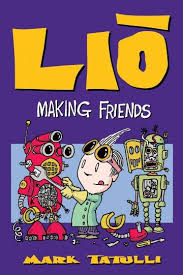
[READ: January 15, 2016] Making Friends

It’s unsettling to me that the Liō books come in different shapes.  This one is even hardcover!  The contents of these stories are not unsettling to me though, even if they are to some readers (looking online, you can find gripes).

Liō continues to be a strange kid who loves zombies and squids and spiders and playing pranks.  This is his latest book (and I just confirmed to see that he is still publishing daily, so a new book must be coming soon, right?).

Tatulli still has some great gags.  And this format book has some of the strips in color. (more…)

Read Full Post »

lioSOUNDTRACK: RHEOSTATICS-El Mocambo, Toronto ON (November 1987).

ElMo-Nov1987After re-listening to some of the Rheostatics most recent shows, I checked the Rheostatics Live site and found out that he has added some really old shows.  This show is the oldest show on the site, dating back to 1987.  A brief Rheos history shows that in the earlier incarnation, it was Dave Bidini, Tim Vesely and Dave Clark.  They were joined by the Trans Canada Soul Patrol and played mostly R&B and funk.  Around 1985 the Soul Patrol left and Martin Tielli joined.  Around the time of this show, they had released Greatest Hits.  And then they broke up (circa 1988).  Then they reformed in 1991 with an entirely different sound.

So this is from what I guess you’d call he Mach II era: no Soul Patrol but before the breakup.  Interestingly, only two songs from this how appeared on their debut album, although many appeared on earlier demos.

They play 11 songs, including what I assume is an improvised rap from Dave Clark (the really silly one of the band).  And the songs are dominated by a smooth guitar sound and often times a funky bass.  Perhaps the most amazing thing about this set is the prominence of Tim.  He sings many of the songs and Dave includes him in many jokes.  Martin is almost non-existent.

“National Pride” dates back to 1983 and starts as a kind of goofy rap song but then turns into the funky version from the demo.  Martin Tielli also released a solo song called “National Pride” which is nothing like this.  They follow this with the “Greensprouts Theme Song” (which they played at the AGO almost 30 years after this show).  Dave Clark calls it the “silliest song ever written,” although in the years hence they have made a few challenges to that claim.

“Good on the Uptake” is a song I’ve heard in a few places before.  Tim sings lead and there’s a kind of funky bass line with lots of guitar harmonics.  I think Martin is singing backup (and probably playing the harmonics).

Tim breaks a string and Dave Clark shouts, “This song is called Rheostatics learn how to string their guitar.”  With a broken string they play an impromptu version of “Red Dog Ray” taught to them by Reverend Ken and the Lost Followers “about the beer strike in 1983.  We were all pissed off because we had to drink Old Milwaukee and Rolling Rock and all that shit.”  This song has come up in their sets in the early 2000s.

It segues right into “Ditch Pigs” from Greatest Hits and sung by Martin.  The middle section devolves into a chant of “I want an egg salad sandwich and a glass of Coke.”

For “Four Upright Walls” Bidini introduces David Clark as the Poet Laureate of Etobicoke.  This is a rap of sorts in which the band does response to Dave’s rap (with all kinds of crazy sound effects and even some beatboxing (!)).

“Crystal Soup” is very much a Tim song–it sounds a lot like a song he would write now–there’s a surprise guitar riff in the middle of the verses that sounds a bit like Rush.  At the end of the song Dave introduces “Mr. Nigel Tufnel,” although I’m not sure to whom he is referring.  “Sue’s Mining Song” (also sung by Tim) has a kind Rush feel although the lyrics are very un-Rush (“woman,” “girl” and a line about “buzzards on your Steely Dan”).  It also features Tim screaming a high note!  It’s a pretty heavy song (especially at the end).

It’s funny that they follow-up with “a nice song,” Martin’s sung “Crescent Moon” a very, very new wavey song that Bidini wrote, and which leads of Greatest Hits.  They follow with a fun and fast rocking “People’s Republic of Dave” in which Dave encourages Tim to make silly faces.  And Tim growls that he wishes his name was Dave.  This seems like a great show ender, but they’ve got one more song.

“Chemical World,” has a kind of discoey guitar opening and lots of slap bass.

[READ: January 5, 2016] Zombies Need Love Too

I prefer to read series like this in order, but sometimes you can only get the books that you can get (and you don’t get upset).  For reasons I don’t understand, my library only had the first two books (which were also collected in Liō’s Astonishing Tales which they also have) and the two most recent books.  There’s maybe two books in between, as far as I can tell.

The good thing is that there’s not a lot of forward narrative in these stories–except perhaps for the new pets that Liō acquires.

So after four years what is Tatulli writing about?  Well, largely the same stuff, which is fine with me. (more…)

Read Full Post »

dawnSOUNDTRACK: BANKS-Tiny Desk Concert #401 (October 30, 2014).

banksI’d never heard of Banks before this Tiny Desk Concert.  The blurb says that “Banks’ terrific full-length debut, Goddess, is constructed out of layer upon layer of electronics, beats, samples and other means of submerging the singer’s voice in swirling accoutrements…. On record, she’s placed at the center of lavish productions, each suitable for throbbing remixes and banks of swirling lights.”

In this version, it is just a keyboard and a drum box, so her voice is exposed.  But I actually found her voice was a little annoying.  Especially during the verses, where she uses too much vibrato.

On the first song, “Beggin For Thread,” I enjoyed the choruses where she sang loudly and with less affectation.  Although it was during “Alibi” that I particularly didn’t like her voice–too much yea yea yea with a ton of vibrato.

For “Brain,” the accompaniment is acoustic guitar rather than piano.  It has a very different feel although I liked it even less.  I’m curious to see what their record sounds like with her voice buried, but I’m not going to find out.

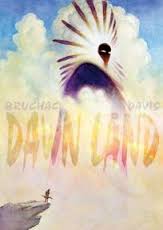
[READ: June 1, 2016] Dawn Land

Dawn Land was a novel that Joseph Bruchac wrote in 1993.  The novel (as explained in the afterword) details the oral traditions of his people as filtered through a fictional story that he was inspired to write over a burst of about six weeks.

I may have enjoyed this graphic novel more if I’d known the original story first (I also didn’t know that Bruchac was Abenaki Indian, so I wasn’t sure what to think about the story in the first place–appropriation is such a hot topic these days.  Of course having said that, I’d never heard of the Abenaki Indians before either (they lived in what is now New England).

I found the story a little confusing.  But before getting into the story, I loved the artwork.  In black and white, Will Davis conveyed so many amazing scenes and scenery–perfect depictions of people and animals and yes, giants. (more…)

Read Full Post »

« Newer Posts - Older Posts »