Feeds:
Posts
Comments

Archive for the ‘Supernatural’ Category

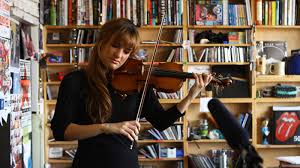
SOUNDTRACK: ESME PATTERSON-Tiny Desk Concert #598 (February 10, 2017).

I saw Esmé Patterson at the XPNFest last year.  Her live show was dynamic and fun and she was really charming.  I got to meet her briefly after the show and she was super friendly as well.

This Tiny Desk Concert (in which she has totally shaved off her big wavy hair), is a somewhat quieter, but overall accurate representation of her live show.

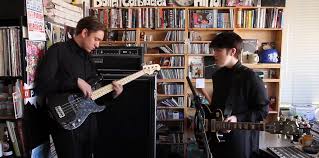
I love that she’s playing a big echoing guitar while the rest of the band Alex Koshak (drums); Jeremy Averitt (bass) and Jake Miller (lead guitar) support her perfectly–the lead guitar lines especially.

I have listened to her record a few times and I never considered that she sounds a bit (vocally) like Edie Brickell.  Well on “No River,” the comparison is apt.  Especially given the lyrics.  But the cute squeak in the vocals is quite endearing.

“Wantin’ Ain’t Gettin” is a cool song with a surprising twist on the theme of the lyrics:

When I ask if you love me / And you say that you might

I’ve got your love wrapped around me / So I put up a fight
Cause I wanna believe you

But I’ve heard that
Wantin ain’t gettin
No, wantin ain’t getting.

I like some of the staggered moments in the song too.  And she’s adorably smiley, throughout, even after singing a fairly dark song like that.

“Yours And Mine” has some great flanging echo on her guitar.   It’s a slow sweet song with nice guitar harmonics throughout.

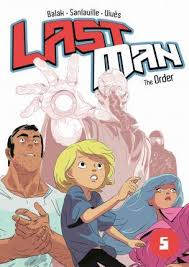
[READ: January 20, 2017] LastMan 5

This book was originally written in French (and called Lastman there as well).  These editions were translated by Alexis Siegel.

Book five opens by returning to the Village of Kings (the home of Adrain and Marianne–where the first two books were set).  Everyone is despondent at the loss of the Velbas. Master Jansen–spurned by Marianne has been inconsolable and all of his students have left him.  Although Elorna has stayed faithful and is ever training (although she thinks that Marianne is a ditz for falling for Richard).

A meeting with the leaders also shows that Richard’s arrival has meant nothing but trouble for them.  They believe that the iguana queen resides in the canyon at the edge of their village (the one that Richard and Marianne crossed).  They believe that a medieval king closed the opening when he sacrificed himself by jumping in.  And he insists that they reinstate the Royal Guardians at once. (more…)

Read Full Post »

last4SOUNDTRACK: LONE BELLOW-Tiny Desk Concert #268 (March 4, 2013).

loneI know the Lone Bellow song “You Never Need Nobody,” a song that has great harmonies.  But I don’t really know much about them beyond that song.

For this Tiny Desk Concert, there are three players—two guitarists, Brian Elmquist and Zach Williams, and one mandolin player, Kanene Pipkin.  Williams, is the primary singer, and all three have amazing harmonies.

“You Never Need Nobody” is a bit slower than the recorded version and while it lacks something that I like from the recording, this version makes up for it in other ways.  At the end, they are wonderfully tight when they hit that dramatic pause.

Its possible the singer is sickly as he sniffs quite a bit through the second song, but his voice sounds great.  At the end, she jokes that he is sweaty and he really is.

“Two Sides Of Lonely” is much slower but the chorus is powerful with their harmonies.  You can see how hard the lead singer and the mandolin player are singing–even the blurb says “with Zach Williams singing every word as if it’s the last time he’ll ever get the chance.”  The bridge is just gorgeous.

On “Teach Me To Know” it’s fun to watch their hands strum in synch.  This song is faster with some cool little guitar lines.  There are just wonderful harmonies all the way through.  As the blurb says, “Their voices harmonize with Williams’, sometimes making vocal power chords and at other times supplying delicate textures.

“You Don’t Love Me” jumps right in with big harmonies.  For this song, Williams puts down his guitar–presumably so he can sing even more intensely.

It’s really amazing seeing bands put so much intensity into their music.

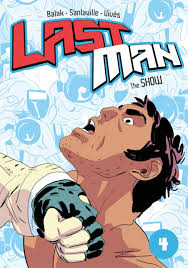
[READ: January 20, 2017] LastMan 4

This book was originally written in French (and called Lastman there as well).  These editions were translated by Alexis Siegel.

The art is black and white (and grayscale) and the characters are what I can only describe as very French looking. The faces are very minimal, with some of them looking almost bleached out but for eyes and a mouth.  Some of the men are rather grotesque-looking while the women are getting sexier with each book (one quite over the top).  No question about the age level of this series now–things are getting much darker and much more intense–keep the kids away.

In the previous book, a bunch of thugs were all ogling a pop star in a magazine, wondering if “they were real or fake.”  In this book we actually meet the pop star (but we don’t learn if they are real or fake).  Her name is Tomie Katana and she was married to Richard for a while before he left.

We also find out (finally) what Richard did to make him flee the city.  It has to do with a previous fight–I suspect we will learn more details about exactly what happened in a later book.

The book opens in Zotis Inc, the company with the biggest pop stars, the biggest sporting events and the biggest everything.  Including The Fight Fist Funeral Cup.  Marianne is talking to one of the executives of the company who sets her up with a car and a hotel for the night.  When Tomie hears her mention Richard, she runs out to try to talk to her. She even runs out into the street–fighting off paparazzi–but to no avail. (more…)

Read Full Post »

last3 SOUNDTRACK: NIGHT BEDS-Tiny Desk Concert #266 (February 18, 2013).

nightTypically we don’t see what happens before the Tiny Desk Concert begins, but for this show, there’s a very funny introduction.  Robin clacks the clacker and as the Winston Yellen starts singing you hear Robin interrupt him and say something.  He sings “When the sorrow goooozz….” and laughs as Robin says “much more important than your singing is my introduction.”  Someone in the band jokes, “gather round, take a knee.”

Night Beds are certainly anchored around Yellen’s voice.  The first song is a brief a capella track called “Faithful Heights.”  It segues perfectly into “Ramona,” where you get a better sense for what the band sounds like.  The band kicks in with some lovely guitar work on the electric guitar while Yellen plays acoustic.  Near the end of the song he launches unexpectedly into some really powerful falsetto.  It’s a very pretty song.

“22” features a more pronounced slide guitar which offers some cool spare, echoing sounds.  The final song is “Hide from It,” and older song tha they haven’t played much. It’s a bit faster with nice backing vocals.  There’s a very pretty guitar riff (I love the gentle echo) and keyboards instead of slide guitar.

I found Might Beds to be quite winning.

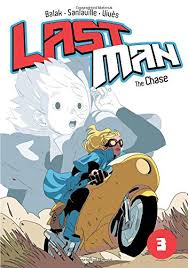
[READ: January 17, 2017] LastMan 3

This book was originally written in French (and called Lastman there as well).  These editions were translated by Alexis Siegel.

The art is black and white (and grayscale) and the characters are what I can only describe as very French looking. The faces are very minimal, with some of them looking almost bleached out but for eyes and a mouth.  Some of the men are rather grotesque-looking while the one woman is a knockout.  For the first book I said that it might be okay for a slightly younger audience, but this book changes things–prostitutes, porn mags, threats of violence–nothing explicit but still, way too much for young kids.

This book is also very different from the first two in that it is set in an entirely in a new location.

Adrian and his mom, Marianne, have ridden out to the Rift on her motorcycle.  His mom says that she is going to walk into the mist for a few minutes and she wants him to stay where he is.  And I love this bit:

-Listen Adrian, they say a lot of things in school and at church but in the end what should you always listen to?
-Uh, yes,  I know. Your heart?
-No Silly, what your mother says.

She comes back with a map and realizes that the rift is passable.  They arrive on the outskirts of a town and are caught by some thugs.  It’s very Mad Max looking with the men being really grotesque and planning to proceed with the rape of the delinquent.  Yikes.

As they get close, Adrian’s mother does a summoning and knocks everyone around her down–many of them flee.  Adrian is in awe of his mom.

They ride into Nillipolis and she is convinced that Richard is there.  But Nillipolis proves to be a scummy town.  We meet a guy who works at a brothel, Francis.  He’s the only nice person in the whole town (as are the prostitutes, particularly Flora, the prettiest woman in the book).  They suggest looking in the pawn shop for evidence of Richard.  And indeed in the shop they see the cup that he and Adrian won–it’s even got their names on it.

There’s a lot of excitement in this book with Adrian and his mom fleeing from the thugs who are with the police and the fireman and then  dealing with two attorneys: Raven and Delacruz.  She is being placed under arrest for charges of false prostitution.  But it’s really because they have tied her to Richard–who is in fact in the same prison.

The last quarter of the book is taken up with the trail.  And this trial is unlike any you’ve seen.  There are cheerleaders.  And, it quickly becomes obvious that you win your case through violence and strength and little else.  If your attorney is killed, then you get the death sentence.

We also learn that there’s a grizzled old creepy dude in a wheelchair who wants the map that she has–he believes that the Valley of Kings–where Adrian and his mom are from–has the secret to eternal life.

The book ends on board a ship to Paxtown–a questionable city.  Richard is heading there as well, and it looks like Cristo, the person in the mask who Richard defeated in the battle is there too.

But we’ll have to wait until book 4 to find out just what’s going on.

Read Full Post »

lastman2 SOUNDTRACK: THE xx-Tiny Desk Concert #265 (February 11, 2013).

xxI have really come to like The xx quite a lot.  And this Tiny Desk Concert is easily one of the best instances of them.  It is just the two of them, singer-guitarist Romy Madley Croft and singer-bassist Oliver Sim She [No beats from member Jamie Smith, who opted to hang back at the hotel].  She sings and plays a very echoing guitar and he plays a very spare bass (also echoed).  Her voice on “Angels” is whispered but not quiet—she sounds amazing. Everything about the performance is clear and beautiful

The only bad thing about the Concert is that they only play 2 songs (and for less that 7 minutes total!)

The blurb says that one of the things that makes this show especially great is that “the setting and band configuration robs them of cover.  [There is] no shroud of darkness or bright lights pointed outward to blunt the crowd’s stares. Throughout their characteristically compact seven-minute performance, Croft and Sim avoid eye contact, as they visibly try to ignore the huge throng and cameras positioned maybe 10 feet away from them.”

When Oliver sings the middle verse on “Sunset” it is a wonderful, stark (and sexy) moment.   When she starts playing the guitar again after the brief bass interlude, it sounds magical.  And their duet at the end is amazingly powerful (especially for something so quiet).

[READ: December 17, 2016] LastMan 2

This book was originally written in French (and called Lastman there as well).  These editions were translated by Alexis Siegel.

The art is black and white (and grayscale) and the characters are what I can only describe as very French looking. The faces are very minimal, with some of them looking almost bleached out but for eyes and a mouth.  Some of the men are rather grotesque-looking while the one woman is a knockout.  (Unlike the first book, this one is slightly more explicit–nothing actually shown, but Richard runs through the town naked and he and a woman are in bed together).

This book picks up where the previous one left off.  Adrian takes on Gregorio.  And Adrian is able to knock him out of the ring.  Adrian wins!  This means he must now fight Elorna, his friend.  Gregorio is humiliated at losing and he is rather mean to Elorna.  And during the match, Elorna bursts into tears and flees the ring, forfeiting and letting Adrian and Richard go to the semifinals.

They are up against Alyssa and Haldes (Haldes is preposterously large and Alyssa is covered by a scarf on her face).  Things get weird in this one when Alyssa recognizes Richard (I won’t say from where).  I’m not exactly sure what happens to her, but she is eventually dragged out of the ring by Haldes–more or less forfeiting as well.

So our heroes are going to the final. (more…)

Read Full Post »

lastman1 SOUNDTRACK: BLACK PRARIE-Tiny Desk Concert #262 (January 14, 2013).

blakcpBlack Prarie is 3/5 of the Decemberists (that seems like a hint directed at Colin Meloy, ha ha).  No actually they are a kind of folk-country band “started by Chris Funk and Nate Query, who wanted an outlet for some of their rootsy, mostly instrumental string-band wanderings.”  Jenny Conlee from the band has also joined on accordion.  That leaves Annalisa Tornfelt’s who sings “sweetly countrified vocals and [plays] violin.” I feel a little bad for the other guys in the band who are not mentioned, but I don’t know their names either.

They play three songs.  “Dirty River Stomp” is a fun instrumental with prominent accordion in the beginning and then a banjo solo and then a violin solo.  It is indeed a big stomping song.   I love the way the song sounds like it has built to an ends but there is a small accordion coda tacked on.

For “Nowhere Massachusetts” there’s a switch from banjo to guitar.  The opening section of the song sounds so much like Guster’s “Careful” that I was sure that’s what song this was.  But indeed, it is not and it goes in a very different direction after that intro.  Coincidentally, Guster also has a song that about Massachusetts (“Homecoming King”).  But this sounds really nothing like Guster once the song starts—there’s accordion and slide guitar and fiddle and of course the vocal melody is very different.

Jenny introduces “Richard Manuel” with “We’re gonna rock this out.  We’re gonna bring it.”  It turns out to be a fairly slow, quiet song.  But with some intense lyrics.  And again there is some great accordion work on this track.

As the show fades out there is much excitement about tote bags, although I’m not sure who is getting what.

[READ: December 15, 2016] LastMan 1

This is the final series of older First Second books that I hadn’t read yet.  I brought home this book 1, some time ago, but when I saw that there were six volumes and that they’d all be released relatively quickly, I figured I’d just wait until they were all out and read them closer together.

This book was originally written in French (and called Lastman there as well).  These editions were translated by Alexis Siegel.

The art is black and white (and grayscale) and the characters are what I can only describe as very French looking. The faces are very minimal, with some of them looking almost bleached out but for eyes and a mouth.  Some of the men are rather grotesque-looking while the one woman is a knockout.  (The book is safe for younger teens, with just a cleavage and an underwear shot, although the whole book is about fighting).

So the story is a little confusing (at least in Book 1).  The main plot is not at all confusing, but the context is never given, so we must try to piece it all together,

Set in an unamed village, the 184th annual Tournament of the Realm is coming up.  We first meet young Adrian who is practicing for his first competition tomorrow.  His teacher is Mr Janesen (with a full head of blond hair and a goatee) and while he is hard on them, he seems fair.  He tries to get Adrian to really harness his powers for the battle. (more…)

Read Full Post »

 socks kronosSOUNDTRACK: KRONOS QUARTET-Tiny Desk Concert #322 (November 25, 2013).

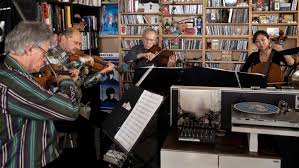
2013 was the 40th anniversary of Kronos Quartet.  I first heard of them about eight years after they started with their cool arrangement of “Purple Haze.”  And then I learned that they were like a sponge, soaking up and playing music from all over the world: In just one year they released albums with tango, songs by South African composers, Polish composers, jazz musicians and so much more.

I have many of their releases, although I realized I more or less stopped listening to new stuff from them around the turn of the century (since when they have released some 16 albums!).

Well, amazingly, the Quartet is still the same original players (except for the cellist–the cello is like Kronos’ drummer as they seem to replace her every couple of years).

They play three pieces here and the three range the gamut from dark and broody to rather sweet to quirky.  In other words, typical Kronos.

For more info:

The musicians —  David Harrington (violin) and longtime members John Sherba (violin) and Hank Dutt (viola) and new (as of 2013) cellist Sunny Yang — could reminisce over more than 800 new works and arrangements they’ve commissioned in 40 years. But instead, the new-music train pushes ever onward to new territories. They remain a living, breathing world-heritage site for music.

Now in the midst of its 40th-anniversary tour, Kronos brings to this Tiny Desk Concert a new arrangement, a work from a new album and, for Kronos, something of a chestnut, a piece the group recorded a whopping five years ago.

“”Aheym” (Yiddish for “homeward”) was written for Kronos by Bryce Dessner; a member of the Brooklyn rock band The National, he studied composition at Yale. The music thrives on nervous energy, pulsating with strumming and spiccato (bouncing the bow on strings) while building to a tremendous fever.”

I love this piece. It is intense and dramatic with its 4-3-3 bowing from all four members.  There’s an interesting cello melody with pizzicato strings from the rest.  The overall melody seems somewhat circular with different instruments taking on different leads.  But this song also plays with some interesting bowing techniques.  In addition to the spiccato (about 4 minutes in), the players drag the bow for momentary scraping and scratching sounds.

Another wonderfully dramatic moment comes at 7 minutes where each musician takes a turn bowing his or her note while the violin plays a super fast series of notes.  The song builds and build in dramatic until it gets to about nine and  half minutes and it reaches its powerful ending.

“Lullaby,” opens with plucked cello notes and strummed viola.  “It is a traditional song with Afro-Persian roots (from the group’s Eastern-flavored 2009 album Floodplain), [and] is woven from different cloth altogether. Colorful tones that lay between our Western pitches are threaded through the music, anchored by a gorgeous solo from violist Dutt; his contribution takes on the warm and weathered sound of a grandmother singing to a child.”  It is slow and moody and beautiful.

Harrington introduces the final piece by saying it’s by a performer that no one had heard of–including, until recently, even himself.

“Kronos caps off the concert with another hairpin turn, this time to a fresh arrangement of “Last Kind Words,” a little-known blues song from around 1930, recorded by singer and guitarist Geeshie Wiley. In Jacob Garchik’s exuberant arrangement (which Kronos premiered this fall), interlocking strums and plucks provide a kind of rhythm section, while Harrington’s violin stands in for the now-forgotten blues singer.”

There’s lots of plucked notes from everyone–including plucked bent note on the viola which gives it a real “early” guitar sound.  While I don’t know what Geeshie sounded like, so I can’t compare the violin to her vocal, the whole thing sounds great together.  In fact the whole thing is unlike any string quartet I’ve heard–so different and wonderful.

I’m going to have to bust out so Kronos CDs.

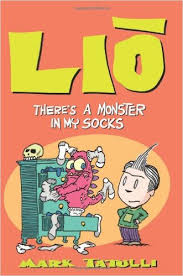
[READ: September 10, 2016] There’s a Monster in My Socks

I’ve been quite puzzled about the publication history of the Liō books.  And this just adds another layer of confusion.  This book covers the exact same time period as Happiness is a Squishy Cephalopod which was published in 2007.  The difference is that Cephalopod placed all of the strips in order, while this one seems to move things around quite a bit (the thinner format also means that it can’t quite handle the single panel strips very well.   But more egregious is that this volume (remember, the one printed after the previous one) prints the Sunday color strips in black and white.

The book also leaves some of the strips out.  It covers the date range from May 15, 2006 – Feb 16, 2007 (Cephaolopod went to May 23), but while it has the Feb 14 strip, it does not have the Feb 15 strip.  Weird.

So, basically this is an inferior version of the same book, but the publishers presumably wanted the books in this more friendly size (or some other nefarious reason).

I’ll include the review of Cephalopod below.

And, here’s the current list of existing Liō books. It’s a shame that there are years and years of strips thus far uncollected. (more…)

Read Full Post »
after-room SOUNDTRACK: NICOLA BENEDETTI-Tiny Desk Concert #274 (May 6, 2013).

nicolaNicola Benedetti is a Scottish violinist who has had a storied career already.

Benedetti was mentored by Yehudi Menuhin starting at age 10, and won the BBC Young Musician of the Year Award a decade ago.  She plays a 1717 Gariel Strad. (It’s worth some $10 million.)

The first piece she plays was instantly recognizable–where had I heard it before?  Ah yes, the mournful and harrowing music from Schindler’s List.  [Williams: Theme from ‘Schindler’s List’].  She plays it perfectly, of course.  It’s evocative and instantly brings back scenes from the film.  And then apologizes for it being a bit of  sombre start.

 Then she plays a piece by Bach–he wrote six sonata and partitas trying to emulate many instruments at once.  This one is Bach: “Chaconne from the Partita for Solo Violin in D Minor.”  She says she’s not playing the whole thing because it’s 16 minutes long.  But she plays the first third which is also recognizable.  Once again, it sounds beautiful.  The blurb speaks of “the way she makes room for silence in Bach’s Chaconne before tearing deep into its dense warp and weft.”  And it is indeed enchanting.

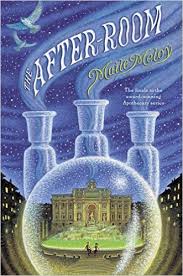
[READ: May 30, 2016] The After-Room

This is the final book in a trilogy (what is it about trilogies that are so popular?) that began with The Apothecary.

This book is set in 1955.  (Sarah and I were commenting on how this era of history is an unusual one for stories to be set and how that’s a nice change).  Janie and Benjamin are safely back in Michigan after the deadly exploits of the previous book.

Benjamin’s father was killed at the end of the previous book and Janie’s parents have agreed to take care of him–so he is living with them.  Janie’s father is quite suspicious of a romance between the two of them and he has every right to be.  Janie is certainly in love and Benjamin probably is too, but he has other things on his mind right now.

I had planned to read this book when it came out, but I was involved with a very big book when it came out.  But I was at the library with nothing to do so I grabbed this and started reading it and I was hooked immediately.  In fact, I found this book so good, so fast paced and exciting that I put down my other reading and just flew through this. (more…)

Read Full Post »

curswedSOUNDTRACK: MAYA BEISER-Tiny Desk Concert #283 (June 29, 2013).

mayaMaya Beiser is an Israeli-born American cellist.  And the blurb tells us that:

Maya Beiser’s Twitter handle — @CelloGoddess — says it all. She’s a brilliant cellist with a stunning command of her instrument, and she’s tightly tied to technology. Beiser takes the sound of her cello and runs it through loop pedals, effects and other electronics to make her instrument shimmer, drone and groove.  Time Loops, her 2012 album, is one of that year’s hidden gems.

The music feels experimental in that she’s using an age old instrument (and age old tuning) mixed with technology.  But the two songs she plays here are simply beautiful and the technology only serves to make the songs all the more enticing.

I don’t know what these pieces are “meant” to sound like.  In fact, I don’t even know the composers.  But her version of these pieces (with the wonderful drones and echoes of what she is playing) are terrific.

Osvaldo Golijov: “Mariel” One of the fascinating things about this piece is that it is impossible to tell what she is looping (especially since we miss the very beginning to see if she clicks any pedals).  But is she looping what she has played or is there some other music being added in?  This is a mournful piece with some great sounds (looped) accompanying her.  It’s seven and half minutes of beautiful cello music.

She introduces the second piece “Just Ancient Loops” Mvt. 1 by saying that Michael Harrison wrote the piece for her.  She plays 6 minutes of the 25 minute epic piece, or what amounts to the first movement (called Genesis). She also tells us that it was written in “just intonation” which is an ancient way of tuning the cello, but it is natural for the instrument which is all about pure fifths.

It opens with some plucked bass notes which are immediately looped and run through much of the piece (how is she controlling the loops?  I can’t see her feet at all).  By the middle, the piece is in full swing with different cello sounds echoing and looping. It sounds full and fantastic and over all just really wonderful.

I typically enjoy cello music, but there is something especially cool about this performance.

[READ: September 2, 2016]. Harry Potter and the Cursed Child

I wasn’t all that excited about this book.  It was a play.  Did Rowling even write it?  (I actually still don’t understand the provenance of the story)?  And did I really want to read about a grown up Harry?

Well, first T. read it and then S. read it and they both said it was great.  So I read it.  And I flew through it (and stayed up too late reading it, too).  And, man was it enjoyable.  More than enjoyable.  I immediately got right back into the Potterverse and I loved seeing the famous characters grown up.

So, what’s this book about, exactly?

Well, without giving spoilers (to those few to whom it applies), the plot starts off 19 years after the action of the last book.  (more…)

Read Full Post »

cardboardSOUNDTRACK: MARY HALVORSON QUINTET-Tiny Desk Concert #267 (February 25, 2013).

maryI had never heard of Mary Halvorson before.  And that makes sense because she is an avant-garde free-jazz guitarist, a sound I like (sometimes) but one which I do not follow.  So a little background is in order:

As a sidewoman, [Mary Halvorson] is often tapped to play in open improvising situations….  Among her sonic signatures are craggy distortions, bent strings and delay-pedaled blurts through a hollow-body guitar….  Halvorson has now recorded two albums with her quintet, one with alto saxophone (Jon Irabagon) and trumpet (Jonathan Finlayson) up top. (The rhythm section is also among New York’s finest, with John Hebert on bass and Ches Smith on drums.) From the way her songs balance order and entropy, you can hear that she’s studied how golden-era hard bop blended those voices, and how later generations morphed, rephrased and imploded those ideas.

The Quintet plays two pieces.  I would have guessed they were improvised but not only do they have titles, they have sheet music!

“Love In Eight Colors” (No. 21) starts out as a slightly dissonant mellow jazz piece.  Then about 45 seconds in, Mary throws in an unusual guitar lick—a slightly weird note.  And then a minute later things get noisy until a simple trumpet solo takes over.  When the music resumes, Mary is playing some strangely discordant chords over the solo—everyone seems to be doing their own thing.  Around 4 minutes in, it turns into something new with an interesting, mesmerizing guitar solo riff.  When the band resumes, the sax takes over and the trumpeter literally stands stock still like a statue staring forward–it’s almost creepy.  At 8 minutes, they introduce a two-minute drum solo.  It’s fun to watch all the strange things he does—elbow on the drum head, vibrato with his hands changing the sound, clicking the sides of his drum.  Then the band resumes until the end.  And it’s more dissonance.

She introduces “Hemorrhaging Smiles” (No. 25) without smiling.  There’s a lot more melody in this song–the sax and trumpet sound groovy.  Even the guitar is pretty. Then she throws in a bizarre scale which cycles throughout the song.  It’s strangely addicting and I enjoyed hearing it every time it came back–even though it wasn’t exactly pretty.  The guitar has a lot of vibrato on it, although about six minutes in she switches the sound of her guitar to a bit more conventional sound and she plays a wicked solo. The second listen through made me appreciate what was happening a lot more.  Even if the song is pretty out there.

Mary Halvorson’ Quintet is not for everyone.  It might not be for many at all, but if you like your jazz free, check her out.

[READ: June 19, 2016] Cardboard

I’ve had mixed feelings about TenNapel’s books.  I loved Ghostopolis, and didn’t love Tommysaurus Rex.  So I picked this up with some hesitation.

But I found that I really enjoyed this weird book a lot.

For a kids’ graphic novel it’s actually quite long.  And, for a kid’s graphic novels there’s a few adult themes (like unemployment and widowhood) that a kid may not get or care about all that much (or maybe they would, what do I know).

As the book opens we see Mike, a big burly carpenter, begging for work.  But he gets nothing.  And as he walks away we see a very strange-looking man (TenNapel’s book are chock full of weird-looking characters) who offers to sell him a gift for his son.  Mike has no money, so he can’t buy the cool gift.  But the man says that for 78 cents (the exact amount in his pocket) he can have this giant cardboard box.

Mike is appalled at the idea of getting his son a box (even if it can be a creative play toy–ha!), but he’s got nothing else.  So he drives home with this box muttering “worst present ever.” (more…)

Read Full Post »

kalfusSOUNDTRACK: XENIA RUBINOS-Tiny Desk Concert #552 (July 25, 2016).

xeniaI am fascinated by the music of Xenia Rubinos.  Every song in this Tiny Desk Concert has something interesting going on.  But for two of the songs, I can’t stand her voice.  Rubinos seems to sing in a free form jazzy / R&B/ improvised manner.  And it bugs me.  No matter how fun she is to watch (and she is), I just don’t like the way she sings (except on the second song).

But the music!  I love the way “Lonely Lover” opens with some interesting drumming and occasional weirdo samples. But the main melody is created by two bassists! (no guitars or anything else).  It’s such a great melody, slinky and smart, with each bassist playing a different aspect of the melody.  It’s super catchy (and when she sings actual words it works well).  It’s just the moaning and groaning that I can’t stand.

Between the first and second song she takes a dance break.  Then “Mexican Chef” open with a cool staggered bass line that is echoed by the guitar (the guitar (not the riff) sounds kind of 80’s punk) and some funky drums.  The lyrics of this song are right on, too.  It’s  a ruthless critique of the way brown people are treate.  It’s sung in a kind of rap style, with no room for soaring vocals.  It’s a really great song:

French bistro, Dominican chef/Italian restaurant, Boricua chef/Chinese takeout, Mexican chef …. Brown walks your baby/Brown walks your dog/Brown raised America /Brown cleans the house/Brown takes the trash/Brown even wipes your granddaddy’s ass …  Brown breaks his back // Brown takes the flack / Brown gets cut coz his papers are wack. … Brown has not / Brown get shot brown gets what he deserves coz he fought.

Right on.

For the final song, “Laugh Clown,” Rubinos plays solo bass and sings.  The bass is just occasional notes as Rubinos scat/sings.  It’s less interesting than the other two songs, but it makes for a  nice change of pace.

Once I got past her vocal delivery, I found I really liked these songs a lot.

[READ: November 18, 2016] Three Stories

Back in 2014, I ordered all 16 books from Madras Press. Unfortunately, after publishing the 16 books they seem to have gone out of business (actually they are switching to non-fiction, it seems). They still have a web presence where you can buy remaining copies of books.  But what a great business idea this is/was

Madras Press publishes limited-edition short stories and novella-length booklets and distributes the proceeds to a growing list of non-profit organizations chosen by our authors.  The format of our books provides readers with the opportunity to experience stories on their own, with no advertisements or miscellaneous stuff surrounding them.

The format is a 5″ x 5″ square books that easily fit into a pocket.

Proceeds from Kalfus’ book go to the Free Library of Philadelphia.

As the title suggests, there are three stories in this book. (more…)

Read Full Post »

« Newer Posts - Older Posts »