I usually am able to track provenance of my discs pretty well, but this one I am only largely certain came from my friend Lar (sorry Lar, the memory is not what it used to be). But where else would I have gotten a CD from a Mogwai show if I’ve never seen them live?
This promotional bauble is a delightful collection of 5 songs (duh). The first three are studio recordings that were pretty much unavailable elsewhere (I read some sit that explained where you could’ve gotten them beforehand, but let’s just say unavailable). And the live tracks were also unreleased.
The three studio tracks, “Close Encounters,” “Drum Machine” and “D to E” are very pretty, rather delicate instrumentals. I would say that they are uncharacteristic of Mogwai, except that Rock Action was a pretty mellow album. Nevertheless, even for Mogwai these are especially mellow and pretty.
The final two tracks are live: “You Don’t Know Jesus” is from Rock Action, and this live version is a bit more dramatic than the album release. The final track is the amazing “New Paths to Helicon (Part II),” a song which never suffers from a lack of drama.
This is a pretty great tour artifact.
[READ: May 30, 2011] “Trade”
I was a little skeptical of this Simon Rich piece because I find that sports metaphors don’t always pan out, especially for a (somewhat) longish comedy piece. But Rich manages to make the whole thing not only funny but also fit within the confines of the metaphor.
For this is the story of a breakup told as if it were a baseball trade.
Josh is traded by his girlfriend Kate. He is devastated; he thought he was doing very well on her team. But when he speaks with his brother Craig (who offers condolences and a trade story of his own), he realizes that his relationship numbers were not up to stuff. But Josh is really devastated when he finds out who he was traded for (when he meets the man to exchange Kate’s apartment keys). (more…)
SOUNDTRACK: CITY AND COLOUR Live at the Sasquatch Festival, May 29, 2011 (2011).
City and Colour have a new album coming out soon. So it’s kind of surprising that this seven-song show is three songs from their previous album, two from their first album, a cover, and only one new track (“Fragile Bird”).
This is the first time I’ve heard City and Colour live with a band (most of the recordings I have by them are just Dallas Green solo). It’s nice to hear how powerfully they work together (giving some of those songs an extra push).
Despite the brevity of the set (and the amusing banter about airport etiquette) you get a pretty good sense of what the “pretty-voiced guy” from Alexisonfire can do on his own. I found the cover, Low’s “Murderer,” to be a really perfect choice–one that suits the band and their slightly-off harmonies, rather well.
I’m looking forward to their new release–“Fragile Bird” is another beautiful song. But in the meantime, this is a good place to hear what they’ve been up to.
[READ: early June 2011] 2011 Fiction Issues
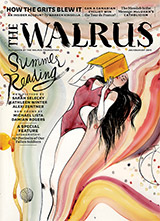
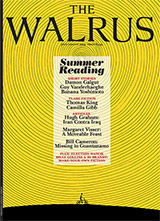
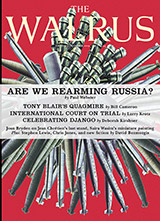
Five Dials seems to always generate coincidences with what I read. Right after reading the “”Summer’ Fiction” issue from Five Dials, I received the Fiction Issue from the New Yorker. A few days later, I received the Summer Reading Issue from The Walrus.
I’m doing a separate post here because, although I am going to post about the specific fictions, I wanted to mention the poetry that comes in The Walrus’ issue. I have no plan to write separate posts about poetry (I can barely write a full sentence about most poetry) so I’ll mention them in this post.
The main reason I’m drawing attention to these poems at all is because of the set-up of The Walrus’ Summer Fiction issue. As the intro states: “We asked five celebrated writers to devise five guidelines for composing a short story or poem. They all traded lists–and played by the rules.” I am so very intrigued at this idea of artificial rules imposed by an outsider. So much so that I feel that it would be somewhat easier to write a story having these strictures put on you. Although I imagine it would be harder to write a poem.
The two poets are Michael Lista and Damian Rogers. I wasn’t blown away by either poem, but then I don’t love a lot of poetry. So I’m going to mention the rules they had to follow. (more…)
SOUNDTRACK: CHARLOTTE GAINSBOURG-KEXP in studio May 11, 2010 (2010).
Charlotte Gainsbourg is a fascinating individual. Between her acting and her singing, she’s had quite a life. And even moreso since she had a near fatal accident.
That accident formed the nexus of her album IRM. And this interview and performance is done in support of that disc. IRM was made with Beck. Beck’s not here, and the songs are more stripped down, but they sound really good in this format.
Gainsbourg sings the Beck-sung-on-IRM “Heaven Can Wait” and really makes it her own. The other three songs here work very well in this more acoustic setting. “Me and Jane Doe” is practically acoustic already and “Time of the Assassins” and “Trick Pony” are reworked very well. And Charlotte is a charming interviewee as well.
It’s another excellent in-studio performance from KEXP.
[READ: March 31, 2011] “The Dead Are More Visible”
I read all of The Walrus stories when I received the magazines. I wondered when I would completely recognize a story when re-reading them now. Well, this was the first one that I remembered parts of vividly. And why not–there’s a search for a missing eye on an ice hockey rink. That’s hard to forget. However, I didn’t remember the ending and in fact, my memory added many more details than actually occurred in the story.
The beginning of the story, which is very different from what I just described, was less memorable but perhaps more interesting. The story opens with a woman reflecting about her graveyard shift job. In this case the job is literally a graveyard shift, because the park she works in has a graveyard within it. However, her job is not really scary–she is there to make the ice for the upcoming skating season. It takes several nights of very cold weather and she must go out in all her gear and fill up the rink, several tousand litres of water at a time.
While the ice settles, her time is her own–to listen to music and read. She gets a few hundred pages read a night (dream job!) She prefers romance and horror novels. The introduction of horror novels into the story foreshadows a bit about the scene ewith the eye later on, although for this is not a horror story. (more…)
SOUNDTRACK: LES CLAYPOOL-5 Gallons of Diesel (DVD) (2005).
I’ve loved Primus for years. And if you love Primus, chances are you love Les Claypool. And Les Claypool has created and released music with all manner of bands since Primus broke up (they have since gotten back together and have planned a new release for July). I don’t love all of his solo releases, but they all have something to commend them, and he’s made some great, unheralded music during those years.
This DVD covers the years from Sausage through to 2005. At first I was pretty excited by the DVD. The set opens with the off the wall video for Sausage’s “Riddles Are Abound Tonight” which is followed by a mercifully short “making of” video.
Then things started to go downhill somewhat. The rest of the DVD is live, which is fine (Les live is a thing of beauty). It’s just that for many of the videos the quality is terrible. The audio is also not ideal all the way through (that may have been my setup, but there were certainly songs that were much quieter than others). Now I accept that there weren’t professional film crews out for Les Claypool’s Holy Mackerel tour, and that these videos are basically bootleg, but it seems like they may have spruced them up a bit for the DVD.
Things change with the switch to Oysterhead. I could have watched several songs from Oysterhead and I wonder why they chose only one. This is a professional quality mix (although it is a little dark) and I have to say that the whole song is stolen by Trey Anastasio’s guitar thing. It’s a guitar (called the MatterHorn) but during the verses of the song it appears to be a kind of theremin on the reverse side (with a full-sized antler sticking out of the bottom) . He holds the thing upside down and waves at it to generate noise. It was bewitching.
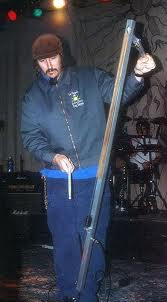
But Trey wasn’t the only one with a weird instrument. For the Frog Brigade set(s) on one of the songs, Les plays a “bass” which is just one string (called the Whamola). He hits it with a stick and changes the notes with a movable handle that he raises and lowers. I’ve never seen anything like that, either. Most of the Frog Brigade set is outside at a festival. The lighting is good but the sound is awful. In one song, the poor guy on percussion is banging away at various things and you simply cannot hear them. Les also uses a secondary microphone (the Sandman–which has a great story behind it) but its volume is also quite low, which is a shame as you can’t hear him for quite a bit.
When Colonel Claypool’s Bucket of Bernie Brains the setting is an odd one (they appear to be on a cruise(?)). It’s basically two lengthy jams, which is fine. Buckethead amazes with his skills. But the Bernie on keyboards, I can’t tell if he was screwing up or messing around during his solos.
There’s two more songs attributed to just Les Claypool, and this version of “Riddles Are Abound Tonight” is especially neat because there is a sitar playing the majority of the riff.
The DVD extras are fun. There’s a weird set from a band called 3 Guys Name Schmo which is 2 bassists and a drummer. The other bassist is miked very loud and it’s hard to hear Les (imagine outbassing Les Claypool!). Then there’s the second official video on the disc for “Buzzards of Green Hill” (very low budget). This comes with a making of the video video and a making of the audio video. Both are interesting and brief, giving tidbits of info without overwhelming us.
The final two items come from an actual TV show called Fly Fishing the World. I don’t fish, so I never knew this show existed. But sure enough, there’s our Les going to two separate locations and fishing on. The best part is that they play lots of Primus music between fishing (probably the most Primus music ever played on non-music TV), and they interview him as well (I didn’t know he had such cute kids). Despite my not knowing the show or caring about fishing, I found the whole program enjoyable and fascinating (and they catch and release as well). It’s well worth the time.
So overall, this is a mixed bag. There’s not a lot of video of Les’ non-Primus music out there, so in that respect this is great. I just wish the quality was better.
[READ: March 25, 2011] “Life in Three Houses”
This is an excerpt from Suicide. The introduction states that days after delivering the manuscript of Suicide, Levé killed himself. I suspect that that is the main reason that this story was published here.
It opens promisingly and very interestingly in the second person. The story tells us that you set off to play tennis with your wife, but you backtrack and go into the basement where you shoot yourself. Your wife finds you moments later but misses the clue you set out for her (that was handled very well).
The rest of the story (and there’s quite a lot) gets confusing. First off because it stays in the second person (even after death) but it also goes into apparent flashbacks. Even more confusing is the addition of an I as the narrator. An I who knows “you” but who was not present for the suicide so how could he have all these details?
The book is being published by Dalkey Archive Press. It’s possible that the excerpts do an injustice to the full book, but I fear that I will not be reading any more by this author.
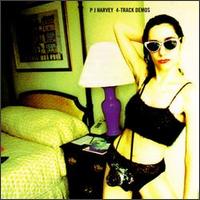
After the intensity of the Steve Albini produced Rid of Me, Harvey releases this collection of demos. The amazing thing is that these versions actually seem more intense than the Albini version. Or if not more intense, then certainly more raw.
The songs definitely have an unfinished feel about them, and yet they only vary from the final version in polish (and Albini’s stamp).
“Rid of Me” is just as quiet/loud, and has those high-pitched (and scary) backing vocals. Speaking of scary vocals, her lead screams in “Legs” are far scarier here than on Rid of Me–like really creepy. (Which sort of undermines that idea that this was released because Rid of Me was too intense for fans). “Snake” actually features even creepier vocals–Harvey must have had a field day making these sounds!
I admit that I like the finished version of “50 Ft Queenie” better,”but there’s something about this version of “Yuri-G” that I like better.
The disc also has some tracks unreleased elsewhere. “Reeling” is an organ-propelled song of female strength with the nice lyric: “Robert DeNiro sit on my face.” “Hardly Wait” is a slow grinder that is fairly quiet for this time period. “M-Bike” is a cool angry rocker about a guy and his motorcycle which is one of my favorite tracks on the disc.
It’s a great companion to Rid of Me.
[READ: end of February to early March] original articles that comprise A Supposedly Fun Thing I’ll Never Do Again
As I mentioned last week, I decided to compare the articles in A Supposedly Fun Thing I’ll Never Do Again with the original publications to see what the differences were. It quickly became obvious that there were a lot of additions to most of the articles, and it seems rather pointless (well, actually it seems exhausting and really outrageously time-consuming) to mention them all. But what I did want to note was the things that are in the articles that have been removed from the book. There’s not a lot but there are a few juicy tidbits (especially in the early articles) that are fun to note for anyone who read only the book and not the original articles.
My process for this was rather unthorough: I read the article and then right afterward I read the book. If I noticed any changes, I made a note on the article version. Many of them were surprisingly easy to note as DFW’s writing style (especially his idiosyncratic phrases) really stand out. This is especially true in the Harper’s articles. The academic ones were less notable, I believe, and I’m sure I missed a bunch.
I’m not sure in any way how these pieces were dealt with initially by the magazine or DFW. I assume that DFW handed in the larger article (like we see in the book) and the magazine made suggested edits and DFW edited accordingly. Then the book copies are probably the originals, bt which have also been updated in some way.
In most cases, it’s not really worth reading the original article, but I’m including links (thanks Howling Fantods), for the curious.
As for length, it’s hard to know exactly what the conversion from magazine article to book is. The “Tornado Alley” tennis article is 8 pages (more like 4 pages when you take out the ads) and the book is 17. Perhaps more accurately it seems like one Harper’s column = just under one book page. I’ll try to figure out what the conversion is if I can.
One last note, whenever I say “article” I mean the original magazine version. And obviously “book” means ASFTINDA. (more…)
For Rid of Me, PJ Harvey jumped to the big leagues (relatively) by enlisting maniac Steve Albini as a producer. And he takes the rawness of Dry one step further into a sound that is both raw and sharp. He really highlights the differences between the highs and lows, the louds and quiets. And man, when this came out I loved it.
Like NIN’s “March of the Pigs,” the opening of “Rid Of Me” is so quiet that you have to crank up the song really loud. And then it simply blasts out of the speakers after two quiet verses.
“Legs” turns Harvey’s moan into a voice of distress, really accentuating the hurt in her voice. And Harvey hasn’t lightened up her attitudes since Dry, especially in the song “Dry” which has the wonderfully disparaging chorus: “You leave me dry.”
“Rub Til It Bleeds” is a simple song that opens with a few guitars and drums but in true Albini fashion it turns into a noisy rocker. “Man Size Quartet” is a creepy string version of the later song “Man Size” (I’ll bet the two together would sound great). And the wonderful “Me Jane” is a great mix of rocking guitars and crazy guitar skronk. Albini really highlights the high-pitched (male) backing vocals, which add an element of creepiness that is very cool.
For me the highlight is “50 Foot Queenie”. It just absolutely rocks the house from start to finish. The song is amazing, from the powerful…well…everything including the amazing guitar solo. “Snake” is a fast rocker (all of 90 seconds long) and “Ecstasy” is a song that feels wrung out, stretched to capacity, like they’ve got nothing left.
It’s not an easy record by any means, but it is very rewarding. This is a CD that really calls for reamastering. Because it is too quiet by half, and could really use–not a change in production–just an aural boost.
[READ: end of February and beginning of March] A Supposedly Fun Thing I’ll Never Do Again
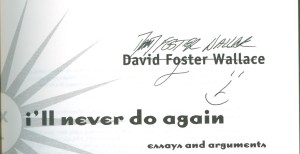
This is a collection of 7 essays that DFW wrote from 1990-1996. Three were published in Harper’s, two in academic journals, one in Esquire and the last in Premiere. I devoured this book when it came out (I had adored “Shipping Out” when it was published in Harper’s) and even saw DFW read in Boston (where he signed my copy!).
click to see larger
[Does anyone who was at the reading in Harvard Square…in the Brattle Theater I THINK…remember what excerpts he read?]
The epigram about these articles states: “The following essays have appeared previously (in somewhat different [and sometimes way shorter] forms:)” It was the “way shorter” that intrigued me enough to check out the originals and compare them to the book versions. Next week, I’ll be writing a post that compares the two versions, especially focusing on things that are in the articles but NOT in the book (WHA??).
But today I’m just taking about the book itself. (more…)
After mentioning the two live shows that comprise the majority of this disc, I figured I’d mention the disc itself. Rheostatics are a great and engaging live band: Dave Bidini has wonderful repartee with the audience and Martin Tielli’s live guitar work is amazing. The band sounds tight but not stiff and there are a number of tracks here that are goofy (but not throwaway) like the acoustic version of “Bread, Meat, Peas & Rice” and the weird and wonderful “People’s Republic of Dave.”
The songs that were taken from the two Bathurst Street concerts have been professionally mixed and mastered (of course) so even if you’ve listened to the bootleg concerts, you’re going to hear a different quality (and mix, as boots tend to be recorded from one side, usually missing some aspect).
My only gripe is something that they’d never really be able to accomplish live anyway. It’s in “King of the Past” which is one of my favorite Rheos songs. On the album, after the break, there’s an electric violin (or something) that plays a really cool dramatic melody. But live they never play it like that, they rely on Tielli’s guitar. The guitar sounds fine, but that majestic string section provides such a great contrast that the live version lacks just a little.
On the other hand, the live version of “Horses” is stunning. As are “A Midwinter Night’s Dream,” “Palomar,” and “Christopher.”
[READ: February 8, 2011] Tropic of Hockey
I bought this book when I was in Toronto sometime in 2001. I was pretty excited to get another book by Dave Bidini. And then I proceeded to not read it for a decade. Hey, these things happen.
But I have to say in many ways I’m glad I waited this long to read it. The book was written pre 9/11 and as such it has a kind of sweetness about international travel that I miss now. And I can appreciate it all a lot better with a decade’s distance from everything. As of 2011, I know that I never want to go to the UAE, but reading Bidini talk about the UAE circa 1999 it sounds like a really fun place to go.
So anyhow, this book, as the subtitle suggests, is Bidini’s attempt to find hockey in weird places around the globe. Bidini has gotten tired of the NHL: it is bloated, is it full of obnoxious rock anthems during stoppage and the spirit of the game has been overwhelmed by the Almighty dollar (specifically the American dollar). And so, he wanted to see if he could find people who played hockey the way he and his pickup team play on the weekends: for the love of hockey. And he was amazed to find hockey fans in these four unexpected places: Hong Kong, China, The United Arab Emirates and Transylvania.
The book is really three things though: it is the story of hockey in different places, it is a chance for Bidini to play hockey in these places and write about the experience and it is a history of Canadian hockey. (more…)
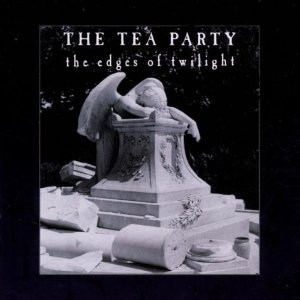
SOUNDTRACK: THE TEA PARTY-The Edge of Twilight (1995).
In the way that Ian Astbury of The Cult reminded everyone of Jim Morrison, so does Jeff Martin, singer of The Tea Party. He looks a bit like him and he sings in a baritone voice that, while all his own, sounds like perhaps a 1990s Jim Morrison.
This, their third album, is full of what I think of as their trademark sound: all manner of exotic instrumentation laid over heavy Zeppelinesque riffs. Opener “Fire in the Head’ is not unlike “Kashmir” in its riff, and what’s funny is that the exotic instrumentation makes it sound even more like “Kashmir” than “Kashmir” does. Zep didn’t use instruments like the sitar and sarod to make their sound more authentic. Indeed, authenticity seems to be what the band is going for, as later albums describe them spending time in the middle east where they learned to play these instruments more proficiently.
“The Grand Bazaar” takes that concept further with some really Eastern sounding music within a very heavy rocking track. And “Ianna,” although not my favorite track, really showcases the Middle Eastern instrumentation in this cool, twisty track. There’s also a more traditional rock number, “Drawing Down the Moon” which features lengthy blues-guitar solos over a fairly conventional track.
It’s not all heaviness though, as “Correspondences” is a seven minute piano based ballad in which Martin’s voice is right in your ears. It’s on this track that you decide whether you love his voice or think he’s preposterous. If the latter, well, then there’s the beautiful instrumental “The Badger.” And “Shadows on the Mountainside” is a quieter acoustic number in which Martin sings in his much more delicate range.
But perhaps the most over-the-top, and consequently, best track on the disc is “Sister Awake” which features 12-string guitar, sitar, sarod, harmonium and goblet drums. It starts slowly and quietly and builds into multiple climaxes (complete with loudly whispered “Sister!”).
Whether or not this confers any kind of approval on The Tea Party or not, Roy Harper (as in “Hats Off to Roy”) does a spoken word bonus track at the end of the disc. I don’t know much about Roy Harper or what he was up to in 1995 (perhaps he’d do anything for a buck?) but it give an air of legitimacy, no?
The Tea Party is a band that splits people into love it or hate it groups. They have sold millions of copies and yet there are those who despise them. Their next album Transmission found some success in the U.S. because it was a bit more industrial sounding (with samples and loops), but they never really broke through down here.
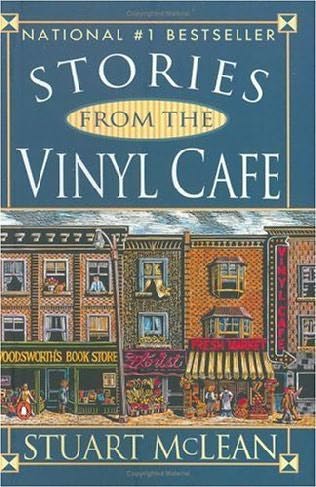
[READ: February 4, 2011] Stories from the Vinyl Cafe
I’m not sure how I found out about this book. I know I bought it in a Chapters in Toronto. I wonder if it was on a display and I was intrigued by the title. Or, more likely, I had heard a bit about him in my preparations for my trip and decided to buy his book. Whatever the case, I didn’t read it until now.
McLean is described in one of the (practically a dozen) pages of praise and advertisements for his other books as a Canadian Garrison Keillor. And, as lazy as that seems, it’s fairly accurate. Especially because although McLean is a humorist (he won the Stephen Leacock Memorial Medal for Humor), like Keillor, who is mostly funny, McLean also deals a lot with serious matters. Indeed, some of the stories in this collection are utterly unfunny: ending with a dead dog or a dead grandmother.
And here’s the thing. These stories are slices of people’s lives. They are incidents that impact them and are worth recollecting, but that don’t cause anyone to change. They’re like perfect little anecdotes, and I imagine they are excellent to hear aloud. (more…)
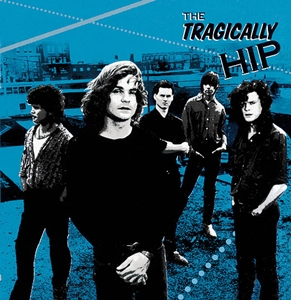
SOUNDTRACK: THE TRAGICALLY HIP-The Tragically Hip (1987).
It’s not really fair to review a successful, long-lived band’s first album over 30 years after the fact. I mean, Rush’s first album doesn’t show any of the prog tendencies they’d be known for (not to mention a different drummer/lyricist). In fact, virtually no bands come out fully formed, which is good for all fans.
Having said that, from this album, you’d have very little indication that the Hip would become as dynamic as they eventually did.
This is a 7 song EP full of rocking tracks with overlays of acoustic guitars. Unlike later discs, there’s only a minor indication that they’re from Canada (“Last American Exit”) or overly literate. Mostly they seem like a rocking bar band. The songs are good, somewhat generic, but solid. In fact, “Small Town Bringdown” is still played in concert from time to time.
The biggest surprise is Gord Downie’s voice. By now his voice is pretty distinctive, but on this first disc it seems like he’s still trying to figure out what he’s doing. On “Killing Time” he’s unrecognizable from the frontman of today. He seems to be working in a much gruffer range than he would later use. Lyrically, the songs are also tougher than they would eventually become.
The most memorable song is probably the most embarrassing: “I’m a Werewolf, Baby” is as silly as it sounds, but the riff is really great and it has staying power. Shame about the lyrics. This disc is probably not worth getting since “Small Town” is available on their Greatest Hits. Although if you really want to hear “Werewolf” it’s only available here.
[READ: January 26, 2011] “Live Large”
Just as I settle into the idea of reading 25 back issues of The Walrus for all of the fiction contained therein, I get to this 2004 Summer Reading Issue which features seven stories! Three of them are short stories and the other four are flash fiction.
This first story was my favorite of the bunch. It is a fairly simple story about a down-and-out man who longs for one day of joy. Billy Constable has slowly seen his money evaporate. He has had to sell off a lot of his luxuries, including the membership to the Fairview Golf Club. He has also had a recent medical scare (a minor heart attack) which has made him go straight and clean: no booze or smokes.
Except that things have gotten really bad lately, and who can resist the slide back into temptation. When he gets a call to play a round of golf, from the very man he sold his golf membership to, he is about to tell him where to go, until he realizes that the man is calling him because he genuinely wants him to play in their foursome. He decides why the hell not. (more…)
Shad and Dallas Green (from Alexisonfire) recorded an EP called Two Songs and the profits go to Skate4Cancer. The A Side is the new song “Live Forever.” Shad is a great rapper, and make no mistake, this is a Shad song. Green sings the hook-filled chorus (and an intro line).
Shad’s rapping is great and his rhymes are clever and interesting (he even does a fast double-time section which I’d never heard him do before). But the music itself is kind of bland. I listened to it three times and I never really got into the flow of it.
I rather hope that sales are good (for the charity’s sake) but I’m afraid I’m not that excited by the track.
[READ: January 23, 2011] “Choynski”
I recently noticed that I had reviewed a whole bunch of stories from The Walrus. So I wondered just how many stories there were in previous issues of the maagzine that I hadn’t posted about. The magazine only started in 2003, and I still have all the issues (yes, that’s right… I bought Issue 1 on the newsstand), so it wasn’t that hard to figure out. In the early days, not every issue had fiction in it. I started calculating and discovered that there were only about 25 stories to go. So I thought, why not go back and read them all, eh?
This story was in Issue #2, and I have to say, good for them for picking David Bezmozgis to be their first author. His issue bio reads that his first short story collection Natasha will be published in June. And if you check now, you’ll see that Natasha won a Commonwealth Writers’ Prize and was a New York Times Notable Book. Not bad.
There are essentially two stories in this piece and they tie together quite nicely. The first arc concerns the narrator’s dying grandmother. She is an old Russian Jew whose English isn’t great so she tries to speak in Yiddish to make up for it. Her family understands but few others (like her doctor) know what she’s talking about. As the story progresses, her family tries to keep the truth of her condition from her, but she is no dummy.
The second story concerns the narrator’s attempt to learn more information about Joe Choynski. Choynski was being inducted into the International Boxing Hall of Fame (Old Timers division) and the narrator was going to the ceremony. In trying to learn more about Choynski (considered America’s frst great fighting Jew), he enlists the help of Charley Davis, an old man who knows more than just about anyone else about the Choynski. (more…)
 SOUNDTRACK: MOGWAI-5 Track Tour Single (2001).
 I usually am able to track provenance of my discs pretty well, but this one I am only largely certain came from my friend Lar (sorry Lar, the memory is not what it used to be). But where else would I have gotten a CD from a Mogwai show if I’ve never seen them live?




















 I Just Read About That...