Feeds:
Posts
Comments

Archive for the ‘Fishing’ Category

SOUNDTRACK: EARTH-All Tomorrows Parties, October 5, 2011 (2011).

Anyone who likes Black Sabbath a lot knows that they were originally called Earth.  About mid way through this concert, the lead singer/guitarist of Earth says that he grew up listening to Black Sabbath and reading HP Lovecraft, so Earth is clearly something of a tribute.   Incidentally, he grew up in Manalapan, NJ which is just down the road from us.

All of these bona fides means that I should love Earth.  But I have to say that although I didn’t dislike this show at all, it’s really not my thing.  Earth creates long droney songs.  I tried to measure a couple of BPM of songs and came out with 60 for one song and 42 for another (by contrast Judas Priest’s “Breaking the Law” is 180 BPM).

The songs are all instrumental and range from 8 to 12 minutes.  Again, nothing objectionable about that.  Indeed most of the songs are cinematic and cool sounding.  My problem with them is that there wasn’t a lot of dynamism in the songs.  The bass wasn’t crazy heavy or loud or chest rattling (as I had been led to believe Earth’s bass was).  The melodies were pretty, but it came across as soundtrack music–for a very very slow zombie chase, perhaps.

According to some basic history, Earth used to be a heavier, noisier band, but have morphed away from that, and I suspect I would have liked their earlier stuff a bit more (although the one older that they played, “Ouroboros is Broken” wasn’t that much different from the rest.

NPR broadcast most of the All Tomorrow’s Parties concerts, and I enjoyed listening to them all.  But Earth is just not my thing.  You can check it out here.

[READ: October 20, 2012] “A Farewell to Yarns”

I mentioned the other day that I read one complete piece in the three Outside magazines since I subscribed.  It was this one.  The thing that I have enjoyed about the Outside articles that I have cherry picked is that unexpected writers pop up to write an essay.  So here’s Ian Frazier, comedian and essayist, writing for Outside.  Weird.  (Or maybe not so weird, he’s an Editor).

And, unlike many of the other things I’ve read in Outside, Frazier is not, repeat not going to do anything brave or daring or stupid, he’s just going to muse about a topic.  I like it.

Basically, this whole piece is a compliant about how with everything documented and digitalized it’s impossible to tell fibs about the one that got away or as he calls it, “an outdoorsman’s sacred right to exaggerate.”  What I like is that he takes us all the way back to ye olde mapmakers who wrote Here be Monsters which leads to this wonderful idea that I have never considered “the pictures of the monsters must have been accurate; how would the mapmakers have known what to draw unless eyewitnesses had told them?”

And he moves on through those who spied the Loch Ness Monster and Bigfoot.  He even talks about one I had ever heard of, a hidden city in Siberia called Gorod Koka-Kola, built during the cold war as a reproduction of an American city, they speak English and live and behave like Americans–perfect for spymasters to practice   Genius–and how would anyone ever know if it existed in remotest Siberia?

But Fraizer’s greater point is that “Lies make the wild scary and alluring.”  He grew up in Rural Illinois afraid of the Argyle Monster who haunted Argyle State Park–and, boy, how many adventures he had or dreamed of having back then. (more…)

Read Full Post »

After enjoying yet another article from Outside, I figured it was time to subscribe, you know, give the magazine makers some money for their work.

I decided to wait for three issues to offer a verdict because the first two were really disappointing.  Subscriptions run $2 an issue with a list price of $7.  I haven’t really talked about subscription prices of other magazines before but this one is quite high.  It’s staggeringly high for the amount of ads that are in the magazine, too.  They have a half a dozen advertorials which look like articles (which I hate) and all those personals in the back.  Plus the mag is littered with ads for gear (which I know gear people love but still  it should impact the price of the magazine.  Sheesh).

So the articles I’ve enjoyed in the past were personal stories (from the likes of Wells Tower, etc).  They are extended pieces by reasonably famous authors and they have a great voice.  In the issues I’ve received so far, the feature stories have been the 50 Best Jobs and Are You Tough Enough?  That Jobs one seems like a fun article and indeed the places they chose were interesting.   Although this was more of a fluff piece than a real article–no one is getting a job looking at these companies–certainly not just because they read about it here.  Also, note that none of the companies are East of the Mississippi.  There’s also later article on adventure seeking entrepreneurs.  Yawn.  I gather that the Are You Tough enough type of article is the real meat and potatoes of the magazine, with headlines like “Eat Like a Champion” and “Surfing Monster Waves,” the actual target audience for this magazine must be slim indeed.  I know it’s not me. (more…)

Read Full Post »

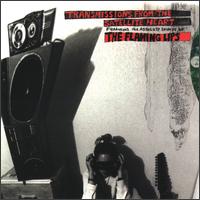
SOUNDTRACK: THE FLAMING LIPS-Due to High Expectations…The Flaming Lips are Providing Needles for Your Balloons EP (1994).

This EP came after the success of Transmissions from the Satellite Heart and the single “She Don’t Use Jelly.”  Naturally that is not the single here, rather it is “Bad Days,” a new song tha sounds of the period.  As does “Jets Part 2 (My Two Days As An Ambulance Driver)” a fuzzed out trip.

“Ice Drummer” is a primarily acoustic but still distorted song.  It’s kind of boppy and light which is odd since it is a cover of a Suicide song.   “Put the Waterbug in the Policeman’s Ear’ is a demo with strings and piano.  It also has a very lengthy introduction in which Wayne explains his brother’s proclivity for drugs and his belief that he can control bugs (and have them attack the policeman who is trying to arrest him).  It was recorded on a boombox.

“Chewin’ the Apple of Yer Eye” is a live version recorded at a record studio.  It has nice guitars with scritchy violins.  “Chosen One” is a cover of a Bill Callahan song at the same venue.  There’s a lengthy introduction explaining that it’s a cover and why he likes it so much.  It’s a nice version, very stripped down.  “Little Drummer Boy” is a travesty, but a good one (and is 1,000 times better than their version of “White Christmas.)”

“Slow-Nerve-Action” is a live version apparently broadcast on a Top 40 radio station.  The squall of noise as the song opens would frighten off anyone listening to Top 40, but the middle of the song’s acoustic section is rather pleasant (if not a little scratchy and staticky).  Although this EP racks in at 44 minutes long, it’s really not that essential (although the live versions are nice).

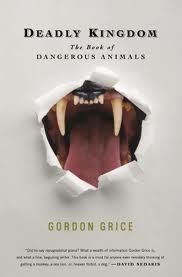
[READ: May-July 2012] Deadly Kingdom

If you have any kind of animal phobias–literally any kind: snakes, sharks, spider, rodents, bugs, stay away from this book.  Indeed, even if you don’t have this kind of phobia, you may after reading this book.  As the title says, this book tells you every single conceivable way that an animal can kill you–from biting to clawing to stomping to crushing to infections to diseases to parasites to long lingering diseases to numbness to elephantiasis (and that’s just chapter 1).  Somehow the author is not afraid of everything that moves, and is even a collector (with his wee son) of all manner of unusual creepy crawlies–tarantulas, hissing cockroaches and the like.

Sarah bought me this book for my birthday because David Sedaris recommended it when we saw him speak.  When Sedaris read from it, it was funny but dark.  Sedaris’ comment that “Monkeys are such assholes “was certainly borne out by the book.  Sedaris’ other comment–if you ever feel bad about eating meat, just read this book–is also completely accurate.  Even cows can be assholes.  This book is hard to digest in large doses.  I found that I had to put the book down after a section or two because there’s only so much you-will-die-if-you-do-this reading that I could take.

Grice has done a ton of research–he has looked into all manner of medical and death records and talked to lots of scientists around the world.  And he breaks the book into five major categories: The Carnivorids, Aquatic Dangers, The Reptiles and Birds, The Arthropods and Worms and Other Mammals.  The introduction more or less explains his origin story for being interested in deadly animals–a cougar was on his Oklahoma panhandle property when he was six years old.  His grandfather dispatched it, but he had to stay safely in the car during the ordeal.  And he has been curious ever since.

The introduction also contextualizes the violence that animals do to humans.  Is it all defensive (as we take over more and more land, it’s hard to know exactly what is defensive) or is it straight out aggressive. But he says the hardest part about this kind of descriptor is that “besides our usual biased views of all the parties involved, is that violence rouses strong emotions.  We are almost forced to take sides with the injured humans or the slandered animals….  Many writers depict virtually all animal attacks as “provoked” by the victim.  On the other side, some writers are at pains to paint dangerous animals as monsters of cruelty.  All of these views are simplistic.” (xxiii). (more…)

Read Full Post »

SOUNDTRACKLOS CAMPESINOS!-“By Your Hand” (2011).

I’ve enjoyed Los Campesinos!’s records in the past and I’m pretty excited about the prospect of a new release.  This song doesn’t deviate too far from their previous releases although to my ear it sounds a bit more musical (more instruments, more vocals) and less abrasive.  The basic elements are still there:great lyrics delivered in a more or less spoken way, followed on its heels by big shouty sections (and the whole band seems to be shouting along on this one).

This song also feels a little warmer, although the lyrics “by your hand is the only end I’ve foreseen” is either really dark or really naughty depending on how well it correlates to the verses.  Regardless, the chorus is catchy and fun to sing and the lyrics are wonderfully twisted.  Los Campesinos! have done it again.

And here’s the video.

[READ: September 16, 2011] “Jean-Baptiste Labat and the Buccaneer Barbecue in Seventeenth-Century Martinique”

I was interested in this article because it talked about the boucan and the buccaneer, and both of these things were mentioned in Book 9 of The 39 Clues.  It was a weird sort of coincidence that the boucan which I had never heard of before should appear in two things that I read about week apart (and then this weekend the Pa Renaissance Faire was pyrate themed!).   I was also interested because of the way this article was presented in the email to us: “if you have ever wondered on what foods a seventeenth-century missionary from the island of Martinique dined, check out this article from Gastronomica. (Hint: They include manatee, lizard, and parakeet)” made it a must-read.

While the article does, indeed make mention of these foodstuffs, it is by no means the extent of the article.  Rather, Toczyski looks at what Labat, a French priest and a missionary, wrote in his extensive chronicle about his stay in the Caribbean.  In particular, she focuses on the amazing breadth and depth of his gastronomical accounts (which includes details about all the meals they ate en route (the ship was amazingly well stocked–they even had a garden on board, which was under guard day and night (!); and then on the island he also talks in loving detail (with recipes) of all of the native dishes that he would eventually consume (including turtles, frogs and the palm worm (see picture at right (the picture and an awesome description of eating the palm worm is here at Boots in the Oven, at the bottom of the page).

(more…)

Read Full Post »

SOUNDTRACK: TINDERSTICKS-Claire Denis Film Scores 1996-2009: Vendredi Soir [CST077] (2002).

This score was created by Dickon Hinchliffe and the liner notes indicate that it was something of a jumping off point for his future film scores.  This was the third score that the band created for Denis (after Nenette & Trouble).  Stuart Staples was working on the latest Tindersticks album so Dickon took over all of the duties on this one.

This is a beautiful, melancholy soundtrack, full of gorgeous swelling strings and simple piano notes.  It doesn’t remind one all that much of  Tindersticks, but it’s not terribly far removed from their sound either.

The whole score (which is paired here with the score from L’Intrus) is 25 minutes, which made me wonder whether this is a full length film, or just a film with lots of silence (or, perhaps non-Hinchcliffe music that wasn’t included here).  [The film is 90 minutes long].

Pairing it with L’Intrus makes sense in terms of space, but the two scores could not be more different from each other.

[READ: June 15, 2011] “The Cat”

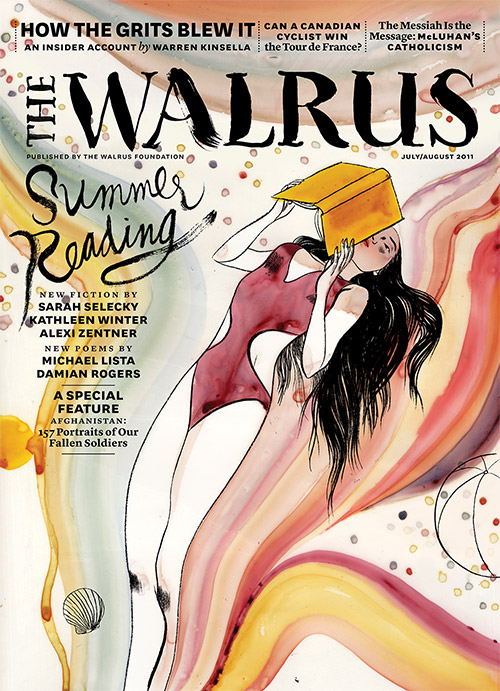
This is the first story in The Walrus’ Summer Reading issue.  As I mentioned, the intro states: “We asked five celebrated writers to devise five guidelines for composing a short story or poem. They all traded lists–and played by the rules.”  Sarah Selecky was given rules by Kathleen Winter (which I posted below).

The first line of the story really sets up the whole thing: “I am not at all surprised that my father has come back to earth in the form of a grey and white cat.”  And indeed, the rest of the story discusses her relationship with her father (those awful fishing trips when she could neither speak nor move) and how he never seemed to be pleased about her.

Now that he’s back as a cat, the dynamic has changed.  Although there’s still fish in their relationship.

I really enjoyed this story,  For although it was brief, it was wonderfully evocative.

Kathleen Winter imposed these rules on the story: (more…)

Read Full Post »

SOUNDTRACK: CITY AND COLOUR Live at the Sasquatch Festival, May 29, 2011 (2011).

City and Colour have a new album coming out soon.  So it’s kind of surprising that this seven-song show is three songs from their previous album, two from their first album, a cover, and only one new track (“Fragile Bird”).

This is the first time I’ve heard City and Colour live with a band (most of the recordings I have by them are just Dallas Green solo).  It’s nice to hear how powerfully they work together (giving some of those songs an extra push).

Despite the brevity of the set (and the amusing banter about airport etiquette) you get a pretty good sense of what the “pretty-voiced guy” from Alexisonfire can do on his own.   I found the cover, Low’s “Murderer,” to be a really perfect choice–one that suits the band and their slightly-off harmonies, rather well.

I’m looking forward to their new release–“Fragile Bird” is another beautiful song.  But in the meantime, this is a good place to hear what they’ve been up to.

[READ: early June 2011] 2011 Fiction Issues

Five Dials seems to always generate coincidences with what I read. Right after reading the “”Summer’ Fiction” issue from Five Dials, I received the Fiction Issue from the New Yorker.  A few days later, I received the Summer Reading Issue from The Walrus.

I’m doing a separate post here because, although I am going to post about the specific fictions, I wanted to mention the poetry that comes in The Walrus’ issue.  I have no plan to write separate posts about poetry (I can barely write a full sentence about most poetry) so I’ll mention them in this post.

The main reason I’m drawing attention to these poems at all is because of the set-up of The Walrus’ Summer Fiction issue.  As the intro states: “We asked five celebrated writers to devise five guidelines for composing a short story or poem. They all traded lists–and played by the rules.”  I am so very intrigued at this idea of artificial rules imposed by an outsider.  So much so that I feel that it would be somewhat easier to write a story having these strictures put on you.  Although I imagine it would be harder to write a poem.

The two poets are Michael Lista and Damian Rogers.  I wasn’t blown away by either poem, but then I don’t love a lot of poetry.  So I’m going to mention the rules they had to follow. (more…)

Read Full Post »

SOUNDTRACK: LES CLAYPOOL-5 Gallons of Diesel (DVD) (2005).

I’ve loved Primus for years.  And if you love Primus, chances are you love Les Claypool.  And Les Claypool has created and released music with all manner of bands since Primus broke up (they have since gotten back together and have planned a new release for July).  I don’t love all of his solo releases, but they all have something to commend them, and he’s made some great, unheralded music during those years.

This DVD covers the years from Sausage through to 2005.  At first I was pretty excited by the DVD.  The set opens with the off the wall video for Sausage’s “Riddles Are Abound Tonight” which is followed by a mercifully short “making of” video.

Then things started to go downhill somewhat.  The rest of the DVD is live, which is fine (Les live is a thing of beauty). It’s just that for many of the videos the quality is terrible.  The audio is also not ideal all the way through (that may have been my setup, but there were certainly songs that were much quieter than others).  Now I accept that there weren’t professional film crews out for Les Claypool’s Holy Mackerel tour, and that these videos are basically bootleg, but it  seems like they may have spruced them up a bit for the DVD.

Things change with the switch to Oysterhead.  I could have watched several songs from Oysterhead and I wonder why they chose only one.  This is a professional quality mix (although it is a little dark) and I have to say that the whole song is stolen by Trey Anastasio’s guitar thing.  It’s a guitar (called the MatterHorn) but during the verses of the song it appears to be a kind of theremin on the reverse side (with a full-sized antler sticking out of the bottom) .  He holds the thing upside down and waves at it to generate noise.  It was bewitching.

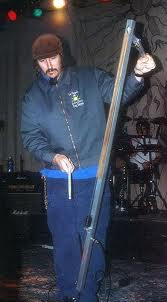
But Trey wasn’t the only one with a weird instrument. For the Frog Brigade set(s) on one of the songs, Les plays a “bass” which is just one string (called the Whamola). He hits it with a stick and changes the notes with a movable handle that he raises and lowers.  I’ve never seen anything like that, either.  Most of the Frog Brigade set is outside at a festival.  The lighting is good but the sound is awful.  In one song, the poor guy on percussion is banging away at various things and you simply cannot hear them.  Les also uses a secondary microphone (the Sandman–which has a great story behind it) but its volume is also quite low, which is a shame as you can’t hear him for quite a bit.

When Colonel Claypool’s Bucket of Bernie Brains the setting is an odd one (they appear to be on a cruise(?)).  It’s basically two lengthy jams, which is fine.  Buckethead amazes with his skills.  But the Bernie on keyboards, I can’t tell if he was screwing up or messing around during his solos.

There’s two more songs attributed to just Les Claypool, and this version of “Riddles Are Abound Tonight” is especially neat because there is a sitar playing the majority of the riff.

The DVD extras are fun.  There’s a weird set from a band called 3 Guys Name Schmo which is 2 bassists and a drummer.  The other bassist is miked very loud and it’s hard to hear Les (imagine outbassing Les Claypool!).  Then there’s the second official video on the disc for “Buzzards of Green Hill” (very low budget).  This comes with a making of the video video and a making of the audio video.  Both are interesting and brief, giving tidbits of info without overwhelming us.

The final two items come from an actual TV show called Fly Fishing the World.  I don’t fish, so I never knew this show existed.  But sure enough, there’s our Les going to two separate locations and fishing on.  The best part is that they play lots of Primus music between fishing (probably the most Primus music ever played on non-music TV), and they interview him as well (I didn’t know he had such cute kids). Despite my not knowing the show or caring about fishing, I found the whole program enjoyable and fascinating (and they catch and release as well).  It’s well worth the time.

So overall, this is a mixed bag.  There’s not a lot of video of Les’ non-Primus music out there, so in that respect this is great.  I just wish the quality was better.

[READ: March 25, 2011] “Life in Three Houses”

This is an excerpt from Suicide.  The introduction states that days after delivering the manuscript of Suicide, Levé killed himself.  I suspect that that is the main reason that this story was published here.

It opens promisingly and very interestingly in the second person.  The story tells us that you set off to play tennis with your wife, but you backtrack and go into the basement where you shoot yourself.  Your wife finds you moments later but misses the clue you set out for her (that was handled very well).

The rest of the story (and there’s quite a lot) gets confusing.  First off because it stays in the second person (even after death) but it also goes into apparent flashbacks.  Even more confusing is the addition of an I as the narrator.  An I who knows “you” but who was not present for the suicide so how could he have all these details?

The book is being published by Dalkey Archive Press.  It’s possible that the excerpts do an injustice to the full book, but I fear that I will not be reading any more by this author.

It was translated by Jan Steyn.

For ease of searching I include: Leve

Read Full Post »

SOUNDTRACK: THE REAL TUESDAY WELD-“Cloud Cuckooland” (2007).

My friend Andrew linked me to the video for this song (after I showed him the video for “Lucas with the Lid Off.”   I’d heard of The Real Tuesday Weld, but never heard them, and I hope this is indicative of the rest of their (his?) stuff.

The video (which is hilarious and weird) supplies a wonderful videotrack to the music, but, unlike some other recent videos that I have watched, it doesn’t make a lame song seem interesting.

I likened this song to what I wanted the Squirrel Nut Zippers to sound like: playing old-timey music but with a real sense of silliness.  (The Zippers are great but are often too straight for me).  Rather than vocals, there’s a  sort of nonsensical sound-making.  And there’s some even some human beatbox in the track.

And it’s all over a very bouncy soundtrack that fits well with the black and white “movie” of the video.

It’s very cool.  Check it out here.

[READ: August 27, 2010] The Shell Collector

I have really enjoyed the two short stories that Doerr has written for McSweeney’s.  So much so that I decided to track down this collection of short stories.  And I’m delighted that I did.

Doerr’s stories are set all over the world (he himself has lived in Africa and New Zealand, although he is now from Idaho and grew up in Ohio) and there is so much diversity in this collection that I couldn’t believe he had this much information at his disposal.

One of the interesting things is that quite often the main character is named “The Shell Collector” of “The Hunter” while everyone else in the story has a name.  It’s an interesting conceit which brings at once a distance to the person and yet an immediacy to what he “is.”

“The Shell Collector” features a man who works with shells, specifically with the creatures that live in them (most of which are poisonous).  One day, a reporter is stung by a cone shell (that crawled from the ocean into his house) and goes into deathly coma.  The cone shell is a predatory sea snail called a geography cone has twelve kinds of venom in its teeth.  The woman was pronounced incurable, and yet twelve hours of catatonia later she emerged claiming to have had a religious experience.  From then on, the shell collector’s life is turned upside down. (more…)

Read Full Post »

SOUNDTRACK: RHEOSTATICS-Whale Music (1992).
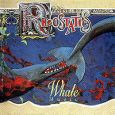
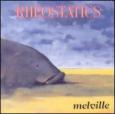
The Rheostatics are from Etobicoke Canada.  Their second album was called Melville (named after a town in Saskatchewan, but it has a whale on the cover so…).  Their third album (this one) is called Whale Music (inspired by the novel by Paul Quarrington).  When they made a film of Whale Music, the Rheostatics were asked to make the soundtrack for it, which they released as Whale Music.  So, the band have 2 albums called Whale Music and one called Melville.  Perfect soundtrack to Moby-Dick.

The album is chock full of all kinds of music: country tracks, folky tracks, metal tracks, and hooks galore.  And it’s all wrapped up in the oddity that is the Rheostatics.  This album features guest spots by the Barenaked Ladies and Neil Peart as well as horns, strings, spoken word parts, and “power tools”.

“Self Serve Gas Station” is a great opening.  It begins with swirling guitars and a beautiful solo (Rheostatics guitar lines sound so elemental as to seem like they’ve always been around).  But just as the vocals begin, the song becomes a sort of country track: a folkie song about adolescnece.  But it returns to a good rocking (and falsetto fueled) rock track.
“California Dreamline” is a wonderfully weird track, with more gorgeous guitar melodies.  It also has a disjointed section with squealing guitars.   While “Rain, Rain, Rain” opens with a lengthy percussion section (played by Neil Peart of Rush) with a weird time signature.  It’s a fun singalong.  “Queer” meanwhile has some great chugga guitars that turn into a rocking tale of an ostracized brother (and features the great line: “But I wish you were there to see it/When I scored a hat-trick on the team/That called you a fucking queer.”

“King of the Past” is another great track, with a wondrous string sound near the end.  It’s a gorgeous song with (again) different sections conveying shanties and jigs (and you can dance to it).  Like Moby from last week, Rheostatics, also bust out a fast metal track, but this one works well: “RDA (Rock Death America)” has a major hook and name checks everyone from The Beatles to The Replacements.

“Legal Age Life at Variety Store” is a great folky singalong (and features the piercing harmonies of Martin Tielli).  “What’s Going On Around Here?” is the most traditional song of the bunch, a poppy little ditty which avoids complacency with a rocking coda.

“Shaved Head” is a moody piece, wonderful for its roller coaster sensibilities, which is followed by the beautiful Tim Vesely sung ballad “Palomar.”  This track is followed by the humorous (but serious) shouted-word piece “Guns” which also features Neil Peart.

“Sickening Song” is an accordion based shanty song.  Followed by another pretty, poppy-sounding track, “Soul Glue.”  Drummer Dave Clark sings “Beerbash,” an upbeat song.  And tye final track is the epic, “Dope Fiends and Boozehounds.”  It opens with a beautiful acoustic intro and a wonderfully catchy wheedling guitar solo.  It ends delightfully: “Where the dope fiends laugh And say it’s too soon, They all go home and listen to
The Dark Side of the Moon.”

I had been listening to the band live a lot recently, and they play these songs a lot.  So it was quite a treat to go back and hear the original with all its full instrumentation.

[READ: Week of June 14, 2010] Moby-Dick [Chapters 62-86]

I never thought I’d ever say this, but I really enjoyed Moby-Dick this week.  So far, these twentysome chapters have been my favorite (even the gruesome whale sections), there weren’t any chapters that I thought really dragged.  So, good for me!

This week’s read begins with Ishmael stating that harpooners should not have to paddle and then be expected to harpoon as well.  They should save their strength for that last, all important act.  And that seems logical to me, although one also expects that the harpooners would feel kind of bad while everyone else is paddling. (more…)

Read Full Post »

SOUNDTRACK: MOBY-Everything is Wrong (1995).
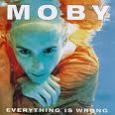
I suppose that everyone knows that Moby (the musician) is Herman Melville’s great- great- great- grandnephew.  And that’s why he has the middle name Melville and had the nickname Moby.

Moby started out as a techno guy. He even made the Guinness Book for the fastest bpm ever recorded (since then, many have surpassed that) with the song “Thousand.”  It’s an interesting song, although more for its novelty than anything else.  He also had a cool hit called “Go” that sampled music from Twin Peaks.  And in 1999 he took over the world with his album Play, which featured some 18 songs that were all licensed for commercial use (many of which were ubiquitous that summer).

But this disc, Everything is Wrong, came out before Play, and it was considered a high water mark for dance music (before the next high water marks of Fatboy Slim and LCD Soundsystem came out, of course).

So this disc was hailed as the big breakthrough for Moby.  And it has something for everyone.  It opens with a pretty piano piece ala Philip Glass which is, as its name implies, a “Hymn.”  From there we get a heavy techno beat and “Feeling So Real” kicks off.  Gospel-like vocals soar above the dancing (this foreshadows Play quite a bit).  It sounds very 1994 to me, although I don’t think it sounds dated, necessarily.  And then comes his stab at punk.  “All That I Need is to be Loved” is a fast blast of aggro music.   The problem is that Moby doesn’t do punk very well.  His guitars are too trebly, his vocals aren’t very strong and despite the beautiful melodies he creates, he doesn’t write very catchy hooks.

“Every Time You Touch Me” returns to the style of “Feeling So Real” and is another stellar dance track.  While “Bring Back My Happiness” runs even faster.

“What Love” is another screaming punk track.  This one is closer to Ministry.  It’s quite a slap in the face after the rest of the disc.

“First Cool Hive” slows things down with a groovy almost ambient track.  And “Into the Blue” is a moody song that sounds like it could also have been taken from Twin Peaks.

“Anthem” returns to the fast beats with ecstatic moans sprinkled over the faster and faster beat.

The album ends with two tracks, “God Moving Over the Face of the World” which is a beautiful instrumental (again ala Philip Glass or more likely Michael Nyman) that weaves in and around itself for 7 minutes.   (It, too, hints of Twin Peaks).  And, “When It’s Cold I’d Like to Die,” while not exactly uplifting is coldly beautiful (kind of like a long lost Eurhythmics track)..

The disc is such a mishmash of styles, that it’s hard to really know what to classify it as.  Some of it works wonders.  Other tracks (notably the punk experiments) are less successful (even though I did enjoy them then, I think they just didn’t age well…or maybe I didn’t age well).  Of course, over the course of his career, Moby has attempted all of these genres in more detail, so this was almost like a sampler of what he would be doing later.

Sixteen years later it holds up quite well (although I still think Play is better).

[READ: Week of June 7, 2010] Moby-Dick [Chapters 42-61]

The reading this week opens with a chapter about whiteness.  And how somehow Moby-Dick is even more fearsome for being white.  As the chapter opens whiteness (even in skin color) is lauded.  But by the end, he cites it as being particularly creepy: white whales, polar bears, albinos.  (I think that this was my very least favorite chapter so far–I was uncomfortable reading it and I didn’t get a lot of humor from it either).

Some more down time passes, with Ishmael describing how Ahab is able to plot a course to find Moby-Dick.  It’s not just looking for a needle in an ocean–there are pathways that whales follow, for instance.  This is followed by a chapter that allows Ishmael to swear, absolutely swear! that whalers can recognize the same whale even years later if you tried to kill it but failed (and that he himself remembers one whale that got away from a mole under its eye). (more…)

Read Full Post »

« Newer Posts - Older Posts »