Feeds:
Posts
Comments

Archive for the ‘Short Story’ Category

SOUNDTRACK: HURON-“Corktown” (2010).

Huron‘s “Corktown” opens with a guitar riff that sounds like classic 70s rock (hello Thin Lizzy!).  But when the song kicks in for good, the verses are a light, jangly pop.  It makes for a really interesting mix of styles and it works really well.

Some of the other tracks include the screaming rock of “Big Dig” (which has chord progressions of Neil Young but sounds nothing like Neil Young).  It also features some wonderfully stupid fat bass sounds as the song nears its conclusion.  “Bloodfire” has another great guitar solo.  And the vocalist sounds an awful lot like one of the guys from Sloan (who knew Sloan could be so influential?)

Thanks CBC Radio 3 for introducing me to this great band.

[READ: June 15, 2010] “Sun Na, Bird”

This final piece is at the same time the bleakest and yet most hopeful story of the group.

It is the near future and in this suburban Canadian town, all the humans have fled, with no intention of returning (the TV is still on in the house where the story takes place). (more…)

Read Full Post »

SOUNDTRACK: GALAXIE 500-“Big Bang” (2006).

When I saw this band come up on CBC Radio 3, I thought, I didn’t know that Galaxie 500 were Canadian.  Well, they’re not.  At least the early 90’s band Galaxie 500 aren’t.  But THIS Galaxie 500 are from Montreal.

Now, I understand that there are a lot of bands with the same name.  It’s prettyinevitable as there’s only so many permutations of common words.  But “Galaxie 500?”  How could they not know there was another band with that name, especially as seminal an act as Galaxie 500 was?  So, what is their name?  A tribute?  I just don’t get it.

And so I was prepared to hate this band on principle. But then I heard the song.  It’s noisy, crazy, brash and ballsy.  It’s not exactly punk, it’s sort of a garage band with sound effects (in many places it sounds like the more raucous Sloan songs).

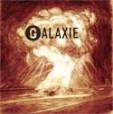
They also sing in French (which means they have more right to the spelling of Galaxie than the previous incarnation of the band).  Even though “Big Bang” comes from the top album Le Temps au Point Mort, I really enjoy this lower album cover more (and the songs from it (which you can hear on the band’s website) are also great.  As is the video (available there, too).

[READ: June 15, 2010] “A Few Acres of Snow”

This story starts out in reality and slowly shifts into a  more fanciful realm.  As it opens, a man arrives at a cabin. His intention is to write a book called One Hundred and Twenty-Seven Paintings To See Before You Die (I love the conceit of this, a sort of lazy man’s guide to touring the world).

He is isolated (which is what he wants), with no phone or contact with the outside word (or his family).  And then it starts snowing.  It snows harder and harder and plies up to his windows.  And then it goes higher still. (more…)

Read Full Post »

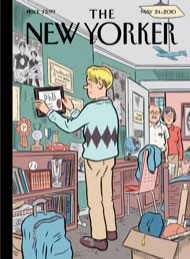
This week’s New Yorker contains a list of the 20 authors under age 40 that they predict we’ll be talking about for years to come.  Their criteria:

did we want to choose the writers who had already proved themselves or those whom we expected to excel in years to come? A good list, we came to think, should include both.

They have published eight of these authors in the current issue and are publishing the remaining 12 over the next 12 weeks.  I’m particularly excited that they chose to do this now.  Since I’m currently involved in two big book projects, it’s convenient to be able to read a whole bunch of short stories to intersperse between big posts.

I’ve read half of the authors already (likely in The New Yorker and McSweeney‘s).  And have heard of many of the others.   The list is below: (more…)

Read Full Post »

SOUNDTRACK: THE BEATLES-Help! (1965).

At last, a Beatles album that I knew from start to finish.  And here it is, another soundtrack album.  This disc is the first that starts to really embrace the diversity that The Beatles were capable of.

The title track starts out with the fairly shocking screams of “Help!” but it settles nicely into a poppy Beatles track.  Of course, I’ve yet to see the film of Help, so I don’t know how these songs fit in the movie. But as with A Hard Day’s Night, the first half of the songs were in the movie and the second half were not.  And somehow I’m surprised that “Act Naturally” (one of their funnier songs, even if they didn’t write it themselves) was not in the film.

Their other cover, “Dizzy Miss Lizzy” is probably my least favorite track (I just don’t like their cover choices).  But by then, the disc has well proven itself to be fantastic.

This also leads me to my first “huh?” moment with Beatles lyrics.  I have never understood “Ticket to Ride.” “She’s got a ticket to ride and she don’t care.”  Okay.  Why should I care, then?  I suppose the verses reveal more of the story, but from a chorus point of view, that’s a head scratcher.

To me, this is where The Beatles became THE BEATLES.

Oh, and did you know the semaphore doesn’t actually spell “HELP”?  They were going to do that, but the photographer didn’t like the way those semaphore letters looked.  So, he created this arrangement, which spells “NUJV.”

[READ: May 25, 2010] “please, thank you”

This story is written from the point of view of a stroke victim.  Mr Sanchez had a stroke and is hospitalized.  And we see him watching, unable to communicate, frustrated as people–nurses and others–hover around him, asking questions, turning on lights when he’s trying to sleep, and–the nerve–speaking to him in Spanish as if that was why he didn’t answer.

As the story progresses, we watch Mr Sanchez get stronger, go to therapy, feel better about himself and even, kind of, become friendly with the nurses and others who work in the hospital.

The story is basically that simple: regrowth after a stroke.  However, the writing style–the first person narrative–was absolutely compelling.  I enjoyed that the story was from his point of view, so we learned details as he felt they were worth revealing.  I enjoyed slowly learning more about his family.  And I really enjoyed learning why the story was written with no capital letters. (more…)

Read Full Post »

SOUNDTRACK: EVANGELISTA-Prince of Truth [CST061] (2009).

This is the second disc by Evangelista, the band fronted by Carla Bozulich. This disc continues in the vein or the previous disc, which is a little disappointing.

The disc is chock full of a lot of noise: stringed instruments, textures, layers, but they all add up to very little.  Bozulich’s voice is in another location entirely.  On most of the songs, there’s no real connection.

Two songs in the middle, “You Are a Jaguar,” and “Iris Didn’t Spell” are more reasonable attempts where Bozulich’s wild vocals are wedded to a more standard musical composition.  And those tracks work pretty well.  But when there’s so much directionless stuff floating around on the disc, it’s hard to want to listen to it.

[READ: May 25, 2010] “Afraid to be Men”

This is a conversation between two men.  They are given no context and are speaking abstractly.  These two things combines make for a less than satisfying read.

Admittedly, this piece is excerpted from a longer piece called “Manifesto.”  I’m not planning to read the longer piece, so I’ll never find out of context is given. (more…)

Read Full Post »

SOUNDTRACK: BBC Sessions (various).

Many many bands that I like have recorded tracks for the BBC.  And after several sessions, they tend to get released as BBC Live or BBC Sessions discs.  In the last few years, I’ve gotten discs from the Cocteau Twins, Tindersticks, The Beautiful South, Belle and Sebastian and Therapy?  One of the first ones I’d every gotten was The Smiths’ Hatful of Hollow.

I’ve always loved these releases.  The recordings are “live,” even though they’re not in front of an audience.  For the most part they don’t vary greatly from the originals (that’s not always the case, mind you, but most of the time it’s true.)

What makes these releases so great is that by the time the bands do these recordings for the BBC, the original album has been out a while and the band has toured a bit.  So, they know the song backwards at this point, and they usually record a version that’s faithful to the original but a little more playful.  I always thought that the Hatful of Hollow versions of songs were better than the originals.  It was many years before I understood why there were two “official” releases of the same songs.

There are so many BBC recordings out there (this is an incomplete list).  If you like a British band, chances are they recorded some sessions.  And I don’t know if the BBC is hard pressed for money or what, but they seem to be releasing them by the handful lately.  The biggest problem of course is that most of them are not available in the States (at least for a reasonable price).  And that’s a drag.  So find them used and enjoy!

[READ: May 19, 2010] Girl with Curious Hair

This is DFW’s first collection of short stories.  I clearly bought this copy soon after finishing Infinite Jest.  I was delighted to find as a bookmark an old stub from a sub shop that I used to go to all the time when I worked in Cambridge, Ma.  I wonder if that sub shop is still open.  It was in Brighton, was more or less on my way to work, had a predominance of Irish products and had delicious subs that were almost cheaper than buying the stuff yourself.  I had checked off a few stories in the table of contents (most of the shorter ones) but that stub brought back more memories than the stories did.  I didn’t even recognize the ones that I had apparently read.

And the stories are pretty memorable.  So I wonder if I didn’t read them at all.

The first story is “Little Expressionless Animals” (or, the Jeopardy! story).  In fact, if I may back up, the whole collection is really rife with pop culture, especially television references.  In David Lipsky’s book, Although of Course You End Up Becoming Yourself , DFW states matter-of-factly that he has an obsession with TV and pop culture, so this shouldn’t be surprising.  But for me it was disconcerting to have the pop culture not incidental or as a set dressing, but absolutely central to the stories. (more…)

Read Full Post »

SOUNDTRACK: FRIGHTENED RABBIT-The Winter of Mixed Drinks (2010).

I enjoyed Frightened Rabbit’s previous disc ever so much: a twisted blend of rocking folk music and very dark lyrics.  The fact that a number of these songs were used in Chuck was a treat for me.

I’ve never heard their first disc, so I don’t know how much their songwriting changed from disc 1 to disc 2.  But there’s a pretty huge leap from disc 2 to disc 3.

The most notable track has got to be “Swim Until You Can’t See Land.”   And it’s notable for having a really rocking and catchy and undeniable chorus.  They liked it so much, they reprise it later in the disc (with new instrumentation and such) on “Man/Bag of Sand.”

The rest of the disc sounds like Frightened Rabbit, but like the full band version.  There’s just so much music, that it actually distracts a bit from the lyrics (on the previous disc, the lyrics were certainly more of the focus).  There’s even a string arrangement on “Living in Colour.”

And yet despite all of these changes, they never lose what makes FR special: that voice and that outlook.  Although I’m sure I would have enjoyed if this disc was similar to the previous one, I’m always delighted to see a band take some chances and try something different.  And here they did, and it works wonderfully.

[READ: May 19, 2010] “Ash”

On April 14, Iceland’s volcano Eyjafjallajokull erupted.  And here, barely a month later, Roddy Doyle has written a story in which that eruption plays a role.  I’m impressed enough that he could get a coherent story written in that short amount of time, but I’m amazed that it was squeezed so quickly into The New Yorker‘s fiction schedule.  Admittedly, I don’t know how The New Yorker does anything, so I don’t know if they had a slot open (doubtful) or if they had to push back other stories (unlikely) or maybe he was slotted to give them something else, and whipped this out instead?  Beats me.  Whatever the reason, I was really surprised to see this here. (more…)

Read Full Post »

SOUNDTRACK: THE BEATLES-Beatles for Sale (1964).

After the riotous fun of A Hard Day’s Night, I expected that this disc would not only continue the fun, but also be full of songs that I’d heard all the time on the radio.

But wow, this disc is kind of a downer.  “I’m a Loser.”  Really? It’s catchy as all get out but what happened to these guys in this last year?  “Baby’s in Black.”  Wow, these guys are serious now.  The opener, “No Reply” is all about getting rejected.  And “I’ll Follow the Sun” is about leaving and losing a friend.

But there are some good times as well. The cover of “Rock n Roll Music” is a little too stiff for such a rollicking song (kind of like how “Roll Over Beethoven was a little too stiff previously).  But “Eight Days a Week” is a rocking good time.  Fun for all and the first sign that the fun Beatles haven’t grown up completely.

The second half of the disc I barely recognized at all.  One or two songs were kind of familiar, but I wasn’t singing along with abandon.

Yet despite my unfamiliarity, the disc shows remarkable progression in songwriting, in structure (and even recording techniques–again, the liner notes were really informative about the technology they used).  I doubt many people consider this their favorite Beatles disc, but I think it’s a fine transition into what’s to come.

It’s also quite surprising to see how much their hair has grown in a year.

[READ: May 16, 2010] “Lost in the Funhouse”

I read this short story because it is something of the foundation of David Foster Wallace’s story “Westward the Course of Empire Takes Its Way.”  This story is part of Barth’s larger collection also called Lost in the Funhouse.  And, based on this story, I’m looking forward to reading the rest of the collection.  But this story works in an of itself and, since it forms the backbone of the other story I’m going to mention it by itself.

This story is written in a thoroughly postmodern way.  As the story opens, with the enigmatic line, “For whom is the funhouse fun?,” we are introduced to Ambrose.  Ambrose has come with his family to the shore for “the holiday, the occasion of their visit is Independence Day, the most important secular holiday of the United States of America.”

Shortly after this italicized part, the story interrupts itself with this:

Italics are also employed, in fiction stories especially, for “outside,” intrusive, or artificial voices, such as radio announcements, the texts of telegrams and newspaper articles, et cetera. They should be used sparingly.

And so it goes with the rest of the story.  The author (one assumes) interrupts the flow of the narrative, letting the reader know that there is far more at foot here than just the story of Ambrose at the beach.

The story eventually gets back to the matter at hand: Ambrose, his brother Peter and Peter’s girlfriend Magda are driving with Ambrose’ parents to Ocean City.  This trip is made three times a year but this is the first time that Magda has come with them.  They play car games (spot the towers), and generally act like a family on a long car trip.

At this point the author interrupts again to note that:

So far there’s been no real dialogue, very little sensory detail, and nothing in the way of a theme. And a long time has gone by already without anything happening; it makes a person wonder.

Oh, and all along it is quite apparent that Ambrose is, as the title suggests, lost in the funhouse at the beach.

When they finally arrive at the beach, there has been an oil spill and no one wants to swim, so they stay on the boardwalk (not under the boardwalk).  Then the family decides to go for a swim in the pool.  At which point the author jumps in again and stops the meandering:

There’s no point in going farther; this isn’t getting anybody anywhere; they haven’t even come to the funhouse yet. Ambrose is off the track, in some new or old part of the place that’s not supposed to be used; he strayed into it by some one-in-a-million chance….

When the funhouse is finally mentioned as an activity, there is general hilarity and nudging and winking about what happens in funhouses (which Ambrose is too young to understand).  At this point, it’s worth noting that Ambrose has a pretty big crush on Magda.  He has spent many an afternoon with her while the three of them were playing (although she clearly thinks nothing of it).  When he suggests that he and Magda go in the funhouse together, everyone wonders what he’s thinking, but no one says anything (again, he’s too young).

Ultimately, the three kids make it to the funhouse, the entrance of which blows girls’ skirts up (and then Ambrose realizes the point of the funhouse!).  And he realizes that the funhouse is not meant for him.  And then he gets lost.

From there the story turns into fantasy, imagination and future possibilities.

It’s a fascinating piece of work.  I certainly wouldn’t want all of my stories to be constructed in this way, but I really appreciate this point of view and the, in my opinion, funny intrusions that break the fourth wall.

For reasons I’m not entirely clear about, the whole story is available here as a Word doc.

Read Full Post »
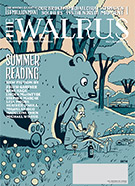
SOUNDTRACK: Thee Silver Mt. Zion Memorial Orchestra-Kollpas Tradixionales (2010).

Silver Mt. Zion are back!  And they are noisy!
This disc continues their fine output of haunting, rambling epics.  The opener is a 15 minute slow builder called “There is a Light” and the finale is a 14 minute story called “‘Piphany Rambler.”  In between we have  a couple of multi-part tracks: “I Built Myself a Metal Bird” and “I Fed My Metal Bird the Wings of Other Metal Birds” which are some of the fastest tracks they’ve recorded.  The other “suite” is 3 versions (and spellings) of the title track.

The one consistent thing about Silver Mt . Zion (in whatever version of their name they employ) is that they write incredibly passionate music.  It’s often raw and it swells and ebbs with feeling.  I especially enjoy the (multiple) climaxes that fill all of the longer songs.  And when the band brings in the horns and the strings and the whole group sings along, it’s very affecting.

The one thing that I’m still not totally on board with is Efrim’s voice.  On previous releases, I bought it because he sounded very angsty, but I’m starting to think that the tenor of his voice just doesn’t work with the bombast of the music.  When the backing singers chime in, the sound is glorious, but I find his voice to be simply the wrong sound.  There’s a few parts on the disc where he sings in a lower, softer register, and I found them really moving.  I think if he sang all of the parts like that, they would impact the songs more strongly (and maybe even be more understandable).

I realize that the vocals are an essential part to the disc, and I definitely get used to them after a few listens, I just feel like the whole disc (and not just the music) would be amazing if Efrim used that deeper register more.

Nevertheless, the music is really fantastic, and if you buy the LP, you get some great artwork, too.

[READ: May 13, 2010] McSweeney’s 34

After the enormous work of Panorama, (McSweeney’s newspaper (Issue 33)), they’ve returned with a somewhat more modest affair.  Two slim books totaling about 400 pages  Each is a paperback. The first is a collection of short stories artwork, etc.  The second is  nonfiction work about Iraq.  Both books are bound together in a clear plastic slipcover (with a fun design on it).  [UPDATE: I cannot for the life of me out the books back in the cover.  They simply will not sit without ripping the plastic.  Boo!]

The first collection opens with a Letters column, something that we haven’t seen in years!  And, as with the old letters column, the letters are absurd/funny/thoughtful and sometimes just weird. (more…)

Read Full Post »

SOUNDTRACK: The Beatles-With the Beatles (1963).
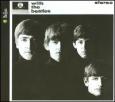
Reading the liner notes to these discs gives me a greater appreciation for what the Beatles did.  They put out these first two records in the span of eight months and recorded both of the discs in a matter of like 26 hours each.  That’s pretty amazing.

I’m also starting to think that mono may be the way to go with these early discs.  I mean I’m a stereo guy, but I’m listening to these discs in the car, and it’s weird to have all the instruments on my side and all the vocals over by the passenger seat.

As for this disc itself, again, I was surprised by how many songs I didn’t know on it.  It’s also funny to hear so many cover songs (although it makes sense this early in their career).  Especially since, for the most part, their originals are quite a bit better.  It’s also funny how many of these covers I think of as Beatles songs.  Especially, “Money.”  This disc closer is like “Twist and Shout” in that it really rocks the house down at the close of the disc.  It’s not quite as intense as “Twist” but it’s close.

The only real dud on the disc is “Roll Over Beethoven” which is remarkably stiff for a song about rock and roll.

Whether it’s the production or the amount of time they spent in the studio, this disc sounds more accomplished than the first.  And I can really see  what all the excitement must have been about.  Four good-looking guys singing about love.  What could be better than that?

[READ: May 11, 2010] “Free Fruit for Young Widows”

After reading the Holocaust-based story in McSweeney’s (post coming soon), and the Holocaust section of 2666, the last thing I was ready for was another Holocaust story.  And what a doozy this one is.

Sometimes, when reading a Holocaust based story, I worry that my emotions about the Holocaust will overshadow the quality of the story.  In other words, is it a cheap ploy, an easy setting to get a reaction from the reader.  This story definitely is not. (more…)

Read Full Post »

« Newer Posts - Older Posts »