Feeds:
Posts
Comments

Archive for the ‘Short Story’ Category

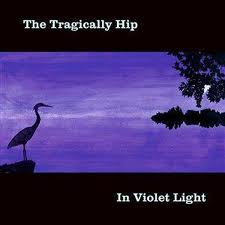
SOUNDTRACK:  THE TRAGICALLY HIP-In Violet Light (2002).

Back in 2000 or so, I was a little down on The Hip’s releases.  I may have even decided to give them a break for a while. But then I heard bits of In Violet Light and I felt that they were back to their strengths: anthemic rock with interesting hooks.  And the disc scales back the total time to about 45 minutes, so there’s less bloat.
“‘Use It Up'” is a pretty standard fast rocker but there’s nice subtle sounds in the bridge that make it a bit more.  But their two best songs in years come on this disc:  “The Darkest One” and “It’s a Good Life if You Don’t Weaken.” “Darkest” brings back that smooth low end that gets you moving and Downie’s voice just soars above the music.  And “Good Life” is a great slow builder, the kind they haven’t really done in a few albums.  Again, the bridge is great.

It’s followed by “Silver Jet” which features some of the most unusual sounds that Hip guitarist have made.  Squealing feedback sounds, which build to a great chorus.  “Throwing Off Glass” is one of their infectious ballads.

There’s a couple of okay songs towards the end, but the album comes back to life with “Beautiful Thing” a catchy, building rocker and “Dire Wolf” a great ballad in which Downie’s voice and lyrics (along with some interesting country tinged guitar) make this a great track.  And the album closer “Dark Canuck” is a slow builder.  It starts off somewhat plainly, but it keeps ratching itself up over 6 minutes to end the disc on a high note.

The Hip are definitely moving into a more mature period at this point, but they’re still writing interesting songs that are full of intensity.

[READ: February 15, 2011] “Wireless”

This story has a few components that tie together very nicely.  The major component is alcohol, for this is a story about an alcoholic.  And what I liked about the construct of the story is that it seems to take a while to gain focus, like the alcoholic herself.

It opens with observations about people who collect or obsess over something (her friend has a Glenn Gould obsession –glennerd she calls herself).  The story then tries to get us to meet the antagonist of the story, but, the story plays coy, making a joke out of how the two meet.  Finally, Joan and Ned meet in a bar in Toronto.  She’s from Vancouver, he’s from Newfoundland.

She is charmed by his east coast/Irish/Newfie ways and even though he hates to be seen as charming he assumes that this is a pick up so he lets it pass. Ned is in a trad band which plays lots of vulgar trad songs (sounds like a lot of fun,actually).  They have many drinks together.  He figures the night’s going well for him until we learn that Joan doesn’t like burly, hairy men, which Ned is.  She doesn’t invite him back to her room, but he invites her to visit him in Newfoundland any time.

She can’t get him out of her head, so she plans an excursion to Newfoundland, under the guise of writing a piece about the east coast for her magazine.  She argues that since that movie was filmed there and its very touristy now, it will be of interest to their readers.  (I don’t know what that movie might be).

Ned is excited to see her and they quickly get to drinking.  Ned’s Newfie hospitality makes him insist that she stay at his place that night, but frankly, her hotel is ever so much nicer than his house.  Rather, after much internal debate, she invites him to stay in the hotel room.

The next day they do some sight-seeing together–the go for a hike to the icebergs.  Ned is not as interested in the outdoors as Jane is, and Jane starts talking about how they (alcoholics) need to stick together and take care of each other (Ned is on his fifth cigarette by now).  Ned is put off by this, and their relationship gets strained very quickly.

But Ned is not willing to let her go and he makes some promises to her which she is not sure how to read.

It’s a dark story, that’s for sure.  I liked it, especially the way it came alive just before the end, but I had some complaints.  There was too much in the way of grand proclamations about “alcoholics.”  I got as annoyed by it as Ned.  But the really complaint is that, by the end, Jane is clearly the only person who doesn’t see what Ned is doing (readers figured it out a page earlier than she did), and it makes the ending all the more disappointing because although there is resolution, it’s rather unsatisfying.

But I did enjoy the story, and the ending threw in some wonderful surprises.  It just felt like the actual end missed a great opportunity to blow us away.

Read Full Post »

SOUNDTRACK: THE COCKSURE LADS-The Greatest Hits of The Cocksure Lads 1963-1968 (2010).

At last, The Cocksure Lads have released a greatest hits collection on CD.  These songs have been unavailable to anyone since the late sixties and it’s wonderful to be able to enjoy them again or for the first time.

Dusty Fosterboard, Reg Topping, Derek Millwood and Blake Manning wrote some charming rock back in the late 60s.   Their music was certainly forward looking.  Check out the rocking song (with keyboards–perhaps a Beach Boys influence?) “You’re a Cocksure Lad’ coming out in 1963 (while The Beatles were still doing fairly standard rock n roll songs and covers).  “You Gotta Stay Cocksure” (1964) sounds a bit more Beatlesesque, although perhaps a little more adventurous than Beatles songs at the time.

“A Case of the Dropsies” (1965) was a silly, almost novelty song (with a siren in the background), although it features a cool low-end guitar solo (and great harmonies). “Mushy Peas” seems like it would be a novelty, but it is a really a sadly passionate song of loss when the protagonist stops of for the titular dinner before heading for America.

“Ship’s Ahoy” (1968) comes from their concept album of the same name and while not as musically adventurous as any of The Beatles records, was certainly a fun (and different) song for the band–was that “oregano” joke a sly drug reference?  “Admiral Trafalgar” comes from this album too (and even mentions Hitler!–a political song in 1968?)

The charming and trippy “Umbrella Girl” also has some cutesy asides (I think a lobster bit my ‘and) and a cool autoharp as a major instrument.  “Ticky Boo” is a cute little romp: “Mrs Eng-a-land, a pack of crisps and me.”  They were even forward thinking on “That’s Any Good” in which one of the things that’s good is “when your country wins the arms race.”

There’s definitely some novelties here.  “A Car Boot Light That Never Quite Shuts Off” is an organ and voice song (with a crazily long note held at the end).  “I’ve Already Been Loved” opens with a very randy sounding “Wellllllll” but turns into a delightful, poppy number.  Of course, the final song, “Wellies in the Bath” is the obligatory goofball song (the “Ringo” song if you will).  And it is cute (especially at only 43 seconds).

The songs are charming and nostalgic, and even if you don’t remember them.  It’s a nice trip down memory lane[1]

[READ: February 20, 2011] “April Foolery”

I found this story because after reading The Ask, I looked up Lipsyte and Wikipedia said he has two short stories in collections (and no other short fiction pieces published–although I know The Dungeon master was in The New Yorker). Indeed, this was one of two.  I looked up The Revolution Will Be Accessorized up on Google books, and his entire story was available!  (It’s only two pages).

Looking at the rest of the authors, I do wonder if I’d like to read the whole thing. I’ll have to see if it’s in our library.  (It isn’t, but I’m going to interlibrary loan it).

Anyhow, this absurdly brief story is a sort of history of April Fool’s Day with modern suggestions for making it more fun).  It begins with the generally accepted premise that April Fool’s Day is tied to the adoption of the Gregorian calendar.  People were punished who did not know that this new calendar had updated the new year.  And this spirit of prankishness lives on.

Given that bit of background, Lipsyte offers six pranks for April Fool’s. (more…)

Read Full Post »

SOUNDTRACK : PHISH-Live Bait: Vol 2 (2010).

Phish has been releasing live concert downloads  for years now.  And now that they’ve started touring again, they have a whole bunch of new ones.  I’m not going to be downloading new shows, (I have a  bunch of old ones that I really never listen to).  But what I like is that they are giving away a few tracks from these shows.  And what I love is that they’re calling the freebies, Live Bait.

This set is a few tracks from shows recorded in August of 2010.  There’s nine tracks  ranging from 90 seconds (“NO2” ) to 17 minutes (“Twenty Years Later”).

Although this show is from 2010, this bait contains only two songs from their last album, Joy. The older songs are fan favorites (“Wilson, “Possum”) and weird interludes (“Kung”).  The band sounds fresh and really into what they’re doing and the old songs sound rejuvenated and fun.

Nevertheless, since most of the other live releases are older, it’s so nice to have the two new songs.  You can’t be choosy on a free sample, but I’d have loved to hear them do “Time Turns Elastic.”  If you’re new to Phish, this is a good place to get a free sample of their live shows.  Three volumes of bait have been released so far.

[READ: February 16, 2011] Ladies and Gentlemen, The Bible!

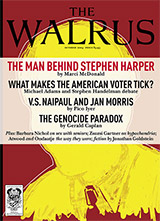
I discovered this book when I read the short story “Samson and Delilah in The Walrus.  I liked, but didn’t love, the short story, but I was intrigued enough to want to see how the other Bible stories would stack up.  And since we had the book on the shelf, I decided to check it out.

So this book is a retelling of several stories from the Old Testament.  What Goldstein does is create a backstory for these biblical characters who are really just sketches.  The stories are funny, serious, weird and often enjoyable.

The introduction is a very funny kvetch about at being a Jew and having dinner in the Grey Derby; waiting online for hours with so many other Jewish families, eating kosher food with your own family, fighting over the check, pointing fingers, calling each other names and, ultimately, leaving by 5:30 PM.  It made me laugh out loud in the best Woody Allen tradition.

With no real introduction, he moves right into his new versions of Bible stories.

The biblical stories that Goldstein updates include:

  • Adam and Eve
  • Cain and Abel
  • Noah and the Ark
  • The Tower of Babel
  • Jacob and Esau
  • The Golden Calf
  • Samson and Delilah
  • King David
  • part 1: Goliath
  • part 2: Bathsheba
  • part 3: Absalom
  • Jonah and the Big Fish
  • My Troubles (A Work in Progress, by Joseph of N–) (more…)

Read Full Post »

SOUNDTRACK: THE TRAGICALLY HIP-Music @Work (2000).

I tend to dismiss this Hip record for two reasons: the cover is pathetic and I don’t like the title.  Of course, the title track is catchy as anything, and, in reality, the whole record stands up quite well.

Music @Work rocks harder than Phantom Power did, although clearly The Hip are in a new mode of music making–no longer lengthy emotive tracks, now the make shorter, poppier tracks that explore what would have to be called their gentler side.  “Stay” is a very simple acoustic guitar track with maybe a bit of keyboards, but Downie’s voice is mixed so high it’s practically like a spoken word track (only catchy).

There’s a lot of songs that, while not brilliant, are catchy and very toe tapping like “The Completists.”  As I described their earlier stuff, this disc is above average rock, and this is a more adult-alternative rock than their earlier raw rock.    But there are a few louder rocking songs too: “Freak Turbulence” is a fast rocker  that comes in at under 3 minutes.  “Train Overnight” is a return to a somewhat rawer sound and “Wild Mountain Honey” has a great opening riff and some unexpected stops and starts.

Despite my negative thoughts about this record, listening to it again made me realize just how good it is.

[READ: February 15, 2011] “Warlords”

This story continues with The Walrus‘ flash fictions.  Again, I don’t see this story as being in the tradition of Flash Fiction so much as just being a very short story.  Of course, as with any good flash fiction, this story packs a ton of information in to a half a page.

The story is all about Warlords.  Duh.  But rather than looking at the warlord himself, Atwood looks at the people who live under a warlord.  Those who can work for him or those (women, bankers, writers) who will never be able to.  She then peels away the layers of the warlord’s minions until we reach the inner circle.

And what happens to the inner circle when a warlord is deposed?  Is that guy sweeping garbage a former member? (more…)

Read Full Post »

SOUNDTRACK: BIG DIRTY BAND-“I Fought the Law” (2006).

I just found out about this “supergroup” which was created for the Trailer Park Boys Movie.    The group consists of Geddy Lee and Alex Lifeson from Rush, drummer Jeff Burrows from The Tea Party and three people I don’t know: the singer from Three Days Grace, the singer/guitarist from Thornley and on lead vocals Care Failure from Die Mannequin.

I have to say that I’m not that excited by this cover.  The song has been covered so many times (some very good: The Clash, some very clever: The Dead Kennedys, and some terrible: many others).  And frankly there’s not much that you can do with this song.  It’s simple in structure with potential for shouting (which everyone likes), but little else.

For Rush fans, you can’t tell that Geddy or Alex are even on it.  So really it’s just a kind of metal-ish version of this old song.

Oh well, they can’t all be zingers.  You can hear it here.

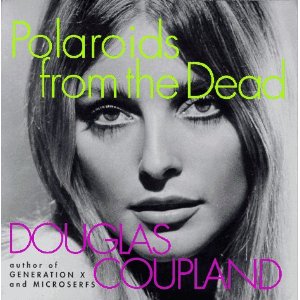
[READ: February 1, 2011] Polaroids from the Dead

After reading Shampoo Planet, I wanted to see if I remembered any of Coupland’s books.  So I read this one.  It’s entirely possible that when I bought this book I was disappointed that it was not a new novel and never read it.  Because I don’t remember a thing about this book.  (This is seriously calling into question my 90’s Coupland-love!).

But I’m glad I read it now.  It’s an interesting time-capsule of the mid-90s.  It’s funny to see how the mid 90s were a time of questioning authority, of trying to unmask fame and corporate mega-ness.  At the time it seemed so rebellious, like everything was changing, that facades were crumbling.  Now, after the 2000s, that attitude seems so quaint.   Reading these essays really makes me long for that time when people were willing to stand up for what they believed in and write books or music about it (sire nothing changed, but the soundtrack was good).

So, this collection is actually not all non-fiction.  Part One is the titular “Postcards from the Dead.”  It comprises ten vignettes about people at a Grateful Dead concert in California in 1991.  As Coupland points out in the intro to the book, this was right around their Shades of Grey album album In the Dark, and huge hit “Touch of Grey”, when they had inexplicable MTV success and it brought in a new generation of future Deadheads.  He also points out that this is before Jerry Garcia died (which is actually helpful at this removed distance).

These stories are what Coupland does best: character studies and brief exposes about people’s lives.  The stories introduce ten very different people, and he is able to create a very complex web of people in the parking lot of the show (we don’t see the concert at all).  As with most Coupland of this era, the characters fret about reality.  But what’s new is that he focuses on older characters more (in the first two novels adults were sort of peripheral, although as we saw in Shampoo, the mother did have millennial crises as well).  But in some of these stories the focus is on older people (Coupland was 30 in 1991, gasp!).  And the older folks fret about aging and status, just like the young kids do. (more…)

Read Full Post »

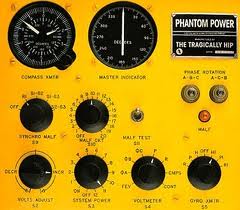
SOUNDTRACKTRAGICALLY HIP-Phantom Power (1998).

The last couple of Hip albums were pretty intense, and it seems like the live album seems to cured them of their need for raucousness. And so Phantom Power follows with a much less intense collection of songs.

The first three songs are somewhat loud and rocking, but they lack any of the twists and turns that the previous records had.  Rather they are pretty straightforward rock tracks.  “Poets” is catchy and fun to sing along to, with a good guitar intro.  And “Something On” is similarly rocking.  But after that the disc changes.

There’s a lot more folk and acoustic guitars here.  It’s an unexpected direction, especially when you figure that their first albums were so raw sounding.  In some ways that makes the album disappointing.

But what they have removed in intensity they have made up in subtler ways.  Take the cool harmonies on “Membership.”  I’ve always found their backing harmonies to be slightly off, usually in an interesting way, but the harmonies are perfected on this song, where they are more of an echo of Downie’s vocals which add a new sound to the song.

There’s a really fun rocking song about hockey (among other things) in “Fireworks,” although for all of its speed, it’s a very poppy track–there’s very little bass evident on the track (or most of the disc).  And it speeds along just as catchy as can be.

I have to wonder if “Vapour Trails” had any influence on Rush’s decision to name their comeback album Vapor Trails.  Probably not, but it’s fun to think about (and it is probably the heaviest song on this disc).

But “Bobcaygeon” is the obvious highlight (although it’s even better live)–the bridge into the chorus is sublime.  It’s one of their more mellow tracks, but there are cool twists and turns throughout.  Second is “Escape is at Hand for the Travellin’ Man” an uptempo but by no means rocking number that propels itself along on a simple riff and engaging lyrics.

I tend to forget about this album because it is not so intense, but listening to it again, I’m reminded not to overlook this album, even if it’s not a hit-worthy as some of their others.

[READ: February 8, 2011] “Samson and Delilah”

This story is a retelling of the Samson and Delilah biblical story.  I knew the original story pretty well, but I didn’t know that Samson was blinded (which he was).

This retelling is more contemporary (in langauge) and it is somewhat funnier (although it’s obviously not a funny story in the end).  Goldstein has added aspects that make it funny: anachronisms and such.  But he also imbues Samson (and Samson’s father) with characteristics that aren’t in the original. (more…)

Read Full Post »

SOUNDTRACK: MONEEN-The World That I Want to Leave Behind (2010).

I’ve liked Moneen’s discs; they played an interesting mix of grungey noisey rock and incredibly poppy emo.  And their song titles were really long and often funny (“The Frightening Reality Of The Fact That We Will All Have To Grow Up And Settle Down One Day,” “There Are A Million Reasons For Why This May Not Work… And Just One Good One For Why It Will”).

The first sign that The World I Want to Leave Behind is different is that their song titles are all really short.  The longest one is the title of the album–which is the shortest song: a 2 minute quiet intro that features some noisy guitars at the end.   The rest are 1-3 words long.  Now, perhaps you can’t judge a band by that; however, their music, like thier song titles, has eschewed complexity and embraced pop.  (“Believe,” “Waterfalls,” “Lighters”).

Okay Moneen always had this component to it.  So it’s not like suddenly the band is all pop.  Take “Are We Really Happy with Who We are Right Now?” from the album of the same name .  The song is all emo vocals (including harmonies) but the music is punky and noisy.  It’s also got a lot of dissonance.  Similarly, “The Start to this May be the End to Another” (from their debut), opens with really blasting noise and then turns into a heavy emo track with loud and quiet sections.  They are certainly poppy, but there’s at least nods to noise.

This album removes all of that noise and chaos and settles into to some tried and true emo.  If you hate emo, you will hate this album.  There’s virtually no dissonance on the disc at all.

Okay, that’s not entirely true.  The second song, “Hold That Sound” opens with some noiy aggressive guitars (and interesting noisy effects) and “The Long Count” has some noisy heavy opening chords which propel through the track.  But unlike earlier records, the noise gets pushed to the background pretty quickly.  “The Monument” also shows some remnants of heaviness–there’s even screaming vocals at one point.

And yet, the aforementioned “Wateralls” and “Lighters” sound like Guster-lite (and I like Guster quit a bit).

The final song, “The Glasshouse” does rock pretty hard (although the harmonies are all still there and the emo certainly seeps in by the end with a piano break and the final 2 minutes being all gang vocals).

Okay so in fairnes to the band, they haven’t smoothed off all the rough edged, but the polished bits are really polished now.  The thing is, I kind of like emo, so despite my tone, I don’t really dislike this record.  I’m always diasppointed when a band moves more commerical, especially if they cut off their more interesting bits, but Moneen make good emo (if you allow that such a thing exists).  I don’t like all emo bands, but there’s still enough interesting stuff here to keep me coming back to it.  In fact, for all of its poppiness, “Believe” is a really fantastically catchy alt rock song which should be in heavy rotation somewhere, if it’s not already.

[READ: February 13, 2011] A Place So Foreign and 8 More

When I saw that Cory Doctorow had a book of short stories out, I was intrigued. I’ve enjoyed two of his books quite a bit, so what could he do with short fiction?

This is some of his earliest work and I found it a mixed bag.

The first story “Craphound” was great (and the origin of his website name).  It concerns going to flea markets and buying all kinds of crap.  When you do it a lot, you become a craphound.  But when you take a fellow craphound’s crap of choice for yourself, you break the unwritten rule.  That’s all well and good.  But in this story one of the craphounds is an alien, like from another planet.  And what he trades for his crap is pretty wild.  But why would he break the unwritten rule?  The story is a fun look at what happens when extra-terrestrials are a part of your life.

“A Place So Foreign” was my absolute favorite story in the book, and one of my favorite short stories in quite some time.  I’m happy to say that I read it last, so it totally ended the book on a high note. Despite the cover picture with an “alien” hand holding a suitcase, the story has nothing to do with that at all. (more…)

Read Full Post »

SOUNDTRACK : BLACK MOUNTAIN-Wilderness Heart (2010).

As the Tea Party showed, it’s never too late to pay tribute to Led Zeppelin.  Of course in 2010, it seems really uncool.  So, why not go whole hog?  The opener, “The Hair Song” sounds uncannily like Led Zeppelin, from chord structure to guitar sound.  And then just wait until after a verse or two and you get the guitar solo which comes straight from a Led Zep song.  And, amusingly enough, the duet vocals of Stephen McBean and Amber Webber combine to sound an awful lot like Robert Plant.

It may not be fair to compare them to their forebears, but they seem so intent upon referencing them.  “Old Fangs” sounds a ton like Buffalo Springfield’s “Mr. Soul” (at least they’re fellow Canadians).  But the wonderfully 70’s-style sound of the keyboards raise the track above any mere copycat.

“Radiant Hearts” is a gorgeous acoustic ballad where you can really appreciate the split vocals of McBean and Webber (and which should make you go back to the first two songs to really listen to how great they sound together.  This is that rare ballad that doesn’t feel like a kind of sell out track.

“Rollercoaster” returns to the 70’s-lovin’ with a monster riff (and a solo) that Tony Iommi would be proud of.  But rather than simply bludgeoning us, the riff stops in its tracks and then slowly builds itself back up.  “Let Spirits Ride” moves out of the 70s and sounds a bit like a Dio riff circa 1983.  But there’s some cool psychedelic vocal processing on the bridge (and a massive organ solo) to really mess with your retro time frame.

“Buried by the Blues” is followed by “The Way to Gone.”  They’re both folkie songs (although “Gone” features a re harder edge).  After the heaviness of the first half of the album , these tracks seem like a bit of surprise but they match the album’s retro feel very nicely.  “The Space of Your Mind” reminds me in many ways of Moxy Fruvous’ “The Drinking Song” (you won’t see that reference too much to this album).  Until the chorus comes in, when it turns into something else entirely.

But it’s not all mellow for the end. The title track has some heavy riffage (and great vocals by Webber–she reminds me of some of the guest vocalists on The Decemberists’ The Hazards of Love, although she really sounds like any number of great 70s rock vocalists).  I love the way the track ends.  The disc ends with “Sadie” another folk song (which makes the album half delicate folk tracks and half heavy rockers). It’s a fine song, but the album is kind of ballad heavy by the end, and the teasing drums and guitars just never bring forth the climax I was looking for.

Despite the obvious homages to classic rock bands, (if you can get past that, the album actually sounds fresh (or maybe preserved is a better word) and strangely original.  Like the preposterous cover, the album is preposterous–over the top and crazy.  Yet unlike the cover, the pieces all work together to form a compelling picture.  Obviously it helps if you like classic rock, but there’s nothing wrong with good classic rock, now is there.

[READ: February 14, 2011] Literary Lapses

Despite the cover picture above, I actually downloaded this book from Google Books (and the cover of that one was boring).

So, obviously, reading the biography of Stephen Leacock made me want to read some of his humorous fiction.  True, I also wanted to read Mordecai Richler, but his books are much longer and I wanted this done by the end of February!

So, according to Margaret MacMillan, it is this book, specifically the first story, “My Financial Career,” that solidified Leacock’s reputation as a humorist.  And I can totally understand what she means (without having read the other books, of course).  “My Financial Career” is indicative of the others stories: not laugh-out-loud funny, but clever, kind of silly and very smile-inducing.  The gist is that the narrator is very nervous about going into a bank with his large amount of cash ($56!).  He asks to speak to the manager who thinks he’s Very Important and then proceeds to embarrass himself further. And further. It’s quite amusing.

“A Christmas Letter” is one of my favorite in the book.  It’s a very snarky look at a friend’s Christmas Party, with a great punchline.  And stories like “How to Make a Million Dollars” or “How to be a Doctor” are wonderfully amusing tales in which the narrator mocks the wealthy and “professionals.”

There are 42 stories in this book, so there’s bound to be a few clunkers.  Some were mildly amusing, some were mere trifles, and some are crazily out of date for a 2011 audience.  This book turned 100 years old last year.  (Neat). (more…)

Read Full Post »

SOUNDTRACK: RHEOSTATICS-Live at the Bathurst Street Theatre, Toronto ON, April 5, 1997 (1997).

This is the second of two nights that The Rheostatics played at The Bathurst Theatre.  It is also available for free on their live site.

This concert also features a lot on their Double Live album.  There are seven tracks that come from this show: “Feed Yourself,” “Shaved Head,” “Dead is the Drunkest You Can Get,” “Bees,” “A Midwinter Night’s Dream” “Stolen Car,” and “Good Canadian.”

This recording is a lot better (sound wise) that the previous night’s and the band seems a lot more “on.”  And, the band interacts with the audience a lot.  “Feed Yourself” is great and “Mid-Winter” is stunning (both understandably picked for the live album).  There’s an amusing “drum solo” during “Legal Age Life.”  It’s a great set.

Some interesting notes: this is the first time the band has played “Stolen Car” live (and it hadn’t been released yet). It’s the same version as on Double Live, but here you hear a lengthy pause in which “Martin left the lyrics in his bag” and Dave has to entertain the crowd.  “Good Canadian” also on Double Live, was a spontaneous little ditty that Martin made up.  Also, during the show, they encourage people to listen to Nightlines, because it is danger of losing its funding.  Fans will know that Nightlines went off the air not too long after that and the Rheos played the final show (and released an album of it).

Of the two shows, this one is definitely preferred.  And even if you have Double Live, it’s worth downloading this entire show..

[READ: February 7, 2010] “Axis”

Alice Munro has another great, subtle story here.  This one mixes things up a little bit in the storytelling, which I found intriguing and more than a little fun.

It opens with Grace and Avie, two farmers daughters who are at university.  They are studying intellectual subjects, with the hope (let’s be honest) of finding intellectual boys to marry eventually.  They are obviously not sorority material (just look at their coats), but they don’t really want boys who like sorority girls anyhow.

After we follow them for a bit, we narrow the focus to just Grace.  Her boyfriend Hugo is on his way to visit her at the farm (and to meet her parents).  He does not make a very good impression, and he is not to fond of them either.  And, worse yet, they won’t leave them any time to be alone.  Until Grace hatches a plan for them to be alone, which, if you’ve read any fiction, you know won’t turn out too well (but that’s not the climax of the story, don’t worry). (more…)

Read Full Post »

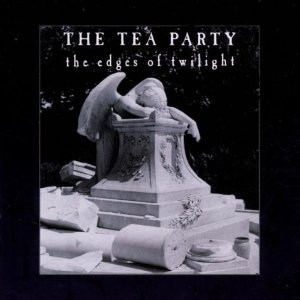
SOUNDTRACK: THE TEA PARTY-The Edge of Twilight (1995).

In the way that Ian Astbury of The Cult reminded everyone of Jim Morrison, so does Jeff Martin, singer of The Tea Party.  He looks a bit like him and he sings in a baritone voice that, while all his own, sounds like perhaps a 1990s Jim Morrison.

This, their third album, is full of what I think of as their trademark sound: all manner of exotic instrumentation laid over heavy Zeppelinesque riffs.  Opener “Fire in the Head’ is not unlike “Kashmir” in its riff, and what’s funny is that the exotic instrumentation makes it sound even more like “Kashmir” than “Kashmir” does.  Zep didn’t use instruments like the sitar and sarod to make their sound more authentic.  Indeed, authenticity seems to be what the band is going for, as later albums describe them spending time in the middle east where they learned to play these instruments more proficiently.

“The Grand Bazaar” takes that concept further with some really Eastern sounding music within a very heavy rocking track.  And “Ianna,” although not my favorite track, really showcases the Middle Eastern instrumentation in this cool, twisty track.  There’s also a more traditional rock number, “Drawing Down the Moon” which features lengthy blues-guitar solos over a fairly conventional track.

It’s not all heaviness though, as “Correspondences” is a seven minute piano based ballad in which Martin’s voice is right in your ears.  It’s on this track that you decide whether you love his voice or think he’s preposterous.  If the latter, well, then there’s the beautiful instrumental “The Badger.”  And “Shadows on the Mountainside” is a quieter acoustic number in which Martin sings in his much more delicate range.

But perhaps the most over-the-top, and consequently, best track on the disc is “Sister Awake” which features 12-string guitar, sitar, sarod, harmonium and goblet drums.  It starts slowly and quietly and builds into multiple climaxes (complete with loudly whispered “Sister!”).

Whether or not this confers any kind of approval on The Tea Party or not, Roy Harper (as in “Hats Off to Roy”) does a spoken word bonus track at the end of the disc.  I don’t know much about Roy Harper or what he was up to in 1995 (perhaps he’d do anything for a buck?) but it give an air of legitimacy, no?

The Tea Party is a band that splits people into love it or hate it groups.  They have sold millions of copies and yet there are those who despise them.  Their next album Transmission found some success in the U.S. because it was a bit more industrial sounding (with samples and loops), but they never really broke through down here.

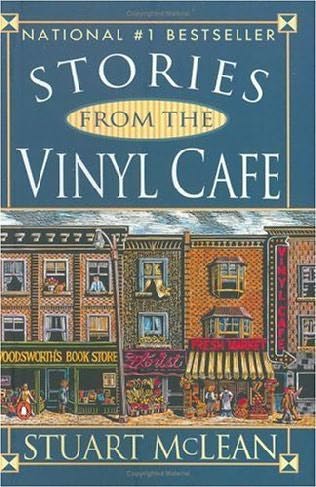
[READ: February 4, 2011] Stories from the Vinyl Cafe

I’m not sure how I found out about this book.  I know I bought it in a Chapters in Toronto.  I wonder if it was on a display and I was intrigued by the title.  Or, more likely, I had heard a bit about him in my preparations for my trip and decided to buy his book.   Whatever the case, I didn’t read it until now.

McLean is described in one of the (practically a dozen) pages of praise and advertisements for his other books as a Canadian Garrison Keillor.  And, as lazy as that seems, it’s fairly accurate.  Especially because although McLean is a humorist (he won the Stephen Leacock Memorial Medal for Humor), like Keillor, who is mostly funny, McLean also deals a lot with serious matters.  Indeed, some of the stories in this collection are utterly unfunny: ending with a dead dog or a dead grandmother.

And here’s the thing.  These stories are slices of people’s lives.  They are incidents that impact them and are worth recollecting, but that don’t cause anyone to change.  They’re like perfect little anecdotes, and I imagine they are excellent to hear aloud. (more…)

Read Full Post »

« Newer Posts - Older Posts »