Feeds:
Posts
Comments

Archive for the ‘Short Story’ Category

SOUNDTRACK: SURFER BLOOD-Live at SXSW (2010).

I really enjoyed Surfer Blood’s album Astro Coast.  There was something familiar about it, yet it never aped any sound exactly.  It’s a fun collection of upbeat almost-summer music.

This live set is a great representation of the band.  They don’t break from the CD all that much, but the band is lively and generous.  They play 7 songs, all of them fast and fun (they say that one song is going to be slow, but it seems to wind up as fast as the rest-and someone in the crowd shots “Play another slow one”).

There’s some good banter and the audience is very appreciative.  It’s great set and worth checking out even if you don’t know them yet.

[READ: March 28, 2011] “Pericles”

This story is set in Greece in 1941.  Bulgarians have occupied the land.  And as the first few paragraphs explain, a thief has come to steal some goats.  The goatherds catch the man (a Bulgarian) and kill him.

When the Bulgarians find out, they take it very seriously.  The army travels to the village and rounds up every single male and all of the young females and intend to shoot them in the center of the city.

The story pulls back to explain that during the occupation all of the men were forced to do labor.  This even includes Pericles, the strongest man in the village.  Before the occupation, he was a helpful giant, able to throw four bundles of hay at a time.  Of course, Pericles was also fearsome, and if he got drunk (which he did from time to time) everyone in the town hid until he sobered up (except for his diminutive wife who could calm him down with a look). (more…)

Read Full Post »

SOUNDTRACK: PETER BJORN AND JOHN-SXSW May 26, 2009 (2009).

This brief set at SXSW (available from NPR & KEXP) showcases the band’s (then) new record Living Thing.  The album was just about to be released, so these are all previews of the album (“New music is the best music”).  The album itself is very sparse and these live songs are equally sparse, but are slightly different in construction (some songs have different instrumentation live than on record).

The crowd is very responsive, and the band is really funny.  During “Just the Past” there’s a section where the song sounds like it ends, but it is just a pause, and the band tsk tsks the audience for applauding too early.  There’s also a joke about John being Joaquin Phoenix and taking up a career in rap.

It’s a wonderfully lively set, even if it is a bit short (the gripe with almost every SXSW download).  It’s a good introduction to the album and a great introduction to a band who has been around for ten years and just started making inroads into American consciousness a few years ago.

[READ: April 16, 2011] Five Dials #1

Five Dials is an online magazine.  It is free to subscribe (and to download).  All previous issues are available on the site in PDF format.  I learned about it because they printed the eulogies for David Foster Wallace in Issue 10.  But the magazine looked interesting in itself, so I decided to go back and read the whole run (the most recent issue is #18).

The only real complaint I have with the magazine is that they don’t put a publication date anywhere on it.  Which is a shame if you’re anal retentive like me. According to Wikipedia, the inaugural issue came out in June of 2008.   It’s a monthly (ish) publication and, although I originally thought it would be a literary magazine, it proves to be very much of a magazine-magazine.  And a good one at that.

There’s a letter from the editor, there’s Current-ish Events, there’s essays, reviews and even fiction.  There’s also a “classic” letter from a “classic” author.  The magazine also has some very cool black and white art in it.  The style is very crisp and one that I find quite agreeable. (more…)

Read Full Post »

SOUNDTRACK: SONIC YOUTH on NPR [interviews and stories] (2006-2009).

While I was finding all of these awesome downloadable shows on NPR, I also found that there are hundreds of downloadable NPR stories about all kinds of bands.  But I was especially interested in the Sonic Youth ones because, well, I’m a fan of the band, but also because it seemed so incongruous to me to hear Peter Sagal introducing a story about Sonic Youth (with noise rock in the background).

The three downloadable shows cover the period from 2006-2008.  It’s no coincidence that this is the Rather Ripped period, where the band is at its most commercial.  And yet it is still pretty neat to hear them play samples of the noisier music as well.

The first one, A 25-Year Experiment in Artful noise (June 12, 2006) appeared on All Things Considered.  It is an interview from WHYY (but with the Peter Sagal intro!).  Joel Rose asks the band about their longevity as well as the history of their sound (this is where Thurston admits that their unusual tunings were because their crappy thrift store guitars sounded very bad in normal tuning).  This interview also revealed to me that Thurston and Kim were married in 1984.  I knew they were an item forever, but didn’t know they were official for that long.  Well done!

The interview also mentions their appearance on the beloved show The Gilmore Girls.  They watched the show with their daughter, Coco and heard Sonic Youth mentioned a few times (by cool chick Lane).  So they got in touch with the producers and were invited on set (I wonder if the actress who played Lane liked them as much as Lane did?).  And they played a fun “troubadour” version of one of their songs on the show (with Coco on bass).

The second download, Story of a ‘Kool thing’ (June 13, 2008) is more of an interview with David Browne, whose book Goodbye 20th Century:  A Biography of Sonic Youth, I have not read (although it sounds good).  This interview delves into their earlier music a bit more (how cool to hear Tom Violence on an NPR show–admittedly this show is The Bryant Park Project, so it’s not quite All Things Considered).  This segment is a general overview of the band’s history and of the book itself (but unlike the book, this offers snippets of music!)

The third one has a rather snarky title: “Turning ‘Sonic Youth’ Fans Into Readers” (January 27, 2009). It’s not so much about the band as it is about a book curated by Peter Wild called Noise: Fiction Inspired by Sonic Youth.

It’s a brief segment which delves into the inspiration for the book and for Wild’s own story “Radical Adults Lick Godhead Style.”  There’s a strangely credulous tone to the whole piece which makes it seem like they don’t really like the book.  I’m curious about the book as there are a few well-recognized writers on board, but I’m not sure if I’ll ever get around to reading it (although Amazon sells used copies for $2.50).

Contributors include:

Hiag Akmakjian • Christopher Coake • Katherine Dunn • Mary Gaitskill • Rebecca Godfrey • Laird Hunt • Shelley Jackson • J. Robert Lennon • Samuel Ligon • Emily Maguire • Tom McCarthy • Scott Mebus • Eileen Myles • Catherine O’Flynn • Emily Carter Roiphe • Kevin Sampsell • Steven Sherrill • Matt Thorne • Rachel Trezise • Jess Walter • Peter Wild

[READ: April 18, 2011] 826 NYC Art Show Catalog

This item is always for sale pretty cheap at the McSweeney’s site.  It recently was marked down to $3 so I figured I’d check it out.  This is a collection of art prints.  Each one is on a stocky paper just under  8 1/2″ x 11″.  The prints are reproduced beautifully (there’s about an inch and a half border (making them suitable for framing).  The back side of the print has a review of the print.  And, most amusingly, the reviews are by 6 to 8 year olds.

The art is hard to summarize, as it covers a lot of ground.  There’s a ton of different styles as well, from straight ahead photography to line and pencil drawing to painting.  These artists each have one page: (more…)

Read Full Post »

SOUNDTRACK: SONIC YOUTH on World Cafe, August 21, 2006 (2006).

Travelling back even further on the NPR timeline, Sonic Youth appeared on World Cafe in 2006 to promote Rather Ripped.

This is a brief session (only three songs) but as with the interview with Thurston Moore, David Dye does another great interviewing the band here.  Although it must be said that saying the band is once again a four piece (when clearly there are five people in the picture and in the studio and when he later says two guitars, two basses and drums–which I also think is incorrect, as I’m pretty sure Kim switched to guitars at this point, although I don’t know if she did during this set) is not a great way to start the interview.

Facts aside, the interview is informative and interesting and provides a glimpse into the band’s psyche all these years into their career.

The set is also good (although Thurston’s voice sounds a little off on the opener “Incinerate”).  The surprising thing about the set is that even with the five of them, the feeling is one of restraint. True, the songs on Rather Ripped are not as noisy as previous records, but this feels like they are trying not to wake anybody up the NPR folks.  It’s a weird feeling for a Sonic Youth set, but the plus side to it is that you can really hear everything clearly.

The other two songs are sung by Kim: “Jams Run Free” and “What a Waste” (why do they never promote any of Lee’s songs??).  And there’s the very amusing comment that the first time they played “What a Waste” Thurston and Kim’s daughter said it sounded like the theme from Friends.  Ha!

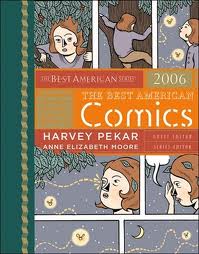
[READ: April 15, 2011] The Best American Comics 2006

I just recently learned about this series from The Best American line of books.  I had known about the Best American Short Stories and Essays and even Non-Required Reading (which I have not yet read).  But once I found out about the best comics, I knew I had to check it out.

The first issue came out in 2006.  The series editor is Anne Elizabeth Moore and the Guest Editor for this volume was Harvey Pekar.  Each of them has an introductory essay in the book.  To me the amazing thing about Pekar”s essay is how aggressively defensive he sounds (a sort of, “you may not like this one, but try this one” attitude) about these comics and comics in general.  I don’t know much about Pekar’s work.  I know he’s a kind of underground icon, but I seem to have missed him.  My impression of him is that this sort of antagonistic/defensive attitude seems to go along quite well with his comics, so I guess that makes sense, but I didn’t find it very welcoming.

But that’s okay, because I really enjoyed the comics.  And quite a few were by artists that I had never read before, which is even better! (more…)

Read Full Post »

SOUNDTRACK: THURSTON MOORE-World Cafe Studio, November 16, 2007 (2007).

This World Cafe set is a nice contrast to the all-acoustic performance mentioned yesterday (even if it was recorded earlier).  Thurston has a full band with him (including Steve Shelly on drums).  Samara Lubelski from the other session is here too.  The band brings new dimensions to what are mostly the same set of songs.  Both sets included “The Shape is in a Trance,” and “Fri/End” but this one also includes “Honest James.”  The contrast is striking though.  The songs are bigger with the band (and allow for more intricacies) but they are still intimate.

  The interview is also interesting.  David Dye is a fantastic interviewer and he gets some great (and funny) answers out of Thurston. The whole description of how the lyrics to “Fri/End” came about is really cool (if unlikely).

Thurston and NPR: perfect together.

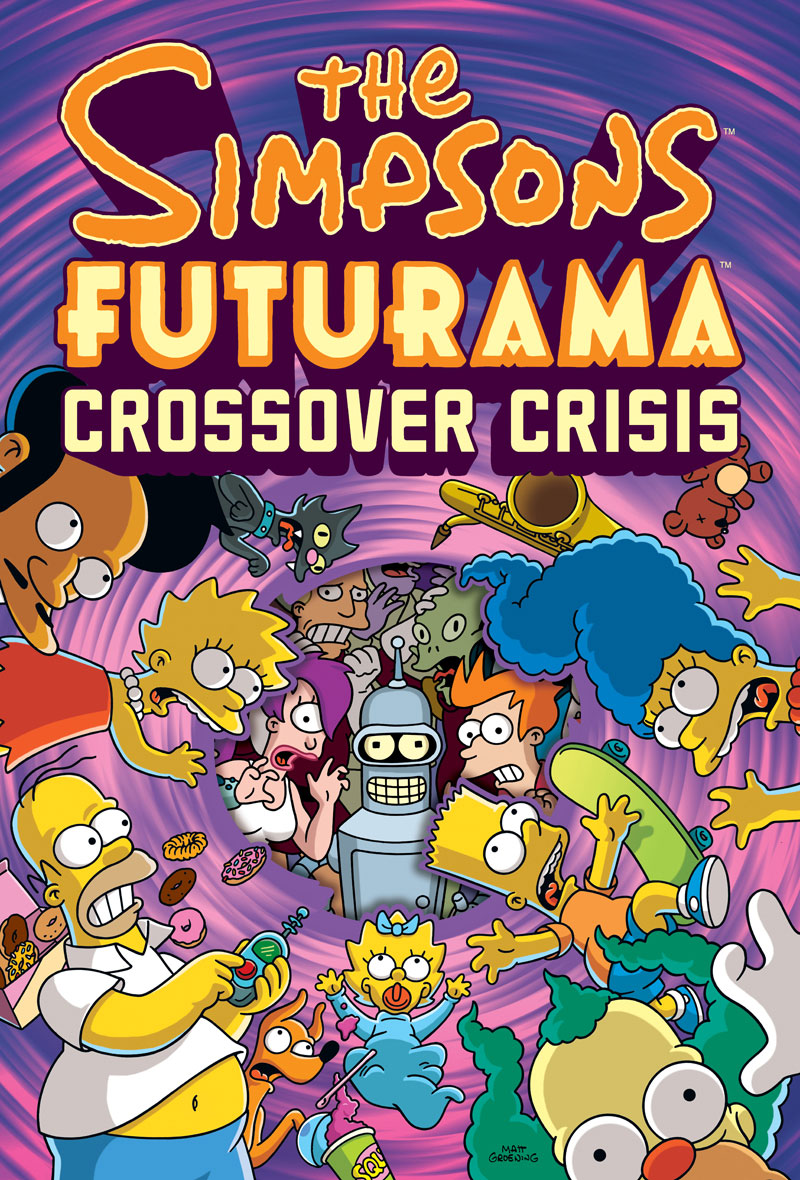
[READ: April 15, 2011] The Simpsons Futurama Crossover Crisis.

This was a wonderful Christmas surprise from Sarah this year.  It is a beautifully packaged (slipcase with a cut-away opening) hardcover edition of the 2002 & 2005 Simpson/Futurama crossover comics issues.

Despite all of my fondness for The Simpsons and Futurama, I never really got into the comics (gotta draw a line somewhere).  But they have Matt Groening’s seal of approval, and they play jokes with things that the show never really touches (not to mention, the shows never tries a crossover event–I can’t even imagine how that would work). (more…)

Read Full Post »

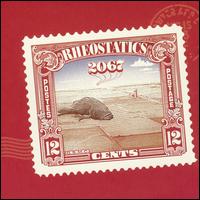
SOUNDTRACK: RHEOSTATICS-2067 (2004).

This was the Rheostatics’ final release.  I’m not sure if they knew this would be their last disc, but it kind of feels like they are throwing everything they can into it.

It opens with a delicate song from Martin which reminds me of Jane Siberry (the “row upon row” section).  Although at about 4 minutes it starts rocking out.  It’s a kind of meandering song, which is odd to open an album with.

It’s followed by “Little Bird Little Bird” a great folky song form Bidini.  But the disc really come alive with “Marginalized” a song that reminds me in some ways of “Horses,” as it is rocking and a little twisted (it seems surprising that it came from Tim Vesely).  It’s got some great guitar and an impressive keyboard solo (!) from new member Michael Phillip Wojewoda.

“The Tarleks” follows (with some fun frog noises). It opens slowly (as Martin songs tend to do) but once it really takes off, its got a great riff with his wonderful dramatic pauses and really funky sound from the bass/keyboards.  Then we get the wonderfully odd “Power Ballad for Ozzy Osbourne.”  It’s a kind of joke (but not really) about rock performers aging gracefully.  Bidini gets a bunch of songs on this disc, and here he gets two in a row, with the bizarrely wonderful “I Dig Music.”  The subtitle is “The Jazz Animal” and it tells you a lot about the song…it is indeed a kind of high-octane jazz.  But it has many different segments (and a lyric that references Squarepusher).

“Here Comes the Image” is a 6 minute track from Vesely which sounds very much like his more mellow tracks.  I’m not sure his tracks belong in the middle o f a disc because they tend to really bring the momentum to a halt.  Although it is a pretty song, it’s quite mellow (the organ solo at the end is pretty sweetly retro).  It’s followed by the five-minute slow instrumental “Who is This Man and Why is He Laughing?”  It really feels like an album ender.

So when “The Latest Attempt on Your Life” comes in, it revitalizes the sleepiness that those two songs imbue.  This track has the wonderful repeated chant “Everyone hates you, you sing like a woman”).  “Polar Bears and Trees” follows and it’s another kind of crazy song from Bidini.  It has such simple verses but the chanted “hey hey ho ho” rocks hard and is wonderfully fun.  (The lyrics are clever too).

Vesely returns with the beautiful, wonderfully catchy “Making Progress” which has another great retro keyboard solo at the end. The final track “Praise This Mutilated World” is one of the most beautiful songs in their output.  It starts as a fairly simple acoustic track (Bidini knows a good melody).  At about two minutes in, the band joins in with amazing harmonies.  The quiet parts keep coming back only to be overwhelmed by the harmonies once again.  The last two minutes are a spoken section.  It goes on a bit long, but is redeemed by another gorgeous chorus.

There’s a bonus track which is a very electronic version of  “Record Body Count.”  So this disc is definitely overly long in some places.  There are some great parts to the disc, but it feels like it could have used a good editor.  Nevertheless, since it’s the band’s final release, respect is due.

[READ: March 15, 2011] “Water Spider”

This very short (three-pages) story turned very dark rather quickly.

It opens with an African man, Bokarie, settling into his life as a convenience store clerk in Ottawa.  We learn that he was granted asylum, and that he has the scars to prove it.  He was quite nervous about leaving his country, and he still puts cinder blocks behind his door, to discourage uninvited guests.

At the same time, the action of the story concerns the accidental drowning of Caitlin, a young girl who presumably got too close to the creek when it overflowed.  The town is obviously distraught that one of their youngest and most innocent kids was killed, and they are planning a memorial service.  They are encouraging everyone to wear pink to the service and are even hoping to get a wreath put on the town’s crest.

Bokarie looks on this entire scene with a kind of bemusement.  His life in Africa was full of death.  Most of it horrifying.  So he seems somewhat unsure of what to make of the town’s outpouring for one lost child.  And then the story slowly reveals a shocking truth.

The truth is NOT that he killed Caitlin.  That’d not how the story is going (I didn’t really think it would go there, but it was a possibility).  Rather, the truth comes out about Bokarie himself, and his life back in Africa.  And it’s frankly horrible.

As the story draws to a close, Bokarie makes a decision that is going to impact the community.  It’s a little unclear what his motivation is, but it opens so many possibilities, that it really brings out a whole new realm to the story,

In some ways this story reminded me of Damon Galgut’s “An African Sermon (from The Walrus July/Aug 2004)  which also had an African character whose past has a hidden element and which turns out to be much darker than originally laid out.

Read Full Post »

SOUNDTRACK: RHEOSTATICS-Night of the Shooting Stars (2001).

This was the first CD by The Rheostatics that I bought as it was released.  I had gotten into them in 1999 or so, and I remember being very excited that this disc was coming out.  I ordered mine from Maple Music (and it was even autographed!) and I recall the evening it came in the mail and I sat in my kitchen rocking out to it.  Night is probably their most accessible disc. There’s a bunch of tracks from Tim Vesely, (who writes the sweet melodies) and although Martin Tielli’s wonderful weirdness is present, it’s more weirdness within conventional songs rather than unconventional song structures.

The disc also features a lot of heavy guitar work.  The disc opens with a heavy guitar riff which morphs into an upbeat poppy number.  Of course, how many pop numbers are titled “These Days Are Good for the Canadian Conservative Youth Party Alliance,”  (Tielli, of course).  There’s a catchy repeated bridge “these days are good for us now” even if the chorus (chorus?) features the bizarre line: “I chipped my eyetooth on the back of a urinal.”

It’s followed by two of the catchiest, poppiest, most wonderful songs the Rheos have done “Mumbletypeg” a delightful ditty sung by Dave Bidini with (again) a wonderful chorus.  And, “P.I.N.”, (Tielli) too catchy by half, and featuring the wonderfully weird lyrics, (in a great descending melody): “You’ve got the key to my heart; you’ve got the P.I.N. to my guts”

“Superdifficult” is sung by Tim Vesely, and sounds a lot like the kind of songs he would later writer for The Violet Archers (he has the most delicate pop sensibility in the band).  Tim also sings “We Went West.”  It kind of slows the pace of the record down, but it is a beautiful song (done with different guitars in each headphone).

“The Fire” is a charming ditty sung by Tielli.  It continues the mellowness of “We Went West” and runs with it until Bidini takes over vocals and adds some heavy guitars.  They end the song with some beautiful harmonies and some screaming guitars.

The next two songs, Vesely’s “In It Now” and Bidinis’ “Here to There to You” are slight songs which are more charming than catchy.  They’re followed by the last three tracks which end the disc with a bang.

“The Reward” has a cool slinky riff and great vocals for Tielli. It’s also sprinkled with some heavy guitar pyrotechnics late in the song.  “Remain Calm” is a calming song from Vesely.  It seems perfectly located between the craziness of “The Reward and the wonderful rocking nonsense of “Satan is the Whistler.”

I always think that “Satan is the Whistler” is a much longer song (it’s six minutes) because there are two official parts to it.  The first 3 minutes are slow and moody, then half way through it bursts into a tremendously heavy riff (complete with whistles!).  It’s a great ending to the disc.

There are also two previously recorded tracks here in new form: “Song of the Garden” is from The Story of Harmelodia, done in a slightly more rocking version here.  And “Junction Foil Ball” (Tielli) was on their odd Nightlines Sessions release.  It opens with some odd effects and guitars and evolves into an incredibly, incredibly catchy riff.  The version here is not vastly different, but it’s a bit cleaner.

I’ve really loved this disc.  And even if the middle is a bit slow, it still rocks.

[READ: March 11, 2011] “Barnyard Desires”

This was a surprisingly odd and twisted story.  And for The Walrus, it was quite long, as well.

It opens with Leona hearing noises in her ceiling.  She suspects that the noises are from rats.  She has called the landlord out several times, but he hasn’t seen any rats.  In fact, he has stopped coming out because he thinks she’s crazy.  She imagines what the rats are up to up there: procreating mostly.  Eventually, she notices a kind of brown stain on the ceiling, which she is convinced is the rats mating and urinating.  The stain grows larger and larger, and it is right above her bed.  She also believes it is taking vaguely human shape.

Meanwhile, we learn about her upstairs neighbor.   The first time they met was in their building’s elevator.  He proudly (and very closely) admittedly that he was recently born again.  She made a quiet comment, turned away and hadn’t really spoken to him since. (more…)

Read Full Post »

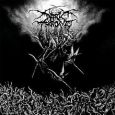
SOUNDTRACK: DARKTHRONE-“Kathaarian Life Code,” (1992), “Sacrificing to the God of Doubt” (2004), “Canadian Metal” (2007).

After watching Until the Light Takes Us, I wanted to check out some of Darkthrone’s music.  According to their Wikipedia page, over the years the band who pioneered black metal has morphed away from the sound.  They’ve added elements of punk and speed metal to their bludgeoning sound.  In the movie Fenriz says that he listens to all kinds of music and is very open-minded.

Kathaarian Life Code” is a ten minute dirge of black metal.  It opens the band’s second album (considered to be a black metal classic) with chanting and guttural spoken words.  Then it blasts forth with the jackhammer style of drums that is now standard in black metal.

It slows down from time to time, allowing for the really heavy parts to blast through the chaos of the fast parts.  It’s pretty intense and not for the faint of heart.  You can hear occasional guitars screaming through the din, but the production is intentionally murky, dark and noisy.  As they say in the movie, the bands intentionally recorded on the shittiest equipment they could find.

Sacrificing to the God of Doubt” is a later song, taken from what is considered their final album in the black metal style.  The band was turning away from the traditional black metal sound, and there are elements of punk (guitar riffs that are audible, and a sound that is less bass heavy) present.  And the production, while still mired by noise is relatively cleaner.

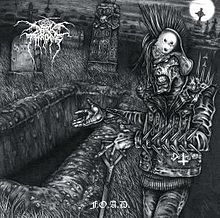
Canadian Metal” is from their third most recent album, after the shift from black metal was more or less official.  It sounds more like an early death metal song.  There’s low tuned notes, audible vocals (growled, but you can actually hear words) and a kind of headbanging aspect to it.  The album is called F.O.A.D. which was a song by Venom (and others, obviously), and this track reminds me of Venom somewhat.  I wouldn’t say that the band has sold out because there’s no way anyone is playing this on the radio, but it’s interesting to see how a band has managed to change things up and add new elements to its sound even though they were the forerunner and grandfather of a scene.

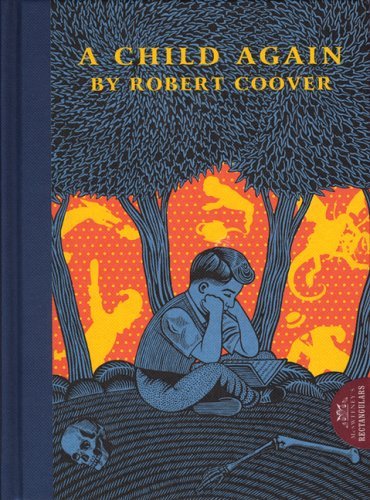
[READ: February and March 2011] A Child Again

This is a collection of short stories from Robert Coover.  There is a kind of theme throughout (most of) the stories about returning to childhood.  But the overall sense is one of despair, sadness, pointlessness and sex.  Lots and lots of sex.  And the sex is usually as vulgar and nasty as the tone of the book suggests it would be.  It’s a little off-putting, actually.

I was planning to say that I didn’t like this collection at all because I really didn’t enjoy the first half-dozen or so stories.  I continued because Coover has a great reputation that I didn’t want to give up after a few misfires.

The real disappointment came because the stories seem so promising: many of them are a kind of retelling of classic fairy tales that looks at “what happened afterward.”  However, and this was true for almost all of them, Coover tries to do two contradictory things with the stories.  He is playing with fairy tales but he is also writing stories that are completely unlike fairy tales.  By that I mean, Coover’s stories are long and very detailed, they bring far too much information to the story.  And a fairy tale is almost by definition short.  I mean, “Puff the Magic Dragon” is a song that’s about five paragraphs long.  But Coover’s “Sir John Paper Returns to Honah-Lee” is 26 pages long.  So instead of playing with the original, it feels like an original story that uses someone else’s characters.  It’s unsettling and unsatisfying.

It’s also not very funny.   And I’m not sure fit’s supposed to be.  But with a title like “Sir John Paper Returns to Honah-Lee” you expect the funny.  And there are funny moments.  I mean the whole premise is that little Jackie Paper has grown up into Sir John Paper.  He’s now an old Knight and he is sent to slay the dragon (Puff) who is plaguing the city.  Even though that is a tragic story, it is also inherently humorous.  And there are laughs when they reunite.  But it gets so bogged down in details, that the essence of the story seems to get lost.  Perhaps I’m just disappointed because it (they) turned out so unlike I wanted them to be. (more…)

Read Full Post »

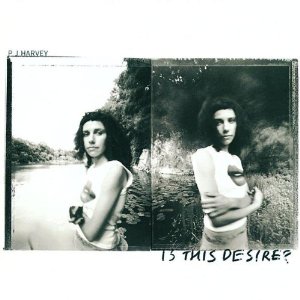
SOUNDTRACK: PJ HARVEY-Is This Desire? (1998).

After the (to me) disappointing To Bring You My Love, PJ Harvey came back with Is This Desire? This disc seems like it took the techniques she explored on To Bring and added more structure to her songs.  Harvey’s songs are by nature minimalist, and that’s why I found To Bring disappointing: it was too minimal.  She fleshes things out here–there’s a kind of Nick Cave quality to the disc as well, especially on the opener “Angeline.”  (She had sung with Cave on his then recent disc)).

These first two songs show an amazing range.  “The Sky Lit Up” has some odd guitar effects and some crazy screams later in the song.  It’s less than 2 minutes long.  As is “My Beautiful Leah,” which is over the top noisy and distorted.  It’s as sinister a song as Harvey has written.  “The Wind” has a wonderful whispered vocal, but it is dynamic and allows her quiet background music to forge its own path).  The harmony vocals are a very nice touch.

But it’s “A Perfect Day Elise” that shows that for all of Harvey’s textures and sounds, she really is a singles writer.  This is a noisy track, but the chorus is simply beautiful.  A fantastic anthem for the late 90s.

But then the disc takes a turn for the ethereal.  “Catherine” and “Electric Light” are quiet, creepy numbers that never really engage. “The Garden” tries to come out of this quiet, and manages somewhat.   “Joy” is another of Harvey’s spookier songs (she can do insane things with her voice) that is filled with anguish.

After these tracks, Harvey returns to the earlier style of the disc, with the beautiful, haunting (but not creepy) “The River.”  “No Girl So Sweet” follows with a noisy short track utilizing some techno aspects and a lot of distortion.  Harvey rocks this song very hard with some great vocals, too.

The final track is “Is This Desire?” It opens with just drums and Harvey’s voice.  It builds in complexity until it reaches a  delicate chorus.  It’s a really beautiful, if not dark, song an a nice ending to a CD that is something of a mixed bag.

[READ: March 23, 2011] “Pride”

I tend to read a lot of peculiar short stories.  So every once in a while, I really enjoy reading a story that is simply about a person or two trying to get by. And if you ever want to read stories about simple human connection, Alice Munro is the way to go!

This story confused me at first because I normally assume that the protagonist of Munro’s stories is going to be female.  This one didn’t state one way or another for a few paragraphs, so I was reading him as a girl (especially since he was talking about another girl in his town).

But no, it is about a boy.  It opens in the 1920s in a small town in Canada.  The protagonist is a poor but reasonably happy boy–with a harelip.  The girl he is talking about is named Oneida (an unusual name that did not catch on in town).  Oneida’s family is wealthy.  Like in a class by themselves wealthy.  Until, that is, her father makes a bad investment (with his bank’s money) in steam automobiles and loses more than his money. (more…)

Read Full Post »

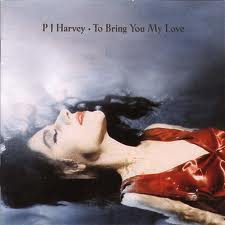
SOUNDTRACK: PJ HARVEY-To Bring You My Love (1995).

After the intensity of Rid of Me, To Bring You My Love ratchets things down a bit.   In fact, it almost seems like Harvey wanted to explore a more mellow side.  I was disappointed in the disc when it came out, although I do think it has a couple of her best songs on it.  The overall tone is simply too atmospheric for me (and I like atmospheric music, I think I just don’t like her version of it).

She dumped the PJ Harvey band, and worked primarily with John Parrish on this disc.  But her voice is deep and resonant throughout the disc.  The disc seems to be easily broken into three styles of song:  brooding, quiet songs; distorted loud romps and catchy songs that have  kind of folk base.

The broody quiet songs dominate the disc.  “Working for the Man” is a very quiet–drums, quiet organ,and a shaker.  “Teclo” and “I Think I’m a Mother” are moody pieces.  After the dynamics of Rid of Me, you expect a big noisy section to come next, but it never emerges.

The louder, more rocking songs are sonically loud.  The title song is pretty much just her and a distorted guitar (not unlike Neil Young), while “Meet Za Monster” has a Tom Waits quality.  Of course, the real power comes from the devastating “Long Snake Moan.”  It’s a five-minute scorcher of a song full of screaming intensity.  And also from the amazing single, “Down By the Water.”  It has an intense distorted bass that buzzes seductively through the whole song.  And when the whispered vocals come in it’s an unexpected sonic triumph.

The third style, acoustic rockers, shows up on “C’mon Billy,” a gorgeous acoustic track with Harvey’s voice strong and proud, and “Send His Love to Me” another intense vocal song.  Both of these songs thread her wonderfully catchy acoustic guitar playing with her rocking sensibilities.

The final track on the disc doesn’t fit neatly into any camp.  “The Dancer” is a moody piece, but Harvey’s vocals are loud and strong and probably the most interesting on the disc.

Even though I don’t like this disc as much as her others, I still acknowledge that there’s some great stuff here.

UPDATE: My friend Lar mentions an interview with PJ Harvey in Mojo.  I’ve made it accessible here.

[READ: March 17, 2011] “Rollingwood”

This is a story about a man who is overwhelmed by his life.  But unlike those of us who suffer from general overwhelmedness, Mather has some very specific problems that conspire against him.

The second, and less obvious one is that his work is less than forthright to him.  His supervisor doesn’t communicate well, there are temps in his cubical and, worst of all, the daycare center where his son goes during the day is closed inexplicably.

The first and more obvious problem is his son, Andy.  Well, more to the point the problem is that his ex simultaneously doesn’t think he does a good job rasing their son, but she also has no problem leaving Andy with him when she runs off with her new boyfriend.

Of course, Mather doesn’t speak up for himself in any of these situations so he is not innocent in the problems.  However, Andy’s mother is pretty much a capital b bitch.  She takes off with her new boyfriend for an unspecified amount of time and doesn’t leave any kind of contact number (Andy has health problems, too), yet she still doesn’t accept responsibility for her actions.  And when Mather’s office’s day care center is closed, there’s not very much that he can do. (more…)

Read Full Post »

« Newer Posts - Older Posts »