Feeds:
Posts
Comments

Archive for the ‘Short Books’ Category

SOUNDTRACK: tUnE-yArDs-Tiny Desk Concert #179 (December 1, 2011).

tUnE-yArDs perform three songs in this Tiny Desk concert.  Merrill Garbus doesn’t chat a lot between songs, but she’s clearly having a good time (witness them all jumping at the end of “You, Yes You” and how much she smiles at the end of the set.  This is a wonderful opportunity to see and hear her live sampling technique in a small setting (with close up cameras!).

Her voice sounds great–she pulls off all of those voices that she conjures on the record.  And her ability to sample herself and make it work is wonderful to witness (I never imagined that some of those “sirens” and “keyboards” are actually her voice).

The live band is also really hot.  The bassist really hold everything together and the horns sound great–duplicating the sound of the record with just enough flare to keep it original.

And to think she’s making all of  that guitar noise with a ukulele!  It’s pretty groovy.

Watch it here.

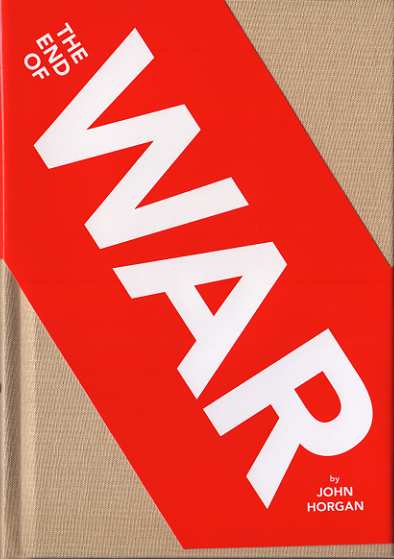
[READ: January 21, 2012] The End of War

This is a non-fiction book in which Horgan believes that in the not too distant future (his lifetime I believe), we will see the end of war.  Not the end of violence, nor anger nor aggression–he’s not crazy–but military campaigns against another country could be ended if we reversed our fatalism about war’s inevitability.

Horgan is a writer for Scientific American and in this book he uses the scientific method to show that ending war is utterly possible.  Now, although Horgan is himself kind of a pacifist (he’s not entirely one, this interview explains), his family is not–his father and grandfather are both veterans and his son is looking to enlist in the army.  Nevertheless, Horgan feels that war is not a viable way to solve problems and that the cost of human life is never worth it.

His research shows him that war should be thought of as a solvable, scientific problem—like curing cancer.  The difference is that cancer is outside of our control, while war is not.  But like cancer, war can infect any society–there is no “reason” for it, but it is like a virus–it infects all cultures, even peaceful ones.  If one culture is aggressive the peaceful neighbors need to prepare for war or move away.

Horgan anticipates skepticism, indeed, many of the sources he quotes are skeptics, and he deals with all of their arguments accordingly.  He looks at those who say that war is genetically part of humanity (as many people believe) or that the best way to prepare for peace is to prepare for war (as just about everyone seems to believe).  He looks at those who say that scarcity causes war (not necessarily true), to those who say that as long as there are guns there will be war (he disagrees).  He has a reasonable, believable argument for all of these doubts.  He even shows that the whole “alpha male, XXY chromosome” argument has been disproven and while men are more prone to violence, they are not more prone to wage war.

He also shows scientific evidence that war has not been around as long as people (or even apes) have existed.  Indeed, the first evidence for “war” (as opposed to violence) is 10,000 years ago (not much in humanity’s timeline).

He culls data from previous wars to show that the causes of wars can never be narrowed down to one thing.  And yet, rather than seeing this as a negative–that so many things cause war, he sees it as a positive–that causes of war are not monolithic and impervious to breakdown.

I was skeptical of this book when I started reading it.  I was willing to accept the various scientific answers that he showed (that war is not innate, for example) but my skepticism came because of what I guess you call the military industrial complex–that our military budget is huge and is not going to go down any time soon.  Just see how much protest is garnered by the miniscule amount that President Obama wants to reduce it.  [Everybody knows this truth but it’s worth seeing in print–our military budget is more than almost every other country combined.  China, who spends the next largest amount on their military has a budget that is 1/6 the size of ours.  That is shocking and depressing and a horrific waste of money].

But his point is that like with so many other things that we have outlawed or abolished over the years: slavery, apartheid, monarchy (as opposed to democracy), acceptance of torture; if we have enough consensus we can also abolish war.  He gives examples that it’s actually not as hard as we might think.  Germany and Japan become pacifist virtually overnight (it was forced on them, but they have taken to it with no problem) and even better, Sweden and Switzerland are pacifist voluntarily.

He also points out that war is already on the wane–although the United States was in two wars very recently, the warlike nature of the world is much less than it was even as recently as the first half of the 20th century.  The number of casualties from war has dropped dramatically compared to World War I.  We simply need to find ways to solve crises that do not involve killing people.

All of the chapters were interesting in this book (the book is more or less set up to deal with an issue per chapter).  Some of the chapters were a little long but at 186 pages (plus a bunch of citation pages) this book is short overall.  I appreciate all of his scientific rigor and his ability to show the arguments and then knock them down.

For me, the most interesting and satisfying chapter was the one that found that preparing for war, despite claims that it is necessary, actually does not keep a people safe. That the allocation of resources towards war removes resources from things that actually make people’s lives  better: art, culture, medicine, health.  Preparing for war doesn’t keep us safe, it actually harms us.

Similarly, he shows that competition for resources is not necessarily a cause for war.  To the contrary they have found that in some cultures scarcity brings out altruism.

In short, he says that the only thing that prevents us from abolishing wars is our fatalism that war is inevitable.  The more fatalistic we are about war the more we accept hawkish ideas which perpetuates more war. Once we stop believing that and we try to work towards the end, he believes that we war can end very quickly.

Horgan doesn’t really calm my fears about the military industrial complex–but who knows with enough popular opinion, maybe voters can change things.  It’s a wonderful thought.  And here’s hoping that this post can spread the good word.

And here’s an interview with Horgan that addresses a lot of these questions.

Read Full Post »

SOUNDTRACK: MATANA ROBERTS-COIN COIN Chapter One: Gens de couleur libres [CST079] (2011).

This is an abrasive album.  Not only does it has some massively skronking free-jazz, but it is also aggressively political, dealing with slavery and race.   So, if the heart-rendered screams of Roberts don’t make you uncomfortable, the description of a woman on the auction block will do it.

I listened to this album a number of times and kept thinking that it would probably work much better live than on record.  Lo and behold, if I’d read the liner notes more closely I would have known that it was performed live.   (The final song has an introduction and cheers at the end, but none of the rest of the album indicates that it’s live).

I like free improv jazz (when I’m in the mood of course) and I also like noise jazz (John Zorn mostly).  So I’m not averse to a lot of the genre.  But there was something odd about this recording to me.  And this is where that whole “live” recording comes into play.  This music felt like it was being performed for an audience.  I don’t know what the difference is, but it’s one I heard.  I can imagine images going along with the show.   And because of that, I feel like I was missing a crucial element.

The liner notes don’t explain anything about the show itself, nor how this person apparently named Coin Coin relates to her (it seems vaguely autobiographical, but I’d love to know more).

There are moments of rather conventional beauty on this recording.  The song that contains the “Bid ‘Em In” section is a great singalong (of course, when you realize what you’re singing about, you’re horrified).  And there are some other sections where Robert’s voice melds perfectly with her band and with Gitanjali Jain’s backing vocals.

The final song is a very moving song written for her mother.

The only thing I really don’t like about the album is Roberts’ poetry-slam-type singing.  I have complained before about this type of sing-song delivery, which just irks me.  I can see that there are times on the album where it works, but for the most part it feels arbitrary (as it always seems to me).  And when you have crazy improv jazz you need something to hold it down.  The poetry slam lyrics don’t do that.

This is not for everybody, but it is certainly a powerful album.

[READ: January 16, 2012] Vicky Swanky is a Beauty

McSweeney’s has gotten me to like a lot of things that I never thought I would–a cooking magazine, a sports magazine, long out of print unheard of titles.  But they simply cannot get me to like flash fiction.  Okay, that’s not entirely true.  Deb Olin Unfurth is quite a master of the genre.  But man, I just cannot get into Williams’ short short stories.

The majority of these stories are two pages long.  This means 12 lines on the first page and anywhere from a quarter to a full-page on the second.  But there are also some stories that end after one page (12 lines).  So here’s the little drinking game I invited.  Since Williams’ stories end so arbitrarily, try to guess which ones end after those first twelve lines and which ones continue on to the next page (it’s not really a fair game because some stories end in ten lines or so, but you get the idea).

Take “Cockeyed” (more…)

Read Full Post »

SOUNDTRACK: MR. DREAM-“Holy Name” (2011).

The cool site Bob Dylan Wrote Protest Songs created a Top 20 list of 2011 albums.  It was an interesting mix of stuff other people liked (PJ Harvey, St. Vincent, Bon Iver) and a whole bunch of stuff that I’d never heard of (like this band).

BDWPS explains that the two guys in Mr. Dream met in college and are music critics (with Pitchfork in common among their employers).  And we all reflexively gag at the thought of music critics making music. 

This song opens as a direct rip off of Nirvana’s “Lithium.”  I mean, it’s unavoidable–same quiet guitar playing virtually the same chords.  It infuritaed me.

But on a second listen, I heard the differences.  They are the same chords as “Lithium” except that the final chord in the sequence goes in a different direction, as does the rest of the song.  It’s rawer than Nirvana (at least than Nevermind), but it has the same feel and attitude.  Maybe with a hint of Slint thrown in. 

I was prepared to write this off as a Nirvana rip off, but of course, Nevermind is twenty years old.  I think their music is just part of punk consciousness now.  And it’s nice that Mr. Dream makes good use of it.  Raw and angry.  Very nice.  I can’t wait to hear the rest of the album.

[READ: December 30, 2011] “Max reviews the classics”

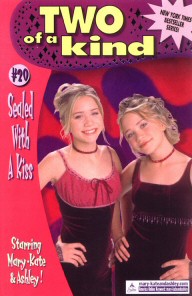
May-Kate and Ashley Olsen are a really really easy target, and I’m a little embarassed for Max that he went after them with this review, but it is still pretty funny (and it’s not like they can’t take it).  The “review” is not as fish-in-a-barrel as it might be. 

The introduction is funny: “Last night I took a break from re-reading Cryptonomicon to pick up a book roughly as long as one of its paragraphs: Sealed with a Kiss” (with links provided for each).

He is clearly setting out to mock the book, I mean how could he not.  But the things he points out are interesting not so much from a Kate and Ashley standpoint as from a book standpoint.  Indeed, he spends a lot of time on just the first sentence: “‘We’re going home to Chicago for only two weeks!’ Mary-Kate Burker told her sister Ashley.”  Max points out, “who, exactly reads the 20th book in the Mary-Kate and Ashley series without realizing they’re sisters?  …If you’re worried about readers that stupid, you probably need to point out that they’re twins too.”  That’s a little harsh to the series as, yes, it is obvious, but the series is clearly written for young kids, and frankly in terms of exposition, that’s pretty brief.

A more salient (and funnier observation): “I can’t help but wonder what percentage of Mary-Kate and Ashley books contain an excalamtion point in the first sentence.  I haven’t checked, but I get the feeling it’s a high number.”  Hilarious. (more…)

Read Full Post »

SOUNDTRACK: tUnE-yArDs-WHOKILL (2011).

I bought this album because NPR was raving about it back in the summer.  When I first played it I was really disappointed.  rather than the interesting experimental music, it sounded like a kind of unpleasant R&B.  So I put it aside for a while.  And when I listened to it again, I was really blown away by it.

For those of you unfamiliar with tUnE-yArDs, there are three or four different singers in the band.  There’s the raspy voiced R&B singer that opens the album.  There’s the whispering vocalist and the spoken word backing vocalists of “Es-So.”  And there’s the rasta singer of “Gangsta.”  There’s the soulful male who sings “Powa” and the woman who can hit the amazing high notes at the end of “Powa.”  And all of those singers are named Merrill Garbus.  For she is more or less the one woman operation behind the band.  (I’m a little unclear if the rest of the musicians are part of her band or just session folks).

I have deliberately been avoiding reading about Merrill Garbus before writing this because I didn’t want to be influenced by reality.  I honestly had no idea who she was or what she looked like when I started listening to the disc.  I assumed, by her voice, that she was a black woman.  But then the liner notes talk about Jewish grandparents and the disc itself includes samples of them, and they are clearly white.  And then yes I saw a photo of her, and she’s quite white.  None of that is of any consequence except to really highlight the chameleonic nature of the music and how it really transcends genres.  That’s pretty awesome.

 The trick that you will read about ad nauseam about tUnE-yArDs is that Garbus loops her own stuff live.  It’s not screamingly apparent on the disc but you can certainly hear stuffed looped as the disc goes along.

This album made almost every best of year-end list.  And that surprises me somewhat because it’s not always easy listening.  “My Country” has all kinds of screamed parts, a staccato horn solo and a cacophonous ending.   The second song, “Es-So” opens with a some clunking drums and what seems like a slightly out of tune guitar playing a simple, aggressive riff.  The rhythm and tune of the song is infectious and yet so…odd.  “Gangsta” is one of my favorite songs of the year.  It opens with a great bassline and then several “sirens” which I suspect are Merril’s own voice.  It seems to end after 2 minutes but there’s more…a bizarre interlude in which the song seems to have a hard time starting up again.  (“bang bang bang oy, never move to my hood coz danger is crawling out the wood”).

“Powa” is probably my least favorite song on the album although I still like it.  It’s slow and kind of ballady but the vocals are just so wild it keeps it from being dull.  “Riotriot” is strange meandering song full of peculiar percussion.  It’s a bit too long, but there’s some really interesting parts, especially at about 3 minutes when the song suddenly turns into a psychedelic freak out.  “Bizness” opens with Garbus’ crazy distorted voice over some pretty descending notes (which I assume are from Garbus’ pretty singing voice).

“Doorstep” has a bunch of fast sha la las that I normally dislike but which work so well within the song and with Garbus’ amazing, angsty singing near the middle of the song.  “You Yes You” has some great guitar work in the beginning and a very fun segment that ends with a big “Ha!”  “Wooly Wooly Gong” is a cool slow song, minor key with delicate vocals.  The disc ends with “Killa” another great song featuring Garbus’ rough voice and scratchy guitars.

The whole album keeps you on your toes.  There’s something for everyone, but it’s all mashed together so it’s not always clear than anyone will like it.  It’s a really fun release and although it took me several listens to really appreciate it, I simply can’t stop playing it now.

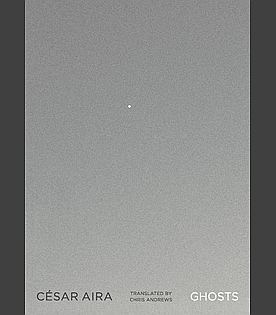
[READ: January 9, 2012] Ghosts

I had planned to read this book a little earlier than I did, but then three holds came in from the library which pushed everything back (those were all new and this book, well, to be fair, I’m not sure it was ever checked out, so I was allowed to renew it).  The only bummer thing about it is that this entire story is set on New Year’s Eve, so it would have been nice to post it then.  Oh well, what’s two weeks?

So, this is the first novel by Aira that I have read.  I really enjoyed his short story recently and, since Roberto Bolaño is a big fan, I wanted to see what he had written.  As I’ve mentioned elsewhere, Aira has written approximately forty-five novels (!) (since 1981 (!!)) He had five in 2005.  Most of them are fairly short (Ghosts is less than 140 pages), so it’s not quite as daunting as it could be.  And for English readers, there are only seven books translated into English.  So now is the time to jump on his bandwagon!

This novel was translated by Chris Andrews, who has translated many of Bolaño’s shorter works as well.  I did notice one or two British/Australian spellings in there (Andrews is Australian).  But I am very impressed with the translation, especially the occasional fifty-cent words that were wonderful choices (I wish I had written them down).

The story itself is fairly simple, although there are waves of complex ideas that come throughout.  As I mentioned, the entire story is set on New Year’s Eve in Argentina (which, North Americans please note, is really really hot–like super crazy hot, which is a little disconcerting to read during a cold January].  It’s also almost entirely set in one building (there’s a quick trip to the market).  And the bulk of the story centers around one (extended) family.

But as it starts, we see something altogether different. The building in question is a condominium.  It was supposed to be finished on January 31, but, of course, it isn’t.  All of the families who have bought into the condo have shown up to see the proceedings.  They are pretty much all there at the same time although some are coming and others are going.  We learn a lot about the building itself, the pool on the roof, the rooms and cabinets, the elevators.  It’s a pretty nice place.  We meet most of the families who will be living there when it is finally finished. The kids love running around in the unfinished house, watching the workmen carting things away and being a mild nuisance.  But it’s basically a holiday so no one cares all that much.

Oh, and there are ghosts all over the building.  (more…)

Read Full Post »

SOUNDTRACK: RALPH’S WORLD-“Red Banana” (2006).

There’s something about kid’s music.  It’s simple, typically, and it can be either cloying or fun. But it’s a really fine line that stands between the two.  Ralph Covert of Ralph’s World manages to keep the line in view and stays on the fun side.  Ralph has a rock history (with The Bad Examples) but I think his kids music is much better and much more interesting.

“Red Banana” is a simple folk song with a wonderfully catchy chorus (“What am I gonna do if my mom finds out?”).  The verses are fun as well.  “Who ever heard of a red banana? Have you ever heard of a red banana?  I’ve never heard of a red banana.” “Who ever heard of a green gorilla?”  (Who is eating the red banana, of course.) 

Ralph knows silly, and he knows how to make silly catchy.  This whole Ralph’s World album, Green Gorilla Monster & Me is a lot of fun.

[READ: December 2010] Guinea Pig, Pet Shop Private Eye

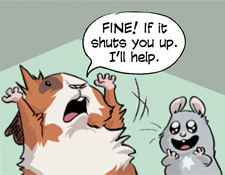
My kids love books (surprise).  And Clark has been reading a lot by himself.  So I’ve been getting him some graphic novels for his reading pleasure.  I stumbled upon this series at the library.  It’s a little too much for him to read by himself–he read it but I know he didn’t get all of what is going on.  Nevertheless, we enjoyed the first book very much and when I learned there were four more I was thrilled!

This series is clever and funny.  And while the kids may not get all the jokes, I sure do, and I think they’re really funny.  And, there are more than enough jokes (visual and verbal) for them to enjoy and for me to enjoy reading to them.

There’s a Guinea Pig (with the best name–Sasspants) who lives in a pet store.  The pet store is owned by Mr Venezi, the most incompetent pet store owner (and business owner, frankly) ever.  Mr Venezi loves his animals but not only does he not know how to take care of them, he doesn’t even know what most of them are called.  Their tanks are mislabeled and often times animals are simply in the wrong places.  Obviously in real life this would be a disaster, but these animals are funny and clever and roll with the problems quite easily.

In the first book, the hamster named Hamisher reads the sign for Sasspants’ tank which says Guinea PI.  Naturally Hamisher thinks that Sasspants is a detective.  The story behind this name change is quite funny.  Sasspants seems to be the only animal with not only the correct name but also a name made out of sticky tiles rather than tape (one assumes this is because Sasspants is very smart and an extensive reader (as well as writer, rappeller and, eventually sleuth)).  When the G from Guinea Pi”g” falls off and goes missing, well, it’s time for our reluctant Guinea Pig to get to sleuthing. 

There are currently four books in the series and I can only hope that more are on the way soon!  All of the illustrations are by Stephanie Yue.  And they are wonderful (it is odd since Venable is a wonderful artist that she uses someone else, but hey, spread the wealth!) (more…)

Read Full Post »

SOUNDTRACK: THE SWELL SEASON-Strict Joy (2009).

I bought this disc for Sarah after it came out.  I didn’t think that I would enjoy it that much because while I loved the movie Once, I wasn’t sure if I needed more from Glen and Marketa.  But then I found a whole slew of free concerts from NPR and I became hooked on the band.

The disc opens with “Low Rising” (what I think of as the “Van Morrison” song).  It gets better with each listen.  It’s a slow ballad which is followed by “Feeling the Pull,” a more up-tempo song that really highlights Marketa’s beautiful harmonies.  “In These Arms” is a gorgeous song.  The verses are downbeat and somber “if you stay…with that asshole…it will only lead to harm” but again the harmonies are gorgeous.  “The Rain” is a more rocking tune (within reason, of course).  It has an interesting middle section that quiets down, but it’s a solid folk rocking song.

“Fantasy Man” is Marketa’s first lead vocal song on the disc.  I like her voice but sometimes I find her lead songs to be a bit too wispy, too quiet.  I like this song, but it feels long (and at 5 minutes, it is).  “Paper Cup” is one of Glen’s quiet ballads.  It’s a pretty song.  “High Horses” is one that I didn’t know from the live sets, I guess it’s not too popular with the band, but I think it’s strong.  It runs a little long but that’s because it has a cool middle section that keeps building and building with more instruments and voices.  “The Verb” is another song that I didn’t know.  It has a cool intensity to it and while it doesn’t stand out as a hit, it’s certainly an enjoyable song.

“I Have Loved You Wrong” is another pretty Marketa song, but again it’s very slow and very long.  I don’t think I could buy her solo album because although her voice is lovely and her melodies are nice, they’re just so ephemeral I can’t really get into them.  “Love That Conquers” is an interesting song.  It sounds nothing like The Swell Season (must be the banjo).  It’s a nice addition to the album and should maybe have been placed a little earlier to break up the sound style a bit more.  “Back Broke” ends the disc very strongly.  Although I think the song works better live (with audience participation), the melody and tone of the song are somberly beautiful.

There are moments of this disc when it turns out to be what I feared the whole disc would be–bland folkiness. But overall this is an enjoyable album for a rainy day.  And Hansard really has an amazing voice.  However, I really like them better live.

[READ: December 26, 2011] Third Reich

I was pretty excited when I heard about this book, although I must admit I was a little concerned by the title.  Bolaño has a kind of weird Nazi fascination.  There is Nazi Literature in America and then a whole section of 2666 is given over to Nazi Germany.  He doesn’t like Nazis or anything but he writes about them a lot and it can be a little exhausting.  So it was with some relief that I learned that Third Reich is the name of a game that the main character plays.  It is a kind of historical reimagining kind of game (I guess like Risk but more specific and with more at stake).  It is set during the time of the Third Reich and the players represent various countries (or perhaps even powers).

I am giving up on explaining the game from here on because a) there’s a lot about the game in the book and b) I’m not sure if it wasn’t explained very thoroughly or if I just missed out on exactly what was happening.  During the book he talks about Hexes 65 through 68 and so on.  So I assume the map of the world is a hex grid.  But he never gives any context (or even a picture!–and this makes sense as it’s written as the diary of a well-regarded player who is not trying to teach us the game).  So while I understand the general tenets and play of the game (there’s a die (or dice) and tokens that reside on the board), the specifics are completely nebulous.  But that’s okay.  Because the game specifics don’t impact the book, but the game overall is at the heart of the book.  I think it’s neat that Bolaño invented a game (and several others games are named, but no details are given).  He is clearly very gifted at inventing people, games, things.

But as I said, the game is only a part of the book and in fact, the game details don’t enter into the book until about half way through. (more…)

Read Full Post »

SOUNDTRACK: THE BIRD AND THE BEE-“The 12 Days of Christmas” (2011?).

I’ve heard this version of the 12 Days of Christmas twice.  Once in Ulta and once on the show New Girl (in the Christmas episode, where Jess and her friend are (ew) sitting on the floor in the bathroom, you can hear it faintly behind them).

This is a very intriguing version of the song.  It sounds like the Cocteau Twins–a kind of lush, waves upon waves sound.  There’s a female singer (who sounds like Liz Frasier) and as the song progresses down through the numbers it almost seems to be done in a minor key or something.  Of course I’ve only heard snippets of the song so I don’t have any major moments to report about.  Nevertheless, I really enjoyed it.

The problem is I have no idea who sings it! (circa 2014: well now I do).

Obviously the people in Ulta were useless, and I’ve been trying to find out from TV song sources, but I still don’t know who it is.

And you know, the internet is a wonderful thing, but trying to find a song that has been covered at least 100 times and using a search term like “new girl” is not going to give you results that you want.

If anyone wants to give me a Christmas gift, tell me who sings this!

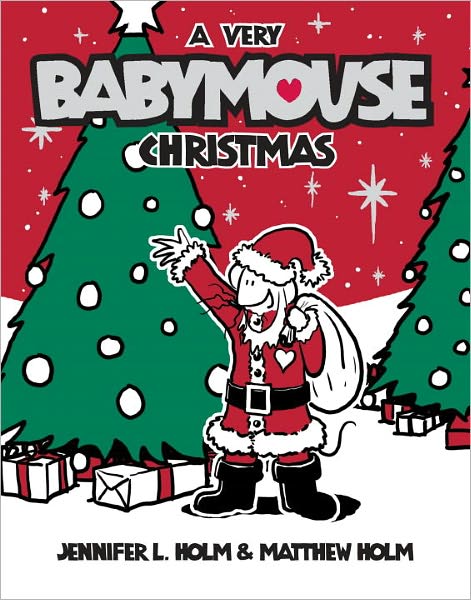
[READ: December 22, 2011] A Very Babymouse Christmas

I have caught up with the Babymouse books!  And look, I finished the Christmas one for Christmas Day!  Hosannah!

I set little goals for myself, most of which I never meet.  But one of my little goals was to read all the Babymouse books by the end of the year (not a difficult task, admittedly), and I did it!

I really enjoyed the series (the end of the book says there’s a new one due out in August 2012 (wow, serious withdrawal) so the series isn’t over or anything.  It’s funny to me that she never made a Christmas book before (the series has been around for years), but it wraps up my reading nicely.

My favorite part of the story has been the growing depth of the narrator.  We find out that the narrator has parents! (although I’m still not sure if it’s a man or a woman–I assume a woman).

But really Christmas is all about the presents and the big present this year is the Whiz Bang™.  I love this conceit–the Whiz Bang™ is a Kindle/iPod/techie product that does everything–it even has a calculator!  And when the moment of truth comes, there’s even a surprising surprise twist.  (more…)

Read Full Post »

SOUNDTRACK: WOODY GUTHRIE-“The Car Song” (1944).

Several years ago when I was first buying music for our kids, I found a number of Woody Guthrie discs.  I always liked Woody Guthrie in theory (this guitar kills fascists and all that).  But I was unfamiliar with his children’s music.

I was surprised by his stuff for one major reason (Besides the fact that he looks like Sean Penn).  This was later confirmed by his son Arlo when Arlo tried to work with his father’s masters: Woody didn’t really believe in rhythm or conventional timing or anything like that.  And that’s fine, but when it’s combined with the primitive recording equipment that Guthrie had access to, these songs sound, shall we say, rough.

Of course, Woody is mostly known for his excellent lyrics (This Land is Your Land).  So it’s especially funny to hear “Car Song” in which the first verse (according to Woody’s official site) is:

Brrrm brm brm brm brm brm brm, brrrm b’ brrrm,
Brrrm brm brm brm brm brm brrrm b’ brrrm,
Brrrm brm brm brm brm brm brrrm b’ brrrm.
Brrrm brm brm brm brm brm brrrm.

Arlo has said that Woody wasn’t exactly a good dad, but it’s clear that Woody expressed his love for his kids in song.  And this song is a fun and silly one that any kid can enjoy (as long as they don’t mind the really raw recording quality).

[READ: December 4, 2011] Babymouse Burns Rubber

This is the last Babymouse book that I had to read before getting caught up with all of the books (except for 2011’s Christmas book, which is the most recent release!).  It’s number 12, and it continues the later book’s excellent streak.  I was a bit concerned about the book when it opened because it begins with a NASCAR fantasy and I don’t watch NASCAR.  But as with most of the opening fantasies, it doesn’t bear on the actual plot of the book.

This book features a lot of screen time for Babymouse’s friend Wilson (it’s always good to see him and nice to see him get so much attention).  We quickly learn that Wilson is the go-to man when something breaks.  More to the point, he’s the go-to man (or ferret, I guess) that Babymouse goes to whenever she needs something (homework help, fixing a bicycle, whatever).  And Wilson is happy to help (what are friends for?).

When Wilson fixes Babymouse’s bicycle (again–Babymouse is a terrible driver) Wilson shows off his new car!  This car is one for the downhill derby–he’s wanted to race for years and he’s finally old enough to participate.  When Babymouse hears that there’s a race which she could actually enter she gets very excited and wonders what she’ll wear.  Wilson points out that she actually has to build her car first.

Of course, Babymouse can’t build anything, so she asks Wilson for “help.”  And more help and more help.  But now Wilson’s car needs work of its own.  Oh, and let’s not forget that in this year’s race is three-time derby winner Chuck E. Cheetah (nice) who is likely going to win again this year.  (more…)

Read Full Post »

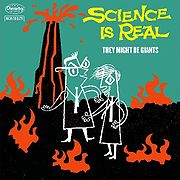
SOUNDTRACK: THEY MIGHT BE GIANTS-“Science is Real” (2009).

Indeed, I do love They Might Be Giants.  I love how their Here Comes series went from letters to numbers to science.  When you hear news of science being questioned from all sorts of places, it’s nice to have some super catchy songs to reinforce science fact.

“Science is real. From the Big Bang to DNA.”  It’s a great way to open an entire album full of interesting scientific knowledge (from the band who covered “The Sun is a Mass of Incandescent Gas,” which gets updated here into a more accurate lyrical song).  My kids love this album, and it makes me proud when they sing along to the great catchy, short songs contained within.  I especially love that the lyrics don’t eschew fun for truth:

I like the stories
About angels, unicorns and elves
Now I like those stories
As much as anybody else
But when I’m seeking knowledge
Either simple or abstract
The facts are with science.

This is a rocking guitar song, fun for the whole family.  Sing it with me…  “Science is real!”

[READ: December 4, 2011] Babymouse: Mad Scientist

I’m almost caught up to the Babymouse series!  This one even came out this year!!  There’s only the Christmas one left–wonder if I’ll be able to get it from the library in time.

This book also introduces a new character, Squish.  I actually found out about Squish before Babymouse, because I received a prepub of the first Squish book.  And now I get to see Squish’s origin story.

This was a really enjoyable book.  After reading the two music-themes ones, I was wondering if the Holms could keep up the interest for 14 books, but they really brought it back with this one.

After some funny jokes about science experiments (and the state of her room) we get a good fantasy sequence set aboard the USS Cupcake (with an unexpectedy funny Star Trek joke from the homeroom teacher).

And now they have a new science teacher (after the experiment went awry with their previous science teacher).  Mr Shelldon is obsessed, and I mean obsessed with molds.  He wants the class to enter the science fair (and encourages them to do research on molds!) (more…)

Read Full Post »

SOUNDTRACK: THEY MIGHT BE GIANTS-“John Lee Supertaster” (2002).

I love They Might Be Giants.  And I love their kids’ records.  This was their first one, No!.  It’s got that awesome craziness of TMBG but lyrically, it’s more “educational.”  Unlike the Here Comes series, No! is not overtly educational (I mean, check out the nonsense that is “Violin”), but the themes are all smart.

“John Lee Supertaster” is about a supertaster.   Supertasters are people whose tastes buds are crazily sensitive and so everything tastes even more powerful than what most people taste (that can be good and bad).

The song opens with an introduction that tells about Supertasters and about a real life supertsatser who John Flansburg met.

The song is a cool, funky song, with funk bass and a great guitar solo.  It’s a short song (two minutes including all of the introductions) but it’s a very cool one.  It’s catchy (I dare you not to sing along) and informative.

I also just learned that it’s all true.  According to the TMBG wiki: “The real John Lee is a man from the band Muckafurgason, whose album was produced by John Flansburgh.”

(And it rocks, too).

[READ: December 10, 2011] Babymouse: Rock Star

This Babymouse book came before Babymouse: The Musical and it’s possible that the Holms used up all of their great music ideas in this plot.  I enjoyed it quite a bit (maybe it’s because I like rock more than musicals?).

The story opens with a fantasy of Babymouse as a rock star with everyone chanting her name…until it is revealed that the chanting is actually coming from her brother Squeak.  When Babymouse gets to school, we learn that she plays flute in the school band.

She is in the second to last seat (because the screech from her flute cracks the polar ice caps and causes elephants to stampede).

After a cool Pied Piper dream sequence, Babymouse learns that Penny, a poodle who was embarrassed earlier by Felicia Furrypaws on the bus, will happily teach Babymouse how to play better (especially if it embarrasses Felicia).  The next several pages show Babymouse in her full-on fantasy mode as a music video star (which includes a Tori Amouse cover version of her hit song–nice touch).

Penny teaches Babymouse to relax.  She has practices it enough so she knows the music, she just has to feel the music (good advice).  Suddenly the hills are alive with the sound of music.

Babymouse appears in the next school band performance and she has a small victory for herself (which is always nice to see in a Babymouse book).

This was an enjoyable continuation of the series.

Read Full Post »

« Newer Posts - Older Posts »