Feeds:
Posts
Comments

Archive for the ‘Sexism’ Category

1993-1994 SOUNDTRACK: LEON BRIDGES-Tiny Desk Concert #469 (September 8, 2015).

leonLeon Bridges has a great old soul voice.  Indeed, I had no idea he was so young until he started speaking after the third song and all manner of young person chat came out of his mouth: “Thanks to my main man, you all looking beautiful man.”  His voice is pure and clean and hearkens back to 1960s soul singers like Sam Cooke.

The way he sings “baby baby baby” in “Coming Home” is classic soul.  And his enunciation of “mouth” is just gorgeous.  This song features the backing vocals of his sister Jesse.

“Smooth Sailin'” features a sax solo and Bridges on guitar.  Since there are 2 guitarists already Bridges’ guitar doesn’t  add much, but for me it’s all about his voice anyhow.

“Twistin’ & Groovin'” is about how his grandparents met.  He says the first time he saw her at a party the thing he noticed first about her was her long legs.

“River” is just him on acoustic guitar with Jesse singing backing vocals.

It’s a solid set and Bridges’ star has continued to rise since this show.

[READ: September 18, 2016]  The Complete Peanuts: 1993-1994

I didn’t like the previous book all that much, but this one picked things up a bit.

The year starts with Snoopy taking a test in school and acing the true false part–the only one to do so!

1993 has Schulz’ first celebration of MLK day.  Patty mentions the “I have a dream speech” but I love that she just mentions it without making it a big deal, it quickly changes to an unfair lunch swap between a carrot stick and french fry.  Speaking of old words, Lucy begins insulting Linus with: blockhead airhead, noodleneck but then finds that these older words work better: puzzlewit, dimbulb.

In pop culture notes, April 1993 sees Snoopy as Joe Grunge and in May 1993 Sally asks why is Barney purple? (more…)

Read Full Post »

1987  SOUNDTRACK: GINA CHAVEZ-Tiny Desk Concert #472 (September 22, 2015 ).

ginaChavez’ voice is poppy but a little deep, almost muscular which I rather like. Or perhaps its just confidence, the blurb notes “the intense openness and warmth of her performances.”

“Fire Water” is primarily a capella and percussion (with interesting clicks and shakers and even a guy whispering “ahhh” ). A few bass notes enter near the end, but other wise it is a very stark song.

“Miles Da Millas” is dedicated to a fiend of a friend who died recently.  He loved Tiny Desk Concerts.  Whenever someone mentioned a new band he would say “But do they have a Tiny Desk?”  So this makes Gina feel like she’s made it  This song, a cumbia, is bilingual with the chorus in Spanish.  And her voice is just as strong if not more so in Spanish.   It’s fun when the percussionist yells and whoops and overall it’s a nice groovy song.  It’s a little weird that she hums a trumpet (quite well, admittedly) when there is an actual trumpet player in the band.  They take turns so I guess it’s kind of duet.

When introducing the final song, she says spent 8 months in El Salvador doing mission work teaching English in an all girls’ school.  Things are really bad down there, so she started a college scholarship fund called Niñas Arriba.  This song “Siete-D” is about a wild ride on the 7D bus from Soyapongo to San Salvador.  Soyapongo is the home of the MS13 gang, the place where guide books tell you not to go.

It’s a fun song (sung entirely in Spanish) with a cool “Sube! Hey! ho!” chant.  It’s a bouncy song with some great trumpet work.  There’s even a rap in Spanish

[READ: September 9, 2016] The Complete Peanuts 1987-1988

I felt like after the major highs of the last few books, this one fell into a bit of a repetitive pattern.  This is not to say there weren’t memorable moments in the book, but there were a lot of variations on a similar jokes (especially with Spike in the desert–how many different ways can you make a joke about a cactus looking like a person with his arms up?  About fifty, I guess).

But perhaps it seems like things have changed because On 1-11 1987, that heading that has been there for so long–the hand-drawn looking “Peanuts featuring Good Ol’ Charlie Brown” had been replaced by a computer-generated font that just says “Peanuts.”  It also felt like the drawings looked different somehow–thicker lines, somewhat less polished?  And in July of 1988 it seems like Snoopy looks rather different. His ears are much smaller for one thing.  That seems to go away though.  But it’s some time round here or maybe even in a previous book that Schulz started drawing circles for eyes on Snoopy from time to time–mostly to express distress or angry.  But Snoopy is meant to have dots or sixes for eyes–the circles always look weird.  And sometime they look poorly drawn, if I may say so.   Especially on October 12 1988 (he’s supposed to look aggrieved, but they still look sloppy for Schulz).

And then, a huge shock to the system!  The daily strips go from 4 panels to 3.  Three panels!  What gives?  Is it because many of his fourth panels didn’t really have a punchline so much as a commentary on the punchline?  It’s mind blowing!  After thirty some years, he is finally messing with the format! (more…)

Read Full Post »

1981 SOUNDTRACK: SON LITTLE-Tiny Desk Concert #496 (December 18, 2015).

sonlittleI know of Son Little, although only vaguely.  WXPN has played his song “The River” quite a lot, although I don’t think I’ve heard anything else.

For this Tiny Desk Concert, he’s really stripped down–just his acoustic guitar, a percussionist (Jabari Exum playing a djembe with accoutrements) and a backing vocalist, his sister Megan Livingston.  His playing is even pretty stripped down–his chords are minimal, almost more like accents for most of the songs (although he does play louder from time to time).

As such, this really celebrates his voice which is strong and almost gospel-like.

He plays three songs. “Lay Down,” is a quiet soulful song with perfectly spare accompaniment.  When it ends, everyone seems adorably shy with Little saying, “just mildly awkward enough.”

“Your Love Will Blow Me Away When My Heart Aches” is a bit bigger–Little sings a bit louder and plays louder chords, but it is still quite minimal.

He ends with “The River” which is certainly stripped down from the radio version.  It opens with some claps and he encourages everyone to clap along although “If you’re like clap challenged then maybe… don’t–you know who you are.”  The song has that bluesy rock feel even in this understated form.  And while I like the original better, this is a great version–that quiet clapping and percussion is really nice.

[READ: July 26, 2016] The Complete Peanuts 1981-1982

So far the 1980s see Schulz settling into a few consistent themes in his strips–regular motifs that he mines over and over again.  Although it’s interesting to see how they have morphed over the decades.

Patty is constantly falling asleep in school (and getting D minuses), Snoopy continues to write funny/bad jokes and gets rejection letters about his books (this is usually pretty funny but it’s also surprising as Snoopy is usually the “successful” one); Snoopy also plays a lawyer a lot in these strips.

1981 begins where 1980 left off with Patty loving the story of Hans Brinker.  1981 also has a lengthy section about Valentines Day (a subject that gets more emphasis in some years than others), although this year Sally is the major protagonist (and her Sweet Babboo her object).  1982 also has a Valentine’s Day with Sally–she gets her hand stuck in the Valentine’s Day cards box.

Schulz used to do bible instruction which is why he quotes it so much.  And he occasionally peppers his strips with religious commentary.  There’s a joke about school prayer–Patty has to go up to the board and when her teacher falls ill she shouts “school prayer works, Marcie.”  There’s an amusing joke that Snoopy used to teach Sunday School at the Daisy Hill Puppy Farm.

Although the running jokes are funny, I love when he gets a new idea.  Like the a fun twist on the dog ate my homework joke when Snoopy as the WWI pilot steals Sally’s homework claiming it is the enemy’s secret papers and he eats them.

Sometimes Schulz gives a one-off joke that’s just silly and funny like when Woodstock “poofs” a dandelion and it “poofs” him back. (more…)

Read Full Post »

harpaugSOUNDTRACK: LAND OF KUSH-The Big Mango [CST097] (2013).

mangoOsama Shalibi is how Sam Shaibi is credited on this album.  He is the composer and creator of The Big Mango, although he does not appear on it.

Some background that may or may not be useful.  This comes from Popmatters:

“Big Mango” is the nickname for Cairo and The Big Mango is a love letter from composer Osama (Sam) Shalabi to his new home, Cairo, and all of its tumults and contradictions…. Reveling in free-jazz noise, rock rhythms, and the radical propulsion that Shalabi encountered on trips to Dakar, Senegal, the album weaves the divine spirit unleashed through fury and joy and dance into an utterly fascinating whole…  This pinging between controlled pandemonium and something beautiful, strident, transcendent, is not accidental. Shalabi is tackling the nature of change and the place of women in Arab culture on Big Mango, and by so clearly blurring the strange and the celebratory, he suggests that even sweeping, radical change need not be a revolution, but perhaps a way of life, movement as vital force in the universe.

With an introduction like that it’s hard not to want to love this record.  But a with everything Shalibi does, he is always trying to push boundaries and attitudes.  And so, this album has some songs that are really fun ad/or pretty and some songs that feel like (but apparently are not) wild improvisations that test the limit of your patience for experimentation.

As I mentioned, Shalibi doesn’t play on this –I would have loved to hear his oud, but instead we hear all kinds of interesting Western and Eastern instruments: setar (is a Persian version of the sitar), flutes, saxophones, piano, balafon (a wooden xylophone), hand drums: riqq (a type of tambourine), darbuka (goblet drum), and tablas (like bongos) and of course, guitars and bass.

“Faint Praise” opens the disc with 3 and a half minutes of Middle Eastern music quietly played with a rather free form vocal over the top.  The vocals are a series of wails and cries (and almost animalistic yips).  It sounds like an orchestra warming up, and indeed, the Constellation blurb says:

These opening six minutes are an inimitable destabilizing strategy of Shalabi’s – his lysergic take on an orchestra ‘warming up’ – that serves to introduce most of the instrumental voices and the montage of genres that will form the rest of the work

It comes abruptly to a halt with “Second Skin,”  a much more formal piano piece—structured notes that end after a few minutes only to be joined by a saxophone solo that turns noisy and skronking and nearly earsplitting.

After some dramatic keyboard sounds, “The Pit (Part 1)” becomes the first song with vocals (and the first song that is really catchy).  It begins with a jolly sax line which is accompanied by another sax and a flute before the whole band kicks in with a refreshingly catchy melody.  For all that Shalibi likes exploration, he has a real gift for melody as well.  The lovely lead vocals on this track are by Ariel Engle.  It’s very catchy, with a somewhat middle eastern setar riff and those voices.  When the song stops and it’s just voices, it’s really beautiful.  The song is 7 minutes long and I love the way the last 30 seconds shift gears entirely to a more dramatic, slower section.  This section is so great, I wish it lasted longer.

“The Pit (Part 2)” is only two minutes long.  It’s a quiet coda of piano and flute.  After about a minute, a low saxophone melody kicks in, it is slowly joined by other instruments and Engle’s voice.  Unfortunately I can’t really tell what she’s singing, but it sounds very nice.

“Sharm El Bango” is a jazzy song with hand drums and all kinds of space age samples spinning around the song.  I really like when the flute melody takes over and the song become quite trippy.

“Mobil Ni” is the second song with vocals.  It begins with some strings instruments and hand drums over a slow bass line.  Then Katie  Moore;s voice come s in with a gentle lovely vibrato.  Her voice is a little smoother than Engle’s.  The song ends with a mellow section.  And then there’s a trumpet blast that signals the beginning of “St. Stefano.”  The trumpet gives way to brief explorations off free-jazz type before turning giving way to a bowed section with resonating bass notes.

“Drift Beguine” returns to catchy territory with a full Middle Eastern musical phrase and Elizabeth Anka Vajagic’s lovely voice raging from high to scratchy and breathy.  Around 4 minutes when the pace picks up, it’s really quite fun.

The final track is the only one that really rocks.  “The Big Mango” has a big catchy guitar riff and hand drums filled in by Molly Sweeney’s rock vocals.  The song ends the disc as a kind of fun celebration.

As with most of Shalibi’s releases, it’s not for everyone.  But there’s a lot of great stuff hear, if you’re willing to experiment.

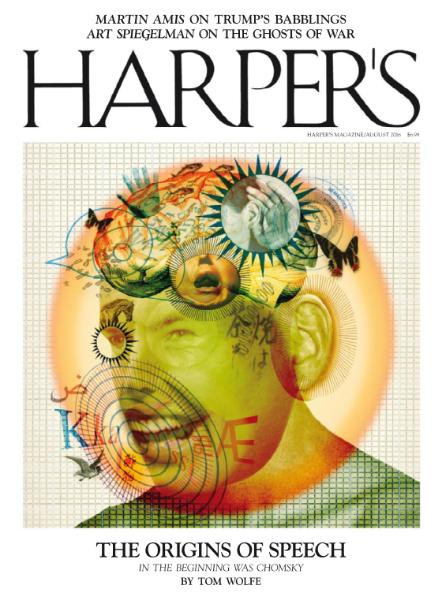
[READ: August 25, 2016] “Don the Realtor”

I hate to contribute anymore attention to Trump.  But it’s hard to pass up a chance to read Martin Amis, especially when he eviscerate his targets so eloquently.  Hopefully Trump’s voice will soon disappear from the airways and we can go back to forgetting about him.

Ostensibly this is a review of “two books by Donald Trump,” The Art of the Deal (1987) and Crippled America (2015).

Amis begins, as he usually does, by getting to the point: “Not many facets of the Trump apparition have so far gone unexamined, but I can think of a significant loose end.  I mean his sanity: What is the prognosis for his mental healthy given the challenges that lie ahead?”

Some basic questions come up about Trump: “Is his lying merely compulsive, or is he an outright mythomaniac, constitutionally unable to distinguish non-truth from truth.  Amis adds that “Politifact has ascertained that Donald’s mendacity rate is just over 90 percent, so the man who is forever saying he ‘tells it lie it is’ turns out to be nearly always telling it like it isn’t.”

But the Trump lying machine has grown from the rubble of the G.O.P. which “has more or less adopted the quasi slogan ‘there is no downside to lying.'” (more…)

Read Full Post »

dirkSOUNDTRACK: ANTHONY D’AMATO-Tiny Desk Concert #398 (October 20, 2014).

damatoI’d never heard of Anthony D’Amato before this Tiny Desk Concert, and yet his music sounds vaguely familiar.  D’Amato sings fast, upbeat acoustic folk rock with a full band behind him.

“Was a Time” starts out with just him and his guitar.  But after the first verse the whole band kicks in and the song really takes off.  There’s some harmonica between verses and a big Whoo! before the end of the song.  The song is a fun romp, fun to sing along to until you realize the chorus: “there was a time that I loved you / I don’t love you any more.”

He introduces the second song “Good and Ready” and says “we’ll start whenever Derek is… good and ready.”  This song sounds very different as it opens with a cool soulful bassline.   After that opening the song proper begins with Amato’s acoustic guitar and the electric guitar playing a loud slide guitar riff.  This song is a bit more positive, despite the repeated line of I don’t wanna wake up,” the chorus is “I don’t wanna wake up if it ain’t next to you.”

All three of these songs use the same verse style with the first words of every line being repeated over and over.  In the first song, every libe starts, “There was a time….” In the second, each line begins “I don’t wanna wake up….”  The final song, “Ludlow,” changes things a little bit although each verse stats with the opening “First the…  then the….”

I felt a little  for his backing vocalist Katy Pinke, because while everyone else is doing things, she’s just standing there occasionally sinking a word or two.  Although for “Ludlow” he and Katy sing a quiet duet.

D’Amato writes catchy, rather pleasing songs.  I wonder why I haven’t heard of him before.

[READ: July 2, 2016] Delilah Dirk and the King’s Shilling

Much like I wrote about the first book: I enjoyed this story quite a lot.  Cliff’s drawing style which was peculiar but ultimately very satisfying.  And more importantly, he tells a great story.

But this book was even more satisfying than the first.  I have also changed my opinion of Cliff’s artistic style somewhat in that I think it is really fantastic.  It is definitely unusual–realistic but not exactly–and he has such amazing control of expressions.  Even moreso in this book in which Delilah goes into polite society and so much must be conveyed through expression.

Plus there’s a lot of action, too. (more…)

Read Full Post »

lilychen SOUNDTRACK: BARRY DOUGLAS-Tiny Desk Concert #537 (June 3, 2016).

barryBarry Douglas is a “classical” pianist from Ireland.  I’ve put classical in quotes because although what he plays is classical in sound, the music actually comes from Celtic tradition rather than the classical canon.

“The Coolin” (An Chúileann) translates to “The Fair-Haired Girl” and dates to around 1641.  His arrangement has a very baroque feel (he is actually a classical pianist, too), which gives the traditional song a more regal air.

He follows that lovely delicate song with “Planxty Dylan.”  Planxty is an Irish dance.  He says that harpists would travel around Ireland and people would look after them.  The harpist would then thank the homeowner by writing a song named after the home where they stayed.  This romp of a dance (at only about 1 minute long) was dedicated to the house of Dylan.

From playing a planxty to the band Planxty.  Douglas has arranged the Planxty song “Raggle Taggle Gypsy” for solo piano.  It has been around since the 18th century.  Planxty made it more famous as a vocal song (which I know) but Douglas’ piano version has a lot of fun with the melody as well.  The melody is also known as “Black Jack Davy.”

“My Lagan Love” is about the River Lagan in Donegal (there are actually four Lagan Rivers in Ireland).  The melody and poem were written by unknown persons.  Douglas arranged this without words in an attempt to make it more timeless.  I know the original and this is a really lovely in this instrumental version.

I can say that I was pleasantly surprised to hear this was the kind of solo music that Douglas was going to play.

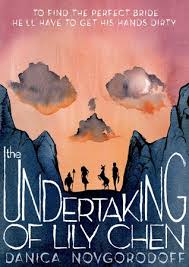
[READ: April 2, 2016] The Undertaking of Lily Chen

The whole premise behind this story is disturbing and apparently true.

Novgorodoff includes a section of an article from 2007 which says that parts of rural China have seen the rise of “ghost marriages.” In this situation, when an unmarried an dies, his parents procure the body of a woman, hold a wedding and then bury them together.  This has led to a black market in corpse brides.  EW!

This story explores that revolting concept. (more…)

Read Full Post »

slowstormSOUNDTRACK: ANDY SHAUF-Tiny Desk Concert #533 (May 20, 2016).

shaufI was unfamiliar with Andy Shauf although once he started playing, I thought his songs sounded familiar.  One of the more interesting thing about him is his singing enunciation (which reminds me a bit of SOAK for a recent comparison–although she is from Northern Ireland and he is from Saskatchewan).

It’s interesting to me that Shauf plays only rhythm guitar–all of the melody lines and solos come from his keyboardist.  It’s also interesting how motionless Shauf is.  He stands quite still and doesn’t even really move as he sings (his voice is mellow but not exactly quiet).

“The Magician” has as some great riffs from the keyboard and some interesting chord changes as the song draws to and end.  And of course, Shauf’s calming, delightful voice (complete with do do do dos) make the song quite lovely.

“To You” sounds similar to the first–same basic tempo and tone, with nice little fills that elevate the song from a simple chord structure.

His final song, “You’re Out Wasting” is “an older song” from his last album.  There’s another great melody running through this song and it’s a bit more uptempo.

I’m not sure if it’s his hair or his posture but he looks uncomfortably hunched-over while playing.  But that doesn’t stop his voice from sounding great and his songwriting from being really enjoyable.

[READ: February 2, 2016] Slow Storm

I really like the way Novgorodoff works with watercolors to create cool backgrounds. However, I don’t really like the way she uses her pen–I don’t care for the look of her characters.  And I don’t love the hand lettering all that much either.

This story is one that I wouldn’t read if it weren’t a First Second book.  And while I’m glad I read it and I found the convergence s of characters to be really interesting, it was a rough road getting thee.

The story begins with no words, just a series of images that juxtapose a tornado/storm and the Kentucky Derby.  The storm is hitting a barn where horses are kept, so these horses are also running, but hey are frightened of course (I especially didn’t like the style of the frightened horses).

Then we see a man get hurled by the tornado into a barn. (more…)

Read Full Post »

[ATTENDED: May 23, 2016] S.T.O.P.

stopIf you have a teen or pre-teen and you are concerned about how they will deal with bullying, sex, body issues or, heaven forbid, heroin, this performance is a must-see both for your child and you.  The performers are all high school students.  They wrote the pieces and they are intended for high school students (and middle school).  If you can’t see them yourself, contact your school or community group to arrange for them to do their show.  It is intense and really effective.

When the fifth grade completed the D.A.R.E. program at school, the ceremony included a piece by this group.  The piece was called “Jack & Jill” and it told the story of how an underage party led to the death of two teens.  There were a couple of moments of humor, but the message was intense and the acting was really good (they “rewound” the story and the actors did a great job of going backwards–including one boy who “fell up” the couch (he fell off it earlier).

After they were done, they said that the troupe would be doing their full hour-long show in May and that was open to anyone in 5th grade and older.  I was amazed that Clark wanted to go as it’s not really his thing.  And so we went.  He was bummed that only a couple of kids he knew showed up.  I was bummed at how few people showed up at all.   And so I wanted to post about the show to get the group some recognition because what they did was really powerful and I think should be seen by just about everyone.

When we arrived, the teacher in charge of the group Miranda DeStefano-Meene told us that the show would be uncensored and pretty intense.  The program says that the words on stage “may embarrass, hurt, offend, scare and anger you.  That is intentional.”  The second paragraph spoke of the heroin epidemic in our society which is bigger than any other drug epidemic in recorded history, which I did not know.

And so we sat back and watched this show.  Now, I happen to think that Clark may not have been exposed to a lot of what was going on in this play (which I’m grateful for).  So this show may have been really intense for him (I know I spent the whole show wondering what he thought).  After the show the only thing he said was that it made hm sad.  And we did talk a little about the messages, but he’s a tight-lipped kid, so I can only hope he’ll come back to me with more questions if they arise.

And what questions he must have.  For this show tackled so many problems facing teens.  (more…)

Read Full Post »

naughty SOUNDTRACK: GEM CLUB-Tiny Desk Concert #181 (December 16, 2011).

gem clubGem Club is a quiet band.  During this set there are three members:  Christopher Barnes on keyboards and lead vocals, cellist Kristen Drymala and vocalist Ieva Berberian (who is eerily silent and still for much of the performance).

The first song, “Animal” features Barnes on keyboards, playing a simple melody and Drymala, playing a low and loud cello to accompany (when her first note comes in, it’s really striking).  She also sings a wonderful harmony vocal.  Barnes’ voice is almost a whisper, but between his voice and the vibrato on the keys, it sounds really big (but still quiet).  I really enjoyed the way the only “melody” she played on cello was at the very end of the song–a brief riff to signal the end.

“Breakers” opens with some rough cello playing and then a gentle echoed keyboard.  Ieva Berberian didn’t do anything in the first song, she just hovered mysteriously in the background. But for the second song she hits occasional tambourine notes (which sound practically like explosions amid the delicate echoing keyboards).  Perhaps the most interesting part of the song is watching Drymala tap on some  colorful bells with her foot to create a lovely melody.

For the final song, “252” Barnes says it is kind of a beast, (although it doesn’t sound any more complex than the previous two to me).  The piano is echoed and Ieva Berberian finally sings backing vocals.  Her voice is a little haunting and it works very nicely with Barnes’ voice.  The melody is beautiful.

Incidentally, the blurb says that this is the first time they’ve amplified a singer’s voice (they ran his voice through a chorus pedal to give it that otherworldly echo).  I have been listening to a lot of loud music lately, and this was a perfect counterpoint.

[READ: December 20, 2015] History’s Naughty Bits

This is the kind of book that promises to be very funny.  And then it turns out to be mostly funny but also rather scholarly.  Which is not bad thing, it’s just not as raucous as one might have imagined.

Dolby begins by dismissing the idea that “naughty” things are a recent invention and then proceeds to go through the history of human culture to show examples of things that would certainly be considered naughty today (some are quite shocking).

She starts with Classical Greece where women were expected to remain chaste, except for hetairai, high-class courtesans, who were well-educated and respected.  That’s some choice.  Adultery was considered less of a sin if was committed with a prostitute. (more…)

Read Full Post »

redSOUNDTRACK: LE FLY PAN AM-fpamCeux qui inventent n’ont jamais vécu (?) [CST019] (2002).

After their previous EP, Le Fly Pan am (note the addition of the Le) come back with an album that can be described as funky.  True, it’s weird funky that gets dismantled while its going along, but it’s still pretty funky.

They wouldn’t be them if there weren’t some crazy noises.  And so the first song (parenthetical translations are from Wikipedia), “Jeunesse sonique, tu dors (en cage)” (“Sonic Youth, You Sleep (In a Cage)”) is just noise and static for 90 seconds before leading to the first song proper:

“Rompre l’indifférence de l’inexitable avant que l’on vienne rompre le sommeil de l’inanimé” (“Break the Indifference of the Inevitable Before We Come to Break the Sleep of the Inanimate”) which kicks in with a really funky bass guitar and drum section. It’s really catchy and almost danceable. But throughout the song’s ten minutes there are elements of destruction going on. There’s screeches that sound like a dentist’s drill. About a minute in, the guitars just seems to stop playing riffs and just tart going crazy–playing loosened strings and just random notes like a beginner (even though the original rhythm is still there).  That funkiness stays for about 5 minutes until the songs shifts gear into a loping melody with a big bass and simple repetitive guitar lines. And then it kind of falls apart all together with some sounds like broken strings and lots of chatter (in French).  At 7 and a half minute it resumes at breakneck speed with the drums and bass pounding away and all kinds of effects splashing on top. The song ends with low rumbling noise before jumping into….

“Partially sabotaged distraction partiellement sabotée” (“Partially Sabotaged Distraction Partially Sabotaged”) This song opens with a four-note, slightly off-key guitar and then loping bass riff that reminds me of SST Records bass guitar of the 80s. It switches between this and a slightly funkier sounding section. But the destruction is apparent from the get go as early in the song, the sound just completely drops out on a couple occasions, making you think the disc is broken (it isn’t).  The song starts to get more intense as the notes seem to get faster and more insistent (those repetitive notes and ringing guitars just seem to scream tension).

“Univoque/Équivoque” (“Univocal / Equivocal”) opens with static and then a very funky bass line.  There a music box playing over the top and some quiet guitars. About half way through the bass ends but the music box (tiny and distorted) continues.  At 3:30 a new bass line, similar to the previous but with a new section added pops up.  It’s a simple song showcasing their groove and their noise.

“Arcades-Pamelor” starts with low distorted noises.  Like the first “song” this is mostly sound effects and things slowed down. Until a screaming noisy static takes over about half way through.  It’s really quite unpleasant.

“Sound-support surface noises reaching out to you” opens with another funky bass and drums and some simple guitar notes. About a minute in a sound emerges that sounds like a skipping CD (but it’s not your CD).   And then a new, different bass pattern emerges with lots of noisy percussion(sounds like people banging things). The skipping sounds seems to work as a segue between section, with some great funky parts and and then the final section which opens with what sounds like a mildly out of tune guitar ran and more great bass. This really enjoyable section winds up glitching to a halt with the  sound of a skipping record player.

“Erreur, errance: interdits de par leurs nouvelles possibilités” (“Wandering Error: Prohibited by Their Opportunities”) has the sounds of sticks clacking together and silverware dropping and mechanical sounds.  And they all seem to somehow settle into a rhythm of piano notes. Unlike the other tracks this one is pretty consistent—strange noises and a simple piano motif.  It’s also probably the least interesting of the bunch.

The disc ends with “La vie se doit d’être vécue ou commençons a vivre” (“Life Must Be Lived or Begun to Be Lived”) another great, funky bass and piano line, with some interesting guitar sounds round the corners. This song is so catchy, it’s wonderful.  After about 2 minutes there’s another breakdown. The music all stops except for the guitars which sound like they are getting strangled.   The second half of the song has the same funky bass but very different guitars and lots of squeals and feedback. After a couple more glitches at 6 minutes in, the bass takes off playing fast rocking riff as the guitar tries to keep up. It’s such a satisfying ending that it’s hugely disappointing that it only last 45 seconds before the album ends.

While it was always obvious that Fly Pan Am were going to play weird experimental stuff, it wasn’t clear before just how funky and dancey they could be too.  If you can handle some noise in your dance, this is a great album.

[READ:January 10, 2016] Red Handed

I absolutely loved this graphic novel.

I had never heard of Kindt before and I didn’t really know what to expect from the book, but I certainly didn’t expect the complicated and super clever plot and structure that this book had.

It opens with a newspaper story that tells us about Detective Gould’s ten years on the force.  Since his arrival there have been no unsolved murders.  He credits the rise in technology for his success.  (continued on A12) and then it moves into the graphic format.  It is headed Detective Gould (in black and white).  Then it shows some mug shots of suspects in color.  And it turns out that these people’s stories will comprise the bulk of the book.

The next chapter opens with a woman fleeing a diner with a stool.  She worked there and is told the stool is coming out of her paycheck,.   We learn that stealing chairs is kind of her thing.  And then we see what her next acquisition after this stool is.

The next chapter is called the Jigsaw and it involves a man who is an art dealer.  As the story opens he steals a giant painting form a woman he has picked up at a bar. And then we learn what he did with it and how he made his reputation.

After he is caught, the story shifts to a series of dialogue boxes on a black background in which Sgt Gould is speaking to a woman who Sgt Gould assumes is connected to all of the cases in the book.  She is playing innocent and has explanations for everything.

After this there is another black and white section designed to look like newspaper stories of The Detective’s Wife  (in which the two are sweet together) and then Tess’s True Heart in which we learn that Tess (whoever that is) is a very smart girl.

The next chapter is The Ant in which an artist wants to tell a story told from the point of view of an ant.  But since the ant cannot write, it must collect letters from the newspaper.  This turns into an art installation in which the author’s editor begins finding the words all over town and using them to tell the story (it’s much more convoluted than that and really clever).  Then we learn that Tess is the author’s editor–the first connection is built.

And after that short piece, we see more black and white stories from Detective Gould and Tess’ True Heart.

The next chapter is The Forgotten about a sleight of hand magician who has stopped doing magic and has become a pickpocket.

The Repair Man is about an elevator repair man who takes pictures up women’s skirts when they are stuck between floors.  And then he begins selling them to a smut dealer.  The way these pictures connect to the rest of the story is amazing.

The next section is The Performance Artist in which a woman is set up to look like she is cheating on her husband (elaborate ruse once again).

The Escape Artist tells the story of a car thief and how so many thieves think they are going to stop but they are afraid of losing the rush.  Well, this guy retired for real.  Until he ran into Tess.  He knows from long ago.  And she brings him back to the city.

Finally, The Fire Starter is about a guy who gets paid to start fights with the intention of a payout coming somewhere down the line.

The last fifty or so pages show how all these crimes, all these cases solved by Detective Gould, are tied together.  And the way it is told just gets more and more interesting.

This was an outstanding book.  I loved the art and design–the various ways that the medium was used to tell the story.  I loved that it was confusing but not too confusing and that it unraveled in the way it did.   I really can’t say enough about this book.  This was another big win for First Second in their #10yearsof01 celebration.

Read Full Post »

« Newer Posts - Older Posts »