Feeds:
Posts
Comments

Archive for the ‘Set at School’ Category

SOUNDTRACK: CAT POWER-Tiny Desk Concert #821 (February 4, 2019).

I remember when Cat Power was a buzz artist who had signed to Matador.  I bought her album in 1996, but I guess it didn’t leave that much of an impression on me.

Since then, she has been a buzz artist for performing and then for not performing and then for performing again.  All the new music of hers that I have heard seems to get slower and softer.

The biggest surprise about the Tiny Desk Concert was how full of smiles she was and yet the blurb makes her sound uncomfortable:

Most artists who play the Tiny Desk are at least a little nervous. Performing in broad daylight in a working office full of staring faces is outside the comfort zones of most people. But Chan Marshall, the unforgettable voice behind Cat Power, seemed especially uneasy when she settled in for her set. Rather than taking center stage, close to the audience, she stepped back and to the side to be closer to her pianist and friend, Erik Paparazzi, for much of the performance. She intermittently steadied herself by resting a hand under her chin while clutching a cup of tea, and she ran through three songs without a break, making her set sound more like a Cat Power medley than a series of distinct songs.

So I don’t know any of the songs she played here and when I first listened I actually assumed she’d only played two songs because the first two blended together.

Regardless, the music was arresting and beautifully orchestrated, with simple piano lines and brushed drums backing a voice that could only be hers.

Opening with “Wanderer,” the title track to Cat Power’s latest album, Marshall sang of restless love and yearning with a nod toward motherhood and her 3-year-old son: “Twist of fate would have me sing at your wedding / With a baby on my mind, now your soul is in between.”

It has a quiet, simple piano melody (from Erik Paparazzi) and a gentle guitar (from Adeline Jasso) that imperceptibly pushes it forward.  After a minute, the brushed drums (from Alianna Kalaba) come in to add a little snap to the song.

“Woman,” another track from Wanderer starts immediately.  She had recorded this song with Lana Del Rey and I recall liking it. This version sounds so much like the previous song that I don’t even recognize the original in it.  The differences between the two songs are that the piano notes have changed a little (but since they repeat all the way through, it’s not hugely noticeable) and the guitar now uses a slide.  Otherwise the beat is I believe unchanged.

She segues right into “The Moon,” from her 2006 album The Greatest.  The only distinction here is that the guitar and drums stop briefly while the newly repeating piano picks up a slightly different melody.  This song sounds so much like the previous one because she sings the word “Moon” so much like the word “Woman” (often given Moon more than one syllable) I couldn’t tell that she was saying something different.

I suppose if I were in the right mood I would have found this mesmerizing and enchanting.  But mostly I just found it rather dull.

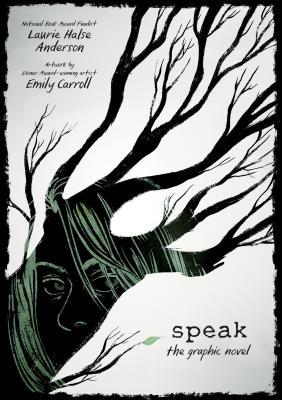
[READ: February 5, 2019] Speak

I hadn’t read this novel and, in fact, I wasn’t exactly sure what it was about (although I knew it was intense).  The only reason I picked it up was because I thought it was a First Second publication and I plan to read all of their books.  This was listed in their 2018 publication list, but it ultimately wasn’t published by them, it turns out.

S. knew the book from her work with teens and said she didn’t want to read the graphic novel version.  So I expected a harrowing, potentially unreadable story.

But Anderson has created an excellent and compelling story built around a harrowing incident.  She also doesn’t detail the harrowing incident until later in the story, so by the time we hear about it we are even more sympathetic to Melinda.

I will say that as the story opened (because I didn’t know the timeline), I thought that the kids were being unrealistically mean to her.  I thought she was a new student at the school (it’s her first year in high school) and I couldn’t imagine why people really had it in for her.  It seemed hard to believe.  Especially as we realize pretty quickly that the incident has already happened.

Then it gradually comes out that kids are mad at her for something she did.  It is connected to the incident, but clearly isn’t about the incident because she hasn’t told anyone about it. (more…)

Read Full Post »

SOUNDTRACK: KING GIZZARD AND THE LIZARD WIZARD-Willoughby’s Beach (2011).

After releasing five new albums in 2017, KGATLW spent 2018 re-releasing their first five releases.  These were out of print and hard to find.  And now they’re back.

Back in 2011, KGATLW was more of a goofy side project (hence the name).  But they coalesced as a seven-piece band and proceeded to make an EP–Willoughby’s Beach.  At nine songs in about 25 minutes, this garage rock/dirty blues project pretty well flies past.  Lyrics are an afterthought (most songs repeat one line) and most of the songs are under 2 and a half minutes.  It is great zipping fun with fuzzy guitars, fuzzy harmonicas, fuzzy vocals and an all around DIY feel.

“Danger $$$” is a fast, crazy blues with a wild harmonica solo and the repeated shouted lyrics of “danger money” between lots of whoops and screams.  “Black Tooth” opens with a similarly fast riff but it immediately slows down into a slower but still rocking riff.  “Lunch Meat” is a crazy fast and catchy song with the full lyric: “They made me get up in the morning morning morning morning.”

“Let it Bleed” is the longest song on the disc at 3:14.  It’s slower and the repeated lyrics are far more comprehensible (I want to see my lover again).  The wonderfully titled “Crookedile” has a kind of a spy theme for its music dark with echoing squealing guitars and chanted vocals.  What “just say god is on your side, he’s on your side” has to do with the title I have no idea.  “Dead Beat” is also (relatively) long, but it is much faster with lots of whoops and a simple but addictive guitar line.

“Dusbtin Fletcher” is a fun punk song with lots of big backing vocals–like The Monkees doing punk.  Oohs and oh ho ohs make this an incredibly poppy song.  “Stoned Mullet” has two sets of lyrics: “jack it” and “green out.”  Your guess is as good as mine.  It’s fast and catchy with a wonderful chorus.

“Willoughby’s Beach” is quick and catchy, a wonderful end to the disc.  The song is the definition of three-chord rock and features the lyric: “Just because I like you, it doesn’t mean I like you.”  Superb stuff.

[READ: January 31, 2019] Secret Coders: Monsters & Modules

This book ends the Secret Coders storyline.

It begins with the boys feeling very calm as they work out a code that will get them to travel to Flatland.  But Hopper doesn’t understand why they aren’t freaking out since as soon as they work out the code they will be travelling to a world with one fewer dimension!

Using a simple repeating code, the turtle makes the opening and they fall into the second dimension.  Eni turns into a square, Josh turns into a triangle and Hopper turns into a line!  And we learned in the previous books that lines (and women in general) were considered nothing.

They are immediately bothered by circles–the most superior shape in Flatland.  After some altercations, Josh and Eni are thrown in jail.  Hopper is able to hide because she is just a line and is therefore very hard to see. (more…)

Read Full Post »

SOUNDTRACK: LIGHTSPEED CHAMPION (“Field Recording” March 2, 2009).

Years before NPR created a category called “Field Recordings,” they were creating Field Recordings–“backstage” (or elsewhere) recordings of bands.  Most of these seem to happen at Music Festivals where musicians just seem to be hanging around anyway.

I have no idea how many of these there are.  In fact, the only reason I discovered this one is because there was a link to it from the Blood Orange Tiny Desk Concert.

Because it turns out that Devonté Hyness, the guy behind Blood Orange was once Dev Hynes, the guy behind Lightspeed Champion.

And so, eleven years ago, Lightspeed Champion played SXSW.

It was a spectacularly beautiful day in Austin, TX when Lightspeed Champion’s Dev Hynes and violinist Mike Siddell met with All Songs Considered’s Bob Boilen for this exclusive outdoor performance. Hynes and Siddell offered up an intimate little set as they ran through four songs, opening with “Tell Me What It’s Worth,” followed by “Everyone I Know is Listening to Crunk,” “Galaxy of the Lost” and an inspired cover of Olivia Newton John’s “Xanadu.”

For all four songs, it’s Dev on acoustic guitar and Mike on violin.  Like on “Tell Me What It’s Worth” Dev sings mostly quietly with his accent audible.  The violin adds sweet touches and occasional solos.

He introduces “Everyone I Know is Listening to Crunk” by saying that crunk is a musical genre that originated about two hours east of here.  Li’l John more or less started it and the queen of crunk is Sierra.  It features this amusing chorus (?)

my drawings are starting to suck
My best friends are all listening to crunk
i feel like the world’s gone crazy
…sometimes in the cold night my phone rings but it’s not you

“Galaxy of the Lost” is a slow pretty ballad with a lovely rising scale in the middle.

Finally comes his cover of “Xanadu” (a song I love).  The opening guitar sounds like “Sugar Pie Honey Bunch” and I love the way he resolves it into “Xanadu.”  The sprinkles of violin are a nice touch.

It’s pretty amazing how different this sounds from Blood Orange.  It’s an impressive development for an artist.

[READ: January 23, 2019] Secret Coders: Potions & Parameters

Secret Coders 4 ended with a puzzle.  But I read it months ago, so I haven’t even thought about it since then.  In fact, I have conceded that I will not learn basic programming from this series, so I’m not even trying.  I could see, though, that if you were reading these in quick succession that it would be fun to learn how to do what they are doing and to try the tests.

When we last left our heroes they were being attacked by biting ducks (!).  They use their program skills and the hard-light-generating Light-Light to escape.  And they wind up in a room with all the people who have drunk the green soda.  Including Hopper’s dad.  What?

As they try to snap him out of the “green!” stupor he is in, Dr. One-Zero arrives with Paz.  Turns out Paz was double crossing the kids all along and now Dr. One-Zero has the hard light generator and has the kids trapped.  He’s that much closer to winning–and his final plan is pretty terrible. (more…)

Read Full Post »

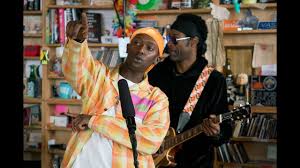
 SOUNDTRACK: BUDDY-Tiny Desk Concert #815 (January 9, 2019).

Buddy is a pretty upbeat rapper from Compton.  He’s dressed in yellow, he laughs a lot.  he plays a groovy kind of gentle raping.

The same soulful hybrid of rapping and singing that compelled Pharrell to sign him as a teenager found Buddy stretching L.A. hip-hop beyond its typical gangsta narrative, while dancing with his dreams and shaking off his demons.

So it’s funny that the blurb is all about the drama of his Tiny Desk.

When Buddy, a preacher’s son from Compton, turns to me with eyebrows raised on the elevator ride inside NPR’s corporate headquarters, it’s hard to tell if the question that comes next is in preparation for his performance or pure provocation.

“Can we smoke in here?!” he asks with a grin that elicits stifled laughter from his bandmates and a few newsroom journalists along for the ride. It’s a blunt request, even from a self-professed “weed connoisseur,” and it kicks off one of the most dramatic Tiny Desks in recent memory.

That drama doesn’t happen until midway through the 11 minute set, and we don’t actually see it.

He starts “Legend,” which is really only an introduction.  He asks everyone to sing “Legend.”  You all got to say this, Legend.  You there in the glasses, you gotta say that shit Legend.

Everyone wants to be a legend, as far as I’m concerned, it’s my turn.

“Trouble On Central” is a song about aspirations and dreams, but being stuck.

Buddy is clearly a natural at this.  He’s also an alumni of actress Wendy Raquel Robinson’s Amazing Grace Conservatory, an L.A. program known for steeping inner-city kids in the performing arts. Between the two, he earned his dramatic chops early.”I’m so used to being in front of an audience of people,” he tells me, “just doing my thing and not really caring about it.” He’s definitely not afraid of the camera. In fact, he’s one of the rare Tiny Desk guests who stares directly into it throughout much of his set, performing for the camera in the most literal sense.

I did think it was odd how often he looked at the camera, and I see that most people don’t

“Hey Up There” is where the controversy arises.

So when Buddy proceeded to fire up a blunt midway through his set, we had to stop the show and ask him to put it out before re-recording his song, “Hey Up There.” (Smoking is not allowed on NPR property.) The performance was still lit,

“Real Life S**t”  has a sweetly sung “la da da da da” backing vocal which he joins in on from time to time.  He raps mostly and throws in some fast rapping at the end of a verse, but mostly this is a groovy song.

While onstage drama kept Buddy a safe distance from the streets, he still experienced the kind of coming-of-age struggles that shaped his personal and political outlook. On “Real Life S**t,” the opening song on his album and the last song in his Tiny Desk set, he conveys that reality with raw sentiment for the sitting President in lyrics straight from the record: “Fuck Donald Trump and that Nigger’s son.”

At first I didn’t think too much of Buddy’s set but after another listen, I enjoyed his whole attitude.  It would have been fun to see him light up and what reaction it caused.

[READ: November 1, 2018] Check Please Book 1

This was a fun, fully enjoyable graphic novel about hockey–with the typical First Second quality, of course.

Like many books lately, this one started as a webcomic and you can read all of this book and more online. (but print is better).

The story follow Eric “Bitty” Bittle as he goes off to college at Samwell University.  Ukazu went to Yale and Samwell is meant to be in the ECAC league just like Yale and Princeton.  Bitty came to hockey through figure skating.  He is quite tiny, especially compared to the other players.  He also bakes a lot of pies.  And, we learn soon enough, Bitty is gay.  Fortunately for our hero, he went to a school that is very tolerant (his coming out story is very funny).

His hockey team also has a star player Jack Zimmerman.  Who?  Jack Zimmerman is the son of the legendary Bob Zimmerman who has won more awards and trophies than you can count.  But Jack was anxious trying to live up to his legendary father and he took anxiety medication for it which ended up with him in rehab and presumably no career.  But he found a home at Samwell. (more…)

Read Full Post »

SOUNDTRACK: ALLEN STONE-“Sleep” (Field Recordings, November 1, 2012).

I read this performer’s name as Alien Stone and was kind of excited.  Far more than when I realized his name was just Allen Stone.

This [Allen Stone: A Rollicking Moment, Performed On The Wind] is the final Field Recording set backstage at the Sasquatch Festival.

It amused me as the song started that they start singing “Danger Zone”  And the opening moment where:

“I feel like Zeus,” Allen Stone announces with a laugh as gusts of wind whip his long hair in dramatic fashion. With a mountainous vista behind him, he’s found himself in the kind of majestic rock ‘n’ roll moment that requires a callout to Kenny Loggins’ “Danger Zone.”

I was thinking that Stone sounded a bit like Stevie Wonder as he sang (which the blurb agrees with), but I also sensed a bit of Jamiroquai.

I thought the song was kind of dull, but maybe that’s because it is normally much bigger.

Usually, Stone performs his bluesy soul with the aid of a crack band, but here, we got the 25-year-old belter to perform his single “Sleep” — usually a big, rollicking rave-up — with just a guitarist (Trevor Larkin, performing unplugged) to supplement Stone’s voice. Channeling Stevie Wonder in all but appearance, Stone demonstrates here that his sound can withstand just about anything, even as it’s stripped down to its skeleton and performed on the wind.

I’ve not heard of him since this, so I don’t know what happened to him, but I’m not really that curious to find out.

[READ: January 11, 2017] “The Hanging of the Schoolmarm”

This is a short, simple story in which the title pretty much tells the whole thing.

But Coover has some fun as it gets there.

The story opens with the schoolmarm playing poker in the town saloon.  At stake is the saloon itself.  The men are awed by her refined and lofty character–they cuss a lot, but never around her. (more…)

Read Full Post »

SOUNDTRACK: HANNI EL KHATIB-“Save Me” (Field Recordings, August 7, 2013).

I love when Field Recordings like this one [Hanni El Khatib Gets Saved In The Desert] are filmed outside.  For this one Hanni El Khatib and his bandmates head to the Mojave Desert where it is getting cold pretty quickly.

I’ve never heard of Hanni before, and his music is generic enough that I don’t imagine I ever will.  The acoustic guitar plays a simple back and forth chord structure to the rhythm of hand jive.  Hanni plays a series of solos on the electric guitar in between simple verses (although the line about boys in the desert seems apt).

After a misfire with the maraca–it is so loud that Hanni can’t hear himself–the other guitarist suggests he should play it more nonchalantly–like business casual.

There’s nothing bad about the song, it’s just , well, bluesy garage rock, a fairly uninteresting style.  But the setting is sure pretty

The Los Angeles singer-songwriter, on a break from touring in support of his latest album In the Dirt, gamely stripped down his loud, bluesy garage-rock sound and let the stunning backdrop of Joshua Tree National Park provide the drama.

[READ: January 9, 2017] “The Gospel According to García”

This story was short and was packed full of so much.  Especially since Garcia wasn’t even present.

The story is told in second person past as a classroom full of kids watch a man come in.  There are 12 students on the verge of failing.  Seven are seniors.  The man seemed to falter a he walked into the room.

The kids knew this was his first mistake–allowing them to size him up.

He sat down where García used to sit, just like that, as if he had the right to do so.

He tried to get them to speak–maybe we should introduce ourselves–but they said nothing.  He tried to make a joke about breaking the ice, but no one responded. (more…)

Read Full Post »

SOUNDTRACK: SILK ROAD ENSEMBLE–“Briel” (Field Recordings, March 26, 2014).

There have been many fun Field Recordings, but this one [Welcome to Yo-Yo’s Playhouse] is surely the most fun. The countless members of Silk Road Ensemble were taken to ACME Studio, a theatrical props warehouse in Brooklyn.  They were given pretty much free reign to put on costumes, to bring out mannequins, to do whatever they wanted and that makes this session seem even bigger than it already is (and it’s already pretty big).

That’s all not to mention that the Silk Road Ensemble is a pretty amazing group of musicians:

cellist Yo-Yo Ma and some of the world’s premiere instrumentalists and composers, including members of Brooklyn Rider, Chinese pipa virtuoso Wu Man, Iranian kamancheh virtuoso Kayhan Kalhor, Spanish bagpiper Cristina Pato, American percussionist Shane Shanahan and clarinetist Kinan Azmeh from Syria.

As we’ve had the opportunity to forge those bonds over time [many of these performers have done Tiny Desk Concerts], we’ve gotten to know the warm, generous-spirited personalities that come along with these immense talents. We thought that setting them loose in a props house, where they could pick and choose among the curiosities for little elements to bring into the camera frame, would bring those aspects of their personalities into sharper focus. What we wound up with was a magical afternoon of play in all senses of the word — not just having the chance to record these virtuosos and their instruments in a spirited performance of John Zorn’s Briel, here arranged by Shanir Ezra Blumenkranz, but also to capture them (and us) having an immense amount of fun.

I had no idea this was a John Zorn piece.  It sounded like a Hebrew composition and now I understand why.  But in the best world music tradition, this piece is arranged for musicians from all over the world–percussion, strings, brass and reed.  There’s a bagpipe solo, a kamancheh solo and a field of percussion.  The song is just way too short.

But to watch Yo-Yo Ma play the cello while holding a mannequin that looks like George Harrison is just one of the many highlights.

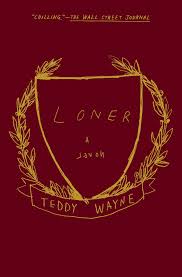
[READ: April 2018] Loner

Everything about the look of this book appealed to me.  The title, the crappy cover, the backwards type, the size, it all just seemed like a light, funny story.

Perhaps something about it should have read “creepy” too.

David Federman is a New Jersey native.  He went to Garret Hobart High School (named for New Jersey’s only vice president) He’s smart (he was accepted in to Harvard) but dull and, as we get to know him, pretty unlikable.  He imagines that Harvard will be a place where he (and other geeks like him) will flourish and kick ass.

He’s not wrong in thinking that–everyone he meets  seems to want to change.  But no one wants to change by hanging out with David.

David winds up in a freshman group that he hates–the Matthews Marauders (who are anything but).  In fact, nothing is going very well until he sees Veronica Wells.  She is everything he desires–a sophisticated New Yorker with money, intelligence and beauty. (more…)

Read Full Post »

SOUNDTRACK: MERCHANDISE-“Become What You Are” (Field Recordings, April 17, 2014).

I feel like I’ve heard of Merchandise, but I can’t be sure.  Especially given their complex history:

Merchandise got its start on the Tampa punk and hardcore scene, then got weirder as artier influences like krautrock took hold. As its sound became harder to pin down, the band inspired an 18-month bidding war between record labels: This year, Merchandise finally signed with 4AD, and adventurous new material has begun to trickle out.

For this Field Recording [Merchandise Sprawls Out In The Sunlight] singer Carson Cox and guitarist Dave Vassalotti — a configuration Cox describes as “some component of Merchandise” — held court for an informal session at Friends & Neighbors,

Before he starts singing a bird goes squawking by, Cox says, “The bird’s on backup vocals.”

As the song starts, it’s acoustic guitar and gentle crooning.  Then Vassalotti’s  electric guitar powers in.  It’s so much louder but the acoustic is perfectly audible–great mixing!  For all that build up of punk and krautrock, this proves to be a pretty straightforward folk song with buzzy guitars.

The end builds nicely with the two of them rocking out.  With the ending guitar solo, the song wends it way to over 9 minutes long.

Though it usually keeps its songs to reasonable lengths, Merchandise also knows how to sprawl out: Its new single, “Begging for Your Life/In the City Light,” spans a whopping 14 minutes. So it’s no surprise that even a truncated version of the group would be capable of wringing an epic out of such a casual environment.

[READ: June 2018] The Misfortune of Marion Palm

Because I have been trying to empty my drafts folder of all of the New Yorker and Harper’s stories that have been cluttering it for two years, I have not read that many books this year.  I’m usually good for 100+ books a year, but this year it will be closer to about 30, if that.

I’ve also read some of these books quite a while ago, so my memory isn’t as fresh as it should be.

I’m not exactly sure why I read this book.  The title was intriguing–“misfortune” is a rather compelling noun.  Plus the chapters are almost all around 3 pages.  But I think it was the very premise that was so fascinating.

Marion Palm is a Brooklyn Heights wife and mother.  She works at her children’s (fancy, expensive) school and was a devoted, if suffering wife.  But as the book opens, she is on the lam with $40,000 cash in her pockets.  She said goodbye to her children but did not say goodbye to her husband.

This is all questionable behavior.  What is even more questionable is that she said goodbye to her two girls (aged 8 and 13) in a diner and then ran out on the bill.  It was cash only and all of her cash was in her knapsack and she didn’t want her girls to see it.  So she left them there. (more…)

Read Full Post »

SOUNDTRACK: JULIE BYRNE-Tiny Desk Concert  #788 (September 19, 2018).

Julie Byrne plays a quiet acoustic guitar and sings in a melodic whisper (almost).  She reminds me of Nick Drake in many ways.

Even in an office in broad daylight, Julie Byrne sings with both a husk and a whisper as if she’s gone a long time without speaking – as if she’s been alone, as if she’s been traveling. Her opening number at the Tiny Desk, “Sleepwalker,” sings of the road as a source of freedom.

I lived my life alone before you
And with those that I’d never succeeded to love
And I grew so accustomed to that kind of solitude
I fought you, I did not know how to give it up

Byrne’s guitar playing sounds very full as is each string gets its own special attention.

Julie Byrne’s hypnotic fingerstyle picking conjures a sense of wandering, a style she adapted from her father and a sound she grew up with until multiple sclerosis robbed him of that companionship and comfort. She now plays her dad’s guitar.

After performing “Sleepwalker” alone, Julie Byrne was joined by her musical companions, Marilu Donovan on harp and Eric Littmann on electronics. Together they conjure an ethereal compliment to Julie’s love of the open landscape.

“Follow My Voice” begins with just Byrne.  After a verse or so, the harp enters, making the song seem somehow even more delicate.  And the keys are there just to add a bit more substance–but not to solidify this delicacy.

“I Live Now as a Singer” is just the keys and the harp.  It reminds me a lot of Enya, with the washes of keys and Byrne’s deep but delicate voice.

[READ: January 5, 2017] “The Short History of Zaka the Zulu”

This story is set in a boys’ Jesuit boarding school in Africa.  The narrator is relating the story of a boy they nicknamed Zaka the Zulu. The narrator explains that Zaka was always odd but that they had never expected that hew would be accused of murder.

He was a very smart boy and he succeeded very well–which made him a little unpopular.  But he became even more unpopular when made head prefect.  He was so upright and sincere; he would get boys in trouble for the slightest infraction.  His worst punishment was when he made the younger boys stay for an extra period so that they could not watch the Mary Wards (the girls from Blessed Virgin Mary school) go for their weekly swim.

There were 40 or so Mary Wards every year.  They didn’t live with the boys, of course, but they were all part of the same school–the girls got the best Jesuit education the country could offer.   Only senior boys were allowed to mingle with the girls–particularly at the one or two dances each year.  It was felt that the girls had a civilizing effect on the boys. (more…)

Read Full Post »

SOUNDTRACK: ANTHONY ROTH COSTANZO-Tiny Desk Concert #789 (September 21, 2018).

The first thing you see when you look at this Tiny Desk Concert is the amazing harpsichord–large and decorated like an old-fashioned leather-bound book.  It is stunning.

But you’re only likely to notice it if you haven’t first heard Costanzo’s voice and then had a look at him.

A word about Costanzo’s voice. He is a countertenor, a man who sings in the range of a female alto. The roots of the tradition date way back to the 1500s, when young male singers, called “castrati,” were castrated in order to preserve their high, flexible voices.

“I’ve managed to do it without castration,” Costanzo joked to the audience of NPR staffers. These days, countertenors sing in falsetto, and while as recently as 30 years ago it was considered something of an androgynous novelty, now countertenors are part and parcel of the opera world.

The music is exceptional and is wonderfully modern with that classical feel that opera naturally seems to add.

Costanzo performs songs from his new album, which pairs music by George Frideric Handel with Philip Glass. Strange bedfellows perhaps, and born more than 250 years apart, but somehow Glass’ repetitive, staccato beats and Handel’s long, flowing melodies manage to shake hands across the centuries.

The first piece is by Philip Glass.  And the music sounds like perfect chamber pop.  The flute plays the Glassian up and down melody while the bassoon plays the wonderful, peculiar bass notes.

One obvious common thread is the arrangements, by Nicholas DeMaison, that Costanzo commissioned expressly for this performance, featuring harpsichordist Bryan Wagorn (playing a beautiful double-manual French-styled instrument built by Thomas and Barbara Wolf), along with flutist Alice Teyssier and bassoonist Rebekah Heller.

Glass’ “Liquid Days,” begins with a recitative introduction, similar to a Handel aria. But the lyrics, by David Byrne, depict love, in all its quotidian splendor.

It is somewhat strange to hear a countertenor (or even if he were a female singing alto) singing lyrics in English.  His voice is truly amazing.

It is even more peculiar to hear the word “television.”  But Byrne’s lyrics are pretty awesome:

We are old friends
I offer love a beer
Love watches television

Love needs a bath
Love could use a shave
Love rolls out of the chair and wiggles on the floor
Jumps up
I’m laughing at love

And all the while Costanzo’s voice sounds operatic, serious, significant.

Costanzo’s agile voice, with its polished tone and patrician phrasing, is a singular reminder that we live in a golden age of countertenors – guys who sing high in music both ancient and modern.

Up next is Handel’s “Pena tiranna” (From ‘Amadigi di Gaula’) which means, I have a tyrannous pain in my heart and I can never hope to find peace.  It opens with harpsichord and bassoon, a wonderful combination.  The flute then enters to play a harmony with his voice.

“Pena tiranna,” from Handel’s undervalued Amadigi di Gaula, is a compelling example of how well the composer can spin a gorgeous melody to evoke the deepest anguish.

The final piece is from Glass: “In the Arc of Your Mallet” (from ‘Monsters of Grace’)” which has a text by the 13th-century Persian poet Rumi.  It speaks of longing in sexy undertones.  He says that in this translation brings out the strange, layered longing–sometimes dirty–meaning under the surface.

Anthony Roth Costanzo is a feisty performer who knows a thing or two about busting down barriers in classical music. After all, opera singers don’t normally belt out arias behind office desks, and they don’t insist on lugging harpsichords with them. They also don’t routinely sing in Bronx middle school classrooms and get students talking about emotions. But Costanzo is fearless. (And after seeing this amazing Tiny Desk performance, watch him melt the hearts of distracted sixth-graders.)

[READ: January 9, 2017] “The Driver”

I never anticipated where this story was going.  And the direction it took to get there was really interesting.

It begins with the story of Mrs Quantrill, a respectable woman who managed to get their house listed on the Nation Register of Historic Places.  She and her husband were philanthropists and they threw legendary parties.

There’s an aside that says when their son Spencer inherited the house, he demolished it and replaced it with storage units.

But at the time of this story Spencer is 9 years old.  And Mrs Quantrill has been called into the principal’s office because Spencer is struggling.  Spencer is nervous and doesn’t know what to do with his, feet, his eyes or his hands. (more…)

Read Full Post »

« Newer Posts - Older Posts »