Feeds:
Posts
Comments

Archive for the ‘Research’ Category

SOUNDTRACK: RICHARD THOMPSON World Cafe Live, September 5, 2005 (2005).

World Cafe love Richard Thompson.  And this set from 2005 seems to have RT playing more than they actually air.  I say that in part because I have no idea how the World Cafe shows work.  Do they just play three or four songs?  The sets where they play in the studio between interviews sure makes it seem that way.  But this set is clearly Richard being interviewed after a performance.  So who knows how many songs he played.

5 songs make this download.  Two of them come from his (then) new album Front Parlour Ballads (“Let It Blow” & “The Thames Side”).  There’s one “brand new” song, which doesn’t appear anywhere as far as I can tell called “Hots for the Smarts” which is one of RT’s great funny clever songs (the lyrics are all very smart things).

The final two songs are classics: “Hokey Pokey” (where’d he pull that one out of?) and “1952 Vincent Black Lightning” (which always sounds great).

RT has hundreds of great songs, so it’s impossible to winnow down to a great set (especially one that’s just five songs long) but this set (which is just him solo) sounds really great and is worth hearing for any RT fan.

[READ:April 8, 2011] “Tom Cruise at Lake Vostok”

This is a very short story that I feel is hindered by the title.  Sure, the title is a major grabber, but it’s also a spoiler.

The story is set at the Vostok Station in Antarctica.  Scientists are doing an amazing amount of research in all manner of departments.  The protagonist is there to study Europa, Jupiter’s sixth moon; meanwhile, a Russian scientist is there to study under the ice (she has a cryobot and all kinds of cool things that burrow through the thick layer of ice).

There are many other scientists at the Station, but since it take a full month to reach Vostok by tractor train, many of them have nothing to do but wait for their ride back.  In the meantime, there is gossip about everyone there–especially the protagonist and the Russian woman who seem so antagonistic towards each other that everyone suspects they’re having an affair.

Then she uncovers an artifact that is so amazing she has to talk to someone about it.  So she calls him on his walkie-talkie.  And this is where the spoiler happens. (more…)

Read Full Post »

SOUNDTRACK: MOGWAI & MAGOO-Do The Rock Boogaloo (2002).

This split CD features a song each by Magoo and Mogwai.  Both songs are Black Sabbath covers, with Magoo doing “Black Sabbath” and Mogwai doing “Sweet Leaf.”  This was released by Fierce Panda records and it’s clearly kind of a joke (the top of the disc says: two sonic scratches of the big bad rock arse”).

And yet despite the jokey nature of the project, the covers are actually quite faithful.  I’ve never heard of Magoo in any other context so I don’t know anything about them.  But their version of “Black Sabbath” is pretty right on.  The big difference is that it seems like Magoo have no bass in their band.  Everything from guitars to vocals is much more tinny than anything Black Sabbath put out.  In fact, when the really fast part at the end comes up, you can hear the bass, but it sounds like perhaps just more guitar notes.  The vocalist is also far less than scary.  And yet for all of that, the song isn’t really jokey, it just doesn’t sound scary like the original.

Mogwai’s cover of “Sweet Leaf” seems even more jokey.  It opens with a pretty heavy sounding riff and then stops after a few seconds so someone can say “give me the microphone.”  There’s also a lengthy conversation going on throughout the background of the song.  The vocals are quite fascinating.  They are utterly understated, bordering on spoken.  As such, there is a notable Scottish accent for the verses.

After the main body of the song, they never quite get to the heavy drum part at the end, in fact, the song kind of just fades out while the lengthy (drunken?) conversation (and burping) continues for over a minute.

No one is going to say this is an essential recording, although it’s good for a laugh, I suppose.

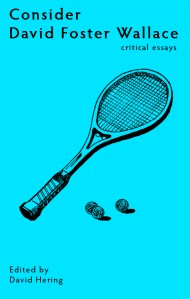
[READ: February 28, 2011] Consider David Foster Wallace [essays 10-12]

More than half way through the essays, we’re moving away from infinite Jest era and into the Brief Interviews era.  These articles look at sincerity, love and footnotes.

Because I don’t have a lot to say about the pieces (I’m not an academic anymore), I’m only going to mention things that I found puzzling/confusing.  But be assured that if I don’t mention the vast majority of the article it’s because I found it interesting/compelling/believable.  I don’t feel comfortable paraphrasing the articles’ argument, so I won’t really summarize. (more…)

Read Full Post »

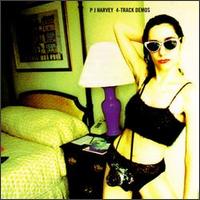
SOUNDTRACK: PJ HARVEY-4-Track Demos (1993).

After the intensity of the Steve Albini produced Rid of Me, Harvey releases this collection of demos.  The amazing thing is that these versions actually seem more intense than the Albini version. Or if not more intense, then certainly more raw.

The songs definitely have an unfinished feel about them, and yet they only vary from the final version in polish (and Albini’s stamp).

“Rid of Me” is just as quiet/loud, and has those high-pitched (and scary) backing vocals.  Speaking of scary vocals, her lead screams in “Legs” are far scarier here than on Rid of Me–like really creepy.  (Which sort of undermines that idea that this was released because Rid of Me was too intense for fans).   “Snake” actually features even creepier vocals–Harvey must have had a field day making these sounds!

I admit that I like the finished version of “50 Ft Queenie” better,”but there’s something about this version of “Yuri-G” that I like better.

The disc also has some tracks unreleased elsewhere.  “Reeling” is an organ-propelled song of female strength with the nice lyric: “Robert DeNiro sit on my face.”  “Hardly Wait” is a slow grinder that is fairly quiet for this time period.  “M-Bike” is a cool angry rocker about a guy and his motorcycle which is one of my favorite tracks on the disc.

It’s a great companion to Rid of Me.

[READ: end of February to early March]  original articles that comprise A Supposedly Fun Thing I’ll Never Do Again

As I mentioned last week, I decided to compare the articles in A Supposedly Fun Thing I’ll Never Do Again with the original publications to see what the differences were.  It quickly became obvious that there were a lot of additions to most of the articles, and it seems rather pointless (well, actually it seems exhausting and really outrageously time-consuming) to mention them all.  But what I did want to note was the things that are in the articles that have been removed from the book.   There’s not a lot but there are a few juicy tidbits (especially in the early articles) that are fun to note for anyone who read only the book and not the original articles.

My process for this was rather unthorough: I read the article and then right afterward I read the book.  If I noticed any changes, I made a note on the article version.  Many of them were surprisingly easy to note as DFW’s writing style (especially his idiosyncratic phrases) really stand out.  This is especially true in the Harper’s articles.  The academic ones were less notable, I believe, and I’m sure I missed a bunch.

I’m not sure in any way how these pieces were dealt with initially by the magazine or DFW.  I assume that DFW handed in the larger article (like we see in the book) and the magazine made suggested edits and DFW edited accordingly.  Then the book copies are probably the originals, bt which have also been updated in some way.

In most cases, it’s not really worth reading the original article, but I’m including links (thanks Howling Fantods), for the curious.

As for length, it’s hard to know exactly what the conversion from magazine article to book is.  The “Tornado Alley” tennis article is 8 pages (more like 4 pages when you take out the ads) and the book is 17.  Perhaps more accurately it seems like one Harper’s column = just under one book page.  I’ll try to figure out what the conversion is if I can.

One last note, whenever I say “article” I mean the original magazine version.  And obviously “book” means ASFTINDA. (more…)

Read Full Post »

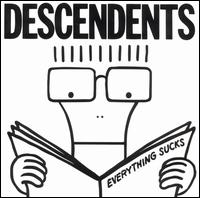
SOUNDTRACK: DESCENDENTS-Everything Sucks (1996).

My three-year old daughter brought this CD out of the shelf of CDs in my house.  I have no idea why she did; she didn’t say.  But I decided to listen to it as I haven’t in many, many years.

The Descendents have been around for a long time and their early records were mostly 1 or 2 minute blasts of punk.  This disc (their first after a nine-year hiatus) doesn’t deviate too much from that track record.  Although the best song on the disc, “I’m the One” actually has a verse-chorus structure and feels like it’s a full length pop song (when in fact its only 2:15).

“I’m the One” more or less set the stage for the kind of pop punk that Epitaph records (who released this record) would bring to prominence with Bad Religion and Rancid (and the rise of emo).  This record offers a fun mix of ludicrously short songs (35 seconds for “Coffee Mug” and 20 seconds for “Eunuch Boy”) and slightly longer songs.  Six of the songs are under two minutes.  And it’s amazing to hear just how much song you can pack into two minutes.

I haven’t really listened to much punk in the last few years, so this is strangely nostalgic even though it doesn’t really sounded dated.  In fact, the slower songs (the 2:30 “When I Get Old”) has a real Bad Religion feel to it–and they never go out of time.  Interestingly they feel a lot longer than 2 minutes after a whole bunch of 90 second songs.

Even after all these years, “I’m the One” stands up as a great song–funny and catchy, and I’m glad to have heard it again.

[READ: February 17, 2011] “The Miraculous Discovery of Psammetichus I”

Following right after Ladies and Gentlemen, The Bible!, is this short story which “fleshes out” The Histories of Herodotus.  In fact Part I of the story is, I assume, an excerpt from Herodotus.

There are Ten Parts, and each part is designed to add more to the simple history that Herodotus gave us.   Indeed, Psammetichus I was a real King of Egypt.

Herodotus tells us that Psammetichus I was curious whether the Egyptians were the most ancient race.  So he took two children, isolated them and made sure no one spoke to them.  They were fed and cared for just not spoken to.  Finally, the children began saying a word over and over, which the wise men determined was a Phrygian word.  This obviously meant that the Phrygians were an older civilization.

The rest of the story is different examples of studies that Psammetichus I did to determine things.  Many of them are kind of funny (absurd, obviously, and sad but sort of funny): raising two children with birds or apes etc.  After a few sections, one of Psammetichus I’s queens (he had twenty-three who were all infertile (!)) asks why he’s so curious. (more…)

Read Full Post »

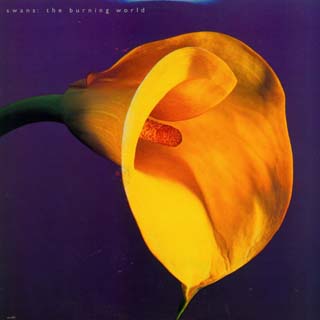
SOUNDTRACK: SWANS-“Can’t Find My Way Home” (1989).

In the Swans review yesterday, I mentioned this as a song that was as far afield from early Swans as was imaginable.  This is a cover of the Blind Faith song and it is surprisingly faithful.  In fact, the original song features a voice that is so falsetto’d it’s almost higher than Jarboe’s.

The big difference here is that Jarboe is an unusual lady and her voice has a weird almost strangled quality to it which adds an air of longing to the song that the original doesn’t.   There’s also an ethereal quality to the music which contrasts with the original’s folk styling.  Not to mention that the production on this version is better.

I also happen to think that the Swan’s guitar intro (while less technically accomplished) is more intriguing.  Not bad for an industrial band.

[READ: February 20, 2011] Consider David Foster Wallace [essays 7-9]

The group read of this book seems to have come to a halt.  Coincidentally, so had my reading of it.  So, I decided to finish up the last few essays of the book to have it done in time for the April 15th release of The Pale King (yay!).

It’s been three months since I last posted about this book so I’ll give my disclaimer:  because I don’t have a lot to say about the pieces (I’m not an academic anymore), I’m only going to mention things that I found puzzling/confusing.  But be assured that if I don’t mention the vast majority of the article it’s because I found it interesting/compelling/believable.  I don’t feel comfortable paraphrasing the articles’ argument, so I won’t really summarize. (more…)

Read Full Post »

SOUNDTRACK: LOS CAMPESINOS! Live in studio at KEXP, July 31, 2008 (2008).

For this brief in-studio performance Los Campesinos! play four songs from their debut album Hold on Now, Youngster.  The band sounds great in this setting.  I don’t have this album, so I don’t know if they deviate at all from the originals, but the live versions are tight and very effective.

The interviews are informative and rather gushing (I’ve never heard a DJ kiss the ass of a performer in such a nice way before–and the band seems really flattered by it–it’s all very sweet).  There’s also some fun comments about their screaming tendencies.

What I didn’t notice so much on Romance is Boring was how many different lead singers the band has.  With these four songs, there are enough lead vocalists to show a lot of diversity (and a lot of screaming, too–“don’t read Jane Eyre!”).  And, as one might expect from the later disc, their earlier lyrics are smart, funny and wicked, too.

The difference between Romance and Hold On, seems to be that the band were much punkier on the early disc, and that all comes out in these live tracks.  And the songs are all short: 3 minutes and under.  They really pack a lot in here.

[READ: January 6, 2011] The Facts of Winter

This book is, apparently, an elaborate joke.  It is set up as a book written by French author Paul Poissel.  But unlike the other things that Poissel wrote (his most famous and lasting works were written after this book), this is a collection of dreams.  Specifically, it’s a collection of dreams from random unnamed people in France, circa 1841.

The book is laid out with the original French story on the left page and the translation on the facing page.  I don’t know French, but my minimal French comprehension leads me to think that the translations are accurate.

So, each entry (most about a half a page, some stretch to two pages) is a recounted dream. I didn’t count how many dreams there were, but there’s more or less one a day from January to March.  None of them are outlandishly crazy or dirty or anything like that, but they are amusing to read.  There is a preponderance of canoes in the dreams.

After the dreams we get a lengthy Afterword (which all told, may be longer than all of the dreams combined).  The Afterword details La Farge’s work while translating and learning more about Poissel.  It is rather funny and goes into all kinds of personal details about La Farge and his ex-girlfriend as well as the friend he met in the city of Aix who takes him to all kinds of old ruins. (more…)

Read Full Post »

SOUNDTRACK: LETTERS TO CLEO-“Cruel to be Kind” (1999).

I’ve liked Letters to Cleo since I first heard them back on WFNX radio in Boston.  And since I had a dog named Cleo and their album was called Aurora Gory Alice, how could I not love them?

This cover of Nick Lowe’s song comes pretty close to the end of their career when they were poppier and slightly less indie.  In fairness, they were always a poppy band and their hooks were irresistible, but they had a bit more of an edge in the beginning.

This cover is pretty spot on.  There’s not a lot of “Cleo” put into it.  It sounds a lot like the original, only sung by the wonderfully voiced Kay Hanley (she sang Josie’s parts in the (terrible) Josie and the Pussycats movie, the title song for My Friends Tigger & Pooh and (gasp) as a backing singer for a Miley Cyrus tour (that’s the sound of my indie heart breaking).  I love her voice (she has a strange pronunciation/accent of some words that I find endearing), so I find the LTC version better than the original, but it’s honestly not all that different.

[READ: Week of November 16, 2010] Consider David Foster Wallace [essays 4-6]

These three essays cover the novella “Westward…” and Infinite Jest.  I was pleased to begin the essays about IJ because I know that novel far better than I know the short stories or Broom of the System.

As I mentioned in the previous entry:  because I don’t have a lot to say about the pieces, I’m only going to mention things that I found puzzling/confusing.  But be assured that if I don’t mention the vast majority of the article it’s because I found it interesting/compelling/believable.  I don’t feel comfortable paraphrasing the articles’ argument.  Besides, what would be the point of that? (more…)

Read Full Post »

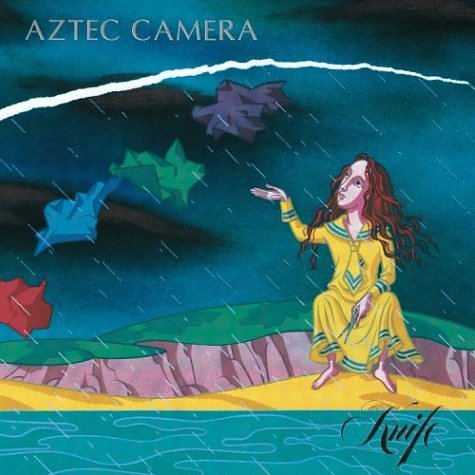
SOUNDTRACK: AZTEC CAMERA-“Jump” (1984).

This is a wonderfully twisted covered of Van Halen’s “Jump.”  VH’s version of “Jump” is bouncy, lively, fun, it makes you want to yes, Jump!  It was many years after the release of VH’s “Jump” that I heard the Aztec Camera version (even though it was released the same year).  The first time I heard it I assumed it was a joke.

I didn’t know much about Aztec Camera (and actually still don’t–looking at their Wikipedia page I don’t recognize the names of any of their singles).   But I have grown to love this cover of “Jump.”  In fact I prefer it to the original.

The opening chord structure makes me think it’s going to be the Rolling Stone’s “Waiting on a Friend” but instead of Jagger’s ooh oohs we get Roddy Frame’s deep voice practically whispering the lyrics that David Lee Roth made famous.  And it stays with this delightfully mellow acoustic style and pacing throughout.  The guitar work in the bridge is actually much more interesting than the bridge in the Van Halen version (ouch).

The chorus seems kind of odd with his very mellowly saying “jump” (although David Lee Roth doesn’t scream “jump” either, it’s the backing vocals that do the exciting part).  I feel like the original VH version hasn’t held up that well, but the Aztec Camera version shows that it’s quite a good song.

Check it out here.

[READ: Week of November 8] Consider David Foster Wallace [first three essays]

I lied.

I said that I wouldn’t feel up to writing posts about all of the articles in this book on a regular basis.  As it turns out, I don’t have a lot to say about these essays, but I had a few thoughts about each one.  Since there’s a group reading going on, I thought it might be fun to post these thoughts now while people were still speaking about the articles instead of waiting until the end.

Before I say anything about this articles, I want to preface that I’m not going to repeat things that were said in the group read (for a couple of reasons).  Everything here is going to be things that I felt about the article and maybe, if something another reader says really sticks with me, I’ll mention it as an influence on me.

Having said that, in one of the comments, author Clare Hayes-Brady says that her article is a part of a longer thesis.  I found this to be a very useful thing to know, and I assume that she is not the only one who had to compress her article because of size and time constraints.  With that in mind, I’m going to accept that if it seems like the author could/should say more about a certain thing within the article that there is probably a larger version of the piece.

And finally, because I don’t have a lot to say about the pieces, I’m only going to mention things that I found puzzling/confusing.  But be assured that if I don’t mention the vast majority of the article it’s because I found it interesting/compelling/believable.  I don’t feel comfortable paraphrasing the articles’ argument.  Besides, what would be the point of that?

(more…)

Read Full Post »

SOUNDTRACK: WEEZER-Hurley (2010).

In my head, no band garners as much debate as Weezer.  According to this article, a man offered them $10 million to break up.  Even I go back and forth about whether they are great pop song writers or incredible sell outs.  I mean, look at one of the items on their thanks list for Hurley: “Dodge–makers of the timeless Challenger.”  Is this ironic or not and if not, does it matter?  I’m also torn by Rivers Cuomo’s Harvard degree, which I would think means he would write intellectually rigorous songs–and yet he never does.

But what of it?  Let’s talk about the music.  It has dawned on me that the closest band to compare them to is Cheap Trick.  They write poppy songs with often heavy guitars that are completely sing along-y but are in no way alternative to anything.  And yet everyone loves Cheap Trick, so why not love Weezer, too?

Hurley is no different.  Each song is 3 minutes of pure pop (for crying out loud Desmond Child is on one track–put one in the sell out column).  But they also have some odd fans on this disc: the crew from Jackass sings backing vocals on “Memories” and Michael Cera plays mandolin and sings backing vocals on “Hang On” (although you can’t hear any of them really).  “Hang On,” by the way is their most Cheap Trick-y song to date.

“Unspoken” features a flute and acoustic guitars until about two minutes into a three-minute song.  Then it bursts out of acousticland and into heavy rocking guitars.  The one song I don’t get is “Where My Sex?” which I suppose is the controversial song on the disc.  He’s clearly talking about socks but he keeps saying sex.  I really have no idea why.  It’s not funny, even remotely.  It’s just an odd decision.  And I would say I rather dislike the song, but the chorus is great, as is the totally unexpected third section (which is like  pop song unto itself) that comes in 2 and a half minutes out of nowhere.

“Smart Girls” has to be ironic, but who knows anymore.  To me the most interesting song is “Brave New World.”  It eschews the standard big-chords-for-choruses format they’ve been using with a much heavier guitar and single guitar notes in the verses.  (Although the chorus is, once again super catchy).

My version of Hurley has bonus tracks which are separated by an interesting 10 seconds of string music.  The bonus tracks include a cover of a song from Yo Gabba Gabba ( I really must watch that show some time).  There’s also a great cover of Coldplay’s “Viva La Vida” (in many ways Weezer is like a harder rocking version of Coldplay in terms of success and obvious sellout possibilities).  Although this live version shows that Rivers’ voice is no match for Chris Martin’s.

“I want to Be Someone” is an earnest acoustic solo track while “Represent” (Rocked Out Mix) is one of the heaviest things they’ve done.  I assumed the original was on Raditude, but it’s not.  Evidently it’s the unofficial song of the U.S. World Cup soccer team.  Huh, who knew?

So yes, it seems that they’re pretty much sell outs.  And yet for thirty minutes (all of their discs are so nicely short) it’s easy to stop worrying about “indie or not” and just sing along.

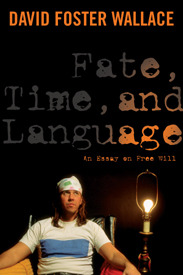
[READ: November 7, 2010] Fate, Time and Language: An Essay on Free Will

First I wanted to thank Columbia University Press for sending me an Uncorrected Proof of this book. I was pretty excited to read it, but to get it a few weeks early was even cooler (and, no, this won’t have any impact on my review).

Second, I wanted to state exactly what this book IS (because I wasn’t entirely sure myself).  The book is a reprinting of David Foster Wallace’s philosophy graduate undergrad thesis.  However, rather than just publishing the thesis (and giving us a short book or a long book with one sentence per page), Columbia University Press has packed the book with a great many essays that help to contextualize the thesis.  The Preface by Steven H. Cahn & Maureen Eckert explains this quite neatly.

So, my (briefer) version of the background: DFW’s thesis is about Richard Taylor’s article “Fatalism” (1962).  CUP has also included Taylor’s initial article (so we can see what DFW is talking about).  And even more than that, when Taylor’s article was initially published, it caused a bit of controversy and a lot of responses.  So, to get a sense of everything that DFW was working with (and against), this book also includes the intellectual dialogue: articles that range from four to ten pages (and also include a dense of Taylor by Steven H. Cahn himself (published in 1964).

Part II of the book includes an introduction by Maureen Eckhart and DFW’s essay.

Part III is a brief look at DFW as a student written by a former professor, Jay Garfield.

Before I get to the meat of the book itself, I wanted to say that I didn’t know anything about this essay.  And I’d thought about this thesis as possibly an interesting piece of philosophy from an author whose work I greatly admired.    Well the introduction to this book states in pretty certain terms that my thinking about this thesis is a massive understatement.  For, in fact, DFW’s thesis undermined Taylor’s argument in ways that no other argument had been able to do before.  His thesis more or less repudiated Taylor’s original essay.  The thesis also won the Amherst University Gail Kennedy Memorial Prize in Philosophy (and a wonderful piece of trivia: DFW’s father James won the same prize in 1959).  So, yes, this isn’t just a graduate undergrad thesis, this is real philosophy.

On to the book: (more…)

Read Full Post »
SOUNDTRACK: FUN BOY THREE-“Our Lips Are Sealed” (1983).

In an interview with David Foster Wallace’s sister, she says that David spent an entire summer listening to this song.  Most of us know the Go-Go’s version which is bubbly and playful (even though the lyrics–which are the same–are quite dark).

I’ve had this song on some compilation or other for years and I’ve alway thought of it as a kind of novelty.  And yet the more I listened to it, the more I liked it (and the more I liked it more than the Go-Go’s version).

Terry Hall, the singer of Fun Boy Three (and The Specials), co-wrote the song with Jane Wiedlin.  And it’s funny to hear how very different the two cowriters made their versions.

There’s definitely a new romantics vibe to the Fun Boy Three version, but the great bass backing vocals bring a coolly mysterious element to the song.  And if you check out the live version, you can see the polar opposite stage manner from Belinda Carlisle.  Terry Hall makes Robert Smith seems gregarious and silly.  And yet, for all of the darkness of the song, it’s still hard not to bop along to.  It’s pretty wonderful.

[READ: November 7, 2010] Consider David Foster Wallace

A group read of Consider David Foster Wallace is currently underway.  I had planned to read along and contribute weekly posts here.  I read the first two articles and, as it turns out, I have literally nothing useful to say about them.  And I certainly don’t have enough to contribute a weekly opinion about them.

It’s not that they are bad, not at all.  The onus is mine.  I am out of academia for something like a decade now.  I am totally out of practice for coming up with clever arguments and rebuttals to well researched pieces.  I have also seen a few people’s comments and critiques of these pieces and I realize that I am just not in the right mindset to be a productive member of the academic community.

But that doesn’t mean that I’m not going to read it and write a post when I’m done (I’ll likely follow along with the discussions, so this book won’t get posted for quite some time).

In the meantime, I wanted to say a few words about the preface and introduction.  (more…)

Read Full Post »

« Newer Posts - Older Posts »