Feeds:
Posts
Comments

Archive for the ‘Religion’ Category

SOUNDTRACK: CECIL TAYLOR-Jazz Advance (1956).

As the biography below states, Cecil Taylor was ahead of his time and harshly criticized for being so.  This was his first album and it made waves–as did his subsequent performance at Newport Jazz Festival (it’s like when Dylan went electric, but for jazz).

Since I’m not a big jazz follower, I’ll start with those who are.  Here’s some notes on the album from The Guardian.

A Taylor group comprised of Buell Neidlinger on bass and Dennis Charles on drums is augmented here and there by soprano saxophonist Steve Lacy; the repertoire mixes tunes by Ellington, Monk and Cole Porter with the leader’s fearlessly personal reinventions of the blues. Thelonious Monk’s “Bemsha Swing” is played even more cryptically and succinctly, the lines breaking up into jagged fragments and jutting chords. Taylor’s “Charge Em Blues” is a 4/4 walk with a surprisingly straight Lacy sax solo, and “Azure”‘s lazily struck chords and delicate treble sounds might even remind you of Abdullah Ibrahim, until the cross-rhythmic improvised piano patterns clattering chords typical of later Taylor emerge. …  It’s a historic document that still sounds more contemporary than most jazz piano music being made today.

As I listened I first thought it didn’t sound all that shocking and I wondered if that was because I was listening in 2021 and not 1956, but around two minutes into “Bemsha Swing” he starts throwing in some atonal and dissonant notes.  You can tell that he knows how to play, but that he’s deliberately hitting either “wrong” notes or just letting his fingers fly where they will.   And it still sounds surprising today.

“Charge ‘Em Blues” sounds far more “normal” at least in the beginning.  Lacy’s sax solo is fun and bouncy.  Then around 5 minutes a back and forth starts with Taylor’s wild free-jazz atonal improv and a drum solo.

“Azure” is a more chill track although about halfway through the improv starts going off the rails.

About half way through “Song” the solo is all over the place–sprinkling around the piano and pounding out a few chords here and there.  It’s dissonant and off-putting, but seem more like it’s trying to wake up the listener. When Lacy’s pretty sax comes in and plays a delightful improv and Taylor is bopping around behind him, the contrast is stark.

“You’d Be So Nice To Come Home To” is the only song on the record that I knew before and I never would have recognized it here.  As AllMusic puts it

At his most astonishing, Taylor slightly teases, barely referring to the melody of “You’d Be So Nice to Come Home To,” wrapping his playful, wild fingers and chordal head around a completely reworked, fractured, and indistinguishable yet introspective version of this well-worn song form.

This is a solo piece and he is all over the place.  At no point did I recognize the original melody.

“Rick Kick Shaw” features some lively drums and walking bass while Taylor goes to town.  He plays some really fast runs which slowly turn experimental. I’m very curious if future renditions of this song were in any way the same or if all of this soloing was improvised each time.

“Sweet and Lovely” is very slow and more traditional sounding.  Without the speed of his solos, this song comes across as almost like a standard jazz song.  Although at the very end he throws in a few sprinkles of chaos just because he can.

[READ: February 2, 2021] The Musical Brain

I’d only read a couple of short stories from César Aira (all included here).  His novels are so short it almost seems weird that he’d write short stories, but some of these stories are very short indeed.  They do also tend to meander in the way his novels do which makes it seem like some of them don’t end so much as stop.

“The Musical Brain” was the first story I’d read by Aira, and what I wrote about the story has held true for pretty much everything I’ve read by him:

There are so many wonderful and unexpected aspects to this story that I was constantly kept on my toes.  This also made it somewhat challenging to write about.

“A Brick Wall”
I thought I had read this story before but I guess I hadn’t.  It begins with the narrator saying that he went to the movies a lot as a kid–four or six films a week (double features). He says he has an impressive memory for details.  He remembers seeing Village of the Damned decades ago.  A small village’s children are all born as zombies. The zombies can read everyone’s minds so the hero thinks–erect a brick wall.  He also remembers North By Northwest which was titled in Argentina: International Intrigue.  He and his friend Miguel loved the elegance of the movie. And they decided to become spies.  So they created a game in which they would “forget” that they were spies. They would leave notes for each other and then “discover” them so that when they came upon them they were new and exciting.  It was surprisingly easy to forget the game, apparently. (more…)

Read Full Post »

SOUNDTRACK: TH1RT3EN-Tiny Desk (Home Concert) #146 (January 18, 2021).

I had never heard of TH1RT3EN before this Tiny Desk Concert. But I was hooked from the beginning.  I liked everything about them.  The fuzzy distorted guitar from Marcus Machado, the excellent delivery of Pharoahe Monch and especially the fascinating drumming and drum style of Daru Jones (look at the way his drums are set up!).

Both the moniker TH1RT3EN and supergroup were born out of a frustration with the veneer of American society that underestimates the darkness of white supremacy.

“I knew 5 years ago where we headed,” Monch shared over the phone. “Sure, we’ve always done socially and politically aware music, but I’m tired of this “love will win” nonsense. Love may be the most powerful vibrating force, but consciousness is spreading and it’s impossible not to be more aware of the evil that has kept the world in complete darkness. TH1RT3EN is the musical personification of me and my comrades at combat.”

“The Magician” is based around the riff from Yes’ “Roundabout.”  Machado plays the riff throughout which I find much more interesting than if it was sampled.  Monch’s lyrics are smart and pointed.  There’s an incredibly fast rapping middle section with some amazing drumming.  I really like his delivery.

Moinch says that that song is about a student who was bullied and grew up to be a school shooter.  Ironically there hasn’t been any school shootings because we’re in the middle of a pandemic–a pandemic that has taken the lives of 250,000 Americans.  And yet Americans reman more afraid of Black Lives Matter than of COVID 19.

TH1RT3EN recorded this set in August 2020, as evidenced by Monch’s interlude, this four-song set still channels the discontent outside our windows today.  Shot in a padded “panic” room, this Tiny Desk (home) concert reflects the rage felt by this three-man battalion.

Monch continues “We are in need of cleansing and an exorcism.  “Cult 45” opens with a sample of a horn riff.  It’s quieter musically so it’s mostly vocals.  When the guitar joins in it’s mostly to add free jazz noises along with some wild drumming.

“Scarecrow” returns to the slow dirgy, aggressive guitar sound behind some fast rapping.

He says he started the band because he wanted a bit more authentic aggression by finding these two musicians.  And the set ends with “Fight” which has a nice big riff and crashing drums.

How’s this for an aptly aggressive verse

Burn a cross, water hose, dogs and nightsticks
Yeah, that’s what it used to be, see, they would usually
Just hang a nigga, fuck ’em
Now they don’t have the time to decorate the trees so they buck ’em

I’m going to have to check out this album.

[READ: February 28, 2021] You’ll Never Believe What Happened to Lacey.

Amber Ruffin is a writer and comedian, most notably from “Amber Says What” on Late Night with Seth Meyers and The Amber Ruffin Show on Peacock.  Amber is hilarious.

But Amber is also righteously angry about the way Black people are treated in America.  Somehow she manages to take the most horrible things you can imagine and report about them with enough humor to make you listen and laugh and still get outraged.

This book is a collection of stories of racist things that happened to her sister Lacey.   Lacey lives in Omaha, Nebraska, where they grew up.  I don’t know anything about Nebraska or Omaha.  Apparently Omaha is a big city and has sections that have a lot of Black folks.  White people who are not from the city find the thought of going to Omaha scary.  It also means that when Lacey gets jobs outside of Omaha she is typically the only Black person in the building.

Which seems to make all of the white people there think it is okay to say whatever crazy racist shit they want to say.  But even outside of work, it seems like Lacey is a magnet for racist comments.  Is it because she is tiny and good natured?  Maybe.  But she is a also a bodybuilder, so watch out.

About this book Amber says:

When you hear these stories and think, None of these stories are okay, you are right.  And when you hear these stories and think, Dang, that’s hilarious, you are right.  They’re both.

There are going to be a lot of time while you’re reading this book when you think There is no motivation for this action. It seems like this story is missing a part because people just aren’t this nonsensically cruel.  But where you see no motivation, you understand racism a little more.  It’s this weird, unprovoked lashing-out, and it never makes any sense. It’s why it’s so easy for people to believe the police when hey beat someone up–because no one would be that cruel just because the person was Black.  But the are!  So as you read this book, when you see there’s no motivation, know that there is: racism.

The Preface has an anecdote that really sets the tone for the rest of the book.  Lacey paid at a store with a check. The checks had Black heroes on them.  Lacey paid with one with Harriet Tubman on it.  The cashier who had been very nice up to that point said “Wow you have checks with your picture on ’em.”  There is then a hilarious juxtaposition of the check with Tubman and one with Lacey’s photo.

Amber contrasts her life in New Yorke City.

Everyone I work with is stark raving normal. We don’t have any crazy bigots (dumb enough to run up) and I’m no one’s first Black friend.  Now I’m not saying no one ever says anything crazy to me–I’m still a Black woman in America–it’s just that we all know there are consequences for talking to me as if you’ve lost your mind.

But in the Midwest it is an unchecked tsunami of dumb questions and comments.  People think it your job to answer “Why can’t I (insert the most nonsense shit you’ve ever head)?”

Lacey chimes in (in a different font) from time to time with things like that she’s happy her little sister is successful in New York:

where someone would get fired for out-and-out racism.  I love that that really happens.  Never seen it, but I love it.  Like Santa Claus.

Amber ends the preface by saying

Hopefully the white reader is gonna read this, feel sad, think a little about it, feel like an ally, come to greater understanding of the DEPTH of this type of shit, and maybe walk away wit a different point of view of what it’s like to be a Black American in the twenty-first century.

And I did.  Boy did I ever. (more…)

Read Full Post »

SOUNDTRACKELISAPIE-GlobalFEST Tiny Desk (Home) Concert #136/156 (January 14, 2021).

ElisapieGlobalFEST is an annual event, held in New York City, in which bands from all over the world have an opportunity to showcase their music to an American audience.  I’ve never been, and it sounds a little exhausting, but it also sounds really fun.

The Tiny Desk is teaming up with globalFEST this year for a thrilling virtual music festival: Tiny Desk Meets globalFEST. The online fest includes four nights of concerts featuring 16 bands from all over the world. 

Given the pandemic’s challenges and the hardening of international borders, NPR Music and globalFEST is moving from the nightclub to your screen of choice and sharing this festival with the world. Each night, we’ll present four artists in intimate settings (often behind desks donning globes), and it’s all hosted by African superstar Angélique Kidjo, who performed at the inaugural edition of globalFEST in 2004.

The second artist of the fourth and final night is First Nations singer Elisapie.

Elisapie returns to Tiny Desk for a show-stopping performance from Montreal, with the disco globe of our dreams helping to light her set. Elisapie, in both her songs and work, is a resounding advocate of First Nations culture in Canada. In her set, she harnesses an incredible energy with electrifying, emotive vocals.

I had really enjoyed Elisapie’s previous Tiny desk.  I found her to be a less extreme, but no less dramatic performer than Tanya Tagaq.  Her band is outstanding creating all kinds of textures to surround her voice.

The first song is “Qanniuguma.”  It starts quietly with a single ringing guitar note from Jean-Sébastien Williams and little taps of percussion from Robbie Kuster.  Joshua Toal adds some quiet bass as the guitar plays some higher notes.  After a minute Elisapie starts singing.  Another 30 seconds later the drums get louder and Jason Sharp start sprinkling in some raw bass saxophone.  As the song grows more intense, Elisapie adds some breathing and chanting–throat singing.  Things quiet down and then build again with the sax and the guitar soloing as the drums and bass keep things steady

Behind her you can see Mont Royal, which has a lot of history.

The second song “Wolves Don’t Live by the Rules” is “a small song” but very meaningful.  It starts in a similar way with ringing notes an thumping drums.  She sings this one in  English and it feels like a much more conventional sounding song.  It’s pretty quiet but the instrumental breaks adds huge guitar chords and the end is really loud.

Introducing the final song, “Arnaq” (which means Woman) she says women tend to forget that we have a lot of strength and we should celebrate it loud and clear.  This one opens with a loud raw sliding guitar like an early PJ Harvey song.  The song’s chorus builds with an “ah ya ya ya” as the instruments add chunky noises–scratches from the guitar and skronks from the sax and all kinds of precious.  It’s a cool noise fest, although the guitar could be a smidge louder.

I’d really like to see her live.

[READ: February 25, 2021] March Book 2

Book Two picks up John Lewis’ life.

Like the first, it starts with Lewis’ preparations for the inauguration of Barack Obama.

Then it flashes back.  Lewis was in college and had moved to Nashville where the growing student movement was gaining strength.

The visuals are even more striking in this book.  The panels of the white woman pouring water and then soap (or flour) on the quietly sitting Black diners and then hosing them down is really arresting.  As is the sequence (which is almost entirely black) of a room full of peaceful protestors being locked in a room when the fumigator was set off.

I couldn’t believe that a man couldn’t really left us there to die.  Were we not human to him?

Then next round of protesta was at the segregated movie theaters.  I love that they chose the Ten Commandments to protest (the irony was lost on the whites in Alabama).  The Black protesters would line up and would be refused seating.  Hundreds of people who would then get back on line and be refused seating again.  Whites would throw things at them and hurl abuse at them. (more…)

Read Full Post »

SOUNDTRACKEMEL-GlobalFEST Tiny Desk (Home) Concert #134/145 (January 12, 2021).

EmelGlobalFEST is an annual event, held in New York City, in which bands from all over the world have an opportunity to showcase their music to an American audience.  I’ve never been, and it sounds a little exhausting, but it also sounds really fun.

The Tiny Desk is teaming up with globalFEST this year for a thrilling virtual music festival: Tiny Desk Meets globalFEST. The online fest includes four nights of concerts featuring 16 bands from all over the world. 

Given the pandemic’s challenges and the hardening of international borders, NPR Music and globalFEST is moving from the nightclub to your screen of choice and sharing this festival with the world. Each night, we’ll present four artists in intimate settings (often behind desks donning globes), and it’s all hosted by African superstar Angélique Kidjo, who performed at the inaugural edition of globalFEST in 2004.

The fourth band on the second night is Emel from Tunisia.

Tunisia-born singer Emel first performed at globalFEST in 2015, the same year she performed her song of Tunisian Revolution, “Kelmti Horra,” at the Nobel Peace Prize Concert. Emel was hailed by NPR as a “21st century catalyst for change.” She created her latest album, The Tunis Diaries, equipped with only a laptop, tape recorder and a crowdsourced guitar after she was unexpectedly quarantined in her childhood home in Tunis last spring.

Emel plays only two songs.  It’s just her and her co-guitarist Kareem.  The songs are spare but very full and quite powerful.

“Holm” (A Dream) is a pretty, quiet song with soaring vocal melodies over the restrained lead guitar from Kareem.

“Everywhere We Looked Was Burning” is sung in English.  The spare and lushly echoed guitars make her voice sound especially raw and passionate.

[READ: January 14, 2021] “Drawing from Life”

I found this story to be a little confusing as it started.

Without really referring to the narrator specifically, the story starts with talk of being called out of retirement and away from Netflix, etc.

It wasn’t until the third paragraph when things started to get explained that it made sense.

Harold is a 70-plus year-old-man.  He was one of the first people in his neighborhood to get the Coronavirus.  His son had thought to get him an oxygen tank and so he didn’t need the hospital.  Two weeks later he had survived the virus and was more or less immune.

It was sometime a month or so later that the local rabbi called up.  He explained that people could no longer sit with the dying, with the deceased, as their faith prescribed.  Perhaps, since he was now immune, he would be willing to do so.  And, more to the point, perhaps he would be willing to paint the deceased for their family–as a last gesture.

Harold was an excellent painter–former teacher, exemplary artist who sold paintings to raise money–and often made a lot.

And so, Harold found himself in the hospital, often overnight, by himself, painting. (more…)

Read Full Post »

SOUNDTRACKHIT LA ROSA-GlobalFEST Tiny Desk (Home) Concert #134/144 (January 12, 2021).

Hit La RosaGlobalFEST is an annual event, held in New York City, in which bands from all over the world have an opportunity to showcase their music to an American audience.  I’ve never been, and it sounds a little exhausting, but it also sounds really fun.
The Tiny Desk is teaming up with globalFEST this year for a thrilling virtual music festival: Tiny Desk Meets globalFEST. The online fest includes four nights of concerts featuring 16 bands from all over the world. 

Given the pandemic’s challenges and the hardening of international borders, NPR Music and globalFEST is moving from the nightclub to your screen of choice and sharing this festival with the world. Each night, we’ll present four artists in intimate settings (often behind desks donning globes), and it’s all hosted by African superstar Angélique Kidjo, who performed at the inaugural edition of globalFEST in 2004.

The second band on the second night is Hit La Rosa from Peru.

Kidjo says their music is like a psychedelic surf-punk cumbia.  That’s true, but in a rather restrained way.  The music is cool and a little wild but it never gets out of control.  They play three songs and again, the musicians’ names aren’t given.

From the candle-lit home of their lead singer, Hit La Rosa comes in hot and doesn’t stop until the final measure. The band explores the many facets of Peruvian cumbia music, infusing it with pop music, folklore, jazz and dancehall to produce its distinctive grooves and hooks. The band’s precise-yet-dreamlike music and punk sensibility all come together to make music that explores life’s shadowy sides. Despite living through a political crisis in Peru, the band brings a message of hope and joy in the midst of struggle and upheaval.

“La Montañita” has a latin drum opening with a weird echoing surf guitar intro.  Sliding bass and trippy keys propel this danceable song along.

“La Marea” opens with a mellow keyboard and slow bass and guitars.  After a coupe of minutes,a drum fill introduces the faster part of the song.  An echoing vibrato-filled guitar solo and trippy synths are accented with Peruvian percussion and drums and it all works really well together.

“Salvia” is trippy and moody with more of the vibrato guitar soloing.  I really like at the end of the song the juxtaposition of the looping guitar melody and the bouncing bass.

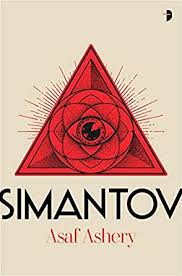
[READ: December 14, 2020] Simantov

This story (originally written in Hebrew and translated by Marganit Weinberger-Rotman) was a combination police procedural and eschatological novel about the end times.

I read the summary of the book at work, but the summary really doesn’t indicate just how supernatural the book is going to get.

It would greatly help to have a solid foundation in Biblical lore to fully understand what’s going on in this book.  I mean, the first chapter title contains a footnote:

The First Day of the Counting of the Omer*
*According to the Torah (Lev. 23;15) Jews are obligated to count the days from passover tp pentecost. This counting is a reminder of the link between the Exodus and harvest season.

Things are supernatural right from the get go.  Elijah the prophet comes to Earth to prepare for its smiting (it’s quite an elaborate introduction).  Elijah lands in Israel and leaves a trail of destruction all the way to Shamhazai’s mansion.

So, obviously it helps to know who Shamhazai is (I didn’t–Shamḥazai and his companion Uzzael or Azael are fallen angels of Nephilim).  The Nephilim are literal giants in the Bible–often taken as fallen angels.  That’s a lot of background for the first 9 pages.

The next chapter reminds the reader of the first humans created by God–Adam and Lilith.  Shamhazai was gaga over Lilith.

Incidentally, after reading the book I was looking at what other readers had thought.  One reader on Goodreads said she had to stop reading the book on page 10 after this sentence:

[Lilith] was dark and comely, her eyelashes fluttered like turtledoves, her perky breasts like two erect towers.

I’m going to admit that I found this simile to be really awkward (translation problem or just poor writing?).  I mean, even if Lilith were a giant, her breasts wouldn’t be like towers, right?  It’s hard to know even where to begin with a simile like that.  But I pressed on. (more…)

Read Full Post »

SOUNDTRACKSOFIA REI-GlobalFEST Tiny Desk (Home) Concert #133/140 (January 11, 2021).

Sofia ReiGlobalFEST is an annual event, held in New York City, in which bands from all over the world have an opportunity to showcase their music to an American audience.  I’ve never been, and it sounds a little exhausting, but it also sounds really fun.

The Tiny Desk is teaming up with globalFEST this year for a thrilling virtual music festival: Tiny Desk Meets globalFEST. The online fest includes four nights of concerts featuring 16 bands from all over the world. 

Given the pandemic’s challenges and the hardening of international borders, NPR Music and globalFEST is moving from the nightclub to your screen of choice and sharing this festival with the world. Each night, we’ll present four artists in intimate settings (often behind desks donning globes), and it’s all hosted by African superstar Angélique Kidjo, who performed at the inaugural edition of globalFEST in 2004.

The third band on the first night is Sofia Rei.  Rei is

an award-winning Argentine vocalist and songwriter [who] blends South American folk traditions with experimental pop and electronic music. That mix of tradition and modernity extends to her surroundings, which features traditional iconography, exuberant plants and looping pedals.

Rei plays three songs.  “Un Mismo Cielo” (The Same Sky) opens with her looping her voice.  Big electronic drums are added and then JC Maillard is messing around with their electronics to create interesting sounds and textures.   After a quiet introduction, Jorge Glem adds lovely cuatro and Leo Genovese plays a trippy electronic flute-sounding keyboard solo.  I enjoy watching Maillard playing the electronic melodies on the keys and then the quick switch to bass guitar for a funky riff.

“Negro Sobre Blanco” (Black On White) is about putting things into perspective.  Rei picks up the charango as the drums echo in.  The charango plays a delightful echoing melody.  Ana Carmela Rodriguez Contramaestre sings backing vocals and platys percussion.  The middle jam with some wild electronics then Maillard picks up guitar a plays kind of spaghetti western melody.  Then the song returns to the original melody with an even fuller sound.

Saving the best for last, Jorge Glem takes an amazing solo on the cuatro.  His hands move so fast and he simultaneously plays high chords along with percussive strumming.  At the end of the solo he does so fascinating strumming with his fingernails to make a trippy psychedelic sound.  It’s phenomenal.

The set ends with “Escarabajo Digital” (Digital Beetle), a fun dancing song.  The juxtaposition of the fast cuatro with the grooving bassline is fantastic.

I enjoyed this set a lot and want to hear more from her (and Glem who has several of his own albums out).

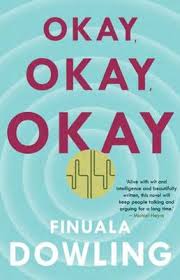
[READ: January 11, 2021] Okay, Okay, Okay

This story is set around Adamastor University in South Africa.  The focus is on Simon, a former teacher (now an administrator) and his family.  Also his assistant Viwe (and his family).  There’s also Vida, a sound technician for live theater.  She is unrelated to them but she gets pulled into their drama.

The story initially seems to be about how Simon (the “Head of Effective Communication”) is desperately hoping to get promoted into a more plum position. He is currently in a very good position financially, although his former colleagues feel like he threw his soul away when he became an admin.  But the story grows bigger–tackling University policies as well as racism and sexism in South Africa.

But the book opens on Vida. Vida is a sound engineer.  She is familiar with University politics because she has been to a few of Professor Bruno Viljoen’s academic parties.  Viljoen is head of the drama department and invited Vida along because she has done sound work for them.

The one thing I didn’t care for in this book was some of the younger characters occasional throwing in text speak (WTF, LOL).  While those are certainly things people of that age might say (although Vida is in her 40s), it was jarring to see text speak in a character’s thought process:

A dinner party full of academics: WTF, she’d had more fun driving her car around with nowhere to go.

Why not write it out?  It just seemed odd.

Aside from that, Vida is a wonderful character–no nonsense, takes no crap from anyone.  She loves sound and is great at her job.  She also has two dogs and two cats and she is crazy about them.  There’s at least five times when she speaks her mind and it’s terrific.

Cecily is Simon’s daughter.  She is currently taking a class with Boris. He is, everyone agrees, a silver fox.  Even younger girls swoon for him.  But Cecily has known him since she was little and she’s not impressed.

As this class opens, Boris is encouraging them to dig into their past to present a monologue.

Half the people in this class probably have slave ancestry.  That blood flows in your veins.  You are slaves.

Immediately a student raises her hand:

I just want to say that it gives me offense when you, a settler, say that I, whose ancestors are buried here, am a slave.  “Slave” implies that a person is not a person–not a mother, a lover, a human being.

After class Bruno asks Cecily what that was all about.  She says that students are very sensitive these days so just mind what he says.  He then offers to set her up with his nephew–a rather handsome fellow who looks like “a Puerto Rican Ken doll.” (more…)

Read Full Post »

SOUNDTRACK: BORROMEO STRING QUARTET-Tiny Desk (Home) Concert #127 (December 15, 2020).

This is the second of three Tiny Desk Home Concerts to honor Beethoven’s 250th birth anniversary. 

The Borromeo String Quartet consists of Nicholas Kitchen: (first) violin, Kristopher Tong: violin, Mai Motobuchi: viola and Yeesun Kim: cello (who is Kitchen’s wife).

Beethoven doesn’t score high when it comes to positive personality traits. Paranoid, litigious and a micromanager, Beethoven didn’t suffer fools and often fought with friends. Still, he possessed a well-developed funny bone, which Nicholas Kitchen and company put on display here, along with their own whimsical tiny “desks.” Because of the virus, and the confined space, the players wear masks.

The humorous side of Beethoven’s personality seeps into his music, such as the false stops and musical giggles that fuel his two-minute-long Presto from the Quartet Op. 130, which opens this performance.

“String Quartet in B-flat, Op. 130, II. Presto” has many fast moments and interesting parts where the first violin pays fast melodies but the rest of the quartet plays slow triplets over and over.  This is one of Beethoven’s shortest movements and is full of variety and energy.

For contrast, the Borromeos follow with a serious movement from later on in the same piece, the prayerful Cavatina, which Beethoven said even got him choked up.

This movement is full of serenity and tranquil beauty.  This is called the beklemmt section meaning trouble breathing. 

Kitchen can barely contain himself about the humor in the next piece, “String Quartet in F, Op. 135, II. Presto.”  He says this has a playful melody and “berserk” middle with instruments going all over the place.

More hijinks ensue in the Vivace from the Quartet in F, Op. 135, where Kitchen says the music becomes “completely berserk.”

And finally, in the last movement of the same quartet, Beethoven inserts a musical inside joke, the brunt of which falls on a wealthy music lover who displeased the great composer by not showing up at an important concert.

Kitchen says that Beethoven never met an occasion when he did not have a pun.  And he enjoyed injection his own brand of humor into his pieces.  In “String Quartet in F, Op. 135, IV. Der schwer gefasste Entschluss” there is an inscription: question must it be?  answer: It must be it must be!  Kitchen explains there was a patron who did not attend the premiere of opus 130.  The next day the patron  asked Beethoven to send him the music so his court musicians could play it. Beethoven said he’d send it but “you not only have to pay the price of admission for the concert you missed but for everyone in your family.”  The man looked at him and said “Must It be?”  Beethoven wrote a canon for four men to sing “it must be it must be.”  Then he made that joke the basis of the last movement of Op. 135.

[READ: January 3, 2021] Dinner

The Linden Tree was an interesting trip down memory lane for Aira.  

Dinner, by contrast is a wild violent fantasy (translated by Nick Caistor).  But its starts in the mundane–with a man and his mother going to dinner.

The two of them went to his friend’s house.  The friend was a terrible storyteller.  But he and the narrator’s mother had one thing in common–they were great at remembering the names of everyone in Pringles.  They knew the genealogies and configurations of nearly all the families.

But the narrator was terrible at remembering names–he had no facility for it at all.  He had plenty of memories from the town, but could never put a name to an event.

Evernatully the friend brought out a precious toy that he had.  It wa an old and rather sophisticated wind-up toy.  Two separate gears would go at the same time.  As it began to run, the door to a bedroom opened an a fat man came out and started to sing (as well as an old 19th century toy could sing). An old woman was in bed and she began to move back and forth “as a blind person does.” Then the second mechanism kicked in an the bedspread began to move and it looks like flocks of birds were flying out from underneath it. (more…)

Read Full Post »

SOUNDTRACK: SPILLAGE VILLAGE-Tiny Desk (Home) Concert #101 (October 23, 2020).

I never imagined that a video filmed in a church would have an explicit language warning at the beginning of it.  But such is Spillage Village.

The Atlanta collective consists of Dreamville records standouts J.I.D and EARTHGANG along with Jurdan Bryant, Hollywood JB, Benji and Tiny Desk alumnus Mereba. R&B star 6lack, also a member of the group, was unable to make it to the shoot due to travel restrictions.

There’s 12 people in the church (let’s hope they are all tested since they are not social distancing). And seven of them are rapper/singers.  The rest is a live band, and they are tight.  They sound great.  It’s amazing how much a live band can add to a rap concert.

Musically, “End of Daze” is very cool with funky bass from Benji and lots of grooving wah wah solos from the guitarist on the back.  The verses are rapped and everyone gets a turn.  What I especially liked was the diversity of voices and styles.

WowGr8 goes first.  He has a cool accent and delivery.  JID has a fantastic style–his voice is higher than the others and very distinctive.  Mereba has one of the best verses–referencing Nipsey Hustle’s murder.  Jurdan has the most conventional-sounding delivery.  Hollywood JB seems a but more lighthearted in his delivery.  Then OLU (dressed in a fantastic suit) sings his verse.  He has a great singing voice.  While he sings his verse and the song fades sprinkling keys twinkle.  They all sing the super catchy chorus. The backing band is apparently all related but someone is playing the keys and the credits don’t say who: Justin Barnett: guitar; Jerramy Barnett: bass; Nick Barnett: guitar; Dj Barnett: drums.

Christo the DJ starts out “Baptize” with a sample.  OLU raps.  I love his delivery–.his verse is choppy and funky.  JID takes the next verse, and I like him even more.  The song has a fun sing along chorus which seems strangely raunchy for a song about baptism.  WOWGr8 takes another verse and shows off some really fast rapping.

Before the next song, someone’s phone rings and one of them says “turn off your phone in church.”  Mereba sings this next song, which she says is called “Hapi.”  After she says this, someone sings “because I’m happy…) very quietly.  The song proves to be a full on gospel type song.  Mereba has a kind of spoken word section and then OLU croons beautifully.

“Jupiter” ends the set.  Mereba grabs an acoustic guitar and the whole group sings an almost campfire singalong.  The church does feel like an appropriate setting for these last two songs.

I’m really impressed by this group.

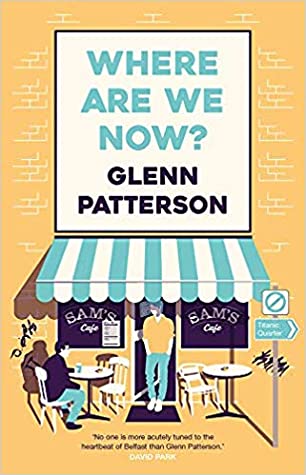
[READ: November 15, 2020] Where Are We Now?

Glenn Patterson is from Belfast, Northern Ireland.  This novel is a small (in scope) story about life in Belfast.  I don’t know that I’ve ever read a story that focused in such detail on the daily life in Belfast, post-Troubles.  The Troubles don’t really enter into the story–except that there are ever present reminders of them.

This is the story of Herbie.  Herbie is a middle-aged man.  I initially assumed he was older middle aged, then I thought he might be younger middle-aged.  I don’t believe it is ever stated.

I had a remarkably difficult time reading this book because there was so much I simply didn’t know.  Stuff that the average Belfastian person probably knows very well and with no problem.

It started pretty early on when someone says that a person had dumped a Portakabin on one of the roads running up to the hills on the far west of the city.

Okay so first, you have to find out what a Portakabin is (a mobile home of some sort). Then there’s a lengthy talk about who might do such a thing.  And I really didn’t understand much of what they were talking about.  Although I did like that they conclude that whoever did it could be summed up as The Ungivers of Fuck. (more…)

Read Full Post »

SOUNDTRACK: CARLOS VIVES-Tiny Desk (Home) Concert #95 (October 14, 2020).

This is a hugely fun Tiny Desk (Home) Concert.

Everything about Vives’ music feels uplifting and joyful.  And boy is that a nice feeling.

Carlos Vives kicks things off in high gear on this Tiny Desk (home) concert with his trademark sound: a celebration of the music from his beloved home country of Colombia, mixed with rock and other Latin music styles.

The opening song “Pa’ Mayte” starts out with a ripping accordion melody from Christian Camilo Peña and some wonderfully funky fluid bass lines from Guillermo Vadalá.  Vadalá is my favorite component of this set without question.

Vives’ voice is strong and powerful and he is joined with a chorus of backing vocalist and percussionist, especially Guianko Gómez from Cuba and Mayte and Tato Montero.

The middle of the song has a rap followed by some really fast and complicated lead guitar from Andrés Leal (followed carefully by Vadalá).

Spirited champeta dance grooves from the country’s Pacific coast permeate his classic 1995 hit “Pa’ Mayte,” and if you look closely you’ll see two of his backup vocalists also playing traditional gaitas Colombianas (flutes).

Then comes the flute solos.  First Mayte Montero on the traditional gaita then Tato Marenco joins in.  Of course no song like this would be complete without some excellent drum and percussion and Martin Velilla is fantastic in that role.

Vives speaks in Spanish between songs. He says that “Cumbiana” is dedicated to his country (Colombia) and the people there.  It opens with pretty, echoing guitar and some wonderful lead bass notes.

It starts slowly, like a love song but turns into a bit of a banger in the chorus.  He even plays a harmonica solo.  During the quiet ending there’s just guitar and harmonica as the song fades.

Next is transition between the title cut of his new album Cumbiana and “La Bicicleta” a vallenato fueled by a bit of reggaeton.

It was originally recorded with his compatriot Shakira and he dedicates the song to her–“the bike to travel the whole world.”

The song is upbeat and a lot of fun.  The middle has a lead flute solo which is echoed by the lead guitar–a great combination. It ends with with a solo accordion melody as the song fades out.

Vives says that “cumbiana is that amphibian territory that I call where cumbias vallenatos and porros are born.

Evidently this is Vives’ signature sound:

a celebration of the music from his beloved home country of Colombia, mixed with rock and other Latin music styles.

They end with “No te Vayas” (“Do Not Go”) opens with quiet guitar.  As he sings the two flutes come in playing the melody along with his voice.  It’s a wonderful combination and an altogether fantastic set.

[READ: November 20, 2020] “A is for Alone”

This story has an interesting setup,.

The narrator is an artist and her latest project is inspired by Mike Pence.  She has called it “Interrogating Graham/Pence” and plans to interview a series of men.  She will give them a questionnaire and take their Polaroid.

The two key questions are:

When, prior to today did you last spend time alone with a woman who is not your wife?  Are you aware of the Modesto Manifesto also known as the Billy Graham Rule, also known as the Mike Pence Rule?

The first man she interviews, Eddie, is an old friend from college.  They took a ceramics class together. They both have fond memories of those days, although since school Eddie has become very successful in the investment world.  Eddie is married and has children and admits that he isn’t alone with other women very often.  But he agrees that the Mike Pence rule is weird.

One of the other questions on the questionnaire is “what did you think when I invited you to lunch?” Eddie assumed that she was sick or dying.

She had planned to meet a different man each week, but then realized she didn’t know 52 men.

The next man she invited was her son’s hockey coach.  He is confused and somewhat alarmed at the lunch invitation.  He assumes there will be more people.  He thinks that the Graham/Pence rule makes sense.  He is not willing to contribute to or particulate in her project. (more…)

Read Full Post »

SOUNDTRACK: GRUFF RHYS-Yr Atal Genhedlaeth (2004).

In 2004. Super Furry Animals frontman Gruff Rhys released his first solo album. The sung-entirely-in-Welsh Yr Atal Genhedlaeth.  It’s a lo-fi bedroom kind of recording.  Mostly catchy as anything, but with some typically weirdo songs as well.   Most of the songs are well under three minutes.

I’ve included some notes from Wikipedia (in italics) that offer translation advice.

The album opens with “Yr Atal Genhedlaeth” which is 8 seconds of warping looping nonsense.  In Welsh the title means ‘The Stuttering Generation,’ but ‘atalgenhedlu’ is also Welsh for a contraceptive.

“Gwn Mi Wn” is a proper song with Gruff singing over a drum pattern.  As the song moves along more looped vocals are added making the song bigger and bigger–almost trance like by the end.  Gwn Mi Wn translates as ‘I Know [that] I Know’, but could also mean ‘a gun I know’, a reference to the battle in the song.

“Epynt” is a 2 minute rocking raw song of guitar and synth and some shouted lyrics.  It’s oddly catchy.  The song is named after a mountain in Mid Wales, but is about money, with the ‘E’ standing for the Euro, and ‘pynt’ sounding similar to the Welsh word for Pound.

“Rhagluniaeth Ysgafn” is a slower, more electronic-sounding song (from the drums and sound effects).  Although guitars do move the song along.  There’s a kind of scream/laugh effect that’s played here and it gets repeated on other songs.  It translated as ‘Light programming’, but ‘lluniaeth ysgafn’ means a light snack.  This is also a catchy song that is a total sing along, if you know Welsh.

“Pwdin Ŵy” literally means ‘egg pudding’, or “egg custard’, two love songs.  “Pwdin Ŵy 1″ is a swinging song that features some nice layered vocals.  It’s upbeat and dancy.  “Pwdin Ŵy 2” is very different–it’s a mellow guitar song with a harmonica solo.

“Y Gwybodusion” (‘The Experts’) is a garage rock song with a cheesy synth solo.  The addition of a (cool) bass line half way through really fleshes the song out.

“Caerffosiaeth” is literally ‘sewage fortress’. ‘Caer’ is a common part of Welsh place-names used to indicate that there was a castle in the town.  It’s an all drum-machine rap full of sound effects.  As with all of the other songs he manages to make it really catchy by the end.

“Ambell Waith” (‘Sometimes‘) is a quiet folk song with interesting sound effects floating around.  The slight echo on everything makes it feel very full.  And the trumpet (!) solo comes as quite a surprise.

The final two songs are much longer than anything else on the disc.

“Ni Yw Y Byd” means ‘We Are The World,‘ but is not a cover.  It’s upbeat, four minutes long and feels fuller than the others.  It reminds me a bit of the melody of “The Gambler” and is therefore crazy catchy.  It’s even easy to singalong to even if you don;t know Welsh.  There’s a clapalong section followed by a flute solo.

“Chwarae’n Troi’n Chwerw” means ‘When Play Turns Bitter’ and comes from a Welsh proverb.  this song is a Welsh language standard originally written and sung by Caryl Parry-Jones.  It’s got a quiet electric guitar playing some lead riffs as he sings in a deeper register.  It ends with 30 seconds of quiet banjo playing.

This is a true solo record from Rhys–snippets, excerpts and home recordings.  It’s a quiet treat.

[READ: November 17, 2020] “New Poets”

When I started reading this story I was afraid that it was going to be one of those grimy violent stories that doesn’t exactly glorify bad behavior, but kind of revels in it.

The narrator, Monk, is recently sober, but he has had a string of bad luck and has moved in with an old college buddy named Dogman.  Dogman has not stopped drinking.  Indeed, he drinks a lot.  Which is odd because Dogman is an accountant in the Philadelphia office of one of the country’s largest banks.  It’s a boring job, so the weekend is for drinking.

They are in a pub (it’s the middle of the day) and Dogman tells Monk that a surprise guest is coming.  The guest is Sudimack.  Monk is really not happy about that. (more…)

Read Full Post »

« Newer Posts - Older Posts »