Feeds:
Posts
Comments

Archive for the ‘Religion’ Category

SOUNDTRACK: THE FLAMING LIPS-Due to High Expectations…The Flaming Lips are Providing Needles for Your Balloons EP (1994).
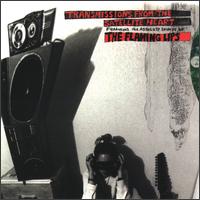
This EP came after the success of Transmissions from the Satellite Heart and the single “She Don’t Use Jelly.”  Naturally that is not the single here, rather it is “Bad Days,” a new song tha sounds of the period.  As does “Jets Part 2 (My Two Days As An Ambulance Driver)” a fuzzed out trip.

“Ice Drummer” is a primarily acoustic but still distorted song.  It’s kind of boppy and light which is odd since it is a cover of a Suicide song.   “Put the Waterbug in the Policeman’s Ear’ is a demo with strings and piano.  It also has a very lengthy introduction in which Wayne explains his brother’s proclivity for drugs and his belief that he can control bugs (and have them attack the policeman who is trying to arrest him).  It was recorded on a boombox.

“Chewin’ the Apple of Yer Eye” is a live version recorded at a record studio.  It has nice guitars with scritchy violins.  “Chosen One” is a cover of a Bill Callahan song at the same venue.  There’s a lengthy introduction explaining that it’s a cover and why he likes it so much.  It’s a nice version, very stripped down.  “Little Drummer Boy” is a travesty, but a good one (and is 1,000 times better than their version of “White Christmas.)”

“Slow-Nerve-Action” is a live version apparently broadcast on a Top 40 radio station.  The squall of noise as the song opens would frighten off anyone listening to Top 40, but the middle of the song’s acoustic section is rather pleasant (if not a little scratchy and staticky).  Although this EP racks in at 44 minutes long, it’s really not that essential (although the live versions are nice).

[READ: May-July 2012] Deadly Kingdom

If you have any kind of animal phobias–literally any kind: snakes, sharks, spider, rodents, bugs, stay away from this book.  Indeed, even if you don’t have this kind of phobia, you may after reading this book.  As the title says, this book tells you every single conceivable way that an animal can kill you–from biting to clawing to stomping to crushing to infections to diseases to parasites to long lingering diseases to numbness to elephantiasis (and that’s just chapter 1).  Somehow the author is not afraid of everything that moves, and is even a collector (with his wee son) of all manner of unusual creepy crawlies–tarantulas, hissing cockroaches and the like.

Sarah bought me this book for my birthday because David Sedaris recommended it when we saw him speak.  When Sedaris read from it, it was funny but dark.  Sedaris’ comment that “Monkeys are such assholes “was certainly borne out by the book.  Sedaris’ other comment–if you ever feel bad about eating meat, just read this book–is also completely accurate.  Even cows can be assholes.  This book is hard to digest in large doses.  I found that I had to put the book down after a section or two because there’s only so much you-will-die-if-you-do-this reading that I could take.

Grice has done a ton of research–he has looked into all manner of medical and death records and talked to lots of scientists around the world.  And he breaks the book into five major categories: The Carnivorids, Aquatic Dangers, The Reptiles and Birds, The Arthropods and Worms and Other Mammals.  The introduction more or less explains his origin story for being interested in deadly animals–a cougar was on his Oklahoma panhandle property when he was six years old.  His grandfather dispatched it, but he had to stay safely in the car during the ordeal.  And he has been curious ever since.

The introduction also contextualizes the violence that animals do to humans.  Is it all defensive (as we take over more and more land, it’s hard to know exactly what is defensive) or is it straight out aggressive. But he says the hardest part about this kind of descriptor is that “besides our usual biased views of all the parties involved, is that violence rouses strong emotions.  We are almost forced to take sides with the injured humans or the slandered animals….  Many writers depict virtually all animal attacks as “provoked” by the victim.  On the other side, some writers are at pains to paint dangerous animals as monsters of cruelty.  All of these views are simplistic.” (xxiii). (more…)

Read Full Post »

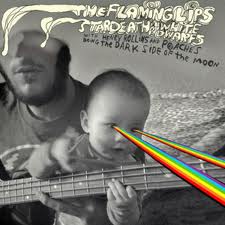
SOUNDTRACKTHE FLAMING LIPS AND STARDEATH AND THE WHITE DWARF WITH HENRY ROLLINS AND PEACHES-“Money” (2011).

I’ve already mentioned this full length album, but how can you not talk about JR without mentioning this song.  (I probably could have dine a post a week about all of the covers of it).

This is one of the most famous songs certainly by Pink Floyd on one of the most popular album s of all time.  So how do you cover it?  You can’t lose the bass line, it’s way too important to the song.

But aside from that the song is pretty different–the vocals are machine tuned almost out of recognizability.  And that’s when you realize that although this is a pretty faithful cover, it’s also a goofy cover.  Not silly, not really disrespectful but not entirely right either (notes are out of tune and flubbed).  It’s very mechanized, as if they are talking about the auto-tuned nature of making hit songs.

  Henry Rollins takes the roll of the random punters ranting at the end of the song, and that’s pretty fun.

The whole thing is kind of  a trifle.  It works better in context of the album because you can understand what the group is doing.  On its own it’s a bit of  shock.

[READ: Week of July 9, 2012] JR Week 4

This week continues where last week left off–in the middle of trying to get Dan to convince Ann to drop the lawsuit against the school (for firing Bast). Whiteback tries to speak for Vern, but Vern will have none of it–Whiteback, despite being president of the school and the bank, is proving to be more and more of a pushover as the story goes along.

Vern gives his take on the school:

The function of this school is custodial.  It’s here to keep these kids off the streets until the girls are big enough to get pregnant and the boys are old enough to go out and hold up a gas station, it’s strictly custodial and the rest is plumbing.  If these teachers of yours strike just sit still and keep the doors open, by the time these kids have been lying around the house for a week their parents will march the teachers back in at gunpoint (226).

Dan interrupts the proceedings to talk to Whiteback about his mortgage (Vern magnanimously tells Dan to go ahead and conduct personal business during work hours).  Dan’s mortgage is not working out so well because the studs in his house are too far apart–causing it to be less insurable and causing him to pay a lot more. When Whiteback commends Major Hyde’s house for being spectacularly built Dan says that he was surprised to see that Hyde was moving.  Hyde doesn’t know what he’s talking about.  Dan tells him that there was a moving van in his driveway taking all of his things out.  There’s some chaos (and a stolen car) when JR comes in and tells them that Buzzie (who was sent down for possession) has taken off down the hall. (more…)

Read Full Post »

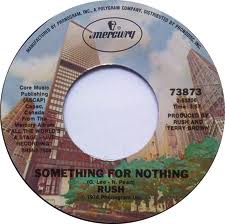
SOUNDTRACK: RUSH-“Something for Nothing” (1976).

This song comes from Rush’s 2112 album.  Since I’ve started reading JR, the refrain keeps popping into my head.  People talk of the influence of Ayn Rand on the band at this time and this song fits the bill.  When you think about the themes of most rock songs (carefree sex and partying) the lyrics to this song are totally conservative: “You don’t get something for nothing, you can’t have freedom for free.”  Rush has always been a hard working band, so this attitude makes sense.

And the song also resounds with the capitalists in this story–make your money (and other people’s money) work for you.  “Countless ways you pass the day.”

The song starts quietly but man it rocks hard with some really heavy guitars.  And the solo is intimidatingly noisy.

Oh and as for Rand, “What you own is your own kingdom.”

Of course, there is a little less capitalism as the song ends: “in your head is the answer, let it guide you along, let your heart be the anchor and the beat of your song.”  So, the message is not one of greed, but that to make your dreams come true you have to work for it.  Not bad advice, really.  Unless you were born into money of course.  In which case, never mind.

[READ: Week of July 2, 2012] JR Week 3

My JR posts are proving to be a day late (but not a… nope I won’t say it). It’s not the reading that’s hard it’s finding time to write these up.  So, apologies for those waiting with bated breath.

The week’s section opens with sex, specifically, Polaroids of sex.  Mr Angel, Stella’s husband, gets a call from Coen at the hospital (he got into an accident because of his broken glasses (ha–it was not reckless driving).  Then he starts talking with Terry about sprucing up the place–nice paneling, some plants–she thinks that’s a great idea (and actually buy a plant with her own money later).  They are interrupted by Mr Angel’s worker Leo who presents him with a stack of photos of the same Terry engaging in various graphic sexual positions (the boys in shipping had them).  With multiple men.  And although none of the men work in the office, the pictures are taken in this very office.  Mr Angel suggests that the photos could be doctored, to which Leo replies, “You’d have to have a picture of her eating a cucumber to paste onto this one, that’s some doctor” (151).   Childish but very funny.

Mr Angel goes off to Dayton to deal with some business and we see that quickest passage of time yet in the book.  Most of the book so far has been set in a day or two, but as we stay with the secretaries, several days pass in Mr Angel’ absence.  Terry and Myrna move their things into the same area so they can talk and listen to the radio while they work.  So there’s the gossip and the radio chatter vying for attention (the radio comes in Spanish as well as English) and the scene stays with them over a few days and through weekend.  Although this book doesn’t shy at all from potty humor, I enjoyed this little exchange before he leaves: Mr Angel say that she’s left the letter “s” off the word scrap on one of the documents.  She’s so embarrassed!

Terry also says she has something to tell Mr Angel about Leo…but that never gets said aloud, even when he returns and reminds her. (more…)

Read Full Post »

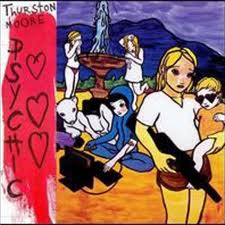
SOUNDTRACK: THURSTON MOORE-“Patti Smith Math Scratch” (1995).

I couldn’t find any archives of Patti and Thurston playing together, so the next best thing is this song named after her.

For a band as dissonant as Sonic Youth and a guy who plays as chaotically as Thurston Moore, it’s amazing how he/they are able to recreate their studio noise live.  There are dozens of versions of this song available on YouTube and while they don’t sound identical, they all sound reasonably close to each other.  And they sound reasonably close to the original studio version.

This is a pretty straightforward song: a simple riff repeated.  It doesn’t have too many crazy guitar pyrotechnics although the solo is pretty awesome.  Especially live.  No idea what the lyrics are about–much like with Patti Smith.

[READ: July 3, 2012] “Patti Smith”

This article just solidified the coolness of my job.  I’ve always enjoyed the JSTOR articles that get passed around here.  Mostly they’re esoteric studies of unexpected topics.  But this one, from BOMB magazine–who even knew JSTOR saved BOMB magazine?–has just boosted JSTOR’s coolness cred by a magnum.

This is an interview with Patti Smith conducted by Thurston Moore.  Already that’s pretty awesome.  What’s even more awesome is that the interview is done in the car while they are driving back from a show in Massachusetts–it’s just Thurston and Patti talking (although obviously edited).

The opening of the article is an introduction by Thurston, which is interesting in and of itself.  He talks about how he got to know Patti’s music (he grabbed her ankle at a concert when he was a teenager) and then how he got to know her .  I didn’t know she was from South Jersey or that she was Robert Mapplethorpe’s lover.  I also never really put together that she married someone with the same last name as her.

First off, it’s very cool to be reading an interview from fifteen years ago in which both musicians are still alive and producing great work. (more…)

Read Full Post »

SOUNDTRACK: BUILT TO SPILL-“Carry the Zero” (1999).

For a time, before the bands each took off, I lumped Built to Spill, Death Cab for Cutie and Modest Mouse into a pile of bands I really liked but wasn’t always sure who was who.  They each have melodic sections, noisy sections and high pitched singers.  (It also turns out that both Modest Mouse and Death Cab for Cutie cite Built to Spill as a big influence).  The big difference between the three is that Built to Spill’s Doug Martsch is a guitar god—he does amazing solos which is why his songs are so long (their Live album features a 20 minute version of Neil Young’s “Cortez the Killer.”

I have no real idea what this song is about, but I love it.  It’s catchy and fun with a great melody.  And, in this case it kind of ties in to JR, because JR is all about making money but his basic math is shaky.  In the same way, carrying the zero won’t do anything in basic math.  Although “you have become a fraction of the sum” is a nice refrain.

This was the song and album that introduced me to Built to Spill and I love it.  Great 90s alt rock.

[READ: Week of June 25, 2012] JR Week 2

And since there are no paragraph breaks, week two picks up mid-flow.  However, this proved to be a good breaking point because almost the entire read for this week is about Mrs Joubert and her class on their field trip to the New York Stock Exchange.  And Edward Bast is steamrollered into doing (and paying for) everything.   Gaddis’ style completely allows for the miscommunication and ease with which Bast is overtaken by Joubert and Gibbs.  While it certainly calls into question Bast’s ability to stand up for himself, it also shows how easily one can be pushed into doing things (although in real life I suspect you’d just say “wait a minute, I can’t,” at some point).  It’s still very funny and the action moves along so quickly that it works perfectly with the flow.

The scene begins with Mrs Joubert herding the kids onto a car and then talking to Mr Bast.  He apologizes for what happened yesterday,  Of course, he is talking about his disastrous TV meltdown but she thinks he means the loss of the bag of money and its turning up 3 pennies short.  Through a series of unsubtle hints from Mrs Joubert, Mr Bast winds up joining their trip to the city.  He had business to conduct in Manhattan so he was going in anyway, but now he’s roped in with the kids.  There’s a lot of sexual tension on this trip–the boys are watching women bend over and Mr Bast keeps pressing his body again “her unyielding thigh.”

Then we get our first really big scene with JR.  In this scene he and a friend (unnamed as far as I can tell) are going through all of their free mail publications and doing trades.  Everything the boys try to trade is a load of crap (a word count on “crap” would be very high indeed). So the kids start looking through their brochures: K’ung-p’a, piano lessons, rare coins, scientific method builds powerful muscles,government surplus (a Tank that turns out to be an airplane gas tank (ha)), How to Make Big Profits Overseas, selling shoes, etc.  There’s some very funny back and forth as smart-assed kids will do (he really has young kids’ dialogue down very well), like :What are you gonna do where it says “married” or what are you gonna do when it says shoe size and you put yours? (more…)

Read Full Post »

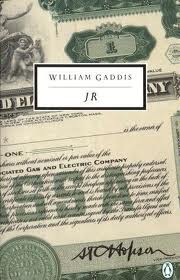
The edition I’m using.

SOUNDTRACK: RICHARD WAGNER-“Ride of the Valkyries” (1856).

Possibly the most famous piece of music from any opera (known for a billion reasons other than the opera itself).  This song was introduced to be by Bugs Bunny.  And then cemented in my consciousness in Apocalypse Now.

It’s really impossible for me to listen to it without seeing helicopters dropping napalm.

I’ve never seen it performed before.  Most of us think of it as an instrumental, but there are vocals, and they add a lot to the performance.  I also didn’t realize that the whole first minutes is a prelude to the third Act–with a darkened stage.  I just watched this version by the Danish Royal Opera in which the setting is updated.  The Stage is amazing and it’s a pretty powerful image, that won’t leave me head too soon.  And of course, the women sound phenomenal.

Smells like victory to me.

[READ: Week of June 19, 2012] JR Week 1

And so begins the saga of JR.  A little of my background:

I read JR about a decade ago.  I recall the structure and some of what happens, but not enough to actually remember anything ahead of time, plotwise.

Usually for these weekly group reads, I post fairly detailed recaps of the book.  And usually I do that because there’s so much going on in a large book, that it’s one way for me to keep track.  JR is going to be a little different.  If you’ve gotten this far in the book, you’ll notice that there’s not a lot of plot going on.  There’s a few scenes with lots of dialogue and maybe something comes of it, maybe not.  So, I’m certainly not going to try to recap everything that happens in the dialogue, nor am I even going to try to figure out who said what or even who is in every conversation–I’m not even sure that’s possible.  But I am going to talk about each scene a bit and see if I can pick out anything that seems important.

The book strikes me as being like an unedited film.  Or like a Picasso–Gaddis wants to show you everything, and let you pick out the important bits.  And so the book feels like a boom mike has been inserted into a room or scene.  We’re not really sure who everyone is, or even who is talking at a given moment.  But we hear everything that’s said. And then the boom mike pulls out and the camera pans somewhere else and the boom mike goes down and we hear some more.  It’s not always clear even that a scene has shifted–although usually a dense paragraph of prose indicates a shift in scene.

As far as characters, it’s not clear if anyone mentioned early on is going to stay with us through the book.  It’s clear that JR will be here (although his first real scene is right after my spoiler line for this week).  There’s also the Bast family who will no doubt play some ind of important role.  Then there’s a lot of teachers as well. (more…)

Read Full Post »

SOUNDTRACK: MASTODON-Crack the Skye (2009).

I’ve really enjoyed Mastodon’s previous records, and this one ranks way up there in intensity and songsmanship. There are 7 songs on the disc, with two over ten minutes long.  “Oblivion” opens with a great minor key chord plucked with single notes and a dropped E.  And when the vocals come in, they highlight the different vocals styles in the band–from a more screamy, almost punk voice to the more melodic/echoey voice of the chorus (kinda like Alice in Chains).  At about 4 minutes the solos play off each other wonderfully, both blistering and then melodic (with almost a Pink Floyd feel at one point).  “Divination” has some amazing guitar play both in the intro and the way the bridge soars with great guitar lines underneath the vocals.  “Quintessence” opens with furious drums and a great prog rock kind of guitar opener.  I love the way the bridge is a gentle (albeit fast) almost trippy section before the chorus bursts in with heavy, heavy chords and chants of “let it go let it go let it go”  It’s the kind of song where the parts work so perfectly together but which wouldn’t seem to.

“The Czar” is a four-part, ten-minute epic.  It opens with a creepy keyboard melody.  The first section is slow and heavy, and when part two comes in the guitars are loud and fast.  Part three has a great riff.  And the end has some gorgeous solos.  It amazes me that ten minutes can pass so quickly. It’s followed by the very heavy (lots of double bass drums) “Ghost of Karelia” the pretty much heaviest song on the record (with a nod to Voivod in the descending guitar solo about three minutes in).  “Crack the Skye” opens dark, but throws in some contradictory keyboard notes that lead to another cool extended guitar riff before jumping into a super heavy death metal verse.  This gives way to some more soaring vocals–the juxtaposition of these two vocalists is amazing.  Imagine the surprise then when the last third of the record has the vocals sounding completely robotic and phased–followed by a mess of guitar solos and concluding with some pretty guitars.

They fade into the final epic, the 13-minute “The Last Baron,” which is one of my favorite metal songs.  It opens with some great guitars and some really cool singing.  The vocals soar, the bass plays a great melody.  There’s a great heavy instrumental section but it keeps returning to the wonderful rising vocal melody line that will get stuck in your head for days.  It’s an amazing end to a great album.

The disc also comes with a DVD that’s all about the recording of the album.   I watched a few minutes and it seemed kind of fun, so I hope to watch it more soon.

[READ: June 17, 2012] The Architect

In the past, Connell’s books have explored all manner of depravity. His books were violent, often sexual and dealt with an otherworldliness that may or may not be internalized. Despite all of this transgressive material, his work was never schlocky, especially his later pieces which show an amazing growth in topics, word choices and imagination.

Connell’s previous books The Life of Polycrates and Metrophilias featured short stories that dealt with all manner of topics.   In Metrophilias, the stories were very short, and it allowed Connell to really explore an idea to its fullest without having to make a “book” about of each one. The short length also allowed him to make the words choices and descriptions more effective.

All of the benefits are reaped in this book, a novella.

Although I enjoyed Connell’s previous longer works, I really loved the way this story started with one idea and stayed with it. Some of his other books are a bit more episodic, which worked for those stories, but in this one, we’re in one place and we are pretty much going to stay there.  And that focus makes this story all the more powerful.

The one thing that hasn’t changed is Connell’s scholarship (both real and fake). For this book is a celebration of Dr Peter Körn (1849-1924), visionary and spiritual scientist. As the story opens, four members of the Körn Society are discussing plans for the new Meeting Place, a central location where all members of the Körn society can gather. They are disgusted by the pedestrian, commercial and rather offensive submissions that they have received for their building—a building that should reflect the spiritual visions of Körn.

Dismayed at the architects who have submitted, one of the members of the Society, Maria Venezuela tells the other three that her nephew Peter De la Tour will soon be arriving with something special.  Peter brings them a book of architecture designs by Herr Nachtmann.  These designs are bizarre and wonderful–organic, amoebic, gravity-defying gorgeous monstrosities–exactly the kind of thing the Society is looking for.  Although one member feels that they are impossible to build, the others are firmly on board.

The challenge then is to find the man. There is some history about the man himself–his genius in and out of school followed by his utter inability to have his work taken seriously by the establishment.  He even had one of his more ingenious ideas stolen by the very teacher who said it was terrible.  And so, when Peter finds him, he is little more than a drunk at the end of the bar.

Yet his ego has never been diminished, and when he is presented to the Society he dismisses their concerns and even tells them that he will not wait for their decision–they have 30 minutes to say yes or he walks.  They agree and he begins working on his masterpiece.

The Society loves the sketch–they know it will be expensive, but Nachtmann promises fast work, effective designs and world-wide acclaim.  Amazingly, he delivers.  He works his men hard.  All through the spring and summer and into the fall, the men work carelessness and the building rises at a phenomenal rate.  Even if it seems to be growing larger than designed. (more…)

Read Full Post »

SOUNDTRACK: JAPANDROIDS-“Fire’s Highway” (2012).

I regret dismissing the suggestions of the NPR folks the other day.  As the more I dig into their suggestions, the more I like–seems their selections are better than their descriptions of said selections.  Take this description of the Japandoids’ album: “snarling punk meets the fist-in-the-air anthemics of Born to Run-era Springsteen and his modern-day equivalents in The Gaslight Anthem.”  I’ve never really liked Springsteen (I know, a Jersey boy, too).  I think it’s more about production (and saxophone) than anything else.  So, comparing bands to him is never a sell for me (even if it may be true).  To me, this sounds much more like a low-key Arcade Fire (with literally no pretensions to anything–I mean, there’s only 2 Japandroids).  Granted, Arcade Fire owe a lot to Springsteen too, but they do something different with his sound, which is why I like them.  [I’m not going to be able to argue my way out of this].

Anyhow, this song is a four minutes of punky guitars and a stupidly catchy chorus.  The fact that it’s only two guys makes it all the more remarkable that it sounds like a full band.  And perhaps, the biggest difference for me is the singer’s voice which feels very early 90s alt rock/punk.  Whatever it is, I’m a fan and will certainly be listening to more of this album.

[READ: June 14, 2012] “The Clockwork Condition”

Like most young men of a certain bent, I loved A Clockwork Orange.  I’ve watched it dozens of times and I’ve read the book.  What I especially like about the story is that my feelings about it change as I get older—which, while not the point exactly, is certainly a theme in the story–how age makes things seem different.  The most important thing I learned from this article is that there was an epilogue in the British version of the book that was not available in the American version (or the film).  And it seems to be pretty important.  What a strange thing to leave out.

Incidentally, Burgess wrote the book in 1962 and the film came out in 1973, which is why he was wrote this in 1973.  He says he was asked about Issues that arose from the film.  And he talks a lot about them.

But he also gives a lot of background.  The title of the book comes from the expression “as queer as a clockwork orange” which is Cockney slang for something so weird it subverts nature.  It was a perfect title for an idea he was going to write about—how people suggested using aversion therapy to change juvenile delinquent behavior.

So this article goes on for a pretty long time, raising all kinds of questions.  It’s really articulate and fascinating and really makes me want to re-read the anti-authoritarian novels I read in high school: 1984, It Can’t Happen Here, Brave New World.   He even talks about B.F. Skinner, who proposed that aversion therapy (which is what Alex gets in the book/movie) was wrong and that positive reinforcement was always more effective.  Skinner worked with animals (Burgess jokes about that) and the whole “you get more flies with honey” attitude works better for training animals he says.  The same is true for people.  Besides, aversion therapy removes freewill. (more…)

Read Full Post »

SOUNDTRACK: LAVENDER DIAMOND-“New Ways of Living” from Score! 20 Years of Merge Records: The Covers (2009).

This song plays around with the Destroyer original a little bit more than some of the other covers have.  Lavender Diamond’s lead vocalist is a woman, Becky Stark, so her voice is different from Dan Bejar’s.  Of course, Bejar’s voice is kind of high-pitched so it’s not that different.  The original also has a female backing vocal on all of the Lie-Dee-Dies, which Lavender Diamond supplies by herself.

The Destroyer version is softer, a bit more delicate (especially the ending section which is washes of strings and gentle keyboards).  Lavender Diamond’s version is primarily piano, and that starkness somehow makes the song more intense.  So yes,  I find myself enjoying the Lavender Diamond version a wee bit more.  I hadn’t heard much by Lavender Diamond before (I knew that Becky Stark was on the Decemeberists’ Hazards of Love album).  But I think it’s time to investigate her stuff a little bit more.

[READ: April 5, 2012] “Train”

I had put off reading this story for a little while because it was pretty long (12 pages in Harper’s which is quite long for a Harper’s story).  Not only was it justifiably long, it was thoroughly enjoyable.

The story was set up in an unexpected way (especially for Munro whose stories tend to be pretty straightforward).  It opens with a man jumping off a train (I also tend to think of Munro as writing about women, so a male protagonist is also something of a surprise).

So Jackson hops off of a train.  It was going slow, but it hurt more than he expected.  After he gets his bearings, he realizes that he is closer to civilization than he realized–indeed, there’s a woman out milking a cow.  The woman turns out to be Belle (the cow is Margaret Rose).

After years of reading different kinds of stories, there were so many different ways this meeting could have gone (most of them badly).  But Munro tends to not write about physical violence, so this meeting goes pretty well–it’s not even all that awkward because Belle is a sweet, almost naive, woman.

Belle lives by herself, although that is a recently development.  Her mother passed away a few months ago after decades of needing a lot of physical help.  Her father has been dead for many years–he was hit by a train.  He used to take care of Belle’s mother, but once he died, the responsibility was all hers.

She was also more or less supported by the Mennonites who live up the road.  The introduction of them is wonderful, as it is how Jackson sees them: “Over the hill came a box on wheels, being pulled by two quiet small horses….  And in the box sat half a dozen or so little men.   All dressed in black with proper black hats on their heads.”

Of course, these little men are the Mennonite children who look after her.  Jackson pities Belle, although she neither seeks it nor really deserves it.  She seems quite content with her situation.  He decides to stick around and fix up her house for her (which is in bad need of repair).  He imagines that he can work for her for a few months and then maybe help the Mennonites a bit and then continue on his way. (more…)

Read Full Post »

SOUNDTRACK: LAURA BARRETT-“Deception Island Optimist Club” from Viva Piñata! (2008).

This is a musically simple song–it appears to be played entirely on, I gather, a thumb piano or kalimba.

The melody is complicated, however.  And Barrett’s voice is beautifully naked.  I especially like the way her voice doesn’t follow the musical melody exactly–she plays around with sounds and ideas a little bit.

I also just found out this neat little piece of information: Her first public performance was a cover of “Smells Like Nirvana” at a “Weird Al” Yankovic

kalimba

tribute concert.  Okay, who even knew there were “Weird Al” tribute concerts?

I’m very much intrigued by this woman, and you can hear a whole bunch of her stuff at her CBC Radio 3 site.

Oh, and that Weird Al song?  You can hear it (there’s no video) right here:

[READ: March 20, 2012] “Sea-Serpents and Scientists”

This was the second archived article that my company sent around for enjoyment.

I like any article about sea serpents, especially The Loch-Ness Monster.  But I was really surprised at the attitude taken in this article.  It actually seemed like it might be a joke, although upon further consideration, I believe it is entirely serious.

As the introductory line says, “The emergence of a fabulous monster in Loch Ness is greeted with debatable reserve by men of science.”

The first paragraph taught me something i did not know: The Loch Ness Monster’s name is Bobby!  And while Wilson says he is not going to “offer a belated biography of Bobby, the sea serpent of Scotland, as he swims like a submarine in Loch Ness,” he is sure going to take scientists to task for not investigating him.

Wilson does not argue that Bobby exists, indeed he claims not to be an expert, “All my life I have abstained strictly from the alcoholic inducements which on these occasions are said to contribute to what around Loch Ness, is called ‘perfect visibility.'”  Although I gather he does believe in him.

Rather, his point is that scientists have dropped the ball by not even looking into “by far the most interesting event in the modern annals of natural history.” (more…)

Read Full Post »

« Newer Posts - Older Posts »