Feeds:
Posts
Comments

Archive for the ‘Racism’ Category

SOUNDTRACK: TH1RT3EN-Tiny Desk (Home Concert) #146 (January 18, 2021).

I had never heard of TH1RT3EN before this Tiny Desk Concert. But I was hooked from the beginning.  I liked everything about them.  The fuzzy distorted guitar from Marcus Machado, the excellent delivery of Pharoahe Monch and especially the fascinating drumming and drum style of Daru Jones (look at the way his drums are set up!).

Both the moniker TH1RT3EN and supergroup were born out of a frustration with the veneer of American society that underestimates the darkness of white supremacy.

“I knew 5 years ago where we headed,” Monch shared over the phone. “Sure, we’ve always done socially and politically aware music, but I’m tired of this “love will win” nonsense. Love may be the most powerful vibrating force, but consciousness is spreading and it’s impossible not to be more aware of the evil that has kept the world in complete darkness. TH1RT3EN is the musical personification of me and my comrades at combat.”

“The Magician” is based around the riff from Yes’ “Roundabout.”  Machado plays the riff throughout which I find much more interesting than if it was sampled.  Monch’s lyrics are smart and pointed.  There’s an incredibly fast rapping middle section with some amazing drumming.  I really like his delivery.

Moinch says that that song is about a student who was bullied and grew up to be a school shooter.  Ironically there hasn’t been any school shootings because we’re in the middle of a pandemic–a pandemic that has taken the lives of 250,000 Americans.  And yet Americans reman more afraid of Black Lives Matter than of COVID 19.

TH1RT3EN recorded this set in August 2020, as evidenced by Monch’s interlude, this four-song set still channels the discontent outside our windows today.  Shot in a padded “panic” room, this Tiny Desk (home) concert reflects the rage felt by this three-man battalion.

Monch continues “We are in need of cleansing and an exorcism.  “Cult 45” opens with a sample of a horn riff.  It’s quieter musically so it’s mostly vocals.  When the guitar joins in it’s mostly to add free jazz noises along with some wild drumming.

“Scarecrow” returns to the slow dirgy, aggressive guitar sound behind some fast rapping.

He says he started the band because he wanted a bit more authentic aggression by finding these two musicians.  And the set ends with “Fight” which has a nice big riff and crashing drums.

How’s this for an aptly aggressive verse

Burn a cross, water hose, dogs and nightsticks
Yeah, that’s what it used to be, see, they would usually
Just hang a nigga, fuck ’em
Now they don’t have the time to decorate the trees so they buck ’em

I’m going to have to check out this album.

[READ: February 28, 2021] You’ll Never Believe What Happened to Lacey.

Amber Ruffin is a writer and comedian, most notably from “Amber Says What” on Late Night with Seth Meyers and The Amber Ruffin Show on Peacock.  Amber is hilarious.

But Amber is also righteously angry about the way Black people are treated in America.  Somehow she manages to take the most horrible things you can imagine and report about them with enough humor to make you listen and laugh and still get outraged.

This book is a collection of stories of racist things that happened to her sister Lacey.   Lacey lives in Omaha, Nebraska, where they grew up.  I don’t know anything about Nebraska or Omaha.  Apparently Omaha is a big city and has sections that have a lot of Black folks.  White people who are not from the city find the thought of going to Omaha scary.  It also means that when Lacey gets jobs outside of Omaha she is typically the only Black person in the building.

Which seems to make all of the white people there think it is okay to say whatever crazy racist shit they want to say.  But even outside of work, it seems like Lacey is a magnet for racist comments.  Is it because she is tiny and good natured?  Maybe.  But she is a also a bodybuilder, so watch out.

About this book Amber says:

When you hear these stories and think, None of these stories are okay, you are right.  And when you hear these stories and think, Dang, that’s hilarious, you are right.  They’re both.

There are going to be a lot of time while you’re reading this book when you think There is no motivation for this action. It seems like this story is missing a part because people just aren’t this nonsensically cruel.  But where you see no motivation, you understand racism a little more.  It’s this weird, unprovoked lashing-out, and it never makes any sense. It’s why it’s so easy for people to believe the police when hey beat someone up–because no one would be that cruel just because the person was Black.  But the are!  So as you read this book, when you see there’s no motivation, know that there is: racism.

The Preface has an anecdote that really sets the tone for the rest of the book.  Lacey paid at a store with a check. The checks had Black heroes on them.  Lacey paid with one with Harriet Tubman on it.  The cashier who had been very nice up to that point said “Wow you have checks with your picture on ’em.”  There is then a hilarious juxtaposition of the check with Tubman and one with Lacey’s photo.

Amber contrasts her life in New Yorke City.

Everyone I work with is stark raving normal. We don’t have any crazy bigots (dumb enough to run up) and I’m no one’s first Black friend.  Now I’m not saying no one ever says anything crazy to me–I’m still a Black woman in America–it’s just that we all know there are consequences for talking to me as if you’ve lost your mind.

But in the Midwest it is an unchecked tsunami of dumb questions and comments.  People think it your job to answer “Why can’t I (insert the most nonsense shit you’ve ever head)?”

Lacey chimes in (in a different font) from time to time with things like that she’s happy her little sister is successful in New York:

where someone would get fired for out-and-out racism.  I love that that really happens.  Never seen it, but I love it.  Like Santa Claus.

Amber ends the preface by saying

Hopefully the white reader is gonna read this, feel sad, think a little about it, feel like an ally, come to greater understanding of the DEPTH of this type of shit, and maybe walk away wit a different point of view of what it’s like to be a Black American in the twenty-first century.

And I did.  Boy did I ever. (more…)

Read Full Post »

SOUNDTRACK: ROKIA TRAORÉ-GlobalFEST Tiny Desk (Home) Concert #136 (January 14, 2021).

Rokia Traore.GlobalFEST is an annual event, held in New York City, in which bands from all over the world have an opportunity to showcase their music to an American audience.  I’ve never been, and it sounds a little exhausting, but it also sounds really fun.

The Tiny Desk is teaming up with globalFEST this year for a thrilling virtual music festival: Tiny Desk Meets globalFEST. The online fest includes four nights of concerts featuring 16 bands from all over the world. 

Given the pandemic’s challenges and the hardening of international borders, NPR Music and globalFEST is moving from the nightclub to your screen of choice and sharing this festival with the world. Each night, we’ll present four artists in intimate settings (often behind desks donning globes), and it’s all hosted by African superstar Angélique Kidjo, who performed at the inaugural edition of globalFEST in 2004.

The final artist of the fourth and final night is Malian singer Rokia Traoré.

Rokia Traoré performed at globalFEST in 2005, the music festival’s second year, and it’s a thrill to present her meditative performance as part of Tiny Desk meets globalFEST. Her work is rooted in the Malian musical tradition, but defies the confines of a single culture. Born in Mali to a diplomat father, Traoré had a nomadic upbringing that exposed her to a wide variety of international musical influences. She joins us from Blues Faso, a theater inside her Foundation Passerelle in Mali, which she created to support emerging, interdisciplinary artists, from music and the performing arts to visual arts and photography.

She plays three songs that more or less segue into each other.  I don’t know a lot about music from Mali, but the little I know I can recognize from the Ngoni played by Mamah Diabaté and the guitar played by Samba Diabaté, with lots of speedy runs.   In “Souba Lé” melody is played on the balafon by Massa Joël Diarra (although I wish they’d have shown us it up close).  Both this song and “Tiramakan” feature subtle bass from Aristide Nebout.  The final song “Fakoly” is a little louder and drummer Roméo Djibré is a bit more prominent.

But all of these songs are all about Rokia Traoré’s vocals which soar and ring out.

[READ: February 25, 2021] March Book 3

Each book has gotten longer.  Book one was 121 pages, Book 2 was 187 and Book 3 is 246.

This book begins right after the bombing of the Sixteenth Street Baptist church in Birmingham, Alabama in 1963.   You meet the victims before they were killed.  It continues through until the passing of the Voting Rights Act in 1965.  Holy cow was there a lot of violence in these two years and the amazing art by Nate Powell never shies away from showing it.

Eagle Scouts at Klan rallies who then go on to kill Black teenager’s, hicks in pickups celebrating the deaths of the girls in the church with anti-integration chants and, as we see more and more in this book, police killing innocent people and not getting in any trouble because of it.

This book has opened my eyes to what Black people have known all along about police forces.  That they are completely corrupt and need to be restructured from the ground up.  When you see that it was their job to be racist in 1963, is it any surprise that they are still racist in 2021?

Reading a book like this I can’t help but think that the best thing we could have done for our country would have been to let the south secede.  Bring all people of color north and let the racists fester in their own lack of diversity.  Because their racism poisons the whole country.  And yet that is exactly the opposite belief that this book is based upon.

I’m embarrassed at how naïve I am. (more…)

Read Full Post »

SOUNDTRACKELISAPIE-GlobalFEST Tiny Desk (Home) Concert #136/156 (January 14, 2021).

ElisapieGlobalFEST is an annual event, held in New York City, in which bands from all over the world have an opportunity to showcase their music to an American audience.  I’ve never been, and it sounds a little exhausting, but it also sounds really fun.

The Tiny Desk is teaming up with globalFEST this year for a thrilling virtual music festival: Tiny Desk Meets globalFEST. The online fest includes four nights of concerts featuring 16 bands from all over the world. 

Given the pandemic’s challenges and the hardening of international borders, NPR Music and globalFEST is moving from the nightclub to your screen of choice and sharing this festival with the world. Each night, we’ll present four artists in intimate settings (often behind desks donning globes), and it’s all hosted by African superstar Angélique Kidjo, who performed at the inaugural edition of globalFEST in 2004.

The second artist of the fourth and final night is First Nations singer Elisapie.

Elisapie returns to Tiny Desk for a show-stopping performance from Montreal, with the disco globe of our dreams helping to light her set. Elisapie, in both her songs and work, is a resounding advocate of First Nations culture in Canada. In her set, she harnesses an incredible energy with electrifying, emotive vocals.

I had really enjoyed Elisapie’s previous Tiny desk.  I found her to be a less extreme, but no less dramatic performer than Tanya Tagaq.  Her band is outstanding creating all kinds of textures to surround her voice.

The first song is “Qanniuguma.”  It starts quietly with a single ringing guitar note from Jean-Sébastien Williams and little taps of percussion from Robbie Kuster.  Joshua Toal adds some quiet bass as the guitar plays some higher notes.  After a minute Elisapie starts singing.  Another 30 seconds later the drums get louder and Jason Sharp start sprinkling in some raw bass saxophone.  As the song grows more intense, Elisapie adds some breathing and chanting–throat singing.  Things quiet down and then build again with the sax and the guitar soloing as the drums and bass keep things steady

Behind her you can see Mont Royal, which has a lot of history.

The second song “Wolves Don’t Live by the Rules” is “a small song” but very meaningful.  It starts in a similar way with ringing notes an thumping drums.  She sings this one in  English and it feels like a much more conventional sounding song.  It’s pretty quiet but the instrumental breaks adds huge guitar chords and the end is really loud.

Introducing the final song, “Arnaq” (which means Woman) she says women tend to forget that we have a lot of strength and we should celebrate it loud and clear.  This one opens with a loud raw sliding guitar like an early PJ Harvey song.  The song’s chorus builds with an “ah ya ya ya” as the instruments add chunky noises–scratches from the guitar and skronks from the sax and all kinds of precious.  It’s a cool noise fest, although the guitar could be a smidge louder.

I’d really like to see her live.

[READ: February 25, 2021] March Book 2

Book Two picks up John Lewis’ life.

Like the first, it starts with Lewis’ preparations for the inauguration of Barack Obama.

Then it flashes back.  Lewis was in college and had moved to Nashville where the growing student movement was gaining strength.

The visuals are even more striking in this book.  The panels of the white woman pouring water and then soap (or flour) on the quietly sitting Black diners and then hosing them down is really arresting.  As is the sequence (which is almost entirely black) of a room full of peaceful protestors being locked in a room when the fumigator was set off.

I couldn’t believe that a man couldn’t really left us there to die.  Were we not human to him?

Then next round of protesta was at the segregated movie theaters.  I love that they chose the Ten Commandments to protest (the irony was lost on the whites in Alabama).  The Black protesters would line up and would be refused seating.  Hundreds of people who would then get back on line and be refused seating again.  Whites would throw things at them and hurl abuse at them. (more…)

Read Full Post »

SOUNDTRACKEDWIN PEREZ-GlobalFEST Tiny Desk (Home) Concert #136/155 (January 14, 2021).

Edwin PerezGlobalFEST is an annual event, held in New York City, in which bands from all over the world have an opportunity to showcase their music to an American audience.  I’ve never been, and it sounds a little exhausting, but it also sounds really fun.

The Tiny Desk is teaming up with globalFEST this year for a thrilling virtual music festival: Tiny Desk Meets globalFEST. The online fest includes four nights of concerts featuring 16 bands from all over the world. 

Given the pandemic’s challenges and the hardening of international borders, NPR Music and globalFEST is moving from the nightclub to your screen of choice and sharing this festival with the world. Each night, we’ll present four artists in intimate settings (often behind desks donning globes), and it’s all hosted by African superstar Angélique Kidjo, who performed at the inaugural edition of globalFEST in 2004.

The first artist of the fourth and final night is Edwin Perez.

From the basement of the Bowery Electric in downtown Manhattan, composer and vocalist Edwin Perez and his 10-piece band come together to put on a show. With a strong backbeat and enough room to move around, Perez’s up-tempo energy brings the party and keeps it going. The theme of the night is salsa dura music, which originated in New York in the 1970s and gained acclaim thanks to acts like the Fania All-Stars and Spanish Harlem Orchestra.

This set is a lot of fun (even with the seriousness of the second song).  Cuban music is so full of percussion and horns it’s hard not to want to dance to it.  And this band has three percussionists: Nelson Mathew Gonzalez: bongo, cowbell (from Puerto Rico); Manuel Alejandro Carro: timbales (from Cuba); Oreste Abrantes: (from Puerto Rico).  The horn section is also pretty large: Leonardo Govin (from Cuba) and Michael Pallas (From Dominican Republic): trombone; Jonathan Powell (from USA) and Kalí Rodriguez (from Cuba): trumpet.

They play three songs. “La Salsa Que Me Crió” has lots of percussion and a great trumpet solo.  Perez even dances during the instrumental breaks.  And throughout, Jorge Bringas (from Cuba) keeps the bass steady.

After introducing the band, he says “Say her name Breonna Taylor.  Say his name Philando castile.  Say his name George Floyd.  End the abuse.”  This is the introduction to the quieter “No Puedo Respirar” (I Can’t Breathe).   Despite the subject, this song is not a dirge.  I don’t know what the words are but there is joy in the music as well.  There’s a jazzy keyboard solo from Ahmed Alom Vega (USA).

Yuniel Jimenez (From Cuba) opens the final song “Mi Tierra” with a fantastic introductory solo on the Cuban tres guitar.  The rest of the song brings back the Cuban horns and percussion. There’s even a drum solo (or two) in the middle.

[READ: February 25, 2021] March Book 1

I had heard amazing things about this trilogy of books.  I don’t know why it took me so long to get around to reading them.  Now that John Lewis is dead for almost a year, it was time to read them.

This is essentially a biography so it’s not easy to write about.  It’s also an incredible story of selflessness, fortitude and unbelievable courage.

The framing device is very well executed.  After a brief prologue that shows John and is marchers getting attacked by police, the book shows us Washington D.C. January 20, 2009, the day that Barack Obama is being inaugurated President.  Since John is (in 2009) in office he will be attending the ceremonies.

As he is preparing and getting ready to leave, a woman and her two children walk into his room hoping to look at Mr. Lewis’ office–a inspirational moment for her young boys.  But it happens that John (or Bob as he is called) is still in his office. They are embarrassed to interrupt, but he welcomes them warmly and shows them some of the things around his office.

Like photos of him meeting President Kennedy when Lewis was 23.  And from the March on Washington in 1963, where Dr King gave his “I have a dream” speech.

Then the boy asks him why he has so many chickens in his office.

The story then flashes back to young John (called Bob by his parents).  His father purchased 110 acres in Pike County, Alabama for $300. John was incharge of the chickens on the farm.  He also loved preaching.  He learned to read at 5 and began preaching to the chickens (they never said Amen or anything).

He also loved going to school.  He would even away from his house on the days his father insisted all the children work in the field because he didn’t want to fall behind.  (Even if it meant getting in trouble).

One of the first being moments in his life wa when his Uncle Otis drove him North.

Otis knew which places offered colored bathrooms and the ones where you would never get out of the car: “Alabama, Tennessee, Kentucky.  These were the states we had to be careful in as we made our way North.”

It wasn’t until they got to Ohio that his uncle relaxed.  They arrive in Buffalo 17 hours later and John was amazed to see white and black people living next door to each other. (more…)

Read Full Post »

SOUNDTRACKMARTHA REDBONE-GlobalFEST Tiny Desk (Home) Concert #135/154 (January 13, 2021).

Martha RedboneGlobalFEST is an annual event, held in New York City, in which bands from all over the world have an opportunity to showcase their music to an American audience.  I’ve never been, and it sounds a little exhausting, but it also sounds really fun.

The Tiny Desk is teaming up with globalFEST this year for a thrilling virtual music festival: Tiny Desk Meets globalFEST. The online fest includes four nights of concerts featuring 16 bands from all over the world. 

Given the pandemic’s challenges and the hardening of international borders, NPR Music and globalFEST is moving from the nightclub to your screen of choice and sharing this festival with the world. Each night, we’ll present four artists in intimate settings (often behind desks donning globes), and it’s all hosted by African superstar Angélique Kidjo, who performed at the inaugural edition of globalFEST in 2004.

The fourth artist of the third night is Afro-indigenous appalachian performer Martha Redbone.

Martha Redbone performs her Tiny Desk Meets globalFEST performance from her home studio in Brooklyn’s Navy Yards. Native and African-American singer-songwriter Martha Redbone is known for her mix of folk, blues and gospel from her childhood in Harlan County, Ky., which she infuses with the eclectic grit of pre-gentrified Brooklyn. Inheriting the powerful vocal range of her gospel-singing African-American father and the resilient spirit of her mother’s Cherokee, Shawnee and Choctaw culture, Redbone broadens the boundaries of American Roots music.

“The Garden of Love” starts with Martha playing percussion sounds.  Keyboardist Aaron Whitby is playing some backing chords while guitarist marvin Sewell is playing some interesting slide guitar sounds.   Martha sings in a very traditional style.  Then the song starts proper with an old sounding blues riff and the song feels old and gospel-like.

She tells us her inspiration is the Appalachian mountains where she grew up–rattles, soul music, the blues.

“Talk About It” is a prayer for stronger communication around the world.  It’s a more conventional sounding soul song, with heavy keyboards and Redbone’s vocals taking the fore.

“Underdog” is a very pretty ballad with slide guitar sounds and gentle keys.  But it’s all about her gorgeous voice.

[READ: March 1, 2021] Kindred [prelude-the fall]

I’m always happy to start a new group read with the fine folks at Infinite Zombies. Normally we read big books by white men.  So this time it was decided to pick a different kind of author.

I was pretty pleased to see that Octavia E. Butler would be the new reading choice.  I had only recently heard of her and had recently read Mind of My Mind, which I really liked.  So it was a great opportunity to read more from her.

Kindred is Butler’s most famous book.  I was looking forward to reading something different from Mind (although I do intend to read the rest of that series).

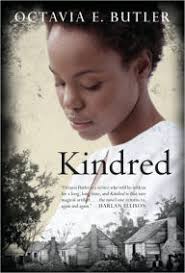
I didn’t know what this book was about.  The cover of this book gives absolutely no indication is what’s going inside.  In fact, it looked pretty much exactly like what is not happening in this book.

I was blown away by the first sections of this book.  Butler’s style is not fancy and I found this direct writing to be really effective at conveying what is going on.

Butler basically puts a horrifying slave narrative into a science fiction story.

It starts very abruptly with the prologue.  The narrator, Dana says that she lost her arm on her last trip home.  The police question her husband Kevin but she assures them it is not his fault.

Then the story resumes with The River.  It flashes back to when this all started–June 9, 1976.

In The River, Dana and Kevin are unpacking books in their new California home when suddenly Dana feels dizzy.  She is pulled through space into a river where a young red-haired boy is drowning.  Dana thinks quickly and stomps into the river to rescue the him.  She even does some mouth to mouth

The boy’s mother starts blaming Dana for what’s happening even while she is trying to resuscitate the woman’s son.  Dana succeeds and just as the boy, whose name is Rufus comes to, his father holds a shotgun at Dana’s head.  What is the black woman (who is dressed like a man) doing with her mouth on his son?

Rufus’s father is Southern and they seem very, very old-fashioned.  But just as Dana fear the worst from the shotgun, she flies back to her bedroom.  She is covered in mud and soaking wet, but Kevin says she was gone maybe ten seconds.  He has a hard time believing her (who wouldn’t) despite the proof of the mud on her clothes.

What in the hell just happened? (more…)

Read Full Post »

SOUNDTRACKBITCH FALCON-Staring at Clocks (2020).

Everyone can agree that Bitch Falcon is a terrible name.  Just awful.

Having said that, this album is pretty great.  Drummer Nigel Kenny was interviewed in the Irish Drummers book, and that book continues to introduce me to bands that I like.

Bitch Falcon is a trio who have been together for five years.  They released their debut album Staring at Clocks in 2020.

Their sound touches on grunge and shoegaze, which I rather like, but they move beyond that and  explore really interesting sounds from Lizzie Fitzpatrick’s voice and guitar.  Her guitar shimmers and wobbles and she is excellent at sculpting feedback into sounds that veer into harshness.  Her voice is strong and powerful, hitting and holding notes that ring out.  But also singing in otherworldly styles like almost wordless sound effects.

The album is held together by bassist Barry O’Sullivan’s prominent position–playing the main lines and basic rhythms of most songs and by Nigel Kenny’s not traditional almost lead drumming.

The album opens with a squealing feedback followed by a rumbling bass and some solid thumping.  And it continues in this vein for some 40 minutes.  There’s diversity in the songs–some are softer and some are dreamy–but the overall sound is consistent.  Throughout the album, there are gorgeous  washes of guitars and wicked feedback.

I love the thumping bass and drum and the ringing guitar and voice in “How Did I Know?”  “Staring at Clocks” opens with guitar sounds that are so unguitarlike, it’s wild.  The fast drums and bass propel the otherwise ethereal song along.  The guitar sounds at the end of the song are like out of a sci-fi movie.

The opening bass sound of “Damp Breath” is great and when they throw in the cool guitar rolls over the top it sounds tremendous. I love the lead bass line of “Martyr” while the guitar lays down intricate passages.  And the final song, “Harvester” is 6 minutes long with the final two allowing the guitars to roar until the album crashes to a conclusion.

This album was a great surprise.  I would love to see them live.

[READ: February 1, 2021] Dragon Hoops

Gene Luen Yang’s books are always fantastic.  He has such an excellent way with storytelling, that no matter what his books are about you know they’re going to pull you in.  Even if they’re about basketball!  Even high school basketball.

Mr Yang opens the book explaining that he never like sports–he was never interested. He got his excitement from comic books, He teaches at Bishop O’Dowd High School (in California) and has been there for seventeen years (Do his kids know that he’s an amazing cartoonist?  I assume so).  In all that time he never thought much about the school’s basketball team, but in this year 2014-2015, there was talk that their team would go all the way.  It was a big story, and Yang loves stories.

In order to see if this would work as a book, it meant talking to Coach Lou Richie.  They have obviously talked over the years, but not very much.  So Yang takes the first step (a wonderful recurring theme in the book) and approaches Lou.  They talk and Yang has an idea for his next book.

We go back through Coach Lou’s life.  He was a young nerd just like Gene.  He was short and skinny.  But when he went to a Bishop O’Dowd game at the Oakland Coliseum, Lou knew he wanted to do that one day.  So he worked out and grew some and by his junior year he was only 5’8″ (like me) but he was  a formidable player.  Lou’s team made it to the Coliseum that year (some kind of State playoffs) and, cliche of all cliches, he scored the game-winning basket.  But, cliche of all other cliches it was called a no basket because of a penalty. It was one of the most controversial calls in a high school game and obviously Lou never forgot it.  (Despite the cliches that’s all true).

Lou became head coach at O’Dowd, and since he came back his teams have been to state five times, but have never won.

But this year he has two secret weapons: Ivan Rabb and Paris Austin.

Imagine being a high school kid, being great at basketball and then having Mr Yang draw you in his book?  Wow. (more…)

Read Full Post »

SOUNDTRACK: AGNOSTIC FRONT-Victim in Pain (1984).

In yesterday’s post, Rebecca Kushner mentions a bunch of punk band members that she either knew or hung out with.  I was amazed at how many of them I’d heard of but didn’t really know.  So this seemed like a good opportunity to go punk surfing.

Agnostic Front is a band I’ve known about forever–they are pretty well acknowledged as the godfathers of punk.  And yet somehow I never really listened to them.

Victim in Pain is their debut album.  It’s got 11 songs in just over 15 minutes.

The longest song on the record is just over two minutes long =.  It’s called “Fascist Attitude” and in addition to being sadly appropriate still, it fits a lot of content into just two minutes

Why should you go around bashing one another
If they look or think different, why let it bother
Everyone’s got their own style, their own thoughts
Don’t let it bother you, don’t let it get caught
Your fascist attitudes – we need the least
With a scene that’s fighting for unity peace
Don’t need more anger; no more danger
Stop now before it’s too late
Learning how to respect each other is a must
So why start a war of anger danger among us
It’s time to grow out of your nazi hypocrism
When you really don’t want part of a fucked up system

Agnostic Front are still going, with a bit more of a thrash sound (and a wicked rumbling bass).  And their albums (and songs) are still really short.

[READ: February 8, 2021] “A Wrinkle in the Realm”

This is an interesting story about masks, but not about the masks that we have been wearing all this time (or maybe it is).

The narrator notices that a woman crossed the street as he walked by.  Then he noticed on the subway that a woman moved her purse to the other side of her when he sat down.

He looked at himself in the mirror and thought he looked normal.  But he wondered what other people swa in him.

I assumed that this story was about racism (although no one’s race is given), but it goes in a different direction.  Although it’s also clearly about racism, make no mistake.

He was unable to stop worrying about what people saw in him to make them afraid.  He tried changing the way he walked, but this new style seemed to make people cross the street even sooner.

One day he was walking behind someone tall and bowlegged.  The man walked past a woman who didn’t do anything.  But when she saw the narrator, she looked startled and immediately crossed the street.  He was so surprised that he followed her.  She crossed back.  When he crossed back, she crossed one more time, but he met her in the middle.  As they walked past each other he said, “There’s nothing wrong with me.  I’m not going to eat you.”  She turned and fled. (more…)

Read Full Post »

SOUNDTRACK: LABESS-GlobalFEST Tiny Desk (Home) Concert #133/139 (January 11, 2021).
LabessGlobalFEST is an annual even, held in New York City, in which bands from all over the world have an opportunity to showcase their music to an American audience.  I’ve never been, and it sounds a little exhausting, but it also sounds really fun.  

The Tiny Desk is teaming up with globalFEST this year for a thrilling virtual music festival: Tiny Desk Meets globalFEST. The online fest includes four nights of concerts featuring 16 bands from all over the world. 

Given the pandemic’s challenges and the hardening of international borders, NPR Music and globalFEST is moving from the nightclub to your screen of choice and sharing this festival with the world. Each night, we’ll present four artists in intimate settings (often behind desks donning globes), and it’s all hosted by African superstar Angélique Kidjo, who performed at the inaugural edition of globalFEST in 2004.

The second band on the first night is Labess.

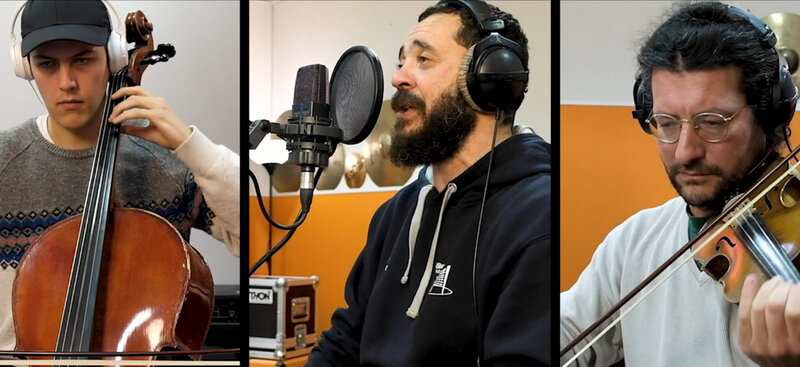
This Algerian and Canadian band proves that music has no boundaries even in times of isolation. Recording its set from France and Colombia, Labess blends flamenco and Gypsy jazz-influenced North African chaabi into energetic soul music with a nonstop beat. Singing in Arabic, French and Spanish, lead vocalist Nedjim Bouizzoul mixes realism and hope, gentleness and fury, in stories about exile that illustrate the joys and the distress that pave the road from the native countries to new homes and back again. Through his poetry, he proposes we reflect on cultural diversity and the necessity to unite, no matter our differences.

“Yal Maknin” opens with Rabah Khalfa playing the derbouka hand drum and a great riff on the banjo from Simon Demouveaux.  Nedjim Bouizzoul sings lead.  As the song move on, Demouveaux plays a solo along with strings from Simon Lannoy (cello) and Loran Bozic (violin).  It’s a lot of different sounds that work well together.

“Yemma” is a much quieter ballad.  Bouizzoul plays acoustic guitar and sings.  Khalfa plays the derbouka and Demouveauz plays a grougious melody on the oud.

They end with “La Vida Es Un Carnaval.” Mike Rajamahendra opens with drums accompanied by François Taillefer and Julio Frias on percussion.  Pierre Bonnet played some excellent bass in the first song. It sounds even better in this song.  Bouizzol sings in Spanish on this one.  The middle of the sing shifts gears and sounds very Spanish, with great horns from Javier Villa (trombone), Rafael “Pachalo” Gavilan (trumpet) and Moises Marquez Leyva (saxophone).  Then comes a drum and percussion section (including Bouizzoul playing percussive guitar.   Finally, along comes the star of the song–Miche Molina plays a wonderful button accordion solo.

[READ: January 2, 2021] A Poor Season for Whales

After having not had much exposure to South African writers (or really much of anything South African), I’m now on my second book.  This one is fiction.

My ignorance of South Africa is pretty vast, so I had to do a bunch of looking things up while I was reading.  Race plays a pretty big role in this book, so i wante dto look up some information about that.

About 80% of South Africans are of Black African ancestry, divided among a variety of ethnic groups speaking different African languages. The remaining population consists of communities of European, Asian, and multiracial ancestry.

According to the 2011 census, the two most spoken first languages are Zulu (22.7%) and Xhosa (16.0%).  The two next ones are of European origin: Afrikaans (13.5%) developed from Dutch and serves as the first language of most coloured and white South Africans; English (9.6%) reflects the legacy of British colonialism, and is commonly used in public and commercial life.

The vast majority of black South Africans were not enfranchised until 1994.

So South Africa has a pretty intense history.  This story addresses that history in some ways–it seems almost unavoidable frankly–but it’s more about an older white woman and the relationship she forms with a younger colored man.

The book starts on November 20, 2018 and runs through the new year.

Margaret Crowley a white fifty-something woman.  She is an architect, is clever and rich and has just moved into a home she designed for herself in Hermanus.  She used to live in Cape Town but left all of her friends and family to find some space in the more bucolic suburbs. The only living creature she brings with her to Hermanus is her dog Benjy, a fun and loyal Doberman.  

There’s some more fascinating things I learned about South Africa.  This story is set at Christmas time and in South Africa, Christmas is warm.  There are also whales who come to calve outside of Hermanus, making it a very popular tourist destination.  The title “a poor season for whales” refers to the fact that not many whales came to calve this year.

Margaret has recently had more upheaval than just a new house.  After twenty-six years of marriage, her husband has left her for a younger man.  She is not angry about it–she’s coping rather well, but she is still disappointed in the way things turned out.

The back of the book draws you in with this

After nearly fifty six years in the world with very little to stress or vex her, it was therefore hardly to be foreseen that in her fifty-sixth year she would kill a man with a kitchen knife.

Things get exciting at the very start of the book.  Margaret is walking Benjy along the sea front when he spots some dassies and charges after them.

Okay, so what the hell are dassies?  That was the first thing I had to look up (they are an African rodent found among rocky outcroppings.)  They were several meters down the cliff.  Benjy went after them he had no way to get back up.  And if he went further over the cliff he would clearly plummet to his death.

As she is freaking out a young man calms her down.  He says he will help.  He rappels down the side of the cliff an helps poor Benjy up and back to safety.  Benjy has made a new friend for life.   The man is a twenty four year old named Jimmy Prinslii-Mazibuko. 

He is very handsome with gray green eyes and caramel skin.  Jimmy is what is known as “colored” in Africa–

In early 20th-century South Africa, the word “Coloured” was a social category rather than a legal designation and typically indicated a status intermediate between those who were identified as “white” and those who were identified as “black.” The classification was largely arbitrary, based on family background and cultural practices as well as physical features. Most South Africans who identified themselves as Coloured spoke Afrikaans and English, were Christians, lived in a European manner, and affiliated with whites

Margaret is obviously very grateful to Jimmy for saving Benjy.  She asks how she can repay him and Jimmy basically asks if he can stop by her house for coffee and maybe a clean up (he’s cut in a few places).  Margaret is hesitant obviously–she doesnt know this man at all–but Jimmy is persuasive and seems sincere enough.  She agrees.

As she puts the ointment on his leg (at his insistence), she finds the whole scene erotcialy charged–but what could a 24 year old want with a fifty-six year old woman?   

Jimmy stays for a time and is completely irritating to her.  He loves to argue and enjoys giving her grief about pedantic issues.  Their conversations are wonderful–funny and very believable.  Jimmy is clearly smart and knows how to turn convention on its head to get what he wants.

Jimmy has really left an impression on her, but she assumes she’ll never see him again.  But the next morning when she goes to the grocery store, she sees him hitchhiking.  He flags her down and she takes him in to town.  She assumes that’s the end of it but he’s waiting at the car when she is dione shopping. She gives him a ride back home and he helps unload the groceries and then offers to make a meal for her.  (She is a terrible cook and he studied to be a chef).

She really doesn’t know what to make of this young man.

One of the most wonderful things (and timely for today–ITMFA) about this book is how much their discussion revolves around eviscerating donald trump.

The ANC was off the wall, Brexit had been a colossal blunder and donald trump was a buffoon, albeit an extremely dangerous buffon.

Even better is Jimmy assessment of how trump won

“I know I’m not saying anything original, said Margaret, but it remains a mystery how a developed, prosperous country like America could have elected a vulgar huckster as its president”
He laughed, “What is democracy but vulgar hucksterism dressed up as the will of the people?
“But democracy is the will of the people,” she objected.  “At least of a majority of the people.”
“Okay fair enough, yea but what determines the will of the people?”  Most people wouldn’t know what to have for breakfast if their TV didn’t tell them.  It’s all showbiz, reality TV, and Trump wasn’t on reality TV for chicken shit. His deal is selling himself to people who like to believe hey too can live in gold-plated skyscraper and screw supermodels”
“But he’s so unappetising.”
… “Sure he’s unappetising but that’s part of his appeal.  Most of the people who vote for him aren’t that appetising either–you’ve seen them on TV, men with paunches, brassy blonde women with too many teeth.  It’s the Revenge of the Uncool, the people left behind in Gun-and-God Gulch, who at the snobbery of the cool, with their trigger warnings and their safe spaces and their gay marriages and their abortions, the people who fly over what they call flyover country and cannot understand how anybody can actually live there…and electing Donald fucking Trump doesn’t make them any more cool, but it sure makes the cool eat a lot of shit. Because the last revenge of the uncool is to annoy the cool.

The story also deals with race issues in an unexpected way.

Jimmy introduces margaret to his friend Thuthukile.

She says to Margaret, “as a black person, I feel unsafe in Sea Point, I feel my identity threatened by the rising tide of whiteness.”
“Excuse me,” Margaret could not help but saying, “but did you say ‘as a black person?'”
“Yes, sure I did, I mean just because I was born with a white skin that doesn’t mean I’m white, Right?”
“Oh, I thought that was exactly what it did mean.”
“No, that’s the old essentialist argument.  I have a while skin but I self-identify as black. I mean, you have people born with penises who self-identify as women, and people born with vaginas who self-identify as men, right?”

When she talks to her friends and family back home about Jimmy, they have amusing reactions. Her best friend Frieda is scandalized (but fascinated) by this young man and wants all of the salacious details.  Her daughter Celia is actually too interested in her own life to care all that much, but her son Carl is concerned.  He is the same age (almost) as Jimmy and goes to the same school that Jimmy did.  He finds out some things about Jimmy that Margaret is not too pleased about.

As Christmas approaches, Margaret get st the unwelcome news that her former cleaning lady Rebecca needs to move in with her.  When Margaret moved to this smaller place, she no longer needed Rebecca who went to live with her own daughter.  But now the cleaning lady finds her living situation unbearable and insists that Margaret allow her to live with her.  Margaret can’t say no largely out of guilt.

There was an earlier comment from Jimmy that I found interesting.  When Margaret told him that she no longer employed a cleaning lady he was offended that she had money and wouldn’t give a needy person a job.  She had felt a little guilty about employing someone to clean for her, but he says it’s better that she an income, right? 

Rebecca lives in a sketchy area and Margaret is nervous to go there, but Jimmy offers to drive. He also speaks isiXhosa which impresses Rebecca and her neighbors very much.

Another wonderful subplot comes when Maraget goes to her daughter’s engagement party.  No one is looking forward to it because no one really likes her fiancee.  But everyone has a pretty good time.  Margaret also runs into her ex-husband’s sister Felicity.  Felicity is a large brash woman–the exact opposite of her brother.  She is flirtatious (even with her nephew) and tells some wonderfully scandalous stories (she believes that her father killed her mother).

This all leads to a big event on Christmas Eve at Margaret’s house.  She invites Miriam, her children and Felicity.  Jimmy agrees to cook and serve.

The party is a disaster with Felicity getting drunk and offending everyone: “when did young people get so humourless.”  At the talk of politics, Felicity grew animated

with trump the troll in the white house, Timid Theresa in Number 10 and Balls-over-Brains Vlad in the Kremlin, we’re fucked.  America is fucked, of course, it goes without saying, but where America goes the planet goes, so the planet is fucked.  And you know why?  Because fifty-two percent of white American women want their pussies grabbed.  That’s the percentage of white America women who voted for trump, right?  In the full knowledge of his pussy-grabbing propensities.
Aunt Felicity are you saying women want to be sexually assaulted?
No love I’m saying that a politically significant number of white women, fifty two wpercent,to be exact don’t regard pussy grabbing as sexual assault otherwise they wouldn’t vote for that tangerine troll, would they?
They may think that trump’s other virtues cancel ot his less admirable propensities
What other virtues love?  His humility?  His honesty?

At this point Celia stormed off.  Felicity was too drunk to drive home. Her son was too drunk to drive home. Carl and Jimmy hit it off and Jimmy wound up spending the night, with Carl.  Margaret is not sure what to think of this.

Things get very intense after this.  Margaret finds out that Jimmy’s secretive past is quite bad–he is mixed up with some very bad people  She can’t decide if she wants him gone for ever or wants him around all the time.  Two big unexpected events happen–one with Jimmy and one with Jimmy’s associates.

And yes, she does stab someone with a kitchen knife. 

I really enjoyed this story a lot and it has led me to other South african authors who I have also liked a lot.  

Incidentally, this book has a blurb: “Pitch Perfect. Aclever, bitingly funny novel.  It had me riveted,” from Finuala Dowling and I just happen to have a book by her with a blurb from Heyns: “Alive with wit and intelligence and beautifully written, this novel will keep people talking and arguing for a long time.”

Read Full Post »
SOUNDTRACKSEVDALIZA-Tiny Desk (Home) Concert #130 January 5, 2021).

Sevdaliza is the first Tiny desk Home Concert to be published in 2021.  Let’s hope she signals a great new year.

Sevdaliza is Iranian born although this concert is filmed in a culturally significant bookstore and publishing house in Amsterdam called MENDO.

Her collection of music is a wonderful mix of the organic and the electronic all centered around her gorgeous voice.

The set opens with “an old reel-to-reel tape machine spinning some Brazilian bossa nova.”  Then it stops and she starts singing “Human,” a song which

casts away the notion of artists — particularly female artists — as products.

It’s a moody Portishead-like track.

It opens with synths and drums as she sings achingly.  Her voice sounds a bit like Beth Gibbons as well.  Then in the middle of the song, the electronics drop off and she recites

I am flesh, bones / I am skin, soul / I am human /Nothing more than human.
I am sweat, flaws / I am veins, scars / I am human / Nothing more than human.

While she speaks, the strings of Jonas Pap (cello) and Mihai Puscoiu (violin) play an eerie backdrop.  When the strings stop a very cool electronic section takes over.  Leon den Engelsen manipulates sounds, making voices sound mechanical and machines sounds human–it’s really cool watching him do this.  Meanwhile, drummer Anthony Amirkhan adds some complex electronic and analog drums.

Then den Engelsen resumes the bossanova tape as Sendaliza announces:

“Good afternoon humans, my name is Sevdaliza, you’re very welcome on flight 808; our destination is Shabrang.”

I feel like “Dormant: sounds even more Portishead-like.  Her voice carries Gibbons’ ache as she sings “I need a different type pf caring, a different type of sharing.”  The percussion is minimal but interesting.  Meanwhile the electronics are buzzing around while the strings ground the song in melody.

As the song fades out she sings notes and words which I believe the keys are manipulating in real time.

“All Rivers at Once” opens with a pre-recorded guitar melody.  The song is just full of samples and interesting melodies and then the middle falls into place with a lovely violin solo.  It ends with a deep resonating cello note

“Gole Bi Goldoon” is sung in Iranian (I assume).  It sounds much more like an old folk song–strings and piano.

I really enjoyed this set and want to check out more of her album.

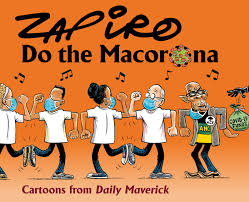
[READ: January 9, 2021] Do the Macorona

I’m not exactly sure why we have been getting so many books from South Africa at work lately, but it’s fantastic.

This book is a collection of editorial cartoons from South Africa’s Daily Maverick newspaper.  Zapiro (Jonathan Shapiro) has been making editorial cartoons and caricatures since the early 1990s and has 25 books of cartoons published.

Although I have been reading some novels from South Africa, I really don’t know very much about the country.  I have learned, however, that reading about a year’s worth of editorial cartoons is a pretty great way to learn about a country.  I don’t understand all of the jokes in here, but I do feel like I have a vague grasp on the country now. However, it’s when Zapiro turns his pen abroad–especially against trump, that I can see how good of a satirist he is.

It feels especially timely to include this post now as we prepare to get the corrupt traitor out of office for good.  He has, in fact, made a cartoon out of the insurrection. (more…)

Read Full Post »

SOUNDTRACK: MULATTO-Tiny Desk (Home) Concert #117 (November 25, 2020).

Most of the Tiny Desk (Home) Concerts have been live (or slightly edited).  This one is clearly not.  There are many times when as she crosses her leg one way, a quick cut shows her with her legs crossed the other way.  So I’m not sure what’s going on–if it’s multiple takes or just her lip-syncing, but it’s very disconcerting.

Mulatto, known as Big Latto has released her debut album, Queen Of Da Souf,

At a time when women in hip-hop are running laps around the guys without so much as shifting their lace fronts, Latto is finding her footing in the new rap canon with Gold-charting singles and standout freestyles.

Also, who knew this was a thing:

As the inaugural winner of the Lifetime reality show The Rap Game and someone who’s made music since the age of 10, the personality that Latto brings to her bars is goofy, assertive and steadfast.  Latto rocks an aqua wig and raps perched from her throne.

I really like that the first song features a live violin (Joy Black).  It’s such an interesting idea and she plays some fast, intense strings.  It works perfectly.

“Blame Me” is a slower sone.  The melody sounds more than a little like “The Way It Is.”

It’s not until “He Say She Say” when Latto rises up from her seat to put extra emphasis behind this reminder: “Self-made b****, hell you talkin ’bout? / Yea, I got it out the mud, no handout.”

“He Say She Say” has a cool off-kilter almost horror movie melody from keyboardist SK.  Her singing and rapping is really good, but I get really bored of all the bitches and f-bombs and n-words.  I realize that that’s the street and the way young people talk, but it gets really monotonous.

[READ: December 20, 2020] Long Way Down: The Graphic Novel.

Jason Reynolds wrote the novel Long Way Down in 2017.  This graphic novel adaptation has some great artwork by Danica Novgorodoff

This is the story of William Holloman–Will.

The story starts out with Will and his friends on the basketball court.  His friend Tony is a great player but he is short and he knows you can’t go pro if you’re short. Will’s brother Shawn comes over to say hi to them.  Then there is a gunshot. Everybody

Did what we’ve all been trained to do.  Pressed our lips to the pavement and prayed the boom, followed by the buzz of a bullet, ain’t meet us.

But this time it hit Shawn.

When bad things happen, we can usually look up and see the moon big and bright shining over us.  But when Shawn died the moon was off.

Novgorodoff does some wonderful color work in these scenes–really creating a range of emotions in a small space. (more…)

Read Full Post »

« Newer Posts - Older Posts »