Feeds:
Posts
Comments

Archive for the ‘Pregnancy’ Category

CV1_TNY_04_01_13Gutierez.inddSOUNDTRACK: TRAGICALLY HIP-“Man Machine Poem” (2012).

hip manI received the new Tragically Hip album Now for Plan A a while back. I’ve listened to it a few times, but it got lost in the shuffle.  Then I put this song on and it really blew me away.

It’s a very typical Hip song–guitars that build but then retreat to let Gord Downie’s voice soar above the quiet verses.  There’s something agonizingly beautiful about the way he sings the verses, which almost feel like they are a capella, the music is so minimal.  Then for the second verse, the band kicks in and builds the song even more.

The chorus, which is very simple and is barely a chorus at all, punctuates the verses perfectly, with Downie’s voice being a great anchor.  The song doesn’t rock as hard as some Hip songs, nor is it as ballady as others, but it’s a perfect example of what the Hip do so well–a middle tempo song that is both passionate and also rocks.  (Although I could do without those weird little keyboard notes that dot the end).

[READ: May 8, 2013] “Marjorie Lemke”

At first I was unhappy about this story—it seemed like it would be another story of a young girl who gets pregnant and has a shitty life.  Especially when I found out the father is a junkie who has run off and that she herself was a huffer of chemical fumes.  Oh boy. And for some reason I thought the story was Irish (I guess there’s lots of down on your luck Irish girl stories out there–cheeky!)

But Braunstein transcends that story but giving Marjorie a support system.  Her aunt, who is very helpful (but doesn’t remove her responsibilities), and a job as a maid at a nice (but not too nice) hotel.  Her daughter, Della, is small for her age, but she seems mostly healthy.  And the hotel allows Marjorie to bring Della along on her cleaning cart (tucked into the clean towels).  Della pretty much sleeps all day (which is good for work, but not so good for nighttime), and no one has complained about her cooing or drinking a bottle when she does wake up.

Then Marjorie knocks on a door and a man is in there—he didn’t say anything when she knocked.  At first Marjorie thinks he’s masturbating, but he’s not, he’s just absorbed in the newspaper on his lap.  He tells her to just go about her work, don’t mind him.  So she does.  He’s not cold exactly just absorbed in what he’s doing.

The next time she goes to the room, he is there again, but this time his wife is there too. She is brusque and tells Marjorie that they will be in the room for about 4 weeks—she is an inspector and has several jobs in the area.  She asks that Marjorie come every two days to clean and says there will be a large tip waiting for her.

The story then jumps forward a bit.  In a way that is impressionistic more than telling, we learn that Marjorie and the man, Gabe, are getting close—talking, holding hands, comforting each other.  (more…)

Read Full Post »

SOUNDTRACK: CALLA-Calla (1999).

I got this album when a patron donated it to the library.  I had never heard of this band, but the other CDs he donated were really cool so I grabbed this one, too.  This is an almost entirely instrumental album (vocals are whispered when present) that feels like a soundtrack to a futuristic Western.  “Tarantula” opens with some creepy, ghostly sounds and then what sounds like spurs walking across the landscape.  When the guitar comes in it sounds like an old Western.  In many ways this album reminds me of a great band called Scenic, although this one makes more use of electronics, which gives it a more eerie feeling.

“Custom Car Crash” has a very Western feel.  Over creepy scraping sounds, a clean guitar plays very simple guitar lines and chords.  When the keyboard lilts over the noise, it’s quite eerie.  This song has vocals; deep, almost whispered vocals, and I can’t really make them out,  There’s also a live bonus version at the end which really captures the studio version, but which I think is better.  “June” has a slow droney sound: more atmospheric than anything else–it seems maybe ten years ahead of its time).  The 8 minute “Only Drowning Men:” introduces more guitars and a lit of tension.   From the noise a delicate guitar pattern emerges for the last minute of the song.

“Elsewhere” is full of buzzy guitars; there’s a live version at the end of the disc as well.  “Truth About Robots” is my favorite track, a real melody over the noise.  Despite its length (just over 2:30), it tells a full story.

“Trinidad” comes a surprise because it opens with bass (you don’t hear much bass on this album).  But “Keyes” is so quiet as to be almost not there.  “Awake and Under” on the other hand has a great guitar and bass sequence with spoken lyrics (reminiscent of many indie bands of the 90s) but which is very effective here.  There’s a live version as a bonus track and it is a highlight.

This is more interesting music for creating atmosphere, but not something I’d listen to a lot.  I was surprised to find out how many albums they had out.

[READ: March 2, 2012] “A Prairie Girl”

I’ve enjoyed Thomas McGuane stories before, but I wasn’t sure if I’d like this one as it opens with a brothel.  Since I’m thinking about the implications of sex in Gravity’s Rainbow, the last thing I needed was a hooker-with-a-heart-of-gold story.  But this isn’t that.  And it has a brothel with a very funny name: The Butt Hut .  The Butt Hut closes down when the madam dies.  Most of the women moved away (either with local men (to the dismay of many) or on their own).  But one girl who stayed was Mary Elizabeth Foley.

Mary Elizabeth attended church weekly, but most of the people gave her a wide berth—literally an empty pew.  It was finally decided that someone should speak to her since she wasn’t going away.  And so Mrs Gladstone Chandler, wife of the town’s bank owner and all around respected individual, sat near her during the mass.  Afterward, she asked Mary Elizabeth: “Where are you from?”  Mary Elizabeth answered “What business is it of yours?”  And she soon had her pew back. (more…)

Read Full Post »

SOUNDTRACK: NICK CAVE AND WARREN ELLIS-The Road: Original Film Score (2009).

I haven’t seen The Road, and I probably never will.  Nor have I read it.  The only reason I was listening to the soundtrack was because I like Nick Cave.  So this is a contextless review.  Of course, I know what the book is about and I rather assume that the film is equally harrowing.  I expected the soundtrack to be full of desolation and horror.

So I was quite surprised that most of the main themes are played on a piano with gentle strings or simply violins.  True there is a sense of emptiness and loss in these songs (they’re not jaunty piano pieces or anything) but they are still unexpectedly pretty.

Of course,a song like “The Cannibals” is bound to be more disconcerting, which it is.  It starts with creepy scratchy violins and then tribal drums take over–all set over a buzzing background.  This is more of what I expected the whole score to be like.   Similarly, “The House” must be a very frightening scene, as the music is threatening, loud, intense and quite scary with, again, more creepy percussion.  Unsurprisingly, a track called “The Cellar” is also spooky; it is only a minute long.

But then songs like “The Church” are so delicate and beautiful and not even all that sad–it actually makes me wonder what the scene in the film is showing.  The end of the score feels like the end of a movie, which I know it is, but it feels like a conventional movie, with closure, something I’m led to believe the book doesn’t have a lot of.

Taken away from the movie, this soundtrack is quite nice.  Aside from the three scarier tracks, this would make for some nice listening on a sad, rainy Sunday.

[READ: February 28, 2012] “The Longest Destroyed Poem”

I enjoyed Kuitenbrouwer’s “Corpse” so much that I decided to see what else she had written.  It comes to three books and four uncollected short stories.  There’s “Corpse” from The Walrus, this one here, another one called “Laikas” (which has a different title on the site where it lives) and a fourth with a broken link.  Boo.

But that’s okay because I’ll certainly investigate her books too.

Like “Corpse,” this story explores women’s sexuality, but it explores it in a very different way.  In fact, I loved the way it was introduced–especially because of the wonderfully convoluted way the sentence reveals it (and how it’s not even the main point of the sentence):

She looked fabulous. Better than back then, when she’d thought she wanted to be an artist, and Victor had made a point — she realized this as she realized many many things, that is she realized it in retrospect — of dropping into the conversation — the one she hadn’t actually been having with him, because she was instead focused almost solely on the fact his much younger roommate had a hand under the blanket her crotch also happened to be under — that he was off to bed early so he could work on a poem he’d been having trouble with.

I had to read it twice because I thought it was funny the first time, and when I fully parsed it, it was even funnier.

So yes, sex.  But as the story opens, years after the above event, Rosa sees Victor and decides to crash into him with her car.  It’s shocking and it’s shockingly well told.

I love the way Kuitenbrouwer uses language.  I could probably quote from this story six or seven times, but I love this sentence that forecasts the trouble ahead:  “Victor noticed her in that split second, too, and he knew what Rosa was up to, for his face changed, channel surfing from neutral smug — well, this was his everyday face — to impending doom.”

As she’s about to ram him (with a Prius, no less), we flash back to their spirited relationship. (more…)

Read Full Post »

SOUNDTRACK: PJ HARVEY-Uh Huh Her (2004).

After the sort of mellow, almost commercial release of Stories from the Sea, PJ Harvey throws the fans a left turn once again with Uh Huh Her.  It’s a heavy, raw album although not raw like Dry was.  It seems  simpler, somehow.  And I think it’s with this disc that you realize that every PJ Harvey record is going to be different.  It was apparent that she had a trajectory on those first few discs, but this one changes everything, and she proves that you’ll never know what’s going to come from her.

“The Life and Death of Mr Badmouth” has a very simple blues riff with kind of chanting (and occasional creepy backing vocals) by PJ.  While “Shame” adds more texture (melodica?) and some more washes of sound.  “Who the Fuck?” is a wonderfully vulgar and raw track with brutal guitars and overly loud vocals.  “Pocket Knife” is a buzzy but quiet track which feels like a demo (the guitar even seems out of tune), while “The Letter” has a great fuzzy guitar sound and a cool melody.

“The Slow Drug” is one of several slower pieces.  As with many of her quieter stuff this does nothing for me, although it’s a nice change on the disc.  “No Child of Mine” is a brief acoustic number.  It feels more like an excerpt or a transitional song than any actual song (being only a minute long).  It leads to the rocking “Cat on a Wall.”  “You Came Through”  mixes things up very nicely with a heavy percussion.  The effects in the song are really captivating.

“It’s You” is a slow piano-based song, while “The End” is a brief instrumental (more melodica).  And “The Desperate Kingdom of Love” is a dark ballad.  The oddest track is “Seagulls” which is a minute of actual seagulls squawking…an unusual addition for any disc.  The album ends with “The Darker Days of Me & Him.” It’s a quiet acoustic song which shows just how many different style she’s willing to experiment with even on one disc.  Even though to me this is a raw rocking disc, there are still a number of acoustic tracks as well.

This album feels like some kind of psychic purge.

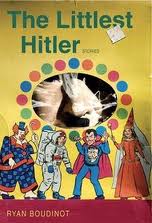
[READ: March 31, 2011] The Littlest Hitler

I picked up this collection of stories because I enjoyed Boudinot’s story in the BlackBook collection very much.  I didn’t realize that that story was in fact part one of a two-part story (although part two bore no relation to part one, as you’ll see).  The story in BlackBook was funny and dark, but it didn’t prepare me for just how dark these stories would get.  And for the most part, it seemed like the darkness came at the very end; a surprise, a shock.   I admit i grew a little weary of the device by the end of the collection, although not all of the stories employed it, so there was some diversity. (more…)

Read Full Post »

SOUNDTRACK: MAYYORS: 3 EPs (online only) (2008-2009).

I learned about Mayyors from the NPR’s Best Metal and Outer Sounds releases of 2009 on All Songs Considered.  I enjoyed Viking’s picks for 2010 quite a bit so I thought I’d investigate his previous years’ selections.  I’d never heard of Mayyors before, but he makes the band sound so intriguing (and dirty).

The write up is so wonderfully enigmatic that I had to find the tracks online.  I mean, how can you pass up this:

This is a plea to Mayyors: If you’re going to release one of the ugliest pieces of noise rock this side of The Jesus Lizard, please start issuing your music in editions bigger than David Yow’s beer gut. After a couple of ripped 7″ singles made the rounds on blogs last year, those seeking the puss-popping skronk of Mayyors scavenged message boards and listservs to get their hands on the next limited affair. (After all, these Sacramento-based dudes don’t have a Web site or any known email addresses. Punk rock, I guess.) The Deads 12″ EP significantly dirties the rock gene pool with nauseating feedback and power chords dumber than the actual mud driven over the orange covers. Once again, Google is your friend.

That link to Google is the only way I was able to find these songs.

So Mayyors have released three EPs since 2008.  Each had a pressing of about ten copies, apparently.  You really can’t find any information about them online.  I don’t even understand how the band plays shows since their total recorded output is about 2o minutes long.  But I was able to get all 9 songs.

Having said all, that I don’t always like the music.  It hurts your head. The general sound is really downtuned sludge rock.  It’s not squealy feedbacky noise, it’s just distorted guitars played very loud and fast with vocals that are pretty incomprehensible (with lots of echo!). I have no idea what he’s singing about.  I’m sure it’s not very nice.  But I feel like their music would be even more subversive if they sang about love and kindness (or like the cover of Megan’s LOLZ: unicorns and rainbows).

The first EP: Marines Dot Com has two tracks “Metro” (3:08) and “Fatigure” (3:35).  “Metro” reminds me a lot of early Butthole Surfers.  “Fatigure” has a discernible riff (which is of course very downtuned.  It’s entirely possible they have only a guitar and a bass.  About half way through, the song changes into a noise-fest.  Of course, nearly 4 minutes of noise is pretty tough to handle.  Especially since the noise is sludgy and loud loud loud.

The middle EP, Megan’s LOLZ, is my favorite.  Three songs: “Intro” (0:59), “Airplanes” (3:23), “White Jeep” (2:18).  The noise and sludge is still there, but you can actually hear nascent riffs under all the noise. It also seems a little crisper (or something), which makes the tracks stand out a little more.

“Intro” actually plays around with different kinds of noise, suggesting they’re in for something new on this EP (of course, it’s still buried under noise and sludge).  “Airplanes” has another discernible riff, although it does sound like it’s recorded in an airplane hangar.  “White Jeep” has a similar (if not the same) riff, but it plays a bit more with feedback and genuinely piecing noises.  (There’s even a  kind of guitar solo).

The latest EP, the one that Viking likes, is called Deads.  It has four songs: “The Crawl” (1:41), “Ghost Punch” (1:41) “Clicks (2:42) and “Deads” (2:53).  And as he describes above, the cover does appear to have been driven over by a muddy truck.

This album is a bit more “polished” (how dare anyone use that word).  In fact the sludge doesn’t really get put onto “The Crawl” until about 50 seconds in.  Don’t get me wrong, it’s still a sludgy mess, but you can sort of tell what instruments there are and that there’s a guy singing.   “Ghost Punch” sounds a bit more death metal-like than their other songs, although it’s so tinny, it sort of transcends the genre somewhat.  “Clicks” seems to be the song of choice for examples of what Mayyors can do.  It’s got intense delay, squealing noises and a vocal melody! (Do I hear screams of sellout?).  Hear it and “The Crawl” here.  “Deads” actually has staccato notes in the opening, but it’s all sludge from there.

And then there’s silence.  Blissful silence.  Mayyors: Not for the sensitive.

[READ: March 5, 2011] “The Other Place”

Mary Gaitskill is generally acknowledged as a master short story writer.  I haven’t read all that much by her.

I’m not sure if her stories are all as dark as this one, but man this is quite dark, indeed.  It’s about a man and his son.  Well, actually it begins with the son.  He is into guns. Like really into guns. He draws them, he makes stories about them, he plays guns outside even if they don’t have guns.  He also loves violence on TV, especially if it’s funny.  The boy is thirteen.

When I read the story, I initially thought that the father was upset or worried about this gun fascination, because he opens the story with “How did this happen?”  But he seems to know how this happened: “The way everything does, of course.  One thing follows another, naturally.”

And so, with the wrong impression, I couldn’t quite understand why the father was so surprised by the son’s behavior because as the father relates his own past, it’s pretty full of violence itself.  Indeed, as it progresses, it seems like the son inherited all of his father’s traits. (more…)

Read Full Post »

SOUNDTRACK : PHISH-Live Bait: Vol 2 (2010).

Phish has been releasing live concert downloads  for years now.  And now that they’ve started touring again, they have a whole bunch of new ones.  I’m not going to be downloading new shows, (I have a  bunch of old ones that I really never listen to).  But what I like is that they are giving away a few tracks from these shows.  And what I love is that they’re calling the freebies, Live Bait.

This set is a few tracks from shows recorded in August of 2010.  There’s nine tracks  ranging from 90 seconds (“NO2” ) to 17 minutes (“Twenty Years Later”).

Although this show is from 2010, this bait contains only two songs from their last album, Joy. The older songs are fan favorites (“Wilson, “Possum”) and weird interludes (“Kung”).  The band sounds fresh and really into what they’re doing and the old songs sound rejuvenated and fun.

Nevertheless, since most of the other live releases are older, it’s so nice to have the two new songs.  You can’t be choosy on a free sample, but I’d have loved to hear them do “Time Turns Elastic.”  If you’re new to Phish, this is a good place to get a free sample of their live shows.  Three volumes of bait have been released so far.

[READ: February 16, 2011] Ladies and Gentlemen, The Bible!

I discovered this book when I read the short story “Samson and Delilah in The Walrus.  I liked, but didn’t love, the short story, but I was intrigued enough to want to see how the other Bible stories would stack up.  And since we had the book on the shelf, I decided to check it out.

So this book is a retelling of several stories from the Old Testament.  What Goldstein does is create a backstory for these biblical characters who are really just sketches.  The stories are funny, serious, weird and often enjoyable.

The introduction is a very funny kvetch about at being a Jew and having dinner in the Grey Derby; waiting online for hours with so many other Jewish families, eating kosher food with your own family, fighting over the check, pointing fingers, calling each other names and, ultimately, leaving by 5:30 PM.  It made me laugh out loud in the best Woody Allen tradition.

With no real introduction, he moves right into his new versions of Bible stories.

The biblical stories that Goldstein updates include:

  • Adam and Eve
  • Cain and Abel
  • Noah and the Ark
  • The Tower of Babel
  • Jacob and Esau
  • The Golden Calf
  • Samson and Delilah
  • King David
  • part 1: Goliath
  • part 2: Bathsheba
  • part 3: Absalom
  • Jonah and the Big Fish
  • My Troubles (A Work in Progress, by Joseph of N–) (more…)

Read Full Post »

SOUNDTRACK: RHEOSTATICS-Live at the Bathurst Street Theatre, Toronto ON, April 5, 1997 (1997).

This is the second of two nights that The Rheostatics played at The Bathurst Theatre.  It is also available for free on their live site.

This concert also features a lot on their Double Live album.  There are seven tracks that come from this show: “Feed Yourself,” “Shaved Head,” “Dead is the Drunkest You Can Get,” “Bees,” “A Midwinter Night’s Dream” “Stolen Car,” and “Good Canadian.”

This recording is a lot better (sound wise) that the previous night’s and the band seems a lot more “on.”  And, the band interacts with the audience a lot.  “Feed Yourself” is great and “Mid-Winter” is stunning (both understandably picked for the live album).  There’s an amusing “drum solo” during “Legal Age Life.”  It’s a great set.

Some interesting notes: this is the first time the band has played “Stolen Car” live (and it hadn’t been released yet). It’s the same version as on Double Live, but here you hear a lengthy pause in which “Martin left the lyrics in his bag” and Dave has to entertain the crowd.  “Good Canadian” also on Double Live, was a spontaneous little ditty that Martin made up.  Also, during the show, they encourage people to listen to Nightlines, because it is danger of losing its funding.  Fans will know that Nightlines went off the air not too long after that and the Rheos played the final show (and released an album of it).

Of the two shows, this one is definitely preferred.  And even if you have Double Live, it’s worth downloading this entire show..

[READ: February 7, 2010] “Axis”

Alice Munro has another great, subtle story here.  This one mixes things up a little bit in the storytelling, which I found intriguing and more than a little fun.

It opens with Grace and Avie, two farmers daughters who are at university.  They are studying intellectual subjects, with the hope (let’s be honest) of finding intellectual boys to marry eventually.  They are obviously not sorority material (just look at their coats), but they don’t really want boys who like sorority girls anyhow.

After we follow them for a bit, we narrow the focus to just Grace.  Her boyfriend Hugo is on his way to visit her at the farm (and to meet her parents).  He does not make a very good impression, and he is not to fond of them either.  And, worse yet, they won’t leave them any time to be alone.  Until Grace hatches a plan for them to be alone, which, if you’ve read any fiction, you know won’t turn out too well (but that’s not the climax of the story, don’t worry). (more…)

Read Full Post »

SOUNDTRACK: DEATHSPELL OMEGA-“Abscission” (2010).

This album, Paracletus, came in at number 6 on Viking’s Top Ten album list.  The song is pretty straight ahead black metal.  It is noisy and growly and everything you might expect from the genre.  The first  surprise here is that the band is French.  The bigger surprise is how after a bout two minutes of pounding noise, a melody comes out of the darkness and brings a real structure to the bludgeoning.

Although I enjoyed the sing as far as black metal goes, I feel like the praise that he heaps on the album doesn’t seem deserved by this track. It’s a strong black metal song but it doesn’t seem either brilliant or confounding to me.

[READ: December 30, 2010] “Sweet Charity”

This is the fifth and final Something Borrowed story in this issue of The New Yorker.  I felt like this story provided a lot of personal background information about Zadie Smith.  The other short articles were certainly personal, but I feel like this one revealed things about her that I don’t know about most authors.

It seems that as a young lady, Smith was a total geek, playing the cello, dressing crazily (relatively) and often not really appropriate for her body size.  She also admits that she was financially very lucky, more so than many of the girls she went to school with.

In Zadie’s account, it is a friend who borrows money from her.  The friend is a fellow cello geek from school.  They agreed to be strong and not fall to the stereotypes of black teenage girls.  But their pledge to not get pregnant was not kept  by the friend.  She had the child and had to work very hard to make ends meet.   Finally, as she is about to be kicked out of her flat, she swallows her pride and asks Zadie for a loan. (more…)

Read Full Post »

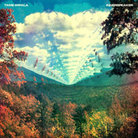
SOUNDTRACK: TAME IMPALA-“Lucidity” (2010).

I heard this song on the NPR’s 5 Artists You Should Have Known in 2010.  The album, Innerspace, is only available in Australia (imported on Amazon for big bucks) but I guess that’s why people download music.

This song is really cool. It feels very My Bloody Valentine to me.  However, inevitable comparisons to The Beatles abound, but that’s mostly in the vocals (which is kind of funny since they are Australian).  But it’s really a very sixties British vocal sound–not unlike early Who).

The big difference comes in the music which is psychedelic and wild in ways that The Beatles never quite managed.  There are great big washes of noise, and the sound quality sounds retro, even though it obviously isn’t.  Comparisons to the great Swedish band Dungen are not misplaced either.

I’ve listened to a few more tracks by them on YouTube, and I think this album could easily be one of the best of 2010 if only more people could hear it!

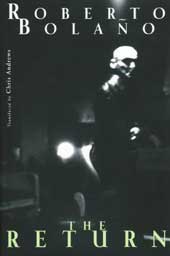
[READ: January 3, 2010] The Return

With the completion of this collection of short stories, I have now caught up with all of the published works of Roberto Bolaño (in English of course).  [The next book, Between Parentheses, a collection of nonfiction, is slated for June].

So The Return contains the 13 short stories that were not published in Last Evenings on Earth.  That collection inexplicably took shorts stories from his two Spanish collections Llamadas telefónicas (1997) and Putas asesinas (2001) and combined them into one collection in English.  It wasn’t quite as evident in Last Evenings, but it seems more obvious here that the stories in Putas asesinas are grouped together for a stylistic reason.  So, to have them split up is a bit of a bummer.  And yet, having them all translated is really the important thing.  And, again, Chris Andrews does an amazing job in the translation

This collection of stories was very strong.  I had read a few pieces in Harper’s and the New Yorker, but the majority were new to me.  Bolaño is an excellent short story writer.  Even if his stories don’t go anywhere (like his novels that never quite reach their destination), it’s his writing that is compelling and absorbing.

This collection also had some different subject matter for Bolaño (it wasn’t all poets on searches). (more…)

Read Full Post »

SOUNDTRACK: CHARLOTTE GAINSBOURG-IRM (2009).

Charlotte Gainsbourg is Serge Gainsbourg’s daughter.  Segre is, of course, known for his risqué songs–although Charlotte doesn’t fall into that same camp.

This is her third album.  Her first was released when she was 13.  The second was recorded with the band Air.  This album was written by and recorded with Beck.  And it’s a fantastic forum for her wonderfully complex voice and also just a great album of varying styles and textures.

IRM is the French abbreviation for MRI (she had a life threatening accident and was subject to many MRI’s). In fact, track two, called “IRM” is an electronic workout with sounds not unlike what you might hear in an MRI.  But the album is very diverse, from whispering vocals to soaring altos.  She has some scary/creepy songs as well as some sultry tracks.  Gainsbourg is also an actress and I like to think that her skills in film have allowed her to inhabit so many characters in these songs.

“Le Chat Du Café Des Artistes” (written by Jean-Pierre Ferland) is the only cover on the disc, and man is it great.   Whether it’s the French lyrics, which add a cool Stereolab-ish feel to the proceedings or the outstanding keyboards which are creepy and alluring at the same time, I don’t know, but this song alone makes the disc worthwhile.

Luckily there’s a lot more great songs here, too.  “Heaven Can Wait” is a duet with Beck (although really, Beck takes the lead).  It sounds like a great Beck track with a stomping acoustic guitar feel.

“Me and Jane Doe” follows with a sound like it belongs on the Juno soundtrack.  It gives Gainsbourg a great opportunity to show of her vocal tricks, since she sings with a flatly American accent.  “Vanities” is a beautiful string-filled track which emphasizes Gainsborugh’s voice (and has a kind of Bjorkian symphonic sound to it().

“Trick Pony” is a heavy electronic dance track, bringing an amazing sonic change to the proceedings of the disc.  And “Greenwich Mean Time” is a nasty sounding song where Gainsbourg is not afraid a to sneer at the listener.

The disc ends with “Dandelion,” a kind of slow blues, “Voyage,” a tribal track  (sung in French) and “La Collectionneuse,” which is not sung in French, but which is a piano based song that kind of creeps along on the edge of sinister.  The end of the song has spoken French words at the end and it sounds not unlike an early Sinéad O’Connor song

It’s rare that you hear an album full of so much diversity which actually holds together so well.  Gainsbourg doesn’t have an amazing voice or a voice that makes you go “wow,” but what she has is a really good voice that she can manipulate to convey a lot of styles, and I think that may be more impressive than an eight-octave range.

[READ: November 4, 2010] “Lucy Hardin’s Missing Period”

It’s hard to talk about this story as a story because of the gimmick that is attached to it.  This is a choose your own adventure story, albeit for adults.  In the magazine itself, there are two paragraphs.  You have to continue the story online here.  The technology involved is superb (you can save your story so that when you come back you can pick up where you left off) and each time you click to go to a new section, it fills in right after the section where you were reading so that the finished story looks like a complete (printable) story.

I tried two different stories and it became obvious that there are hundreds of story segments to choose from.  I’m rather amazed at the author’s ability to create what appears to be so many different stories parts out of these few characters (although I suppose realistically there can only be a half a dozen or so outcomes, no?).  And yet for all of that, I didn’t find the story all that interesting.

(more…)

Read Full Post »

« Newer Posts - Older Posts »